Artwork
Saint Matthew and the Angel
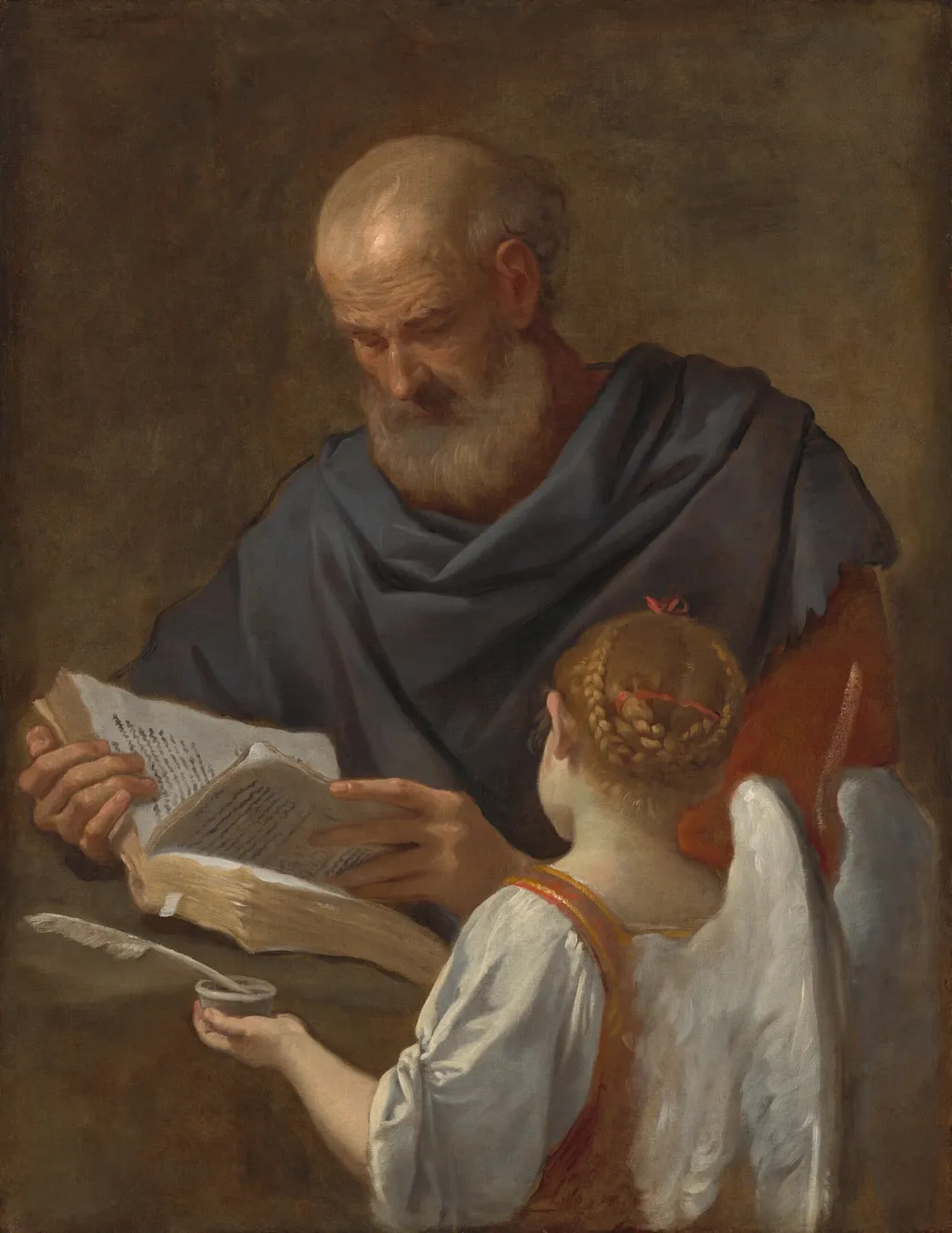
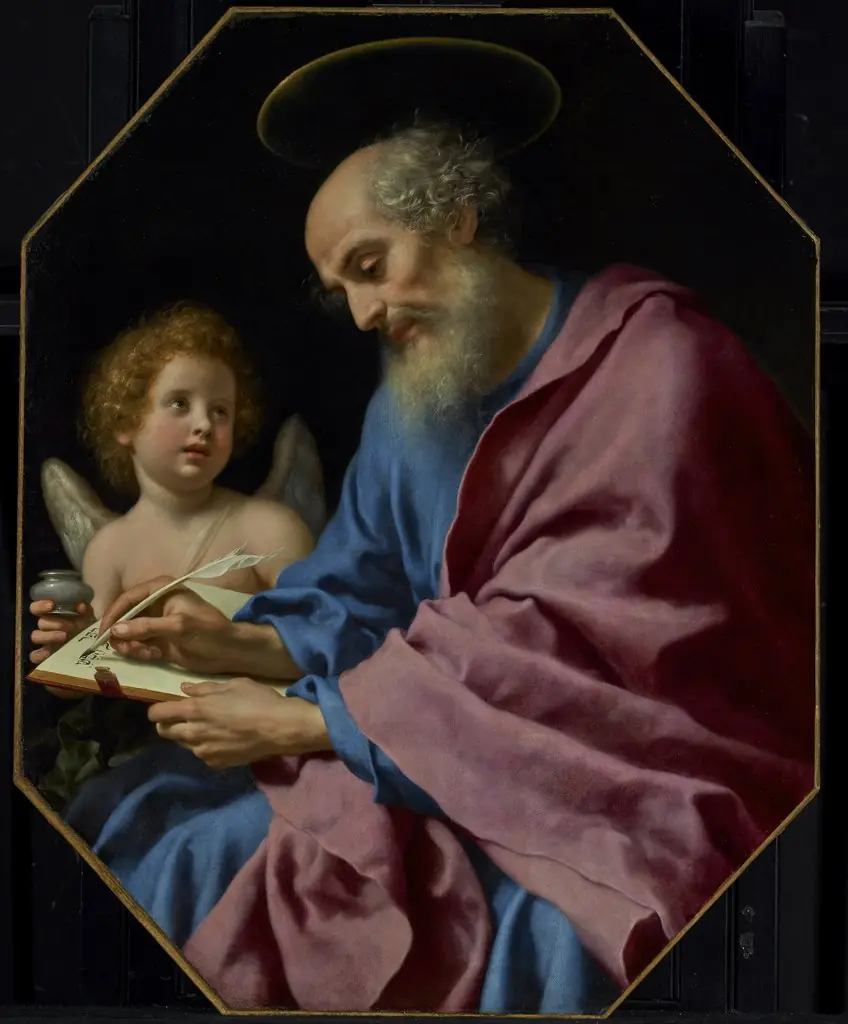
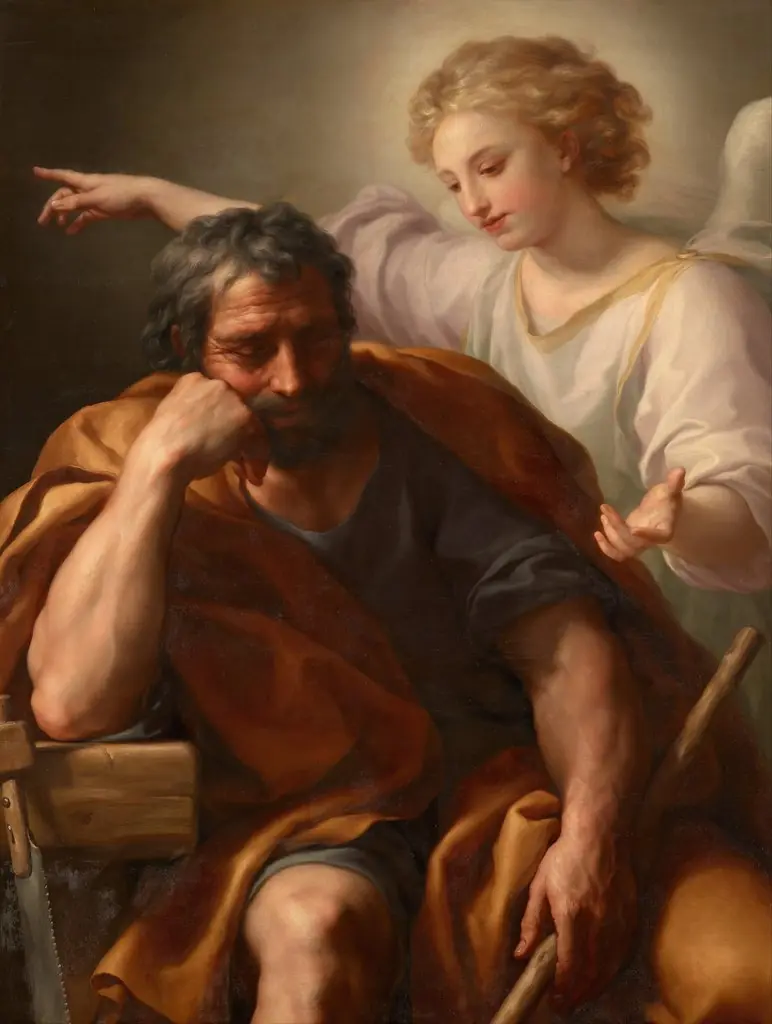
Saint Matthew and the Angel is an oil painting by the Baroque artist Simone Cantarini. It dates from 1646 and is held in the collection of the National Gallery of Art.
About this work
Technique & Style
The brushwork is precise, favoring smooth modeling over visible impasto, particularly in the rendering of flesh and the luminous wings of the angel.
The work is executed in oil on canvas, measuring 116.8 cm in height and 90.8 cm in width. Cantarini employs a restrained yet luminous palette, with a controlled handling of light that defines Saint Matthew's face and the angel's drapery through delicate chiaroscuro. The brushwork is precise, favoring smooth modeling over visible impasto, particularly in the rendering of flesh and the luminous wings of the angel.
The composition's clarity and balanced figural arrangement reflect Cantarini's training in the Bolognese tradition, emphasizing anatomical correctness and a quiet, devotional mood.
The National Gallery of Art, Washington, accessioned the work in 1972 following its earlier sale in London as a Guercino and subsequent passage through private collections.
History & Provenance
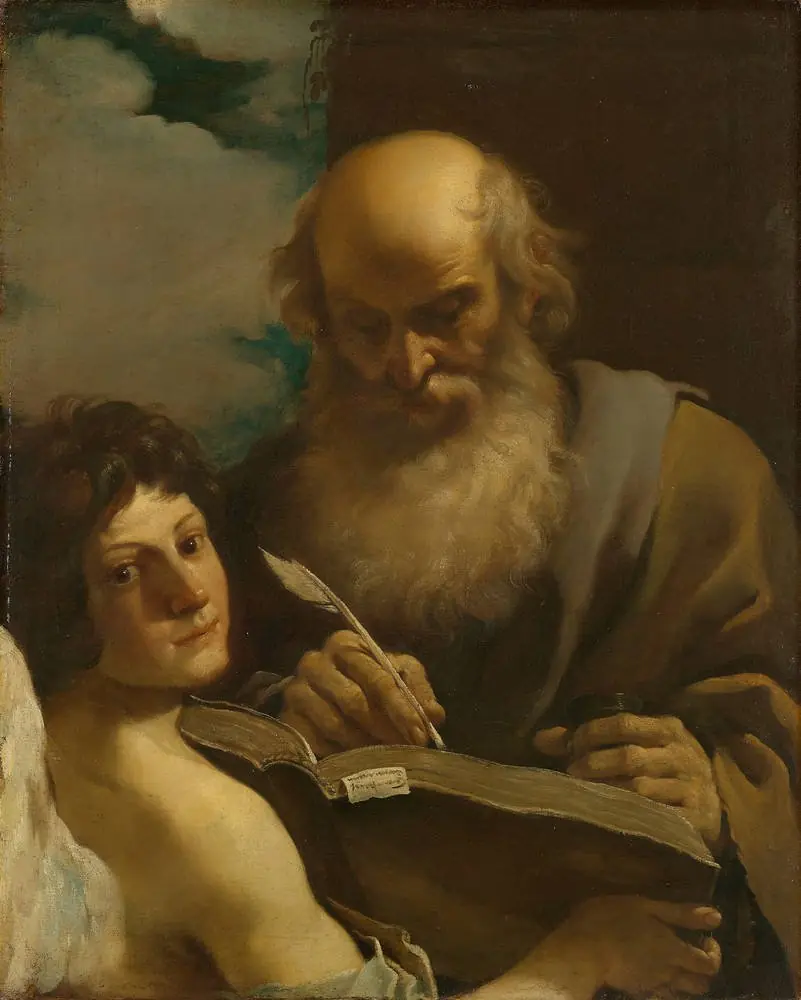
Simone Cantarini executed Saint Matthew and the Angel in 1646 as an oil painting on canvas. By 1937, the work was located in Stockholm within the collection of Hagström. It subsequently appeared at a London auction held by Christie, Manson & Woods on 11 December 1959, where it was catalogued as a piece by Guercino.
Following the sale, the painting entered the possession of James O. Belden, who maintained residences in Paris and Washington. In 1972, Belden donated the artwork to the National Gallery of Art in Washington, D.C., where it remains part of the permanent collection.
Overview
Simone Cantarini, also known as il Pesarese, created Saint Matthew and the Angel around 1646 using oil on canvas. This painting exemplifies his approach during the early Baroque period in Italy. Cantarini's work often merged the refined qualities of Bolognese classicism with a direct, naturalistic depiction of figures, a characteristic evident in this religious scene portraying the evangelist Saint Matthew receiving divine inspiration.
Subject & Meaning
The painting captures Saint Matthew, an older man in a blue robe, engrossed in an open book, his gaze intent. Behind him, a youthful angel, with pale skin and curly hair, subtly assists by holding a quill and inkwell. The angel's presence, with its wings nearly concealed, suggests a quiet, direct impartation of divine knowledge, emphasizing the evangelist's inspired act of writing.
Context
Active during Italy's early Baroque era, Cantarini developed a distinctive style that integrated the academic principles of Bolognese classicism with a more direct, naturalistic approach to his subjects. Beyond his painting, he was also highly regarded for his etching abilities. His prints were known for their luminous qualities and delicate execution, demonstrating a versatile mastery across different artistic media.
Own this work as a print
Artist & collection
Artist
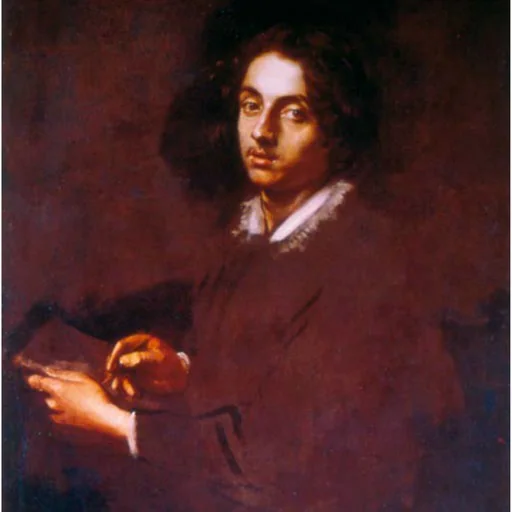
Simone Cantarini or Simone da Pesaro, called il Pesarese (Baptized on 21 August 1612 – 15 October 1648) was an Italian painter and etcher.