Artwork
Psyche and Cupid
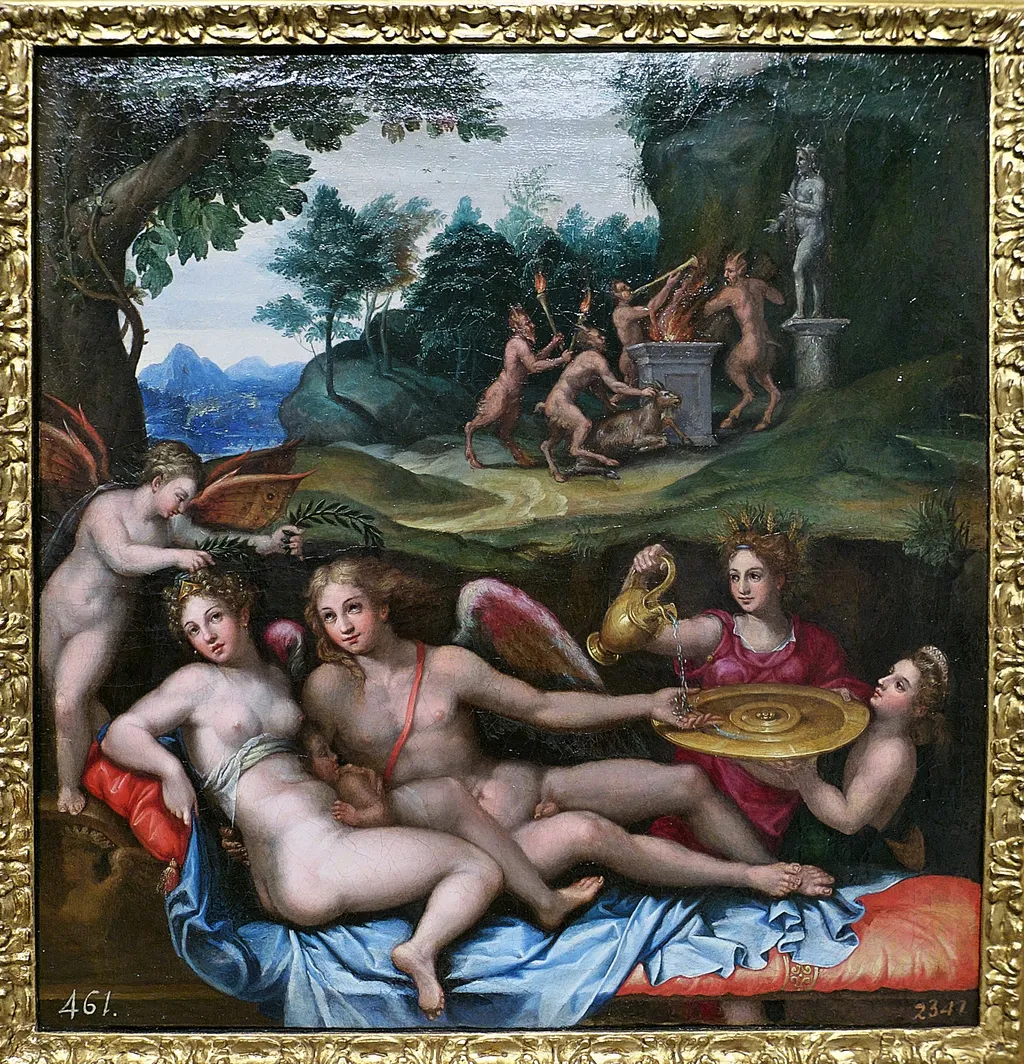
Psyche and Cupid is an oil painting by the Early Renaissance artist Perino del Vaga. It dates from 1501 and is held in the collection of the Museo del Prado.
About this work
Technique & Style
The use of naturalistic details, such as the inclusion of a natural trumpet, contributes to the narrative clarity and formal elegance of the scene.
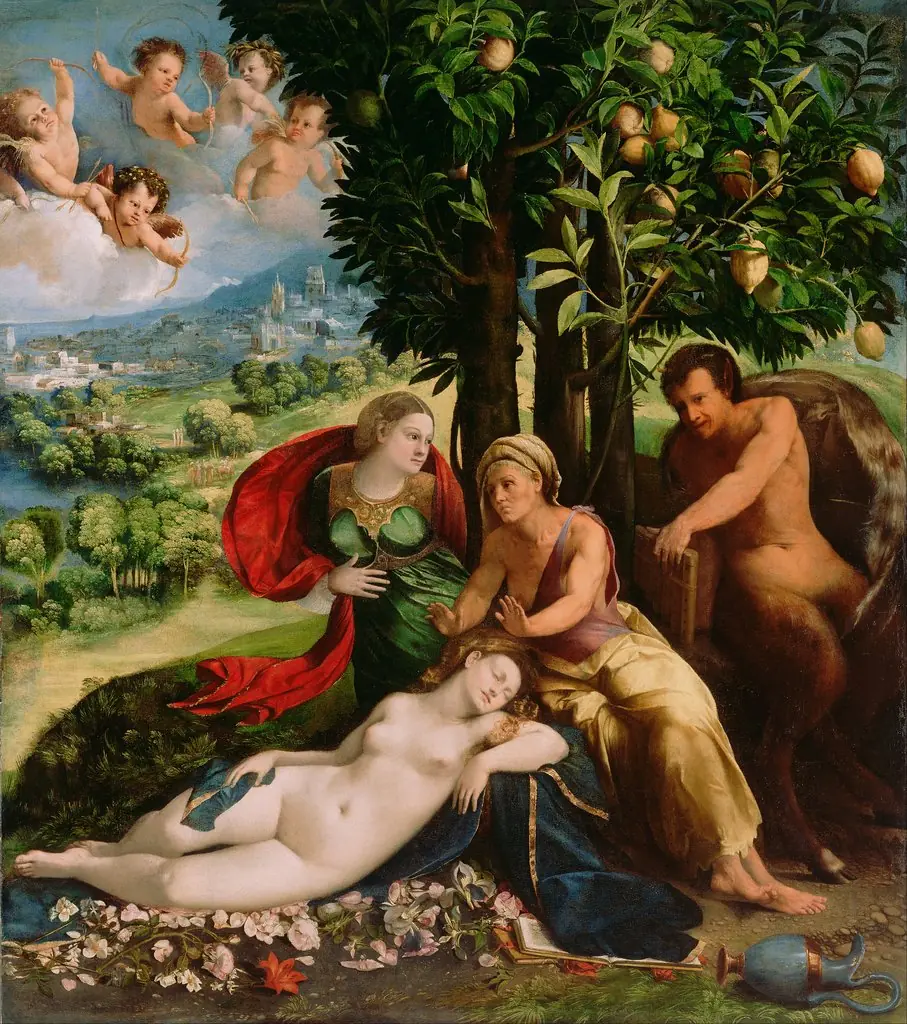
The painting Psyche and Cupid, executed by Perino del Vaga in 1501, is rendered in oil on canvas. The work measures 48 cm in height and 45 cm in width, reflecting the typical dimensions of early 16th-century mythological paintings. The composition demonstrates the graceful linearity and soft modeling characteristic of the Raphaelizing style, with delicate handling of drapery and a restrained palette that emphasizes the tender interaction between the figures.
The use of naturalistic details, such as the inclusion of a natural trumpet, contributes to the narrative clarity and formal elegance of the scene.
History & Provenance
The painting Psyche and Cupid was created by Perino del Vaga in 1501. It entered the Spanish royal collection through the patronage of the Bourbon monarchy, with documented ownership by Philip V of Spain, Charles III of Spain, and Ferdinand VII of Spain. The work is now held in the collection of the Museo del Prado in Madrid.
The painting is held in the Museo del Prado, Madrid. It entered the Prado’s collection through the Spanish royal holdings; it was previously owned by Charles III of Spain, Philip V of Spain, and Ferdinand VII of Spain. The work is inventoried as oil on canvas with dimensions of 48 cm in height and 45 cm in width.
The painting has been included in several exhibitions at the Museo del Prado, most notably in the 2002 exhibition Perino del Vaga y su círculo, where it was displayed as part of a focused presentation on the artist’s oeuvre.
Overview
Created in 1501 by the Italian painter Perino del Vaga, this oil work portrays a mythological episode involving Psyche and Cupid. Executed during the late phase of the Early Renaissance, the composition already hints at the elongated forms and sophisticated elegance that would later define Mannerism. The canvas is part of the Museo del Prado’s permanent collection in Madrid.
Subject & Meaning
The scene gathers several figures in a verdant setting, centering on three women seated on a cloth. One holds a golden tray, another pours from a jug, while surrounding winged beings and hybrid creatures play music and dance, suggesting a festive celebration linked to the love story of Psyche and Cupid in classical mythology.
Context
Perino del Vaga worked in the workshop of Raphael before establishing his own practice, absorbing the High Renaissance’s balanced compositions while experimenting with more expressive poses. This work reflects the broader cultural interest in classical myths during the Italian Renaissance, serving both decorative and allegorical purposes in elite patronage.
Own this work as a print
Artist & collection

Artist
Piero Bonaccorsi (1501 – October 19, 1547), known as Perino (or Perin) del Vaga, was an Italian painter and draughtsman of the Late Renaissance/Mannerism.

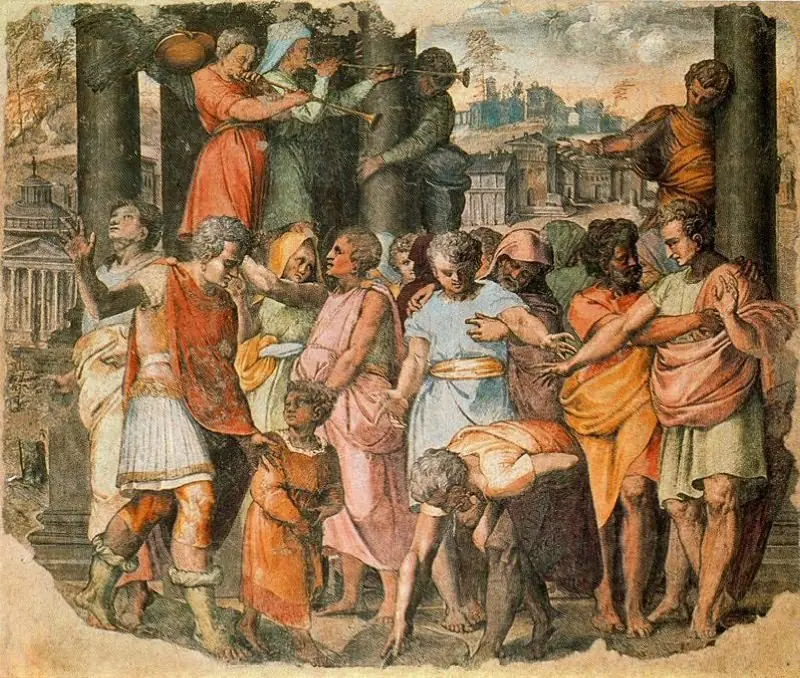
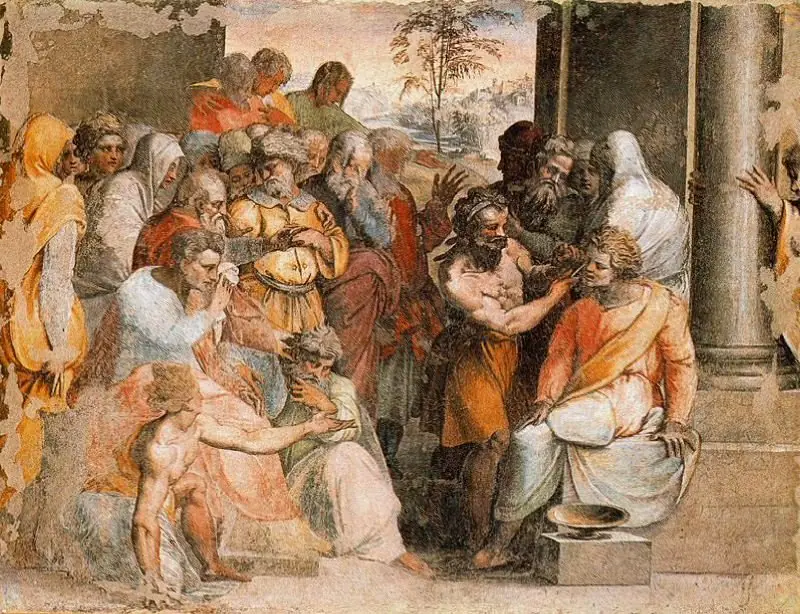
- Allegory of Abundance and the Four Elements
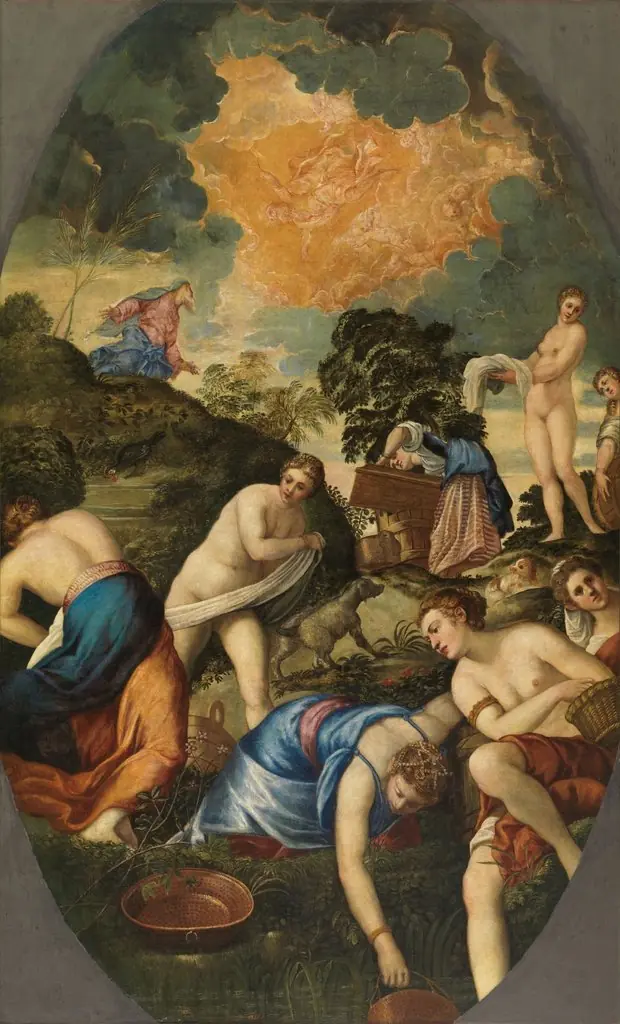 The Purification of the Midianite Virgins
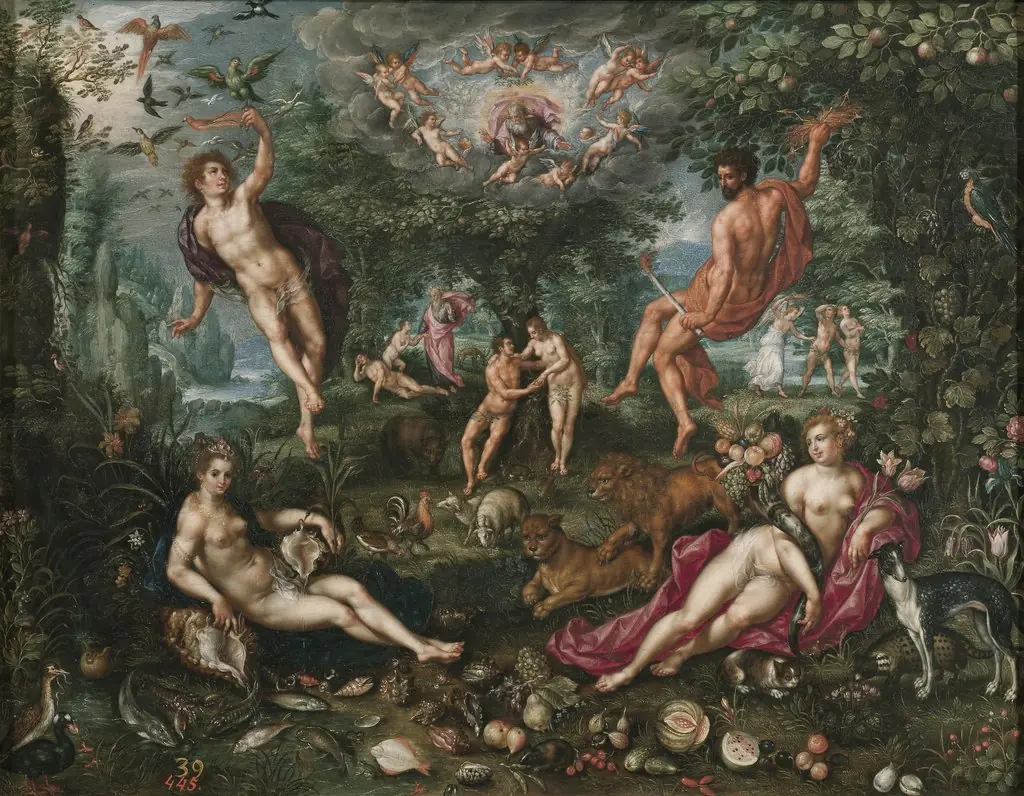 Paradise with the Four Elements
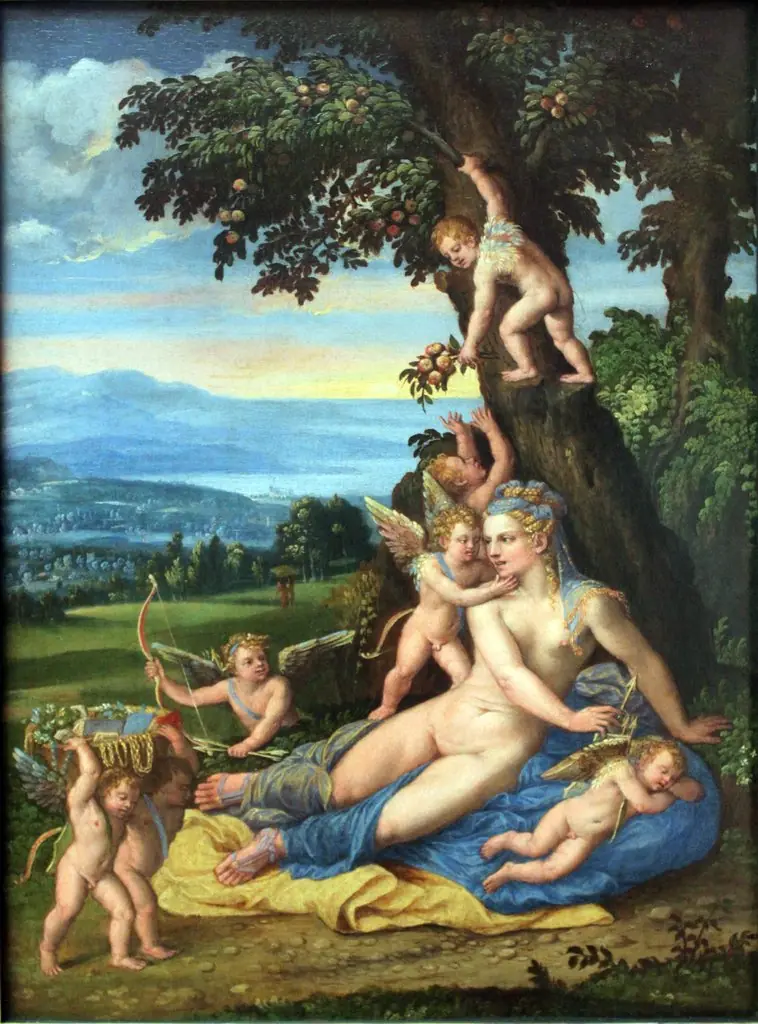 Venus und Amoretten
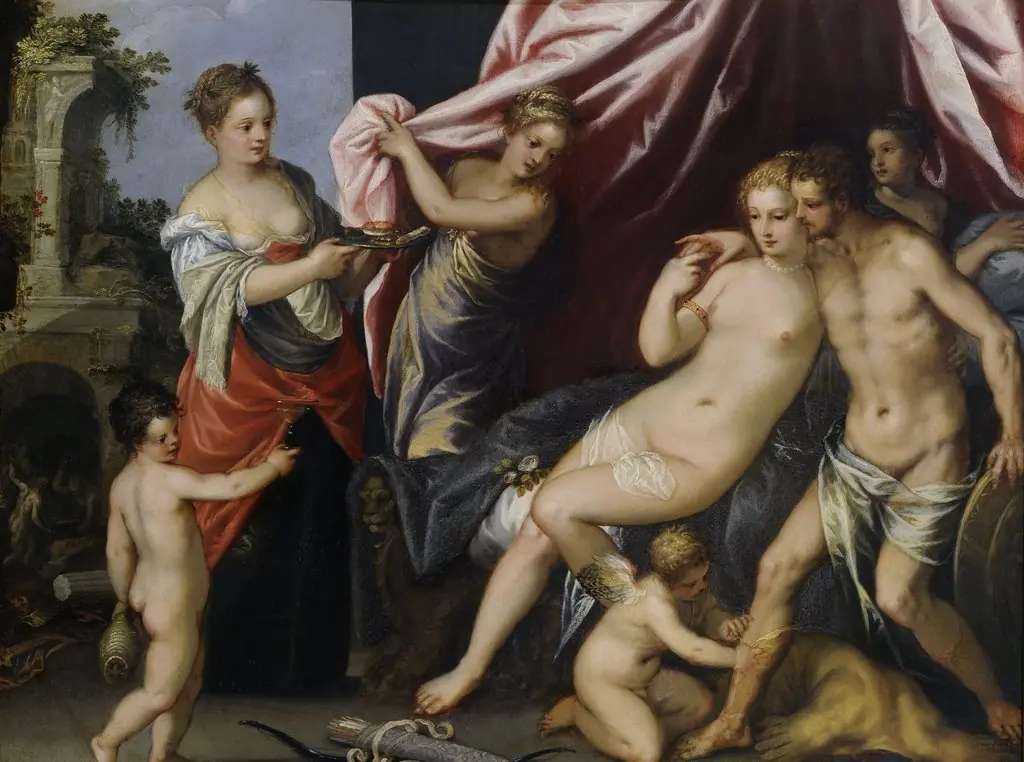 Venus and Mars
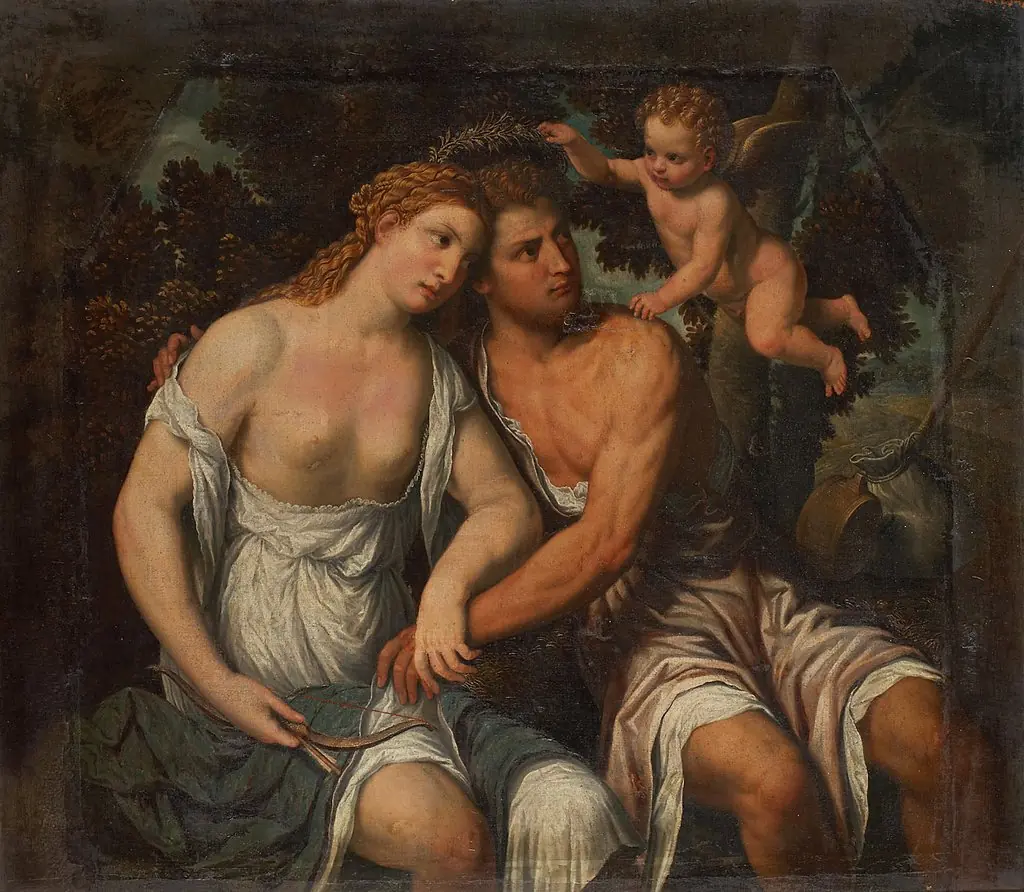 Venus and Adonis
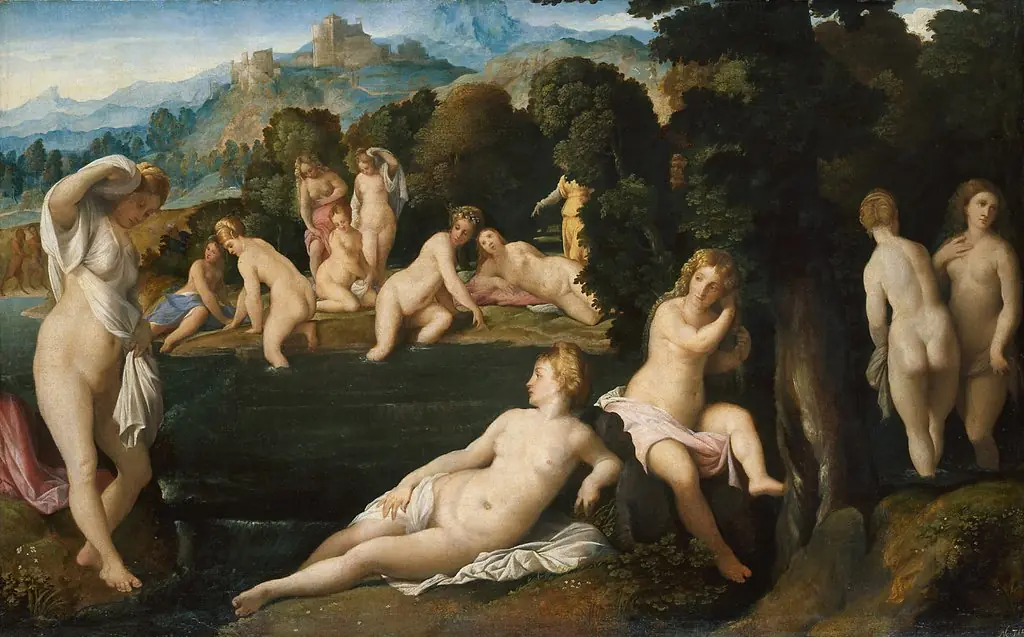 Bathing Nymphs
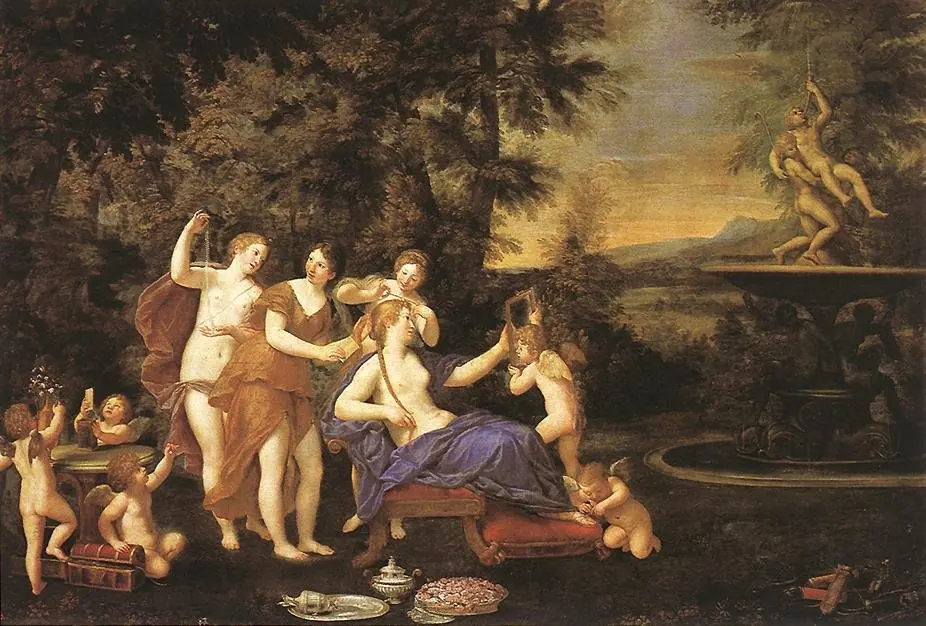 The toilet of Venus
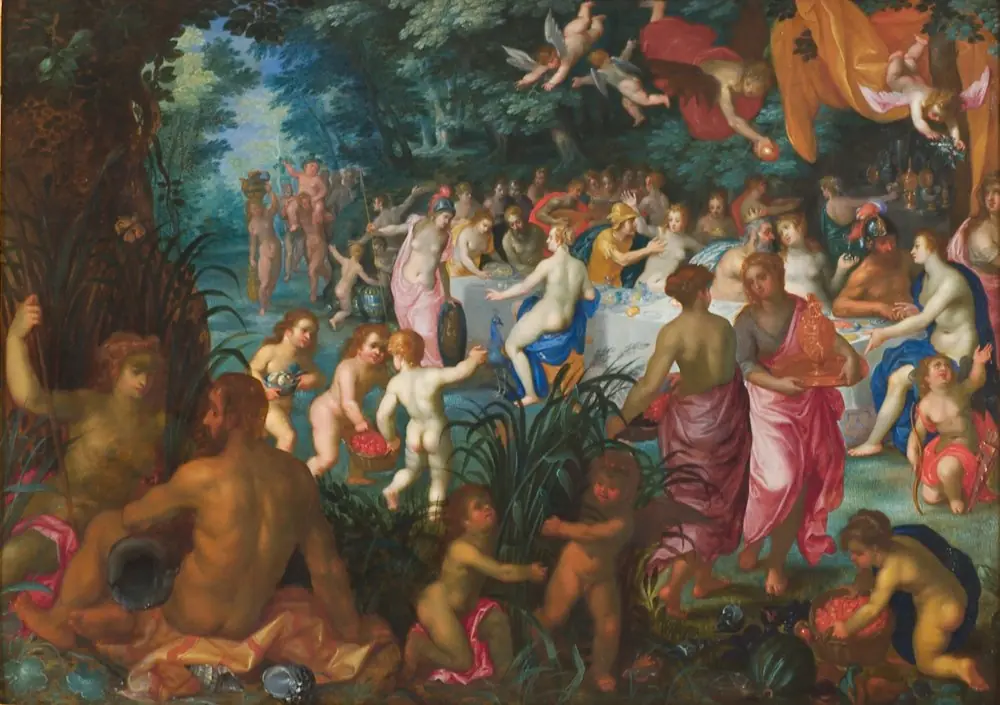 The Marriage of Peleus and Thetis
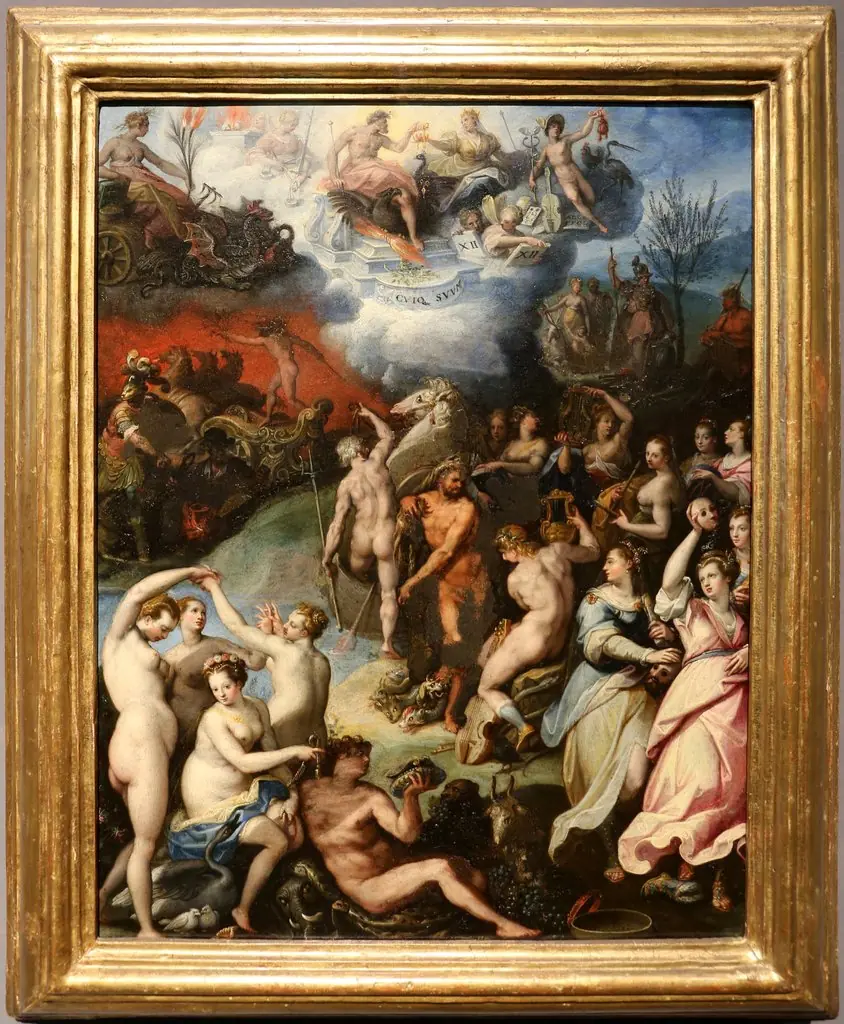 Hercules Musagetes and the gods of Olympus
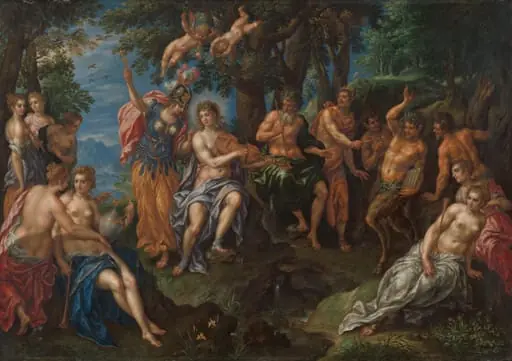 The Contest between Apollo and Pan
 Mythological Scene