Artwork
Saint Matthew and the Angel
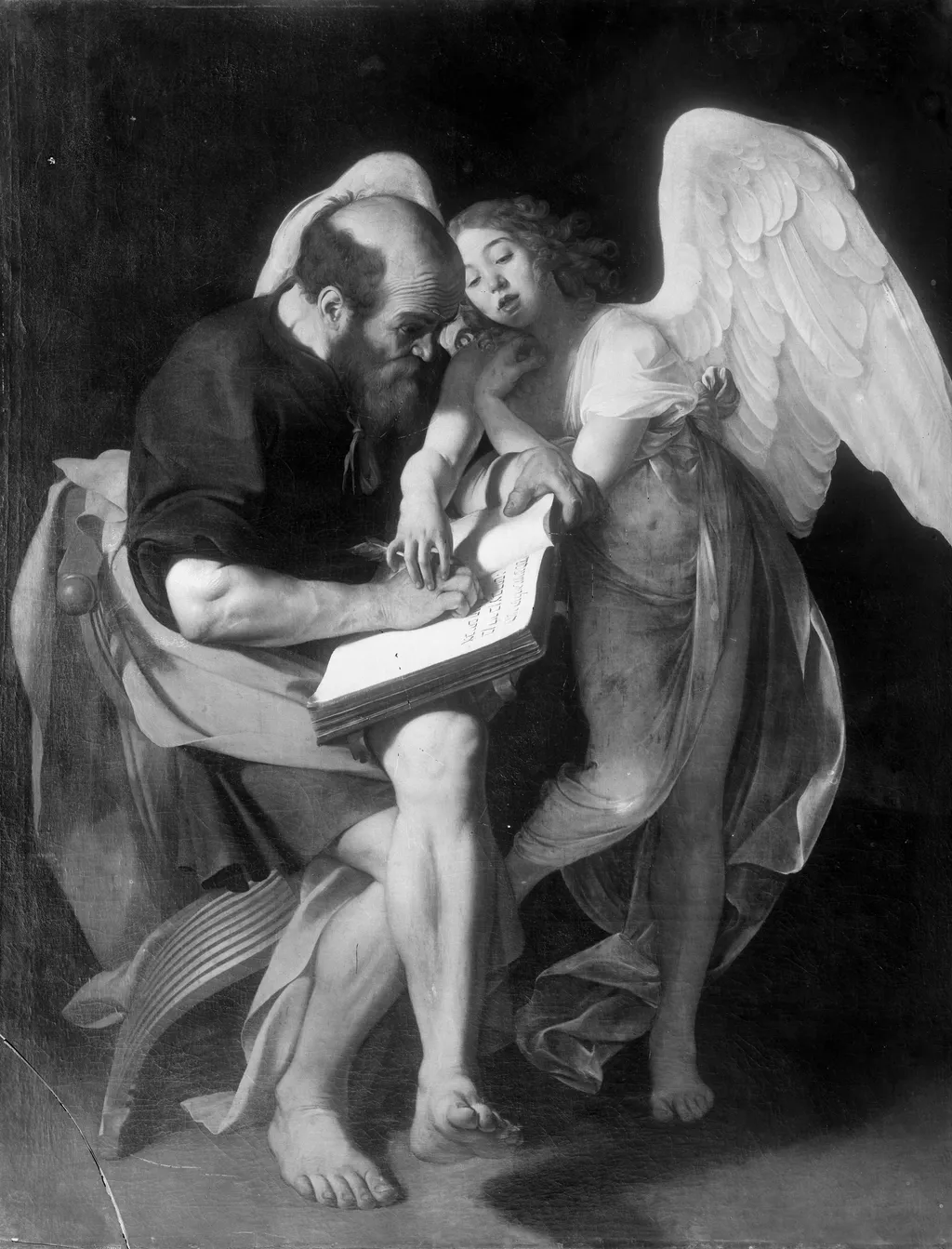
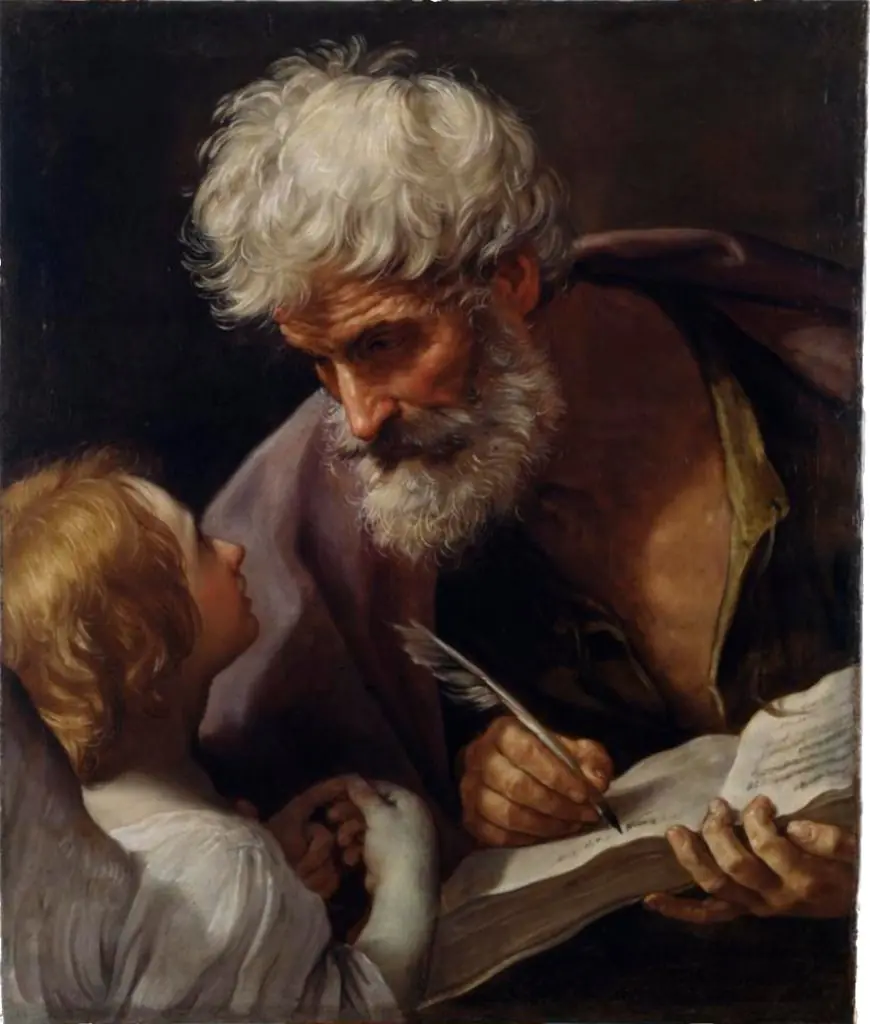
Saint Matthew and the Angel is an oil painting by the Baroque artist Caravaggio. It dates from 1602 and is held in the collection of the Gemäldegalerie Berlin.
About this work
Subject & Meaning
The subject carries symbolic weight about grace elevating the lowly, yet contemporaries found the crude peasant figure unsuitable for a sacred altarpiece.
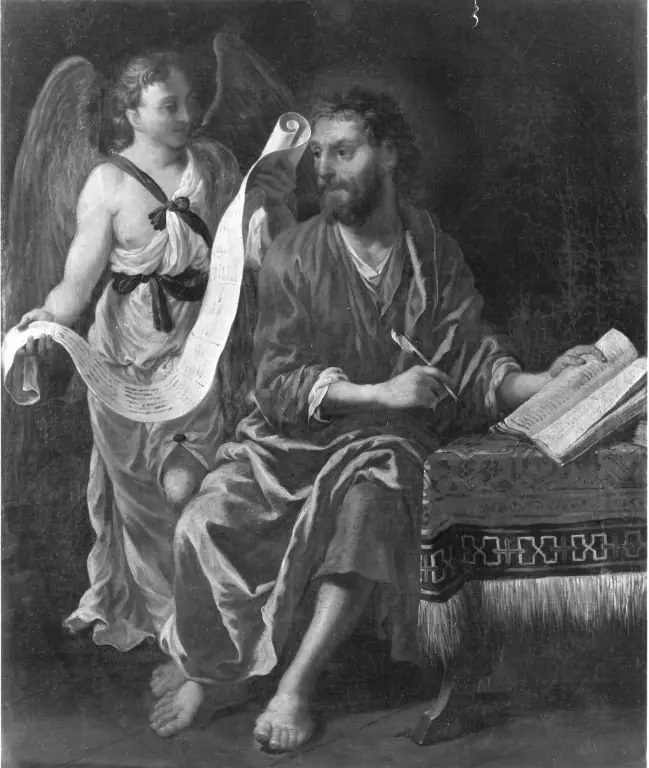
The painting depicts Matthew the Apostle in the act of writing his Gospel, guided by an angel. Caravaggio rendered the saint as an unlearned peasant, poorly groomed, with dirty feet, gaping in awe at the divine presence rather than composing text with scholarly confidence. This naturalistic, anti-idealized approach emphasized Matthew's humble origins and the miraculous nature of his inspiration.
Iconographically, the work represents the moment of sacred authorship: the angel sweeps down while Matthew's stool teeters, creating dynamic movement that signals divine intervention into human affairs. The subject carries symbolic weight about grace elevating the lowly, yet contemporaries found the crude peasant figure unsuitable for a sacred altarpiece. The composition was meant to inspire moral aspiration through the saint's example, though its raw realism proved too confrontational for its intended ecclesiastical setting.
Technique & Style
Executed in oil on canvas in 1602, Saint Matthew and the Angel measured 232 cm in height by 183 cm in width. The handling is consistent with Caravaggio’s naturalistic approach, depicting the apostle as an unidealized peasant with soiled feet and a gaping expression, actions and drapery caught in a moment of abrupt movement as the descending angel jolts the scene. The composition’s dynamism, heightened by the tilting stool and the angel’s sweeping gesture, marks an early instance of the artist’s Baroque dynamism.
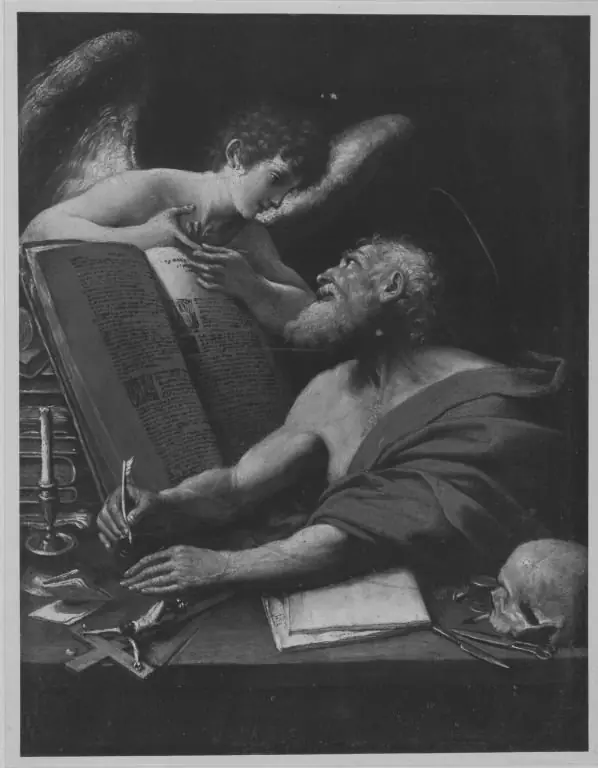
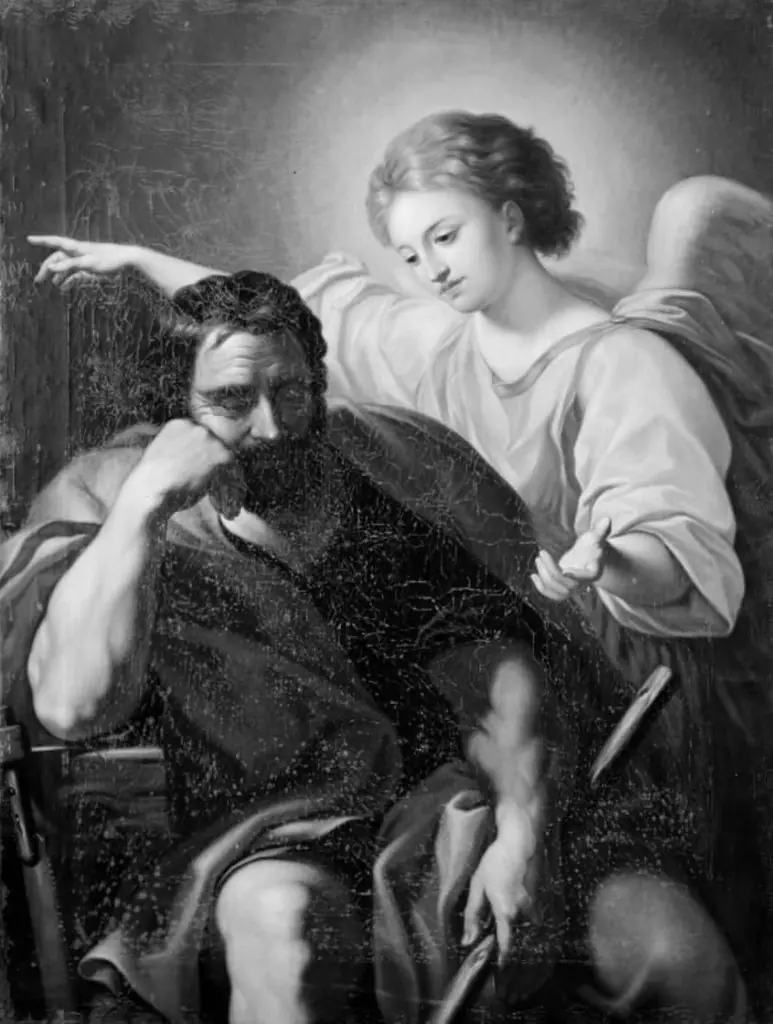
Black-and-white photographs taken before 1945 document the work’s muted palette and strong chiaroscuro, though the original was destroyed in Berlin in 1945 and survives only through these records.
History & Provenance
Saint Matthew and the Angel was painted in 1602 by Caravaggio as a commission for the Contarelli Chapel in the church of San Luigi dei Francesi in Rome. Cardinal Del Monte facilitated the artist's engagement to complete the chapel's decoration, following the success of two earlier scenes depicting the saint's life. The initial work depicted the saint as a humble, unlearned peasant with dirty feet, a realistic portrayal that was rejected by the patrons for appearing too crude and disconnected from the other altar pieces.
Consequently, Caravaggio produced a second, more idealized version, titled The Inspiration of Saint Matthew, which remains in the chapel today. The rejected first version was acquired by the Giustiniani family and later entered the collection of the Kaiser Friedrich Museum in Berlin. During World War II, the painting was moved to the Friedrichshain flak tower for protection but was destroyed by fire in 1945, leaving only black-and-white photographs as evidence of its existence.
The painting was held in Berlin’s Kaiser-Friedrich-Museum (now the Bode Museum) under inventory number 1602, having entered the Prussian royal collection before 1830. It was destroyed in 1945 during Allied bombing of the Flakturm Friedrichshain, where Berlin museum holdings had been stored for safety. The work had previously been displayed in the Contarelli Chapel, San Luigi dei Francesi, Rome, from 1602 until its transfer to Germany in the nineteenth century. Reproductions based on pre-war photographs remain the only visual record.
Context
Completed in 1602 for the Contarelli Chapel, this work exemplifies Caravaggio's dynamic Baroque style, characterized by realistic modeling and dramatic movement rather than conventional idealization. The composition, featuring a teetering saint and a sweeping angel, represented a more exciting approach than the artist's initial submission. However, the depiction of Matthew as an unlearned peasant with dirty feet was deemed too crude by church patrons, who felt it lacked harmony with the chapel's existing altarpieces and failed to provide a moral exemplar for viewers.
Scholarship has re-evaluated the work's rejection; while traditional accounts by Giovanni Pietro Bellori attributed the removal to irreverence, modern historians like Luigi Spezzaferro and Stefano Zuffi argue the first version was a provisional piece intended for temporary display. This theory suggests the replacement with the more glorifying second version was a pre-arranged substitution rather than a scandalous refusal. The painting's destruction in Berlin during 1945 represents a significant loss to art history, as the original would have offered further insight into the artist's evolving relationship with his patrons.
Legacy
The lost work shaped Baroque conceptions of sacred narrative, influencing later depictions of Matthew and the angel through its dramatic gesture and naturalistic detail. Contemporary accounts noted its radical realism, which prompted debates about decorum in religious art. After its destruction in 1945, the image survived only in black‑and‑white photographs, which became key references for scholars examining Caravaggio's early use of movement and chiaroscuro.
The episode also illustrated the tension between patron expectations and the artist's innovative visual language, a tension that resonated in subsequent commissions for the Contarelli Chapel.
Overview
Caravaggio’s 1602 work Saint Matthew and the Angel was created for the Contarelli Chapel in Rome’s San Luigi dei Francesi. The composition presents the evangelist in a moment of study, assisted by an angelic figure. The painting was lost during the 1945 bombing of Berlin and survives only through monochrome photographs and later colour reconstructions.
Own this work as a print
Artist & collection
Artist
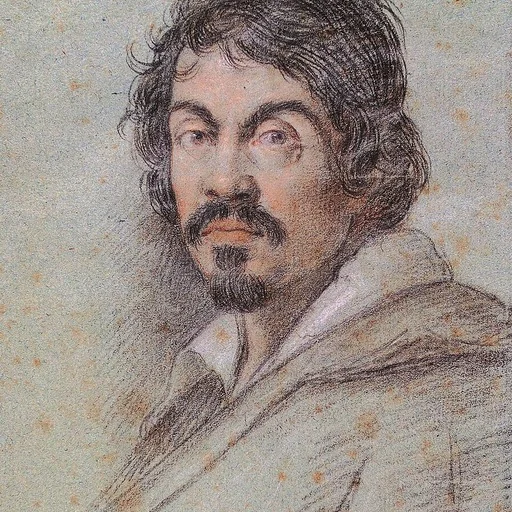
Michelangelo Merisi da Caravaggio (also Michele Angelo Merigi or Amerighi da Caravaggio; 29 September 1571 – 18 July 1610), known mononymously as Caravaggio, was an Italian painter active in Rome for most of his artistic life.