Artwork
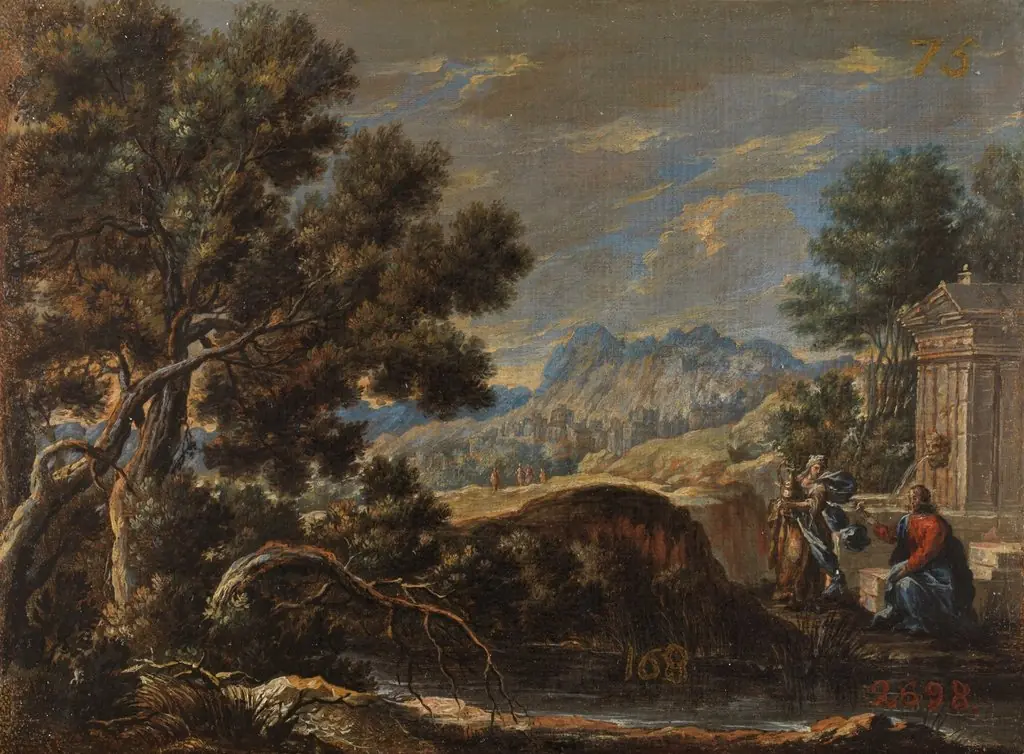
Nymphs in a cave with antique ruins
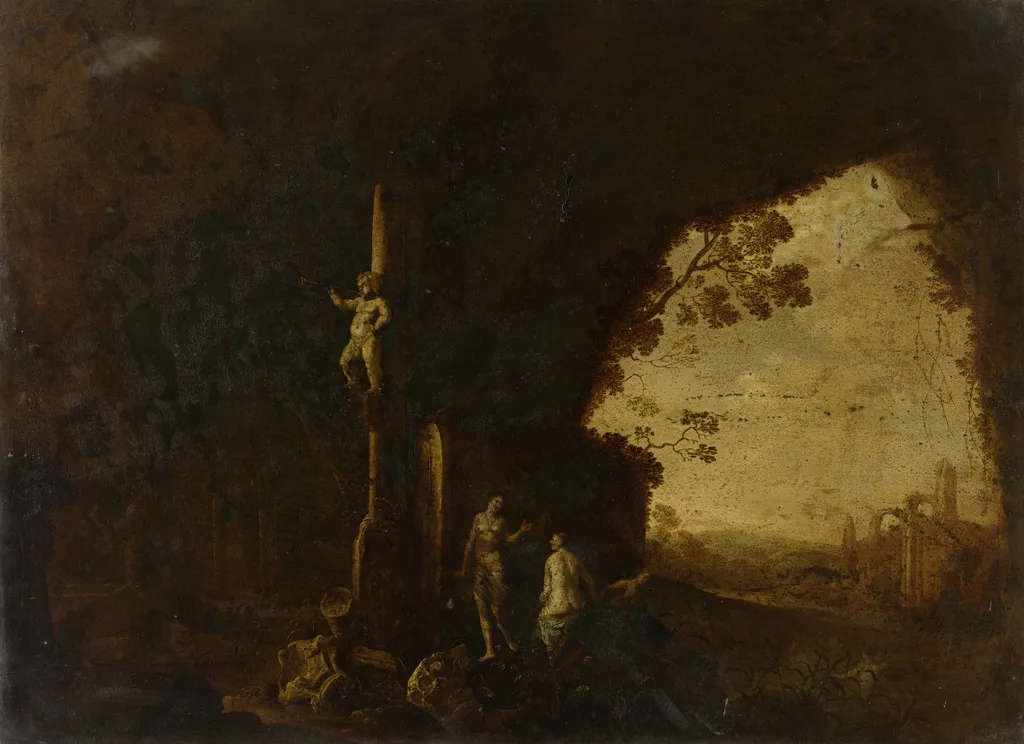
Nymphs in a cave with antique ruins is an oil painting by the Flemish Baroque painting artist Petrus van Hattich. It dates from 1640 and is held in the collection of the Rijksmuseum.
About this work
Technique & Style
No specific information regarding the painting's current condition or conservation history is available in the consulted sources.
Petrus van Hattich's Nymphs in a cave with antique ruins is executed in oil paint on a copper support, a technique favored in seventeenth-century Dutch cabinet painting for its smooth, enamel-like surface that permits meticulous detail and luminous color. The copper panel, measuring 42 cm in height by 58 cm in width, provides a rigid, non-absorbent ground that allows the artist to build up thin, translucent layers of pigment with fine precision, enhancing the interplay of light within the cave setting and the rendering of the antique ruins. The medium and support combination is consistent with Petrus van Hattich's landscape practice, producing the polished finish and refined tonal handling characteristic of small-scale Dutch cabinet pictures of the period.
No specific information regarding the painting's current condition or conservation history is available in the consulted sources.
History & Provenance
The painting Nymphs in a cave with antique ruins was created in 1640 by the artist Petrus van Hattich. Executed in oil paint on a copper support, the work measures 42 cm in height and 58 cm in width. The piece is currently held in the collection of the Rijksmuseum in Amsterdam.
No specific details regarding the original commission, earlier ownership history, or the chain of custody prior to its arrival at the museum are provided in the available records. The documented history confirms its inception date and current institutional location.
Nymphs in a cave with antique ruins is held by the Rijksmuseum in Amsterdam, where it is listed under the inventory number SK-A-2553. The work was exhibited in the Rijksmuseum exhibition 'Dutch and Flemish Paintings from the 17th Century' in 1985.
Context
Petrus van Hattich's 1640 painting Nymphs in a cave with antique ruins exemplifies Dutch Golden Age landscape art, blending mythological subject matter with classical architectural fragments. The work reflects the period's scholarly interest in antiquarianism and natural philosophy, situating the artist within a network of creators documenting historical artifacts while advancing compositional innovations in landscape painting. Its dual emphasis on antiquarian detail and poetic naturalism resonates with broader artistic discourses of the 1640s, particularly the integration of archaeological observation with imaginative landscape construction.
Overview
Petrus van Hattich’s 1640 work titled Nymphs in a Cave with Antique Ruins is a copper painting in the collection of the Rijksmuseum. The composition presents a nocturnal forest setting dominated by a luminous cave opening, around which several figures are arranged, creating a scene that balances natural landscape with classical ruin motifs.
Subject & Meaning
The picture depicts a solitary nude figure suspended from a tree branch, arms outstretched, while two clothed individuals stand amid fragmented stonework, one gesturing upward. The juxtaposition of mythological nymphs with decaying antiquities suggests a dialogue between the timelessness of nature and the remnants of human civilization, inviting contemplation of transience and renewal.
Own this work as a print
Artist & collection

- Landscape
 Forest Landscape with the Murder of Argus and Mercury
 Landscape with figures at the lakeside
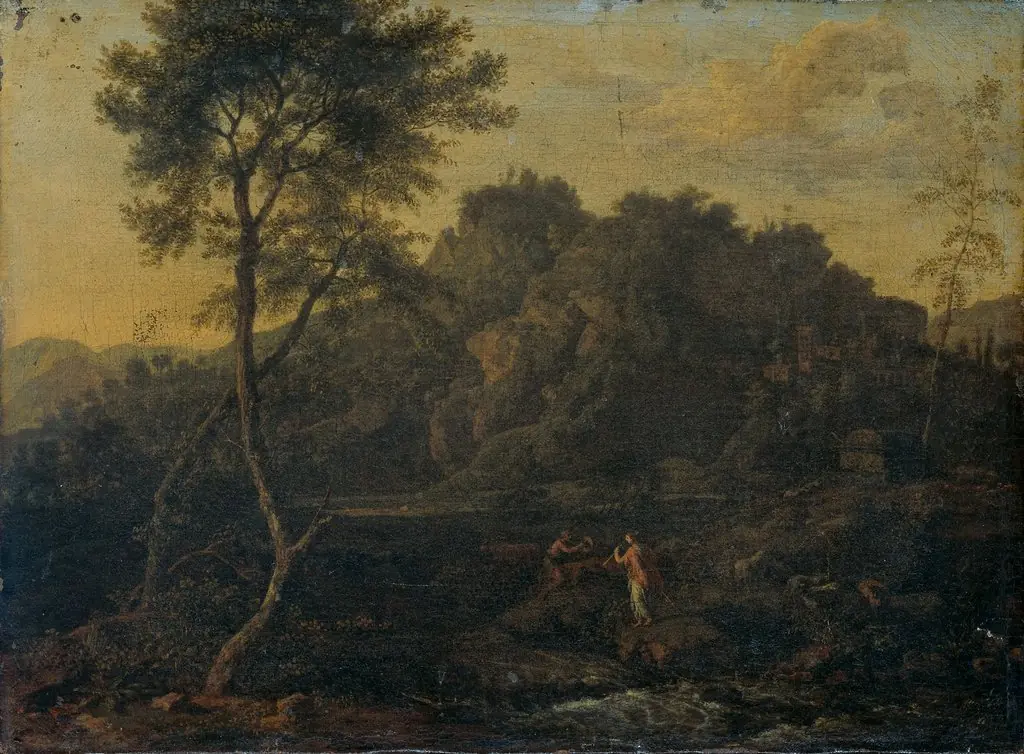 Landscape with Diana and Calliope
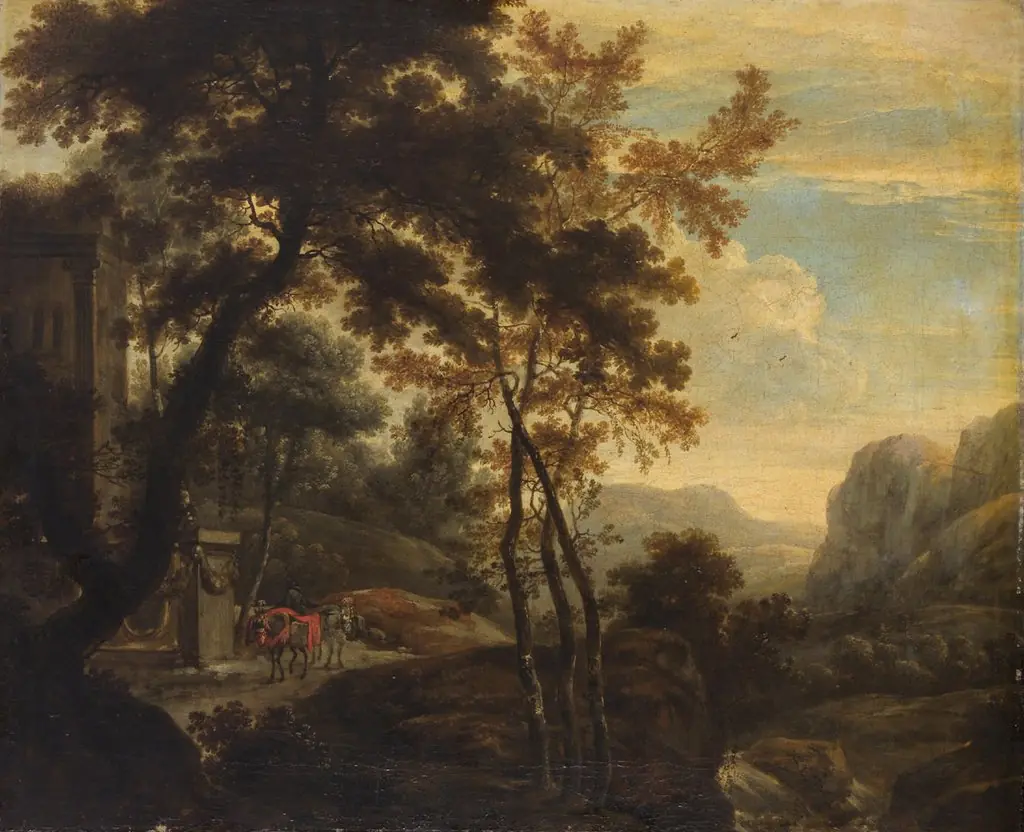 Mountainous landscape
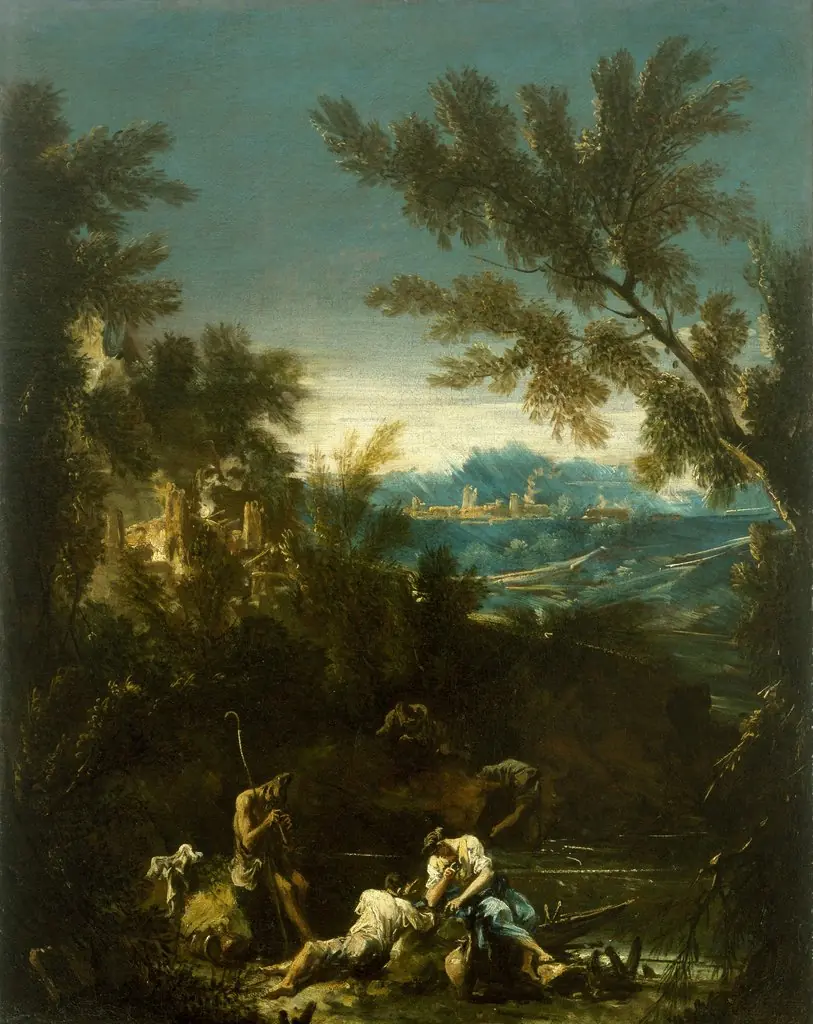 Landscape with Figures
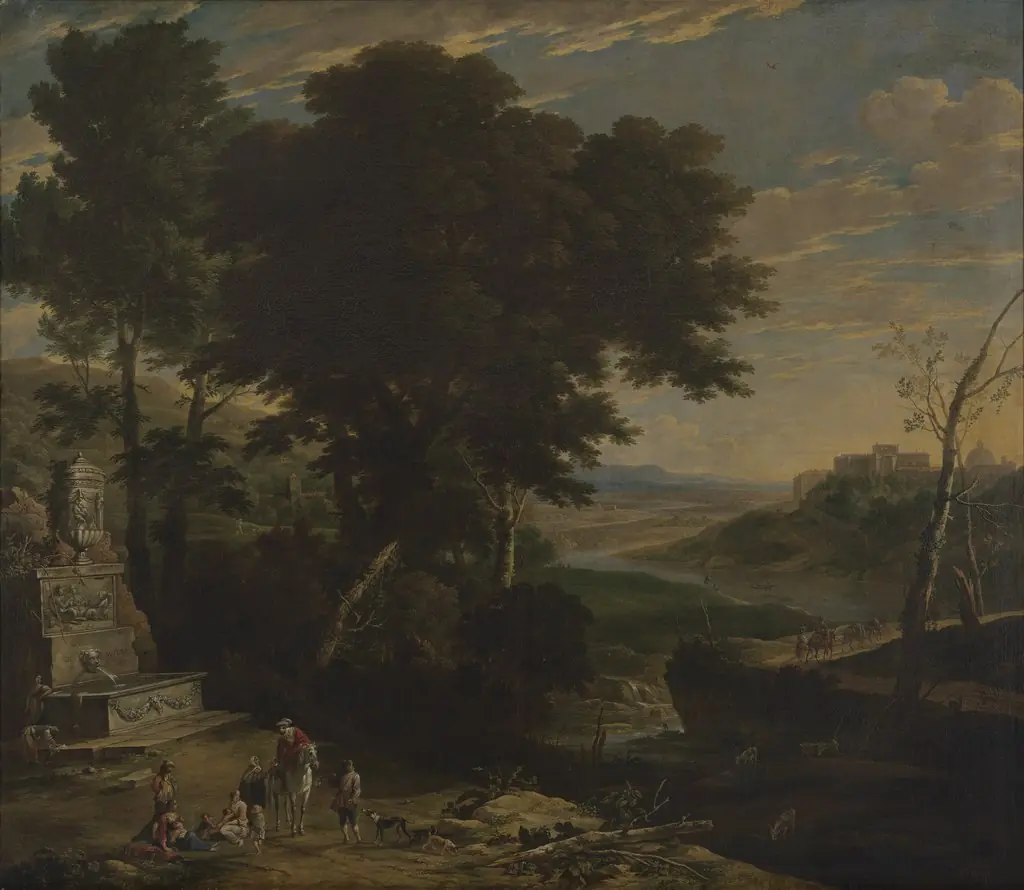 The Fortune-Teller
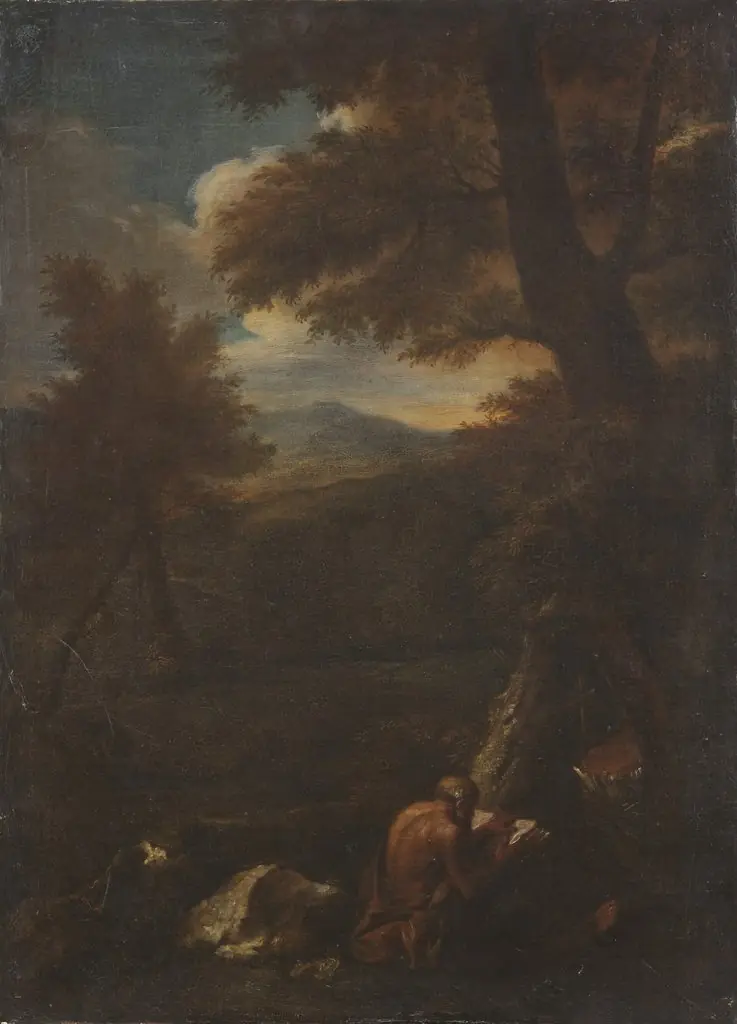 St Jerome in the Wilderness
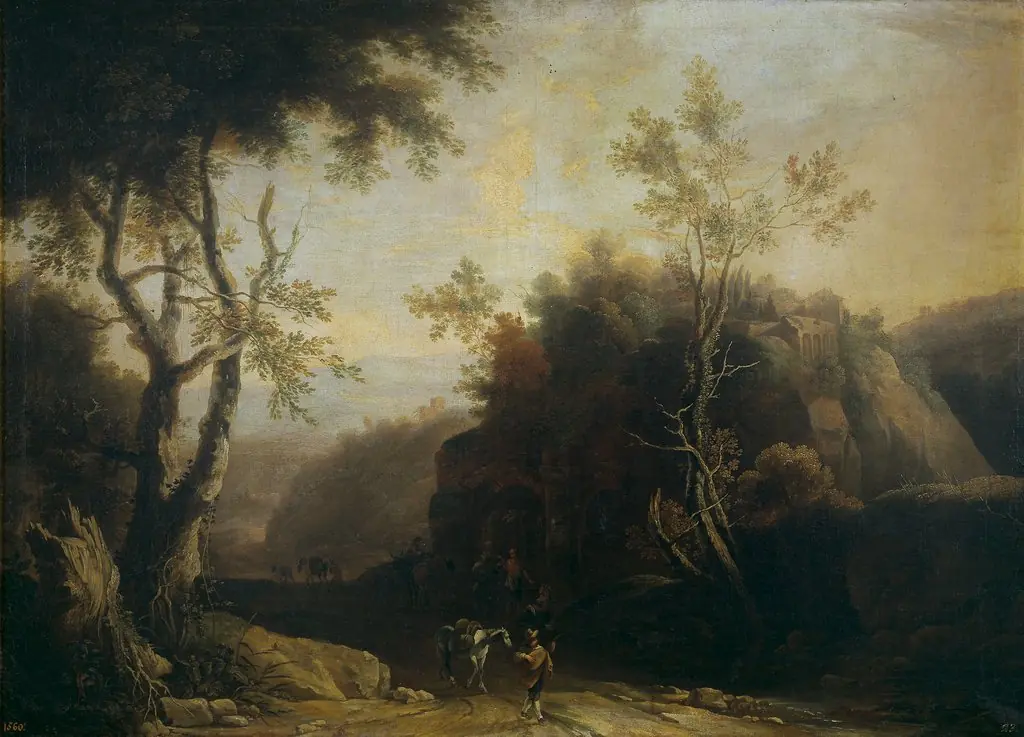 Landscape with tavern and Roman aqueduct
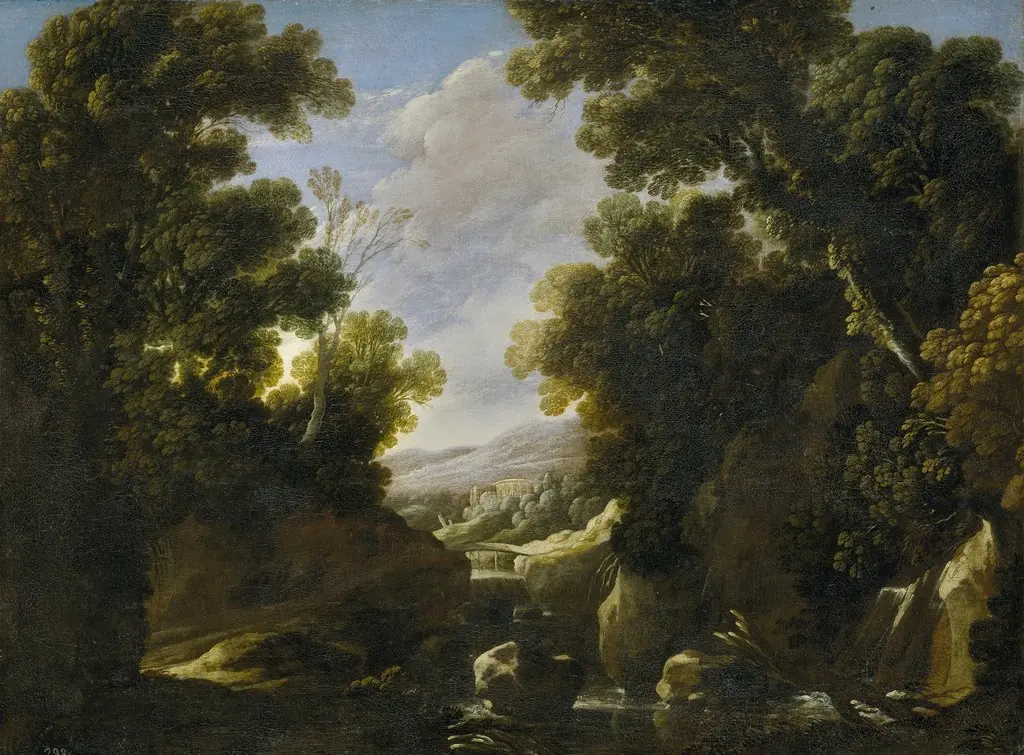 Paisaje frondoso
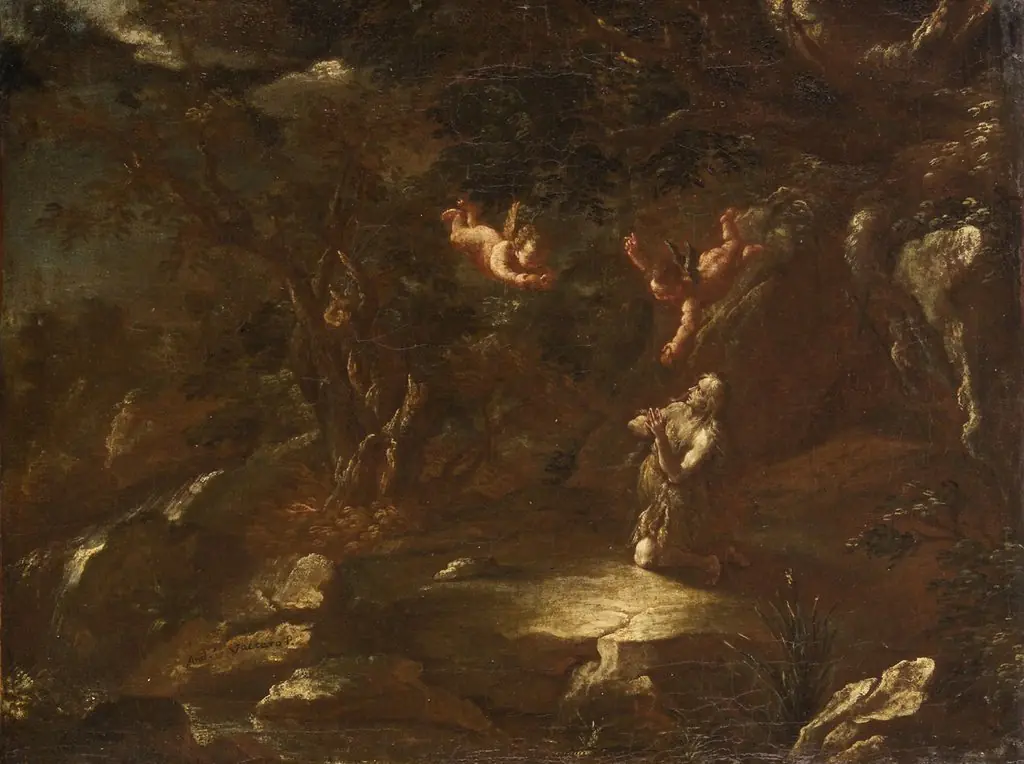 Hl. Maria Aegyptiaca
 Cristo y la samaritana en un paisaje