Artwork
Karawane am Brunnen
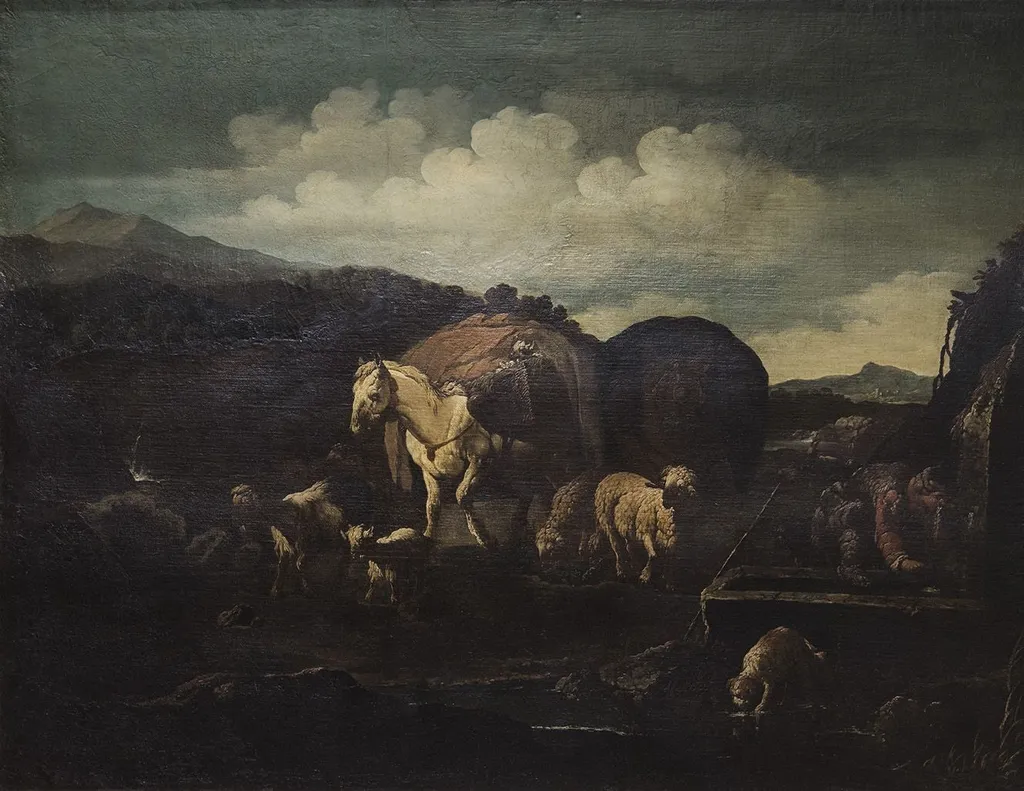
Karawane am Brunnen is an unspecified painting by the Flemish Baroque painting artist Philipp Peter Roos. It dates from 1691 and is held in the collection of the Bavarian State Painting Collections.
About this work
Overview
The composition reflects his engagement with the natural world and the quiet rhythms of travel and rest in the countryside.
Painted in 1691 by Philipp Peter Roos, a German artist who spent most of his career in Italy, Karawane am Brunnen is a landscape scene centered on a group of animals and travelers at a fountain. Roos, who adopted the name Rosa di Tivoli, focused on rural and pastoral subjects influenced by Italian surroundings. The composition reflects his engagement with the natural world and the quiet rhythms of travel and rest in the countryside.
Subject & Meaning
The painting portrays a caravan paused at a watering place, with a white horse as the focal point surrounded by sheep and figures. The scene suggests a moment of respite during a journey, evoking themes of transit and sustenance. No overt narrative or religious symbolism is present; instead, the work emphasizes the quiet dignity of everyday rural life, grounded in observation rather than allegory.
Technique & Style
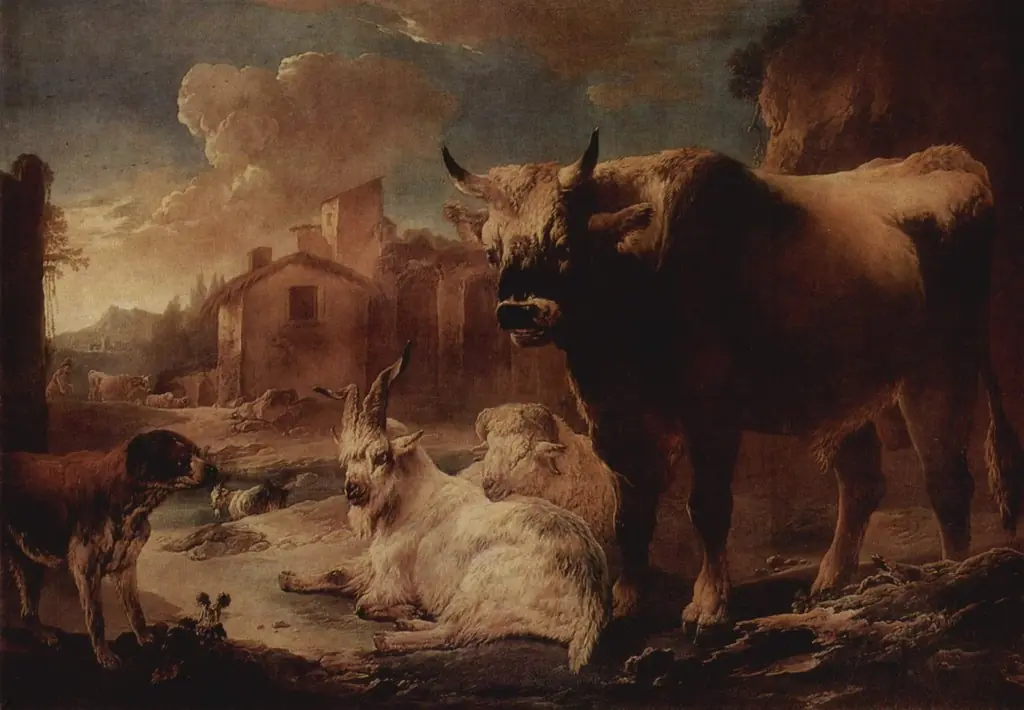
Roos employs chiaroscuro to model forms with subtle gradations of light and shadow, enhancing the volume of the horse’s coat and the wool of the sheep. Brushwork is precise yet fluid, capturing the texture of fur and fleece without excessive detail. The background features a dark, looming mass that anchors the composition, while the cloud-filled sky provides atmospheric depth, typical of Italianate landscape traditions of the period.
History & Provenance
Created during Roos’s time in Italy, where he settled after 1677, the painting reflects his established reputation for animal and pastoral scenes. While specific early ownership records are sparse, the work aligns with the tastes of collectors who favored Italian-inspired genre subjects in the late 17th century. Its survival into modern collections underscores its endurance as a representative example of his output.
Context
In late 17th-century Italy, German and Northern artists often adapted local landscape conventions to suit their own sensibilities. Roos’s work fits within a broader trend of Northern Europeans depicting Italian countryside life with attention to naturalism. His focus on animals and water sources resonated with contemporary interests in pastoral harmony and the observation of nature, distinct from grand historical or mythological themes.
Legacy
Roos’s Karawane am Brunnen remains a quiet testament to his skill in rendering animal life and atmospheric landscape. Though not widely known outside specialist circles, his approach influenced later artists interested in naturalistic rural scenes. The painting exemplifies how Northern European training merged with Italian visual culture to produce a distinctive, understated genre of Baroque art.
Artist & collection
Artist
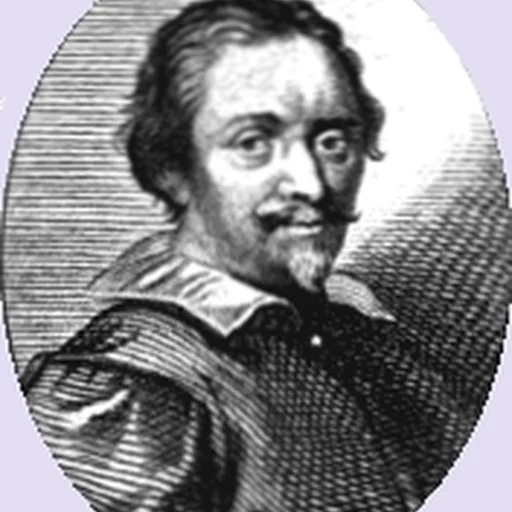
Philipp Peter Roos (later surnamed Rosa di Tivoli; 1655–1706) was a German Baroque painter, active in and near Rome from 1677 onward.

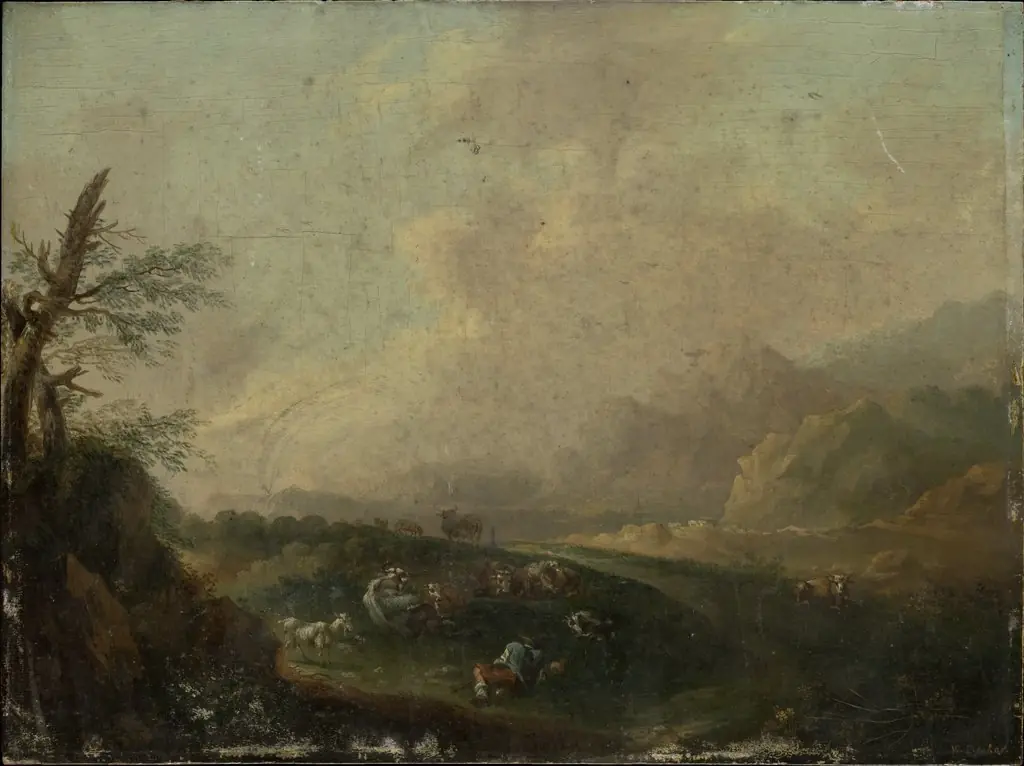
- Landscape with Resting Shepherd
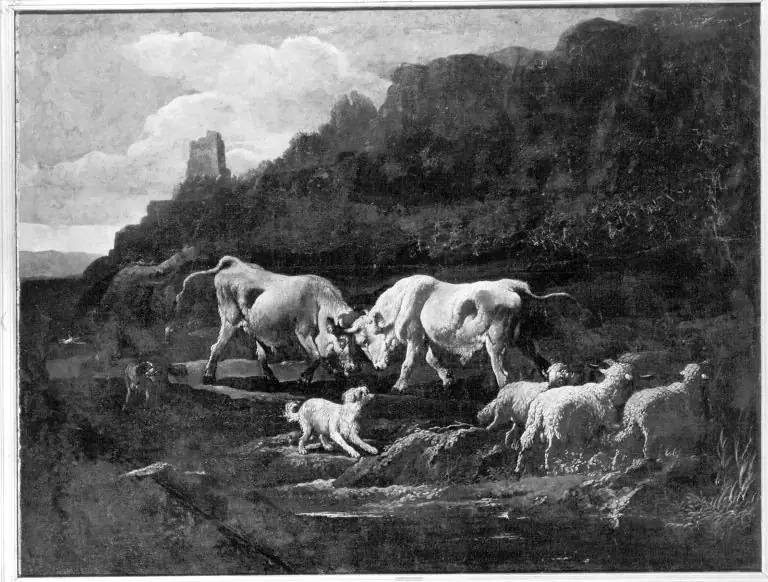
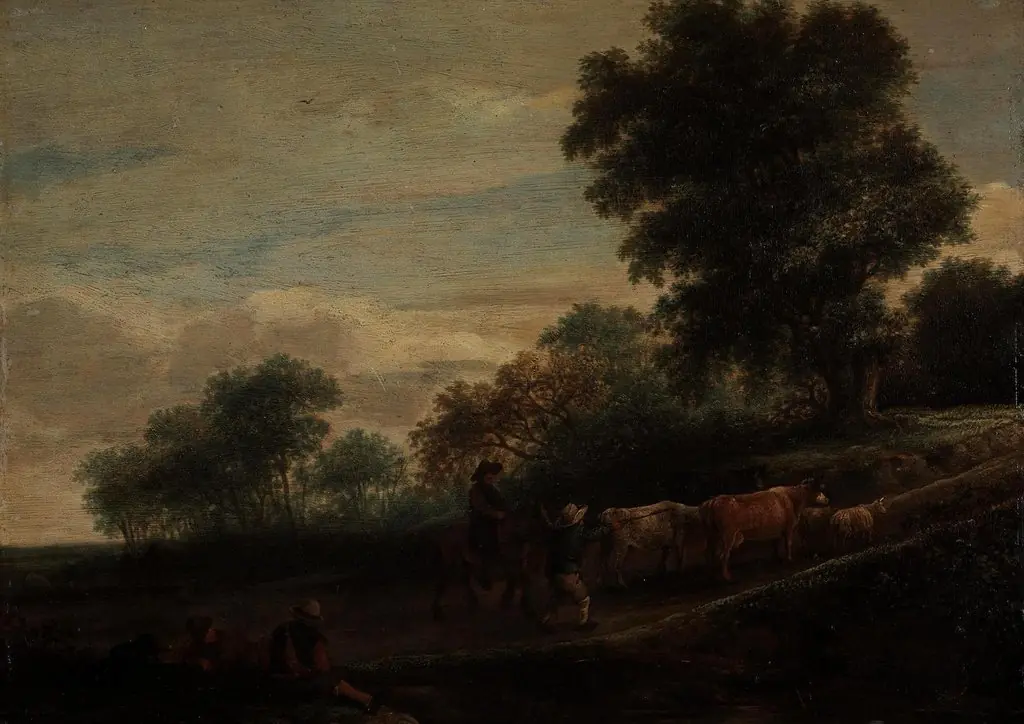 Landscape with Shepherds and Cattle
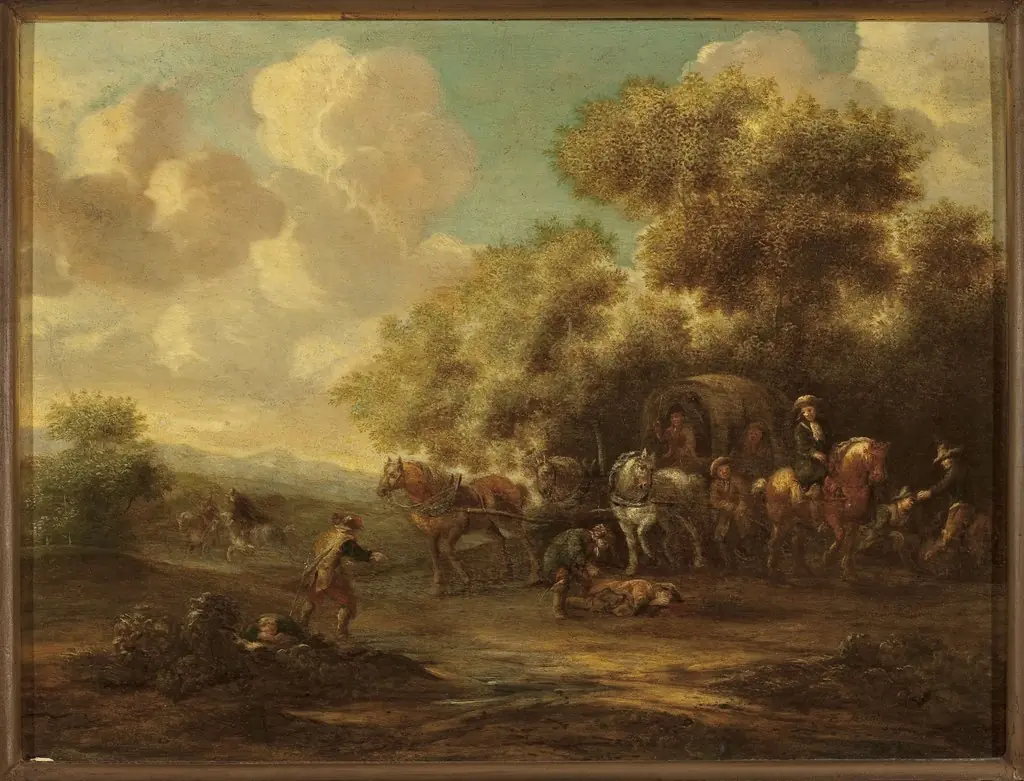 Assault on travellers
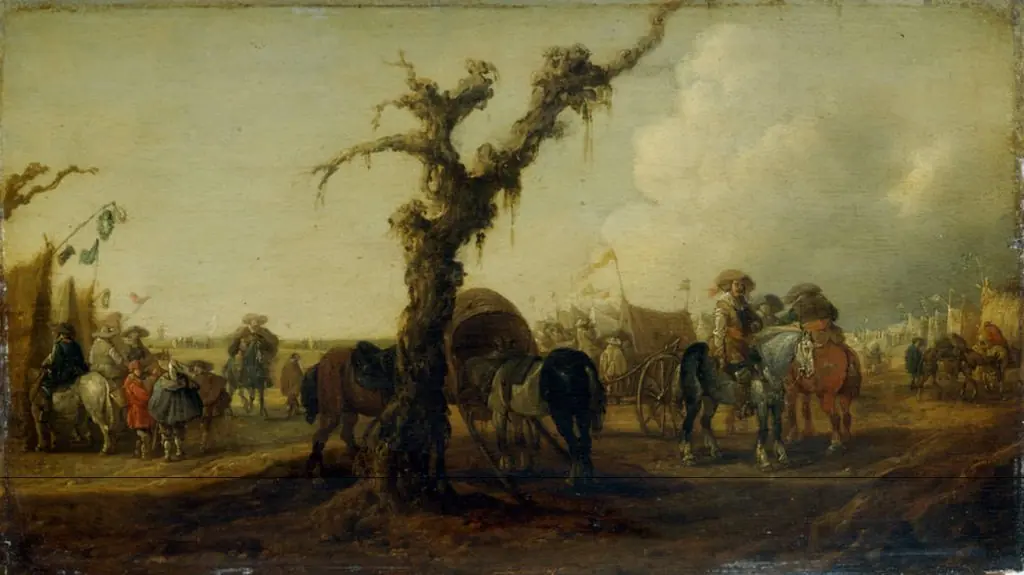 Military camp
 Peisaj cu păstori și țărănci ; pandant: Peisaj cu vite
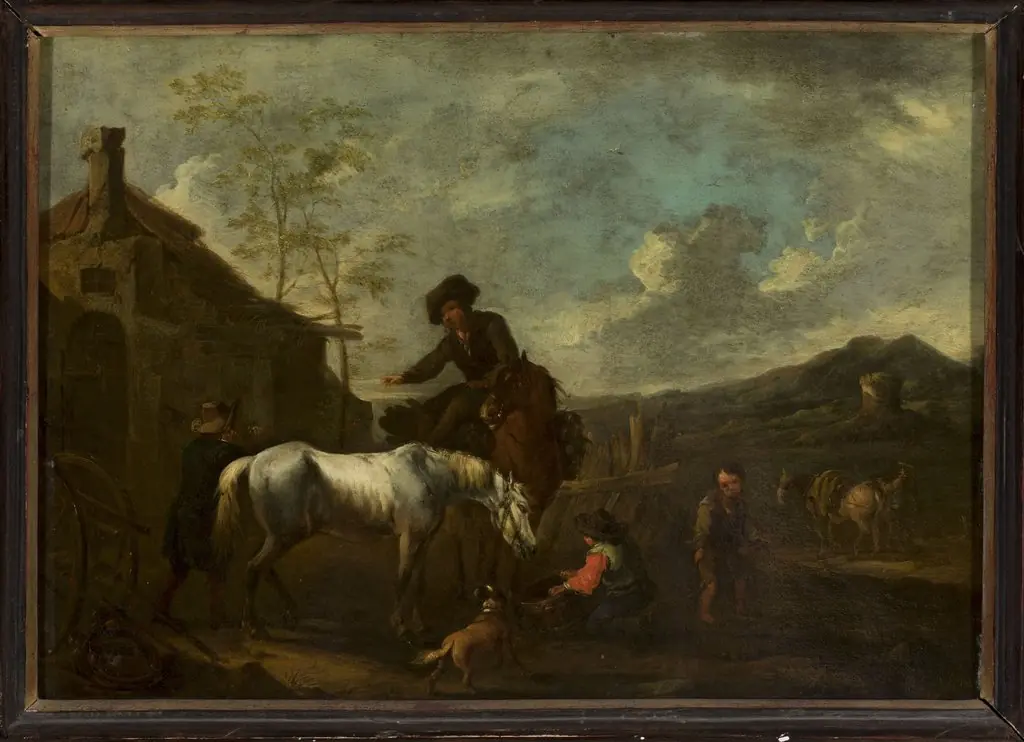 Watering the horses
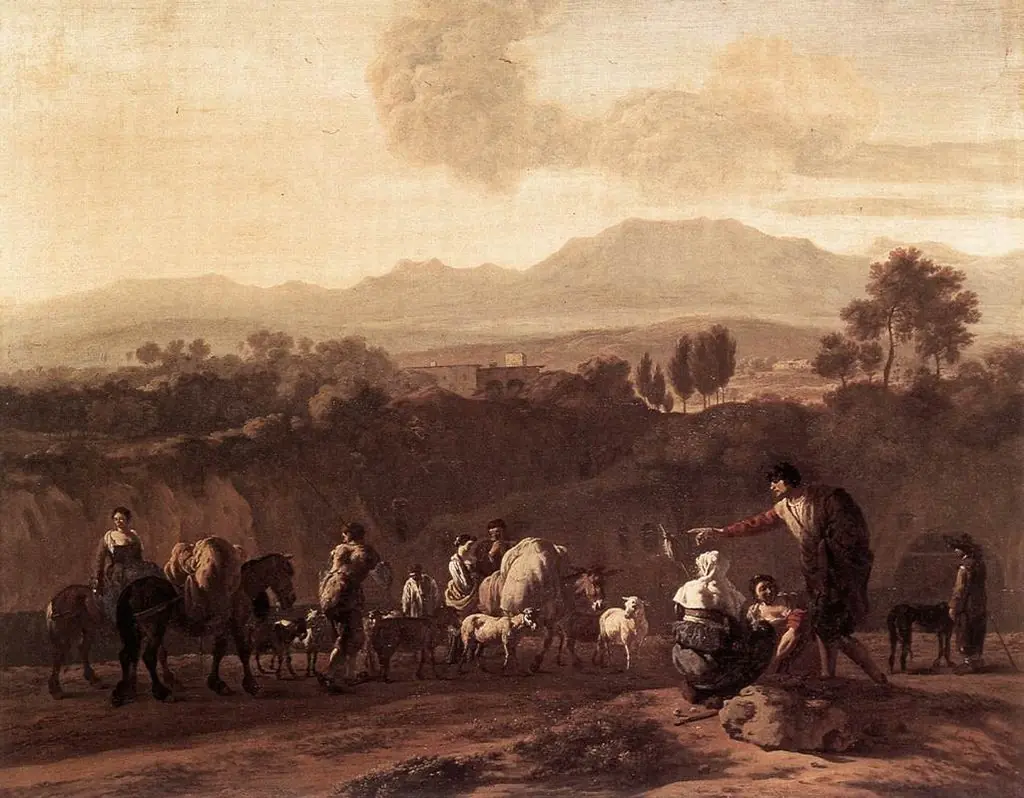 Landscape in the Roman Campagna
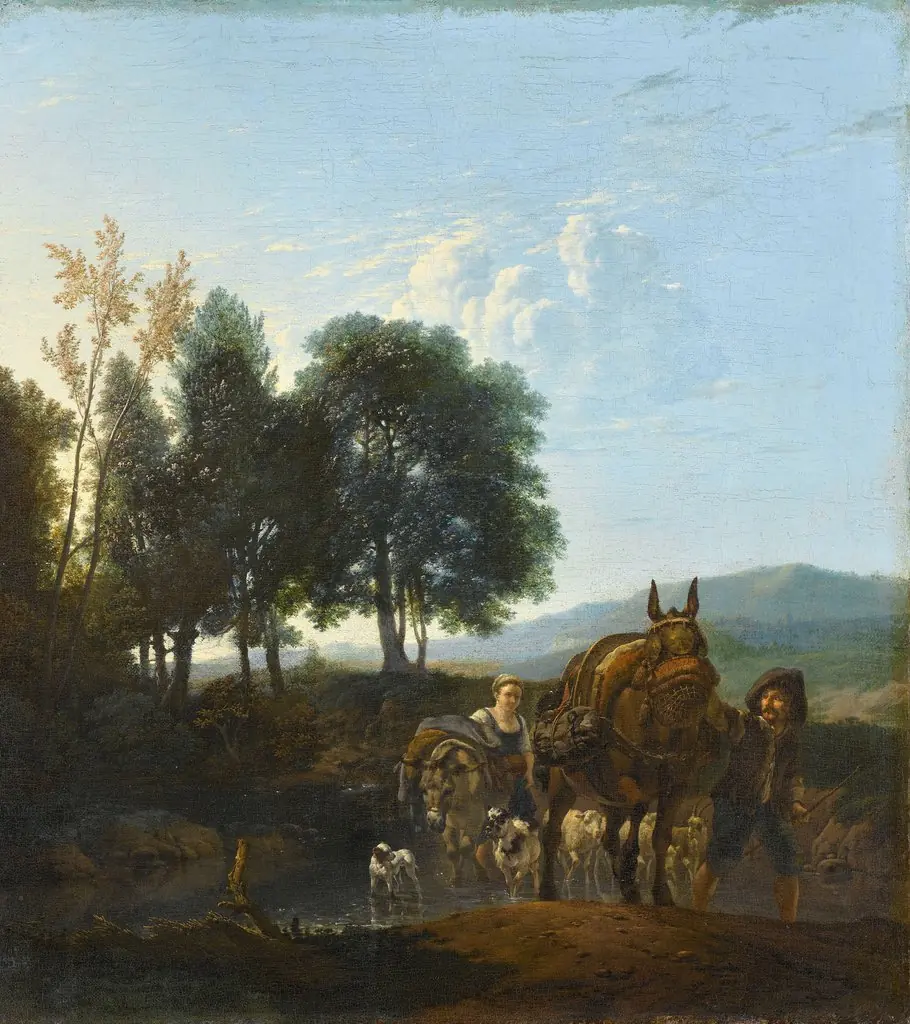 Landscape with mule driver
 Peisaj
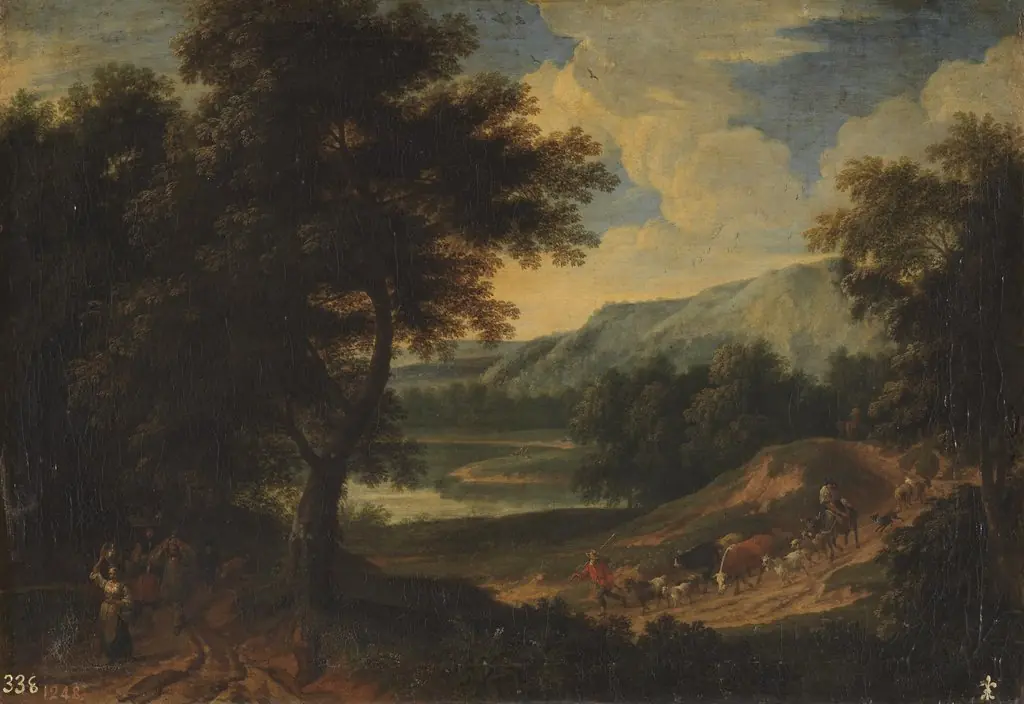 Paisaje con pastores y ganado
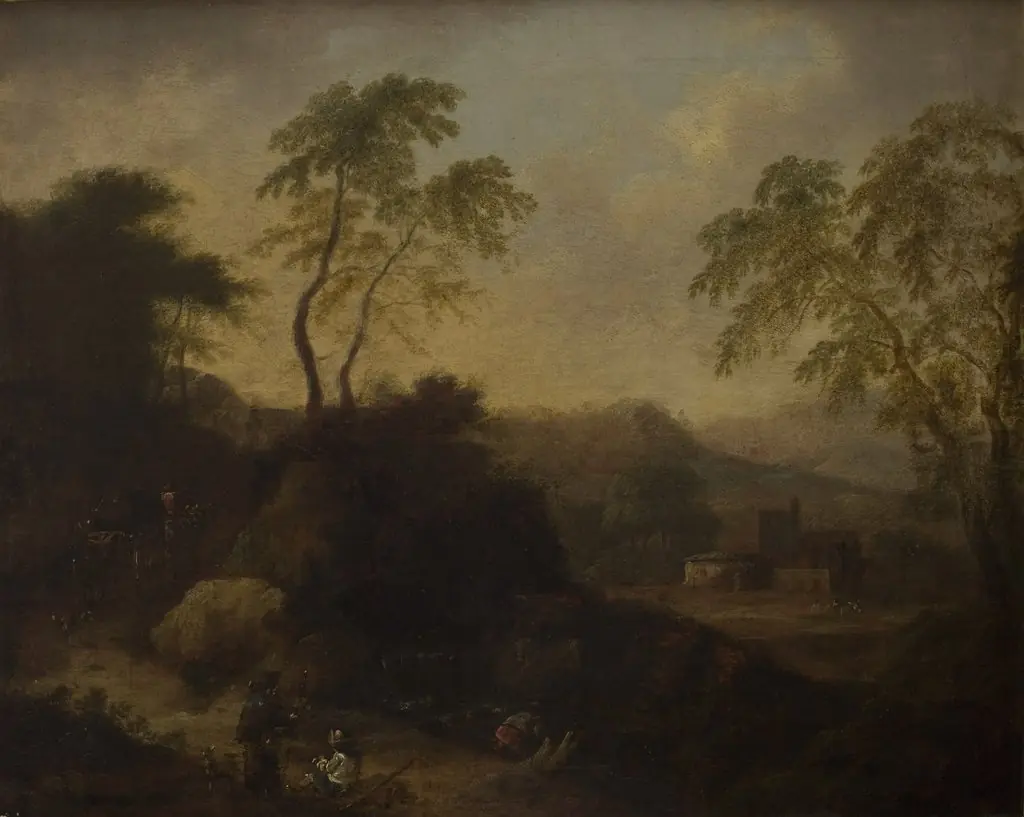 Krajobraz
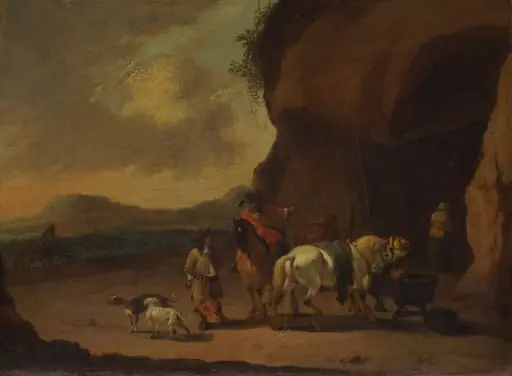 Horsemen Halted on a Mountain Pass