Artwork
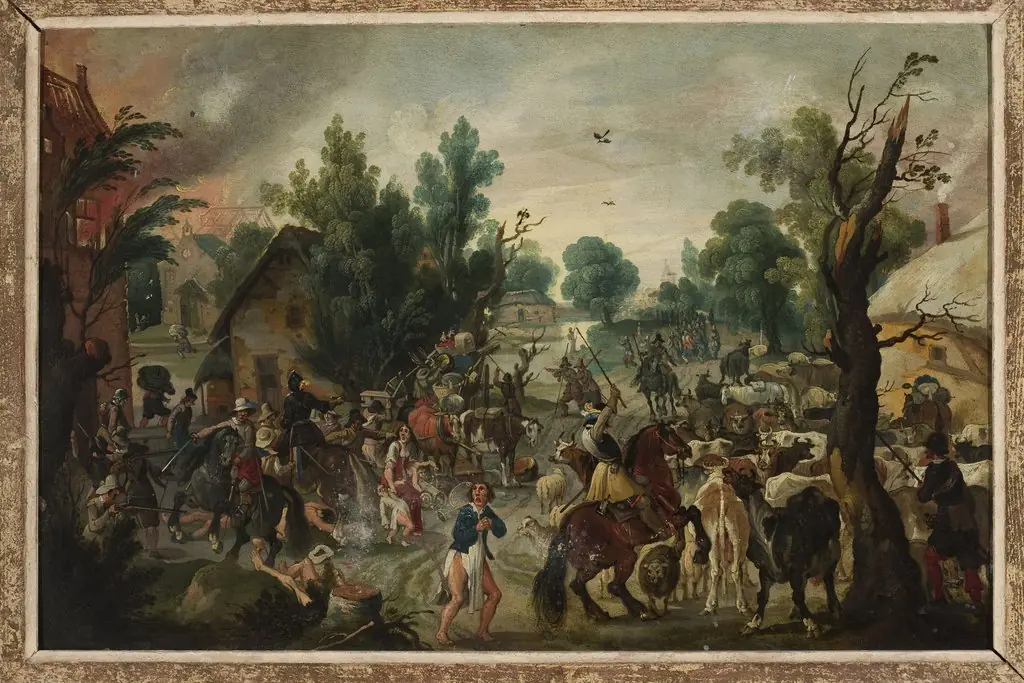
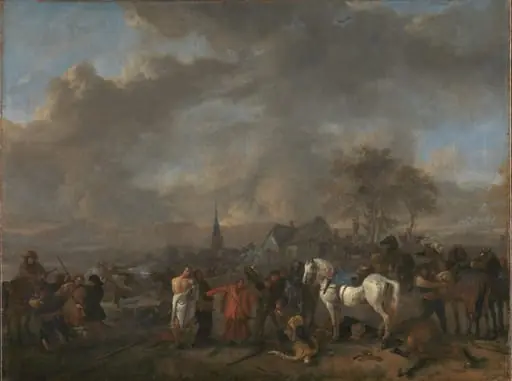
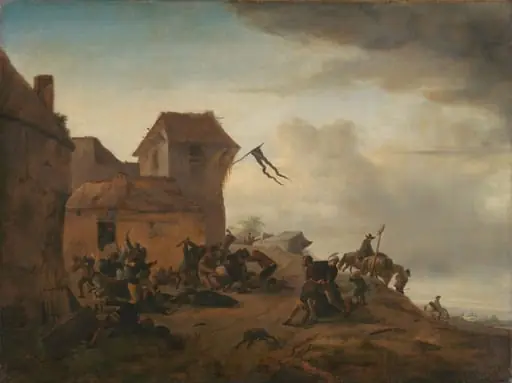
A peasant free-for-all near a village
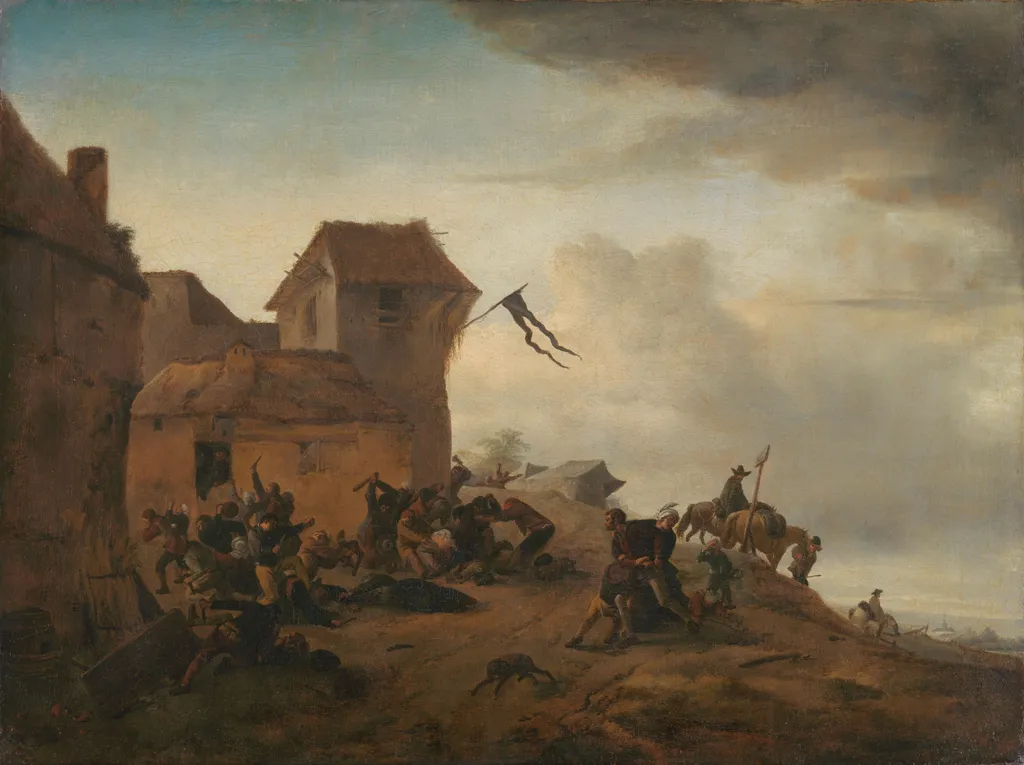
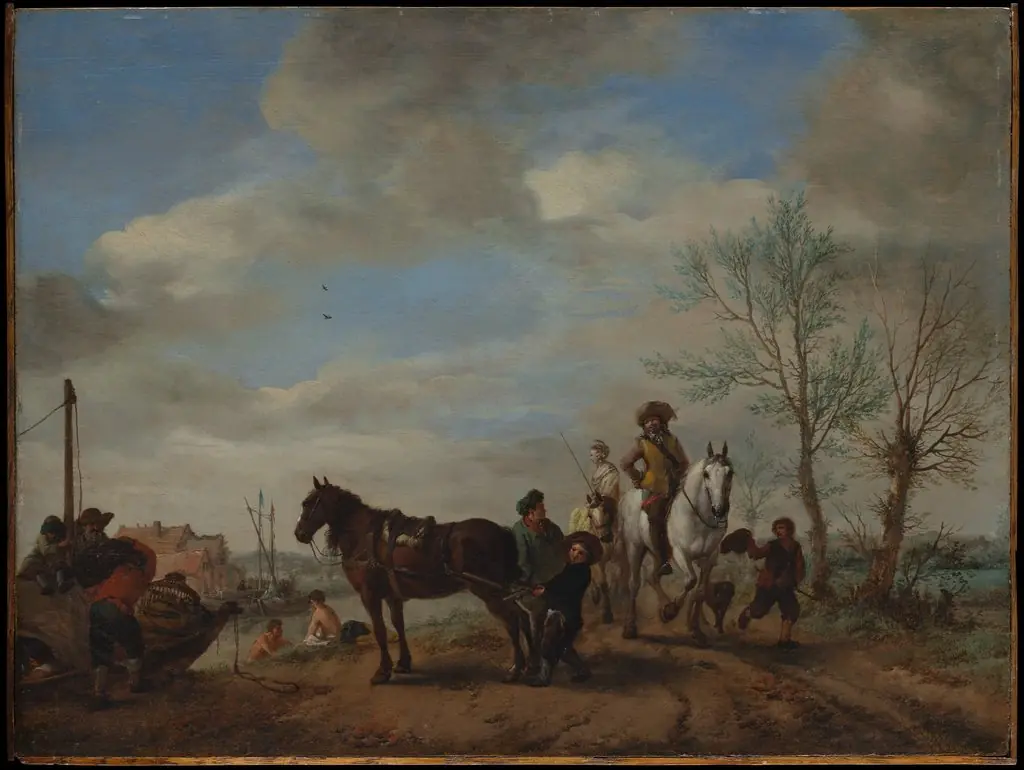
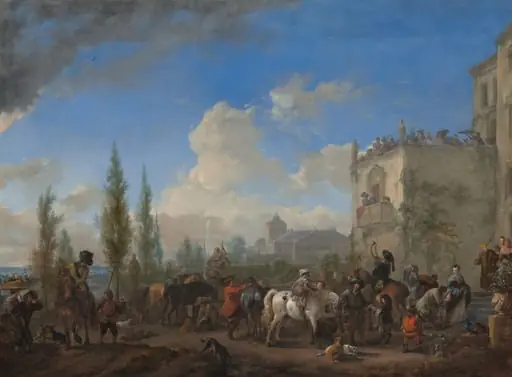
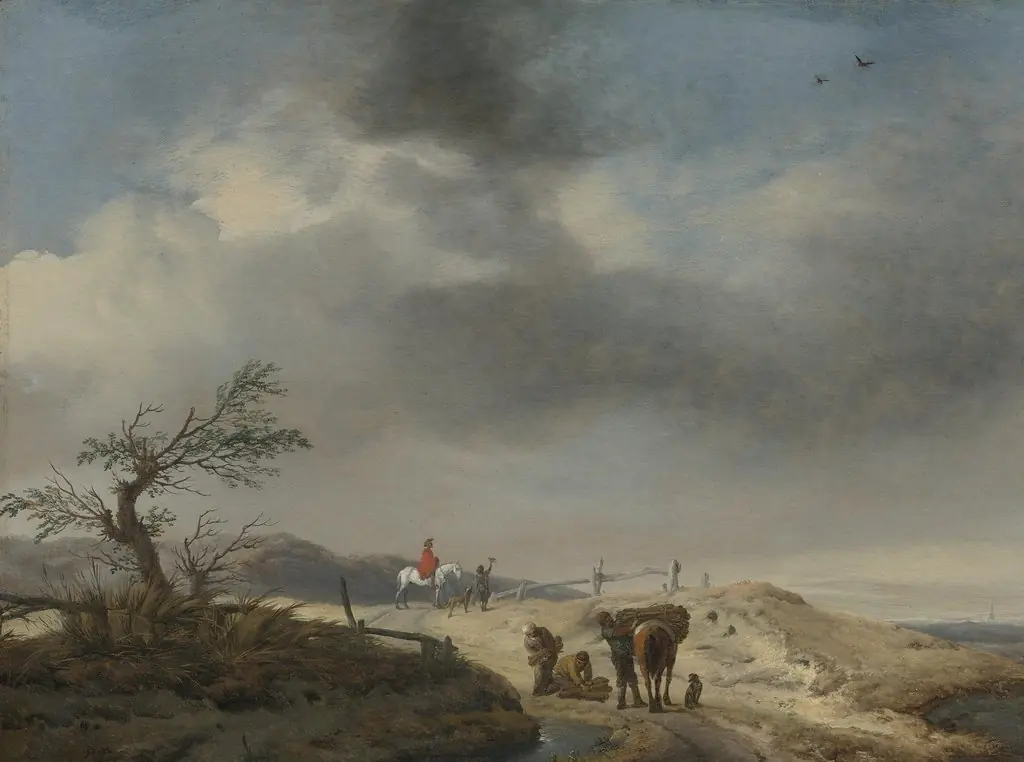
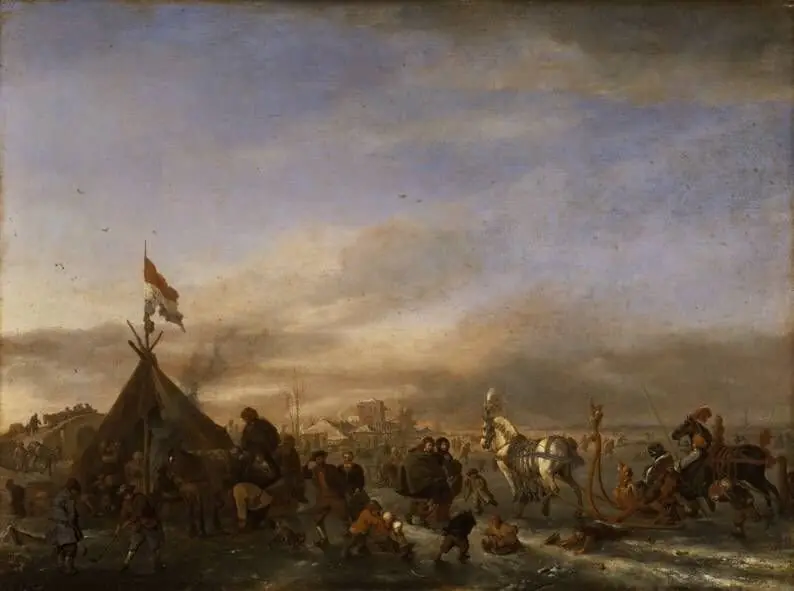
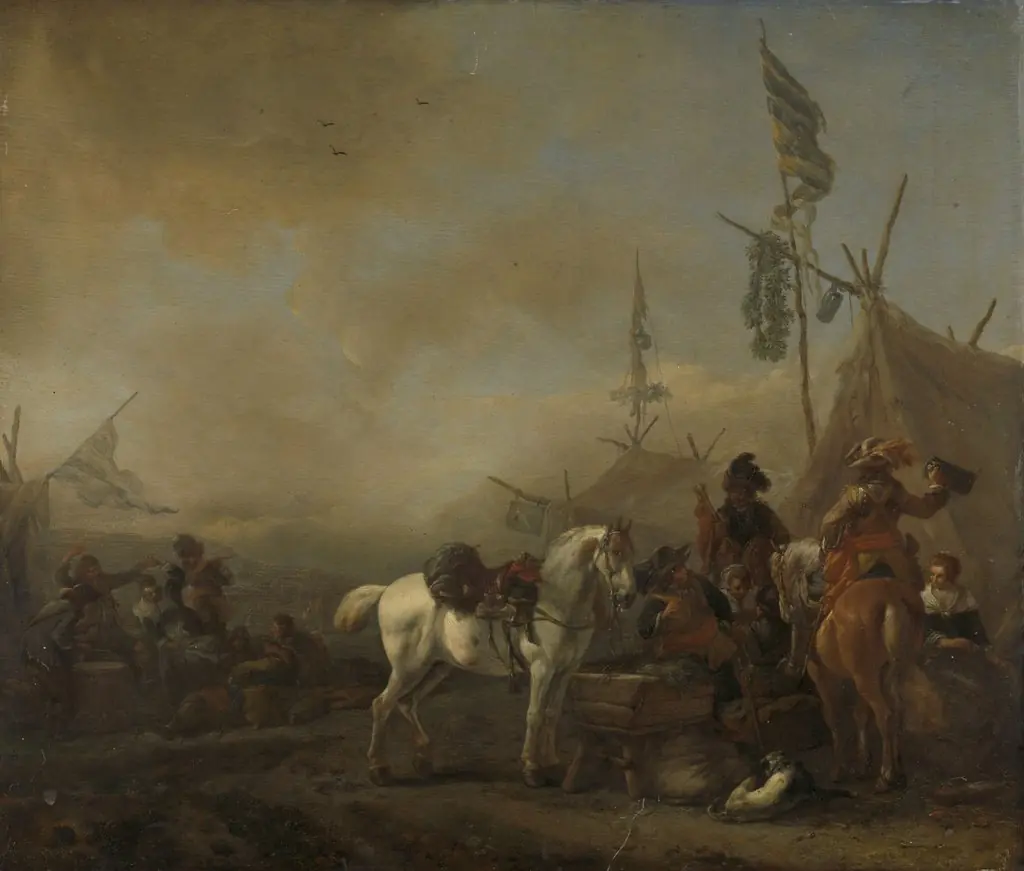
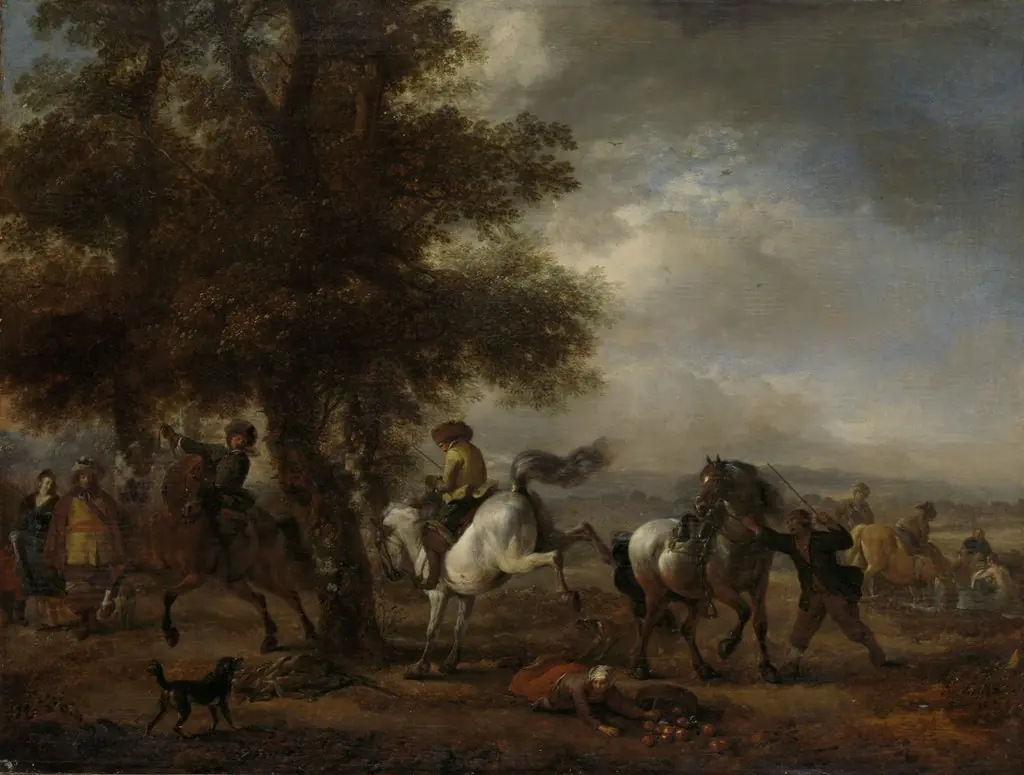
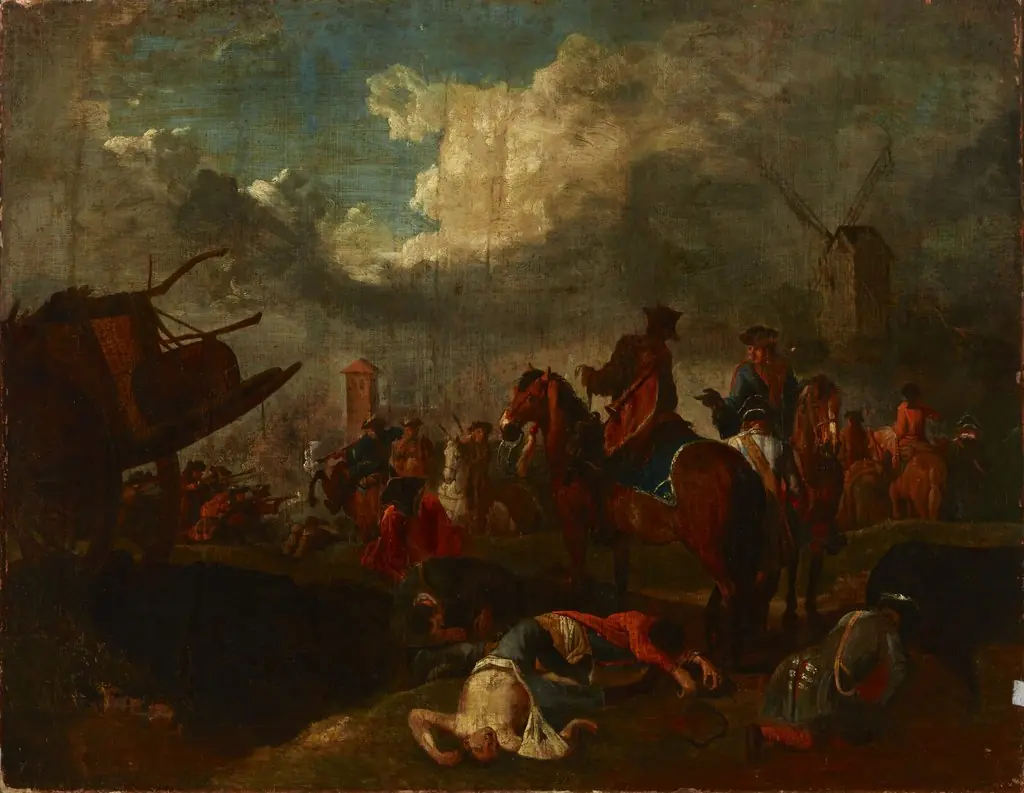
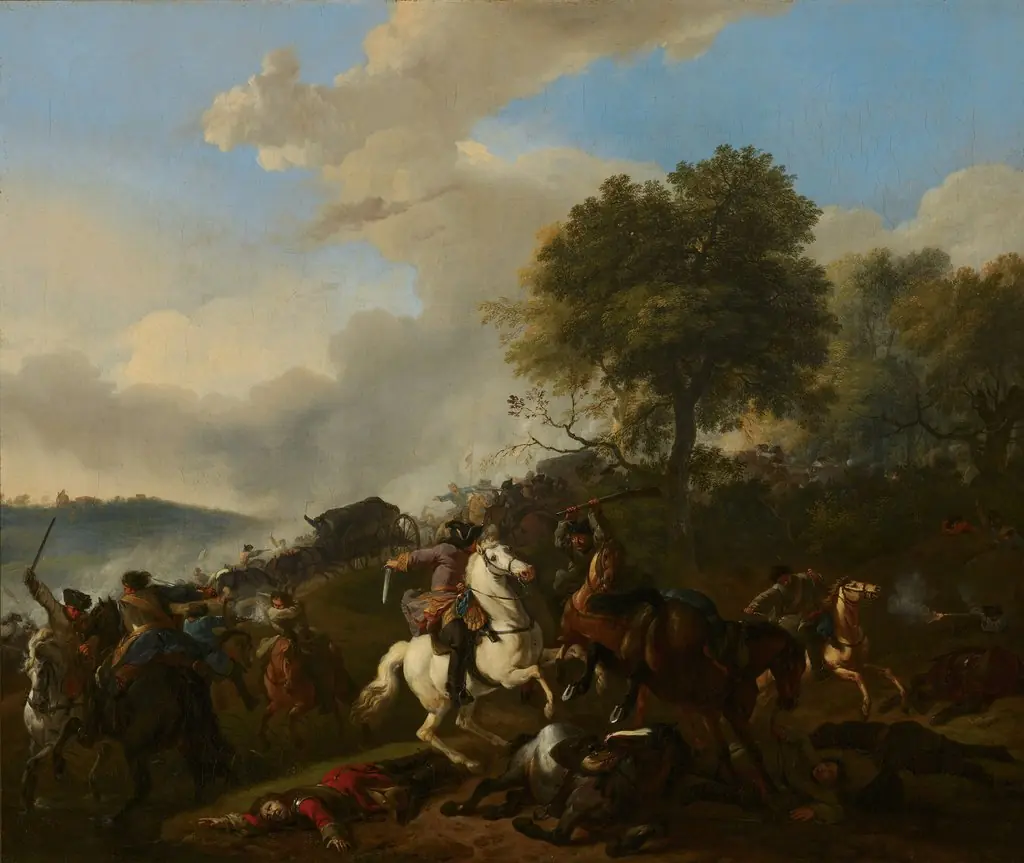
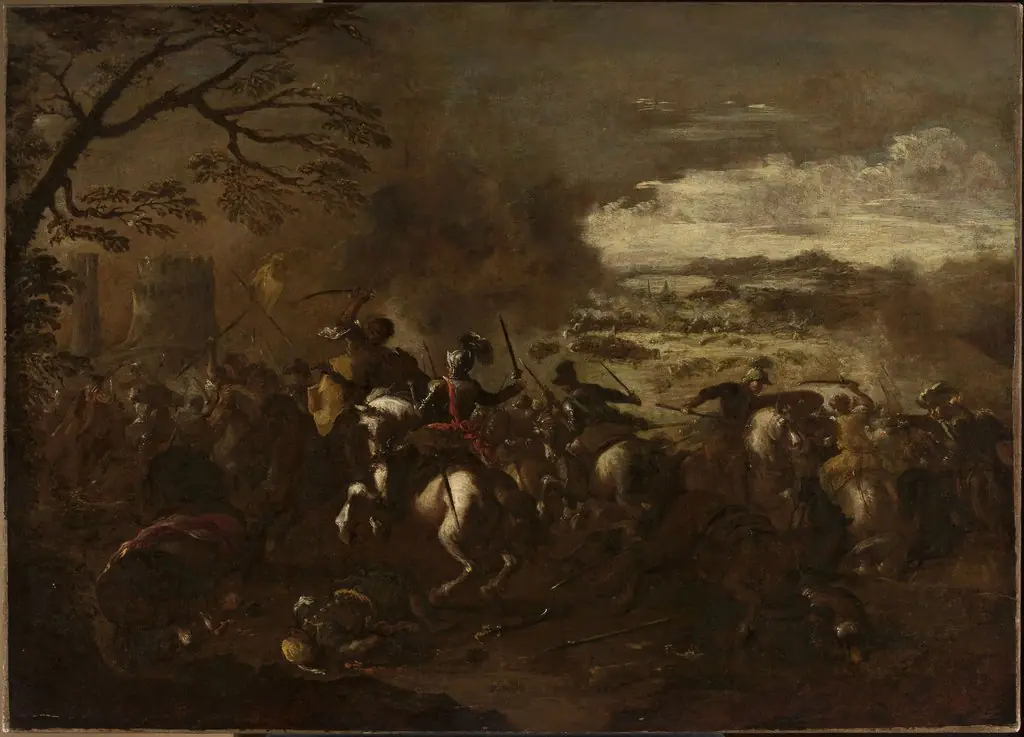
A peasant free-for-all near a village is an oil painting by the Dutch Golden Age artist Philips Wouwerman. It dates from 1650 and is held in the collection of the Rijksmuseum.
About this work
Subject & Meaning
The composition emphasizes figures engaged in collective work, reflecting the social cohesion and agrarian values of 17th‑century Dutch pastoral tradition.
A peasant free-for-all near a village depicts a rustic scene of communal labor and festivity, symbolizing the cyclical rhythms of rural life and the abundance of the harvest season. The composition emphasizes figures engaged in collective work, reflecting the social cohesion and agrarian values of 17th‑century Dutch pastoral tradition.
The work was created by Philips Wouwerman in 1650 using oil on canvas, measuring 66 cm by 87 cm, and is part of the Rijksmuseum collection, originally owned by Gerrit van der Pot in Haarlem.
Its iconography, featuring peasants gathered around a modest feast, conveys themes of communal solidarity and the celebratory aspects of village existence, resonating with the moral and cultural narratives of the Dutch Golden Age.
Technique & Style
The work is an oil painting executed on canvas, measuring 66 cm in height and 87 cm in width. It depicts a lively village scene rendered with loose brushwork characteristic of Dutch Baroque landscape practice. The handling of paint suggests swift application to capture atmospheric effects, while the composition balances figure groups against a receding horizon.
These formal qualities align with Wouwerman's known approach to genre scenes, where dynamic movement and textural contrast define the pictorial space.
History & Provenance
The painting A peasant free-for-all near a village was created by Philips Wouwerman in Haarlem around 1650. It is dated to this year in both the artist’s corpus records and the Rijksmuseum’s holdings, aligning with Wouwerman’s early maturity in the 1650s. The work entered the collection of Gerrit van der Pot before later transfer to the Rijksmuseum, where it is currently held.
No evidence supports a specific commission; it appears to have been produced as part of Wouwerman’s independent practice within the Dutch genre tradition of peasant scenes.
The work is held in the collection of the Rijksmuseum in Amsterdam. Its accession number is not specified in the sources. The painting was owned by Gerrit van der Pot before entering the Rijksmuseum. It has been displayed in exhibitions at the Rijksmuseum, including a 2014 exhibition of Dutch Golden Age works.
Context
Philips Wouwerman (1634–1668), a Haarlem-based Dutch Baroque painter, specialized in vivid landscapes and scenes of peasant life, often depicting rustic festivities amid wooded settings. His 1650 oil painting A peasant free-for-all near a village exemplifies this genre, portraying uninhibited revelry with compositional dynamism characteristic of his mature period.
The work entered the collection of Gerrit van der Pot before being acquired by the Rijksmuseum, where it remains part of their holdings of 17th-century Dutch art. As a landscape painting within Wouwerman’s oeuvre, it reflects his synthesis of northern realism and southern compositional influences, securing his reputation as a master of animated pastoral scenes within Dutch Golden Age art.
Scholarly analysis emphasizes its role in documenting 17th-century rural festivity while highlighting Wouwerman’s technical innovation in rendering atmospheric depth and narrative complexity within seemingly spontaneous peasant subjects.
Overview
Philips Wouwerman, a Dutch artist active in the mid‑17th century, painted the work known as A peasant free‑for‑all near a village around 1650. Executed in oil on canvas, the picture belongs to the landscape tradition and is now part of the Rijksmuseum’s collection.
Own this work as a print
Artist & collection
Artist
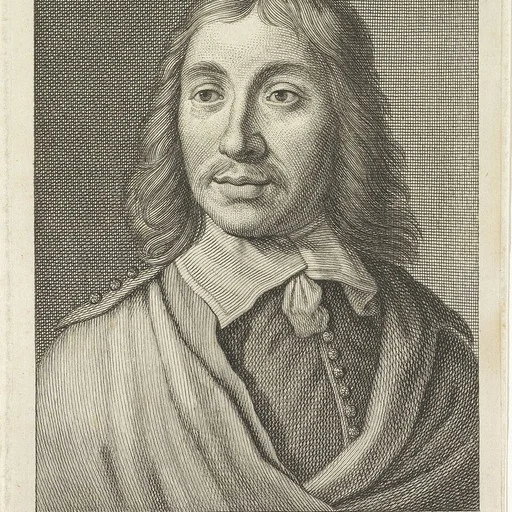
Philips Wouwerman (also Wouwermans) (24 May 1619 (baptized) – 19 May 1668) was a Dutch painter of hunting, landscape and battle scenes. He became prolific during the Dutch Golden Age and joined the Haarlem Guild of St. Luke.