Artwork
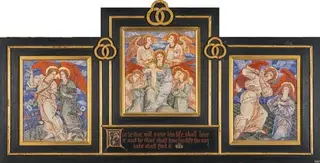
Triptych. Motherhood
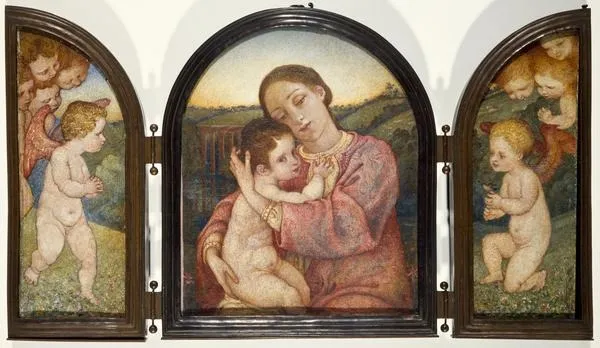
Triptych. Motherhood is an oil painting by the Post-Impressionist artist Phoebe Anna Traquair. It dates from 1902 and is held in the collection of the National Galleries Scotland.
About this work
Overview
The work consists of three arched sections, forming a devotional composition that reflects her engagement with religious and domestic themes.
Phoebe Anna Traquair completed Triptych. Motherhood in 1902 using oil paint on panel. The work consists of three arched sections, forming a devotional composition that reflects her engagement with religious and domestic themes.
It is held in the Scottish National Gallery and represents one of her few major oil paintings, distinct from her more widely known decorative works in embroidery and illumination.
Subject & Meaning
The central panel portrays a mother cradling an infant, their gaze and gesture conveying quiet connection. The child reaches toward her face, suggesting trust and tenderness. Flanking panels feature cherubs amid soft landscapes, evoking spiritual guardianship.
Together, the panels frame motherhood as both earthly and sacred, blending personal intimacy with symbolic reverence without overt religious iconography.
Technique & Style
Traquair employed muted, warm tones to create a hushed atmosphere, avoiding sharp contrasts in favor of gentle gradations. The figures are rendered with soft contours and subtle modeling, reflecting post-impressionist influences while retaining a decorative sensibility. The arched format and stylized cherubs echo medieval altarpieces, yet the composition remains intimate, prioritizing emotional resonance over grandeur.
History & Provenance
Created in 1902, the triptych entered the collection of the Scottish National Gallery shortly after its completion. Traquair, based in Edinburgh, produced it during a period when she was increasingly focused on easel painting after decades of mural and craft work. Its acquisition by the national institution marked recognition of her contributions beyond decorative arts, though it remained less publicly exhibited than her illuminated manuscripts.
Context
Traquair worked within the Scottish Arts and Crafts movement, which valued handcraft and spiritual sincerity in art. While contemporaries like William Morris emphasized communal design, Traquair turned inward, exploring domestic and maternal themes through a personal, quiet lens. Motherhood reflects this shift, bridging medieval aesthetics with modern psychological nuance, and affirming feminine experience as worthy of artistic contemplation.
Legacy
Though Traquair is best remembered for her murals and illuminated texts, Triptych. Motherhood stands as a rare, cohesive statement in oil painting. It reveals her ability to merge craft-based sensitivity with painterly expression.
The work contributes to broader reassessments of late 19th- and early 20th-century women artists, whose domestic subjects were often marginalized but carried deep cultural resonance.
Artist & collection
Artist
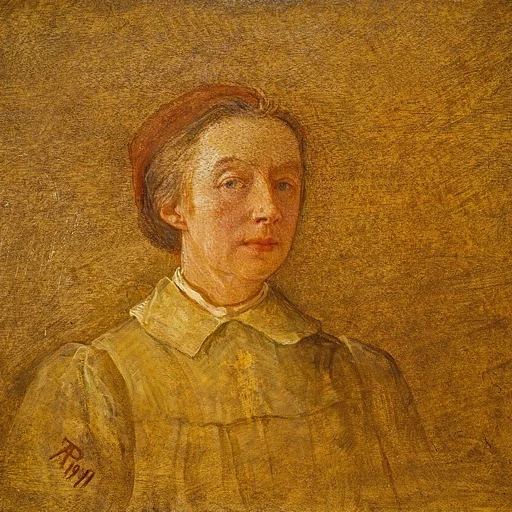
Phoebe Anna Traquair (; 24 May 1852 – 4 August 1936) was an Irish-born artist, who achieved international recognition for her role in the Arts and Crafts movement in Scotland, as an illustrator, painter and embroiderer.

- Triptych of the Holy Family
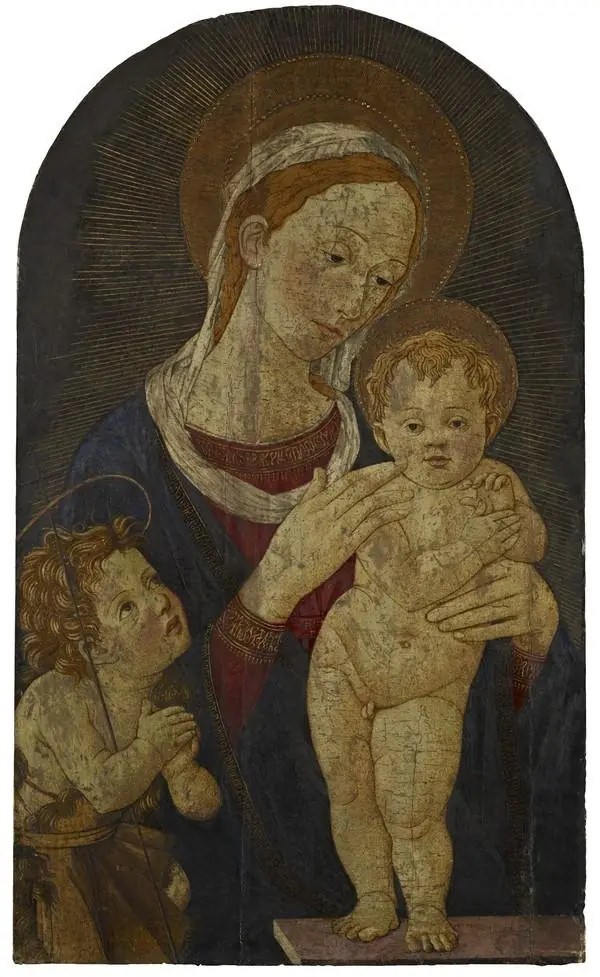 The Virgin and Child with the Infant Saint John the Baptist
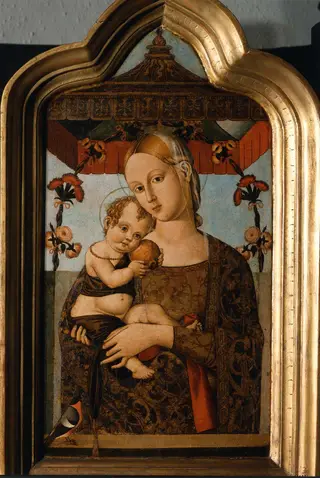 Virgin and Child
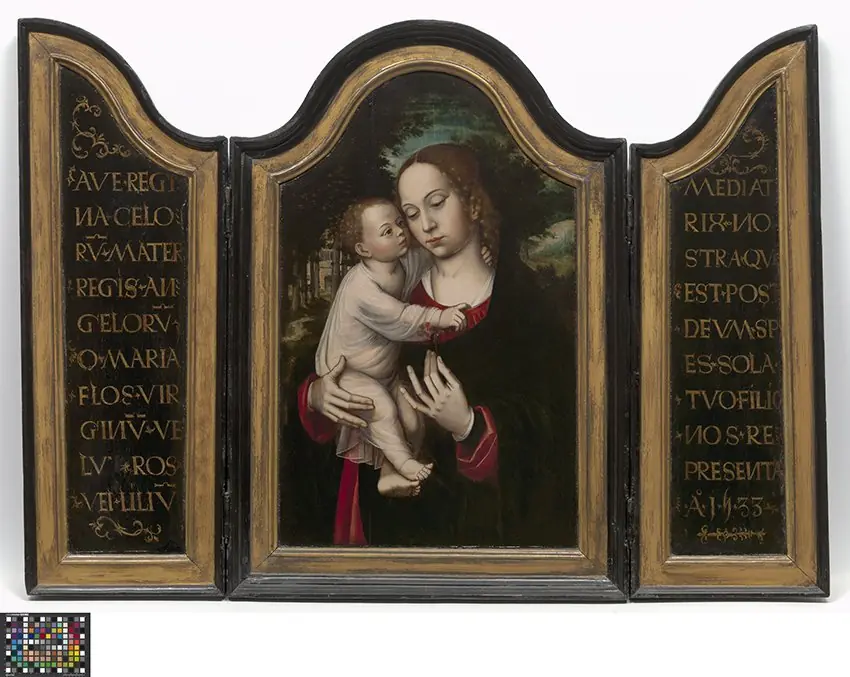 Madonna
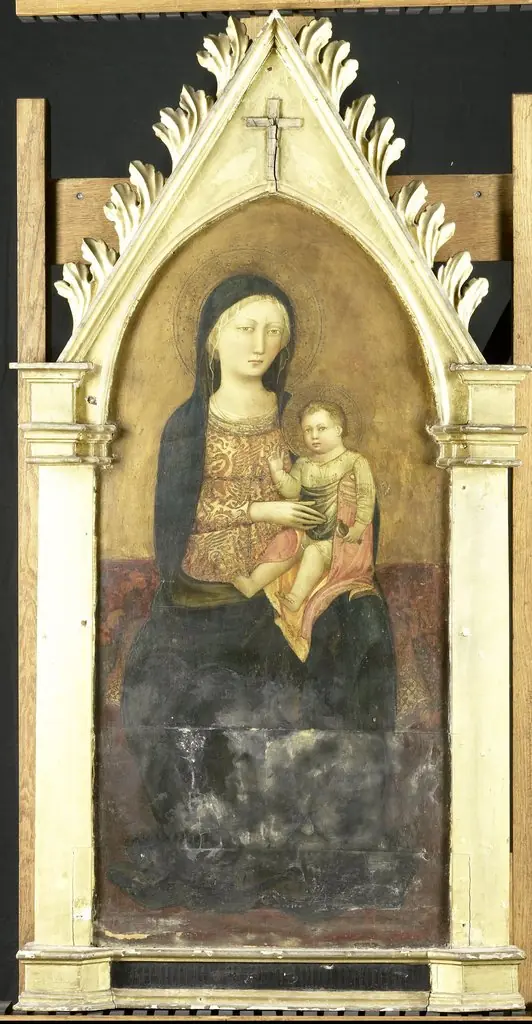 Virgin and Child
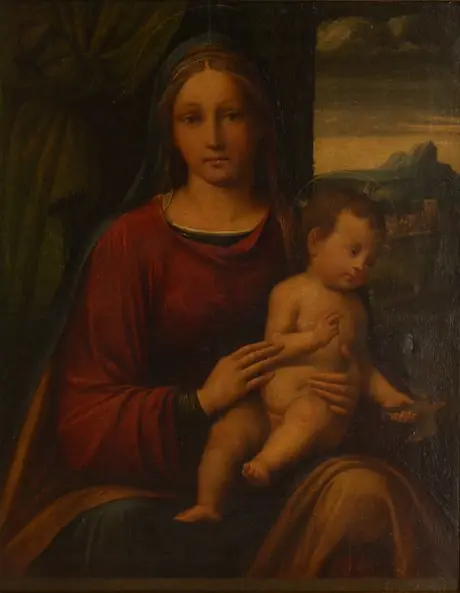 Madonna and Child
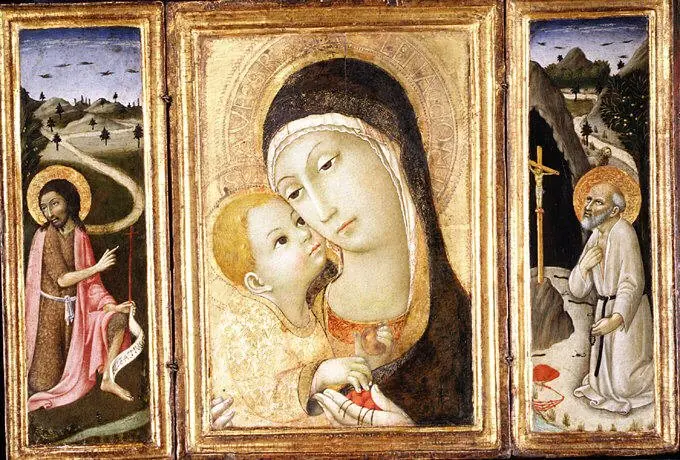 Madonna and Child; Saint John the Baptist; Saint Jerome
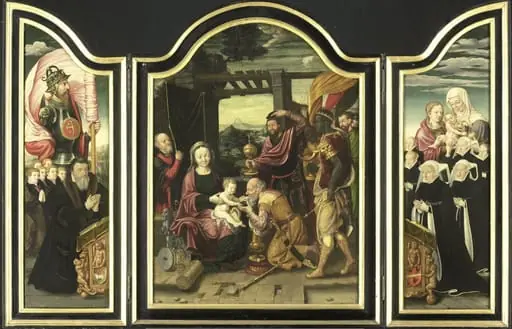 Triptych with the Adoration of the Magi
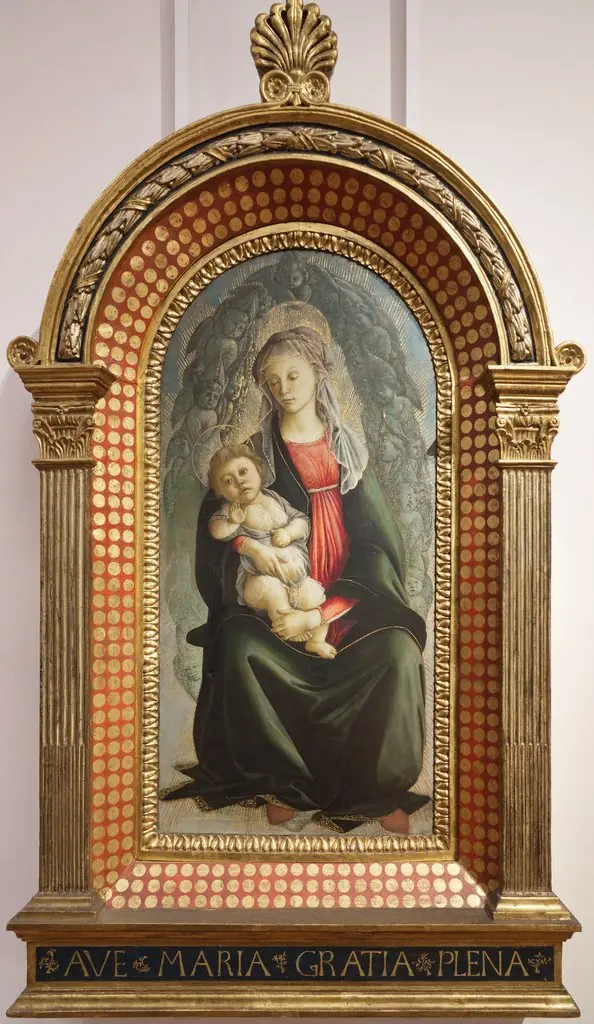 Madonna in Glory with Seraphim
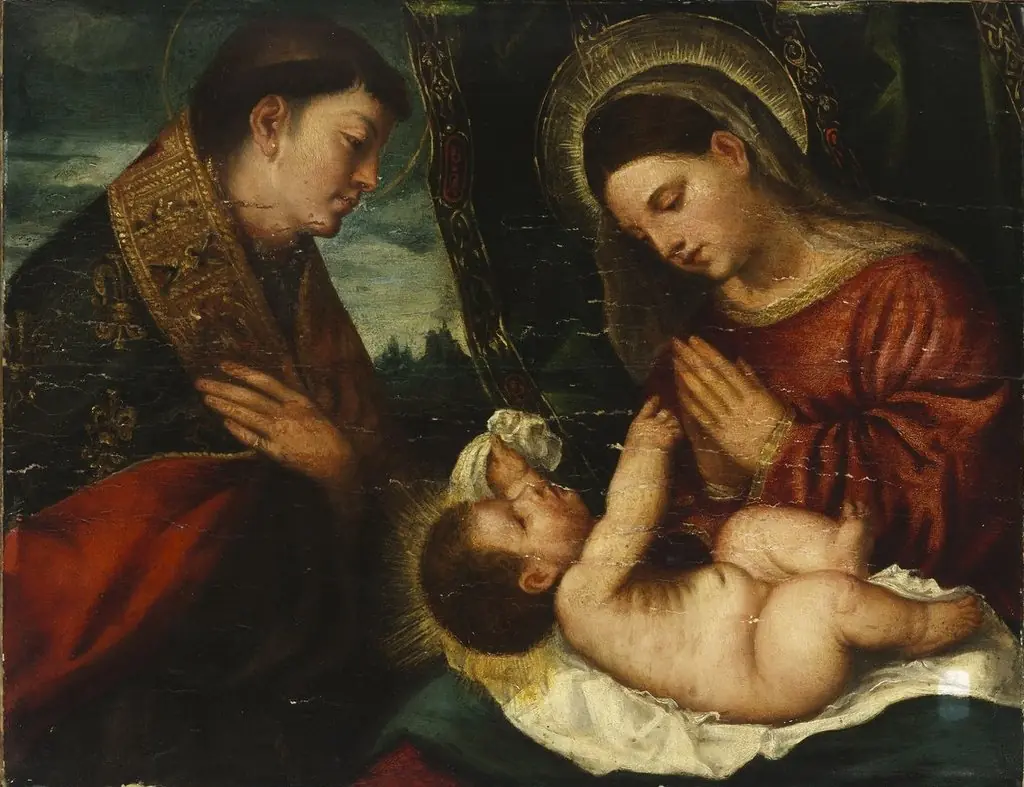 Madonna and Child with Saint Louis of Toulouse
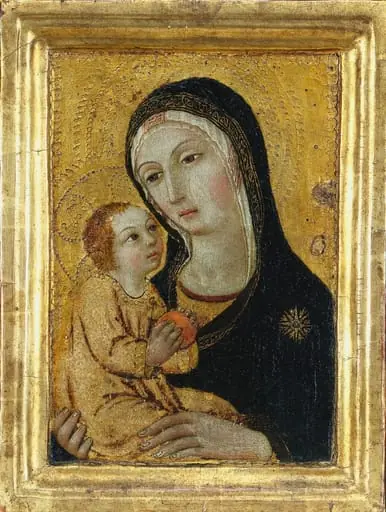 Virgin and Child
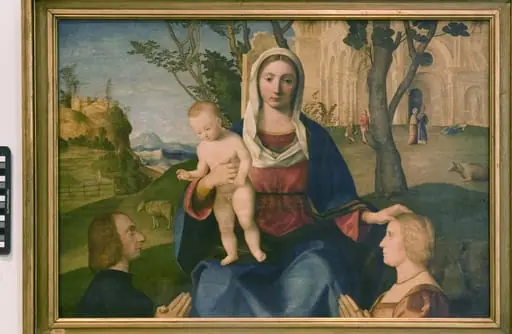 The Virgin and Child with a Male and a Female Donor