Artwork
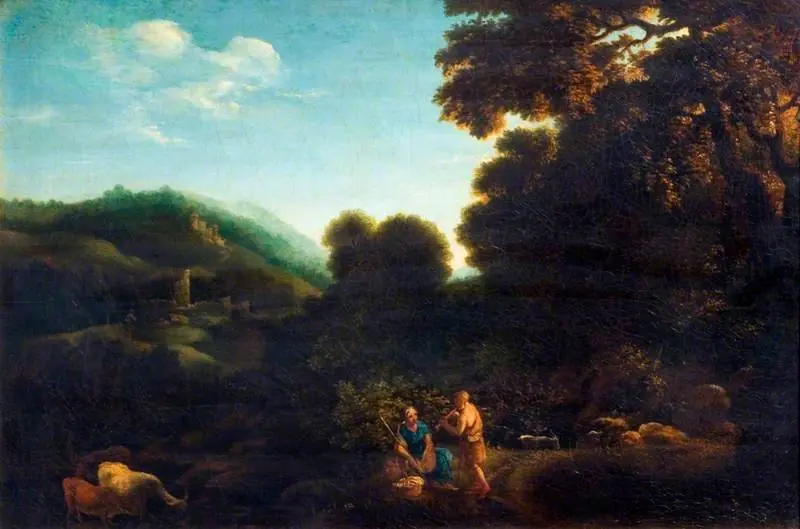
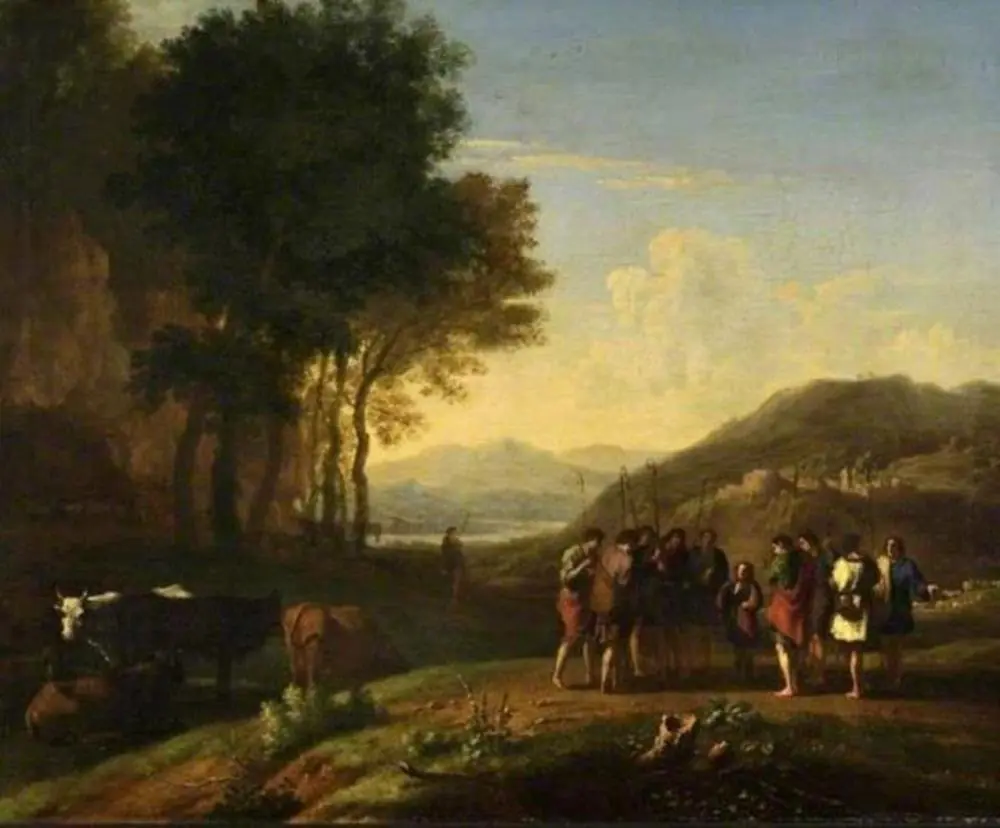
Landscape with mythological figures
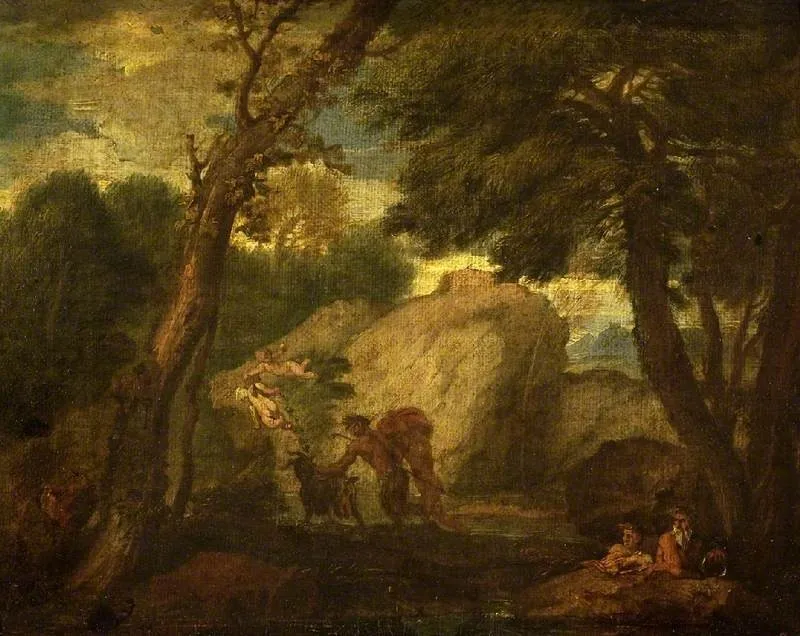
Landscape with mythological figures is an oil painting by Pier Francesco Mola. It dates from 1649 and is held in the collection of the Fitzwilliam Museum.
About this work
Overview
Pier Francesco Mola’s early‑mid‑17th‑century oil work, titled Landscape with Mythological Figures, presents a bucolic scene dominated by rolling hills and a forested backdrop. The composition balances a natural setting with a group of classical‑clad figures in the foreground, rendered in muted earth tones of brown and green that convey a tranquil, pastoral atmosphere.
Subject & Meaning
The foreground figures, dressed in attire reminiscent of ancient Greece or Rome, engage with one another, suggesting a narrative drawn from myth or legend. Their gestures and the objects they hold hint at a specific story, while the surrounding landscape frames the scene as a timeless, idealized world where human drama unfolds within nature.
Technique & Style
Executed in oil on canvas, Mola employs visible brushwork that enhances the texture of foliage and terrain. A careful modulation of light and shadow, chiaroscuro, creates depth, allowing the distant hills to recede behind a luminous sky. The palette of subdued greens and browns reinforces the work’s serene, naturalistic tone.
History & Provenance
Created around 1649, the painting entered the collection of the Fitzwilliam Museum, where it remains on display. Its attribution to Mola, a noted Italian Baroque painter, aligns with his known practice of integrating mythological subjects into landscape settings, reflecting the period’s taste for combining narrative and scenery.
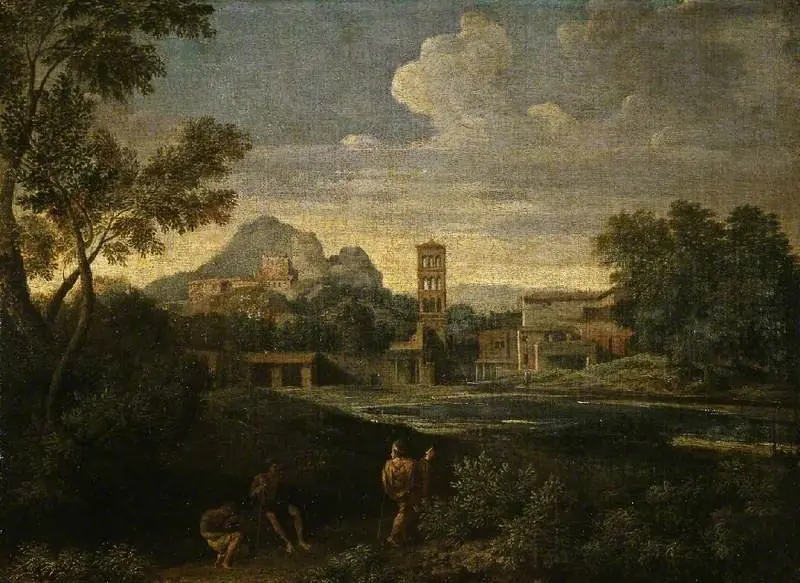
Artist & collection

Artist
Pier Francesco Mola, called Il Ticinese was an Italian painter of the High Baroque, mainly active around Rome.

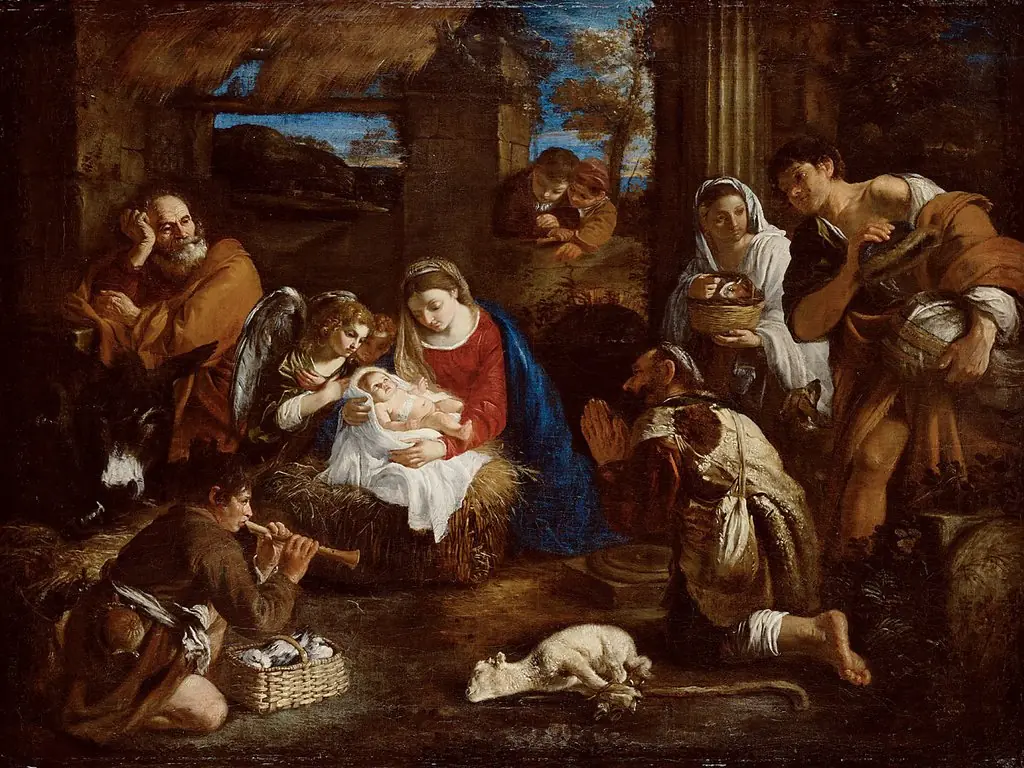
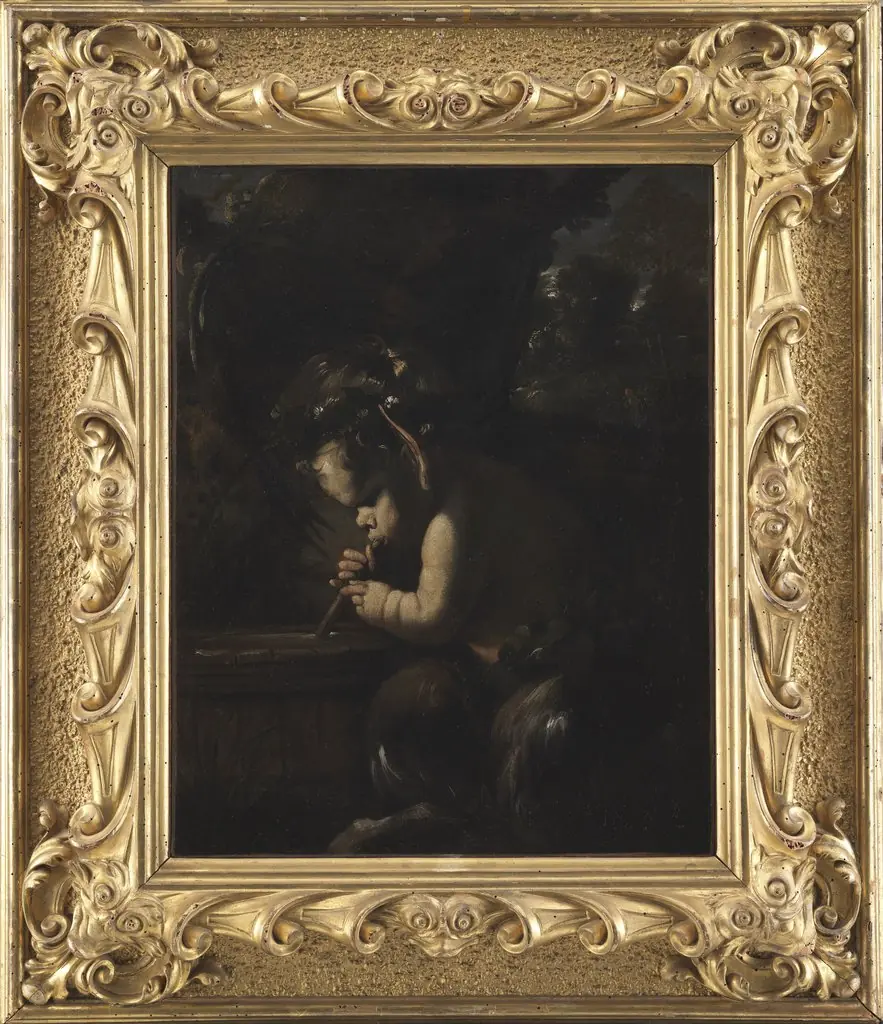
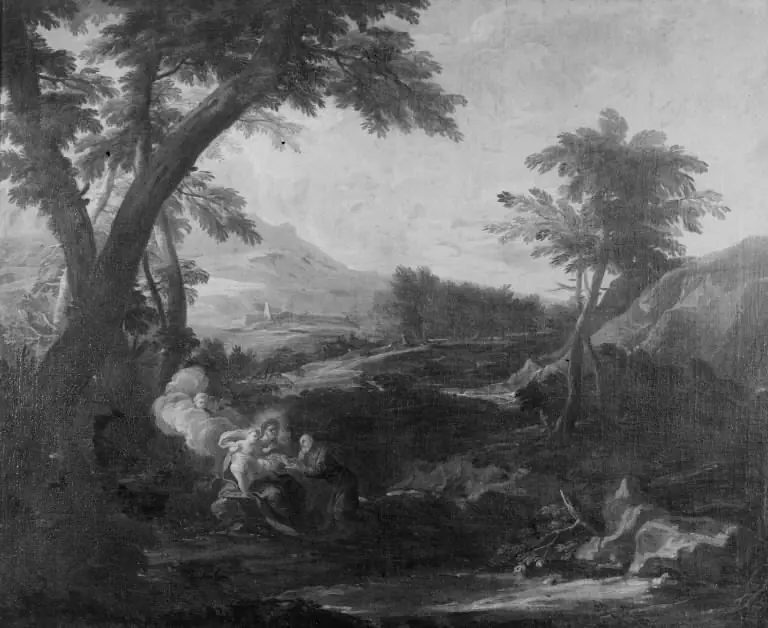
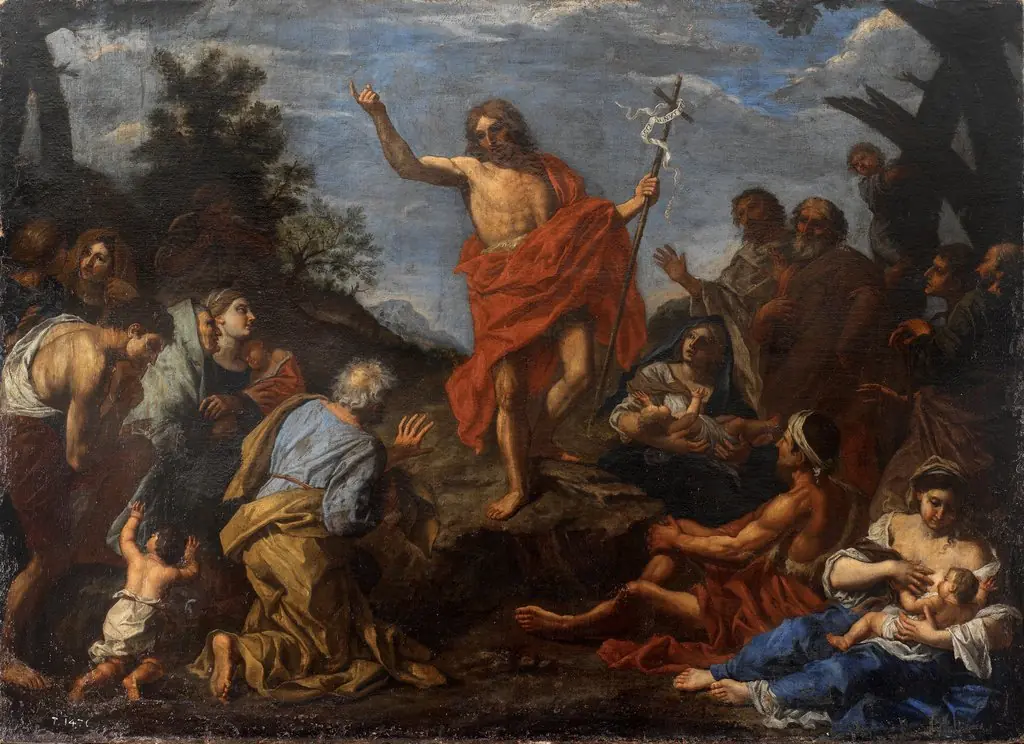
- Landscape with figures
 Pastoral Landscape
 Italian Landscape
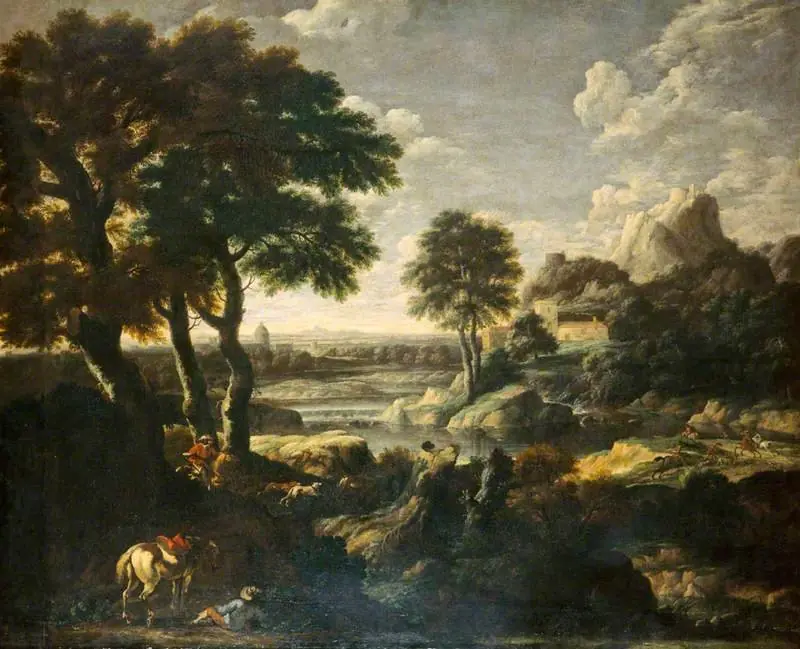 River Landscape with a Hunt
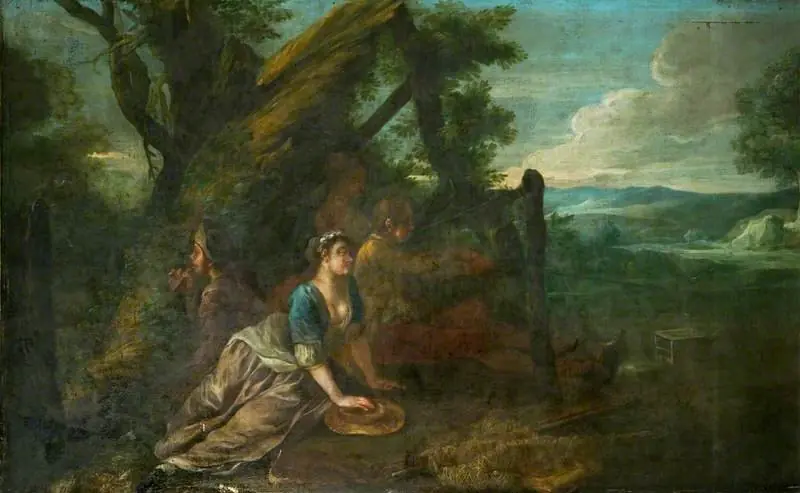 Bird-Catching by a Decoy with a Whistle and a Net (decorative painting for a supper-box at Vauxhall Gardens, London)
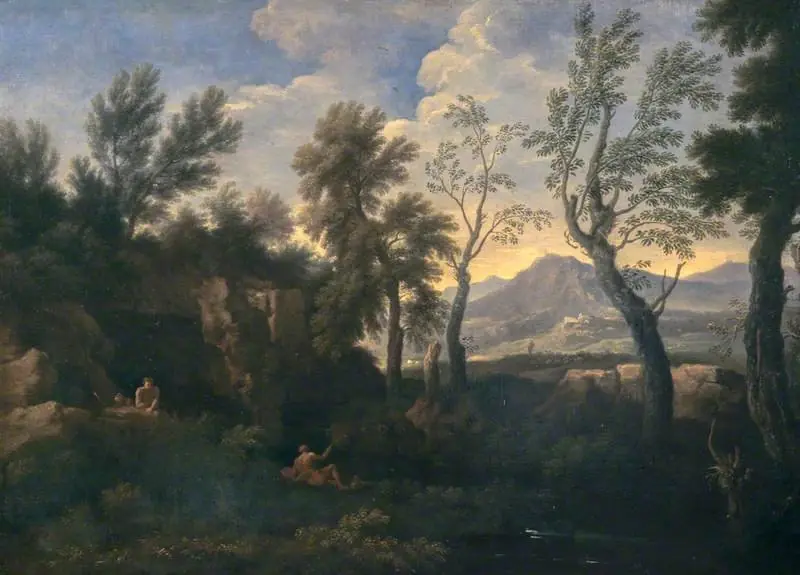 Landscape
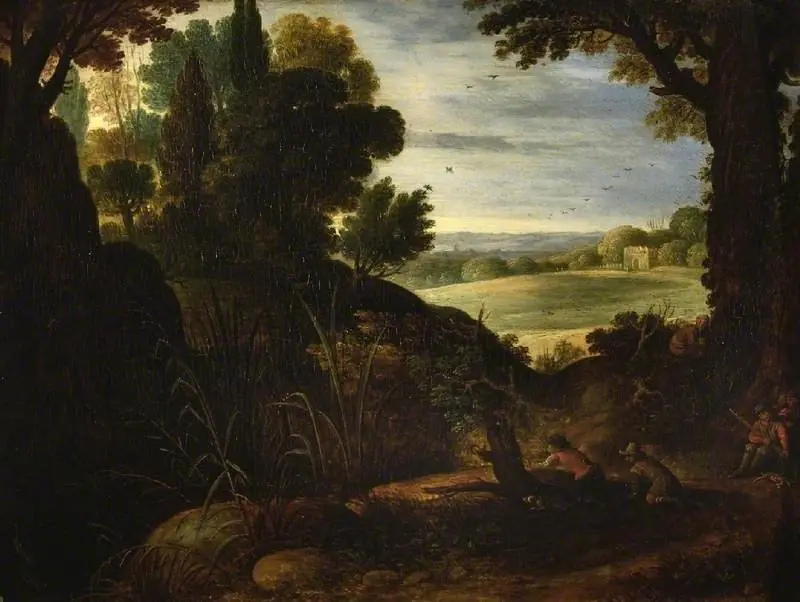 Landscape with sportsmen
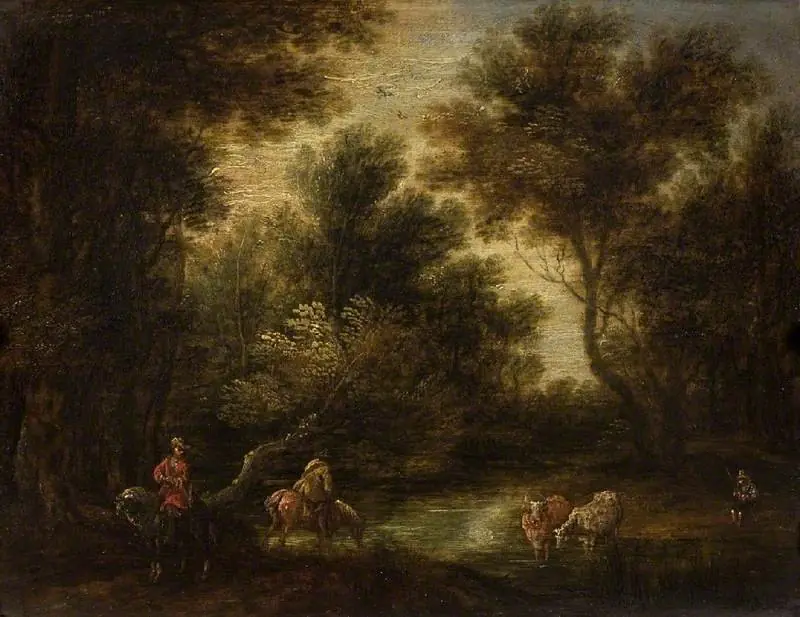 Wooded landscape with stream and figures
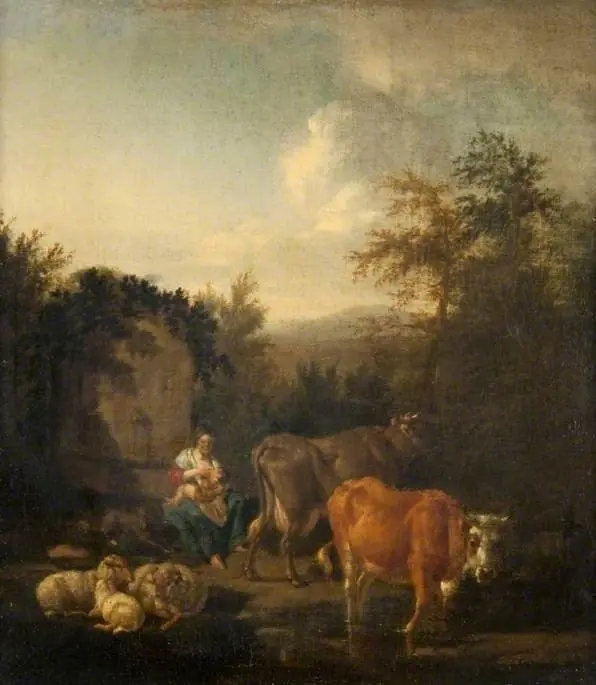 A Woman and a Child, Cattle and Sheep by a Fountain
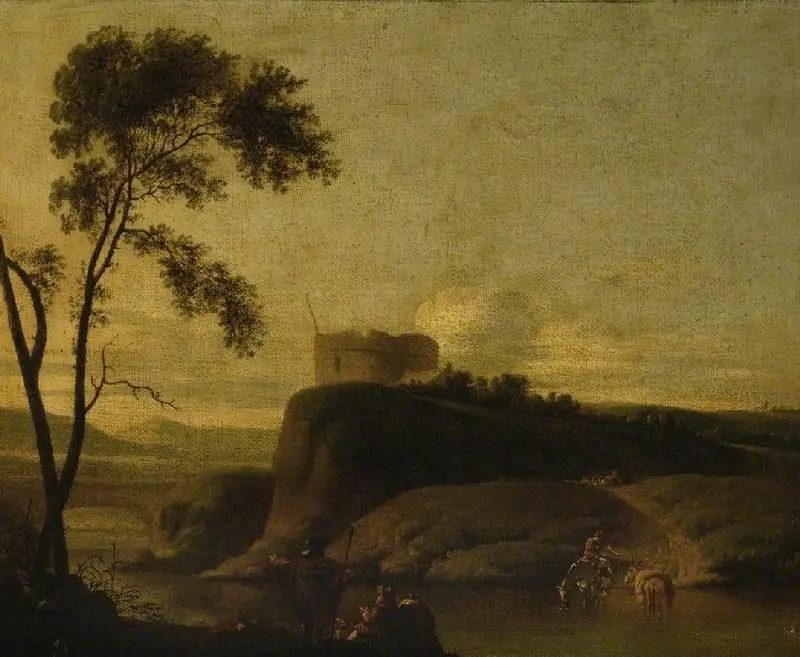 Italian landscape
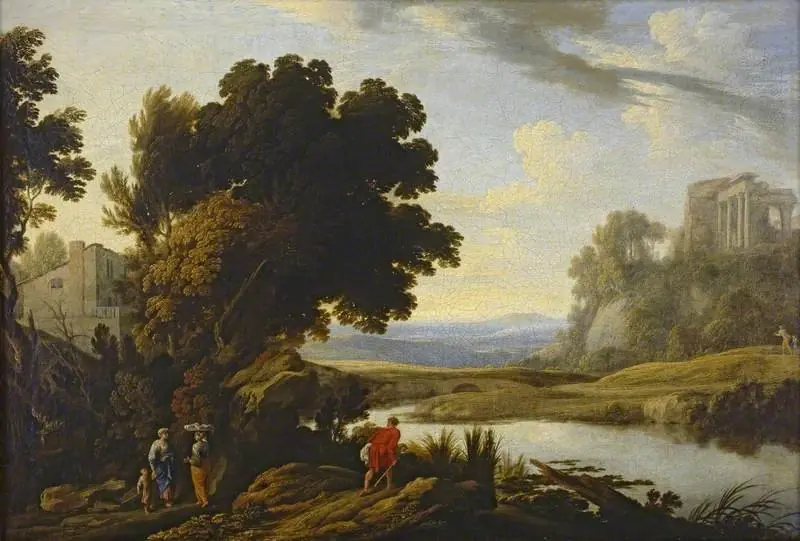 Landscape in the Roman Campagna
 Landscape with Joseph and his brethren