Artwork
Bouquet of Chrysanthemums
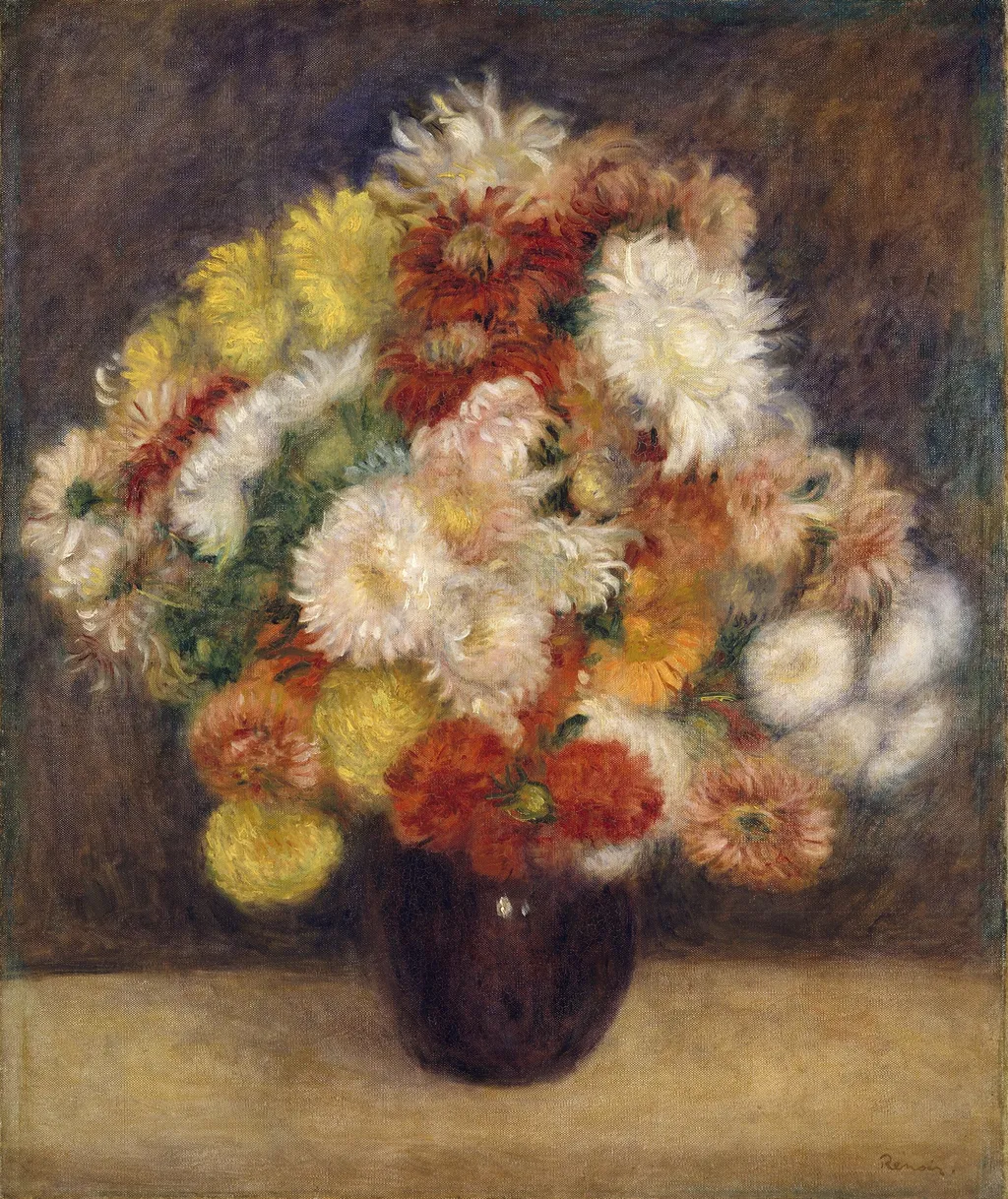
Bouquet of Chrysanthemums is an oil painting by the Impressionist artist Pierre-Auguste Renoir. It dates from 1891 and is held in the collection of the Metropolitan Museum of Art.
About this work
Subject & Meaning
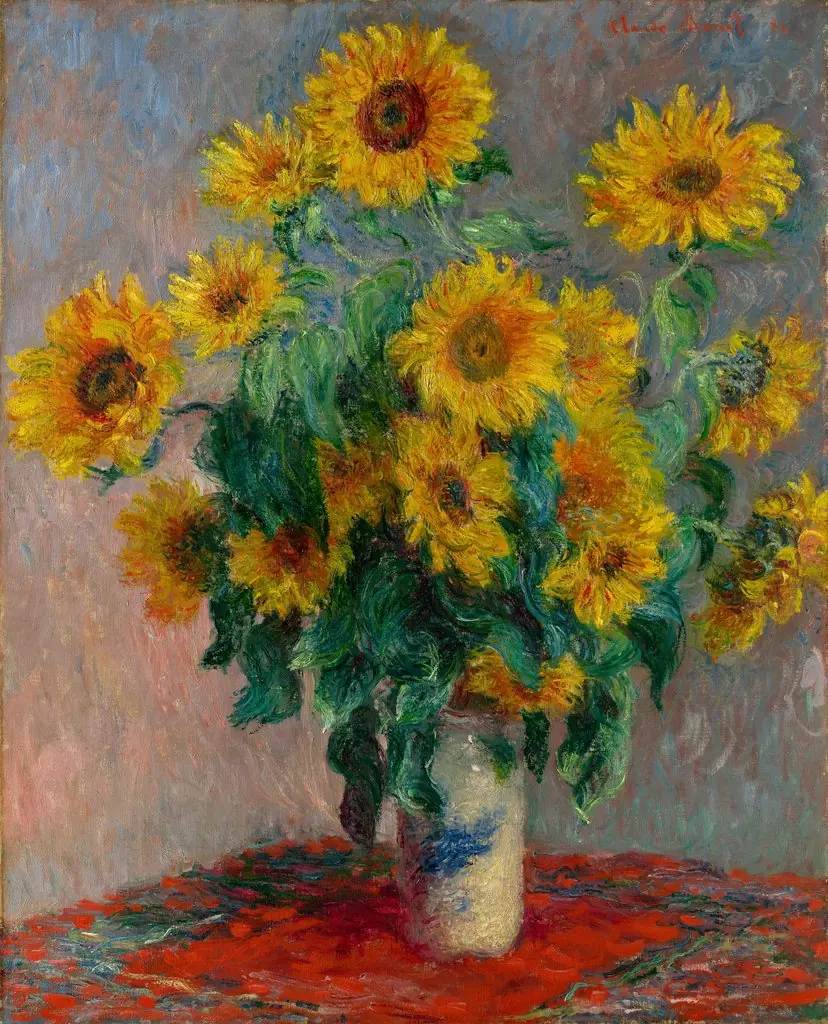
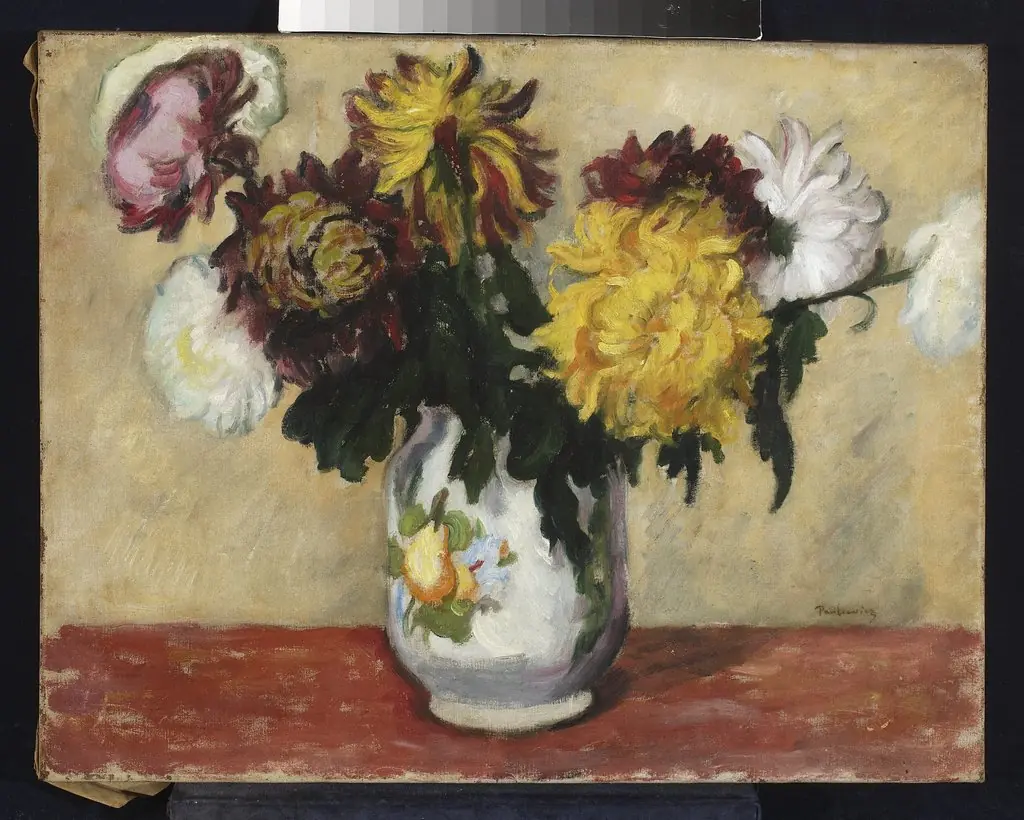
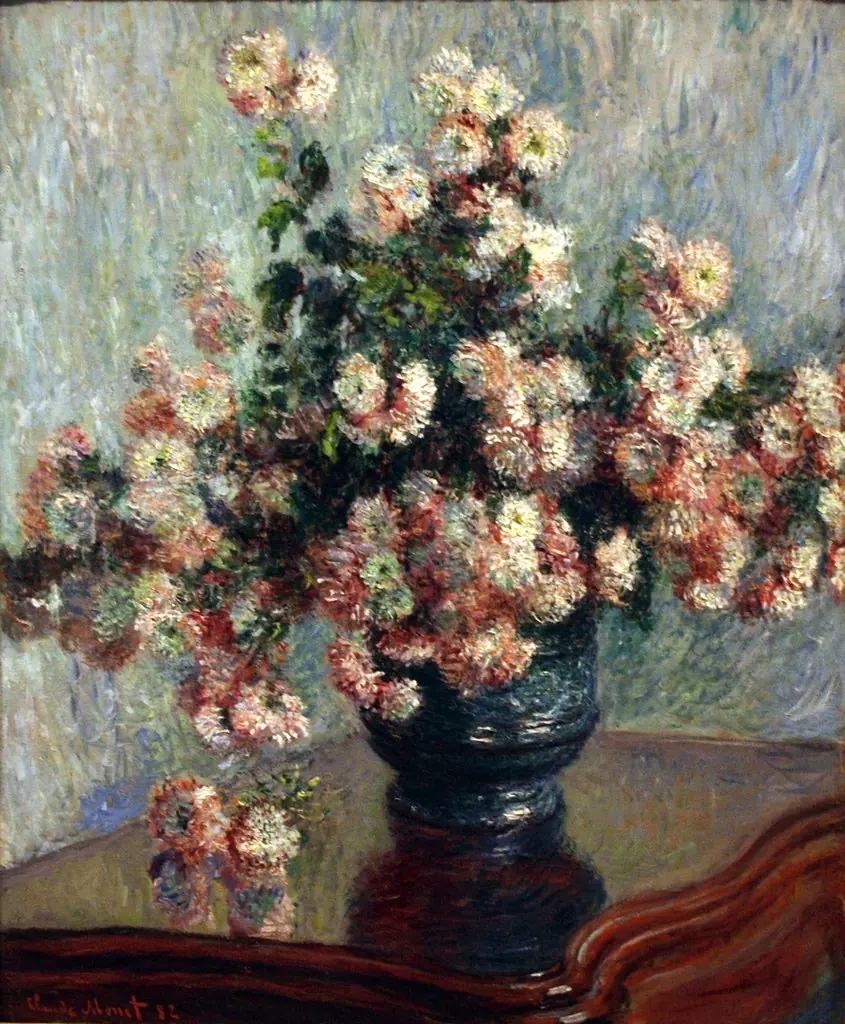
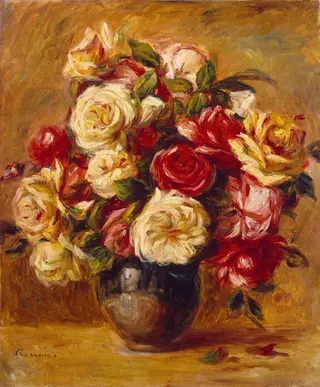
The painting depicts a still-life bouquet of chrysanthemums arranged in a glass vase, rendered in Renoir's late-career Impressionist manner.
The painting depicts a still-life bouquet of chrysanthemums arranged in a glass vase, rendered in Renoir's late-career Impressionist manner. Chrysanthemums in late-nineteenth-century European still lifes often carried connotations of autumnal abundance and fleeting beauty, aligning with the broader Impressionist interest in ephemeral moments in nature. The choice of chrysanthemums may also reflect contemporary French horticultural fashion, as the flower was widely hybridized and exhibited in Paris during the 1880s.
The work's composition centers on the dense, overlapping blossoms and foliage, emphasizing texture and luminosity rather than narrative. As a still life, it prioritizes the sensory immediacy of color and light over symbolic program, positioning the bouquet as a subject in itself rather than an allegory.
Technique & Style
Pierre-Auguste Renoir created Bouquet of Chrysanthemums in 1891 as an oil painting on canvas. The work measures 66 cm in height and 55.6 cm in width. Classified as a still life, the composition depicts a floral arrangement featuring chrysanthemums. Executed in oil paint, the piece exemplifies the artist's handling of the medium during this period.
History & Provenance
Pierre-Auguste Renoir painted Bouquet of Chrysanthemums in 1891 in oil on canvas; the work measures 66 cm in height by 55.6 cm in width. It belongs to the collection of the Metropolitan Museum of Art, where it has been held since its acquisition.
Overview
Painted in 1891, Pierre-Auguste Renoir's 'Bouquet of Chrysanthemums' is a still life that captures the artist's mature approach to floral subjects. The composition centers on a dense, overflowing arrangement of white, yellow, and orange chrysanthemums set against a dark, indistinct background within a simple vase. Renoir employs his characteristic Impressionist technique, utilizing short, visible brushstrokes to construct the forms and textures of the petals and foliage.
Rather than defining sharp contours, the artist allows the colors to vibrate against one another, creating a sense of luminosity and movement. The thick application of oil paint, or impasto, gives the bouquet a tangible, energetic presence, emphasizing the fleeting beauty of the blooms. This work reflects Renoir's continued interest in the interplay of light and color during the 1890s, a period where he often returned to still life to explore technical variations in brushwork and palette.
The painting stands as a testament to his ability to infuse a conventional subject with vitality and a distinct, painterly immediacy.
Own this work as a print
Artist & collection
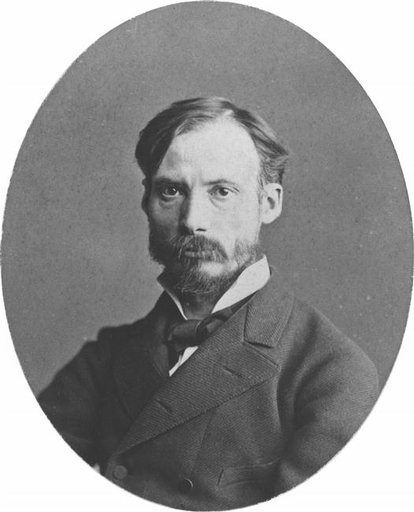
Artist
Pierre-Auguste Renoir was a French artist who was a leading painter in the development of the Impressionist style.