Artwork
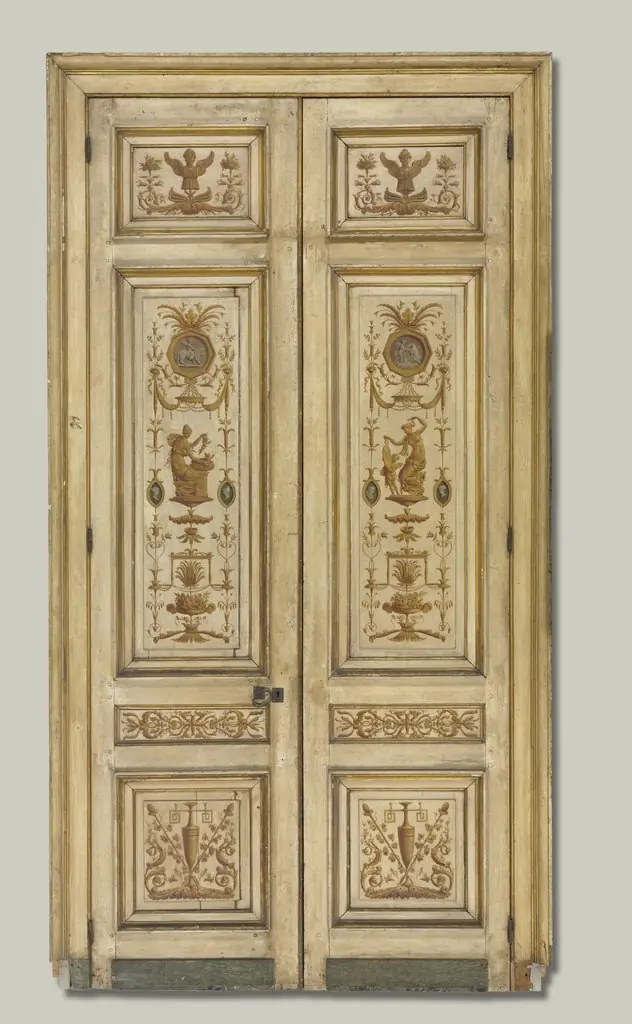
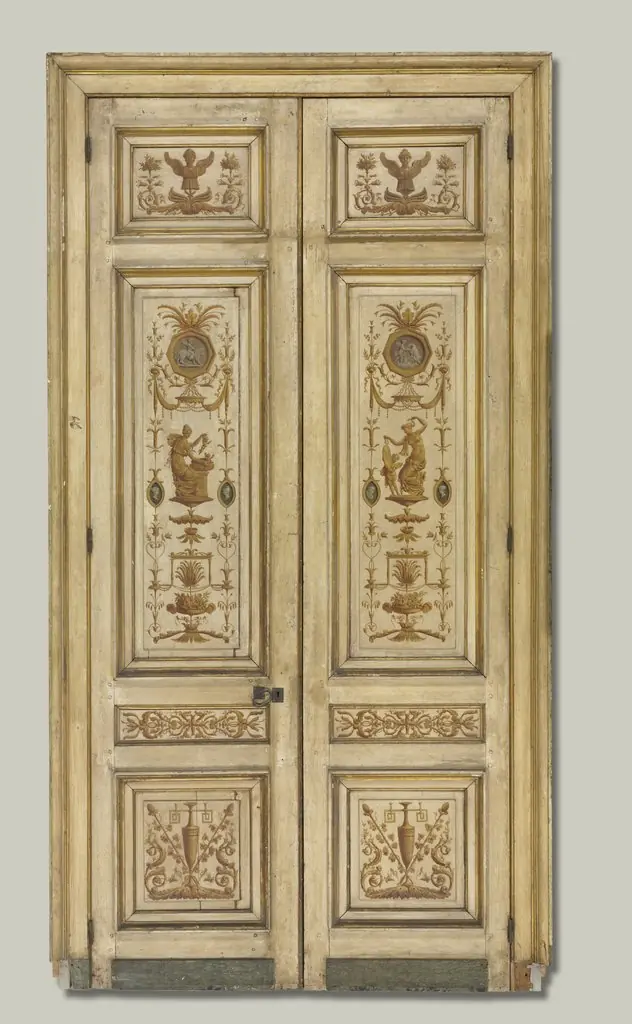
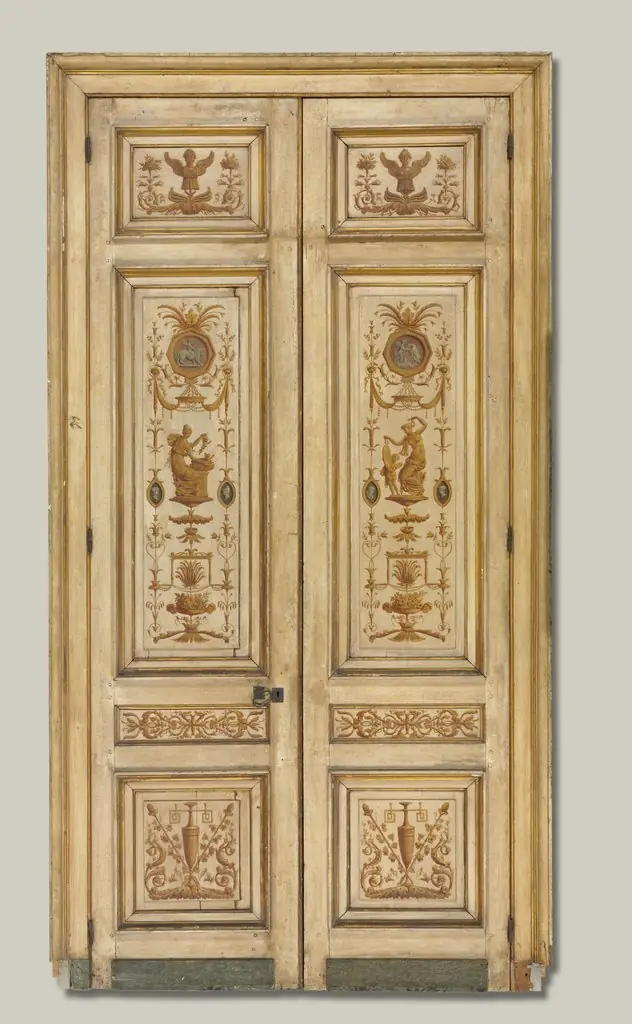
Overdoor Painting and Double-Leaf Doors
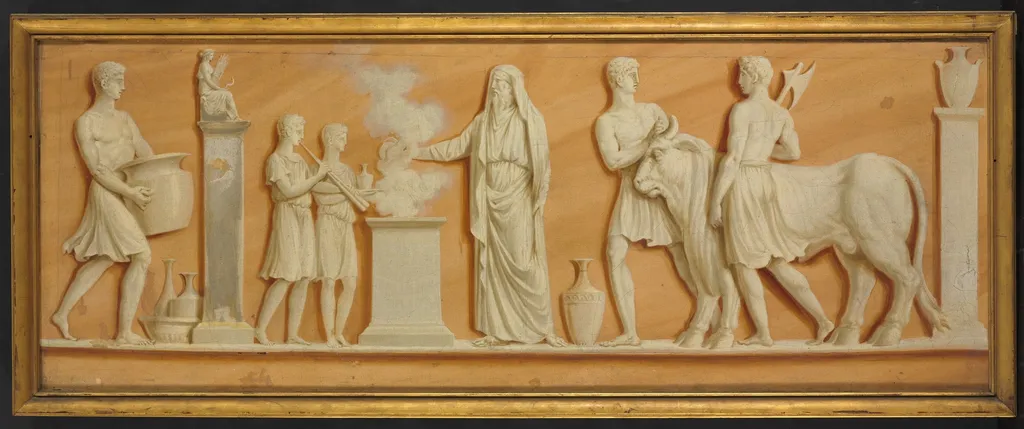
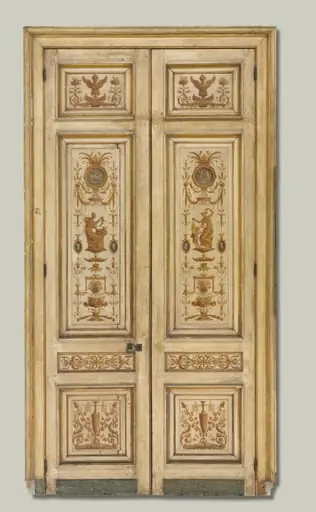
Overdoor Painting and Double-Leaf Doors is an oil painting by Pierre Rousseau. It dates from 1798 and is held in the collection of the Cleveland Museum of Art.
About this work
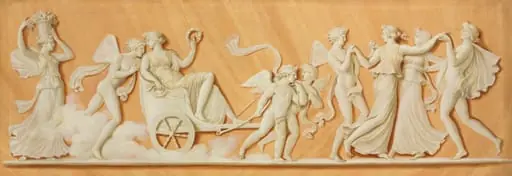
On the right side of the painting, a man leads a bull, accompanied by another figure holding a bird.
This painting is a serene depiction of a mythological scene. In the foreground, a woman stands at the center, surrounded by various figures and objects. To her left, a man carries a large vessel, while another figure stands beside a pedestal.
On the right side of the painting, a man leads a bull, accompanied by another figure holding a bird.
The scene is set against a warm, orange background, which adds to the overall sense of calm. The figures are rendered in a classical style, with attention to detail and texture. The artist's use of light and shadow creates a sense of depth and dimensionality.
For more information on the artist behind this work, look up Pierre Rousseau (French, 1751–1829).
Overview
Overdoor Painting and Double-Leaf Doors is an oil on canvas painting by the French artist Pierre Rousseau (1751-1829), dated to 1794. Measuring 52 x 151 cm unframed (59.7 x 148.9 x 6 cm framed), the horizontal panel was designed as an architectural overdoor, a format typical of late eighteenth-century French interior decoration. The work is now held by the Cleveland Museum of Art, where it entered the collection in 1944 with the accession number 1944.466. Its significance lies in its sophisticated trompe l'oeil technique, which simulates classical stone relief, and in its value as a document of Neoclassical taste during the French Revolutionary period.
Subject & Meaning
The painting presents a frieze-like composition of mythological or ritual figures arranged against a warm ochre ground. Reading from left to right, the scene includes a muscular male figure bearing a large basin, a tall column supporting a seated winged figure, two youthful figures in short tunics playing wind instruments, a robed, bearded figure extending his arm over a smoking altar, another male figure restraining a bull by its horns, and a final figure walking beside the bull carrying a double-bladed axe over his shoulder. A column with an urn caps the right edge, balancing the left side. The iconography suggests a sacrificial or ceremonial procession drawn from classical antiquity, though the precise narrative remains unidentified. The winged figure, the altar with smoke, and the bull all evoke Roman religious ritual, while the double-bladed axe associates the scene with heroic or priestly authority. The shallow, relief-like arrangement presses all elements close to the picture plane, emphasizing the work's function as simulated architectural sculpture.
Technique & Style
Rousseau executed the work in oil on canvas, employing a muted palette of whites, creams, and pale grays against the flat orange-ochre background to create the illusion of carved stone. The technique is fundamentally trompe l'oeil, with smooth, precise modeling that mimics the appearance of low relief sculpture. Shadows fall consistently from a single light source positioned in the upper left, enhancing the three-dimensional illusion. The artist paid careful attention to drapery folds and anatomical detail, and the surface shows fine craquelure throughout. No deep spatial recession is attempted; rather, the composition maintains the compressed, planar quality of classical architectural friezes. The painting is contained within a simple gilt frame, which would have integrated it into an interior architectural scheme as an overdoor. This approach aligns with the broader Neoclassical interest in reviving the forms and spirit of Greco-Roman antiquity through painterly means.
History & Provenance
According to Wildenstein & Co., in a letter of January 19, 1942, the painting originated from a private house at 193 Boulevard St. Germain, Paris (known at the time as 21 and 23 rue St. Dominique), supposedly built after plans by the architect Ange-Jacques Gabriel (1698-1782). The ownership chain proceeded from Comte Hippolyte Terray, who owned the house from about 1830, to his daughter the Marquise de Belleuf, then to Comte de Waresquiel, then to Arthur Veil-Picard. Wildenstein & Co., Paris, handled the work before its purchase by Grace Rainey Rogers in 1913. Rogers gave the painting to the Cleveland Museum of Art in memory of her father, William J. Rainey, with the gift recorded in 1942 and 1944. The museum's artwork page notes that information about this object, including provenance, may not be currently accurate.
Context
Pierre Rousseau worked during a period of intense Neoclassical revival in France, when artists and architects sought to emulate the clarity, order, and moral authority of classical antiquity. The 1794 date places the work in the midst of the French Revolution, a time when classical imagery carried particular ideological resonance. The supposed connection to a house designed by Ange-Jacques Gabriel, one of the premier architects of Louis XV's reign, suggests an elite patronage context, though the exact circumstances of the commission remain unclear. The format of an overdoor painting integrated into architectural woodwork reflects the collaborative nature of eighteenth-century French interior design, where painters, sculptors, and joiners worked together to create unified decorative ensembles. Scholarship on Rousseau himself remains limited, and the Cleveland Museum of Art has flagged that information about this object may require updating.
Legacy
The Overdoor Painting and Double-Leaf Doors survives as a significant example of late eighteenth-century French decorative painting, preserved in a major American museum collection. Its acquisition by Grace Rainey Rogers and subsequent donation to the Cleveland Museum of Art ensured its accessibility for public study and viewing. The work has been digitized and made available through platforms including the Internet Archive and Google Arts & Culture, extending its reach beyond physical museum walls. As a document of Neoclassical trompe l'oeil technique and of the architectural integration of painting in pre-Revolutionary and Revolutionary France, it continues to serve as a resource for scholars of French decorative arts and eighteenth-century European painting. The attribution to Pierre Rousseau, while accepted, sits within a body of work that has received limited dedicated scholarly attention, leaving room for future research into his oeuvre and the broader culture of architectural painting in late eighteenth-century France.
Artist & collection
Artist
Pierre Jean-Baptiste Rousseau was a French essayist, epistemologist, astronomer and journalist who authored numerous popular science essays and articles.

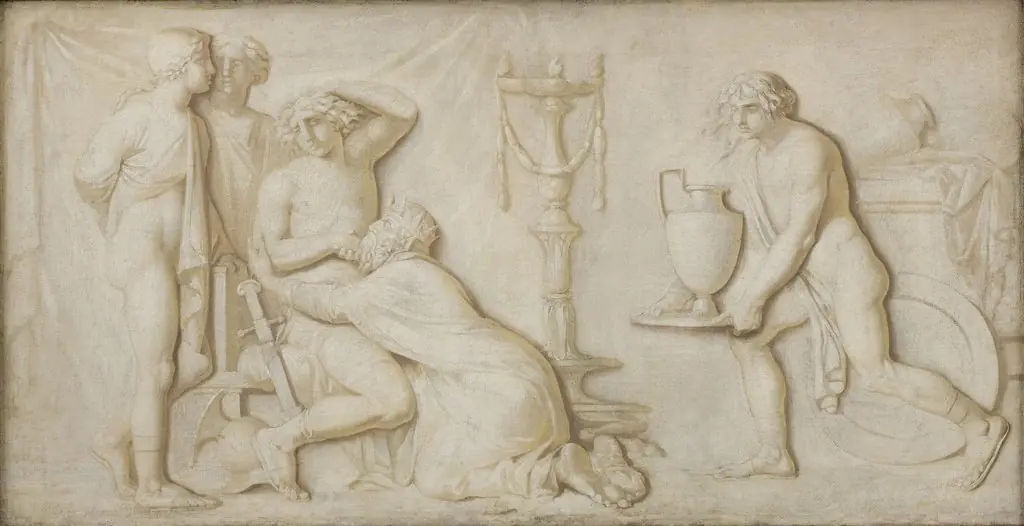 King Priam Pleading with Achilles for the Corpse of Hector
 King Priam Pleading with Achilles for the Corpse of Hector
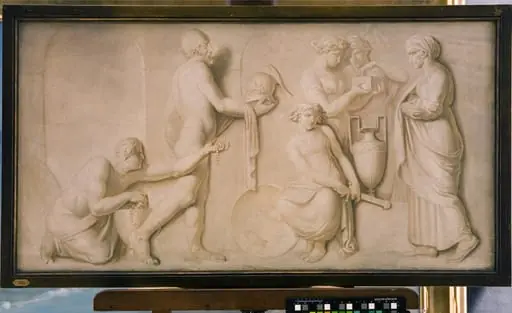 Achilles and the Daughters of Lycomedes
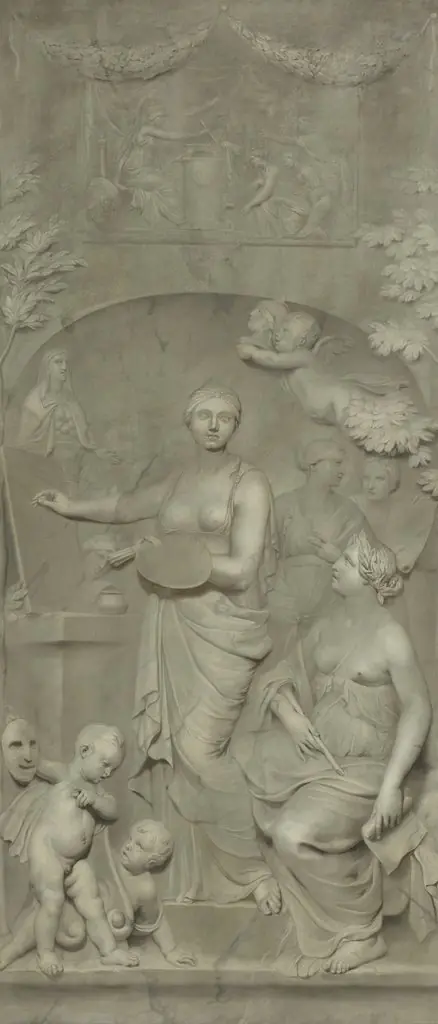 Allegory of the arts
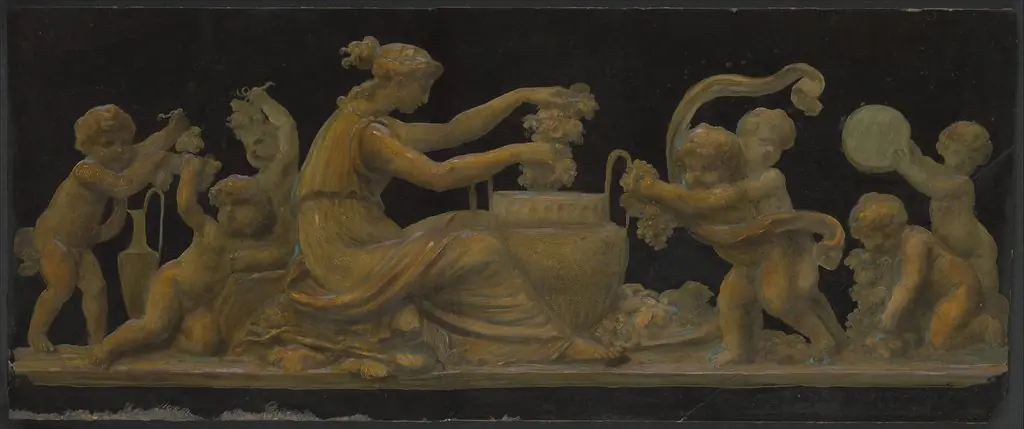 Nymph and Putti in a Vintage Scene; Nymph with a Wreath and Putti with Garlands of Flowers
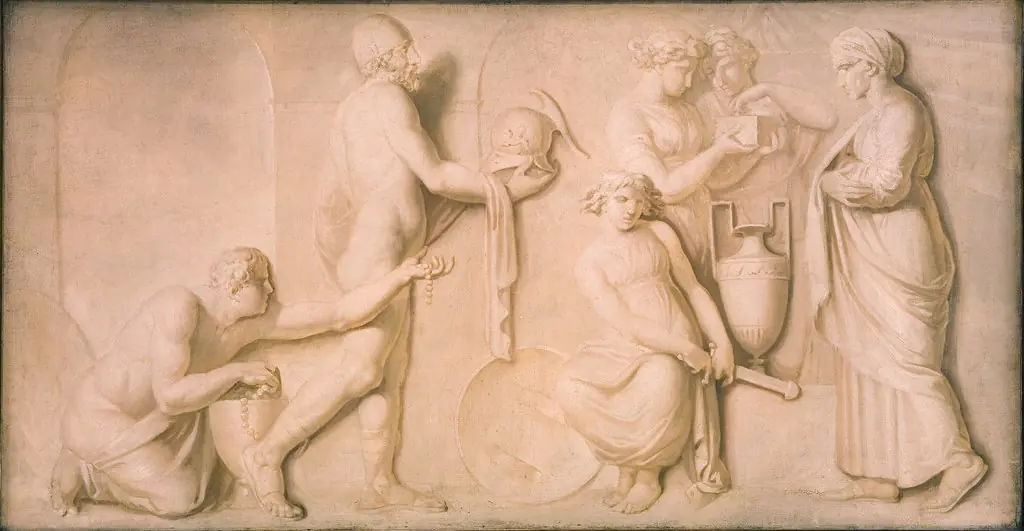 Achilles and the Daughters of Lycomedes
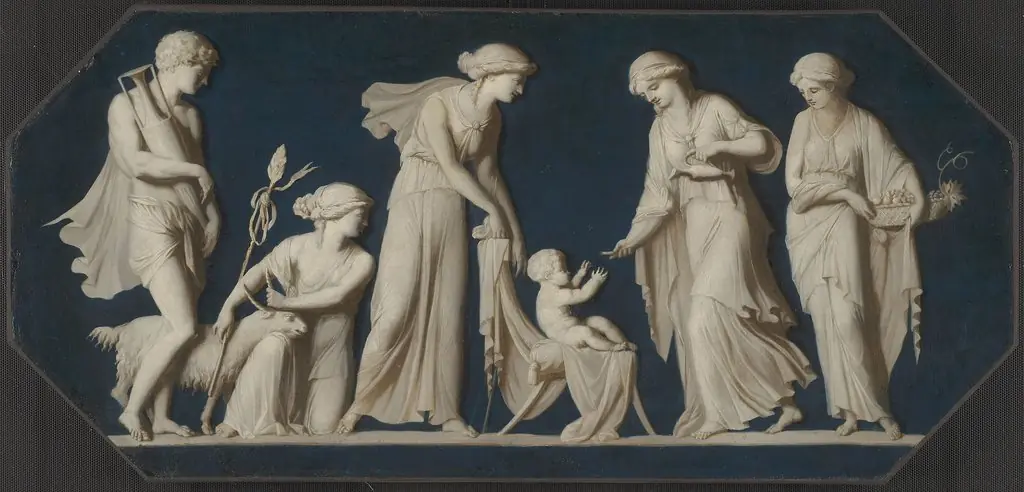 The Birth of Bacchus
 Bacchanal
 Standardization of Weights and Measures in 1683