Artwork
Broadway Boogie Woogie
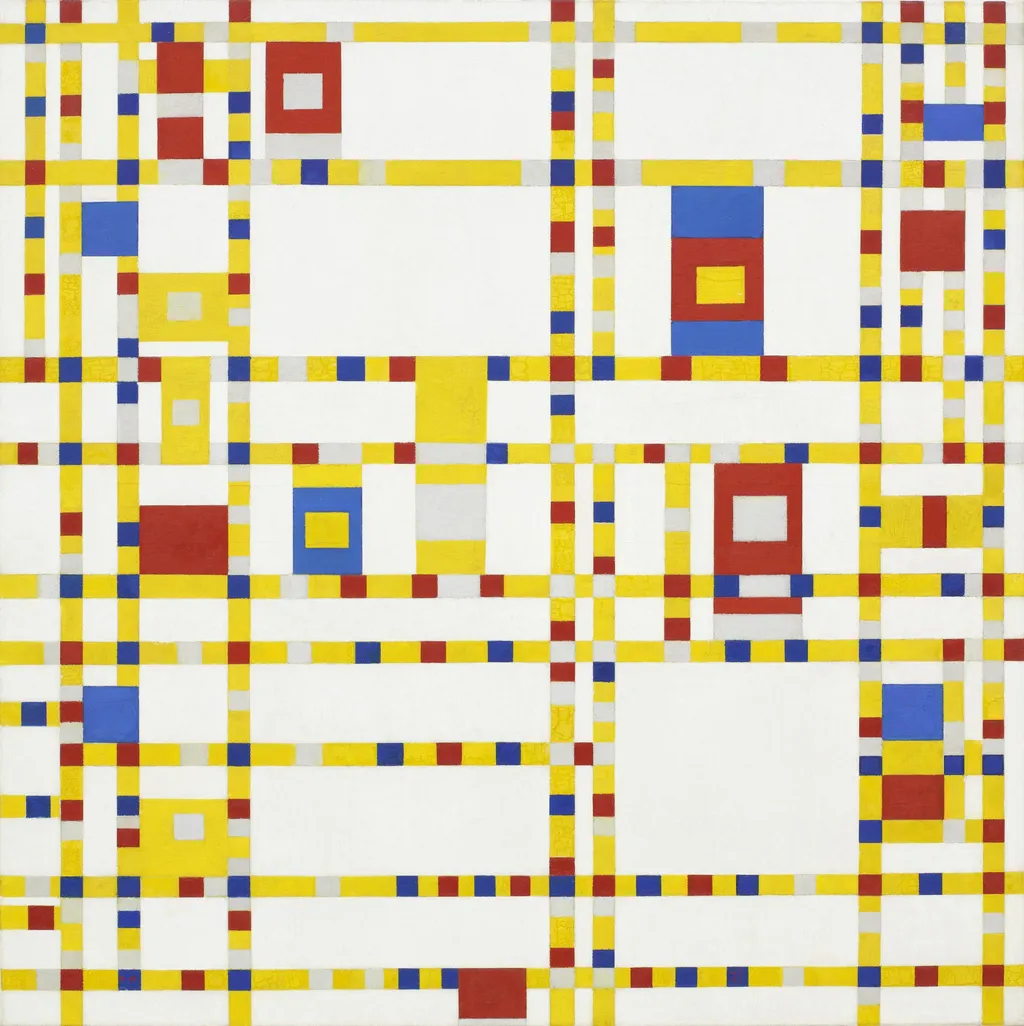
Broadway Boogie Woogie is an oil painting by the De Stijl artist Piet Mondrian. It dates from 1942 and is held in the collection of the Museum of Modern Art.
About this work
Overview
It reflects his engagement with the urban environment and the rhythms of American life, particularly the energy of jazz and city traffic.
Piet Mondrian completed Broadway Boogie Woogie in 1943, shortly after relocating to New York City. Executed in oil on canvas, the work marks a shift from his earlier, more restrained compositions. It reflects his engagement with the urban environment and the rhythms of American life, particularly the energy of jazz and city traffic. The painting retains his signature abstraction but introduces a more complex, pulsing structure.
Subject & Meaning
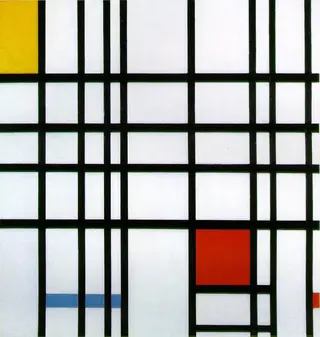
The painting does not depict a literal scene but evokes the rhythm and movement of New York City. Mondrian translated the grid of Manhattan’s streets and the syncopated beats of boogie-woogie music into visual form. The arrangement of colored blocks suggests the interplay of pedestrians, vehicles, and neon signs, translating urban dynamism into an abstract language of color and form without direct representation.
Technique & Style
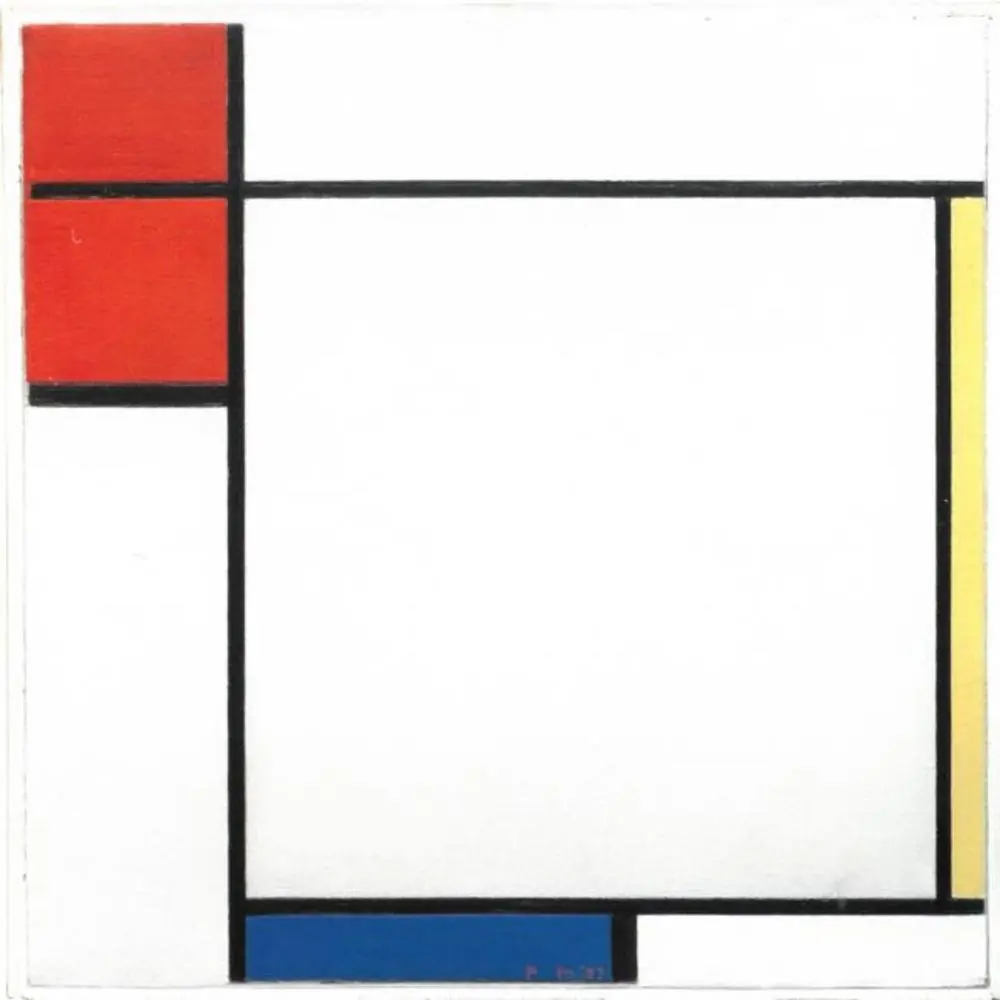
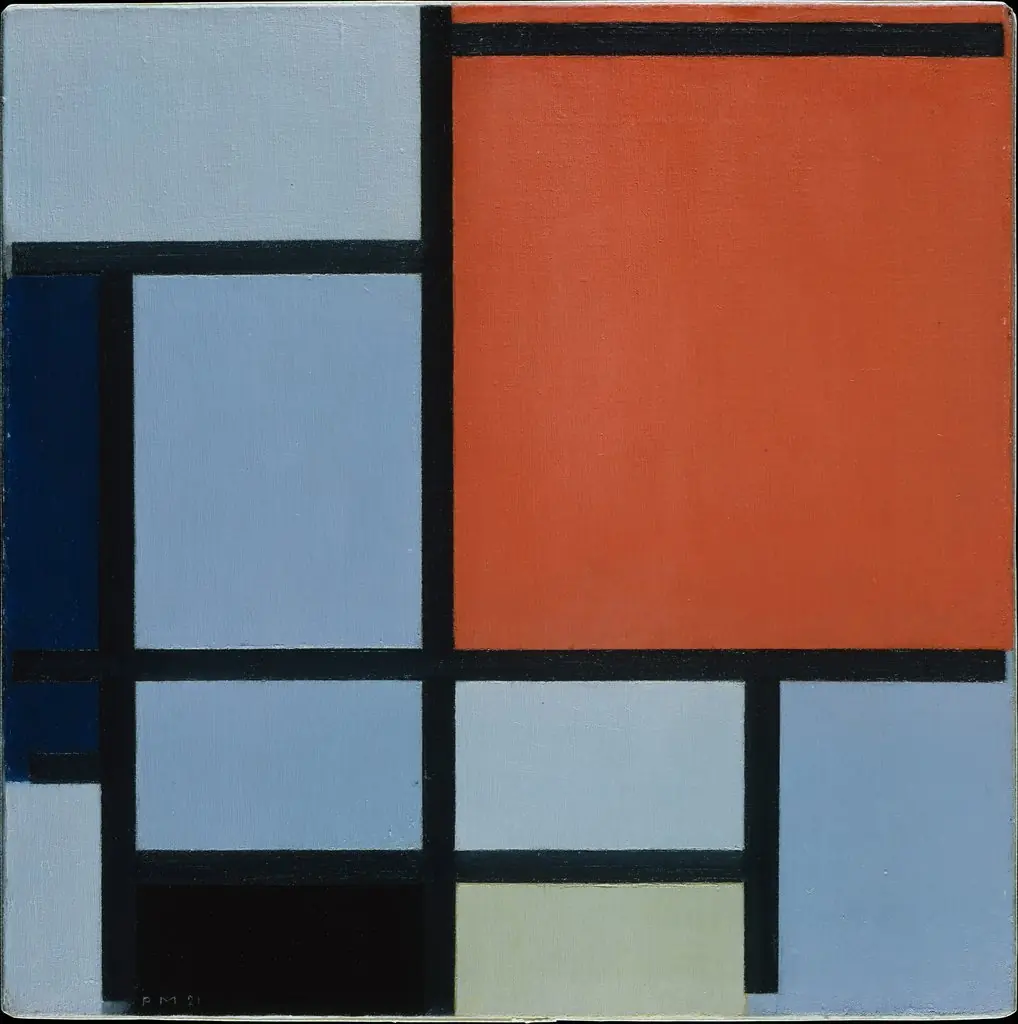
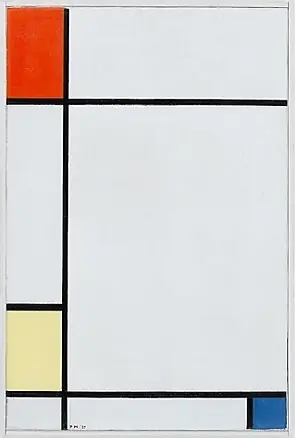
Mondrian employed a grid of small rectangles and squares in primary colors, yellow, red, blue, along with gray and white. Unlike earlier works, these shapes vary in size and are not uniformly spaced; some overlap, others terminate at edges, creating visual rhythm. The paint is applied evenly, with no visible brushwork, emphasizing precision and flatness. The composition avoids symmetry, generating a sense of forward motion.
History & Provenance
Mondrian began the work in 1942 and finished it in 1943, during his final years in New York. He lived in a studio near Times Square and was deeply influenced by the city’s energy. The painting remained in his possession until his death in 1944.
It was acquired by the Museum of Modern Art in New York in 1945, where it has been held since, becoming one of the most recognized examples of his late style.
Context
Created during World War II, the painting contrasts with the turmoil in Europe. In New York, Mondrian found a sense of optimism and modernity. His engagement with jazz, particularly boogie-woogie, and the city’s architecture informed this work.
It represents a culmination of his decades-long pursuit of pure abstraction, now infused with the vitality of American culture and the rhythms of urban life.
Legacy
Broadway Boogie Woogie stands as a pivotal work in 20th-century abstraction, influencing design, architecture, and visual culture. Its integration of rhythm and geometry into non-representational art expanded the possibilities of modernism. The painting remains a touchstone for discussions on how music, urban form, and color can be translated into visual structure, continuing to inform contemporary approaches to abstraction.
Own this work as a print
Artist & collection

Artist
Pieter Cornelis Mondriaan (Dutch:; 7 March 1872 – 1 February 1944), known after 1911 as Piet Mondrian (, US also; Dutch: ), was a Dutch painter and art theoretician, who is regarded as one of the greatest artists of the 20th century.