Artwork
Composition II in Red, Blue, and Yellow
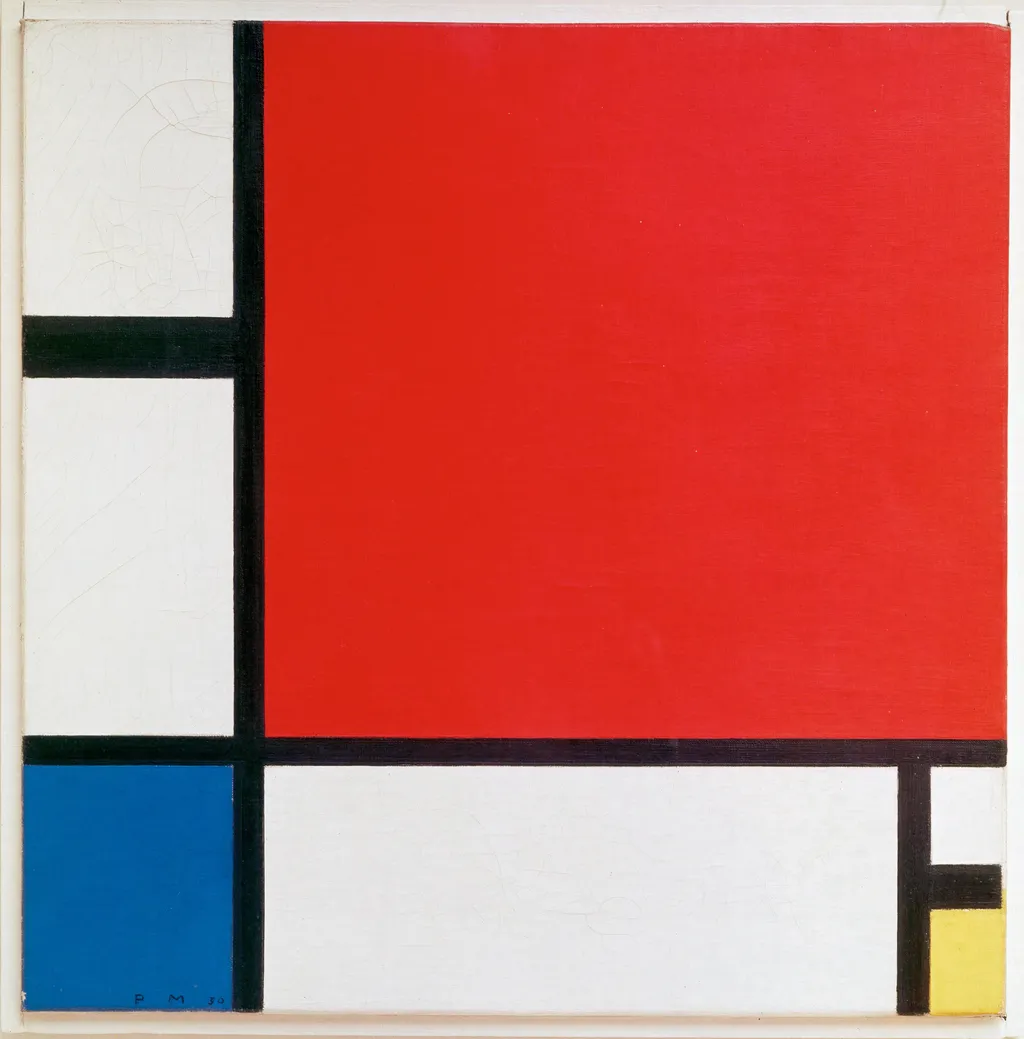
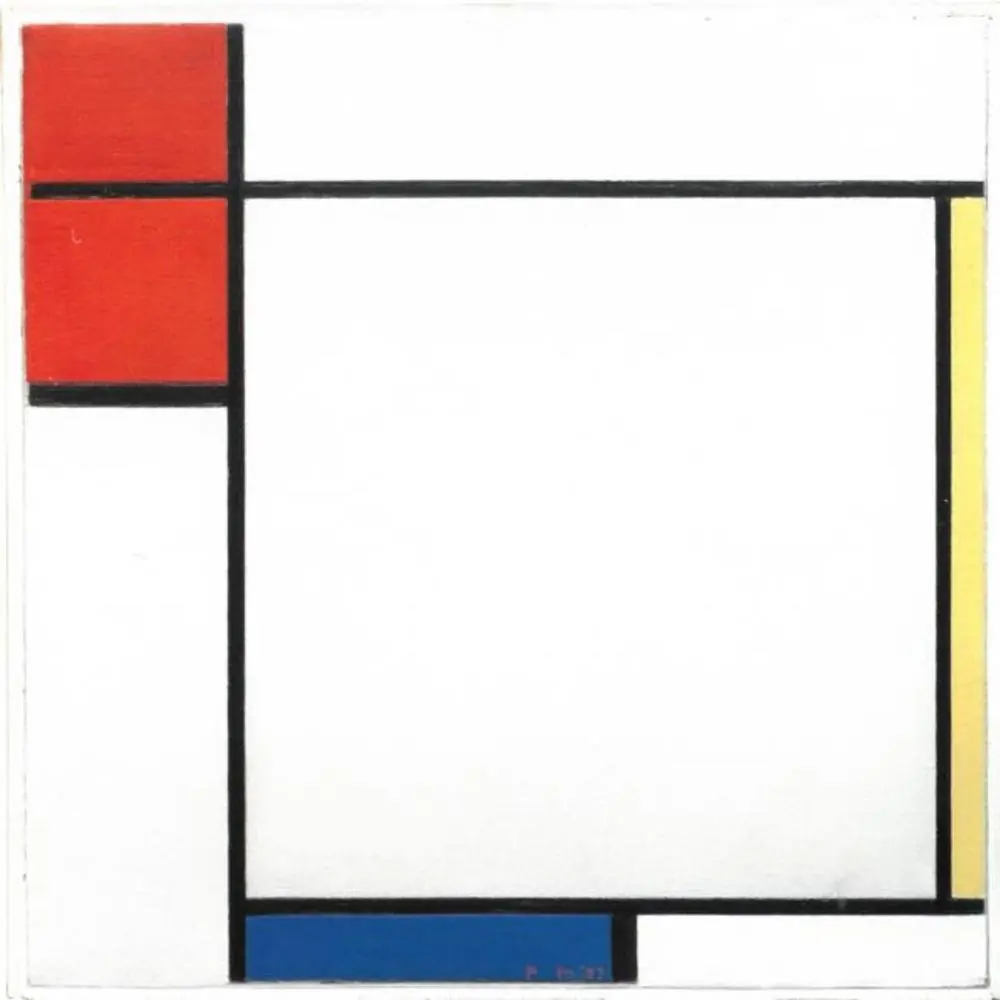
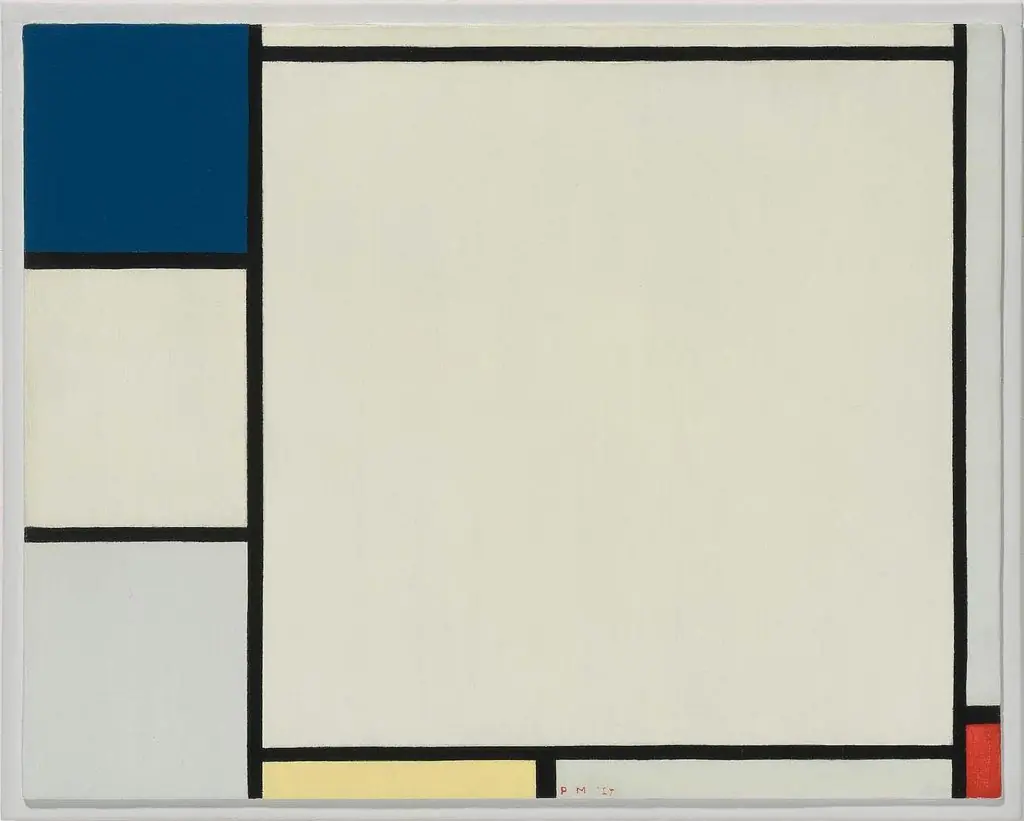
Composition II in Red, Blue, and Yellow is an oil painting by the De Stijl artist Piet Mondrian. It dates from 1930 and is held in the collection of the Kunsthaus Zürich.
About this work
Overview
It stands as one of Mondrian's most resolved investigations of the grid structure, pure color, and asymmetrical balance that define his mature abstract style.
Composition II in Red, Blue, and Yellow is a 1930 oil on canvas painting by the Dutch artist Piet Mondrian, a central figure in the neoplasticist movement and the De Stijl group. The work, measuring 45 cm in height, is held in the collection of the Kunsthaus Zürich in Switzerland. It stands as one of Mondrian's most resolved investigations of the grid structure, pure color, and asymmetrical balance that define his mature abstract style. The painting exemplifies the artist's pursuit of universal harmony through the reduction of form to its essential vertical and horizontal elements, a project that fundamentally shaped the course of twentieth-century abstract art.
Subject & Meaning
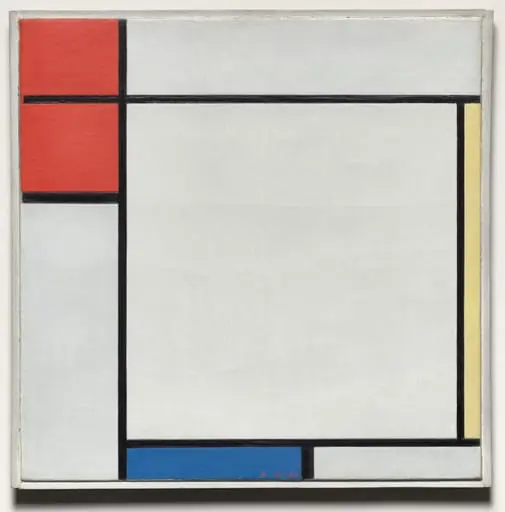
The painting is entirely non-representational, depicting no recognizable subject matter. Instead, its iconography consists of geometric elements: squares, rectangle, and line. A massive red rectangle dominates the upper right, occupying roughly half the composition. To its left, a vertical column contains two stacked white rectangles above a blue square in the lower left corner. Below the red field, a wide horizontal white rectangle spans most of the lower section. In the bottom right corner, a small yellow square sits beside a narrow white rectangle, all framed by black lines. The palette is strictly limited to red, blue, yellow, black, and white. As art historian Stephanie Chadwick has observed, Mondrian's composition demonstrates his commitment to relational opposites, asymmetry, and pure planes of color, functioning as a harmony of contrasts that signifies both balance and the tension of dynamic forces. The work thus embodies Mondrian's philosophical ambition to express underlying universal order through abstract means, eliminating the accidental particularities of nature in favor of a purified visual language.
Technique & Style
The medium is oil paint on canvas, with a matte, flat finish and no discernible modeling or depth. The black lines vary slightly in width and appear hand-painted with visible brush texture, defining the borders of the colored rectangles. The edges of the colored planes abut the black borders with slight irregularities. The white areas show prominent craquelure throughout. The technique employed was notably complex: Mondrian would first sketch the work in charcoal, then apply pieces of wallpaper, add strips of adhesive tape, apply paint, and use more charcoal, before finally replacing all these elements with paint. This layered, iterative process allowed him to achieve the precise yet hand-worked quality of the final surface. The composition is asymmetrical yet balanced, with the massive red field counterweighted by the smaller but strategically placed blue and yellow elements. A signature reading 'P M 30' appears in the lower left corner.
History & Provenance
The painting was created in 1930, during Mondrian's most intensive period of grid-based composition. It is currently located at the Kunsthaus Zürich, where it is accessioned in the museum's collection. The museum's online collection provides public access to the work. The painting has been exhibited and documented as part of the Kunsthaus Zürich's holdings, and is listed in resources including Google Arts & Culture and RKDimages.
Context
Mondrian was a leading practitioner of neoplasticism, the Dutch movement associated with De Stijl that sought to reduce art to its fundamental elements of line, color, and plane. By 1930, he had fully developed the visual vocabulary that would occupy him for the remainder of his career: rectangular fields of pure primary color separated by black vertical and horizontal lines on a white ground. Composition II in Red, Blue, and Yellow belongs to a closely related group of works from this period, including the similarly titled Composition with Red, Blue and Yellow, with which it shares strong formal affinities. The art historical scholarship, as represented by Chadwick's analysis, emphasizes how Mondrian's compositions of this era demonstrate a commitment to relational opposites and the dynamic tension between asymmetry and equilibrium. The work's placement in the Kunsthaus Zürich collection situates it within one of Europe's most significant repositories of modern art, ensuring its continued visibility to scholars and the public.
Legacy
Composition II in Red, Blue, and Yellow has become an iconic representation of Mondrian's mature style and, by extension, of abstract art itself. Its visual logic of balanced asymmetry and restricted palette has permeated popular culture, design, and subsequent art practice. The work's influence extends beyond fine art into architecture, graphic design, and fashion, where the Mondrian grid has become a universally recognized motif. The painting's presence in the Kunsthaus Zürich collection, documented through the museum's online presence and international databases such as Google Arts & Culture and RKDimages, ensures its continued accessibility and relevance. As a touchstone for understanding the trajectory from early modernist abstraction to contemporary visual culture, the work maintains its significance not merely as a historical artifact but as an active reference point for ongoing discussions about the nature of pictorial order, color theory, and the ambitions of non-representational art.
Own this work as a print
Artist & collection

Artist
Pieter Cornelis Mondriaan (Dutch:; 7 March 1872 – 1 February 1944), known after 1911 as Piet Mondrian (, US also; Dutch: ), was a Dutch painter and art theoretician, who is regarded as one of the greatest artists of the 20th century.

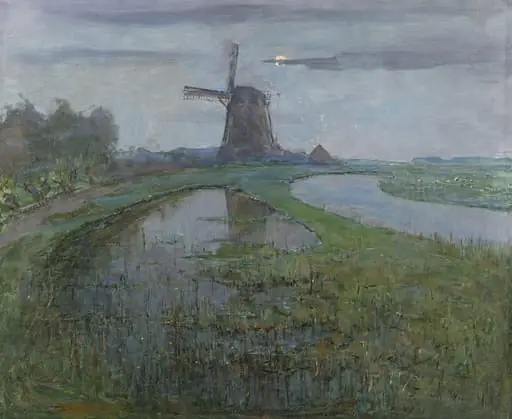
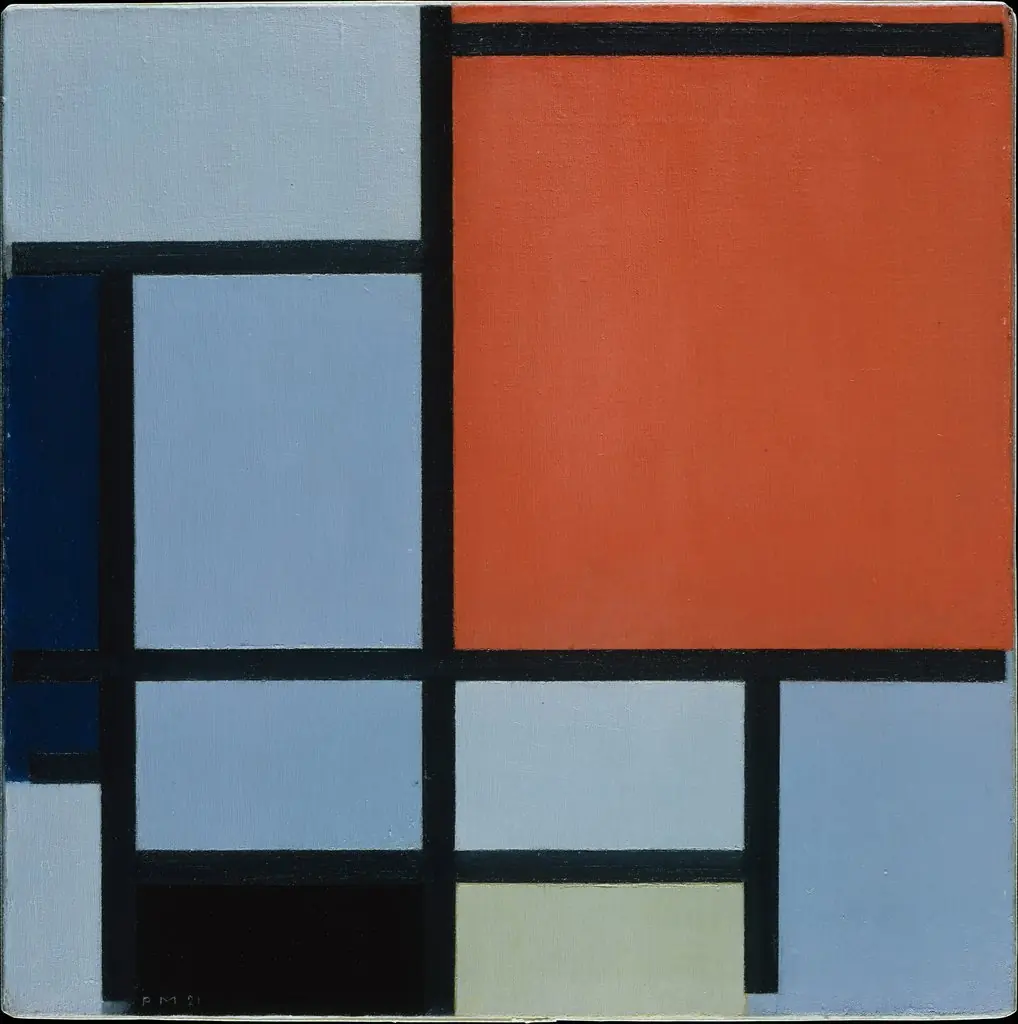
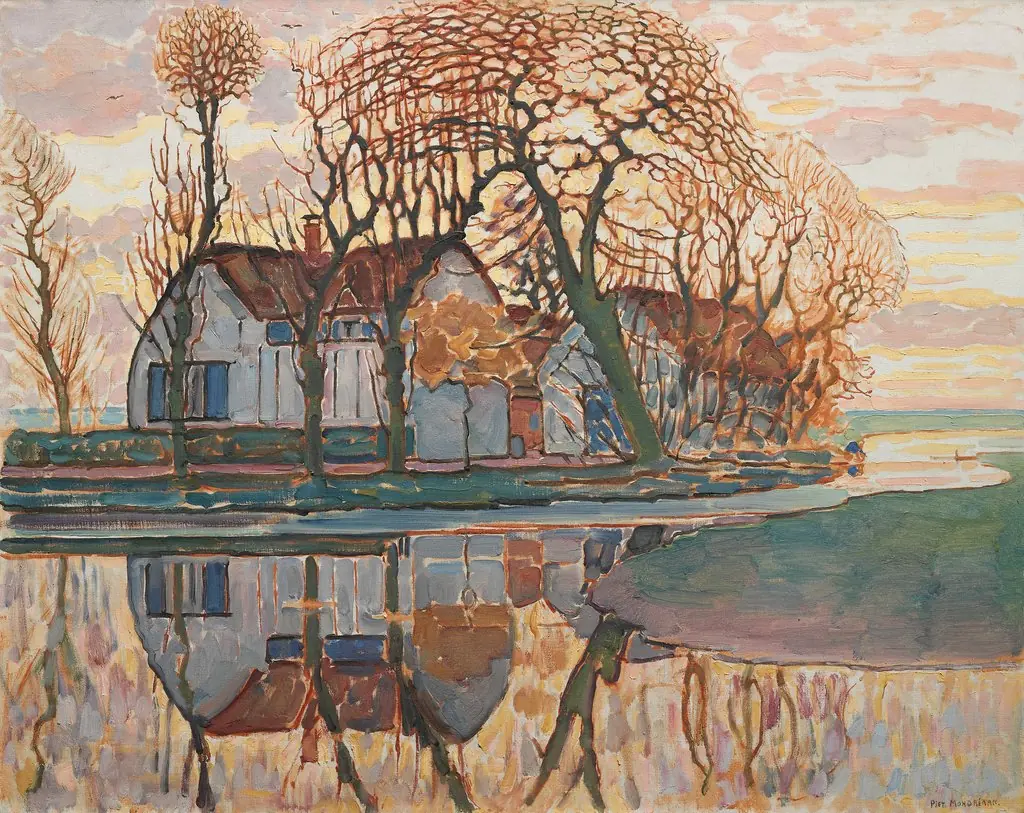
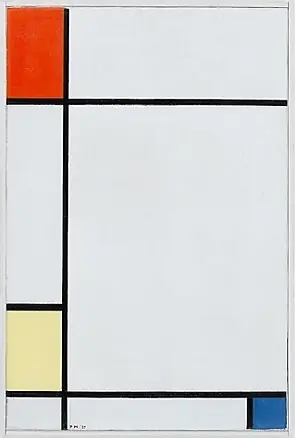
- Composition in Colours
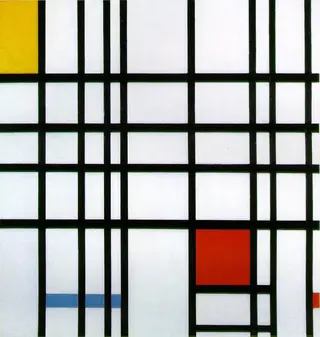 Composition with Red, Yellow and Blue
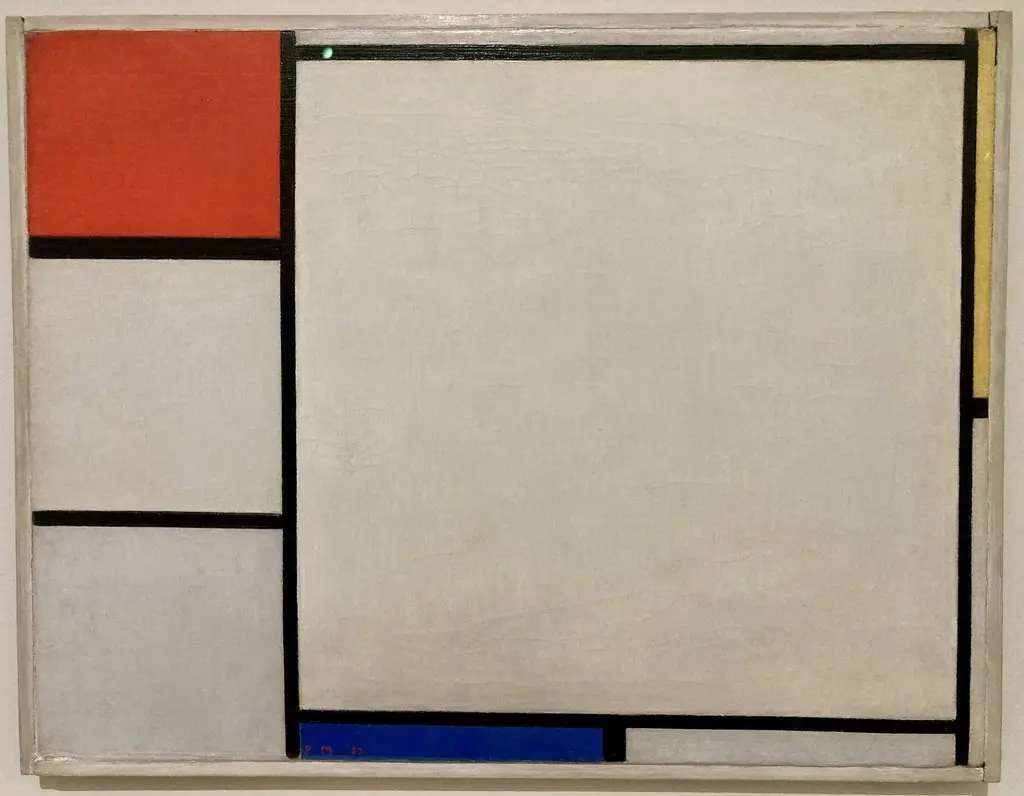 Composition with red, yellow, and blue
 Composition with Blue, Yellow, and Red
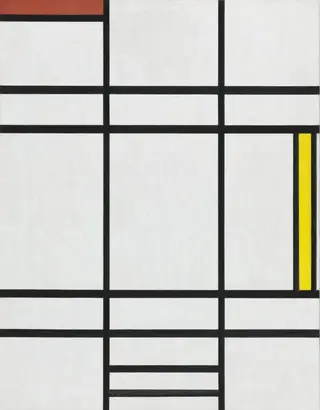 Composition in White, Red, and Yellow
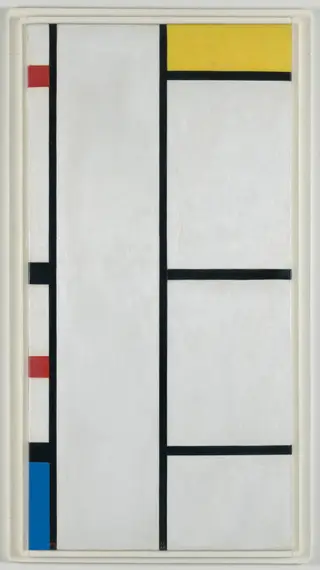 Composition (no. III) blanc-jaune
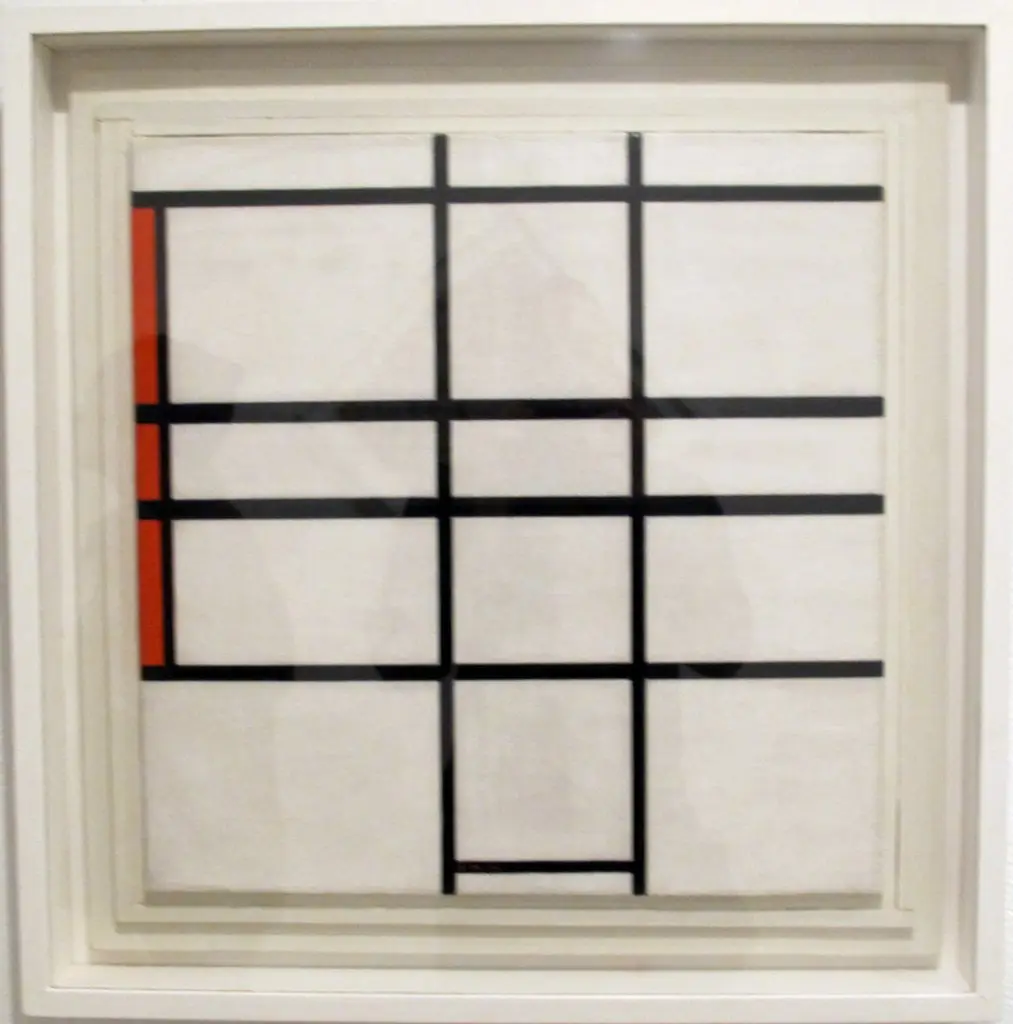 Composition with White and Red
 Composition (No. 1) Gray-Red
 Composition with Red, Yellow, and Blue