Artwork
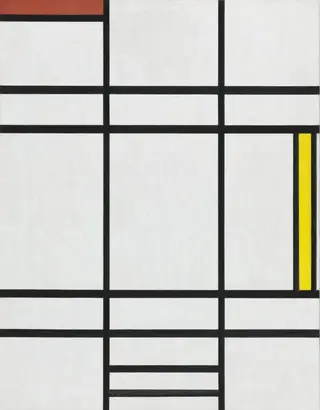
Composition with White and Red
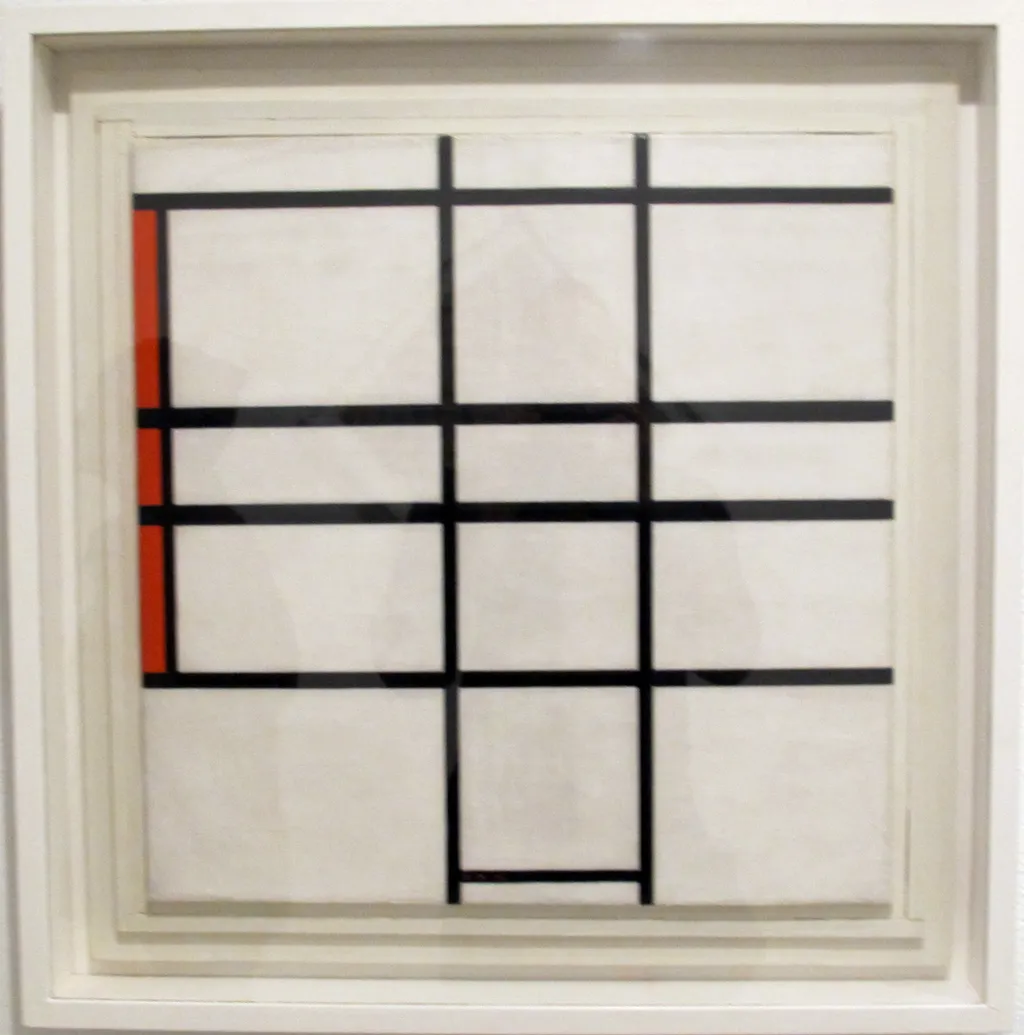
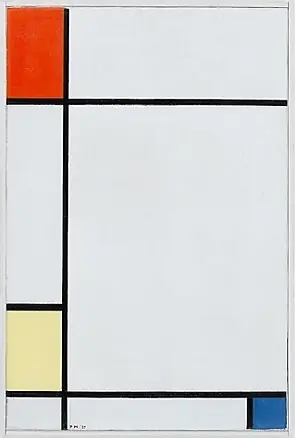
Composition with White and Red is an oil painting by the De Stijl artist Piet Mondrian. It dates from 1936 and is held in the collection of the Philadelphia Museum of Art.
About this work
Overview
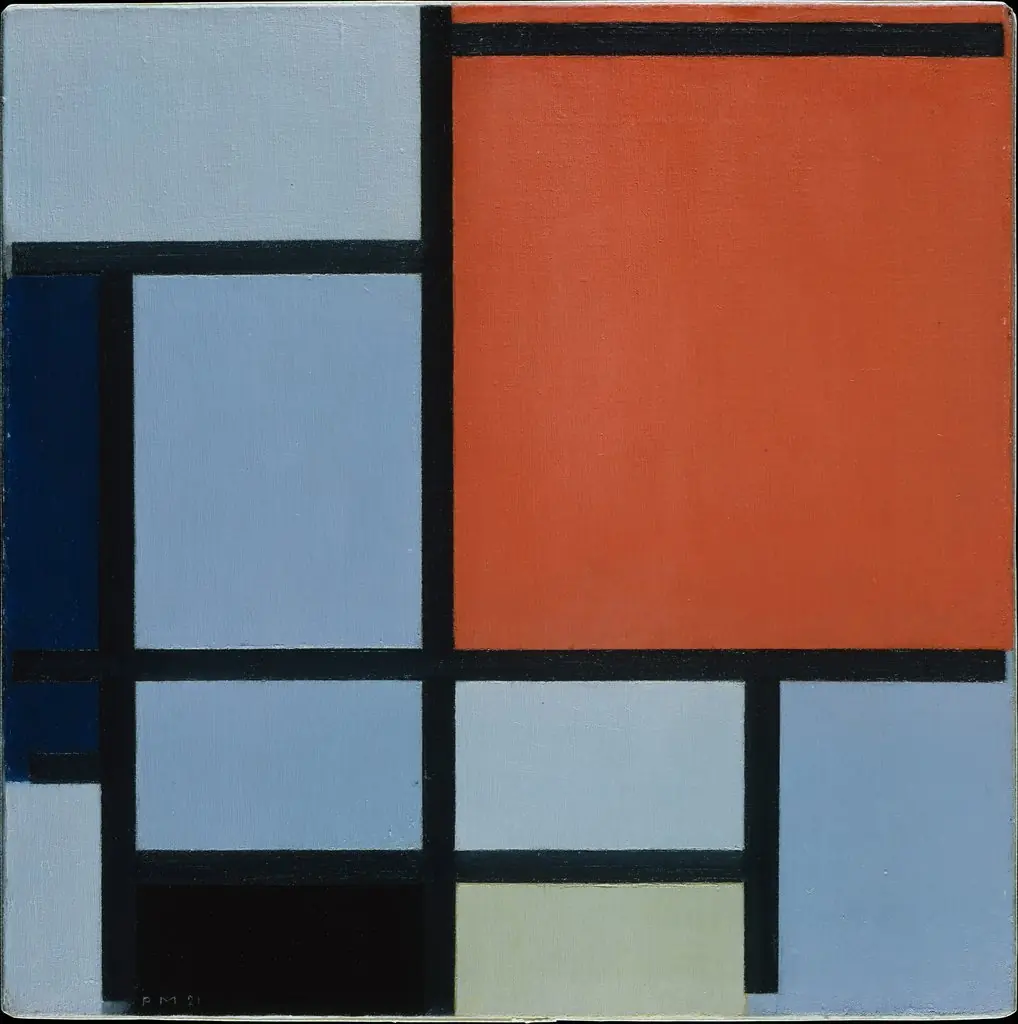
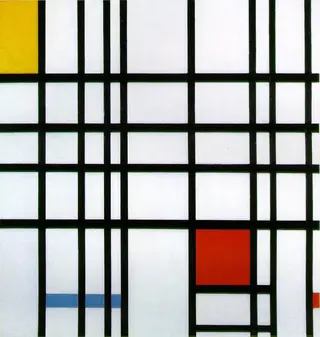
The composition relies solely on vertical and horizontal black lines, white space, and small rectangular areas of red.
Painted in 1936, Composition with White and Red is an oil on canvas work by Dutch artist Piet Mondrian. It exemplifies his mature style, stripped of representational elements in favor of pure abstraction. The composition relies solely on vertical and horizontal black lines, white space, and small rectangular areas of red. This reduction reflects Mondrian’s belief in art as a pursuit of universal harmony through form and color.
Subject & Meaning
The painting does not depict a recognizable subject but instead seeks to express balance and equilibrium through geometric relationships. The placement of red rectangles on the left side introduces asymmetry within a rigid grid, suggesting dynamic tension within order. Mondrian viewed such arrangements as visual representations of cosmic structure, aiming to convey spiritual harmony through disciplined abstraction.
Technique & Style
Mondrian applied oil paint with precision, using masking techniques to achieve sharp, clean edges between planes of color. The black lines are uniform in thickness, and the red rectangles match their width, reinforcing structural consistency. Only primary colors, red, white, and black, are used, eliminating nuance to emphasize clarity. No curves or diagonals appear, adhering strictly to the De Stijl principle of orthogonal geometry.
History & Provenance
Created during Mondrian’s time in Paris, the painting emerged from his ongoing exploration of abstraction following his involvement with the De Stijl movement. It entered the collection of the Philadelphia Museum of Art in the mid-20th century, where it remains as part of a significant group of his works. Its provenance reflects its recognition as a key example of early modernist abstraction in American institutional collections.
Context
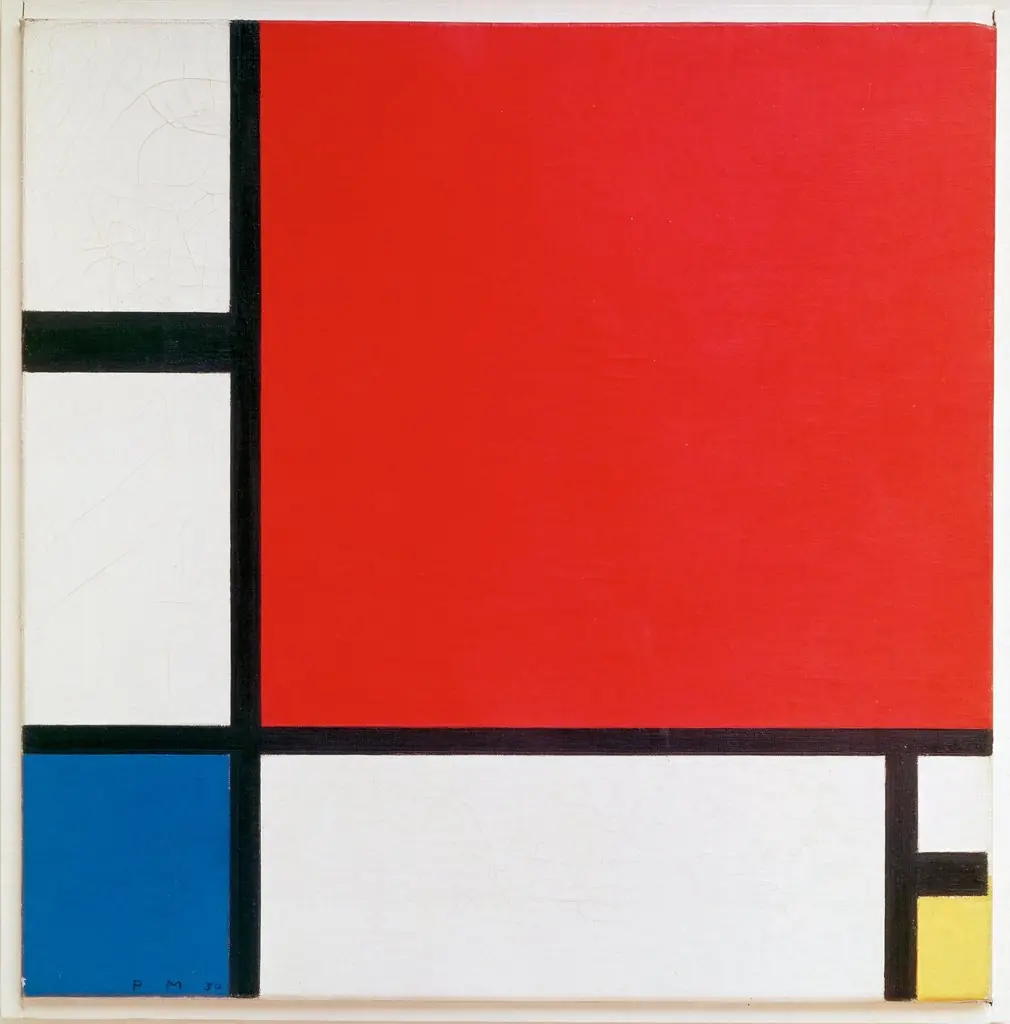
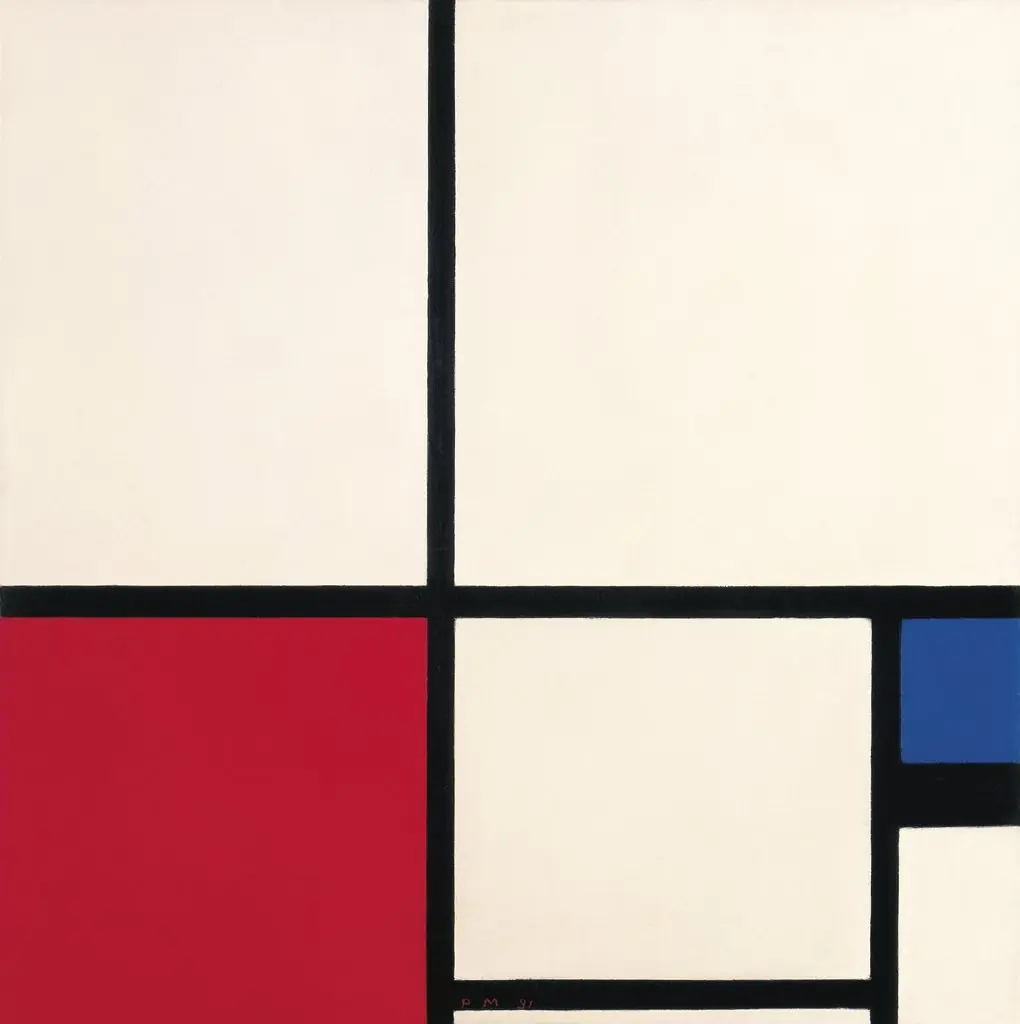
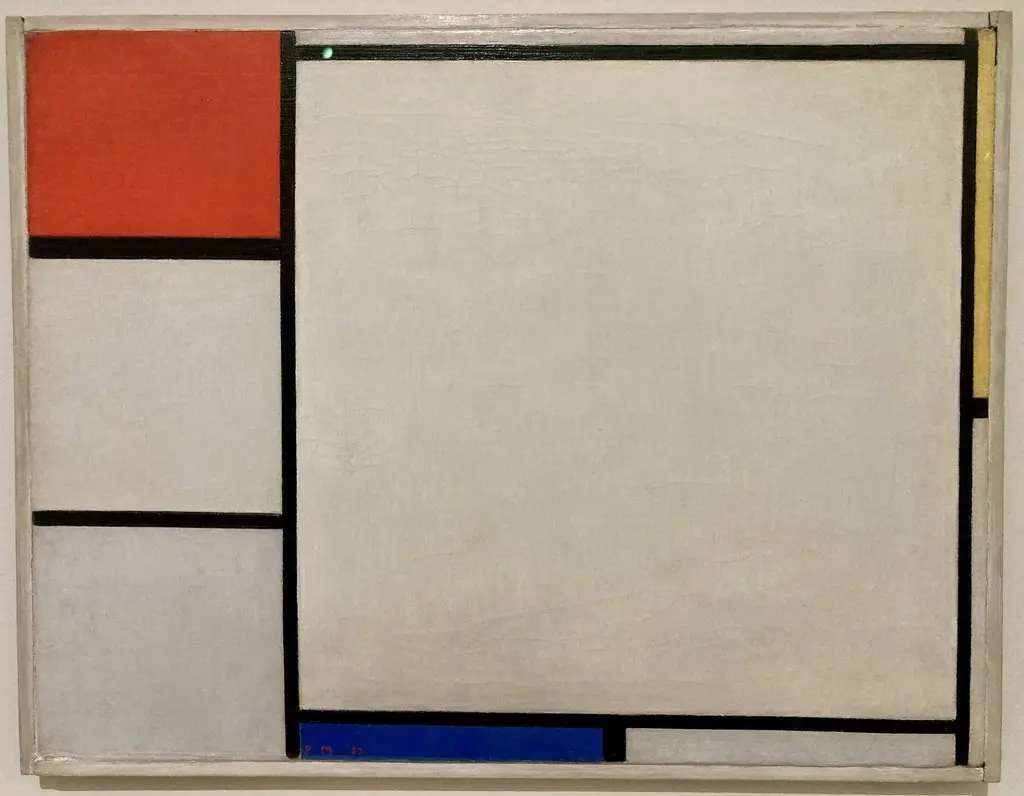
This work belongs to the broader De Stijl movement, founded in the Netherlands in 1917, which sought to unify art, architecture, and design through elemental forms. Mondrian’s approach was influenced by Theosophy and a desire to transcend individual expression. By 1936, he had fully abandoned naturalistic references, focusing instead on universal visual language as a response to the fragmentation of modern life.
Legacy
Mondrian’s reduction of form and color in works like this influenced generations of minimalist and conceptual artists. His grid-based compositions became foundational to 20th-century design, from architecture to graphic arts. While his methods were highly personal, their clarity and discipline resonated beyond fine art, embedding his aesthetic into the visual language of modernism.
Own this work as a print
Artist & collection

Artist
Pieter Cornelis Mondriaan (Dutch:; 7 March 1872 – 1 February 1944), known after 1911 as Piet Mondrian (, US also; Dutch: ), was a Dutch painter and art theoretician, who is regarded as one of the greatest artists of the 20th century.