Artwork
Allegory of the 1577 Peace in the Low Countries
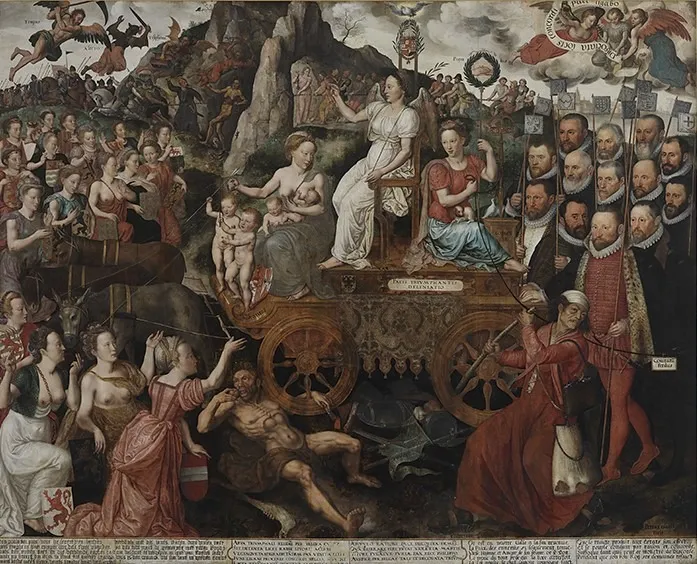
Allegory of the 1577 Peace in the Low Countries is an oil painting by the Northern Renaissance artist Pieter Claeissens the Elder. It is held in the collection of the Groeningemuseum.
About this work
Subject & Meaning
The scene also includes a rock formation, a wagon, a horse, and a depiction of Cain, likely serving as moral or historical counterpoints to the desired harmony.
Created by Pieter Claeissens, this allegorical painting depicts the Edict of 1577, a pivotal moment for peace in the Low Countries. The composition integrates complex symbolism to convey its political message, featuring figures such as an angel and a pigeon, which traditionally represent divine intervention and peace. The scene also includes a rock formation, a wagon, a horse, and a depiction of Cain, likely serving as moral or historical counterpoints to the desired harmony.
Heraldic elements, specifically a coat of arms, anchor the work in its specific historical context. Through these combined visual elements, the artwork functions as a celebratory and didactic representation of the 1577 peace agreement.
Technique & Style
Executed in 1577, this allegorical work by Pieter Claeissens utilizes oil paint applied to a wooden panel support. The composition measures 159 cm in height and 198 cm in width, presenting a complex narrative scene. Visually, the painting incorporates diverse iconographic elements including rock formations, clouds, a wagon, and various figures such as an angel, a horse, and the biblical character Cain.
Heraldic symbols and a pigeon are also integrated into the dense arrangement, which serves to illustrate the political implications of the Edict of 1577. The use of oil on panel was a standard medium for Netherlandish art of this period, allowing for the detailed rendering of the numerous symbolic components required to convey the peace treaty's significance.
History & Provenance
The allegory titled Peace in the Low Countries was painted by Pieter Claeissens in 1577 as a visual record of the diplomatic agreement that ended hostilities in the Netherlands. It entered the collection of the Groeningemuseum shortly after its creation and has remained part of the museum’s Flemish art holdings ever since. The work, executed in oil on panel, measures 159 cm in height and 198 cm in width, reflecting its large-scale, devotional purpose.
Its imagery combines symbolic elements such as the Edict of 1577, a coat of arms, and allegorical figures to convey the political context of the peace treaty.
Context
Pieter Claeissens' 1577 allegory depicting the Peace of the Low Countries was created while the artist was active in Bruges, a period when he served as dean of the Guild of Saint Luke and contributed to civic celebrations that reinforced Spanish Habsburg authority. The composition references the 1577 Edict of Compromise through symbolic elements such as Cain, a wagon bearing the Habsburg coat of arms, and a pigeon representing the treaty's provisional nature, reflecting contemporary political tensions between Calvinist factions and Spanish rulers. Art historians situate this work within Claeissens' broader output of allegorical paintings for municipal patrons, noting its technical precision in rendering architectural details and drapery as evidence of his training in the tradition of Flemish Renaissance narrative painting.
The Groeningemuseum's acquisition of the panel in the early 20th century cemented its role as a key artifact for studying how visual allegory mediated religious conflict in the Dutch Republic's formative decades.
Overview
Created in 1589 by the Flemish painter Pieter Claeissens the Elder, this oil on canvas belongs to the northern Renaissance. It is an allegorical composition that commemorates the 1577 peace settlement in the Low Countries. The work is part of the collection of the Groeningemuseum in Bruges and illustrates the artist’s engagement with historical and symbolic subjects.
Artist & collection
Artist
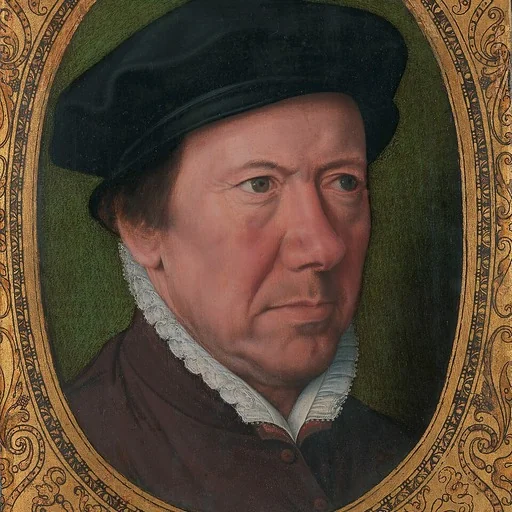
Pieter Claeissens the Elder or Pieter Claeissens (I) (1500–1576) was a Flemish painter of history paintings, portraits and allegorical scenes. He was the first prominent artist in an extended family of artists from Bruges.

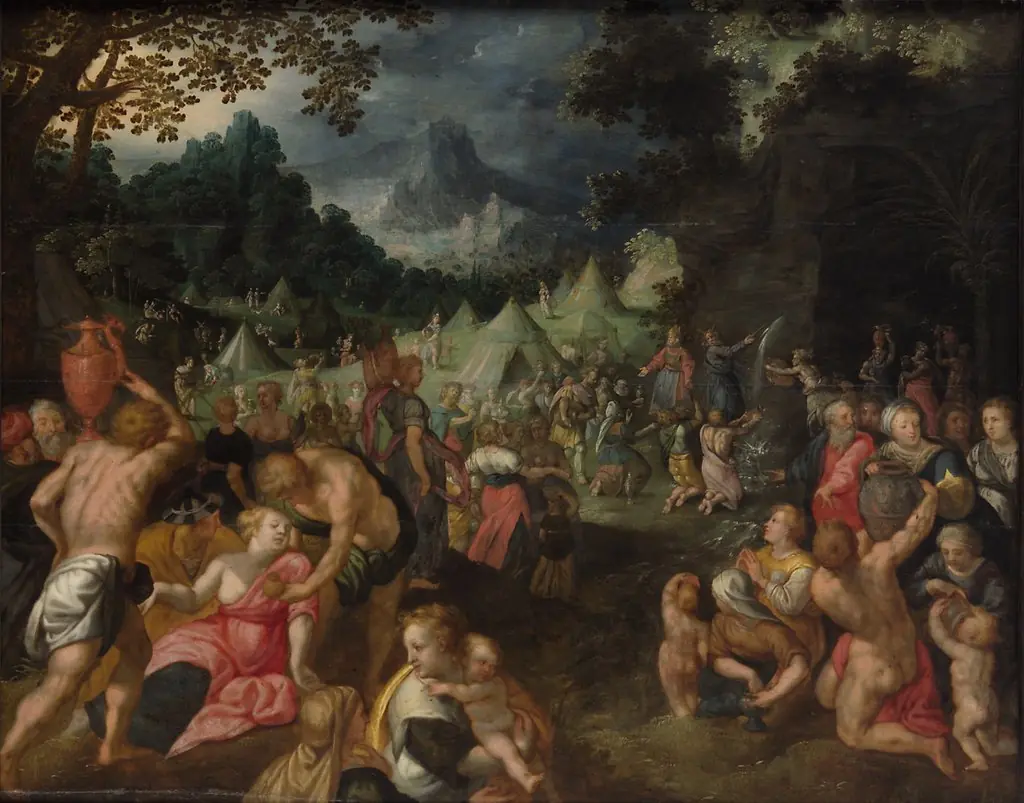 Moses Strikes the Rock
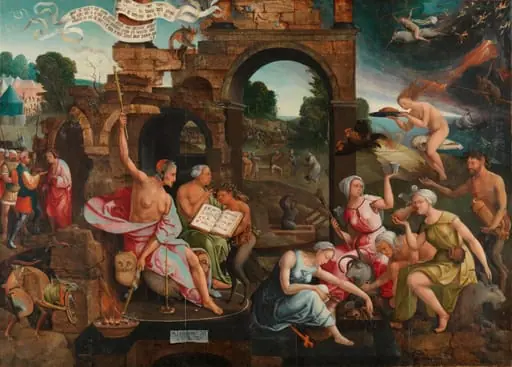 Saul and the Witch of Endor
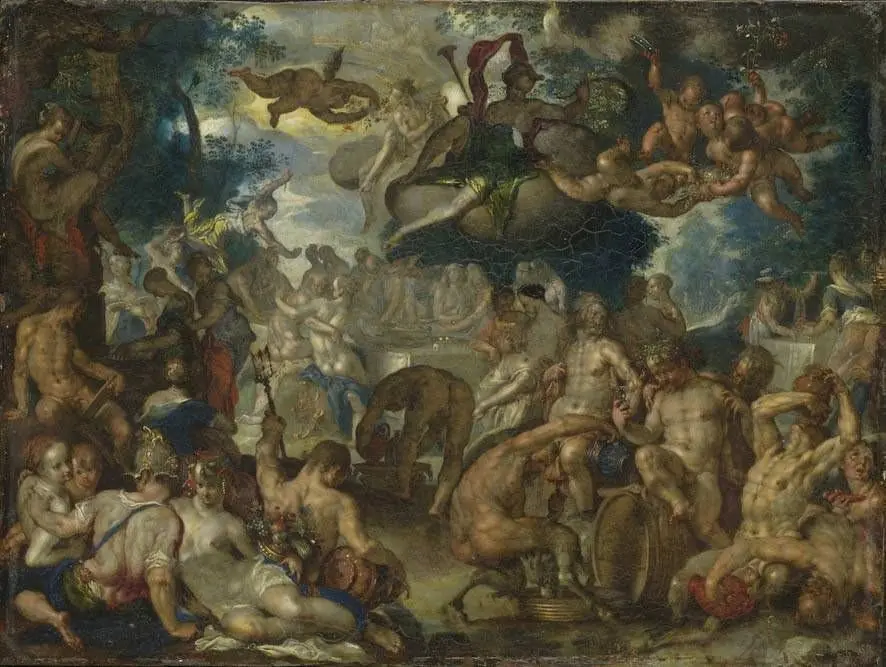 The Wedding of Peleus and Thetis
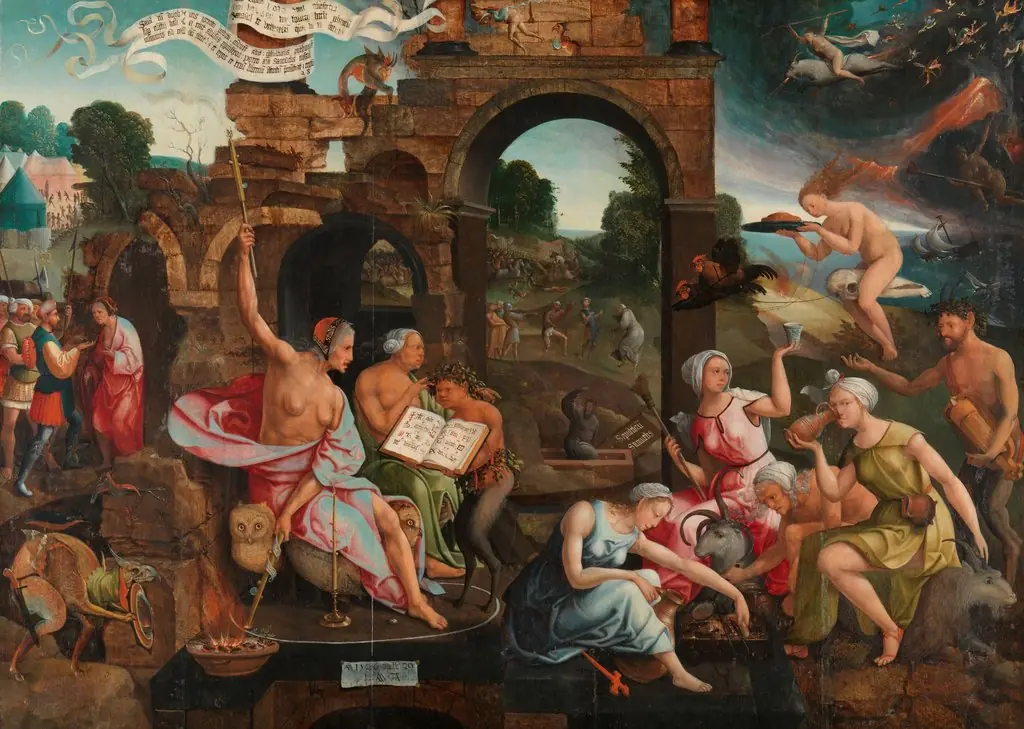 Saul and the Witch of Endor
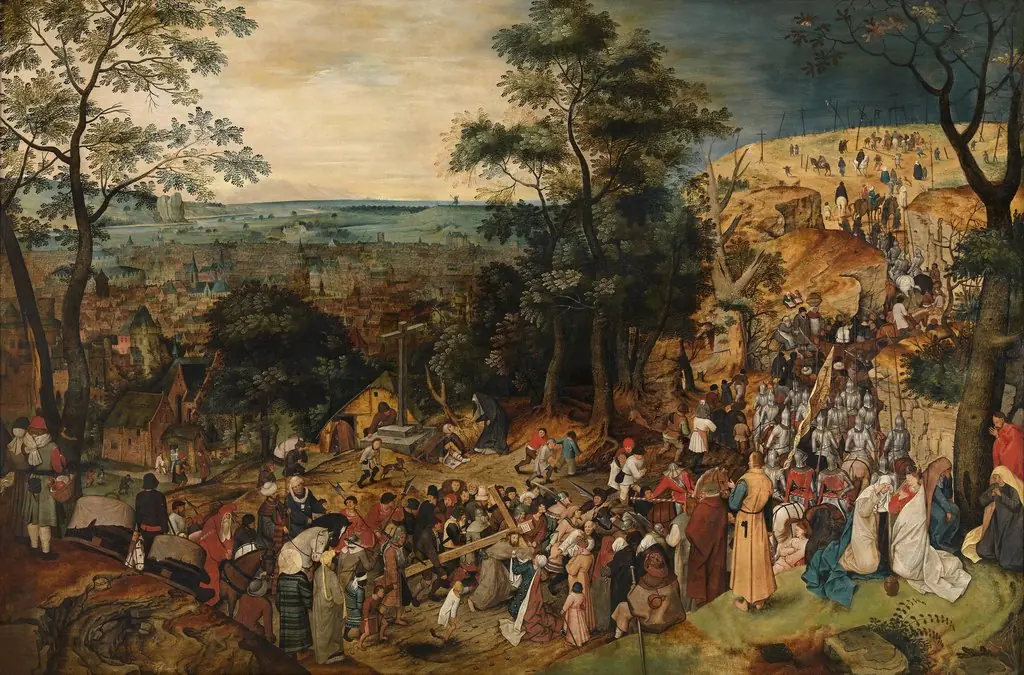 The Bearing of the Cross
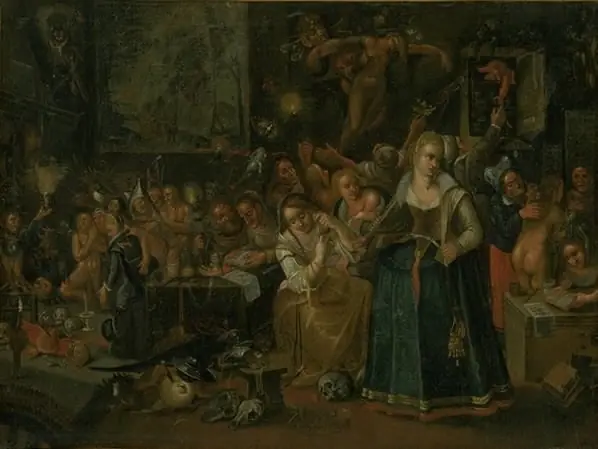 Witches' Sabbath
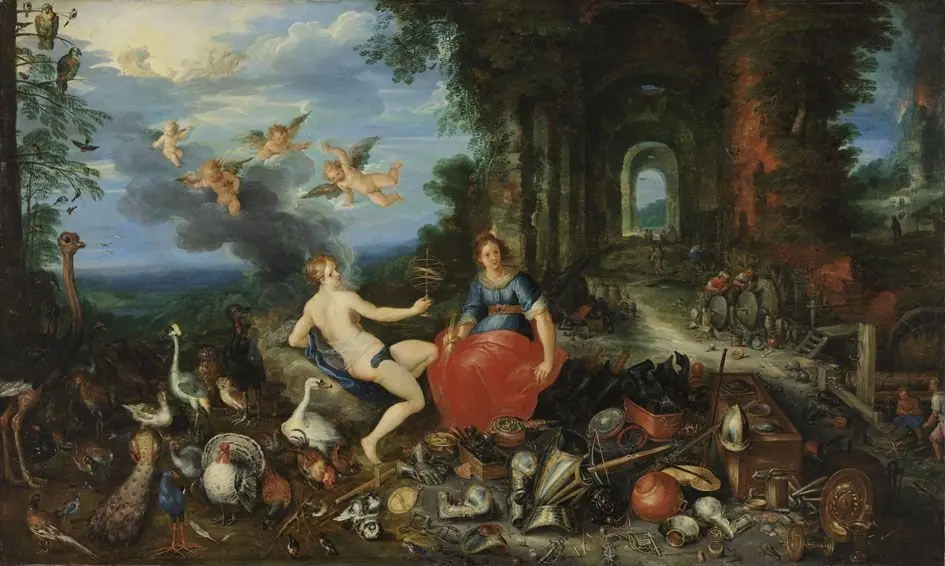 Allegory of fire and air (two of the four elements)
 Moses Striking the Rock
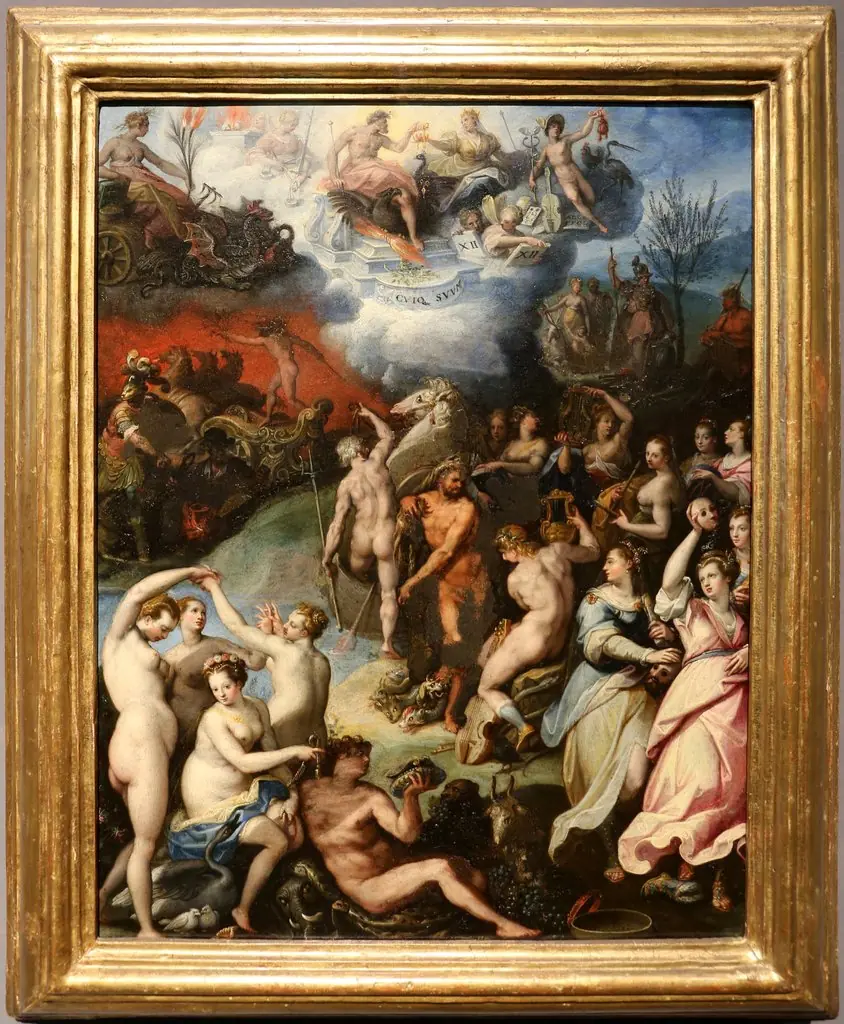 Hercules Musagetes and the gods of Olympus
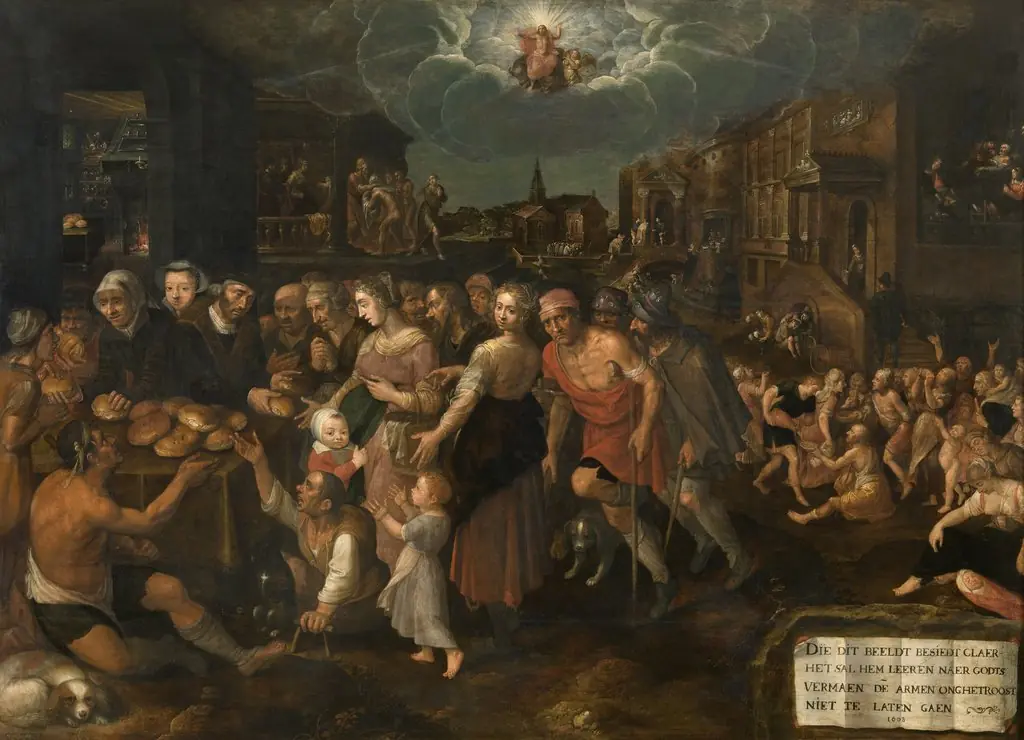 The Acts of Mercy
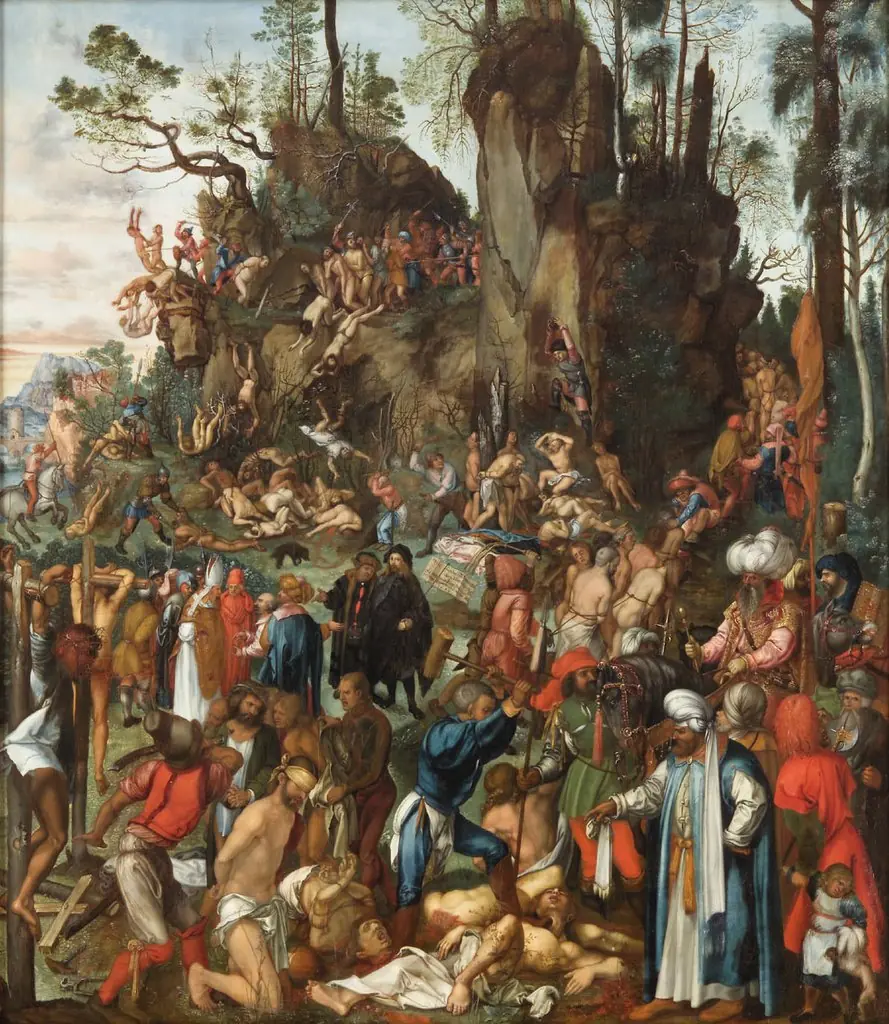 Marter der Zehntausend Christen
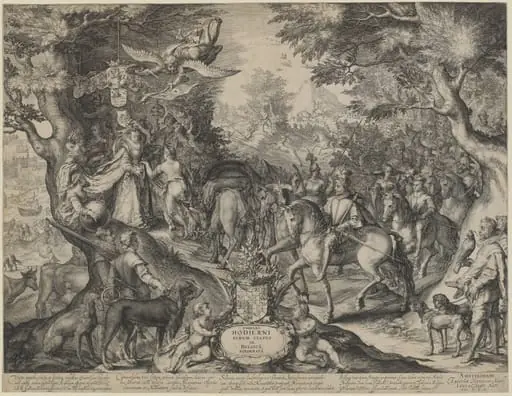
- Allegory of Flourishing State of the United Provinces
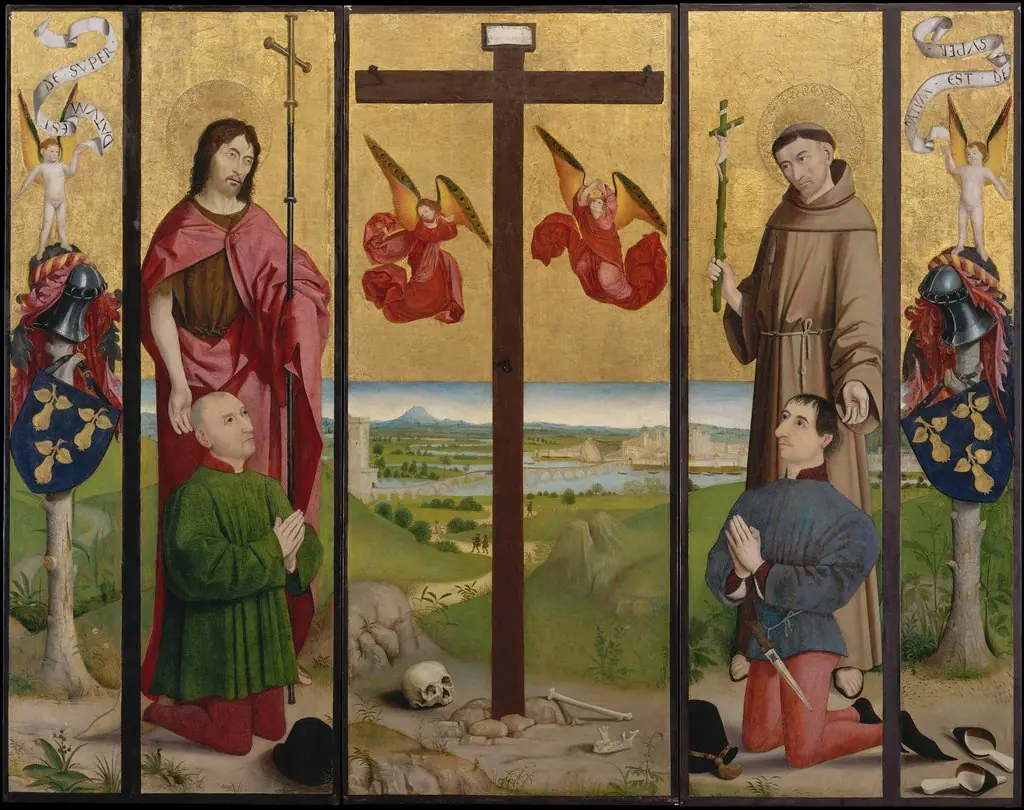 The Pérussis Altarpiece
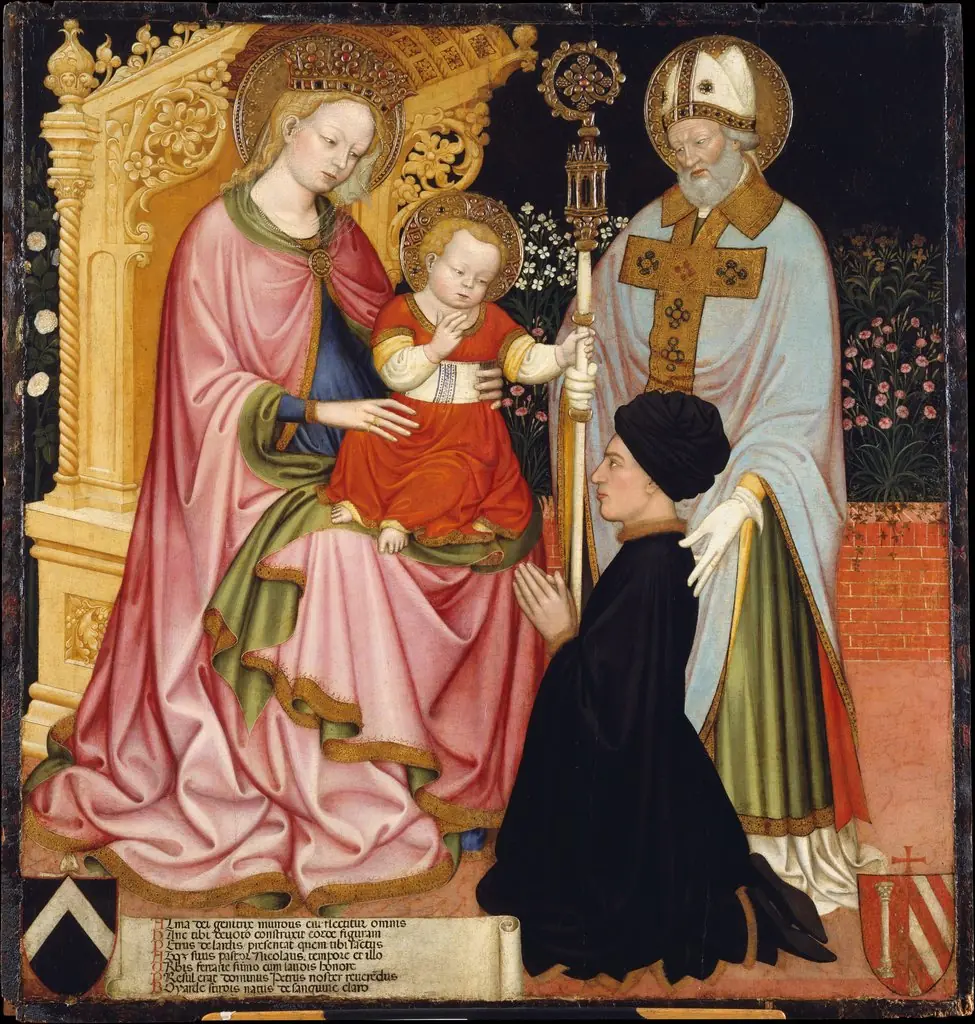 Madonna and Child with the Donor, Pietro de' Lardi, Presented by Saint Nicholas
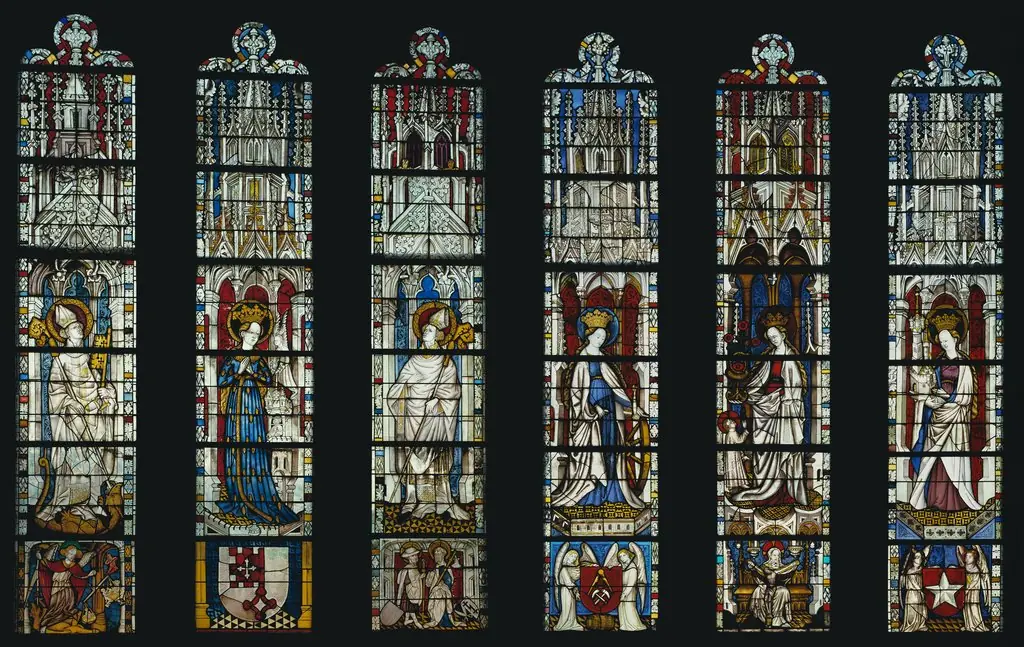 The Virgin Mary and Five Standing Saints above Predella Panels
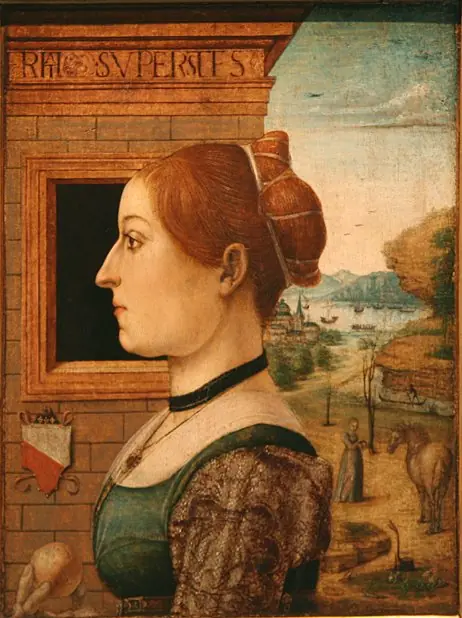 Portrait of a Woman, possibly Ginevra d'Antonio Lupari Gozzadini
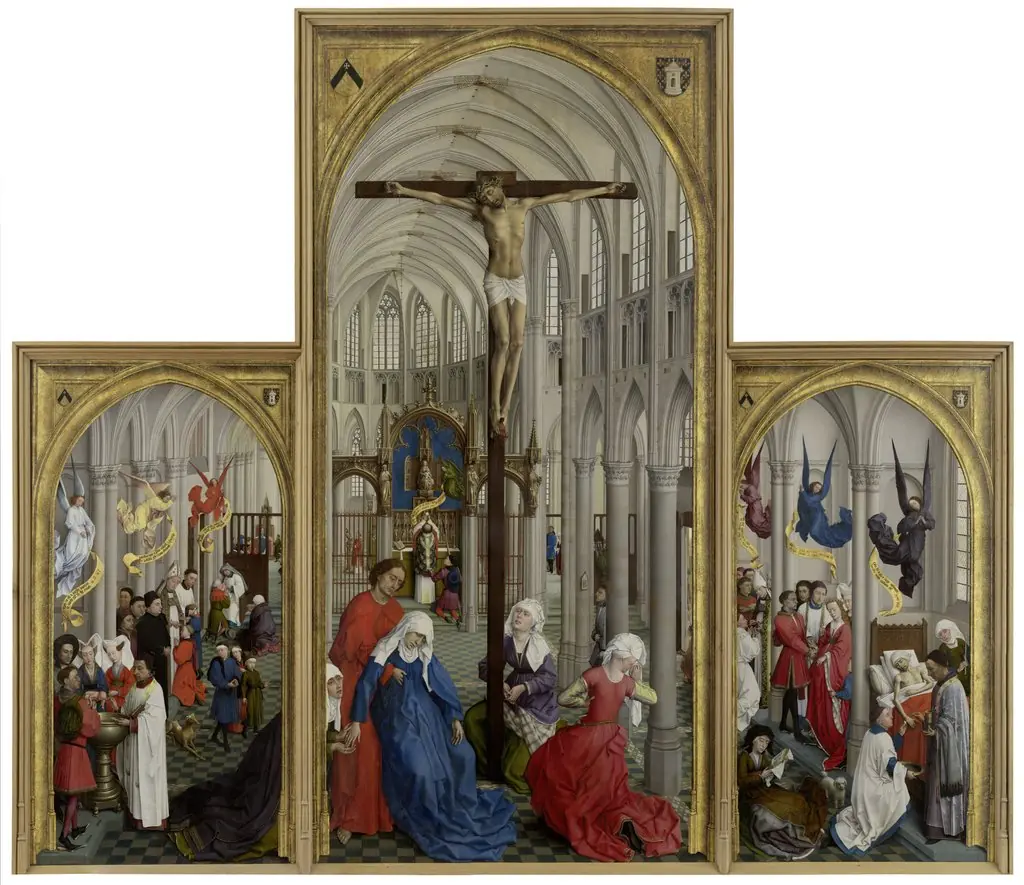 The Seven Sacraments
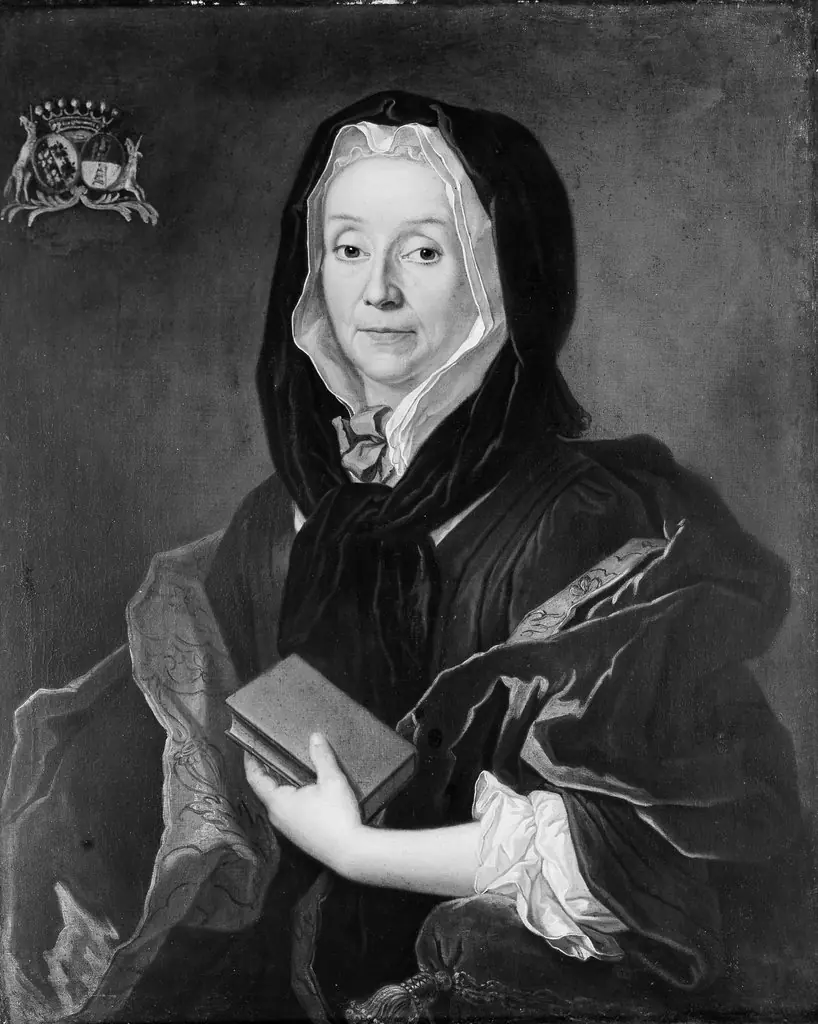 Portrait of a Woman Holding a Book
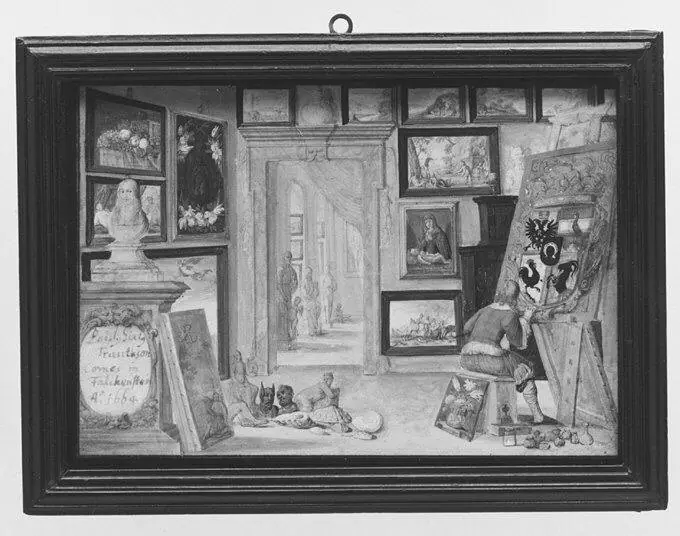 An Artist Painting a Heraldic Shield in a Cabinet of Curiosities
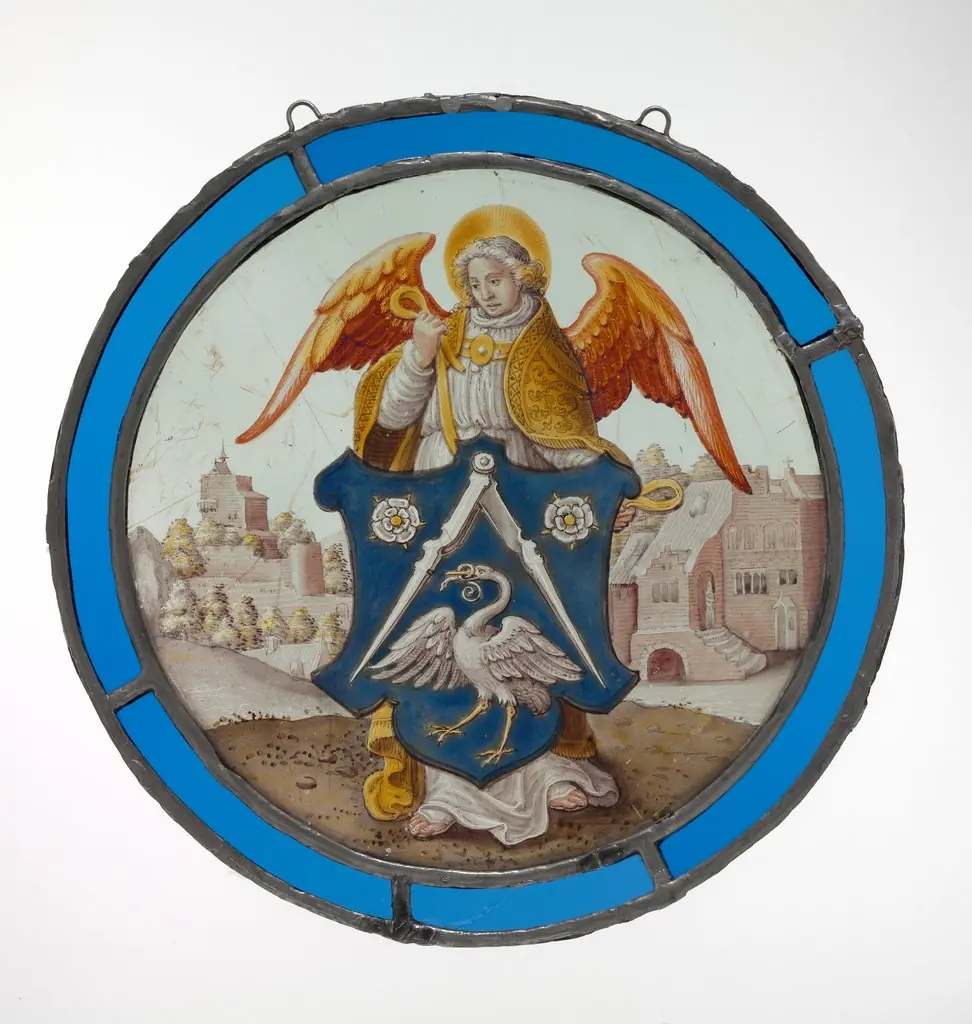 Angel Supporting a Heraldic Shield