Artwork
Saul and the Witch of Endor
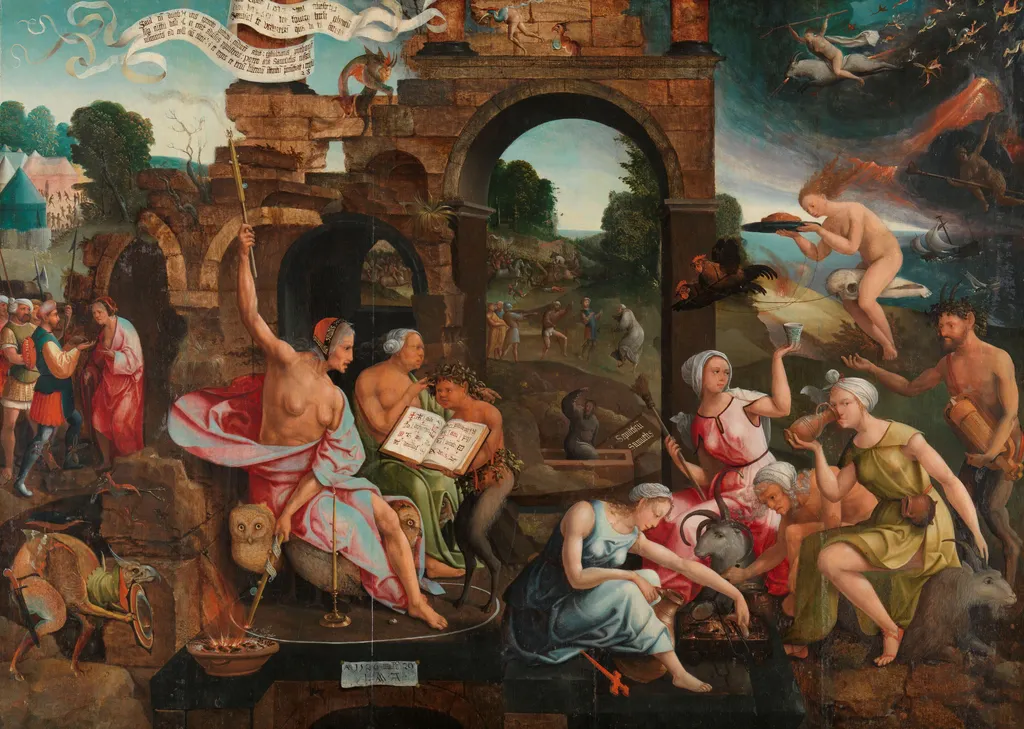
Saul and the Witch of Endor is an oil painting by the Northern Renaissance artist Jacob Cornelisz. van Oostsanen. It dates from 1526 and is held in the collection of the Rijksmuseum. Jacob Cornelisz.
About this work
Subject & Meaning
Beyond the religious narrative, the work functions as a moral warning against sorcery, showing Saul's death as the consequence of turning away from God.
The painting illustrates the biblical narrative from 1 Samuel 28, where King Saul, facing the Philistines, consults the Witch of Endor to summon the deceased prophet Samuel. The composition integrates multiple episodes: Saul's initial request on the left, Samuel rising from his grave beneath a ruined gate, and the ensuing battle above. The witch is depicted centrally within a magic circle, seated on a throne of owls, a Christian symbol of evil, while presiding over a witches' sabbat accompanied by a satyr holding a spellbook and a devil playing a hurdy-gurdy.
Beyond the religious narrative, the work functions as a moral warning against sorcery, showing Saul's death as the consequence of turning away from God. Scholars also identify a satirical layer linking the scene to contemporary Amsterdam events in 1526. Elements such as bread and wine may critique Protestant denial of transubstantiation, while the figure of Saul losing his kingdom through witchcraft potentially satirizes the exiled King Christian II of Denmark and his advisor Sigbrit Willemsdr.
Technique & Style
Executed in oil paint on a vertically grained oak panel, the work measures 85.5 cm in height by 122.8 cm in width.
The composition juxtaposes biblical narrative with fantastical elements. On the left, Saul approaches the witch in an architectural ruin; the center stages Samuel’s apparition rising from a tomb labeled Sepulchru[m] Samuelis, while the upper zone depicts the Philistine battle. The foreground features the witch seated on an owl-throne within a magical circle, flanked by a satyr holding an open grimoire and a devil playing a hurdy-gurdy, with flying witches and demons populating the upper air.
Infrared reflectography reveals several pentimenti: the satyr’s pointed ears were altered, the witch’s bowl replaced by a goblet, and the satyr with the hurdy-gurdy was originally double-fluted; two roosters were added later to the right of the ruin.
The handling combines sharp delineation with dense, layered glazes, typical of Northern Renaissance panel painting of the 1520s, and the palette includes earthy tones heightened by luminous passages in the drapery and supernatural figures.
History & Provenance
Created by Jacob Cornelisz. van Oostsanen in Amsterdam, the oil-on-panel painting Saul and the Witch of Endor is dated November 29, 1526. The artist signed the work with his house mark at the bottom center. Infrared reflectography reveals that the composition underwent several changes during its creation, including modifications to a satyr's ears and arms, the addition of two flying roosters, and the alteration of a witch's vessel from a bowl to a chalice. The work is currently held in the collection of the Rijksmuseum in Amsterdam.
The painting Saul and the Witch of Endor by Jacob Cornelisz. van Oostsanen is held in the collection of the Rijksmuseum in Amsterdam. The work is signed with the artist's house mark and dated November 29, 1526. While the piece is a notable holding of the museum, the available records do not list specific inventory or accession numbers for this entry.
Furthermore, although the artwork's iconography and potential satirical meanings regarding contemporary events in 1526 have been analyzed by art historians, no specific exhibition history or loan records are provided in the current documentation.
Context
Saul and the Witch of Endor is one of the few sixteenth-century depictions of this biblical episode, and its moralizing tone has been linked to contemporary debates on magic and heresy. The painting integrates multiple narrative moments, from Saul’s consultation of the witch to Samuel’s apparition and the final battle, while foregrounding a witch’s sabbath framed as a cautionary image. Infrared reflectography reveals significant underdrawing changes, including shifts in the satyr’s ears and the witch’s attributes, indicating the artist’s evolving compositional choices.
Scholars have also read the work as a coded satire tied to its 1526 date. Art historian Helen Wüstefeld connects the painting’s completion to Amsterdam’s Andriesnacht festivities, a time of revelry when social critique was performed. The inclusion of Protestant eucharistic imagery, such as a flying woman bearing bread and a cup marked “MAL”, has been interpreted as a critique of sacramentarian views, aligning with Van Oostsanen’s earlier polemical prints on the Eucharist.
The owl-throne and sabbath elements further reflect Northern European print traditions, particularly the demonological imagery of Hans Baldung Grien and Hieronymus Bosch, which the artist likely adapted to amplify the work’s moral and satirical charge.
Legacy
In the sixteenth century, depictions of the Witch of Endor were rare, and Jacob Cornelisz. van Oostsanen’s composition stands out for its moralizing warning against hekserij. Art historians interpret the work as a condemnation of occult practices through the fate of King Saul, whose consultation of a witch leads to his downfall. The painting’s satirical edge has also been noted in relation to contemporary events; its 1526 date aligns with Amsterdam’s Andriesnacht festivities, when Carnival-like performances mocked current controversies.
Scholars connect the imagery to Protestant critiques of Catholic eucharistic doctrine, pointing to details such as the flying woman bearing a bread board and the beaker marked MAL. These motifs echo Van Oostsanen’s earlier engagement with sacramental debates in his 1523 woodcut series for Alardus van Amsterdam’s Ritus edendi. Additionally, the figure of Saul has been read as a veiled satire of the exiled Danish king Christiaan II and his controversial advisor Sigbrit Willemsdr., whose reputation suffered from accusations of witchcraft.
Overview
Jacob Cornelisz. van Oostsanen’s oil painting Saul and the Witch of Endor was executed in 1526. Created in Amsterdam during the early phase of the Northern Renaissance, the work measures a modest size and is now part of the Rijksmuseum’s collection. It presents a densely populated interior where the biblical king seeks counsel from a female medium.
Own this work as a print
Artist & collection

Artist
Jacob Cornelisz. van Oostsanen
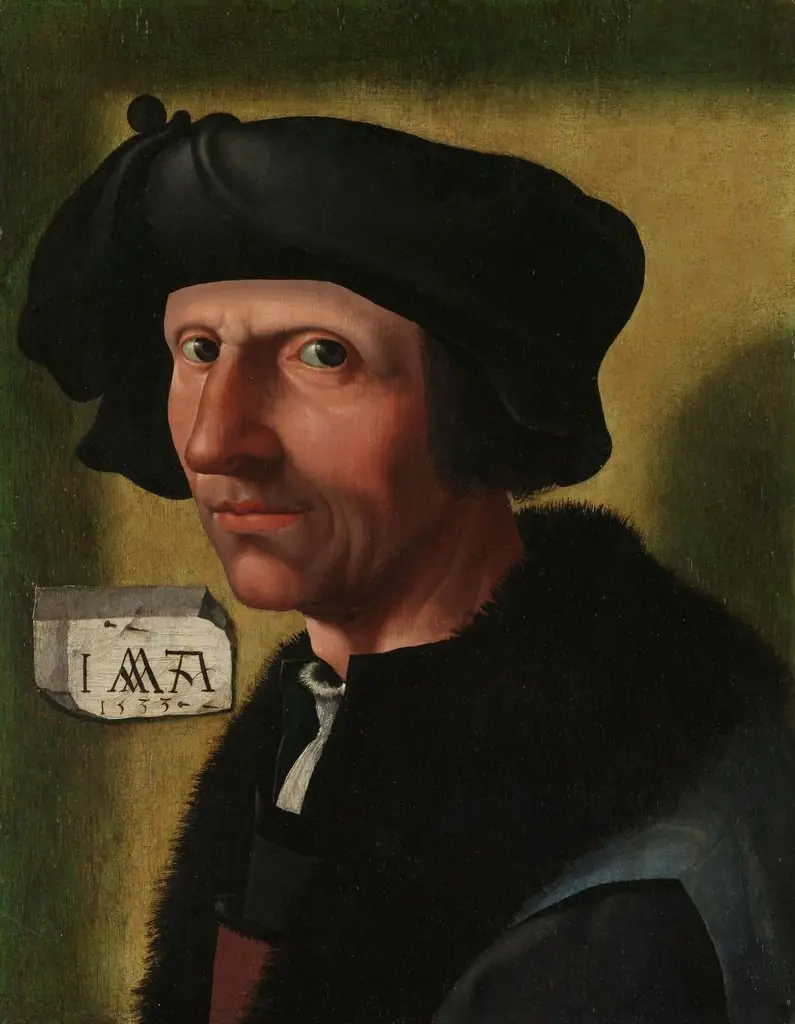
Jacob Cornelisz van Oostsanen (before 1470 – 1533) was a Northern Netherlandish designer of woodcuts and painter.

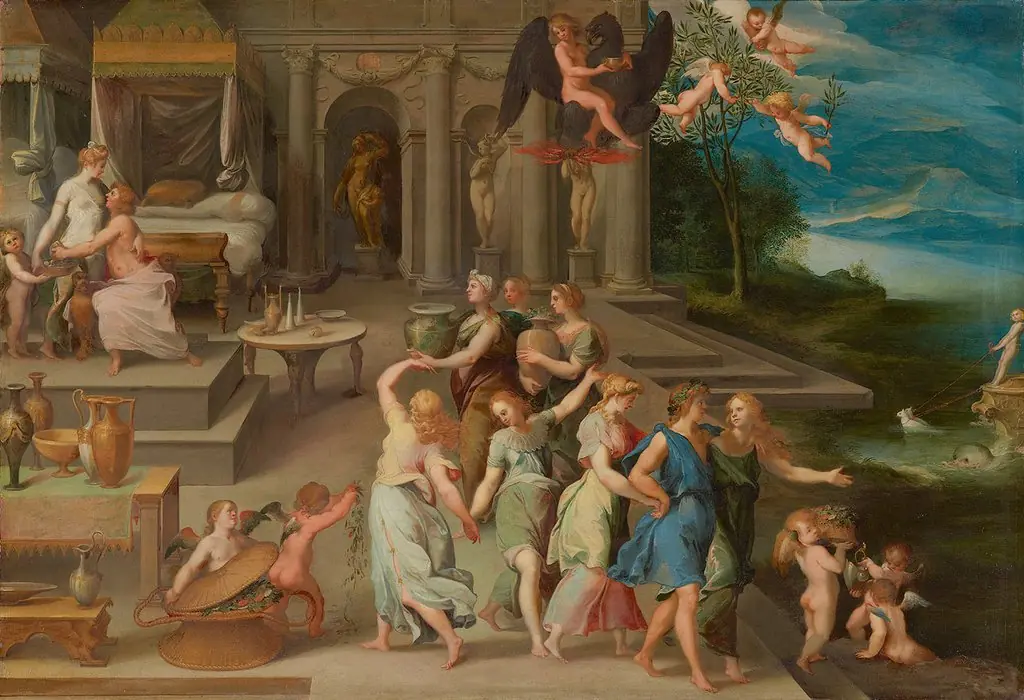 Mythological Wedding
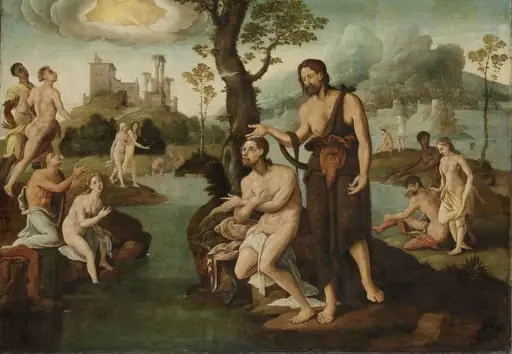 The baptism of Christ
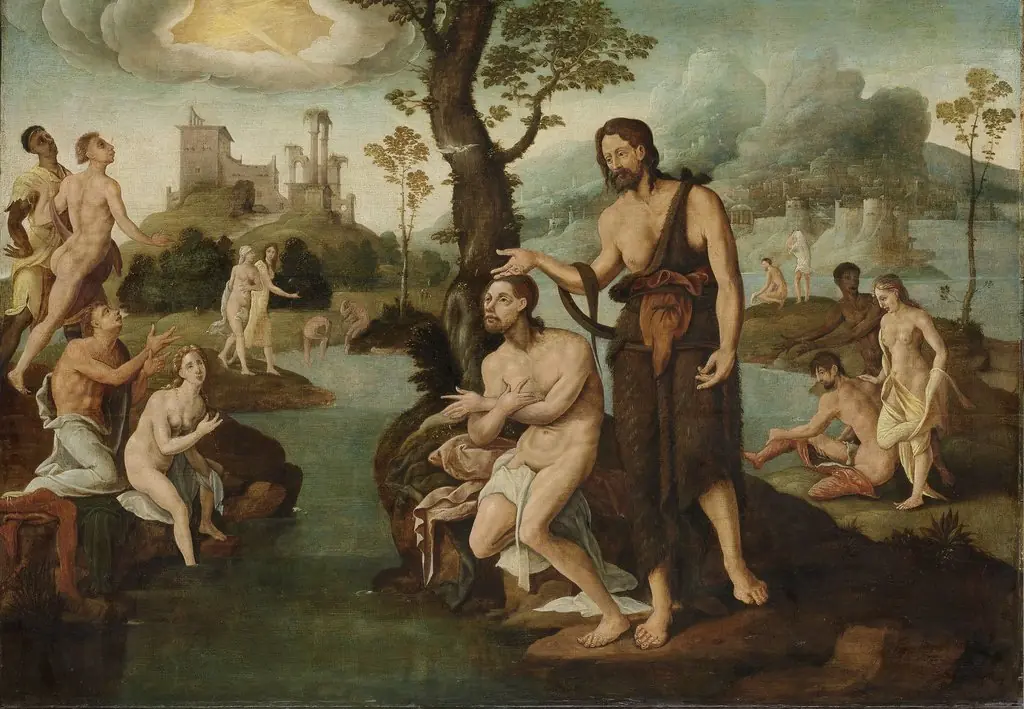 The Baptism of Christ
 The Nymph of Fontainebleau
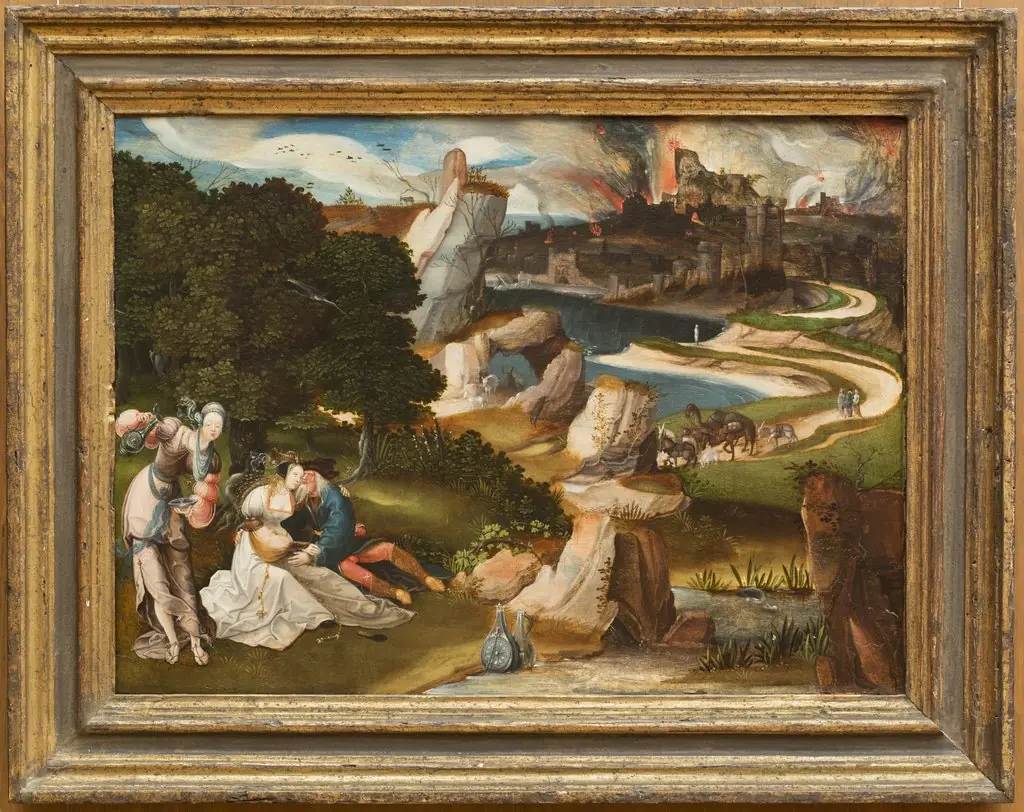 Lot and His Daughters
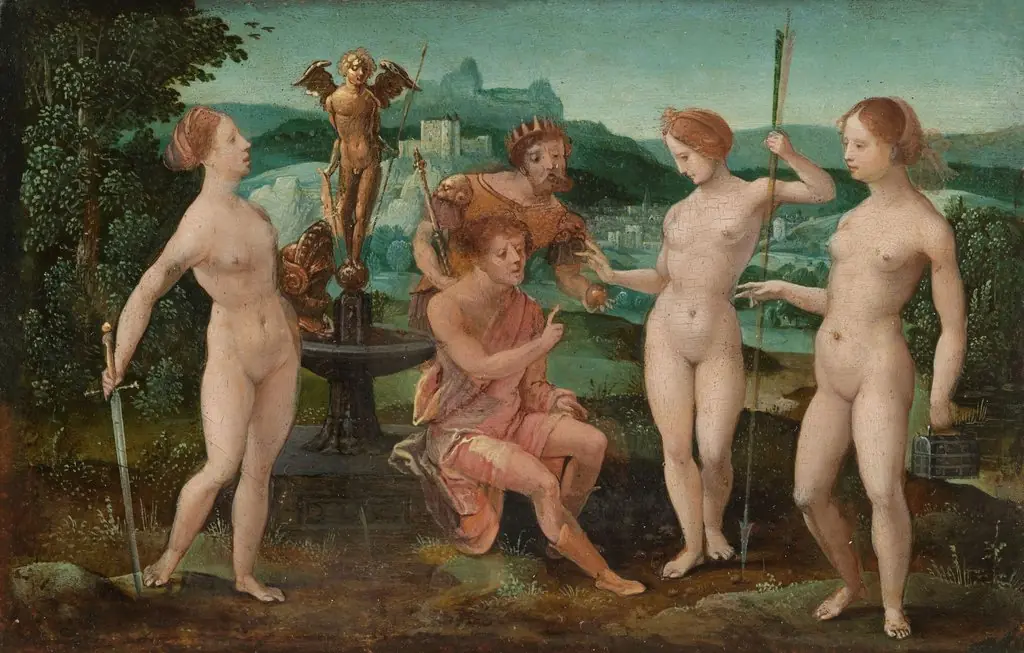 The judgement of Paris
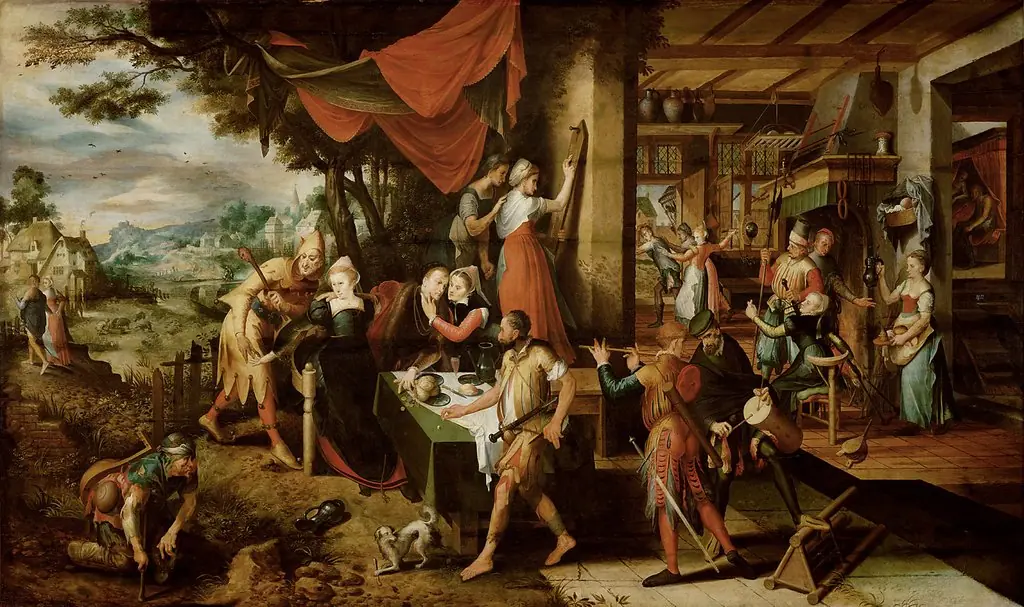 Return of the Prodigal Son
 Parable of the great banquet
 Before Christ's Crucifixion (Christ in Misery)
 Judgment of Paris
 The foolish virgins and the wise virgins
- Saul and the Witch of Endor