Artwork
Breakfast with Fish
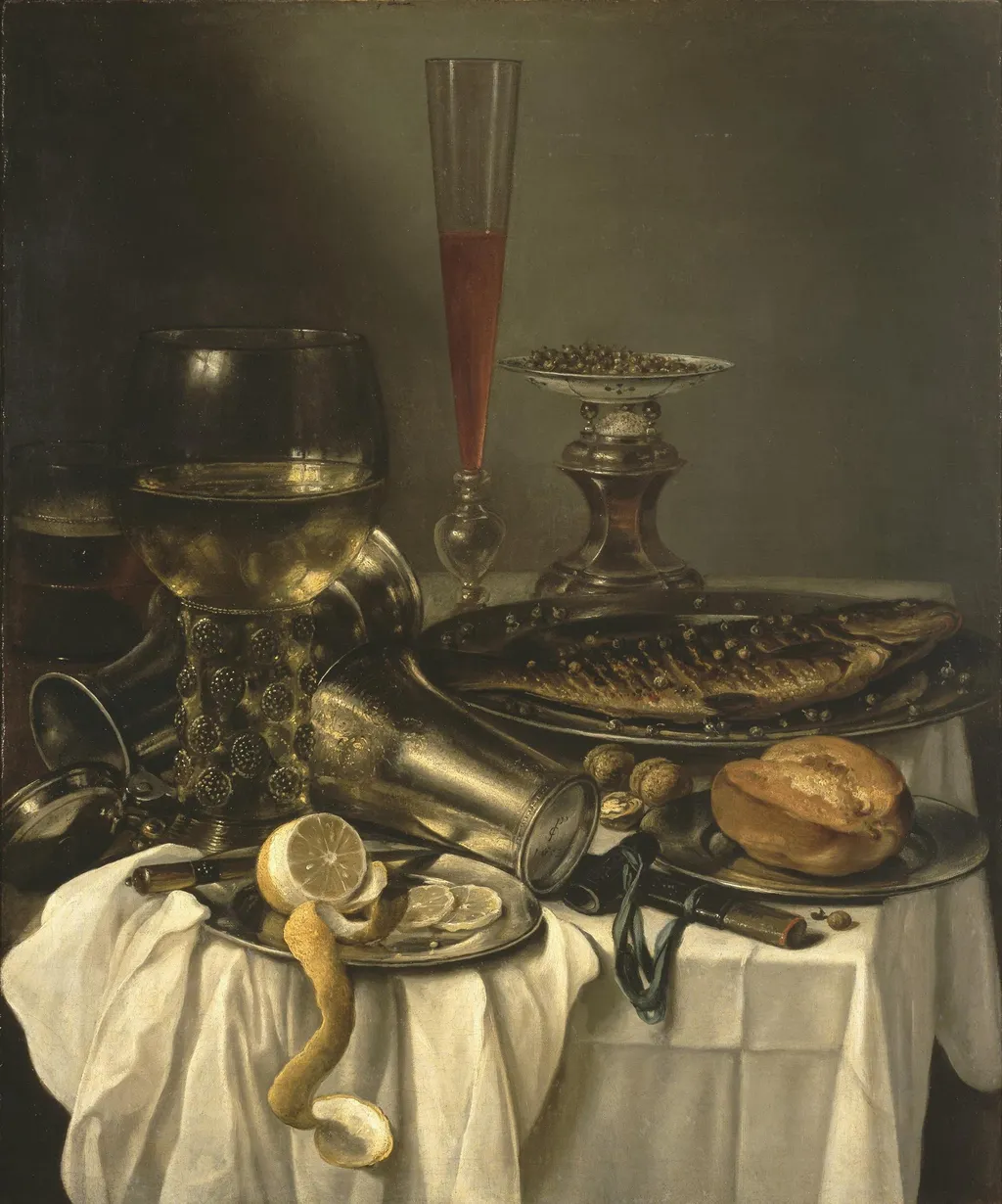
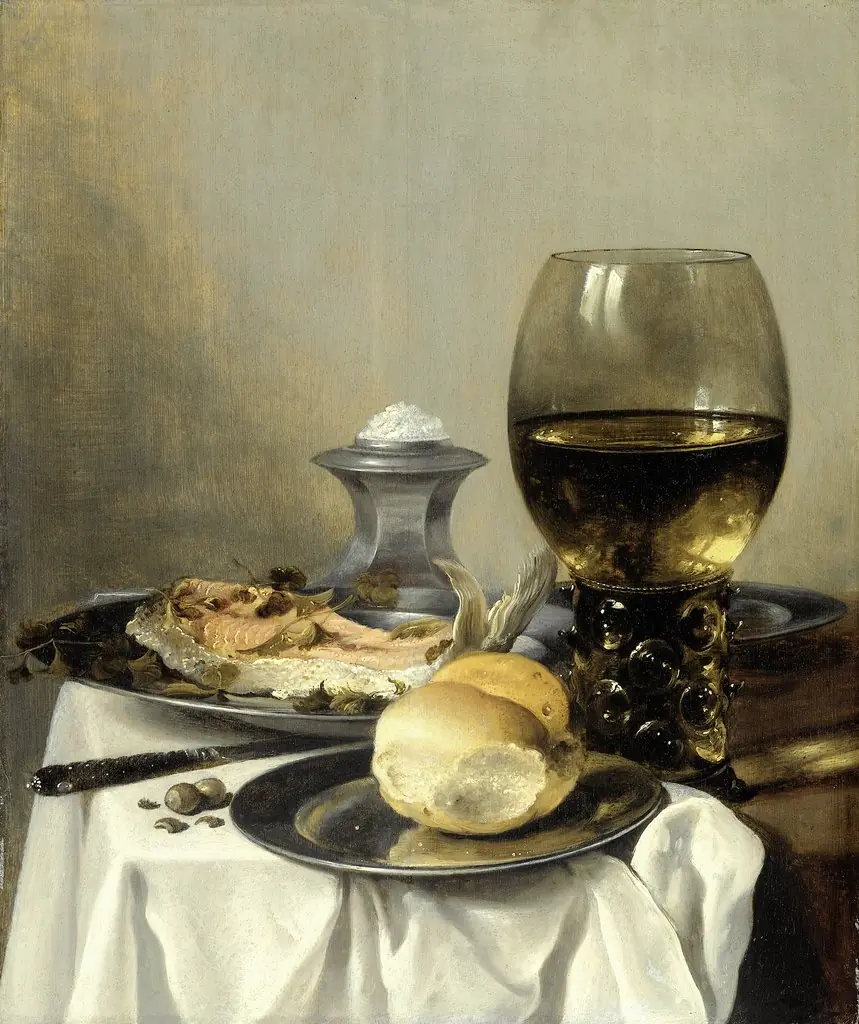
Breakfast with Fish is an oil painting by the Dutch Golden Age artist Pieter Claesz. It dates from 1653 and is held in the collection of the Hermitage Museum.
About this work
Subject & Meaning
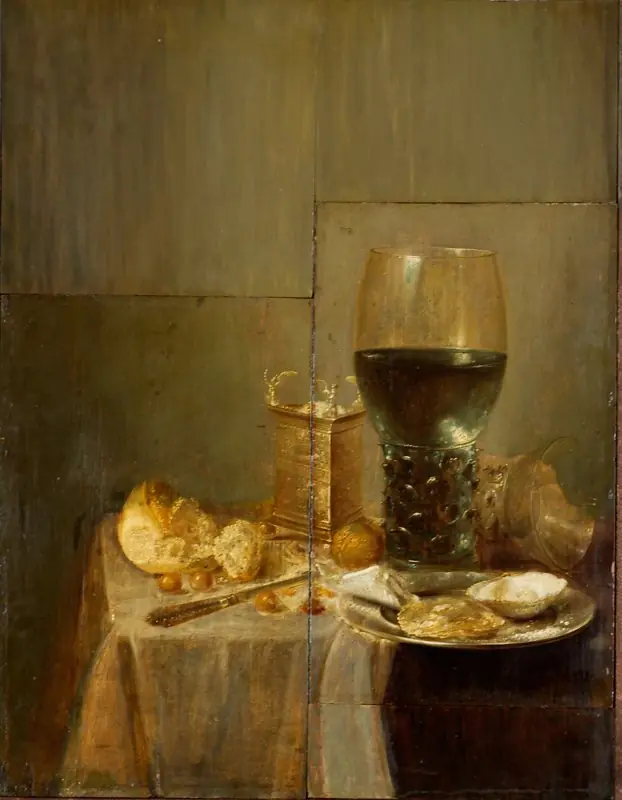
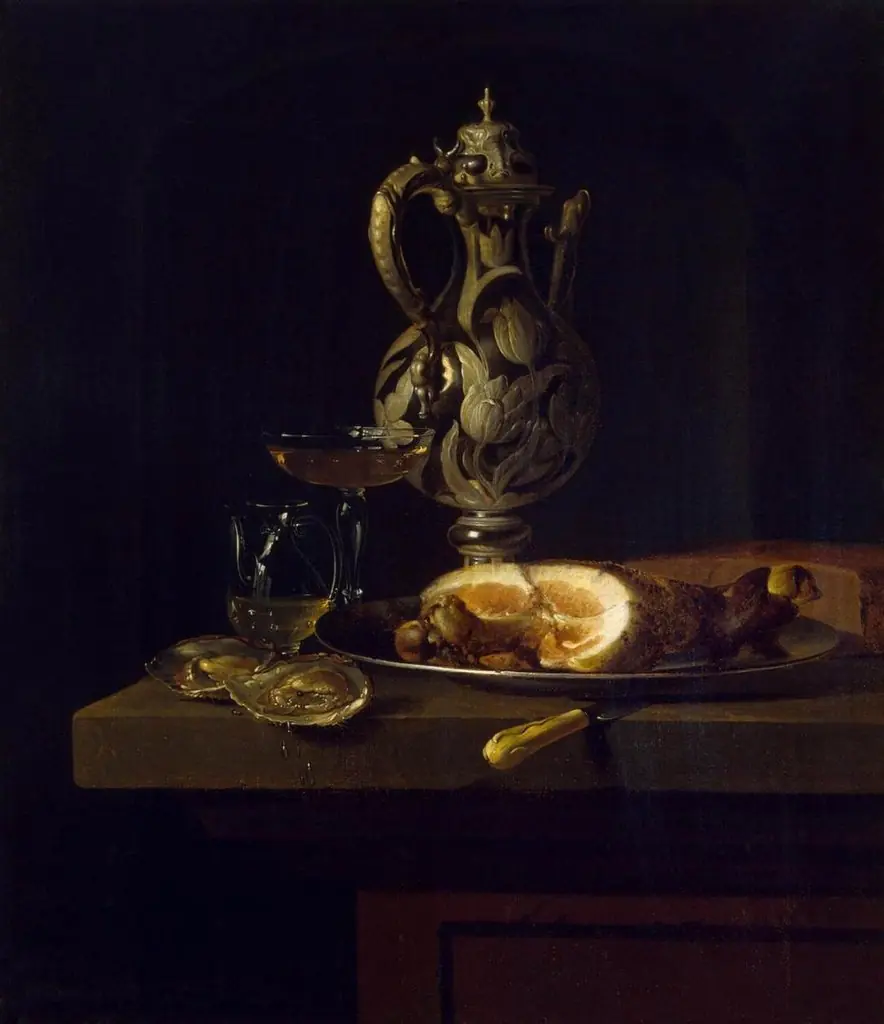
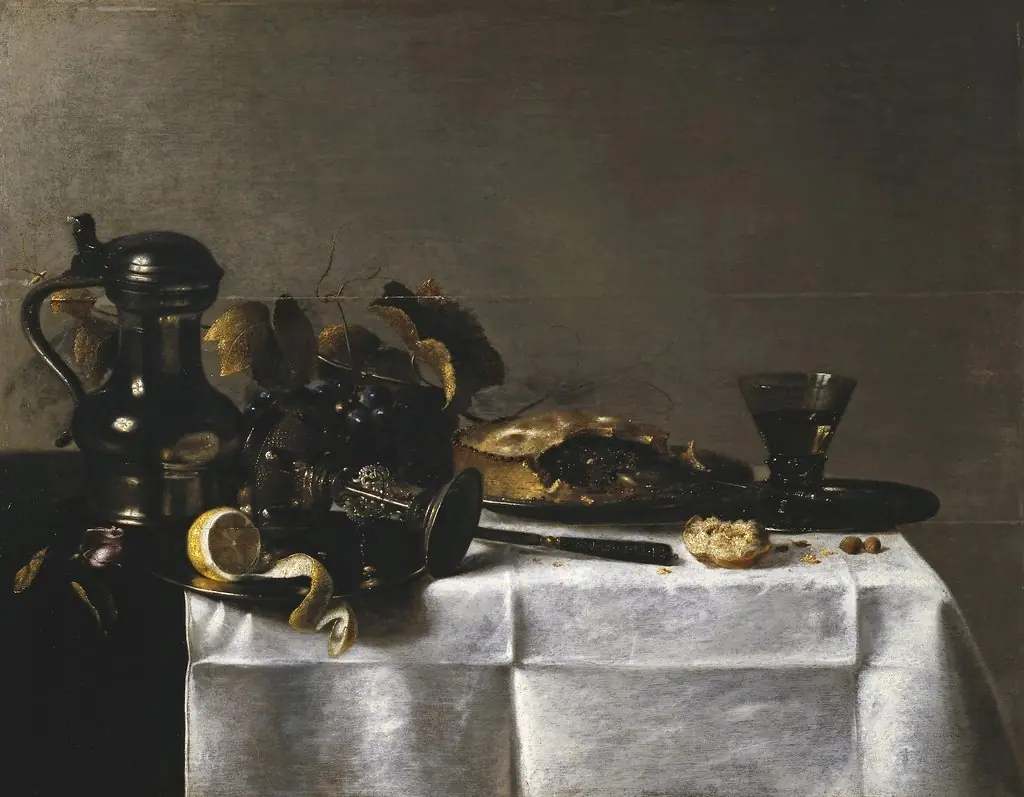
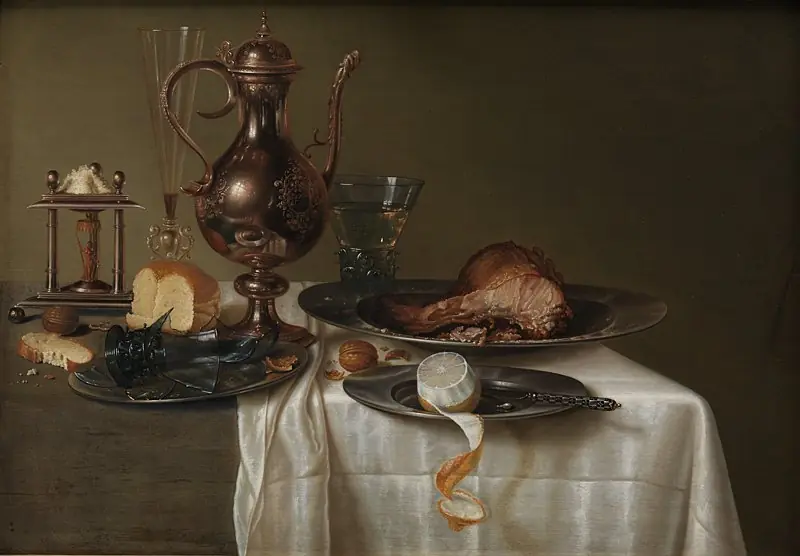
The depicted objects include a fish, bread, a lemon, a wine glass, a chalice, a rummer, a salt cellar, a knife, and capers, all resting on a tablecloth.
Pieter Claesz's Breakfast with Fish (1653) presents an early-morning meal arranged on a draped table, a subject typical of Dutch still-life painting. The depicted objects include a fish, bread, a lemon, a wine glass, a chalice, a rummer, a salt cellar, a knife, and capers, all resting on a tablecloth. Such assemblages of plain foodstuffs and tableware were a hallmark of the "ontbijtje" (breakfast piece) tradition associated with Claesz, in which everyday domestic items are rendered with quiet attention to texture and light.
The inclusion of bread and fish carries Christian overtones, evoking Eucharistic symbolism common in seventeenth-century Netherlandish still lifes, while the lemon, glassware, and capers introduce notes of refreshment and sensory refinement. The work is held in the Hermitage Museum collection.
History & Provenance
Breakfast with Fish is an oil-on-canvas still life painted by Pieter Claesz in the Netherlands in 1653. The work measures 80.5 cm by 67 cm and portrays a table set with a lemon, wine glass, chalice, bread, salt cellar, caper, knife, rummer, and a fish. It is housed in the Hermitage Museum in Saint Petersburg, where it remains part of the museum's collection. Its creation in 1653 is recorded, and the attribution to Claesz is confirmed by the museum's catalogue.
Overview
Pieter Claesz's "Breakfast with Fish," painted in 1653, is an oil still life that captures a moment of domesticity. This work exemplifies the artist's focus on everyday objects and meals, a common theme in Dutch Golden Age painting. It is currently housed in the collection of the State Hermitage Museum.
Technique & Style
Claesz employs a refined technique to render the textures and forms of the objects with remarkable realism. The composition features a careful arrangement of items on a white tablecloth, which stands out against a subdued, dark background. The artist utilizes strong contrasts of light and shadow, a technique known as chiaroscuro, to create depth and emphasize the materiality of each element. This dramatic illumination draws the viewer's attention to the intricate details of the meal.
Own this work as a print
Artist & collection