Artwork
Still Life
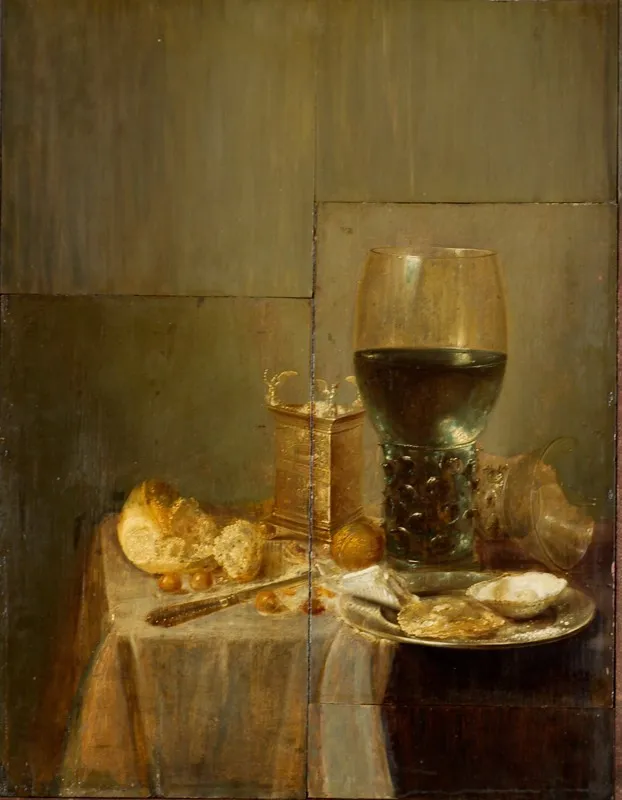
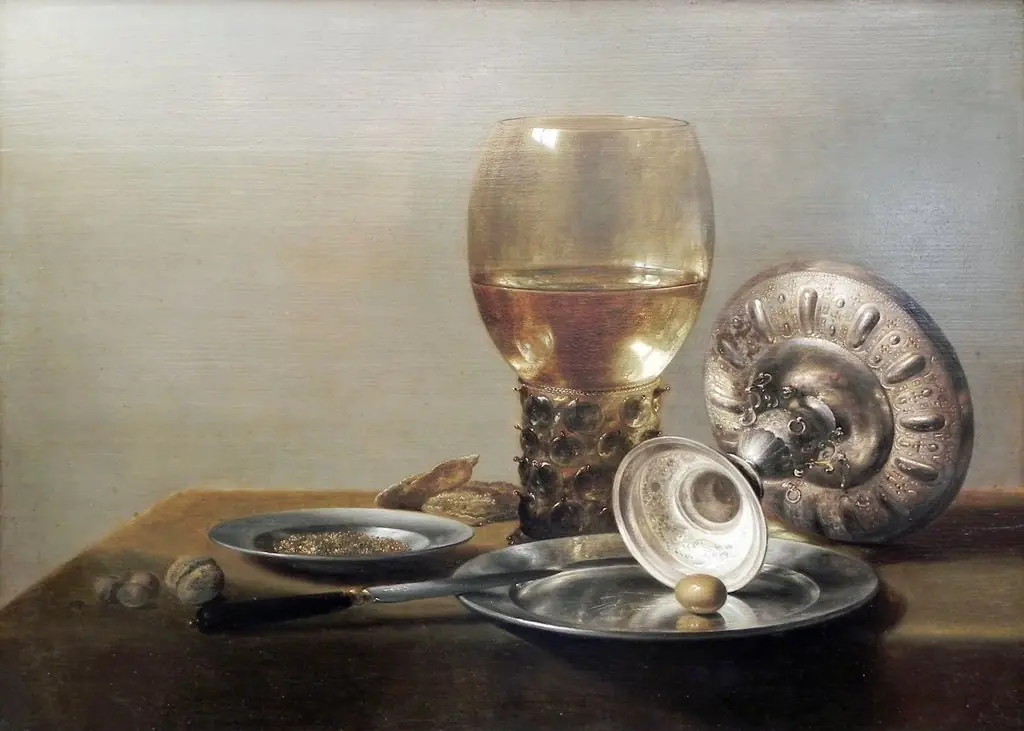
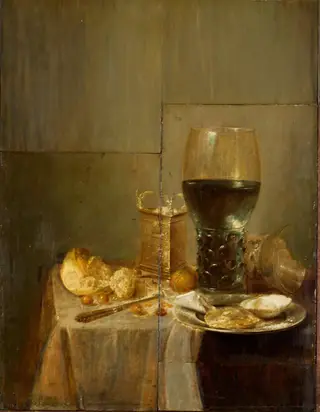
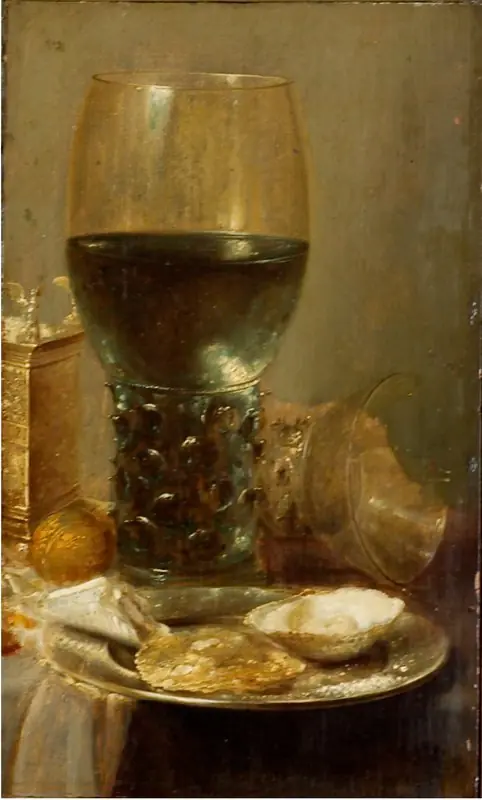
Still Life is an oil painting by the Dutch Golden Age artist Pieter Claesz. It dates from 1636 and is held in the collection of the Statens Museum for Kunst.
About this work
Subject & Meaning
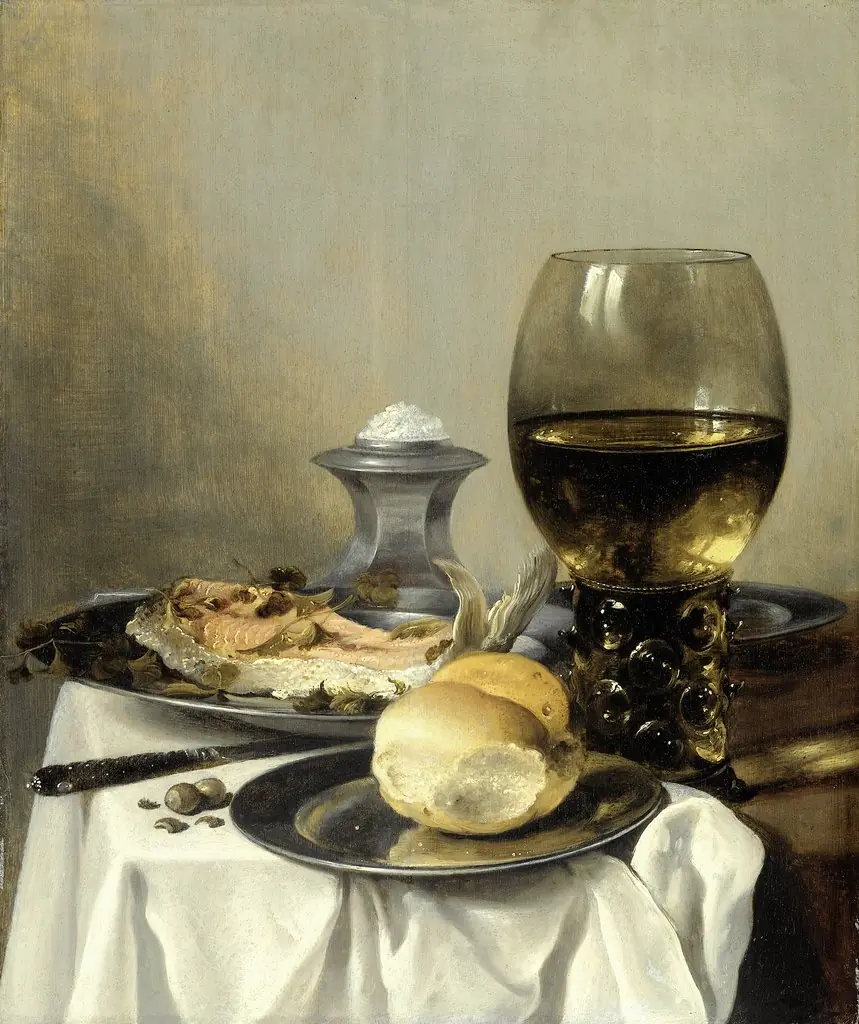
The knife, poised for use, and the partially consumed food suggest interrupted consumption, reinforcing memento mori themes.
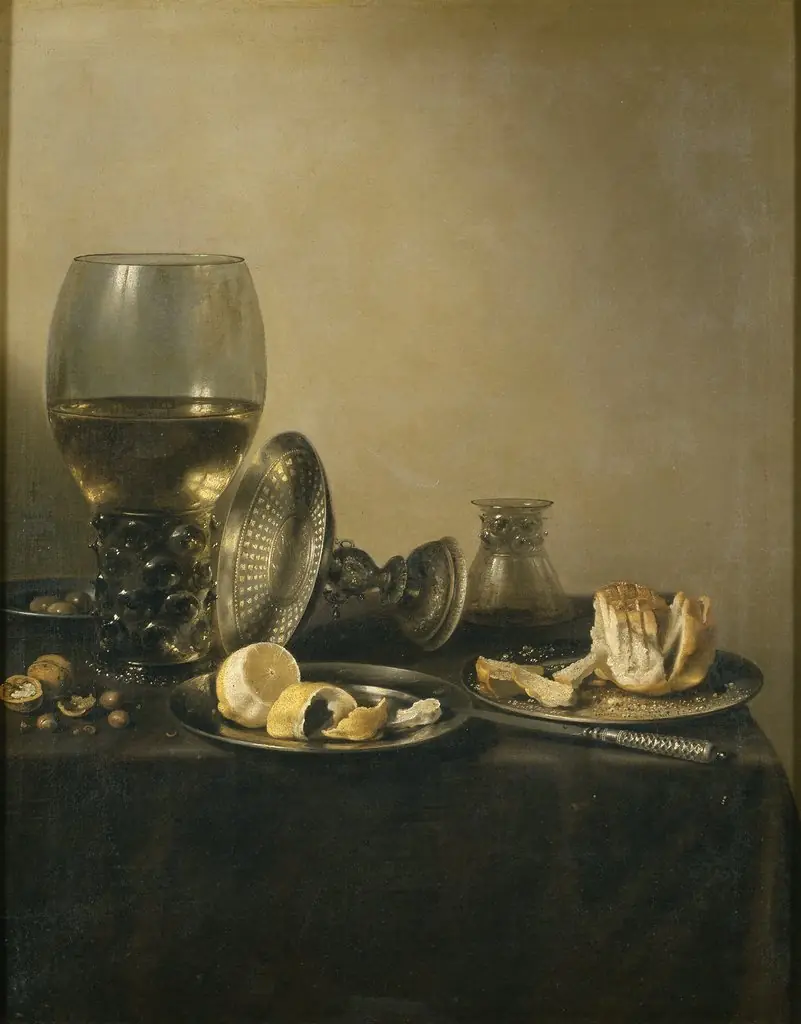
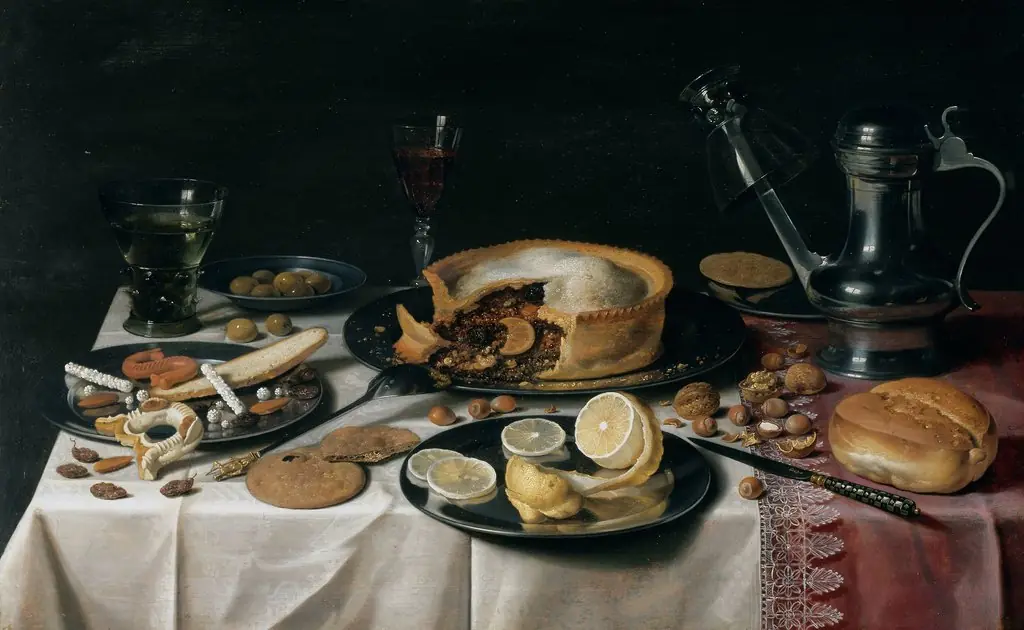
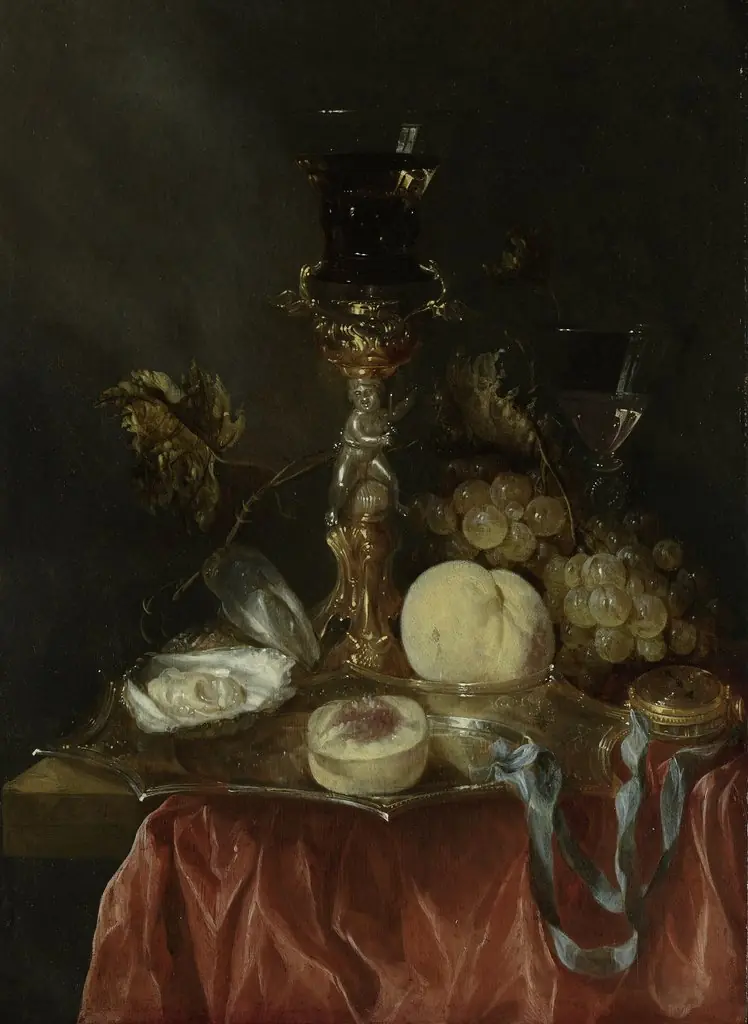
The painting depicts a modest breakfast arrangement typical of Dutch monochrome still lifes of the era. Objects shown include bread, a knife, a salt cellar, olives, a rummer, a berkemeyer, oysters, and walnuts. Such restrained table settings carried moral and symbolic weight: bread and wine alluded to the Eucharist, while the salt cellar, oysters, and walnuts evoked the transience of earthly pleasures and the inevitability of decay.
The knife, poised for use, and the partially consumed food suggest interrupted consumption, reinforcing memento mori themes. The olive may signify peace or divine grace. Together these elements form a meditation on temperance, mortality, and spiritual sustenance.
Technique & Style
Still Life is an oil painting on panel executed by Pieter Claesz in 1636. The work is classified as a painting within the still life genre, depicting everyday objects rendered in oil paint applied to a wooden support. Measuring approximately 73.5 cm in height and 56.5 cm in width, the panel provides a smooth surface for the artist’s layered oil technique.
The material composition, oil pigment bound in a drying medium on a rigid panel, characterizes the piece’s technical foundation.
History & Provenance
Pieter Claesz's Still Life was created in 1636, executed in oil paint on panel. The work entered the collection of the Statens Museum for Kunst in Copenhagen, where it is catalogued under accession number KMS3015 and remains held today. No information about a commission, prior ownership history, or intermediate provenance prior to its acquisition by the museum is documented in the available sources.
The painting measures 73.5 cm in height by 56.5 cm in width, consistent with the panel support recorded for the work.
Pieter Claesz's 1636 oil painting Still Life is held in the collection of the Statens Museum for Kunst in Copenhagen. The institution catalogs the work under the inventory number KMS3015. The provided sources confirm the painting's location and classification but do not list specific past exhibitions or a detailed provenance history beyond its current museum ownership.
Context
Pieter Claesz’s Still Life (1636) exemplifies the banquet still‑life genre that flourished in the Dutch Golden Age, arranging everyday foods such as bread, a knife, a salt cellar, olives and a rummer to convey both abundance and transience. The work, painted in oil on panel and housed in the Statens Museum for Kunst, reflects the artist’s role in codifying this visual language and has been cited by scholars as a key example for studying 17th‑century material culture and the economic context of Dutch merchant households. Its precise composition and realistic rendering underscore Claesz’s influence on later still‑life painters and illustrate the cultural significance of domestic consumption in early modern Europe.
Overview
Pieter Claesz's Still Life, painted in 1636, is an oil painting that exemplifies the Dutch Golden Age tradition of depicting everyday objects. This work features a carefully arranged collection of common items on a tabletop, rendered with a focus on texture and light. It is currently housed in the collection of the Statens Museum for Kunst.
Artist & collection

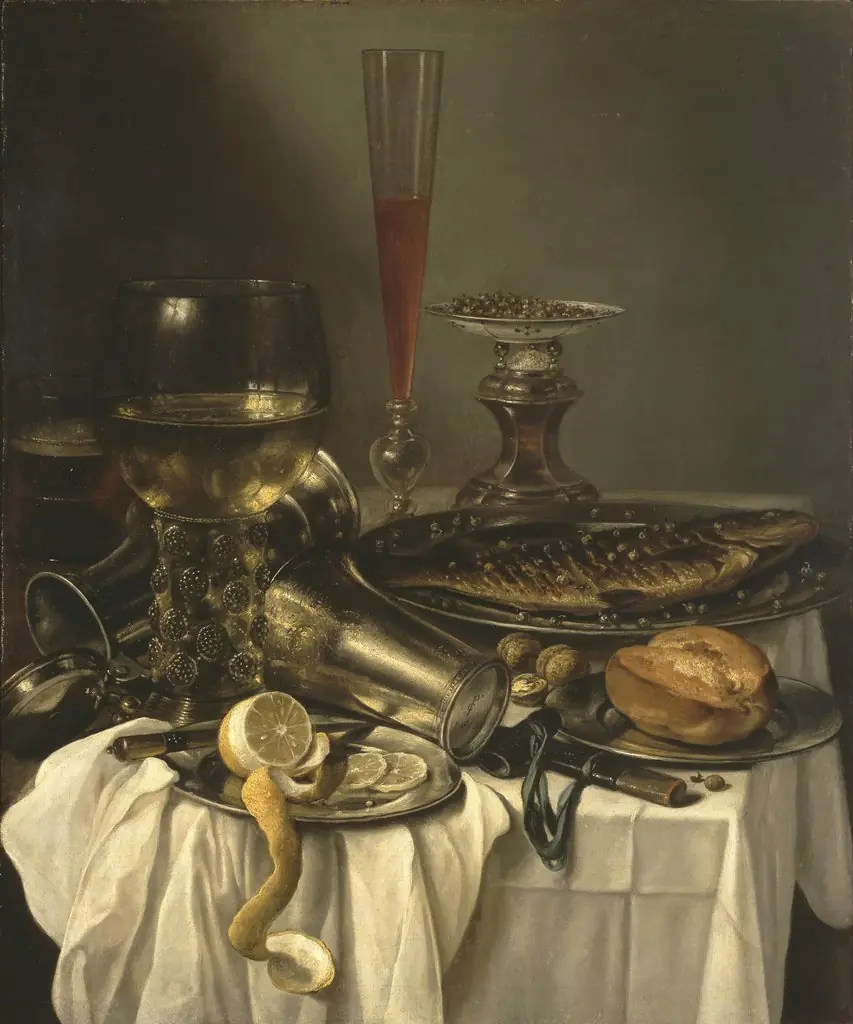
- Still Life
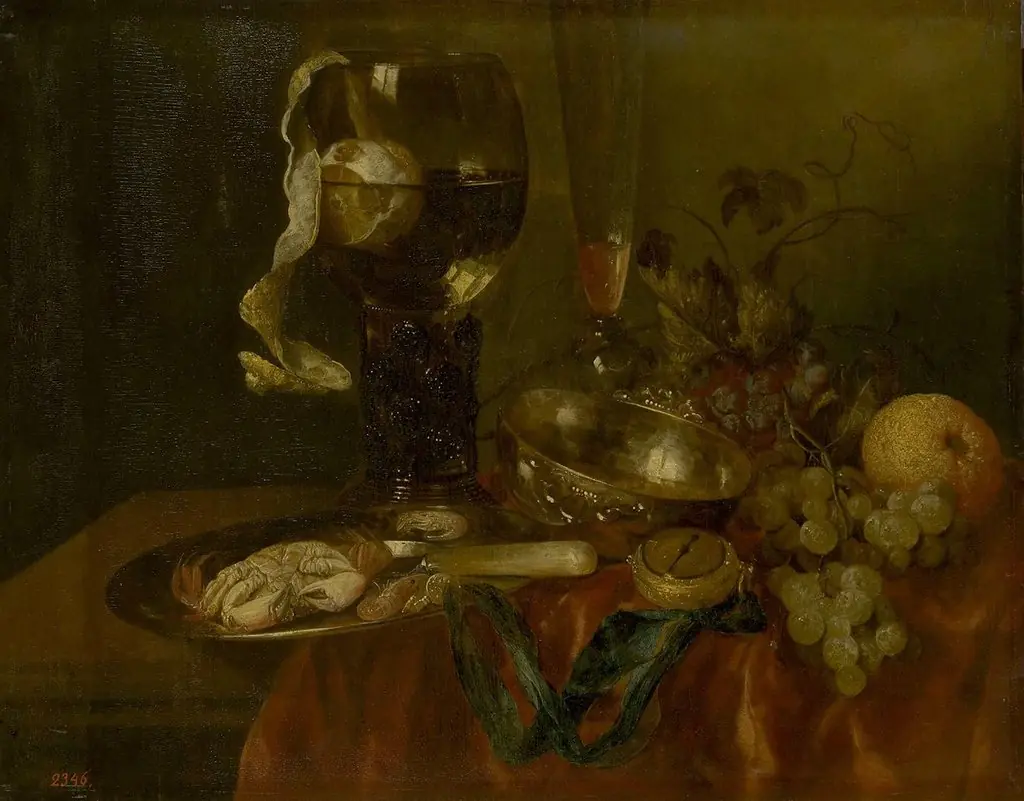 Snack (Still Life with Crab, Fruit and Clock)
 Still Life
 Frühstücksstilleben
 Still Life with a Ming Jug
 Still Life with a Roemer, a Covered Flagon, and a Beaker
 Still Life (rejoined to its left half in 1956)
 Stillleben mit Silberschale und Becherschraube
 PBanquet still life
 Still life
 Still Life with Silver-gilt Bekerschroef with Roemer