Artwork
Still Life
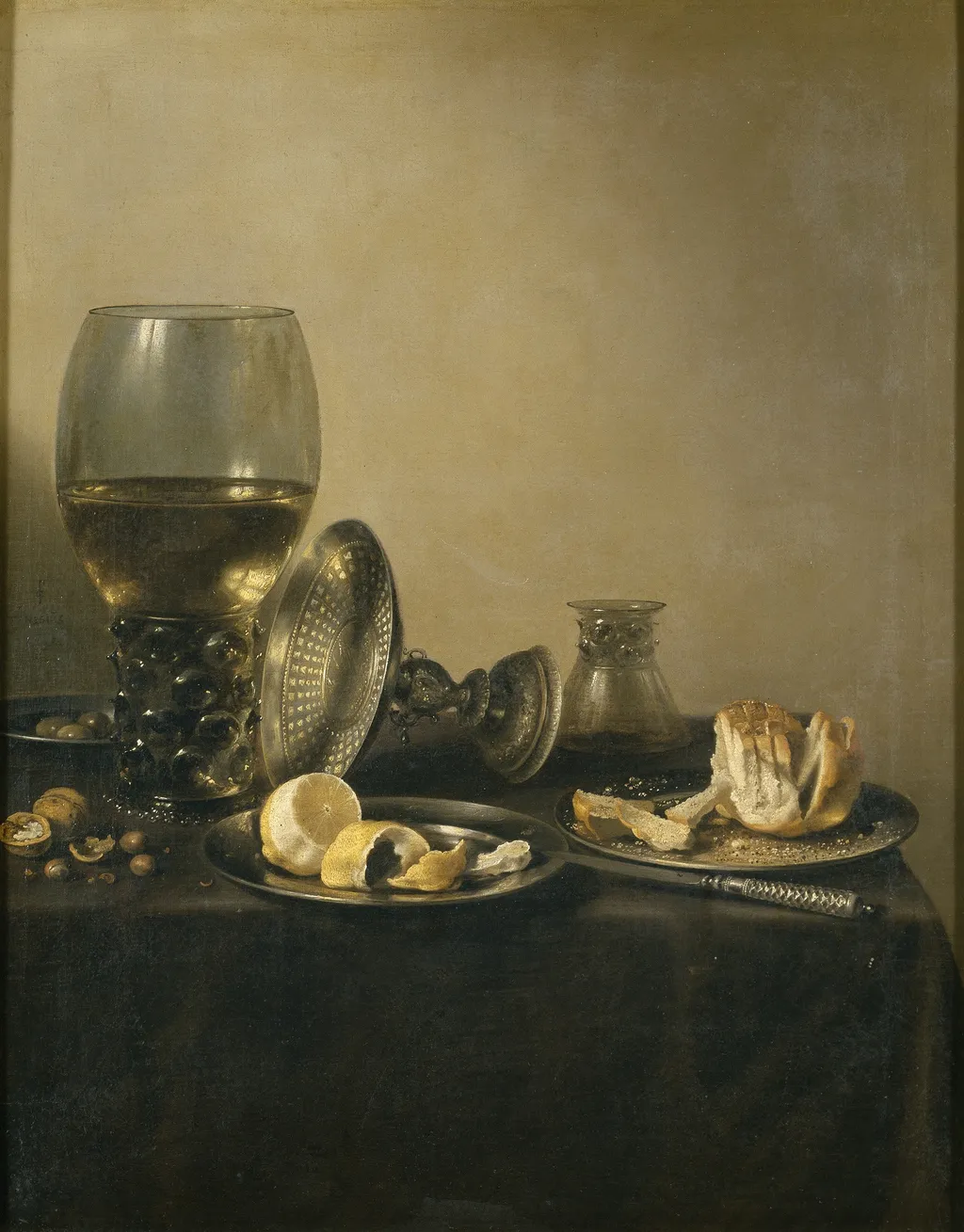
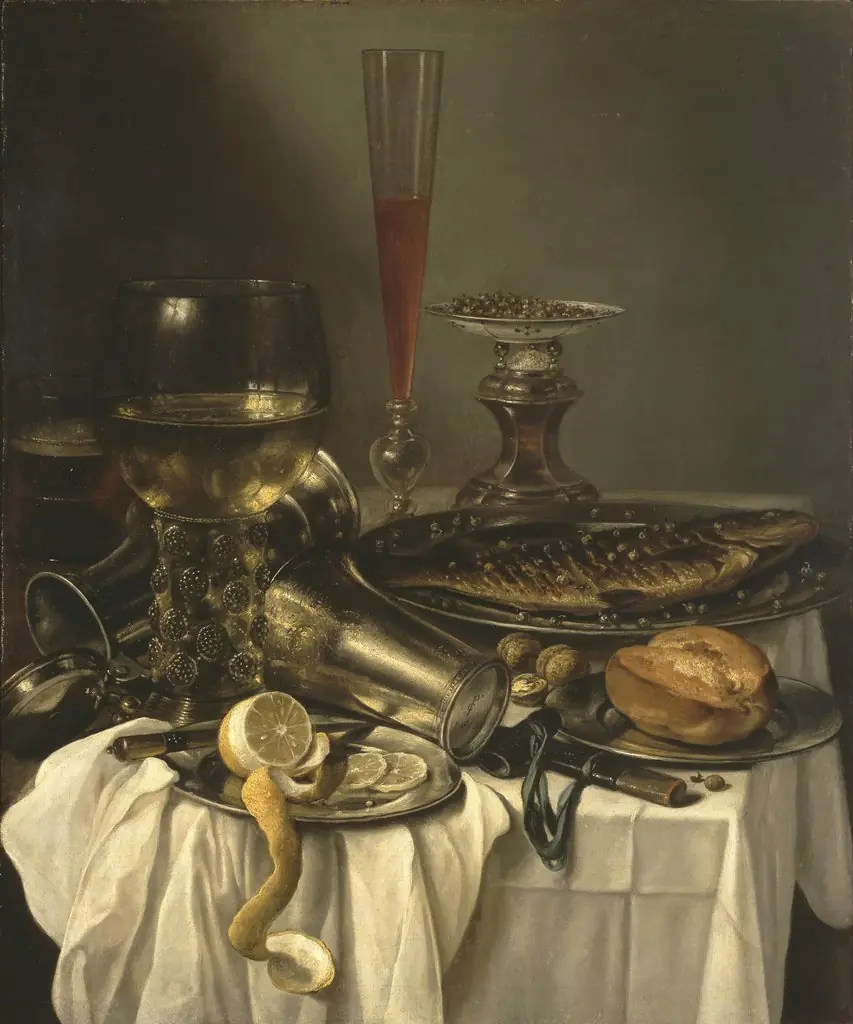
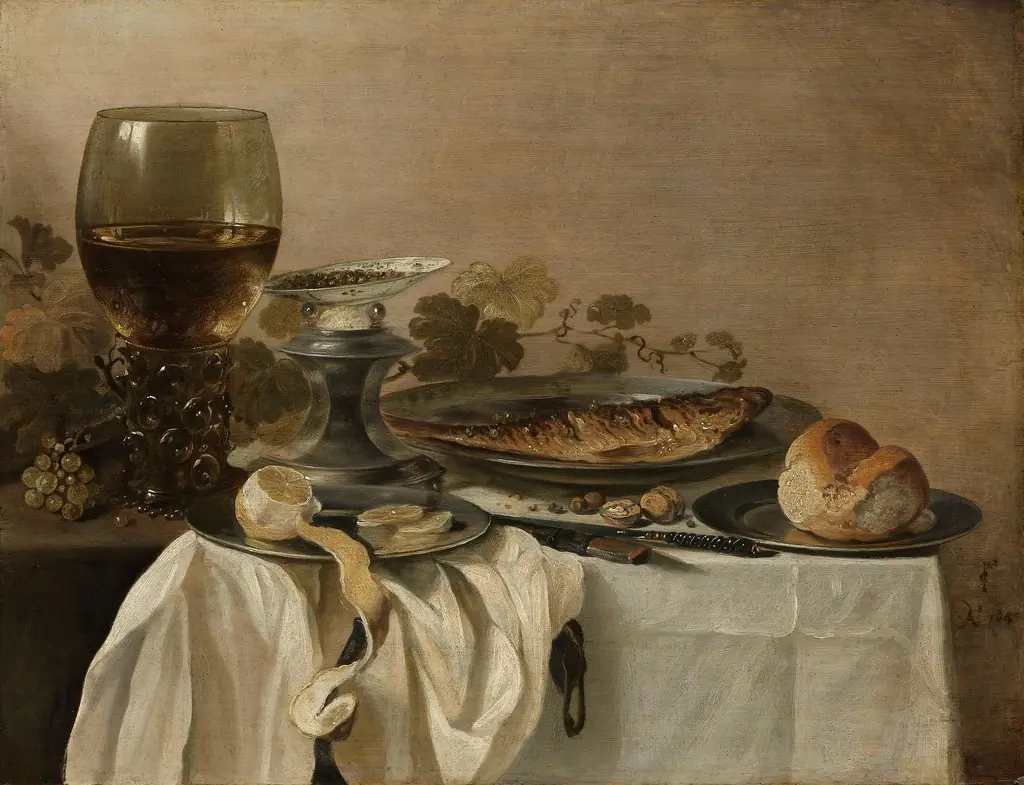
Still Life is an oil painting by the Dutch Golden Age artist Pieter Claesz. It dates from 1637 and is held in the collection of the Museo del Prado.
About this work
Subject & Meaning
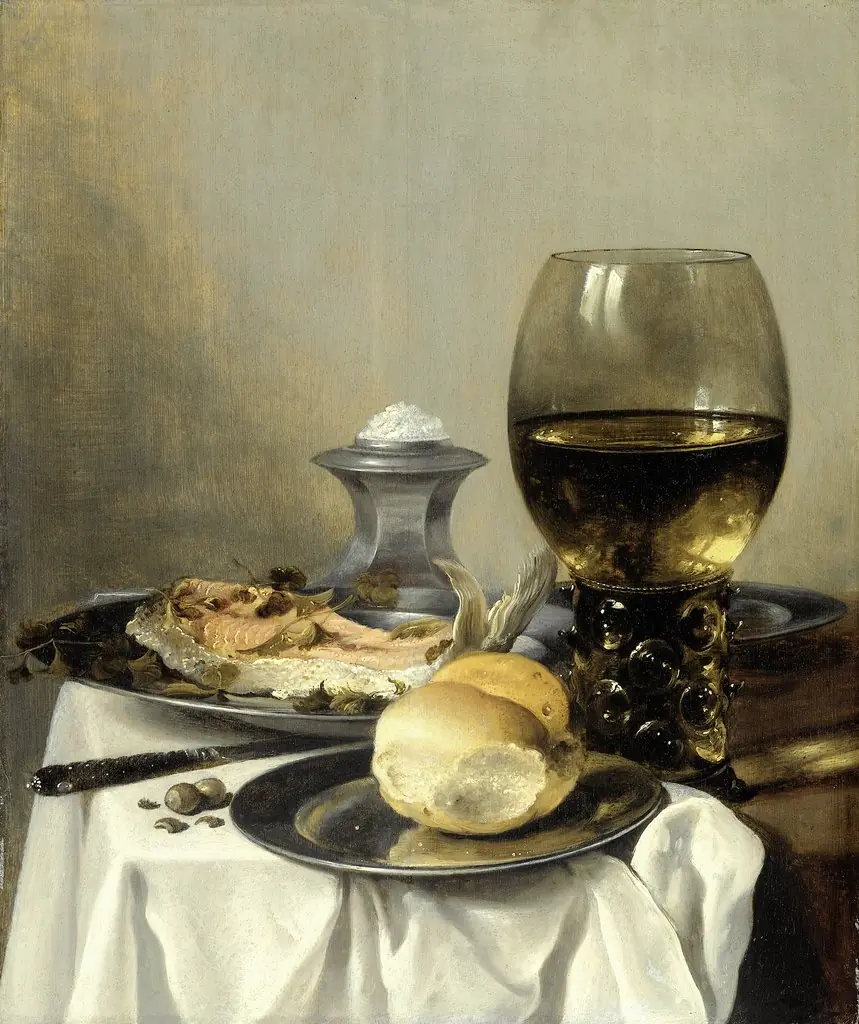
The painting presents a tabletop arrangement of food and drink set against a plain wall, a hallmark compositional formula of Dutch Golden Age still life.
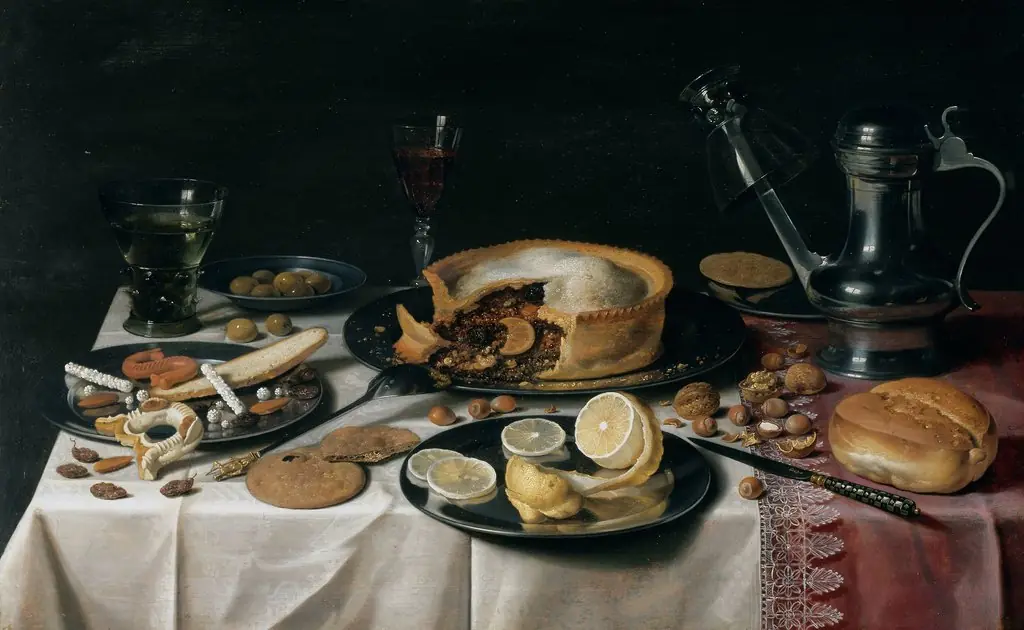
The painting presents a tabletop arrangement of food and drink set against a plain wall, a hallmark compositional formula of Dutch Golden Age still life. The depicted objects include a draped tablecloth, bread, a knife, a lemon with its zest, walnuts, hazelnuts, a cake stand, a tazza, a rummer, and a berkemeyer glass, alongside other drink and food items. Such accumulations of partially consumed food, overturned or tipped vessels, and scattered nuts are conventionally read as vanitas symbols: the bread and lemon evoke the transience of earthly pleasures, while the peeled zest and cracked nuts suggest the passage of time and the fleeting nature of sensory enjoyment.
The rummer and berkemeyer, prominent Dutch glass forms, reinforce the theme of worldly consumption, and the overall muted, contemplative arrangement invites reflection on mortality and the impermanence of material abundance.
Technique & Style
Executed in oil paint on a linen canvas in 1637, the work employs a restrained, monochromatic palette dominated by silvery grays and ochres, punctuated by the reflective sheen of a rummer and the translucent facets of a berkemeyer. Claesz renders the scene with a precise, almost forensic clarity, using fine, controlled brushwork to articulate the varied textures of bread crust, nut shells, and lemon zest. The composition’s shallow space and diagonal thrust from lower left to upper right focus attention on the objects’ material presence, while the subdued lighting and soft transitions heighten the stillness.
Handling is meticulous, with delicate glazes modulating the reflective surfaces and crisp highlights on the metal tazza and glassware.
History & Provenance
Pieter Claesz painted this still‑life in 1637, as recorded in contemporary documentation. The work, executed in oil on canvas, measures 83 × 66 cm and depicts a modest tabletop with beverages, fruit, and utensils characteristic of Dutch Golden Age still‑life. Following its creation, the painting entered the collection of the Museo del Prado, where it has been displayed continuously since the museum’s acquisition.
No records indicate a prior private patron or commission; the entry was made directly into the museum’s holdings, establishing the Prado as its present owner.
The 1637 oil-on-canvas Still Life by Pieter Claesz is held by the Museo del Prado in Madrid, where it forms part of the museum's permanent collection. Within the Prado's holdings, the work is catalogued under inventory number P02753. Measuring 83 cm in height by 66 cm in width, the painting is classified as a still life in the Dutch Golden Age tradition.
The provided sources confirm the work's location and inventory designation but do not record any specific exhibition history or loans beyond its residence in the Prado collection.
Context
Pieter Claesz’s 1637 oil on canvas Still Life, recorded in the Prado’s catalogue, exemplifies the banquet‑piece tradition of Dutch Golden Age still life. The work’s precise rendering of everyday objects, glassware, fruit, and textiles, reflects the artist’s contribution to a genre that emphasized meticulous observation and subtle lighting. Documentation in the internal corpus and the wikidata entry confirms its creation date, dimensions, and classification as a painting within the movement.
Scholars cite the painting as a benchmark for studying material texture and compositional balance in 17th‑century Dutch art, positioning it alongside contemporaries who shaped the still‑life canon.
Overview
Pieter Claesz's 1637 oil painting, Still Life, exemplifies the Dutch Golden Age's focus on everyday objects. This work, now housed at the Museo del Prado, presents a carefully arranged composition featuring a wine glass, a plate of lemons, and a decorative cake stand. The artist employs a subdued palette and dramatic lighting to highlight the textures and forms of these domestic items, inviting viewers to contemplate their transient beauty.
Own this work as a print
Artist & collection

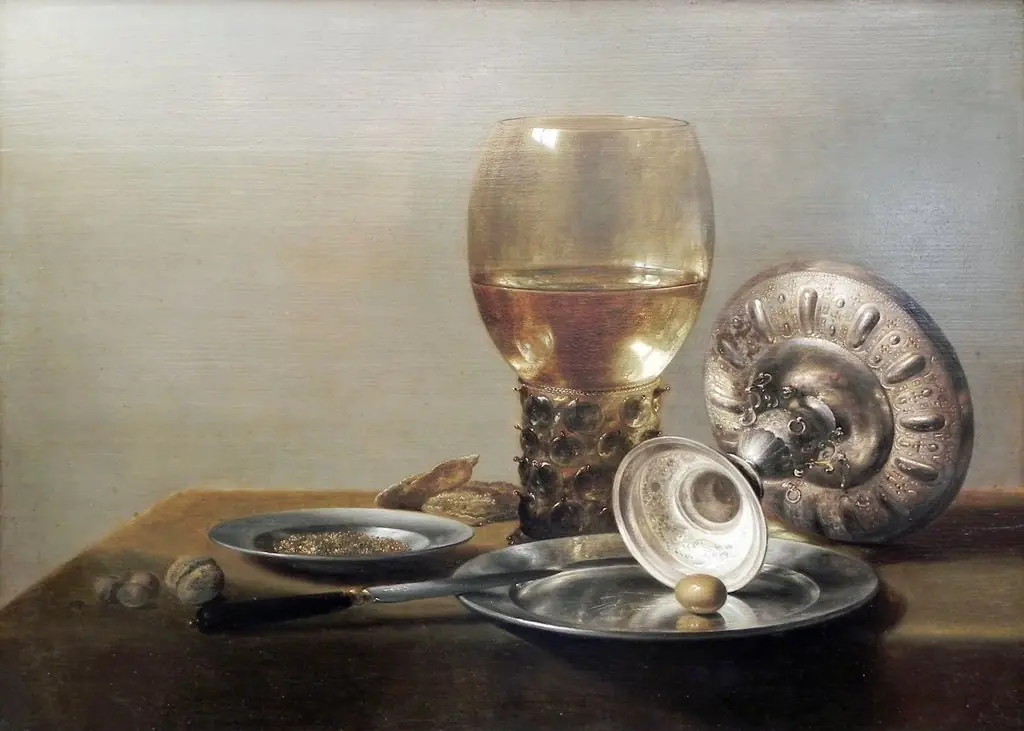
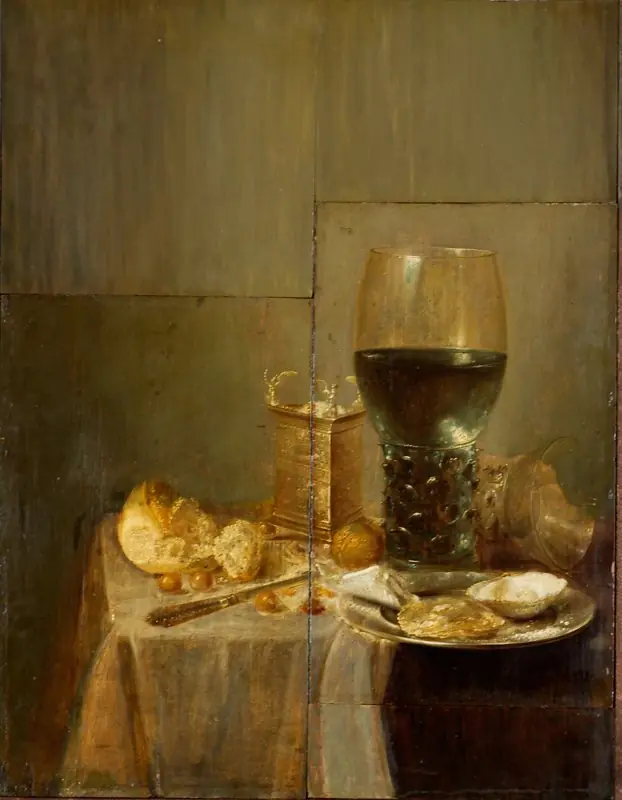
- Still life
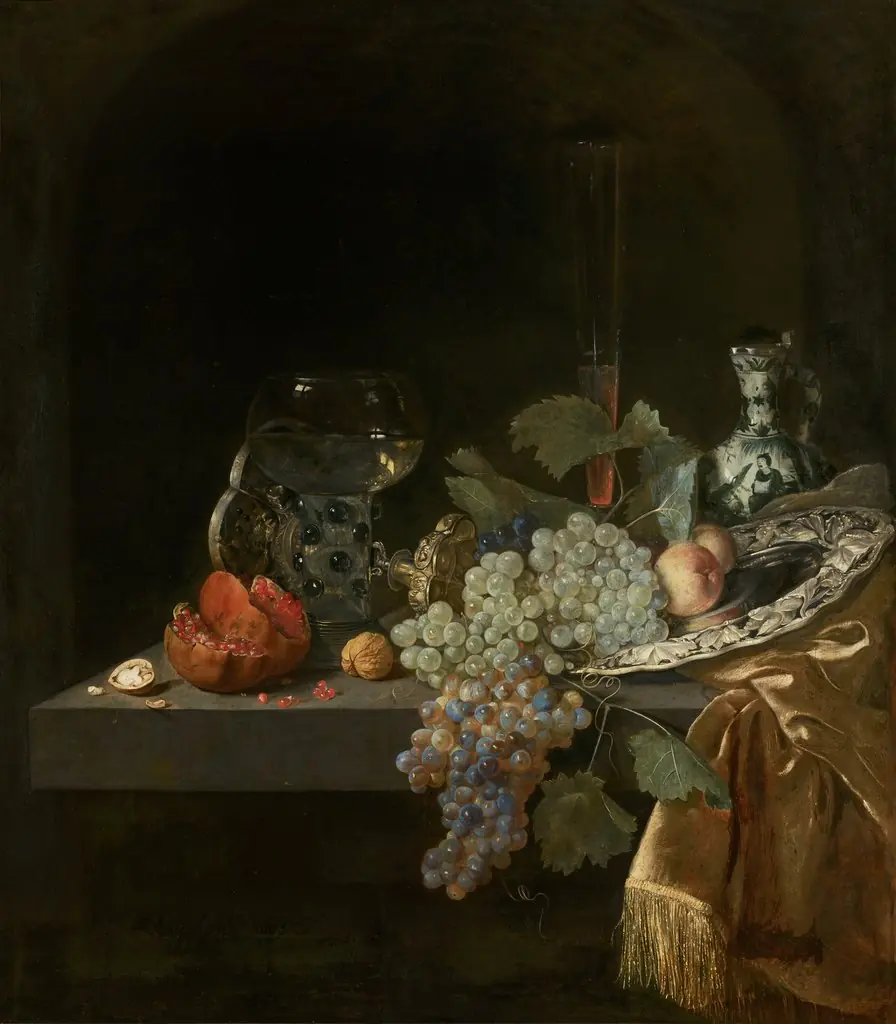 Still life
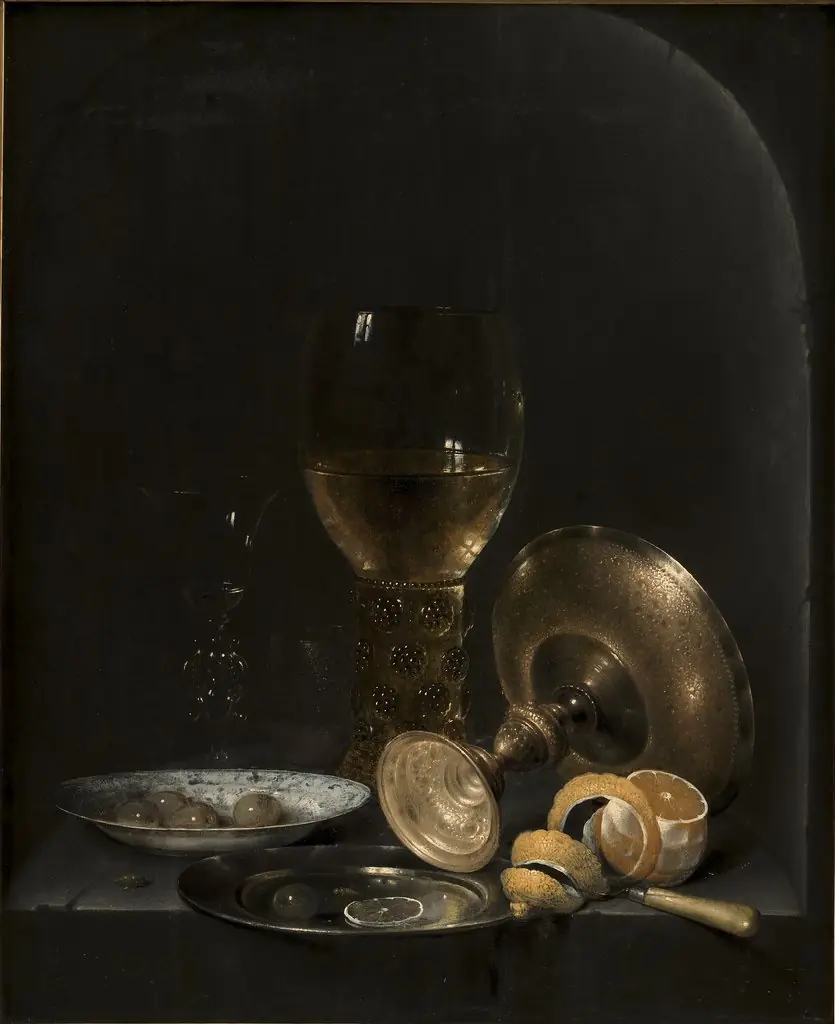 Still life. Breakfast Piece in a Stone Niche
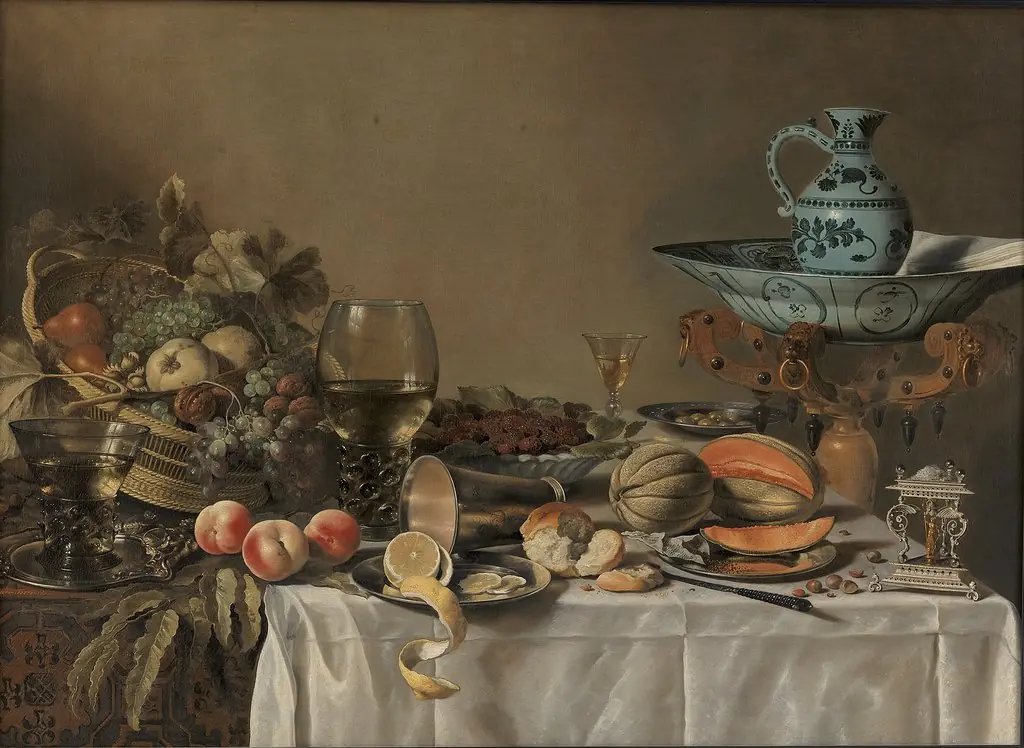 Still Life
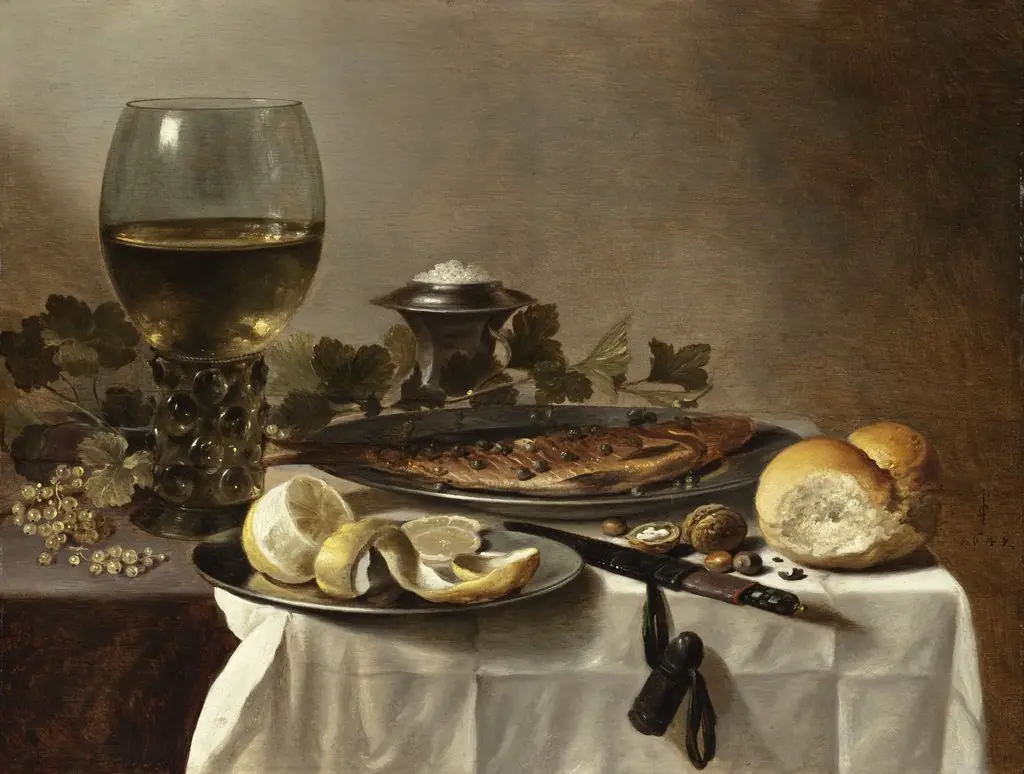 Still Life with Herring, Wine and Bread
 Still life. Breakfast Piece in a Stone Niche
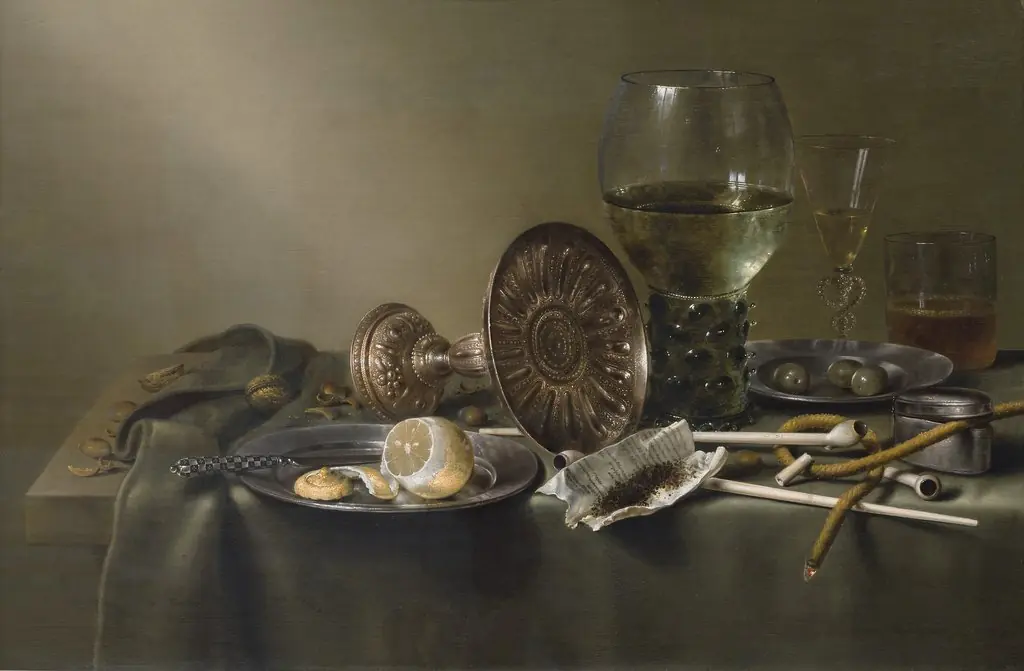 Still Life with Glasses and Tobacco
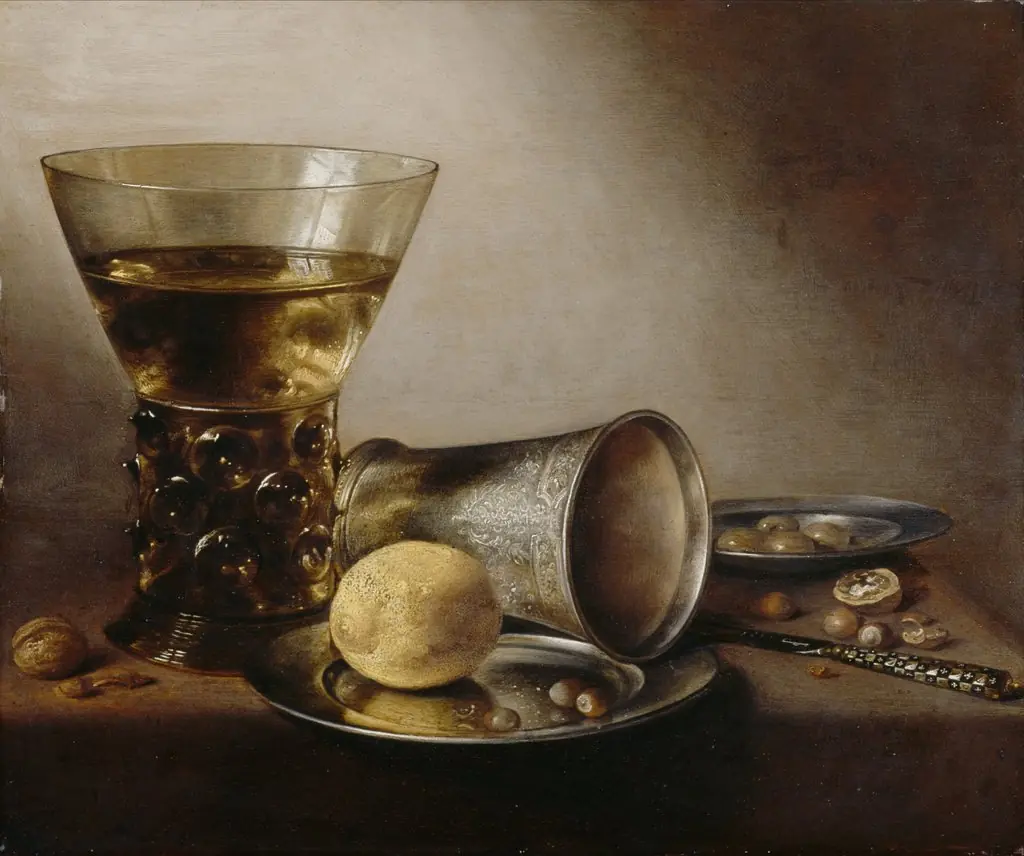 Still Life with Roemer
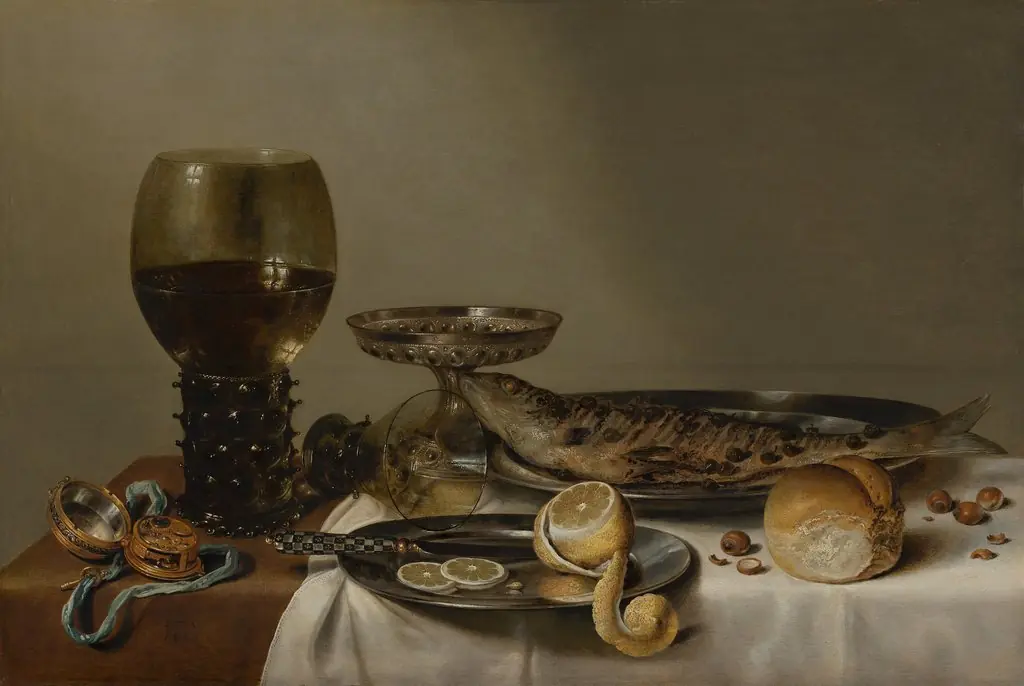 Still Life with a Roemer and a Watch
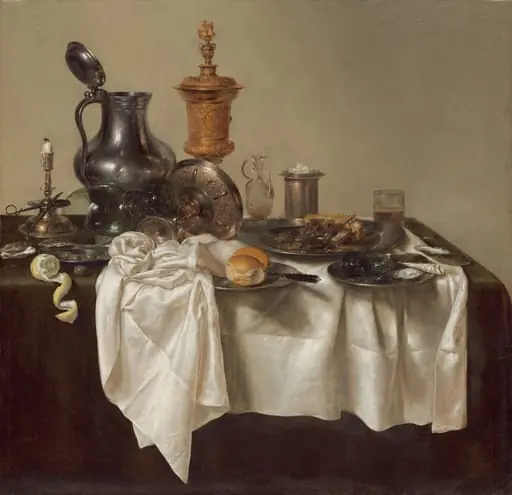 Banquet Piece with Mince Pie
 Still life with a fish