Artwork
The Last Supper
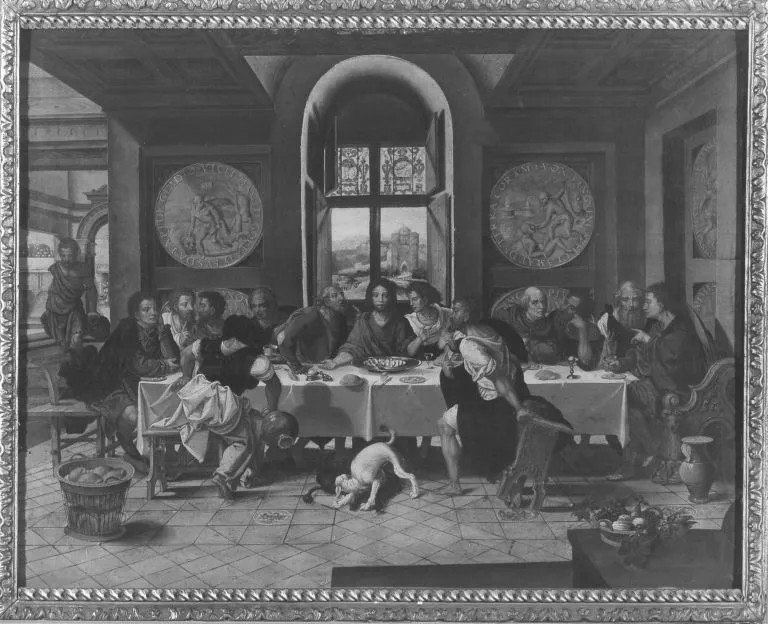
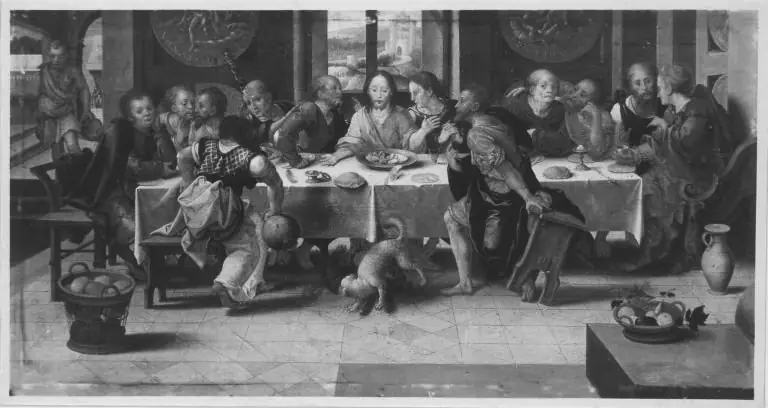
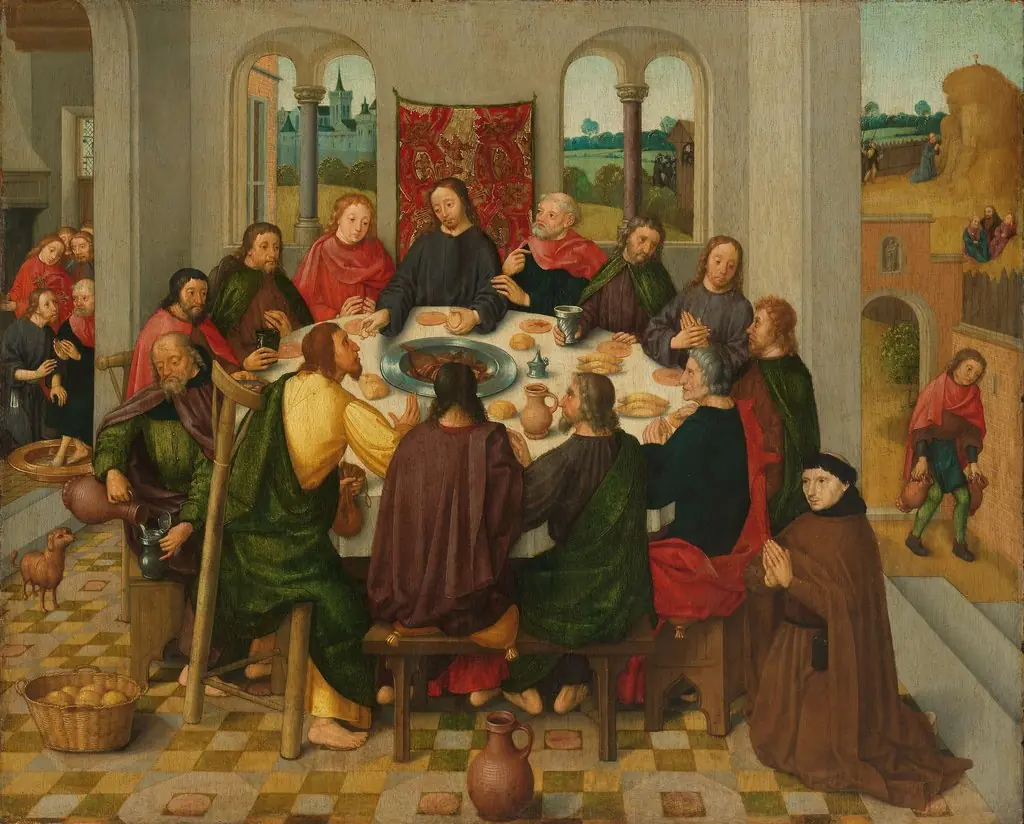
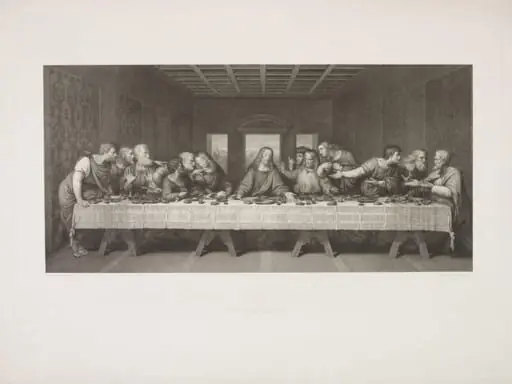
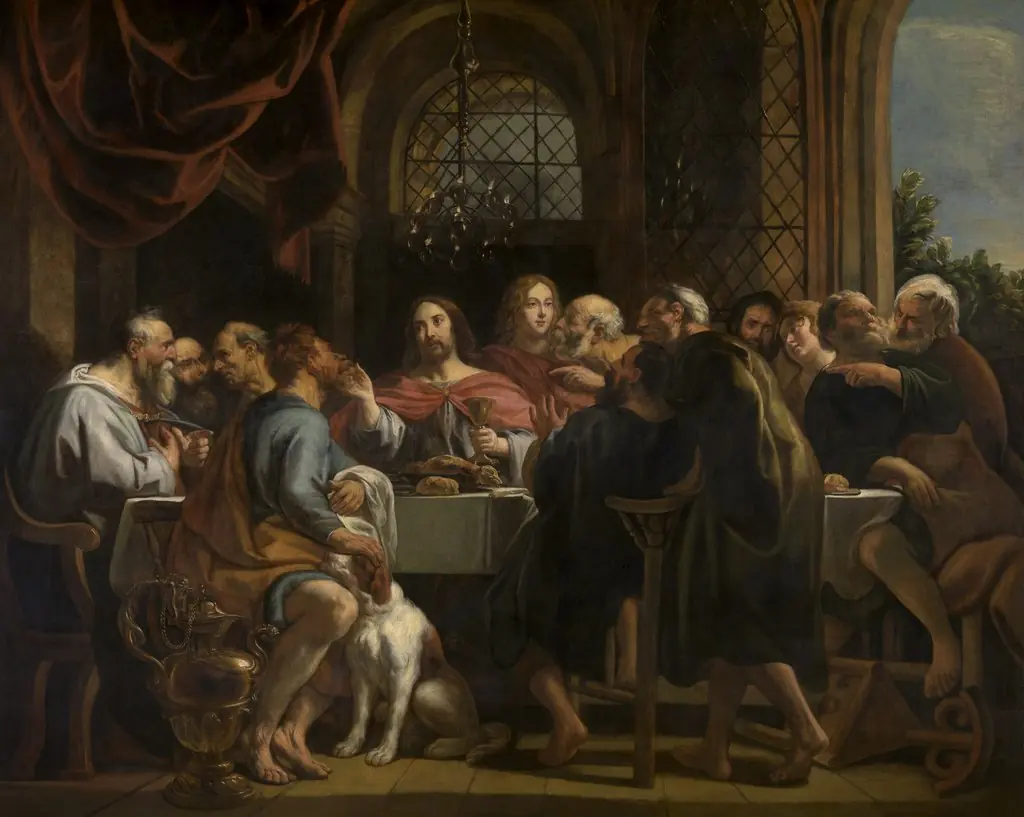
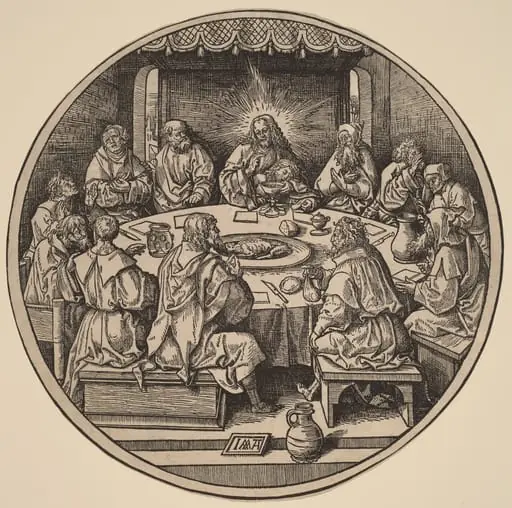
The Last Supper is an oil painting by the Flemish Baroque painting artist Pieter Coecke van Aelst. It dates from 1550 and is held in the collection of the Germanisches Nationalmuseum. Created around the middle of the sixteenth century, this oil on canvas presents a rendition of the biblical banquet.
About this work
Subject & Meaning
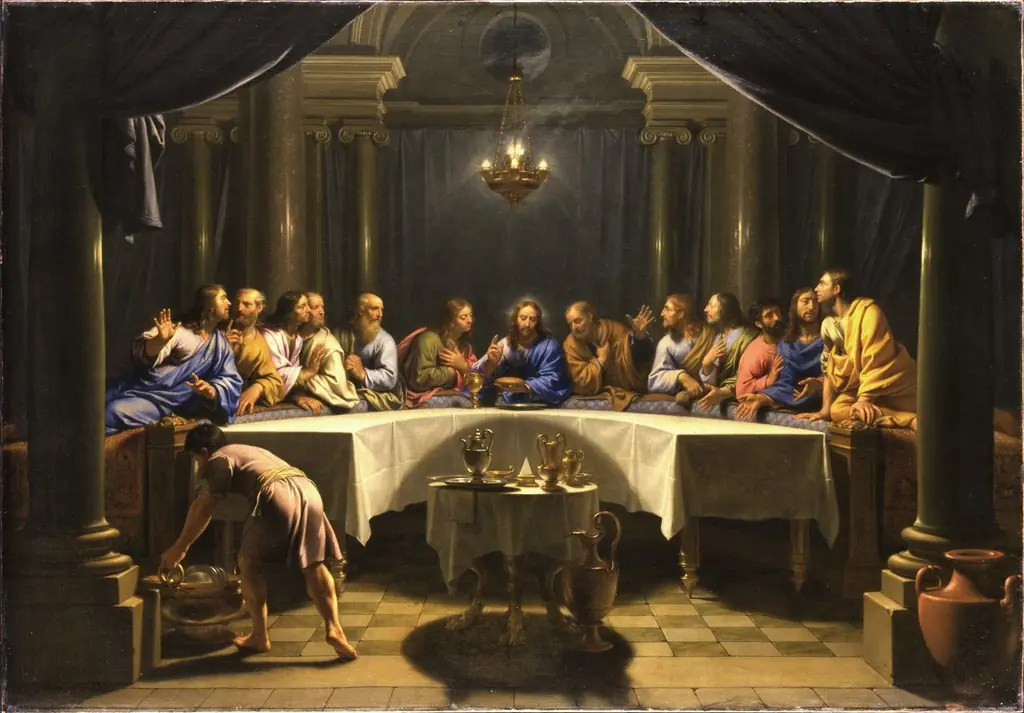
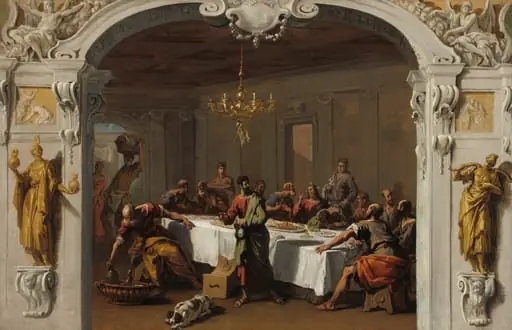
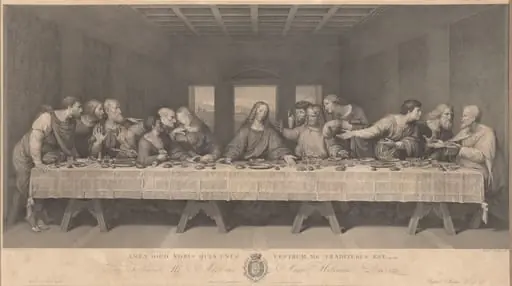
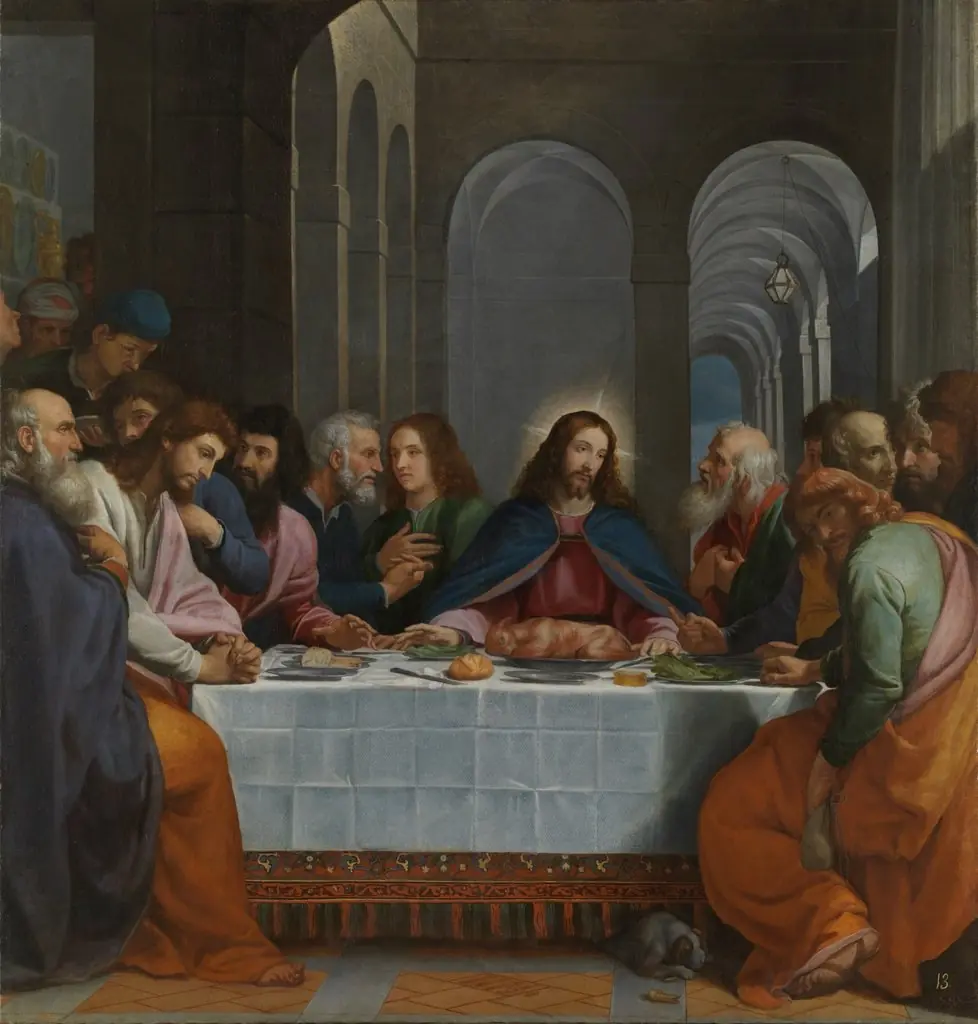
The painting portrays Christ and the twelve apostles gathered around a table during the final meal before the crucifixion, a scene drawn directly from the biblical narrative of the Last Supper. The composition emphasizes the moment of revelation as Jesus announces that one of his disciples will betray him, a pivotal gesture highlighted through the figures' varied reactions. This religious subject underscores themes of sacrifice and foreknowledge within Christian iconography, reflecting Counter-Reformation ideals of emotional engagement and doctrinal clarity.
The work incorporates symbolic details such as a small dog at the apostle’s feet, often interpreted as a sign of fidelity or vigilance, reinforcing the narrative’s moral and spiritual dimensions. The arrangement of gestures and glances among the disciples illustrates individual contemplation, inviting viewers to engage with the theological significance of betrayal and redemption.
Technique & Style
8 cm in width, and depicts the biblical scene of the Last Supper with a dog present.
The work is executed in oil paint on an oak panel, measuring 64.3 cm in height and 82.8 cm in width, and depicts the biblical scene of the Last Supper with a dog present. The painting was created in 1550 and is part of the collection of the Bavarian State Painting Collections at the Germanisches Nationalmuseum, housed in the Alte Pinakothek in Munich. Its formal qualities reflect a religious composition rendered in the style of the period, with the subject positioned centrally to emphasize the narrative of Christ’s final meal.
History & Provenance
Pieter Coecke van Aelst painted The Last Supper in 1550 as an oil work on oak panel, originally created as a religious composition based on the biblical scene. The painting measures 64.3 cm in height and 82.8 cm in width and features a dog among the figures. It is part of the Bavarian State Painting Collections and is housed in the Germanisches Nationalmuseum within the Alte Pinakothek in Munich.
The work is recognized as a religious artwork and forms part of a series of depictions of the Last Supper, reflecting its significance within the artistic tradition of the period.
Legacy
The Last Supper by Pieter Coecke van Aelst emerged as a significant religious composition within 16th-century European painting, influencing devotional practices through its narrative clarity and emotional restraint. Its legacy is anchored in surviving replicas, such as the one documented at the Alte Pinakothek in Munich, which preserved compositional innovations that informed later interpretations of the biblical scene. This work contributed to the evolving visual language of Christ's final meal in art, particularly through its integration of subtle symbolic elements like the inclusion of a dog, which enriched theological storytelling without overt dramatization.
Overview
Created around the middle of the sixteenth century, this oil on canvas presents a rendition of the biblical banquet. The work is attributed to the Flemish painter Pieter Coecke van Aelst and is presently displayed in Munich’s Alte Pinakothek. It follows the conventional composition of the Last Supper while introducing a domestic animal into the scene, offering a distinctive visual twist on a familiar religious narrative.
Artist & collection
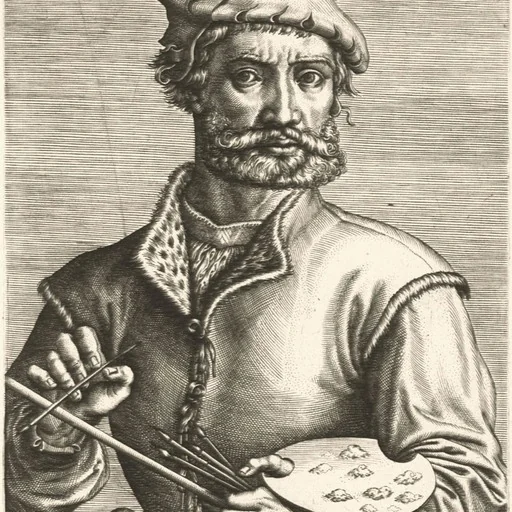
Artist
Pieter Coecke van Aelst or Pieter Coecke van Aelst the Elder was a Flemish painter, sculptor, architect, author and designer of woodcuts, goldsmith's work, stained glass and tapestries.