Artwork
The Temptations of Saint Anthony Abbot
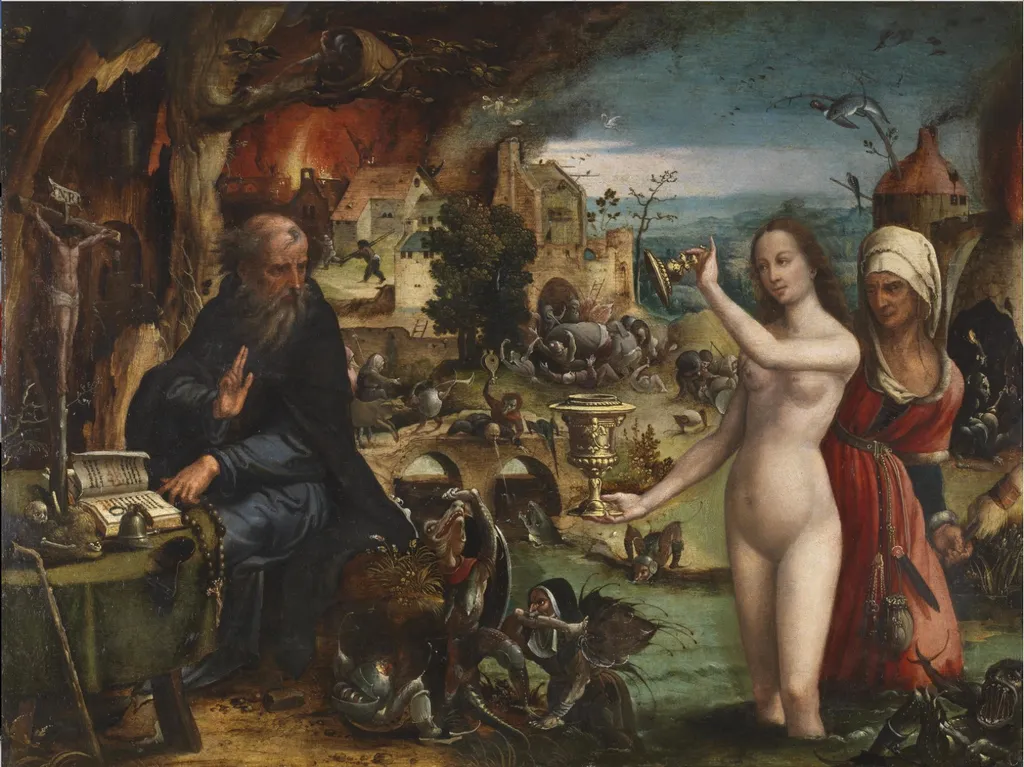
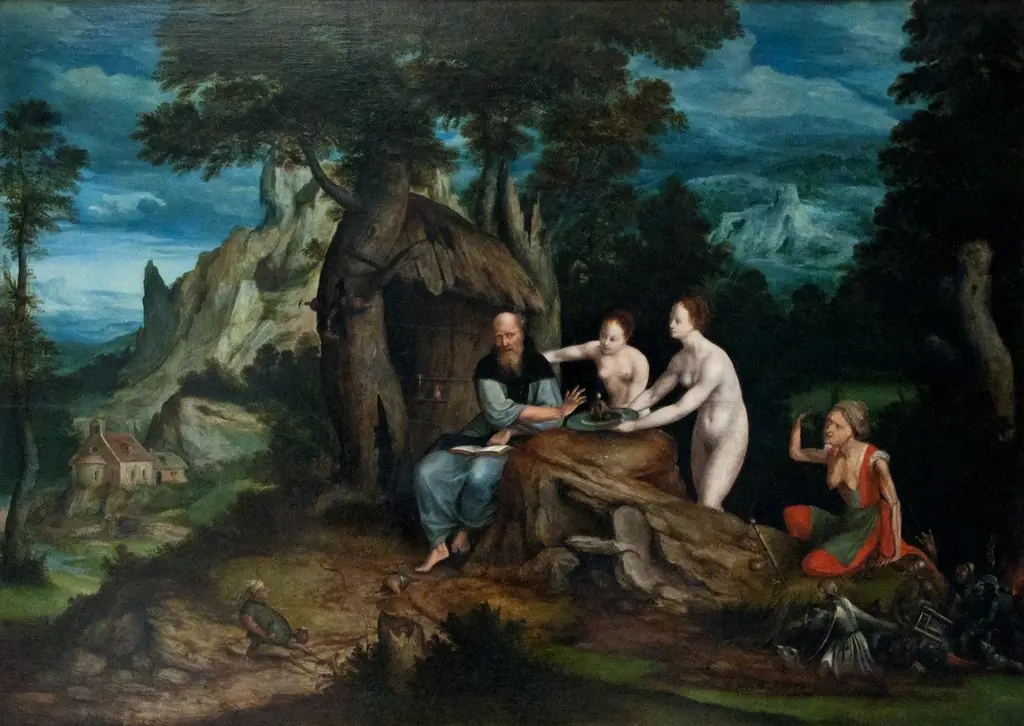
The Temptations of Saint Anthony Abbot is an oil painting by the Flemish Baroque painting artist Pieter Coecke van Aelst. It dates from 1543 and is held in the collection of the Museo del Prado.
About this work
Subject & Meaning
Pieter Coecke van Aelst's painting illustrates the religious narrative of the Temptations of Saint Anthony, focusing on the spiritual trials faced by Anthony the Great. The composition incorporates specific iconographic elements to convey the saint's ascetic life and devotion, including a skull, a book, a rosary, and a crucifix. These objects function as symbols of mortality, scripture, prayer, and faith, anchoring the work in the tradition of religious art that emphasizes piety amidst adversity.
By depicting these attributes alongside the main subject, the artwork visually represents the internal and external struggles associated with the saint's legend.
Technique & Style
The painting is executed in oil on panel, a standard support for mid-sixteenth-century Netherlandish religious works.
The painting is executed in oil on panel, a standard support for mid-sixteenth-century Netherlandish religious works. Handling is characterized by meticulous layering of glazes to build luminous flesh tones and translucent drapery, a technique associated with Coecke van Aelst’s Antwerp manner. Stylistically, the composition juxtaposes the saint’s gaunt, ascetic figure with grotesque hybrid demons rendered in sharp chiaroscuro, emphasizing moral conflict through exaggerated physiognomy and swirling, almost sculptural forms.
The scale is intimate, with the panel measuring 41 cm in height and 53 cm in width, framing the scene within a shallow, stage-like recession that directs focus to the saint’s bowed posture and clasped hands.
History & Provenance
Pieter Coecke van Aelst executed The Temptations of Saint Anthony Abbot in 1543. The work was created using oil paint applied to a wooden panel. While some records suggest a broader inception window starting in 1543 and extending to 1550, the specific date of 1543 is established as the primary year of creation.
The painting depicts religious subject matter, specifically the trials of Anthony the Great alongside symbolic elements such as a skull, book, rosary, and crucifix. Today, the artwork is held in the collection of the Museo del Prado, where it remains part of the institution's holdings of religious art.
Overview
Painted in 1543, Pieter Coecke van Aelst's The Temptations of Saint Anthony Abbot depicts the hermit saint resisting demonic assaults through faith. The composition centers on the bearded saint, clad in dark monastic robes, who gestures authoritatively toward a nude female figure raising her hand in a gesture of enticement. In his other hand, Anthony holds a book and a crucifix, symbols of his spiritual defense, while a skull and scattered objects lie at his feet, referencing mortality and worldly vanity.
The background dissolves into a chaotic landscape teeming with grotesque demons, hybrid monsters, and a distant village populated by tiny figures, illustrating the surreal nature of the saint's visions. To the right, a woman in red observes the confrontation, adding a layer of narrative complexity. Executed in oil paint, the work reflects Coecke's engagement with the Northern Renaissance tradition of detailed, imaginative religious imagery.
Created during the artist's mature period, shortly before his death, this panel demonstrates his ability to synthesize Italianate compositional balance with the intricate, fantastical detail characteristic of Flemish art. The painting serves as a visual meditation on the struggle between asceticism and temptation, a recurring theme in the artist's oeuvre.
Artist & collection
Artist
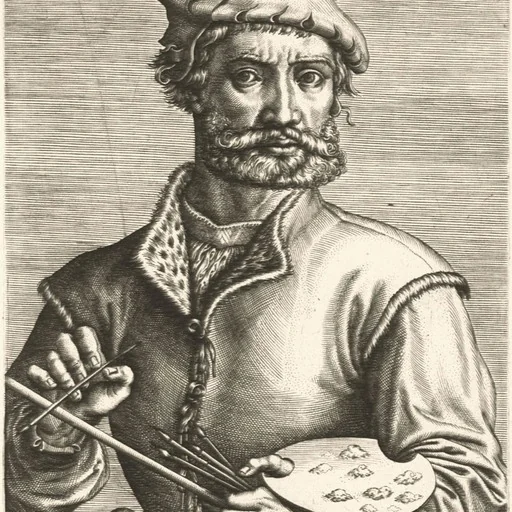
Pieter Coecke van Aelst or Pieter Coecke van Aelst the Elder was a Flemish painter, sculptor, architect, author and designer of woodcuts, goldsmith's work, stained glass and tapestries.