Artwork
Officer paying a woman in a stable
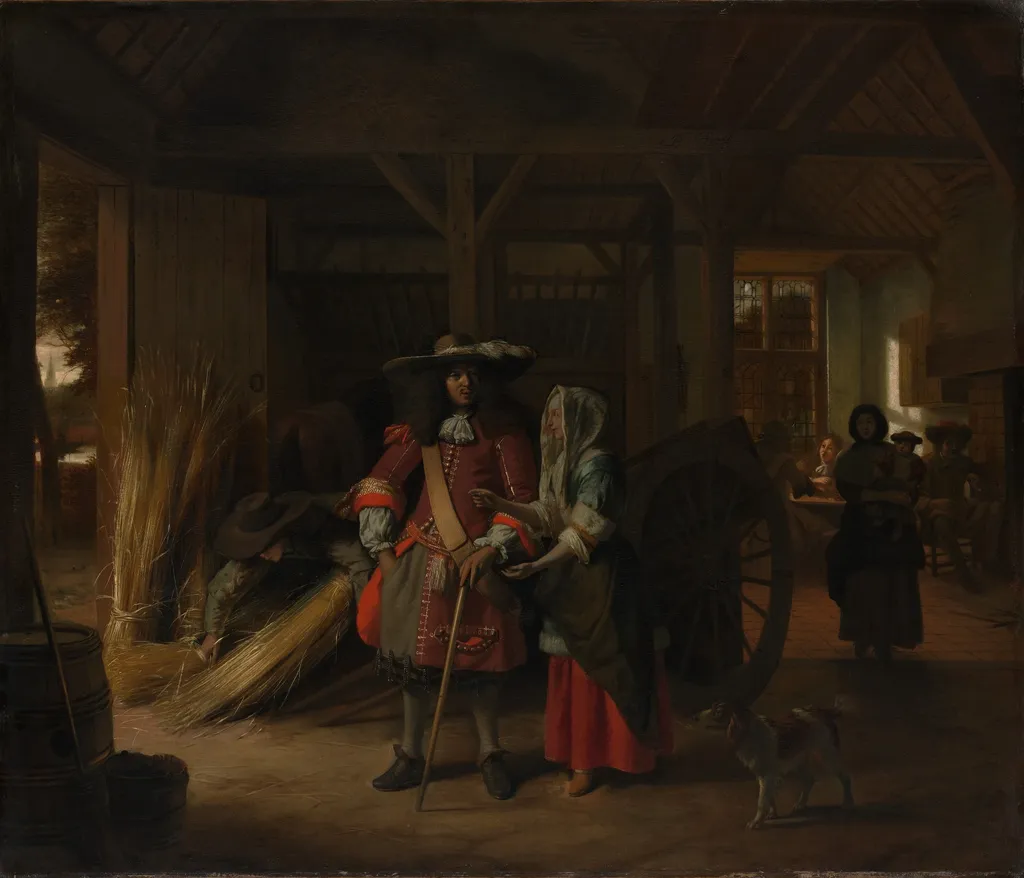
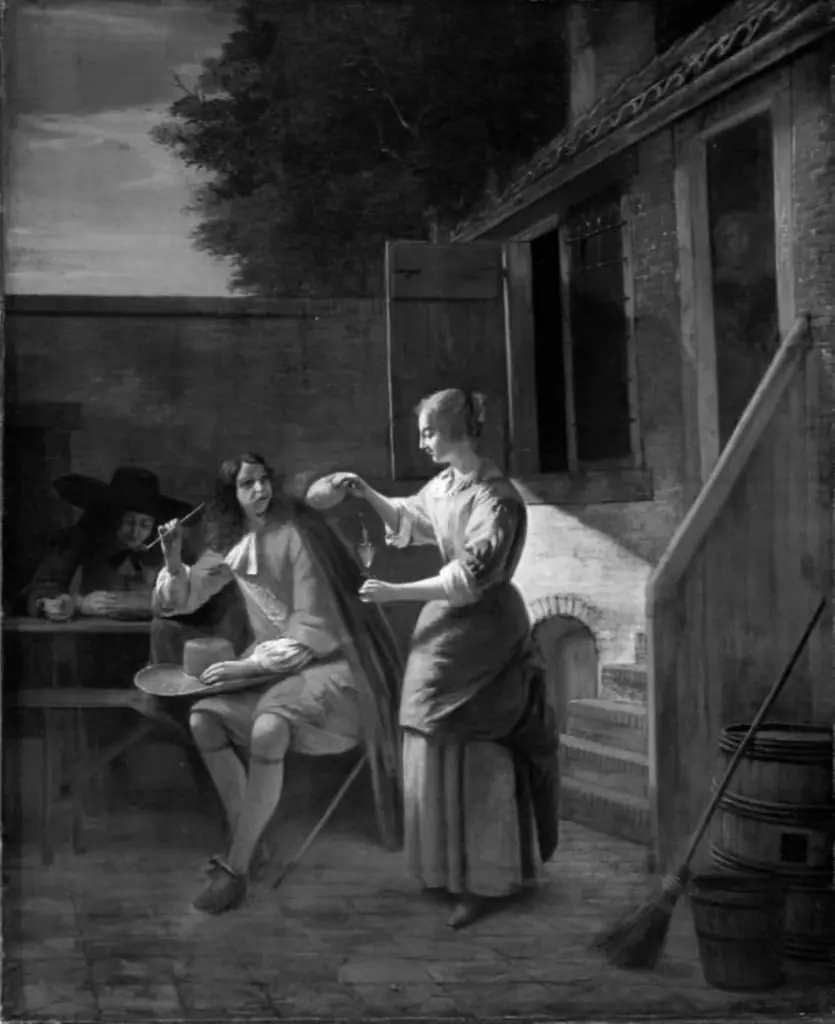
Officer paying a woman in a stable is an oil painting by the Dutch Golden Age artist Pieter de Hooch. It dates from 1670 and is held in the collection of the Metropolitan Museum of Art.
About this work
Subject & Meaning
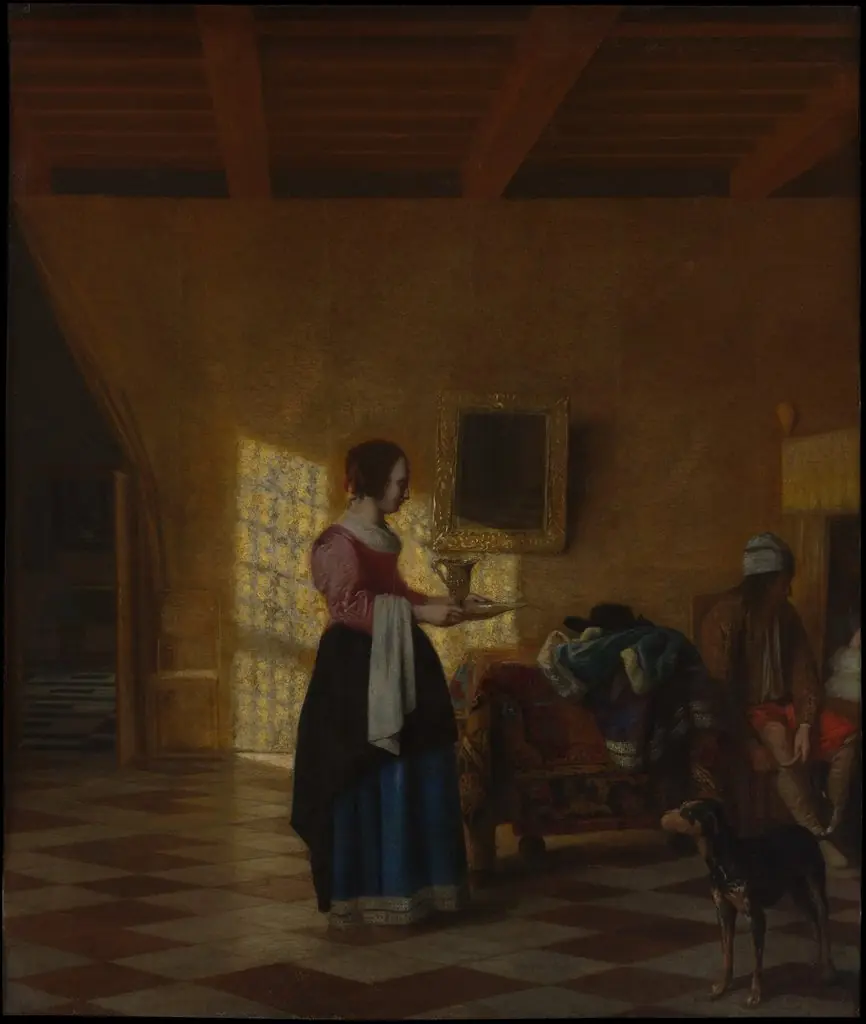
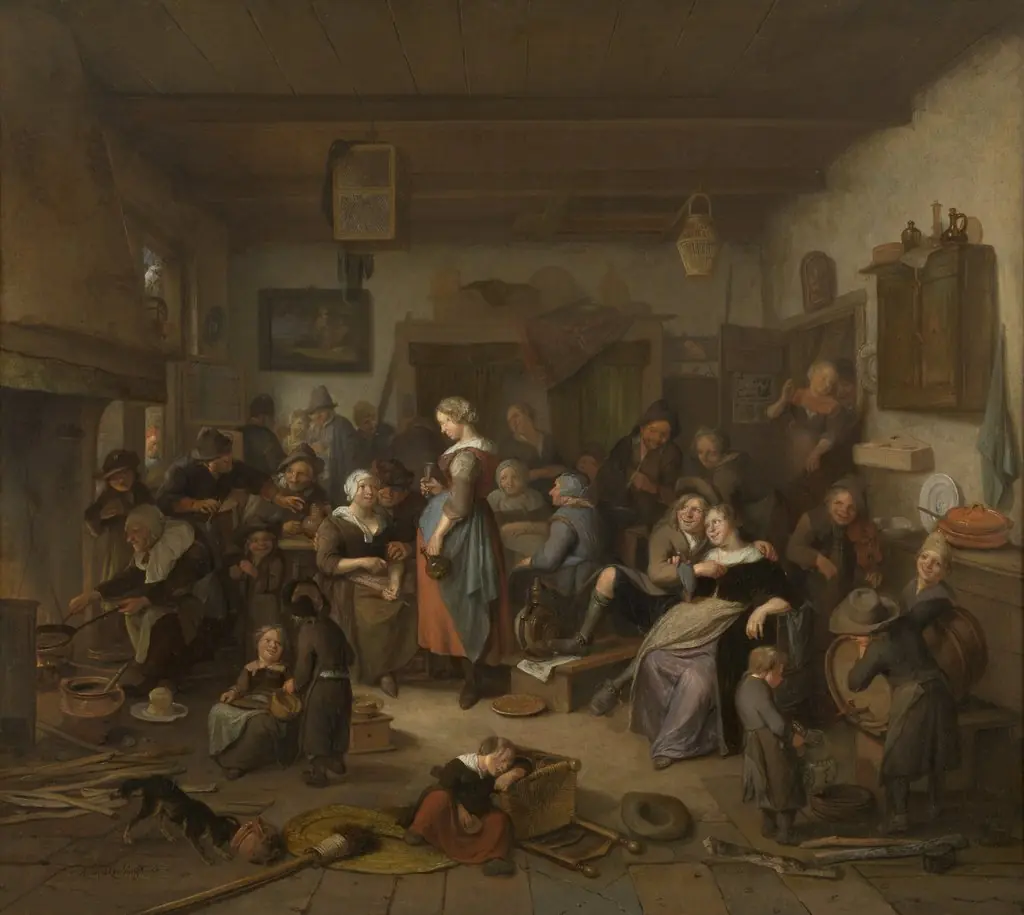
The painting shows an officer handing money to a woman within the interior of an inn or stable, a setting indicated by the presence of architectural details and a dog. The figures are dressed in contemporary attire, the officer in military garb and the woman in modest domestic clothing, underscoring a moment of transaction between public and private spheres. As a genre scene, the work exemplifies the Dutch fascination with everyday life, capturing a routine exchange that hints at broader themes of commerce, hospitality, and the social interactions that defined urban domesticity in the seventeenth century.
History & Provenance
Its creation history is therefore limited to the artist's authorship, medium, and the early-1670s date assigned by scholars.
The painting Officer paying a woman in a stable is attributed to Pieter de Hooch and dated to circa 1670 (with alternative inception dates of 1670 or 1674 given in the museum record). Executed in oil on canvas, it measures approximately 94.6 cm high by 111.1 cm wide. The work entered the collection of the Metropolitan Museum of Art, where it is presently housed; no earlier owners or commission details are recorded in the available sources.
Its creation history is therefore limited to the artist's authorship, medium, and the early-1670s date assigned by scholars.
Overview
Officer paying a woman in a stable is an oil painting by the Dutch Golden Age master Pieter de Hooch, executed in 1670. The work depicts an interior scene within a rustic stable, characterized by the artist's signature mastery of light and spatial depth. A soldier, distinguished by a bright red coat and wide-brimmed hat, stands centrally, engaging with a woman in a hooded cloak who holds a child.
A dog rests on the floor nearby, adding to the domestic atmosphere. In the background, secondary figures sit at a table, while bundles of straw lean against the walls, grounding the scene in a humble setting. Light enters from a doorway or window, illuminating the figures and casting distinct shadows that define the wooden beams and earthen floor.
This painting exemplifies de Hooch's mature style, where he moved beyond simple genre scenes to explore complex architectural spaces and the interplay of light across different surfaces. Created during the height of his career, the work reflects the Dutch interest in everyday life, transforming a mundane transaction into a composition of quiet dignity and geometric order.
Technique & Style
The artist employs a dramatic interplay of light and shadow, known as chiaroscuro, to define the forms and create a sense of depth within the confined space. Strong illumination from an unseen source, possibly a doorway, highlights key figures while plunging other areas into deep shadow. This technique not only enhances the three-dimensionality of the figures and objects but also contributes to the painting's atmospheric quality, imbuing the humble stable with a palpable sense of reality.
Own this work as a print
Artist & collection
Artist
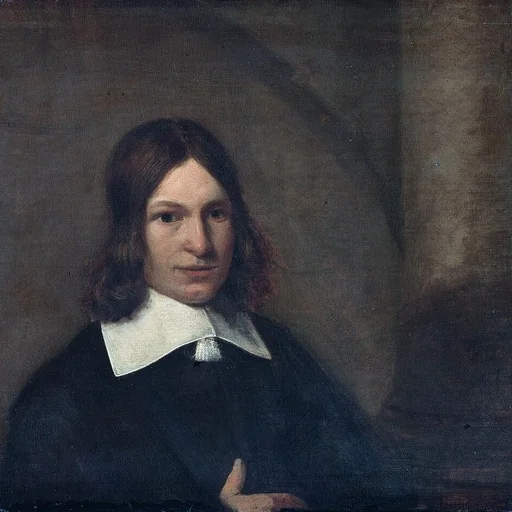
Pieter Hendricksz. de Hooch (Dutch:; also spelled Hoogh or Hooghe; bapt. 20 December 1629 – after 1683), was a Dutch Golden Age painter famous for his genre works of quiet domestic scenes with an open doorway. He was a…

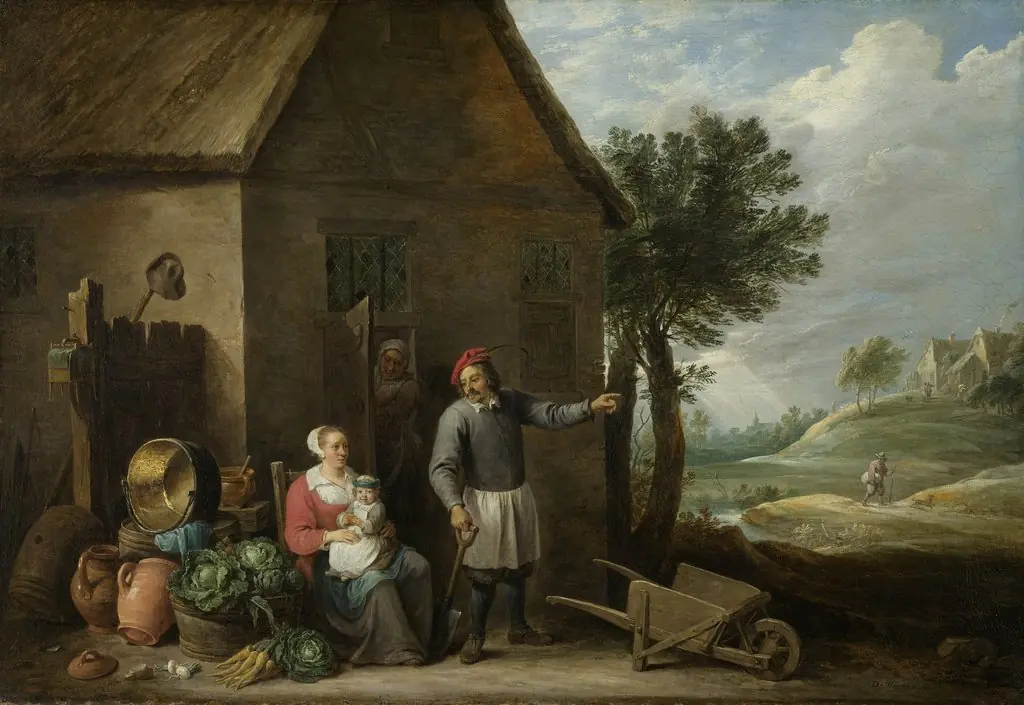
- A peasant with his wife and child in front of the farmhouse
 Vegetable Market
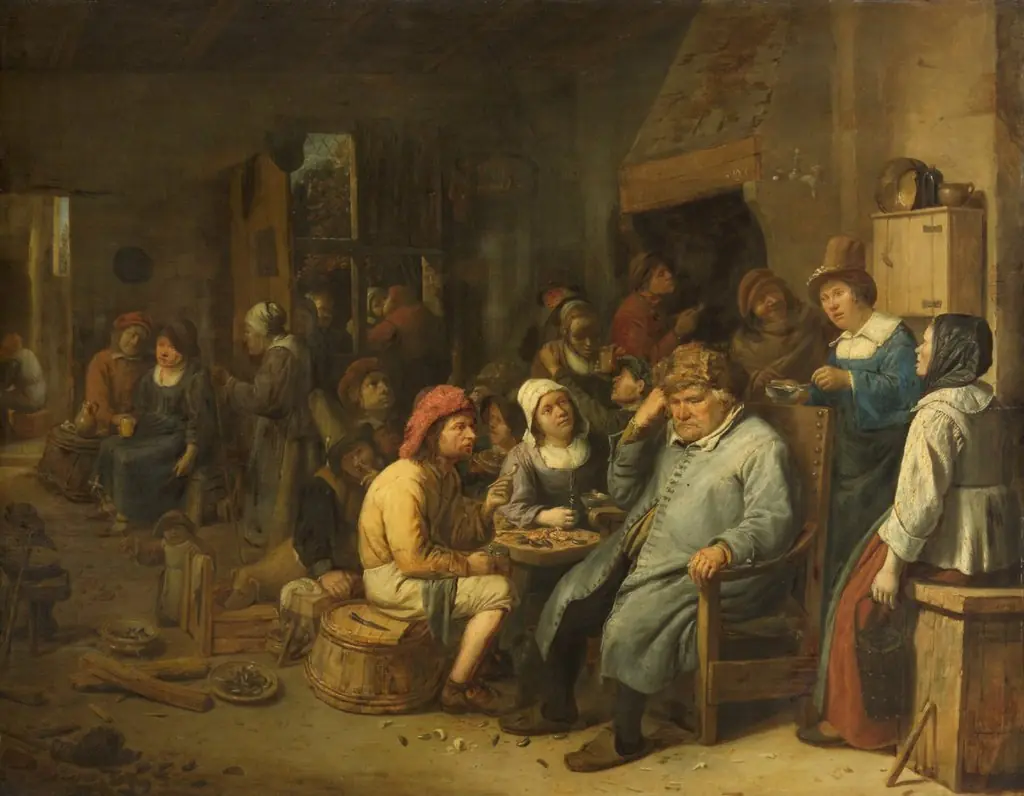 Farming in the Inn
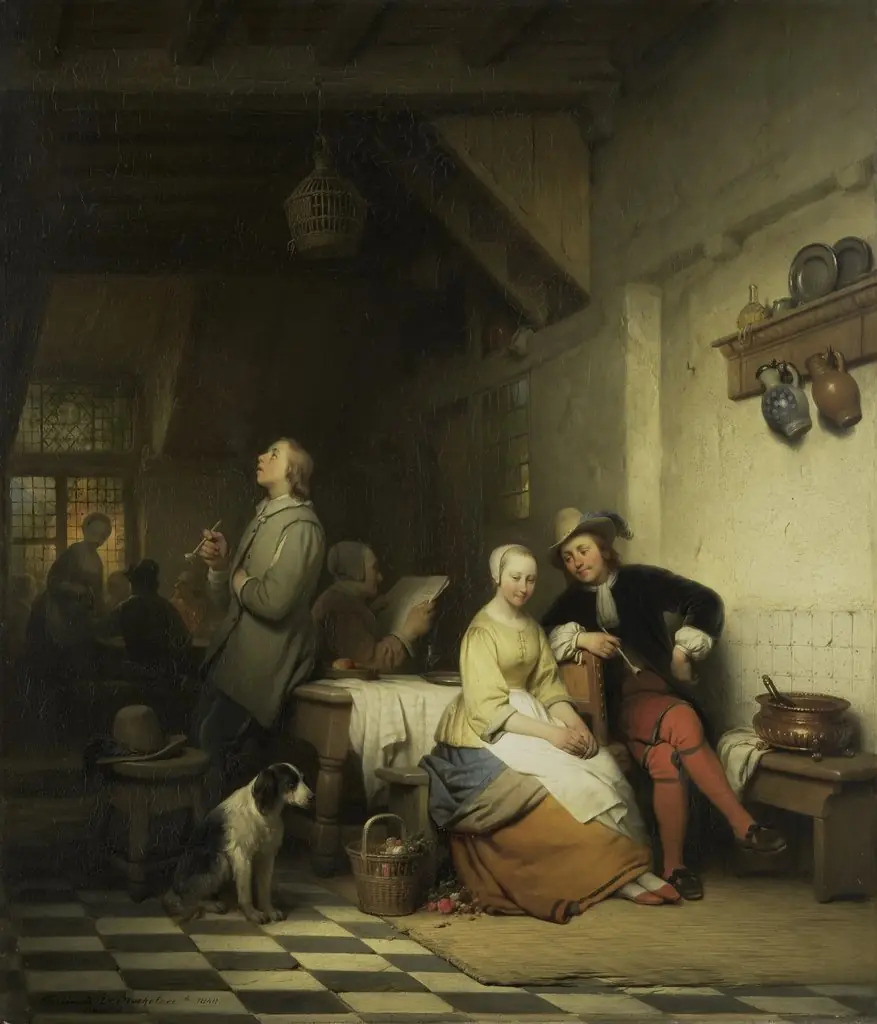 Interior of an Inn, with Figures in Seventeenth-Century Costume
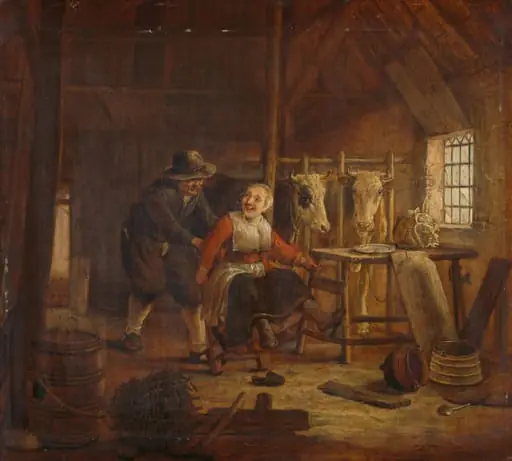 Flirtation in a Cowshed
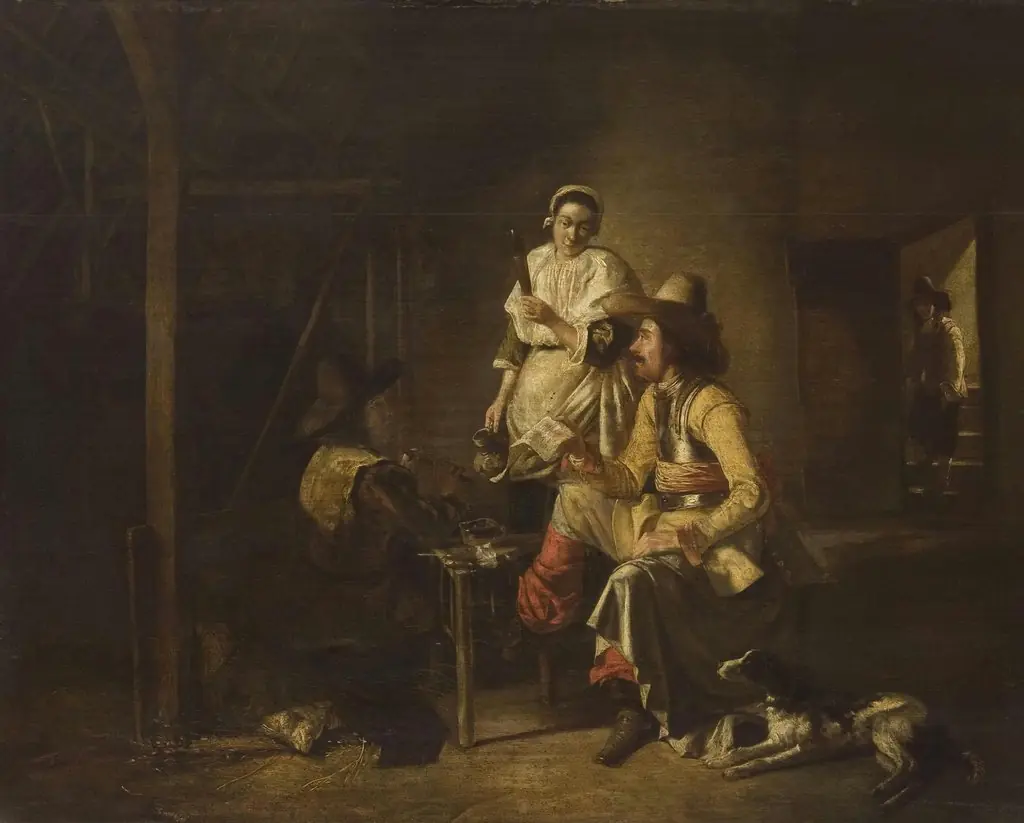 Soldiers with a Serving Maid in a Barn
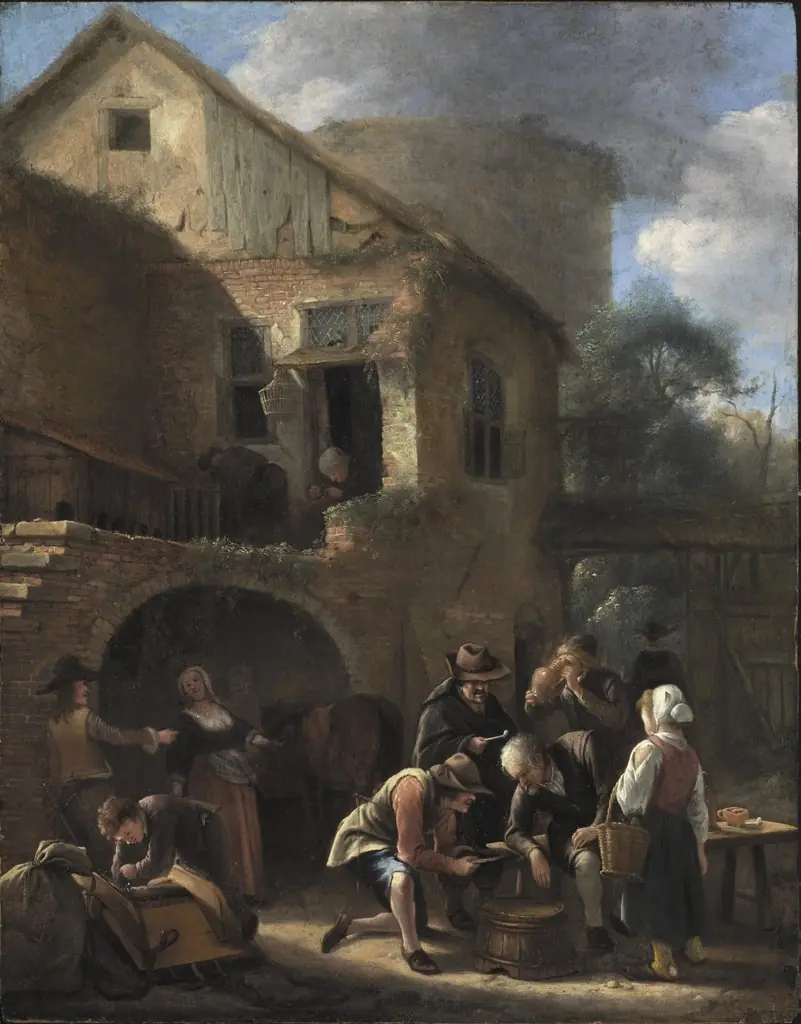 A Party of Peasants
 The Rest on the Flight into Egypt
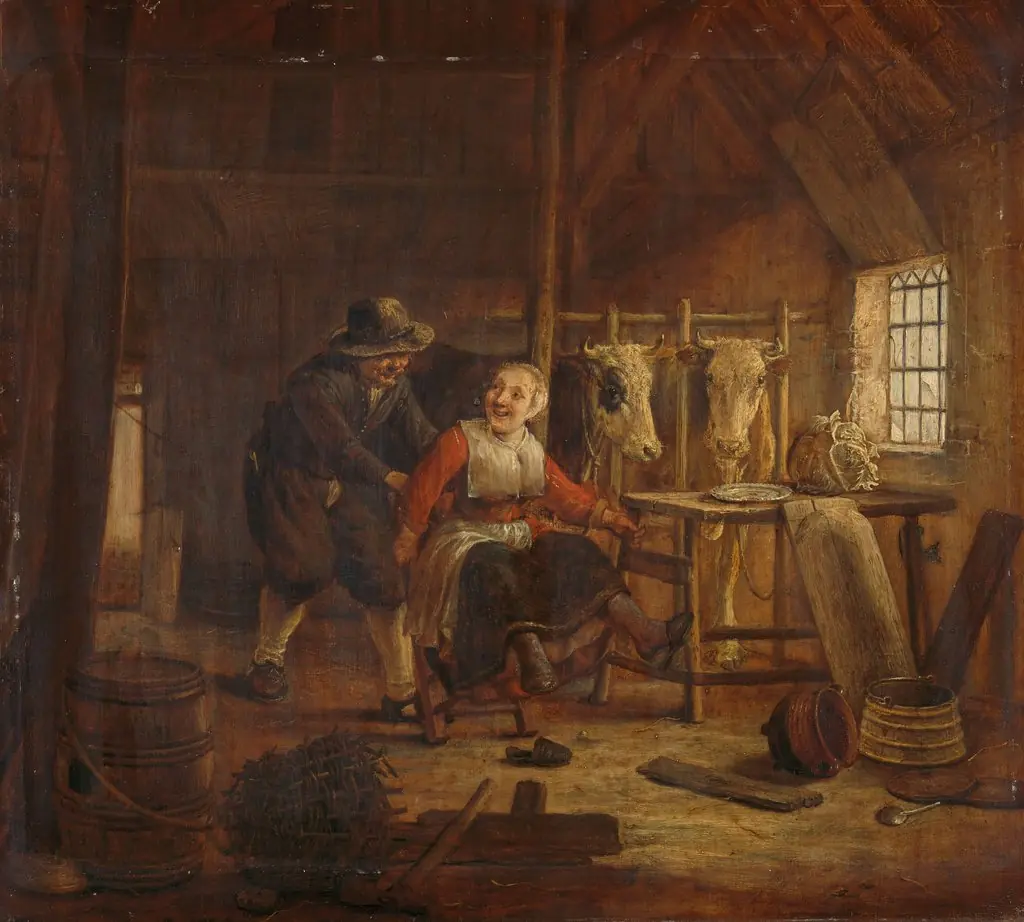 Flirtation in a cowshed
 Interior of a barn
 Jolly Company