Artwork
A Dutch Courtyard
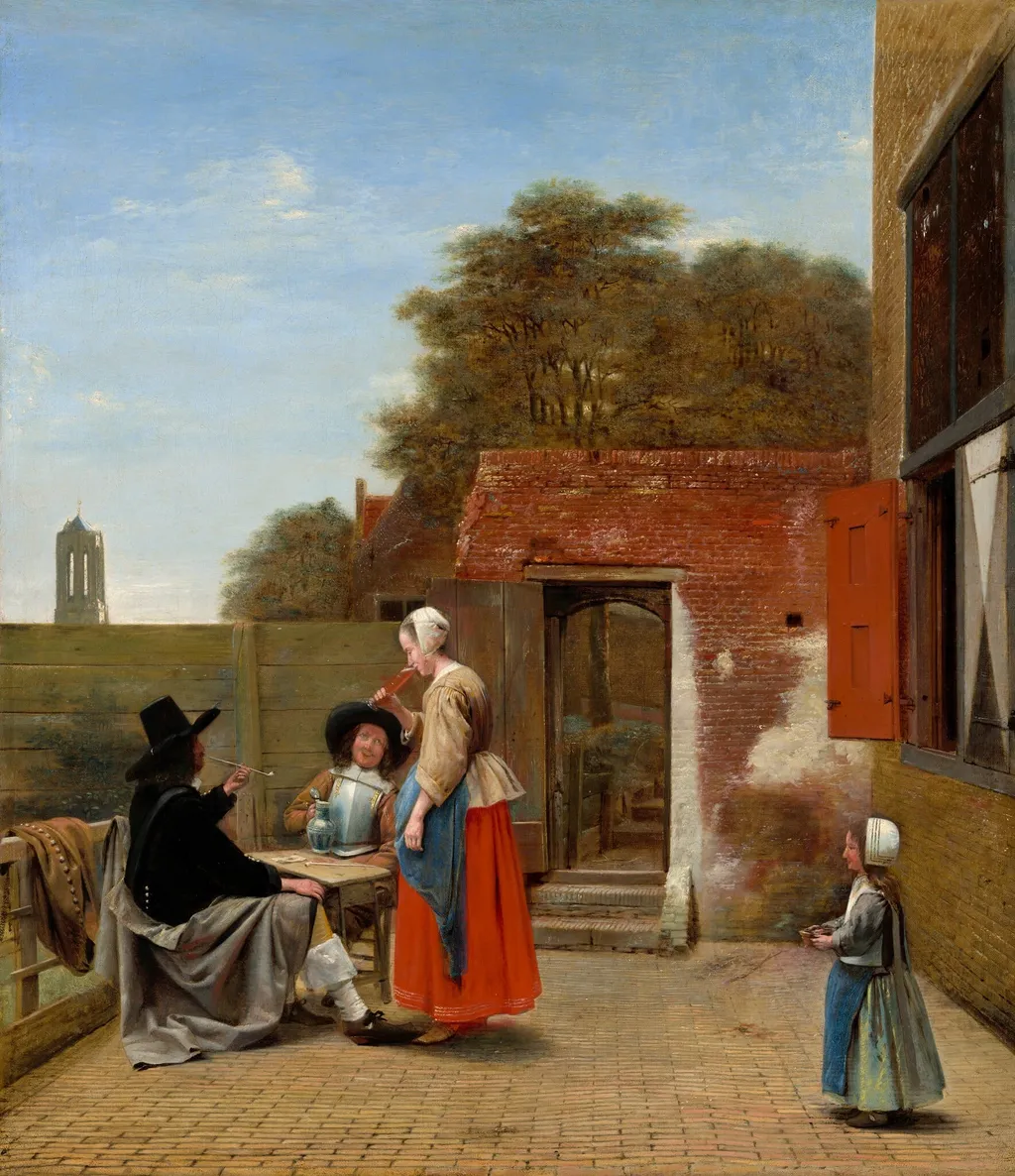
A Dutch Courtyard is an oil painting by the Baroque artist Pieter de Hooch. It dates from 1659 and is held in the collection of the Andrew W. Mellon collection.
About this work
Subject & Meaning
De Hooch's personal experiences, his service to a linen merchant and the birth of his children, may have informed the empathy and balance evident in the scene.
Pieter de Hooch's A Dutch Courtyard (1658–1660) depicts a tranquil, sunlit courtyard where two soldiers engage in lighthearted banter with a serving woman, while a young girl delivers embers for their pipes. The scene unfolds against a backdrop of Delft's Nieuwe Kerk tower, anchoring the composition in the artist's Delft period. The soldiers' relaxed posture and the serving woman's convivial gesture reflect a harmonious social dynamic, underscoring De Hooch's interest in quotidian interactions.
The inclusion of a pass-glass for beer drinking suggests a traditional game, evoking themes of leisure and camaraderie. The painting's serene atmosphere, heightened by the distant church tower, conveys a sense of post-war optimism, aligning with the cultural mood of the Dutch Golden Age. De Hooch's personal experiences, his service to a linen merchant and the birth of his children, may have informed the empathy and balance evident in the scene.
Technique & Style
Painted between 1658 and 1660, A Dutch Courtyard is executed in oil on a medium-weight, plain-weave canvas support. The artist applied an even, somewhat thick off-white ground, which was subsequently coated with a transparent brown wash that thins in the sky area. De Hooch built the composition using thin, transparent paint layers over this undertone, reserving impasted highlights for specific areas.
These highlights are rendered as small, closely positioned, overlapping dabs of color, creating a distinct flickering effect, particularly within the flesh tones. The handling demonstrates meticulous attention to architectural details, such as the bricks and mortar, while employing a balanced color palette with accents of red, blue, and white. Technical analysis reveals significant pentimenti, including the repositioning of the young girl, adjustments to the standing woman's head and foot, and alterations to the background fence and tree trunks, indicating a deliberate manipulation of the composition to enhance spatial harmony.
History & Provenance
The work was painted in 1659 during Pieter de Hooch's Delft period. It remained in the collection of Cornelis Sebille Roos, was sold at auction in August 1820, then acquired by Isaac van Eyck before passing to a Mr. Mason. Lionel de Rothschild purchased the painting by 1842; it subsequently descended through his son Nathan Mayer Rothschild, to Alfred de Rothschild, and was bequeathed to Almina Victoria, Countess of Carnarvon.
The work was sold in 1924 to Duveen Brothers, then to Andrew W. Mellon, and finally gifted to the National Gallery of Art in 1937. No contemporary documentation indicates a specific commission for the piece.
A Dutch Courtyard is held by the National Gallery of Art in Washington, D.C., where it resides within the Andrew W. Mellon collection. The work was accessioned as a gift in 1937 following its transfer from the A.W. Mellon Educational and Charitable Trust, which had received it via deed in December 1934. Its exhibition history includes a documented appearance in 1783, when a watercolor by W. J. Laquy depicted the painting hanging in a frame on an Amsterdam wall.
Prior to its arrival at the National Gallery, the canvas passed through several prominent collections, including those of Cornelis Sebille Roos, Isaac van Eyck, and the Rothschild family at Gunnersbury Park and Halton House.
Context
Pieter de Hooch's A Dutch Courtyard (1659) is emblematic of his Delft-period output, where architectural precision and harmonious social interaction coalesce to define the Dutch Golden Age's genre tradition. Scholars highlight the painting's technical refinement, particularly the layered, transparent glazes and impasted highlights that animate figures and textures, placing it among his mature works circa 1660. Its compositional balance, softened by Delft's characteristic sunlight and muted palette, reflects the period's idealized portrayal of domestic life, a theme De Hooch explored after his service with linen merchant Justus de la Grange and the birth of his children.
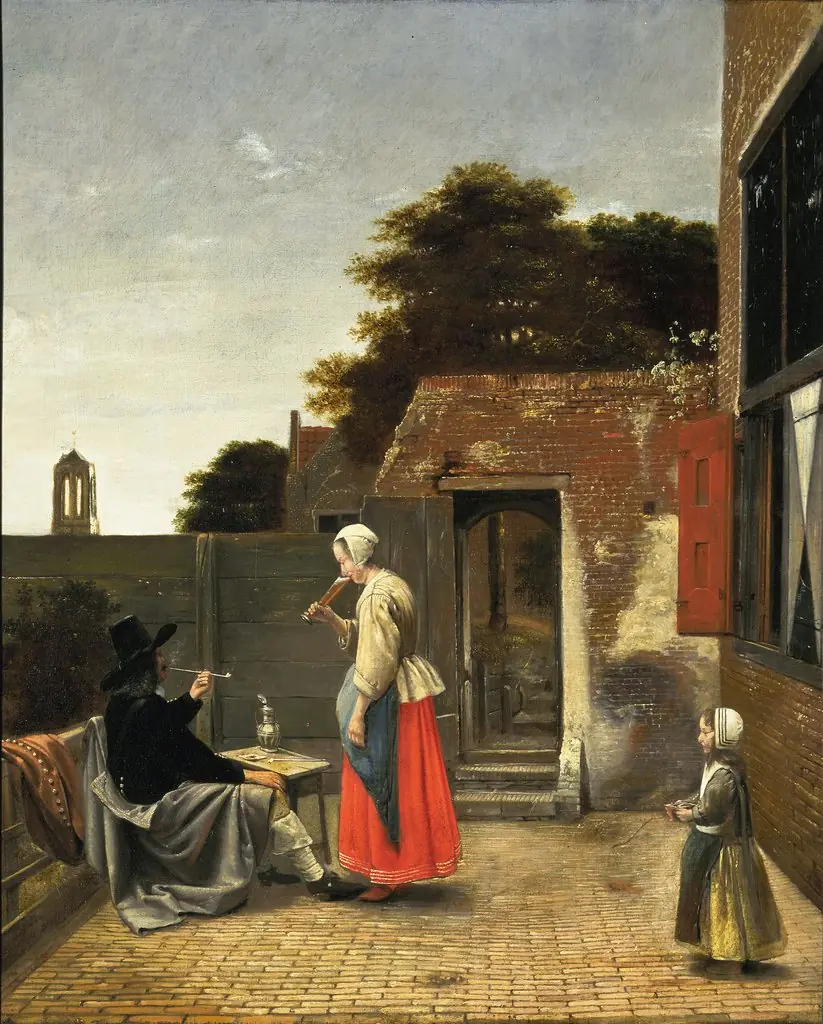
The work's critical reception has long emphasized its atmospheric tranquility and naturalistic detail, though later scholarship notes subtle pentimenti, such as the repositioned girl and adjusted fence, that reveal De Hooch's iterative process to refine spatial harmony. A later replica in the Mauritshuis underscores the composition's resonance, despite debates over its relative quality.
Legacy
A Dutch Courtyard is recognized as a notable achievement within Pieter de Hooch's Delft period, exemplifying the structured harmony and naturalistic qualities of his mature style. The work's reputation is reinforced by the existence of a later autograph replica held by the Mauritshuis in The Hague, which shares the composition but reveals distinct alterations, including the removal of a soldier. The painting's legacy is further cemented by its distinguished provenance, having passed through the collections of the Rothschild family before being acquired by Andrew W. Mellon in 1924.
Since its donation to the National Gallery of Art in Washington, D.C., in 1937, it has remained a centerpiece of the museum's Dutch Golden Age holdings. Conservation efforts, including a significant 2002 restoration, have preserved its condition, ensuring its continued visibility as a key work of the era.
Overview
Pieter de Hooch's A Dutch Courtyard, painted between 1658 and 1660, exemplifies the domestic scenes characteristic of the Dutch Golden Age. This oil on canvas work captures an everyday moment within a private outdoor space. The original painting is housed in the collection of the National Gallery of Art in Washington, D.C., offering a glimpse into 17th-century Dutch life.
Own this work as a print
Artist & collection
Artist
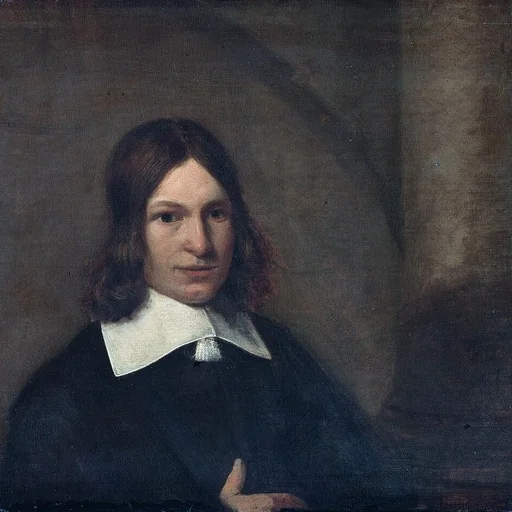
Pieter Hendricksz. de Hooch (Dutch:; also spelled Hoogh or Hooghe; bapt. 20 December 1629 – after 1683), was a Dutch Golden Age painter famous for his genre works of quiet domestic scenes with an open doorway. He was a…
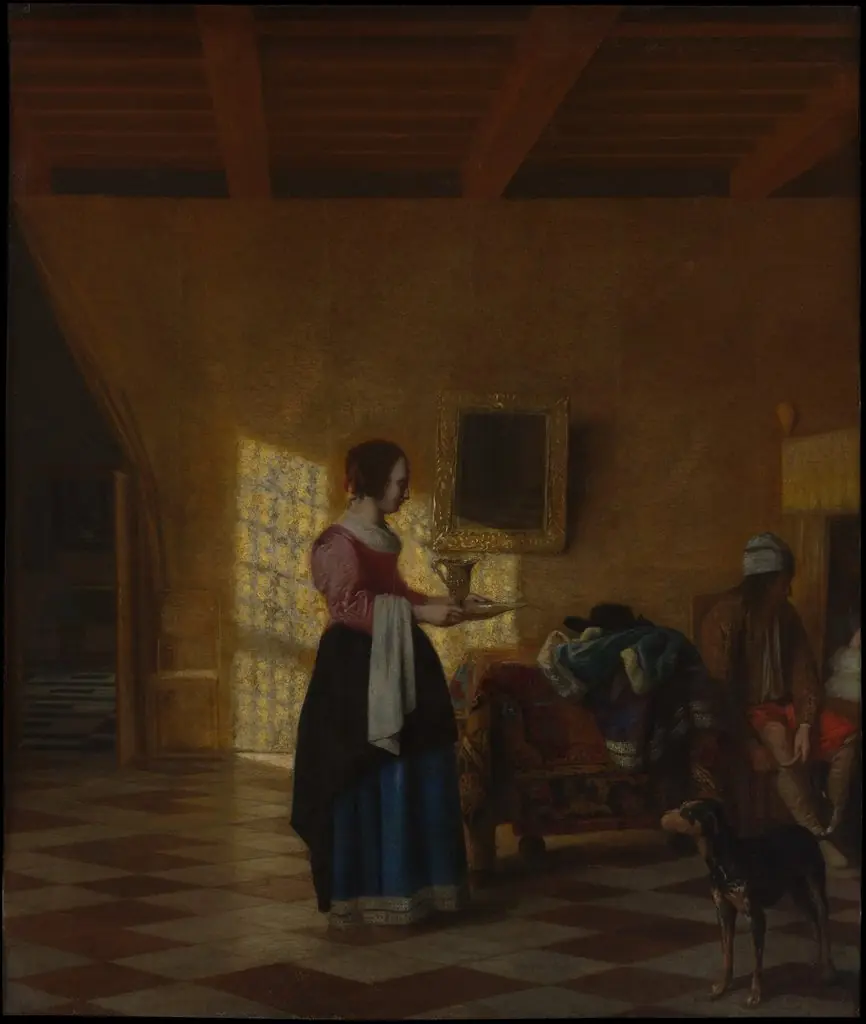
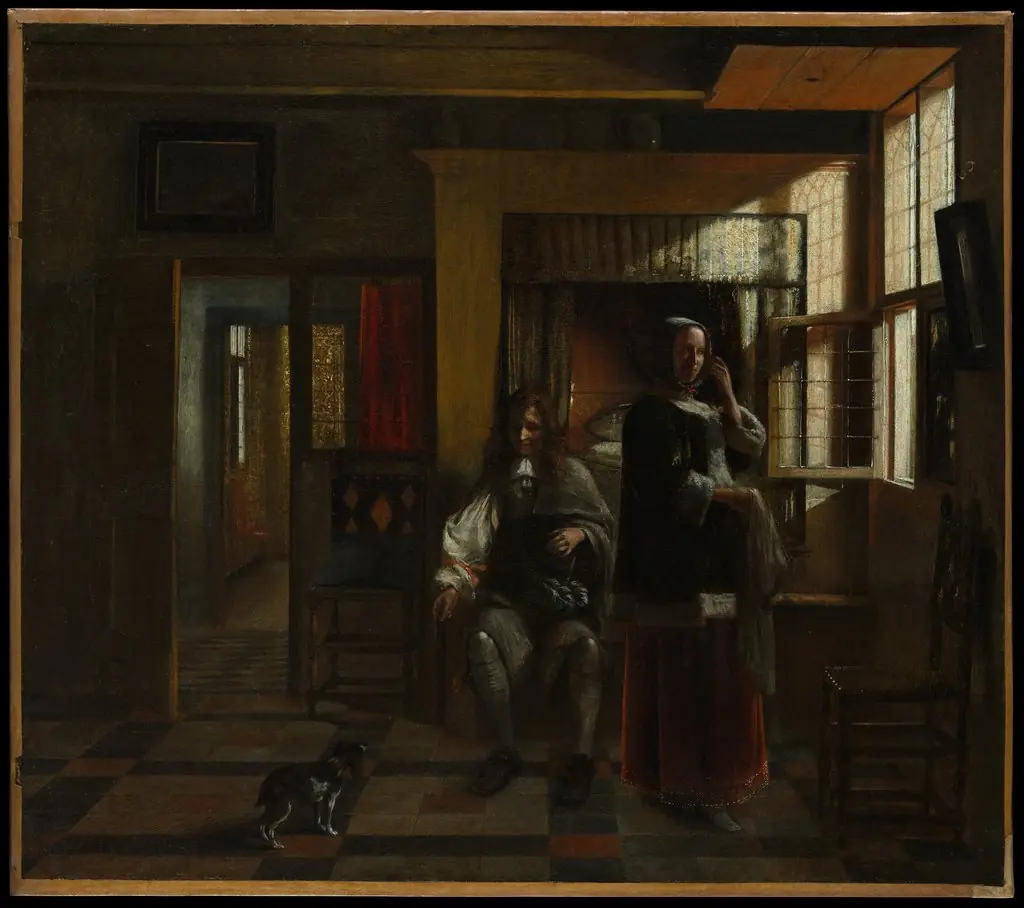
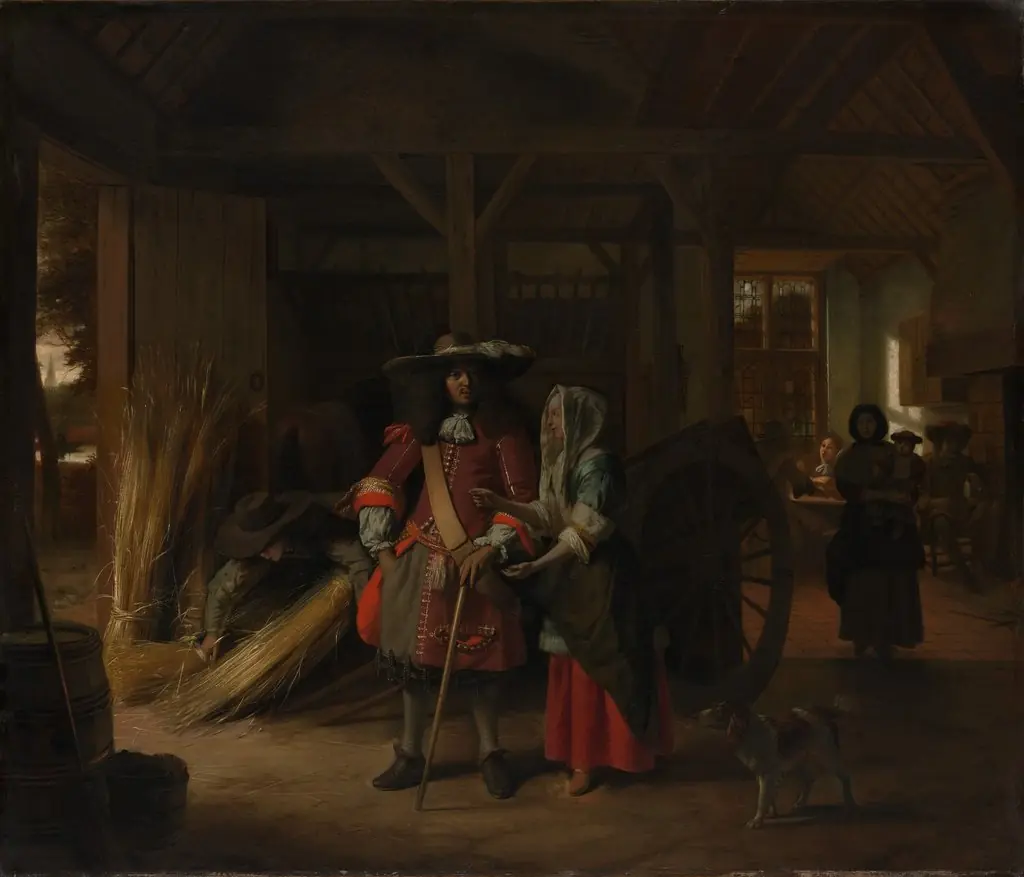
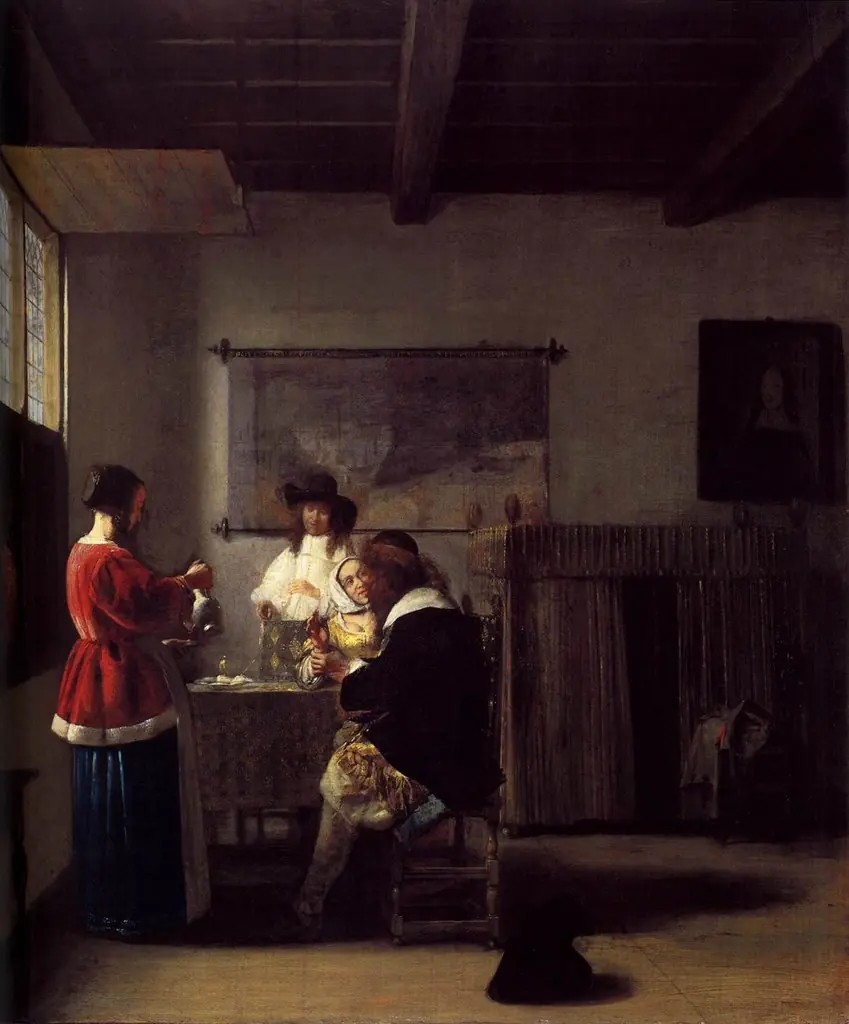
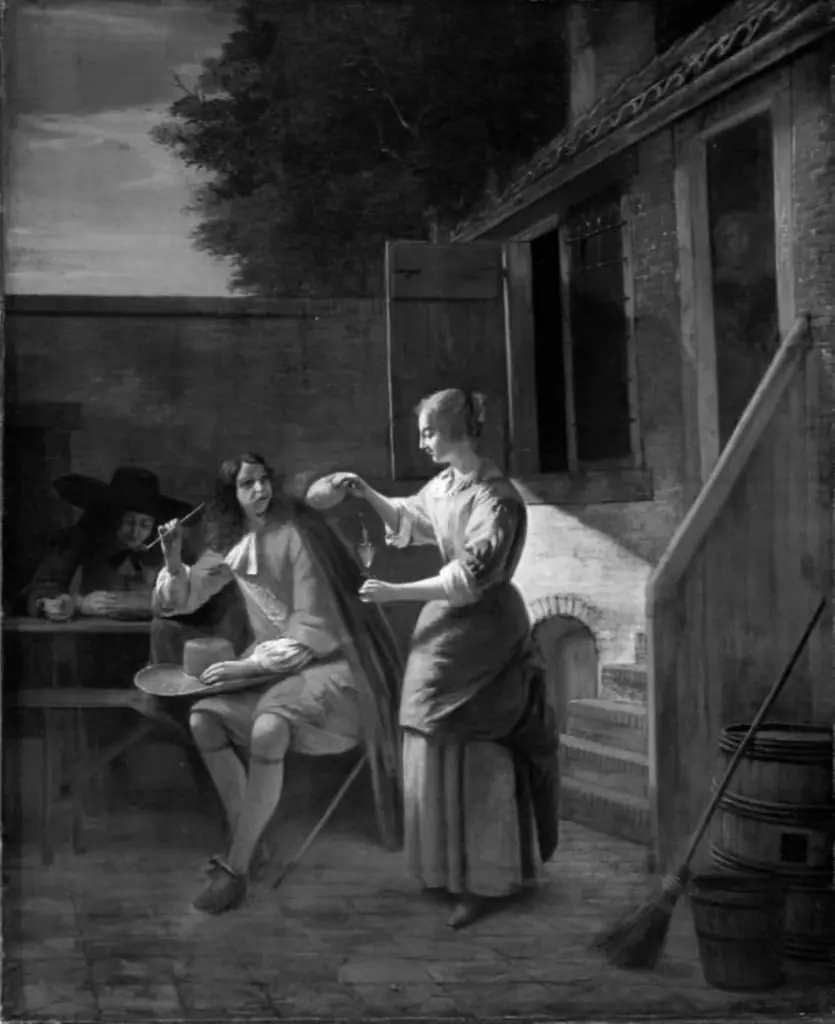
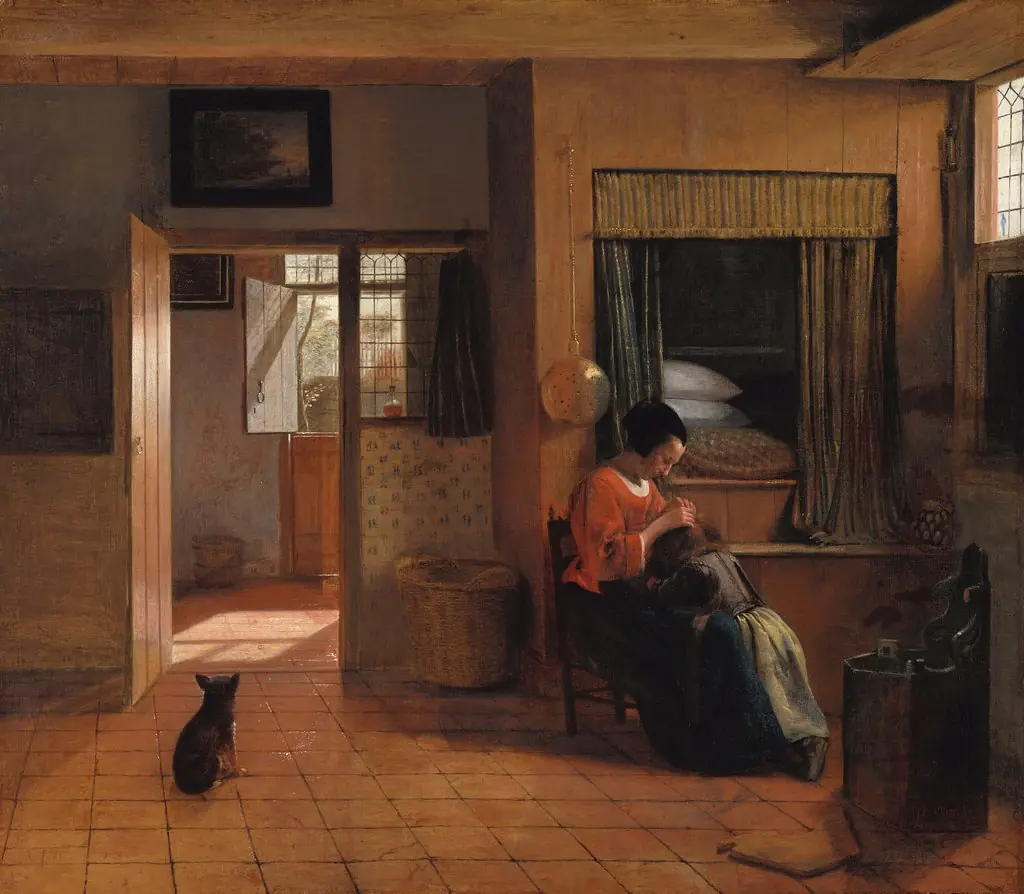
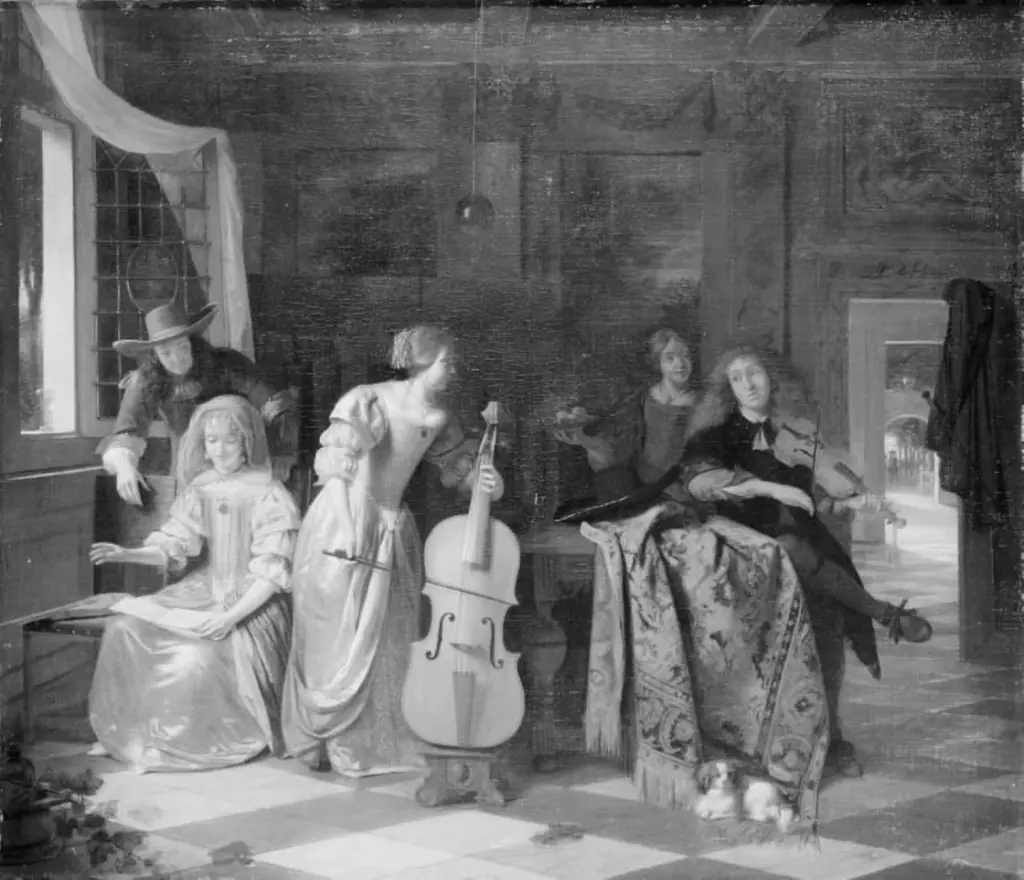
- Courtyard with a man smoking and a woman drinking
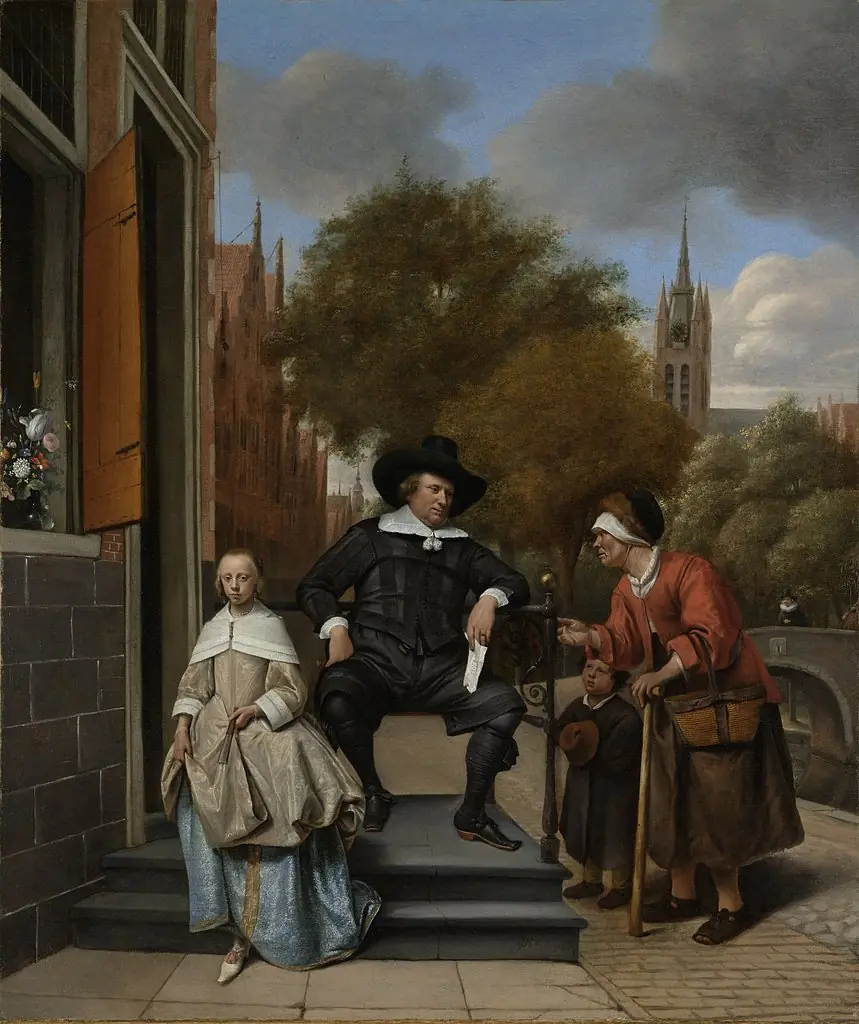 A Mayor of Delft and his Daughter
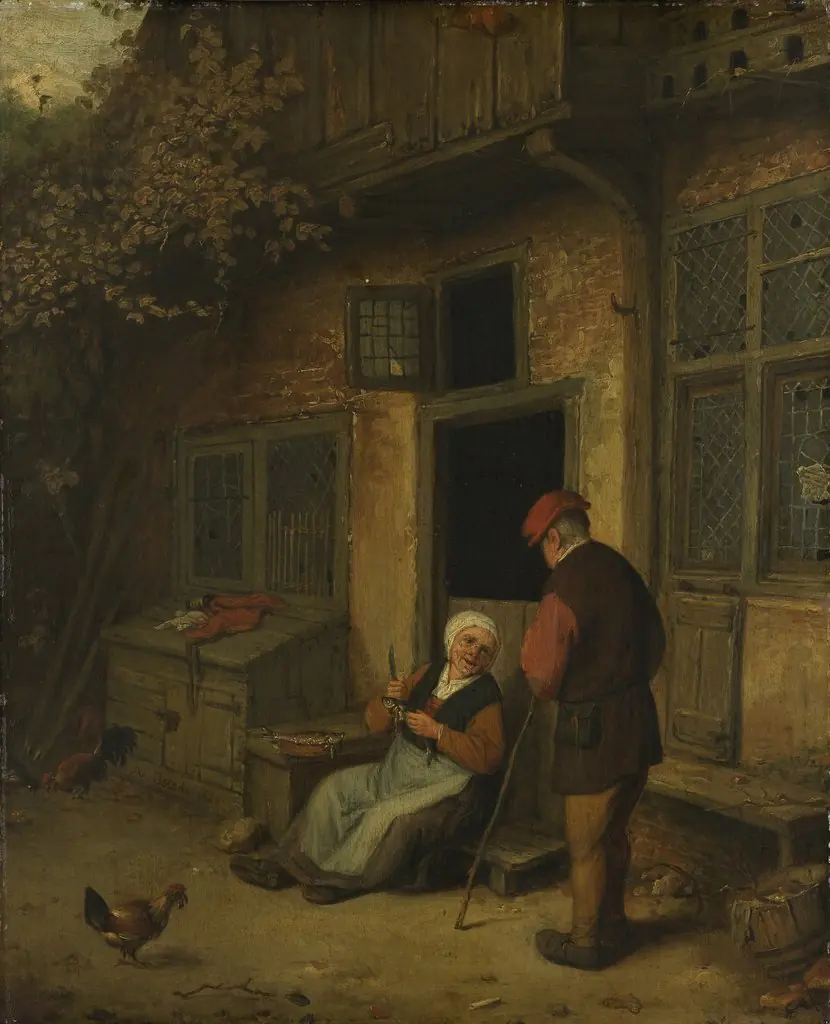 A woman gutting herring in front of her house
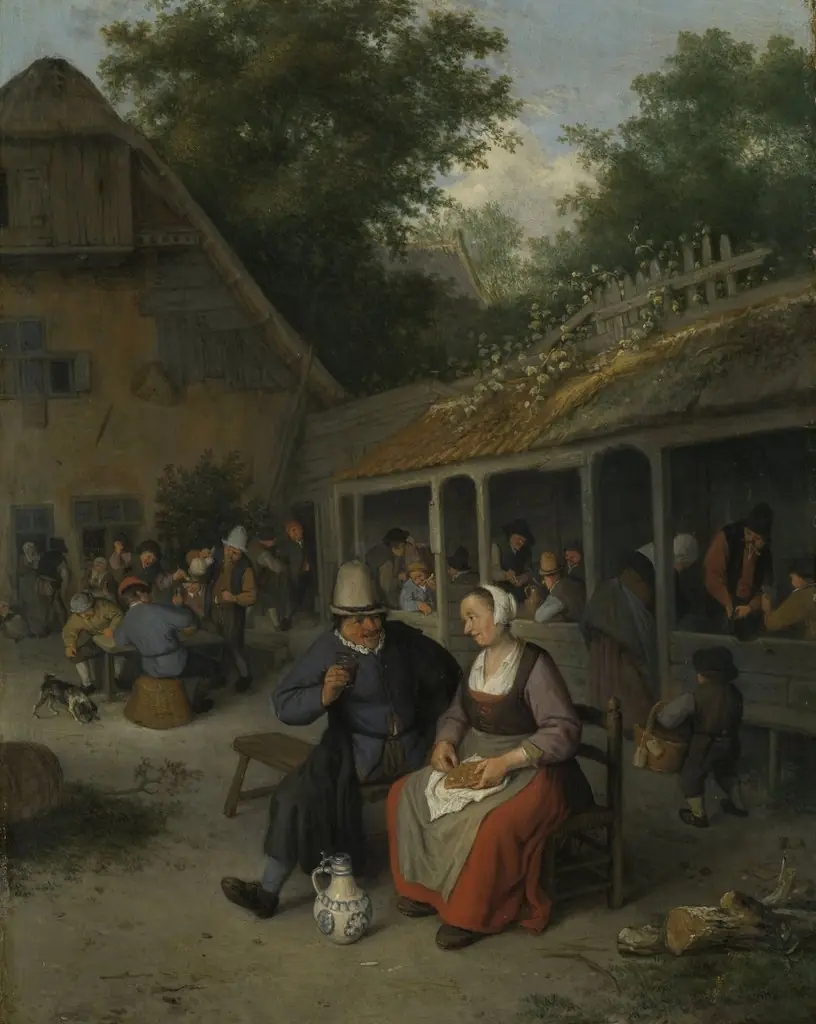 Village inn
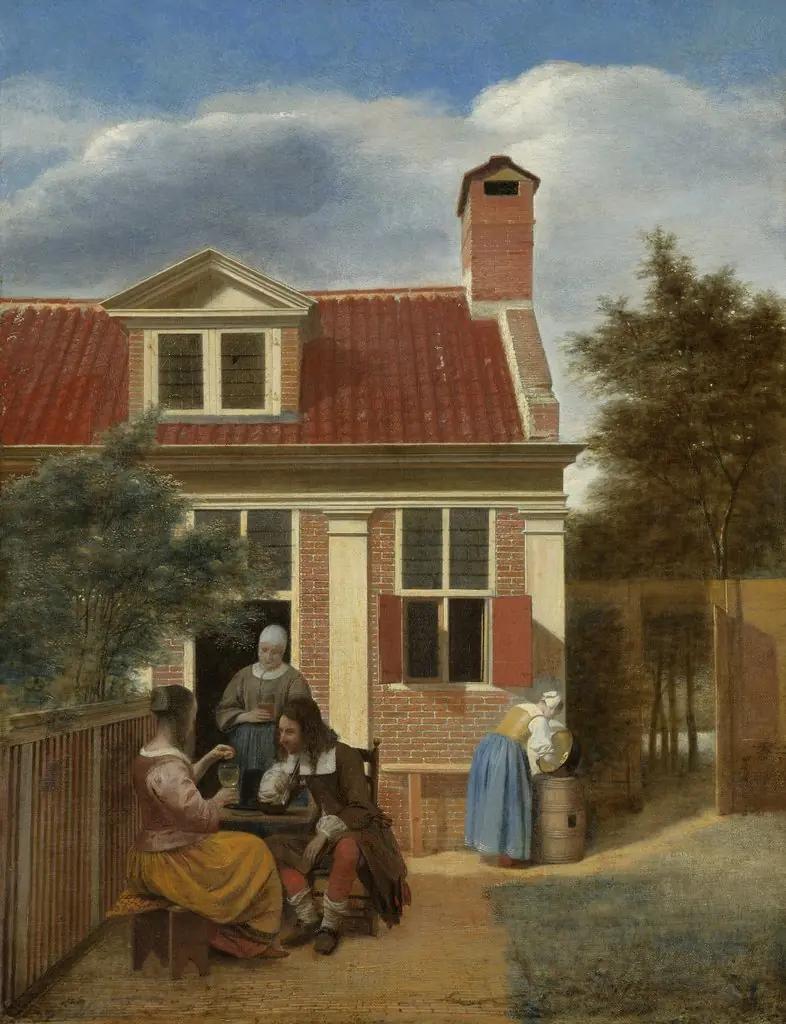 Figures in a Courtyard behind a House
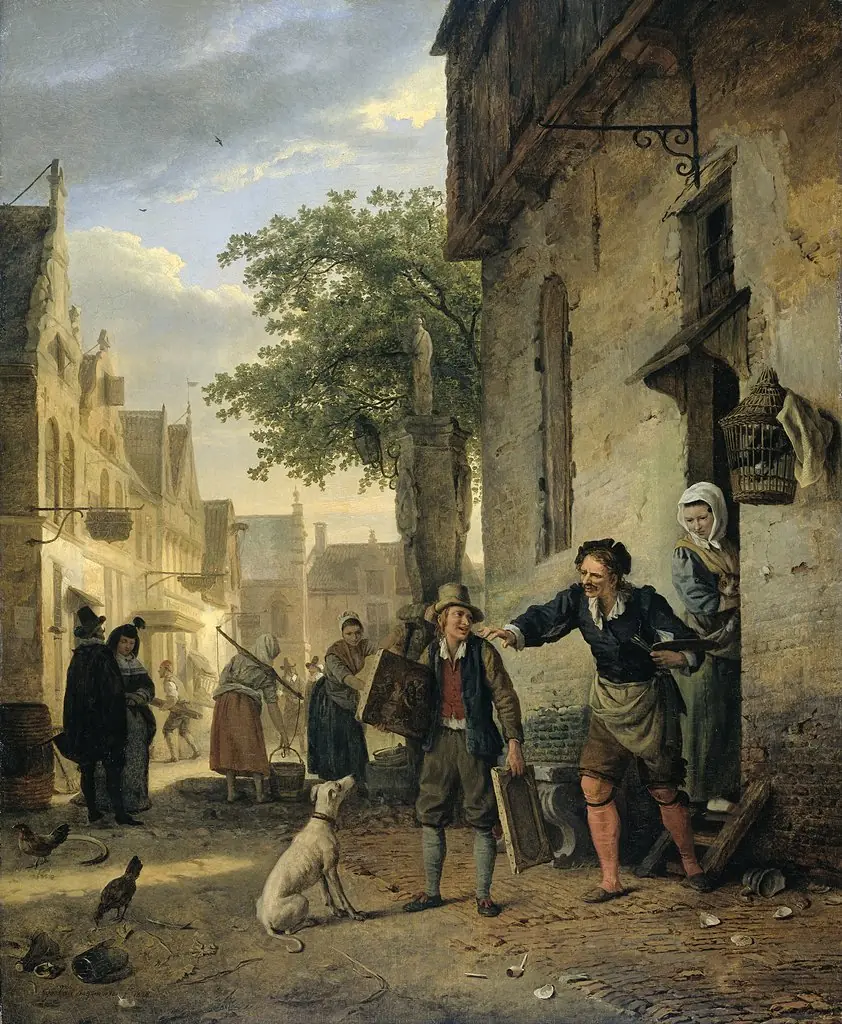 Jan Steen Sends his Son to the Streets to Exchange Paintings for Beer and Wine
 Man Handing a Letter to a Woman in the Entrance Hall of a House
 Inner Courtyard
 Woman and Child in a Courtyard
 The Hunter’s Present
 Woman with a Child in a Pantry
 The Cottage Dooryard