Artwork
Six Wardens of the Drapers’ Guild
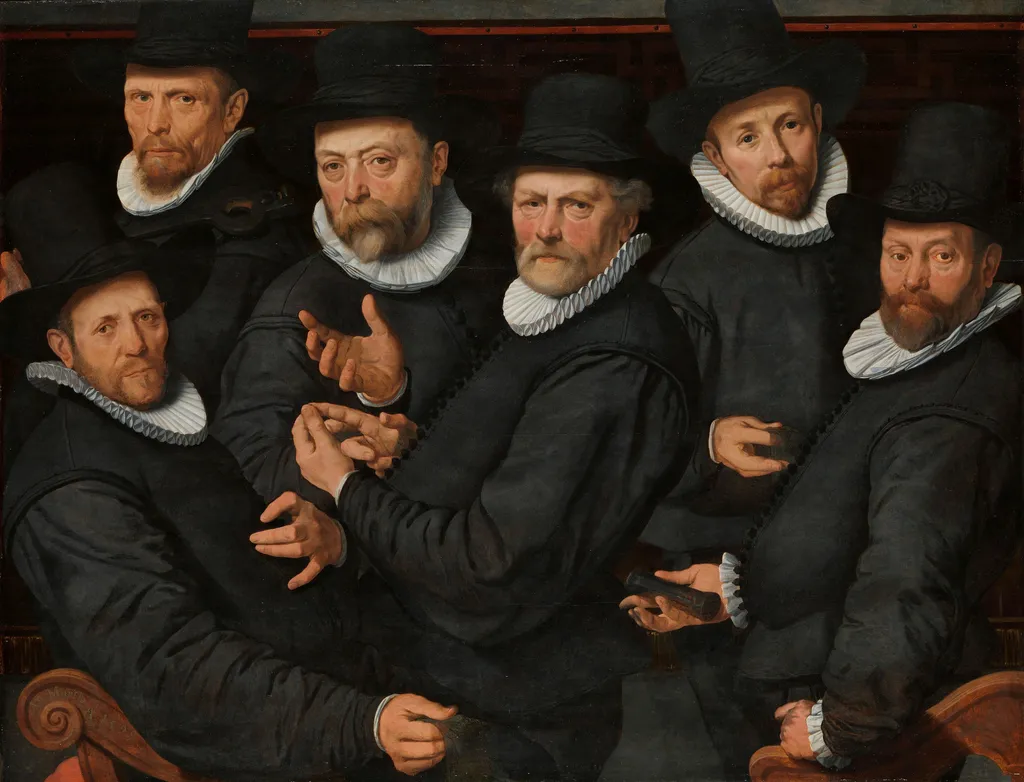
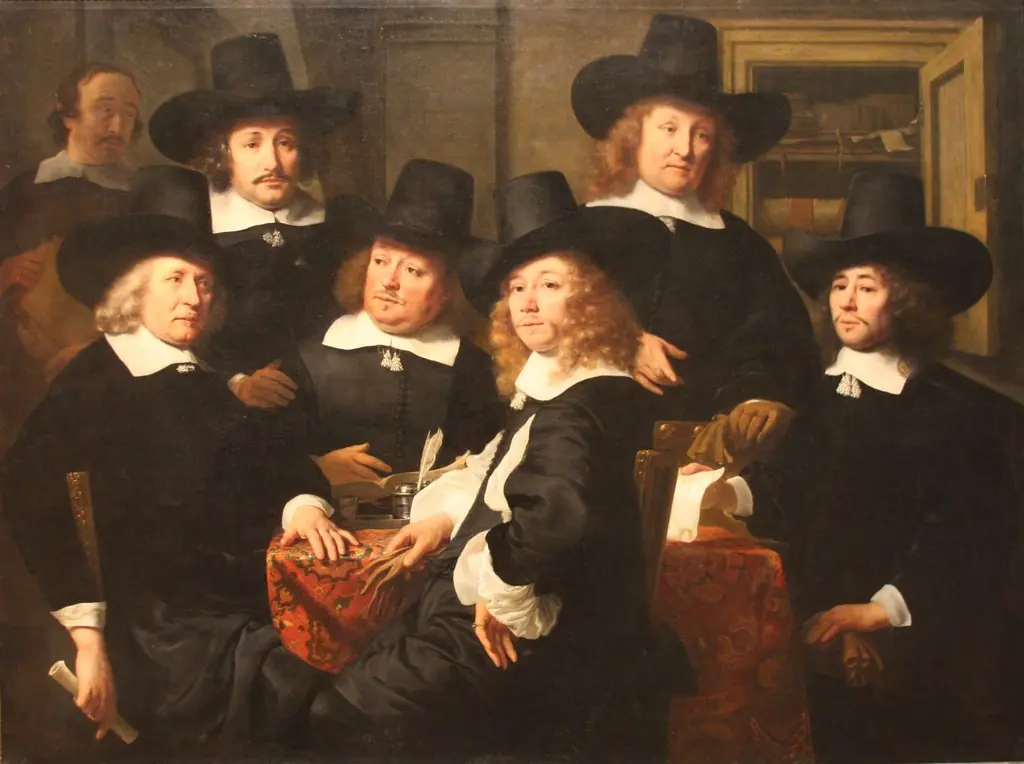
Six Wardens of the Drapers’ Guild is an oil painting by the Dutch Golden Age artist Pieter Pietersz the Elder. It dates from 1600 and is held in the collection of the Rijksmuseum.
About this work
Subject & Meaning
Their attire, dark garments with white ruffs and black hats, signals their civic and professional status as guild officials rather than religious figures.
The painting depicts six men who served as wardens of the Drapers’ Guild in Amsterdam in 1599. Their attire, dark garments with white ruffs and black hats, signals their civic and professional status as guild officials rather than religious figures. The portrait’s minimal props and sober setting focus attention on the sitters’ roles as civic leaders, emphasizing governance and guild authority.
The year 1599, inscribed in the work, anchors the image within the Dutch Republic’s late-sixteenth-century civic culture, where guilds played a central part in urban administration and public life.
The composition’s restraint and the wardens’ direct gazes underscore themes of responsibility and collective governance, aligning with contemporary Dutch ideals of civic virtue.
Technique & Style
Created in 1599, Six Wardens of the Drapers’ Guild is an oil-on-panel group portrait executed by Pieter Pietersz the Elder. The work measures 108 cm in height and 143 cm in width, utilizing a wooden support typical of Dutch Golden Age portraiture. As a formal group portrait, the painting depicts six male figures, adhering to the genre conventions of civic leadership representation.
The medium of oil paint allows for the detailed rendering of the subjects' attire and expressions within the Amsterdam context.
History & Provenance
The Six Wardens of the Drapers’ Guild was painted in 1599 by Pieter Pietersz the Elder, as indicated by the artist’s inscription and date on the work.
The painting was commissioned by the Drapers’ Guild in Amsterdam to commemorate its six wardens for that year. It remained in the guild’s possession, housed in Amsterdam, until the collection was dispersed after the guild’s dissolution in the early nineteenth century.
By the mid-nineteenth century the work had entered the holdings of the Rijksmuseum, Amsterdam, where it has been continuously exhibited since at least 1885.
The painting is held in the collection of the Rijksmuseum, Amsterdam, where it remains today.
Its current inventory number at the Rijksmuseum is SK-C-1849. The work was acquired by the museum in 1849 as part of the collection of the Amsterdam branch of the Drapers’ Guild.
It was included in the exhibition “Pieter Pietersz the Elder: Portraits of Power and Piety” held at the Rijksmuseum from 16 March to 16 June 2019.
Overview
Pieter Pietersz the Elder’s oil painting titled Six Wardens of the Drapers’ Guild was executed around the year 1600. The work portrays a group of six men dressed in black robes with white collars, gathered closely together within a dark interior. It is part of the collection of the Rijksmuseum in Amsterdam.
Own this work as a print
Artist & collection
Artist
Pieter Pietersz the Elder (1540–1603) was an artist, born in Antwerp.

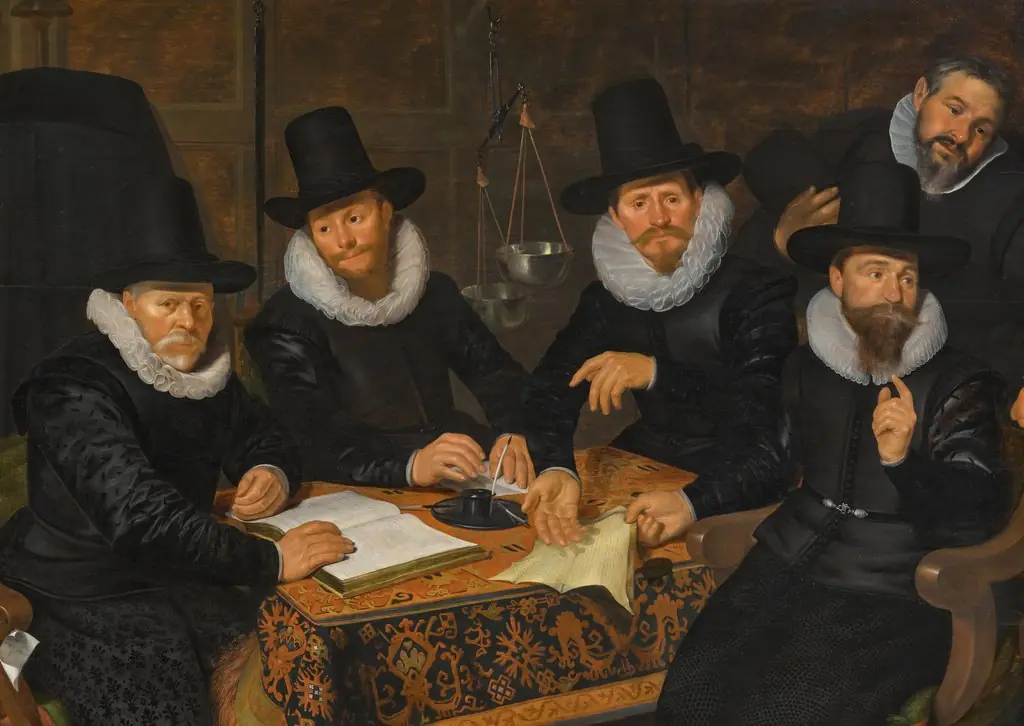 Four Regents of the Groot-Kramergild
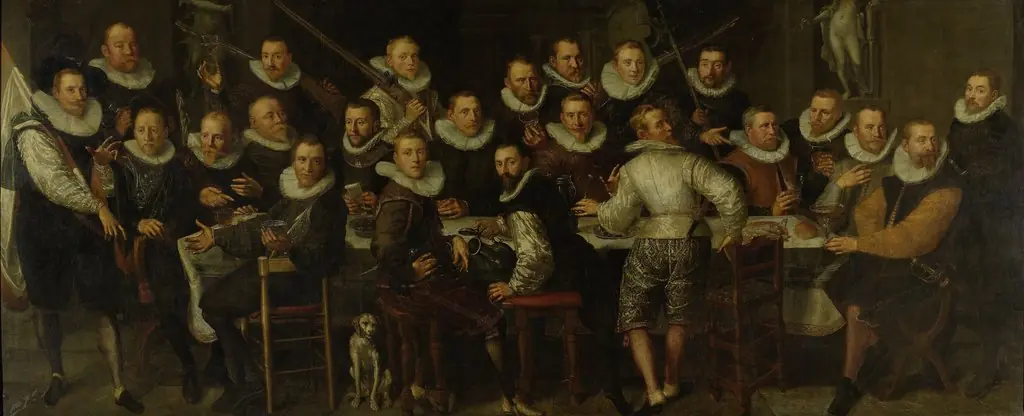 The Company of Captain Gillis Jansz Valckenier and Lieutenant Pieter Jacobsz Bas, Amsterdam, 1599
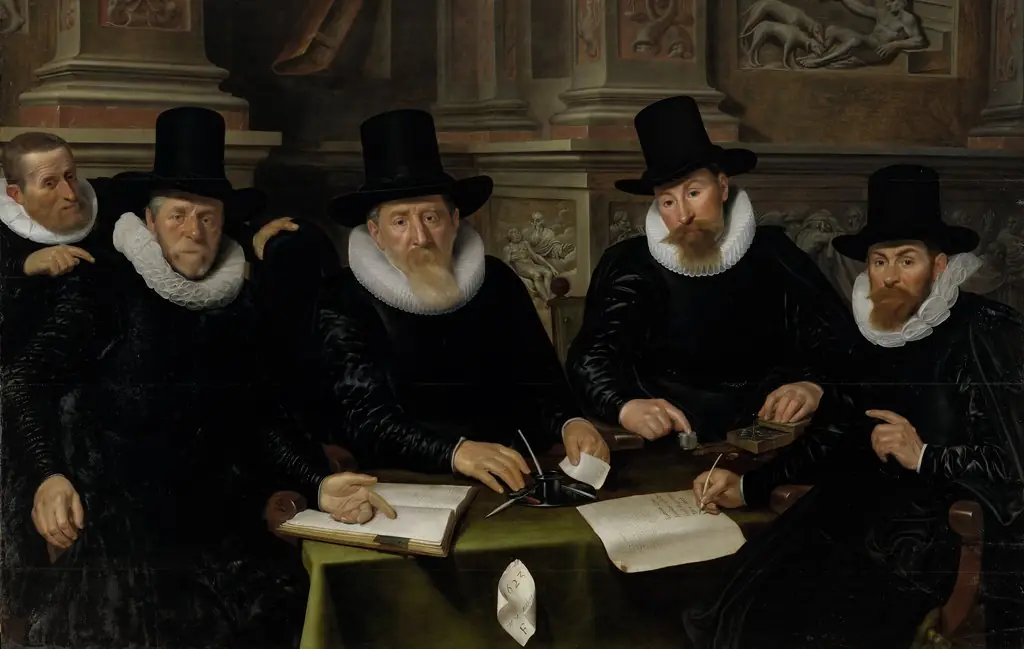 Four Regents and the ‘House Father’ of the Amsterdam Lepers’ Asylum
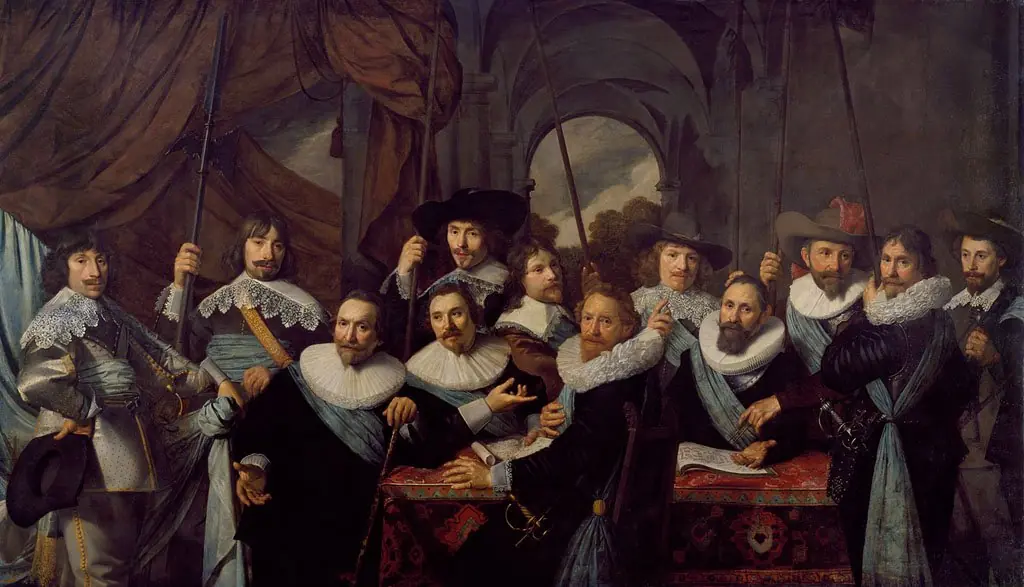 Members of the civic guard company of Captain Dirck Tholinx and Lieutenant Pieter Adriaenszn Raep
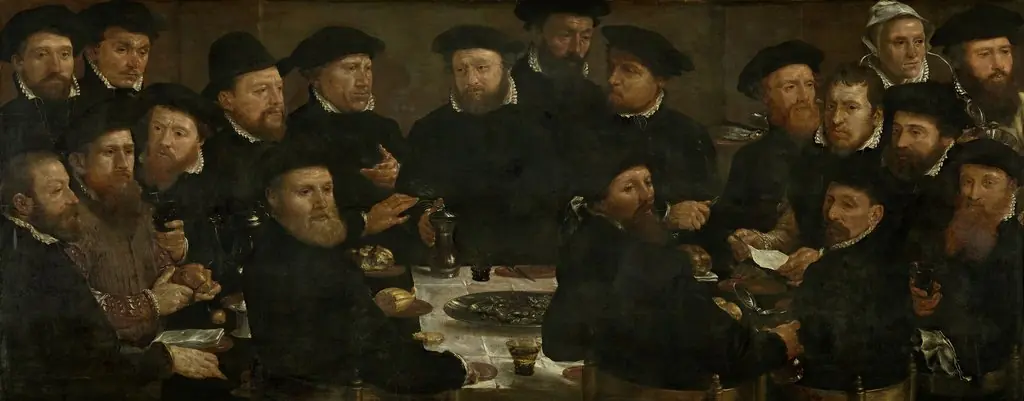 Meal of the Amsterdam militia
 Banquet of Eighteen Guardsmen of Squad L, Amsterdam 1566, known as 'The Perch Eaters'
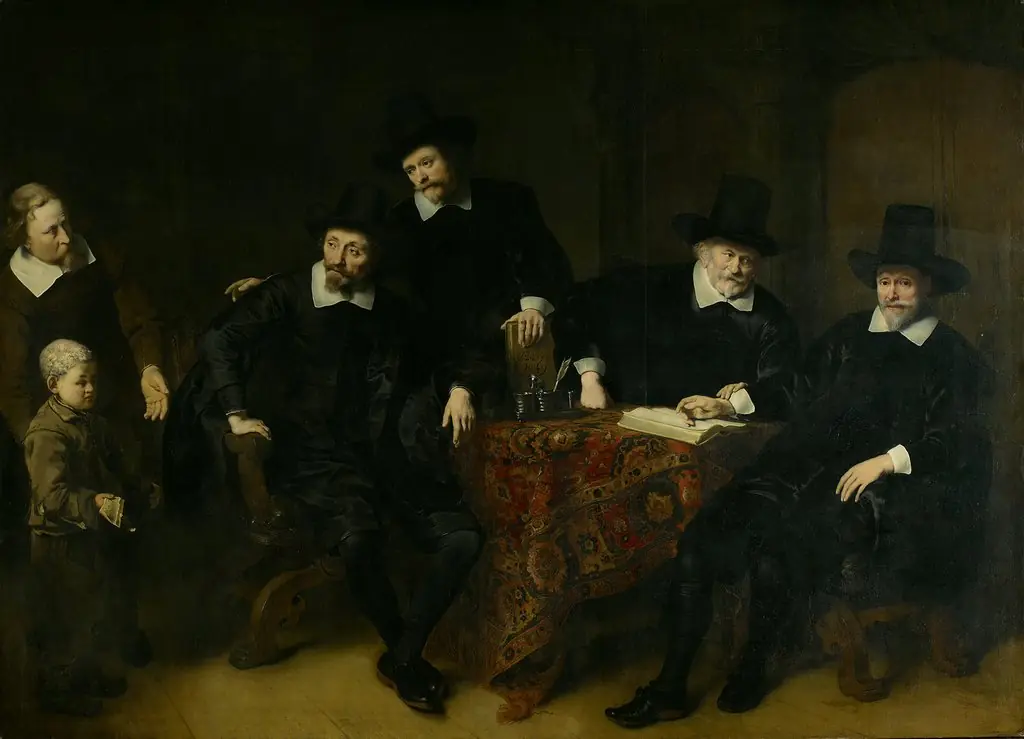 The Regents of the Leper's house in Amsterdam in 1649
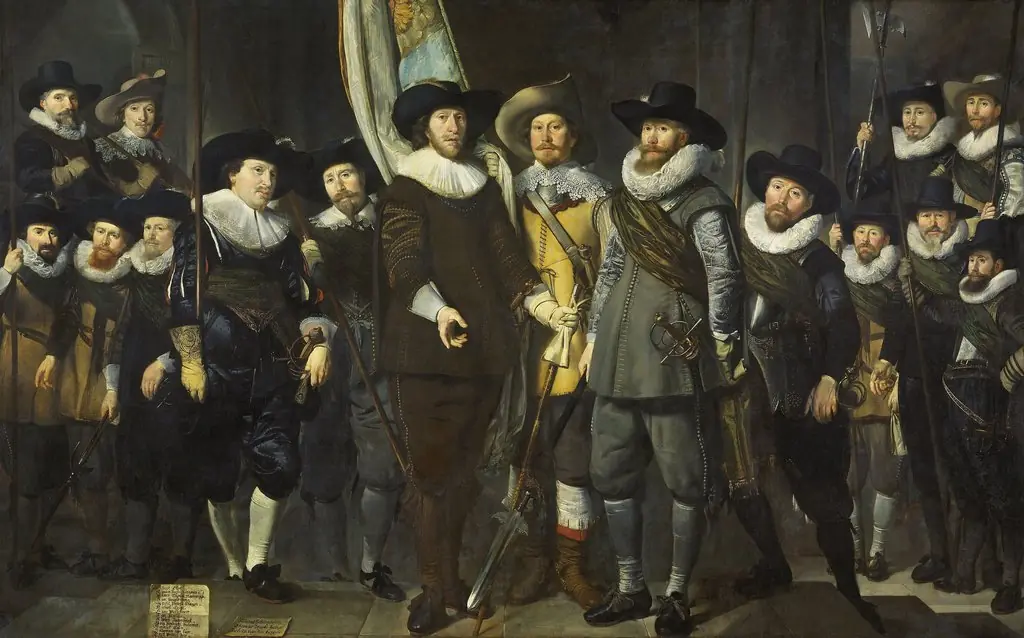 Officers and other civic guardsmen of the IIIrd District of Amsterdam, under the command of Captain Allaert Cloeck and Lieutenant Lucas Jacobsz Rotgans
 Six regents and the beadle of the Nieuwe Zijds institute for the outdoor relief of the poor