Artwork
Officers and other civic guardsmen of the IIIrd District of Amsterdam, under the command of Captain Allaert Cloeck and Lieutenant Lucas Jacobsz Rotgans
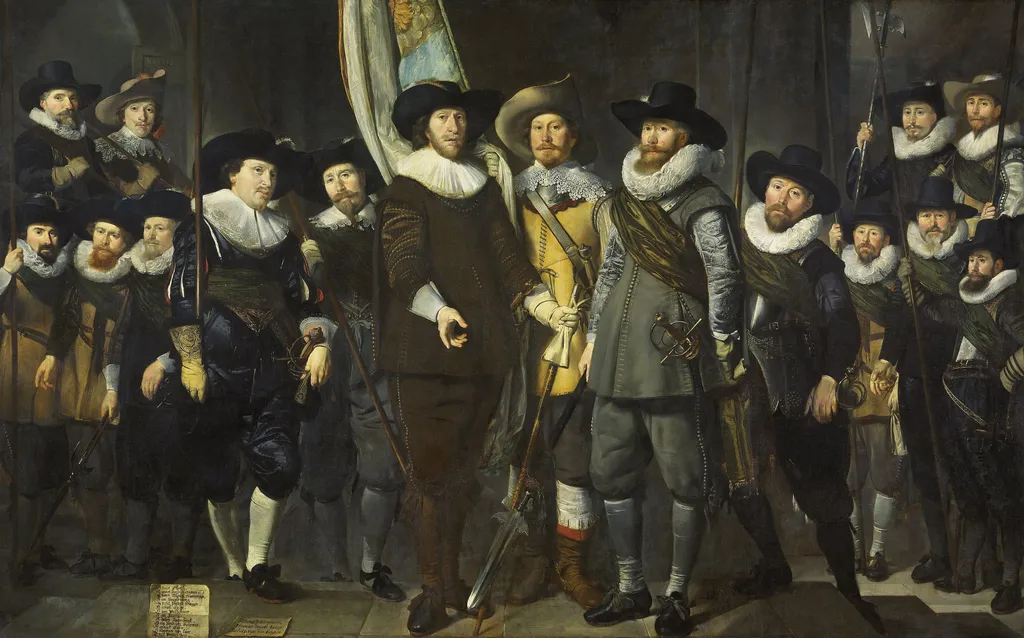
Officers and other civic guardsmen of the IIIrd District of Amsterdam, under the command of Captain Allaert Cloeck and Lieutenant Lucas Jacobsz Rotgans is an oil painting by the Dutch Golden Age artist Thomas de Keyser. It dates from 1632 and is held in the collection of the Rijksmuseum.
About this work
Subject & Meaning
It was originally commissioned for the Kloveniersdoelen, later transferred to the City of Amsterdam, and has been on loan to the Rijksmuseum since 1885.
The painting shows officers and civic guardsmen of Amsterdam’s IIIrd District under Captain Allaert Cloeck and Lieutenant Lucas Jacobsz Rotgans, a typical schutterstuk composition. De Keyser placed the commanders on a raised platform to emphasize their status, while arranging the surrounding figures in varied positions and scales to suggest spatial depth, reflecting the collective identity and martial pride of the district militia.
The work is identified by the monogram ‘TDK 1632’ in the upper left corner, confirming its creation in 1632. It was originally commissioned for the Kloveniersdoelen, later transferred to the City of Amsterdam, and has been on loan to the Rijksmuseum since 1885.
The depiction combines realistic portraiture with symbolic references to civic duty, using visual hierarchy and spatial tricks to convey leadership and unity within the civic guard.
The painting is part of the Rijksmuseum collection in Amsterdam.
Technique & Style
The work is an oil painting executed on canvas, a standard combination for seventeenth-century Dutch group portraits. De Keyser signed and dated the panel in the upper left with the monogram and inscription 'TDK 1632', confirming the 1632 production date. To distinguish the principal sitters, the painter placed the officers on a small raised platform, an unusual compositional device that elevates them above the surrounding civic guardsmen.
The remaining figures are arranged at varied positions and scales to generate an illusion of depth, lending the large-scale canvas, measuring roughly 220 by 351 centimetres, a dynamic spatial structure rather than a flat, frieze-like arrangement typical of earlier militia pieces.
History & Provenance
The painting was commissioned in 1632 by the Kloveniersdoelen in Amsterdam, the headquarters of the city's civic guard, and depicts the officers and guardsmen of the city's IIIrd District under Captain Allaert Cloeck and Lieutenant Lucas Jacobsz Rotgans. It is monogrammed and dated "TDK 1632" in the upper left corner, confirming the year of creation.
When the Kloveniersdoelen was dissolved, the work passed into the ownership of the City of Amsterdam. On 2 October 1885, the city placed the painting on long-term loan to the Rijksmuseum, where it remains held.
The painting is held in the Rijksmuseum, Amsterdam, where it remains part of the permanent collection.
It is inventoried as work no. SK-C-1861 at the Rijksmuseum, with dimensions of 220 cm in height and 351 cm in width.
The work entered the Rijksmuseum’s holdings through a long-term loan from the City of Amsterdam, formalized on 2 October 1885.
Context
The painting, a 1632 oil on canvas group portrait commissioned for Amsterdam’s Kloveniersdoelen, was created by Thomas de Keyser for the civic militia company known as De Compagnie van Kapitein Allaert Cloeck en Luitenant Lucas Jacobsz Rotgans. It entered municipal custody after the militia’s dissolution and was loaned to the Rijksmuseum in 1885, later becoming part of its permanent collection.
Contemporary and later scholarship has highlighted the work’s innovative composition, particularly the use of a raised platform for the captain and lieutenant and the varied spatial arrangements of surrounding figures to suggest depth, features that have informed studies of Dutch Golden Age group portraiture and the development of civic identity in 17th‑century Amsterdam.
De Keyser’s broader oeuvre, which includes both portraiture and architectural designs, contextualizes this piece within the trajectory of early Dutch Baroque painting, where portraiture served both commemorative and propagandistic functions for urban elites.
Overview
Thomas de Keyser’s 1632 oil painting records the officers and rank‑and‑file of the third civic guard district of Amsterdam, led by Captain Allaert Cloeck and Lieutenant Lucas Jacobsz Rotgans. Executed during the Dutch Golden Age, the work now belongs to the Rijksmuseum’s collection.
Own this work as a print
Artist & collection
Artist
Thomas de Keyser (c. 1596 – 1667) was a Dutch portrait painter and a dealer in Belgium bluestone and stone mason. He was the most in-demand portrait painter in the Netherlands until the 1630s, when Rembrandt eclipsed…

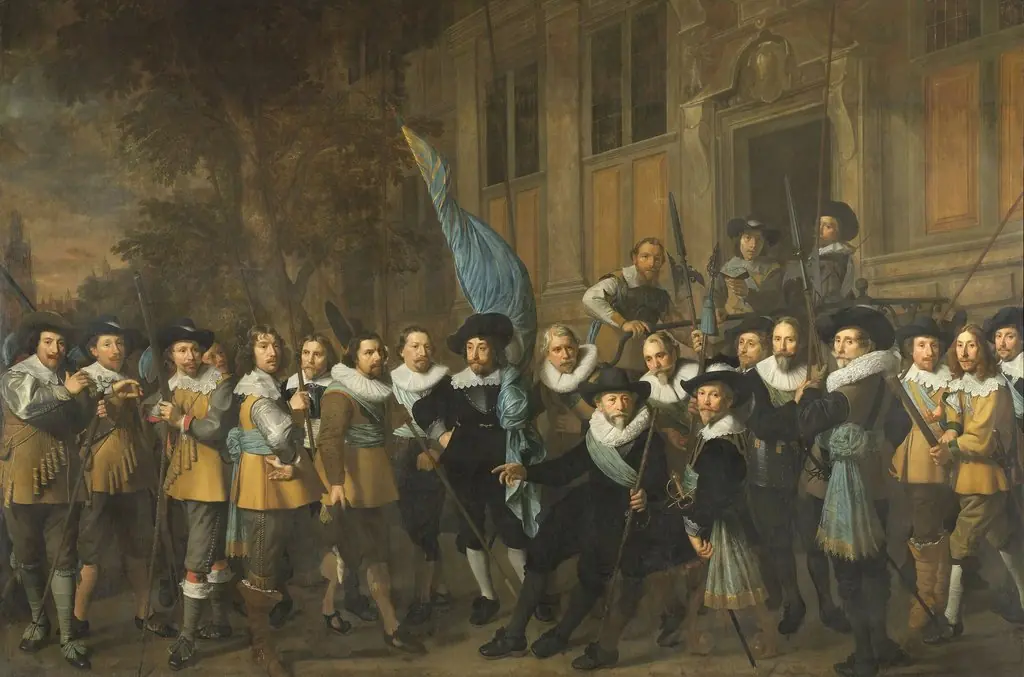
- Officers and other civic guardsmen of the IVth District of Amsterdam, under the command of Captain Jan Claesz van Vlooswijck and Lieutenant Gerrit Hudde
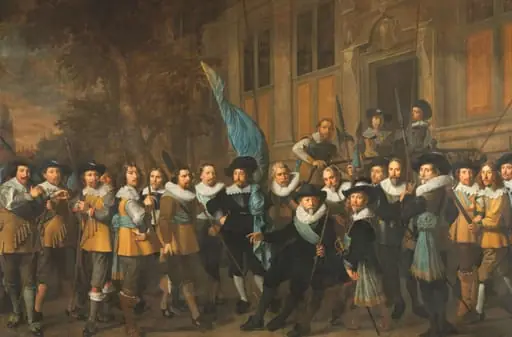 Officers and Other Civic Guardsmen of the IVth District of Amsterdam, under the Command of Captain Jan Claesz van Vlooswijck and Lieutenant Gerrit Hudde
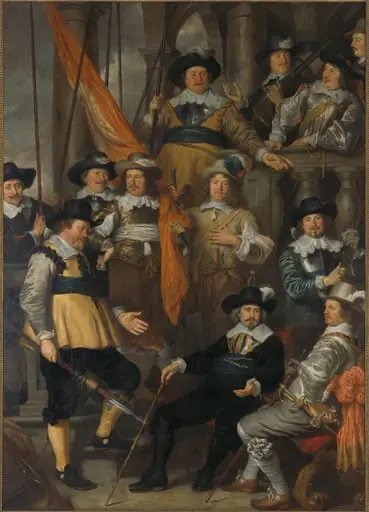 Untitled
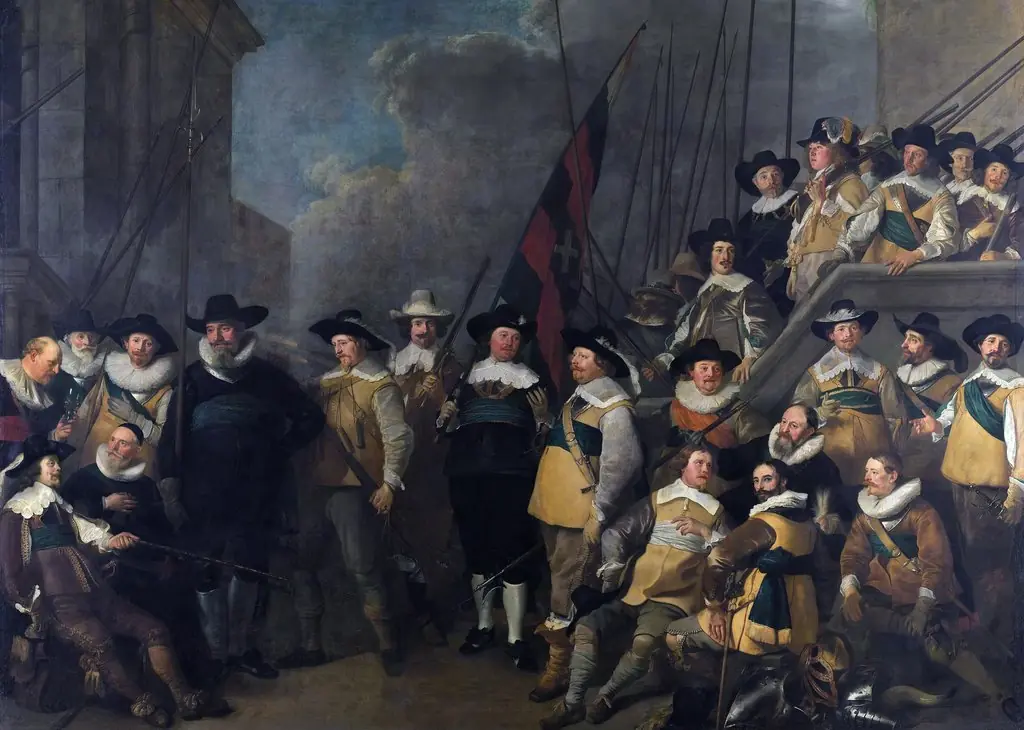 Officers and other Civic Guardsmen of the V District in Amsterdam under the command of Captain Cornelis de Graeff and Lieutenant Hendrick Lauwrensz
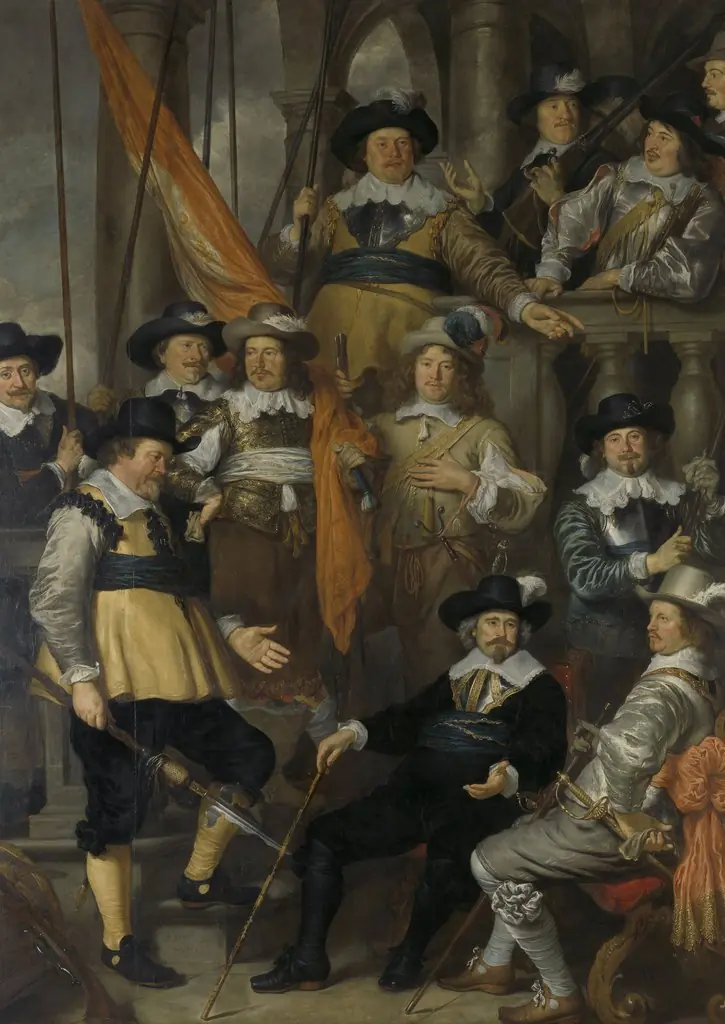 The Company of Captain Albert Bas and Lieutenant Lucas Conijn
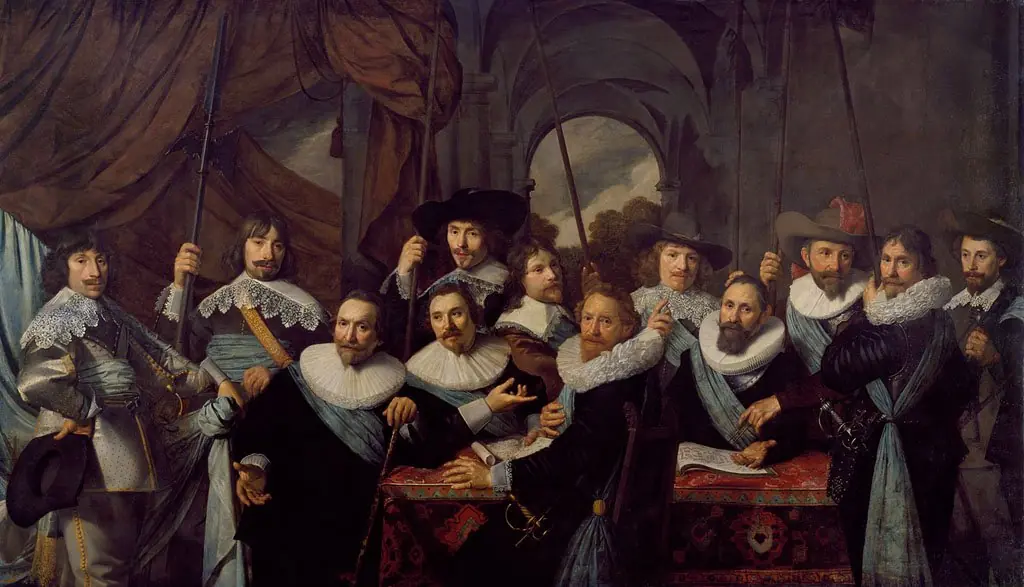 Members of the civic guard company of Captain Dirck Tholinx and Lieutenant Pieter Adriaenszn Raep
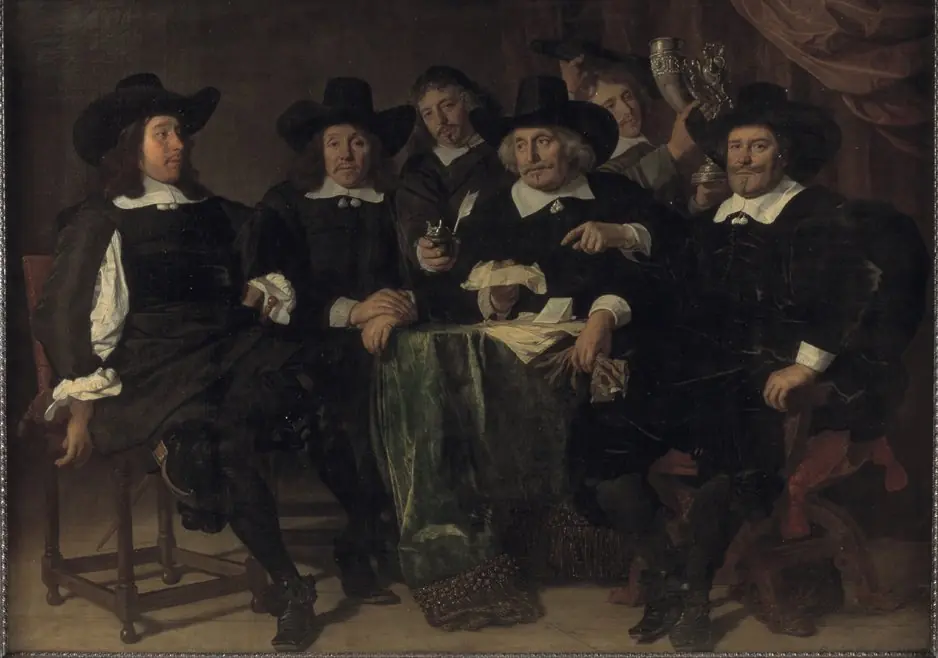 The directors of the Amsterdam civic guard of St. George in 1656
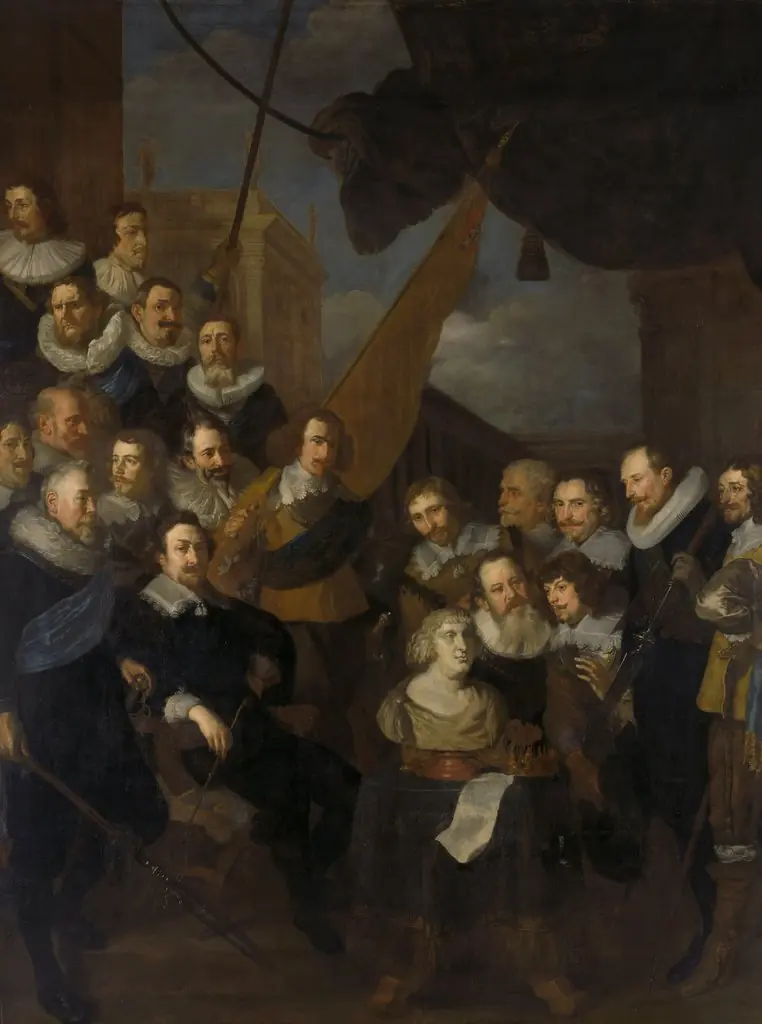 Officers of the militia of departmetn XIX in Amsterdam under the command of Cornelis Bicker and Frederick van Banchem, ready to receive Maria de' Medici in 1638
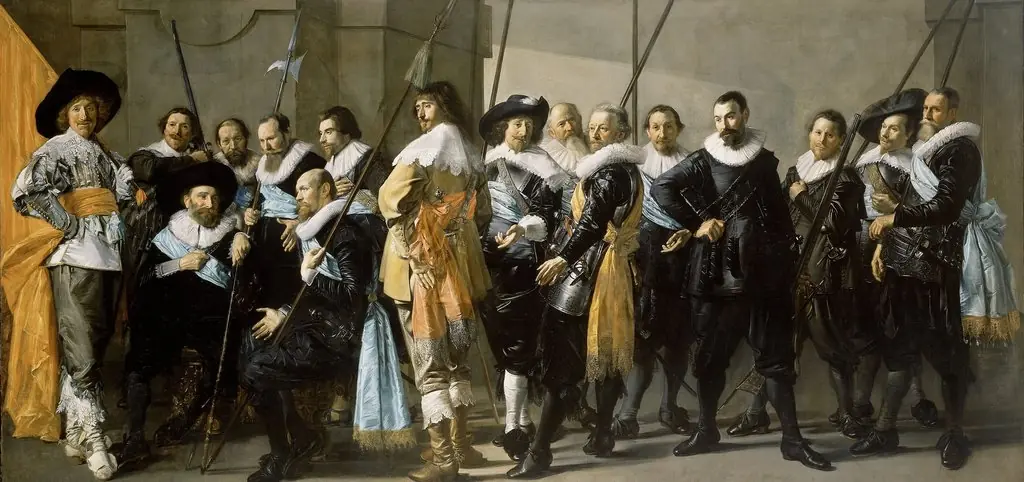 Militia Company of District XI under the Command of Captain Reynier Reael
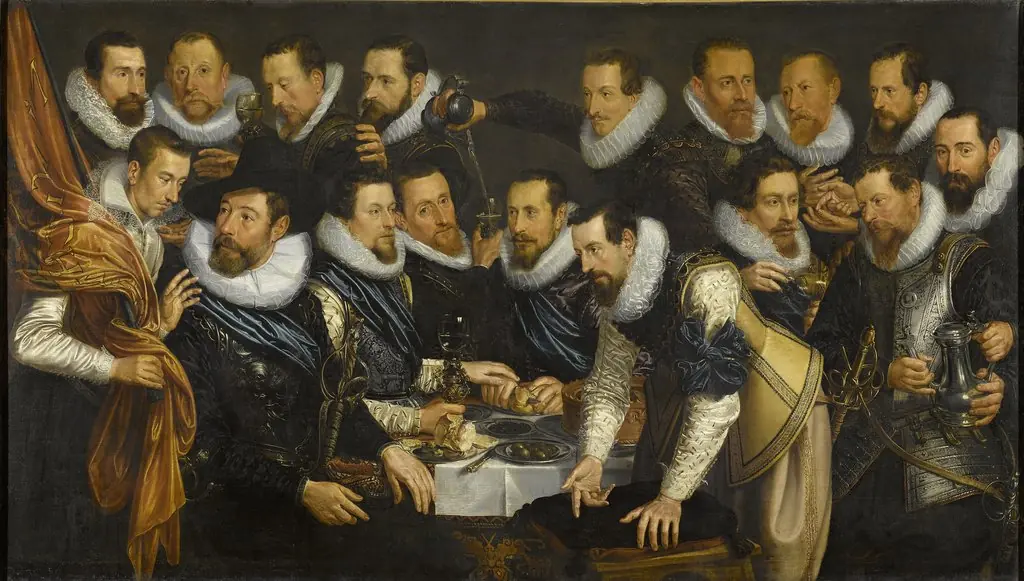 Officers and other civic guardsmen of the XIth District of Amsterdam, under the command of Captain Geurt Dircksz van Beuningen and Lieutenant Pieter Martensz Hoeffijser
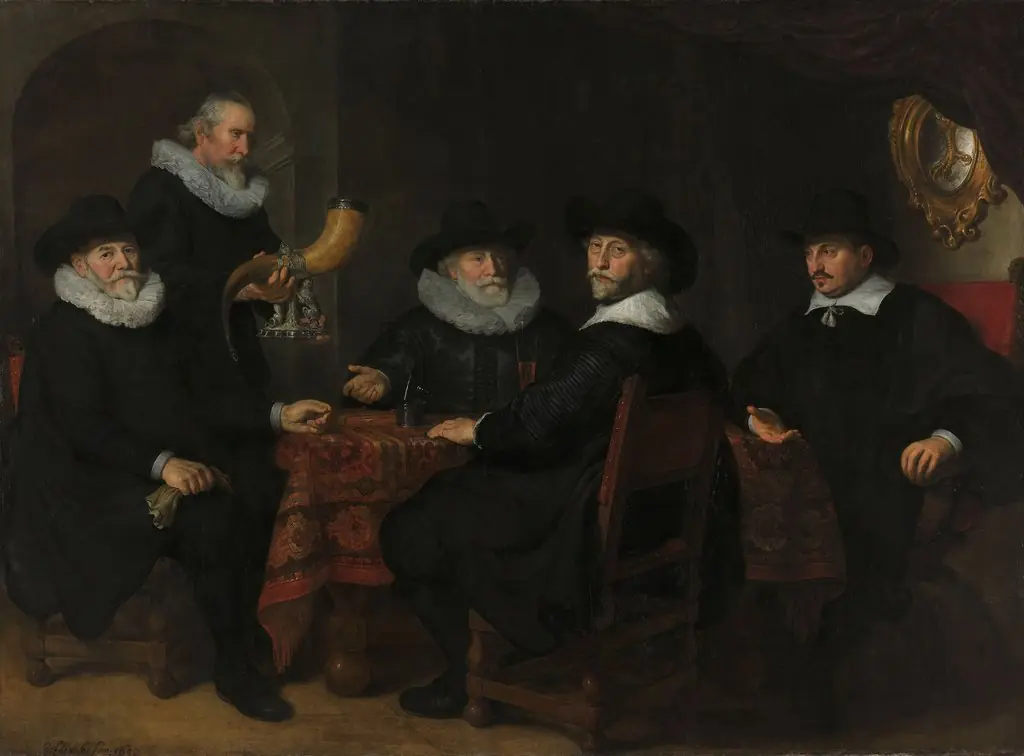 Four directors of the arquebusier's guild, Amsterdam, 1642