Artwork
Mercury and Argus
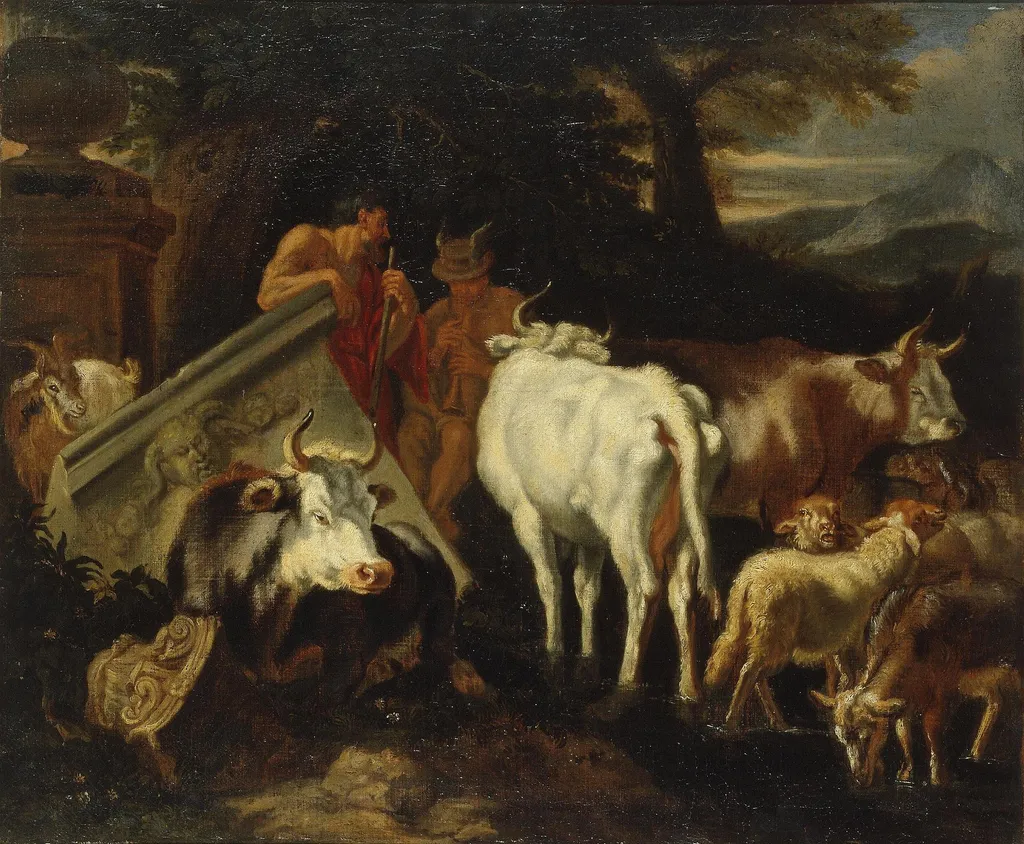
Mercury and Argus is an oil painting by the Rococo painting artist Pieter van Bloemen. It is held in the collection of the Hermitage Museum.
About this work
Overview
3 by 67 centimeters and is held in the collection of the Hermitage Museum in Saint Petersburg, where it is catalogued under accession number 31088.
Mercury and Argus is an oil on canvas mythological painting by the Flemish artist Pieter van Bloemen, also known by his nickname Standaart. Dated to 1750, the work measures 55.3 by 67 centimeters and is held in the collection of the Hermitage Museum in Saint Petersburg, where it is catalogued under accession number 31088. The painting represents a significant example of Van Bloemen's engagement with classical mythology, a genre that occupied an important place within his broader oeuvre as a painter of landscapes and animal scenes.
Subject & Meaning
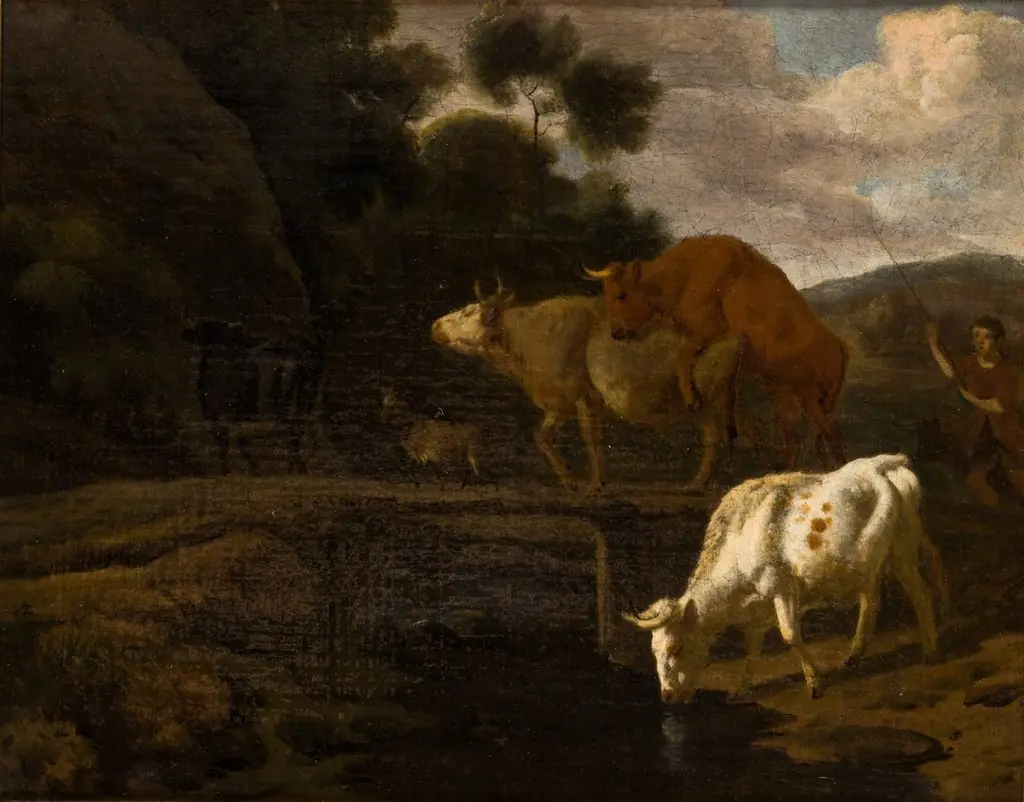
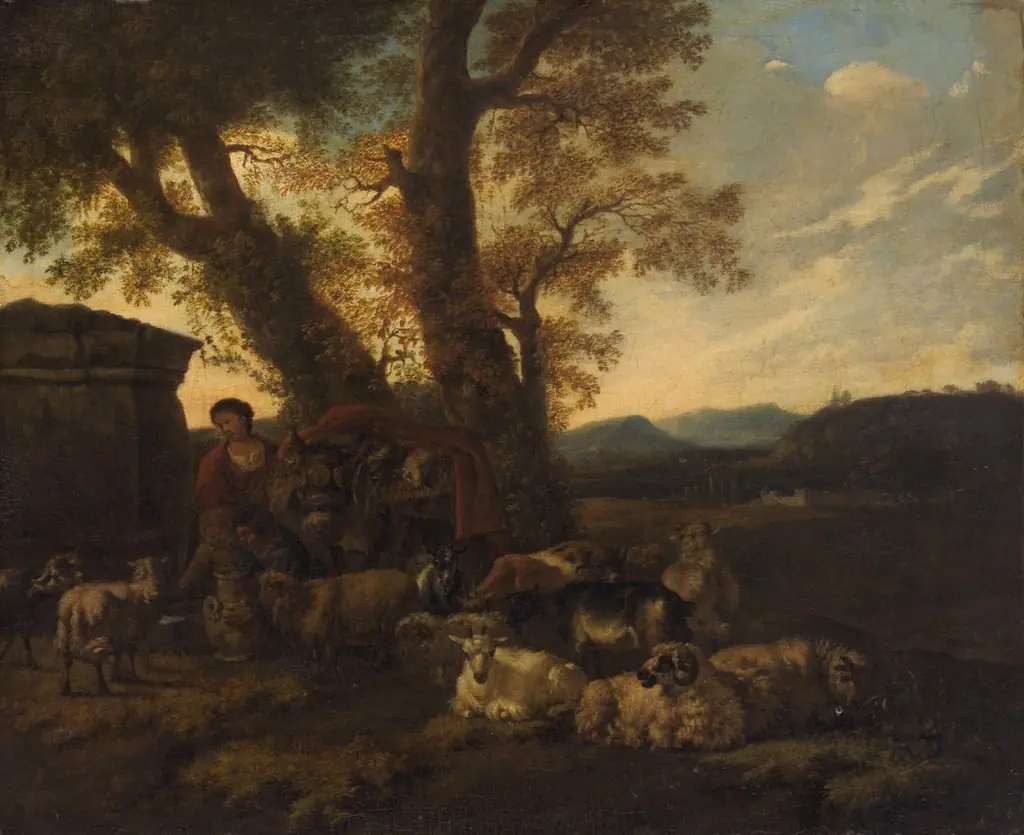
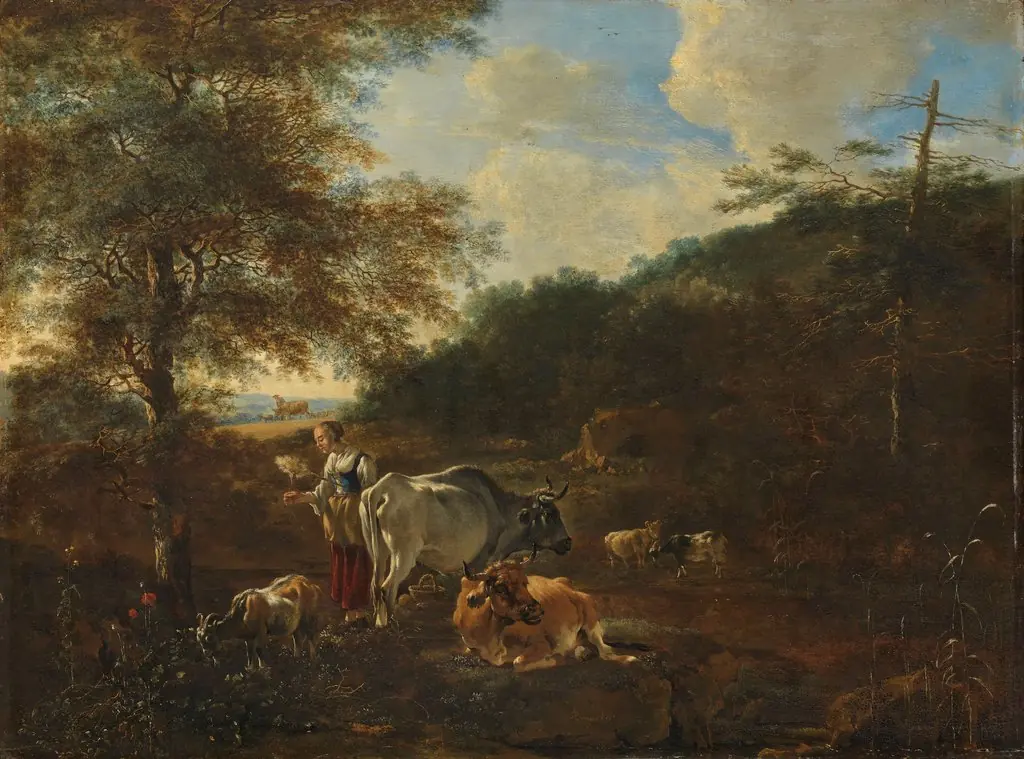
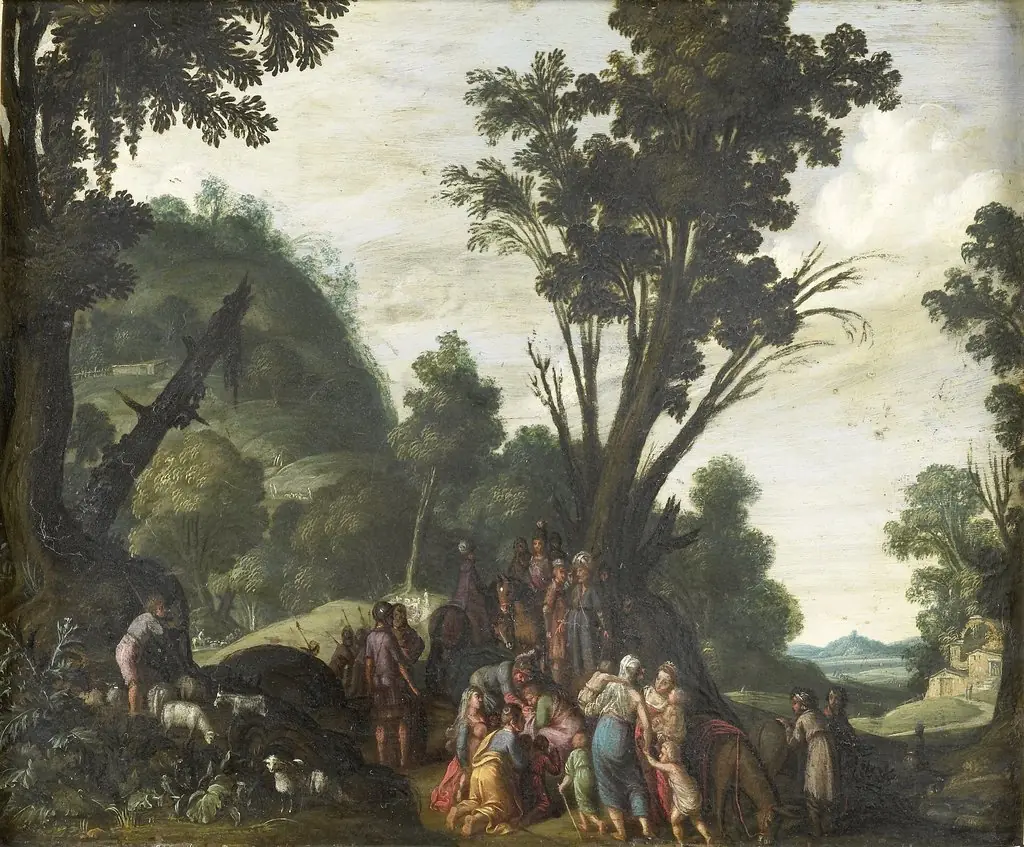
The painting depicts the mythological episode from Ovid's Metamorphoses in which Mercury, messenger of the gods, is sent by Jupiter to slay the hundred-eyed giant Argus, who had been set to guard the transformed Io. In the composition, the bearded Argus leans on a long staff, while the younger Mercury stands nearby wearing his characteristic winged helmet. The narrative moment captured suggests the tension of their encounter before Mercury lulls Argus to sleep and kills him. The scene is populated with multiple cattle, a black and white cow facing the viewer directly, a white cow with its back turned, a brown cow at the right, and sheep and a goat in the lower right corner, alluding to the pastoral setting and Argus's role as guardian of the herds. The inclusion of these animals reflects Van Bloemen's established reputation as a painter of livestock and rural scenes, merging mythological narrative with his particular specializations.
Technique & Style
Executed in oil on canvas, the painting displays the characteristics of Van Bloemen's mature style. The palette is dominated by deep browns, muted greens, and warm earth tones, with the white and light-colored animals providing tonal contrast against the darker landscape. Light falls selectively on the figures and animals, leaving much of the surrounding woodland in shadow, a handling that creates dramatic focus on the mythological encounter. The brushwork appears loose and painterly, with visible texture in the foliage and animal fur. A decorative stone element with carved scrollwork sits in the lower left foreground, adding an ornamental detail to the natural setting. The dense dark trees of the background open onto a lighter sky with distant mountains, creating depth through atmospheric recession.
Legacy
The painting's afterlife has been shaped primarily by its institutional home in the Hermitage Museum and its circulation through digital reproduction and scholarly cataloguing. As a work by a secondary master rather than a leading figure of the Baroque, its influence on subsequent art has been limited, though it remains a document of Flemish mythological painting and of the continued vitality of Ovidian subjects in eighteenth-century European art. The work's availability through the Hermitage's digital collection and through image databases has facilitated its use in broader studies of mythological iconography and of Van Bloemen's oeuvre. It stands as a representative example of how mid-ranking Flemish artists contributed to the visual culture of classical mythology, combining narrative subject matter with regional specialties in landscape and animal painting.
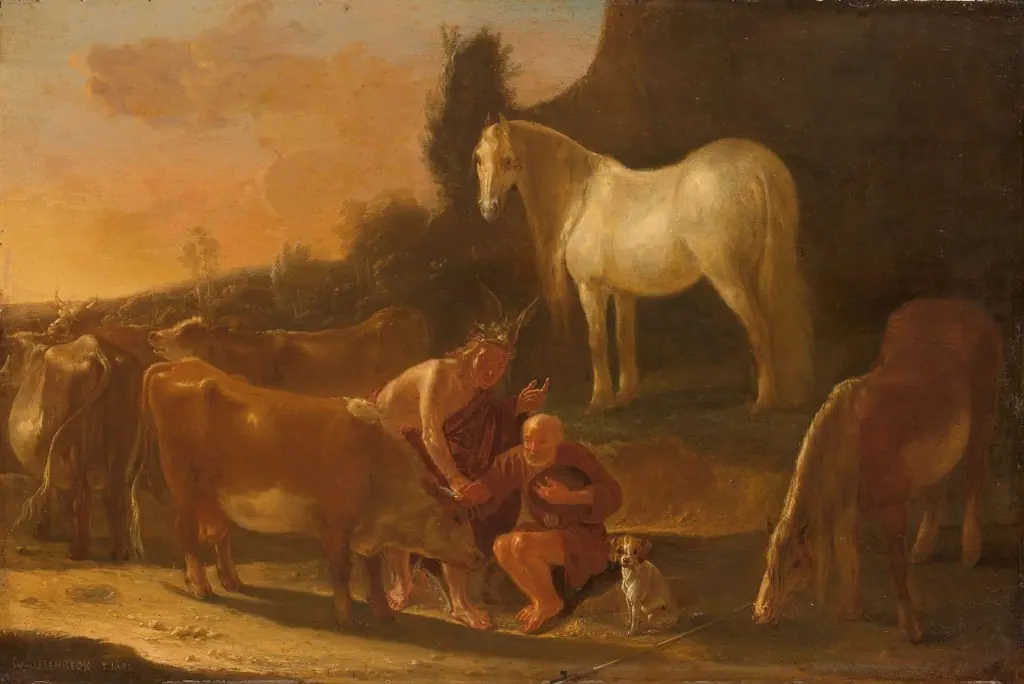
Own this work as a print
Artist & collection
Artist
Pieter van Bloemen, also known as Standaart (bapt. 17 January 1657 – 6 March 1720), first name also spelled Peter or Peeter, was a Flemish painter, draughtsman and printmaker. He was a gifted landscape and animal artist…