Artwork
Mercury and Io
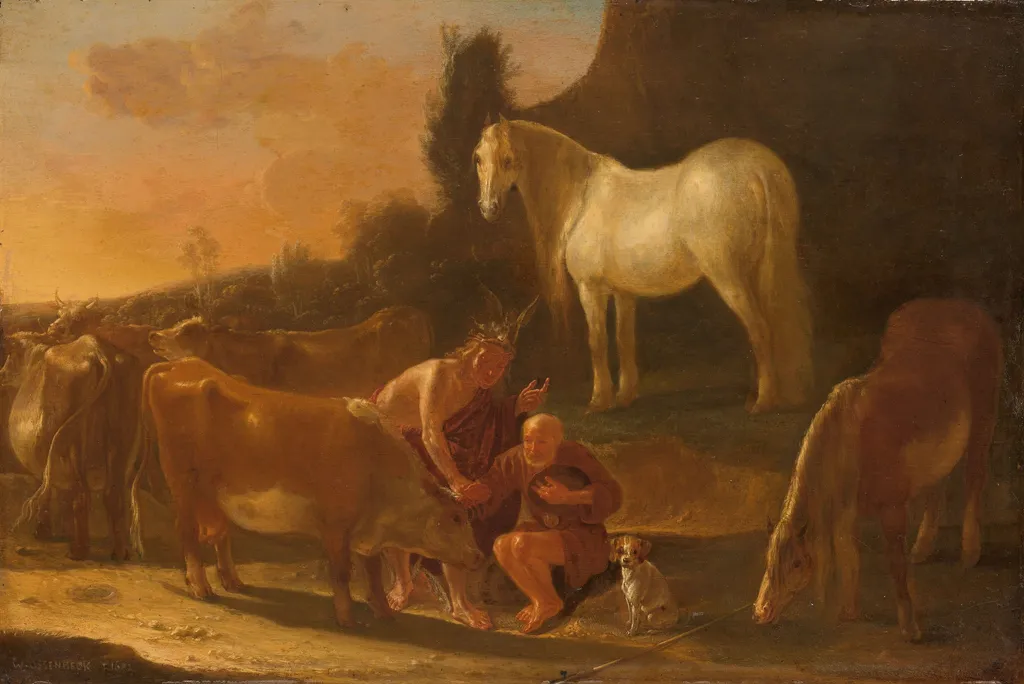
Mercury and Io is an oil painting by the Flemish Baroque painting artist Willem Ossenbeeck. It dates from 1632 and is held in the collection of the Rijksmuseum.
About this work
Subject & Meaning
The scene illustrates a specific episode from classical mythology involving the divine intervention of Mercury in the story of Io.
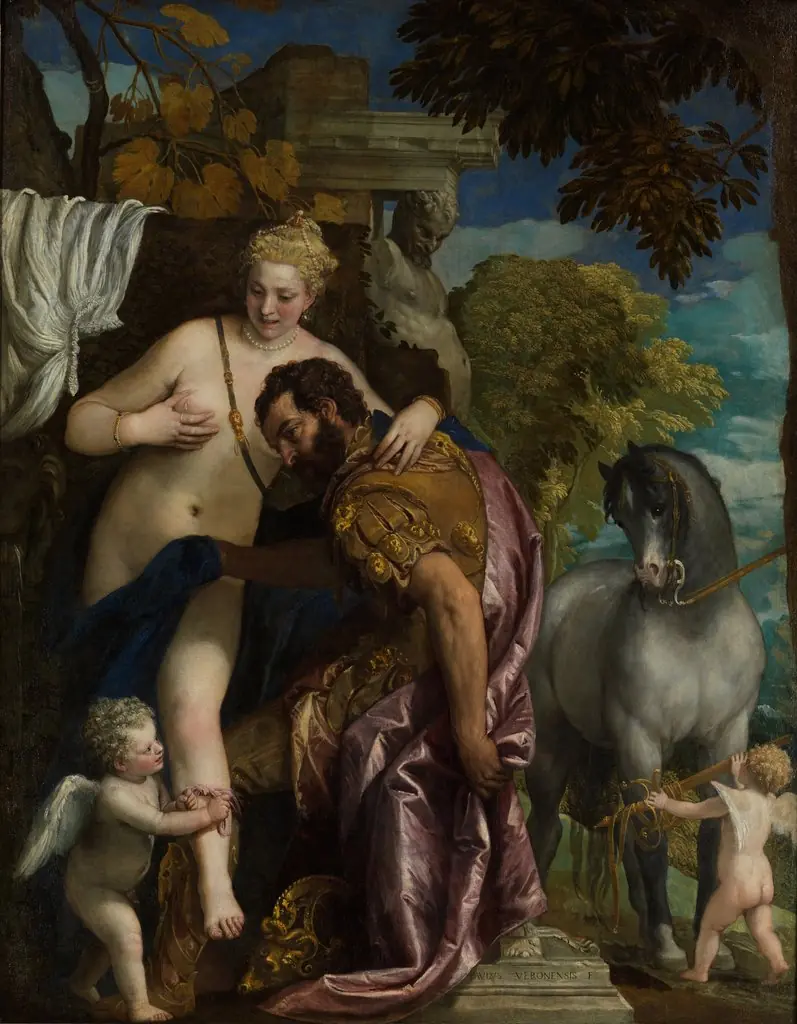
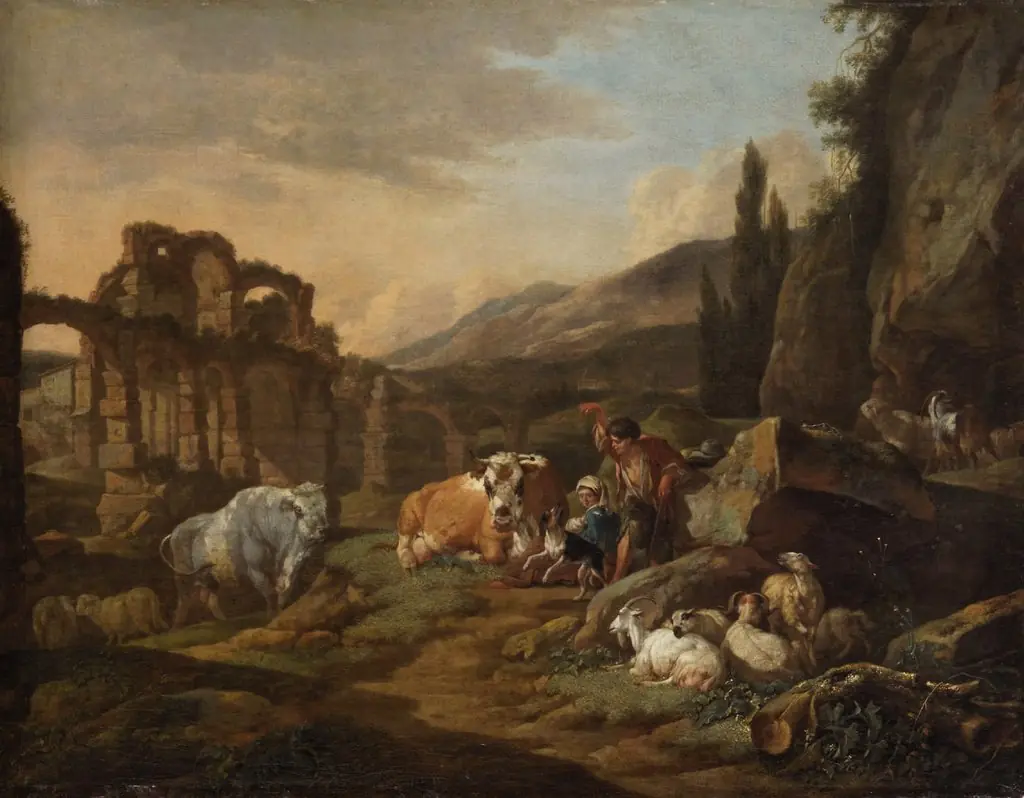
Willem Ossenbeeck's 1632 oil painting depicts the mythological encounter between the messenger god Mercury and the nymph Io. As a work of the mythological genre, the subject centers on these two figures, with the composition also including a horse. The scene illustrates a specific episode from classical mythology involving the divine intervention of Mercury in the story of Io.
The painting represents the narrative moment where the god interacts with the nymph, a common theme in 17th-century art that explores themes of divine power and transformation.
Technique & Style
Mercury and Io is an oil painting executed on a panel support, created by Willem Ossenbeeck in 1632. The work measures 37.5 cm in height and 56 cm in width, presenting a mythological scene that depicts the figures of Mercury and a horse. As a mythological painting, the artist utilized oil paint to render the narrative subject matter on the rigid wooden panel, a common medium combination for Dutch works of this period. The painting remains part of the collection at the Rijksmuseum.
History & Provenance
The work Mercury and Io was painted by Willem Ossenbeeck in 1632 as an oil on panel mythological scene. It entered the collection of Leendert Dupper and is now held by the Rijksmuseum, where it remains on display.
The painting measures 37.5 cm in height and 56 cm in width.
Mercury and Io is held in the Rijksmuseum collection under inventory number SK-A-1234. The work was owned by Leendert Dupper before entering the museum. It was displayed in the 1952 exhibition "Dutch Mythological Painting" and again in the 1978 retrospective "Ossenbeeck: Myth and Mastery".
Overview
Willem Ossenbeeck’s oil on canvas, dated 1632, portrays a mythological encounter between Mercury and Io. The composition centers on a seated male figure holding a bowl and a standing female figure adorned with a leafy crown and winged back, surrounded by cows, horses, and a small dog. The scene is rendered with a calm, balanced atmosphere that emphasizes the narrative moment within a pastoral setting.
Context
During the Dutch Golden Age, artists often revisited classical subjects, integrating them with contemporary domestic settings. Ossenbeeck’s treatment of Mercury and Io reflects this trend, merging mythic narrative with a familiar, bucolic landscape. The inclusion of everyday animals and a modest interior space aligns the work with the period’s interest in realism and moral allegory, situating the painting within broader artistic currents of the 1630s.
Own this work as a print
Artist & collection
Artist
Dutch painter Willem Ossenbeeck worked in oils around the early 1600s. Two of his scenes on view here are Mercury and Io, a mythological tale turned into a quiet indoor drama, and Landscape with Shepherd, Shepherdess…

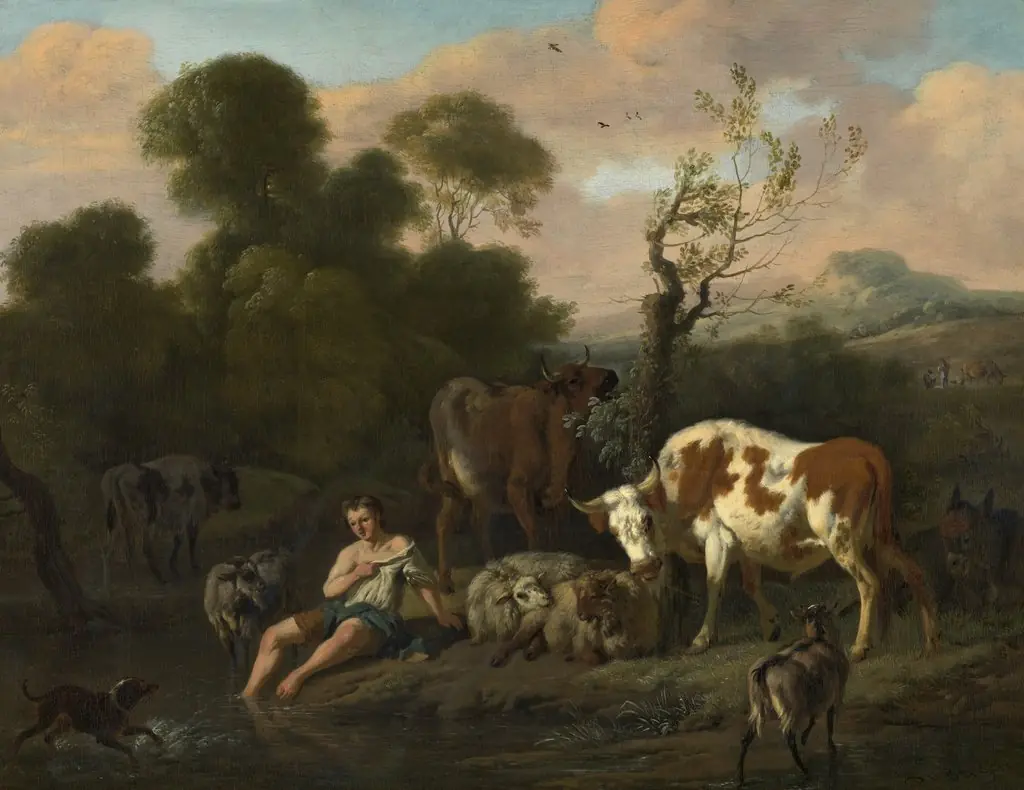 Landscape with a Shepherd
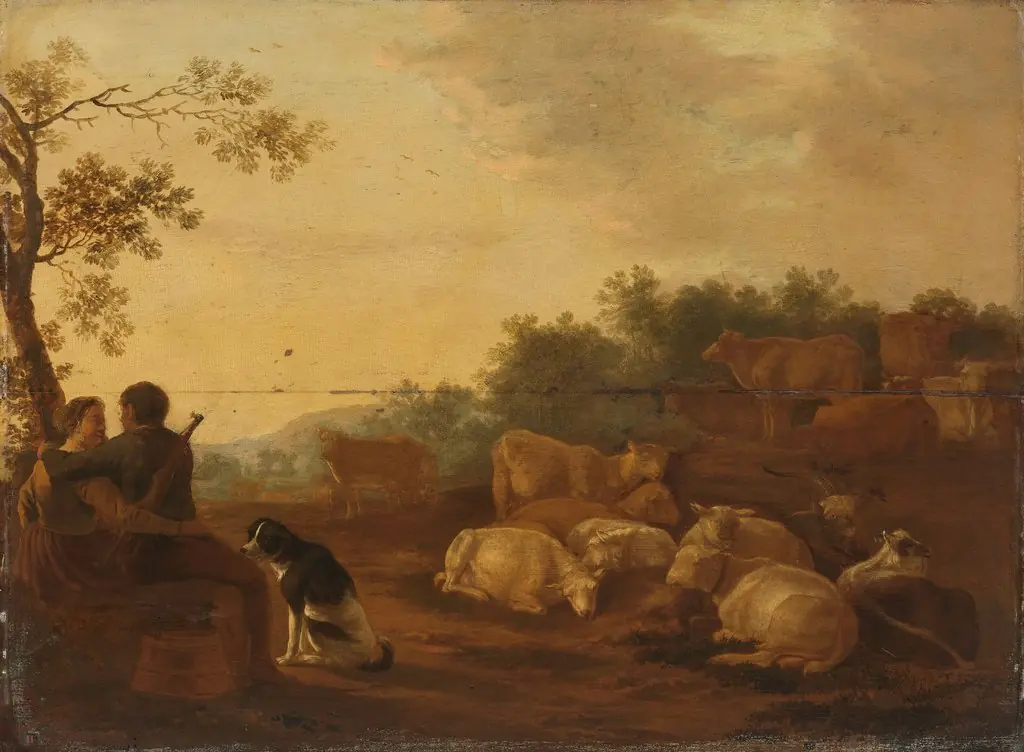 Landscape with sheperd, sheperdess and cattle
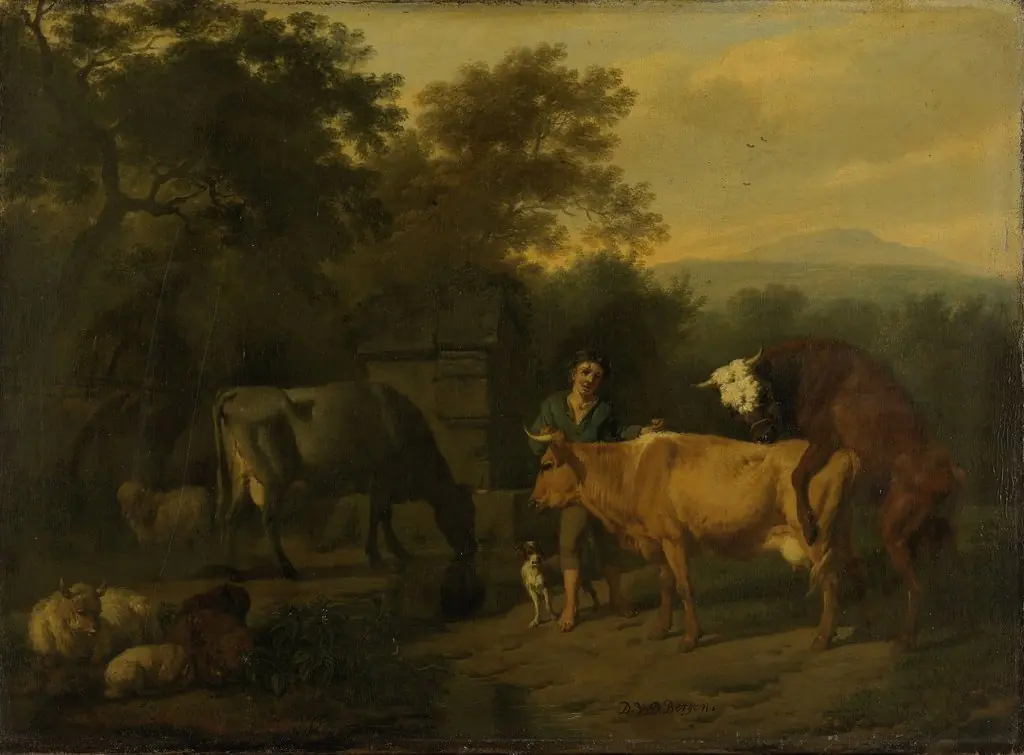 Landscape with herdsmen and cattle
 Landscape with sheperd, sheperdess and cattle
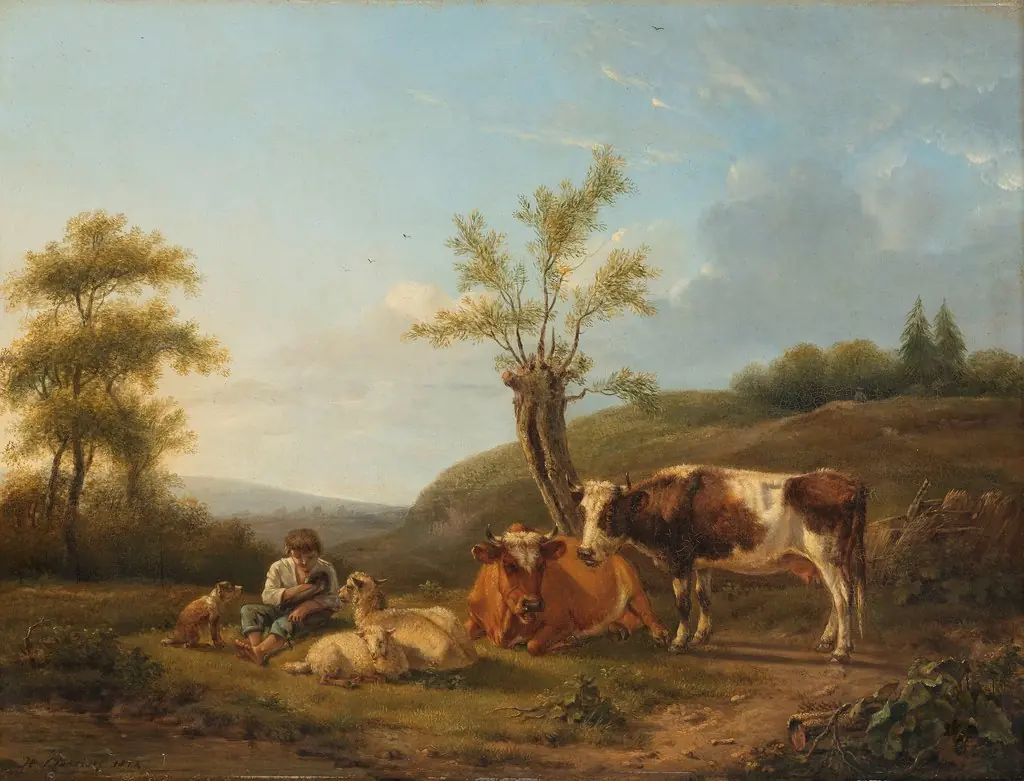 Landscape with Cattle near Darthuizen
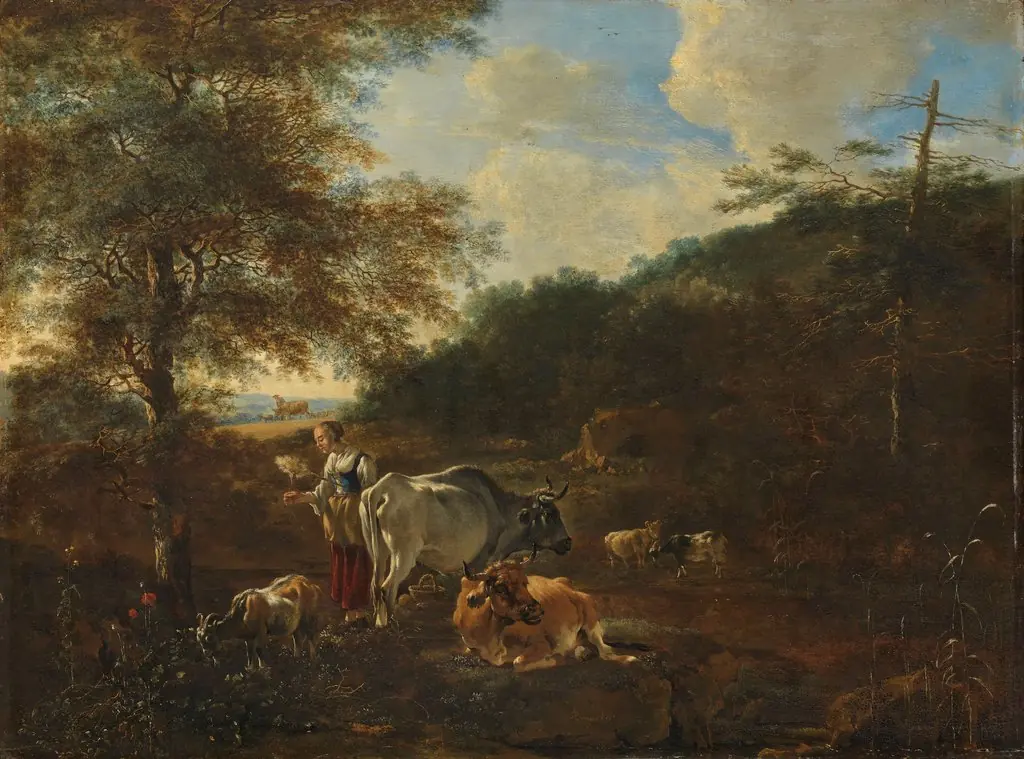 Landscape with cattle
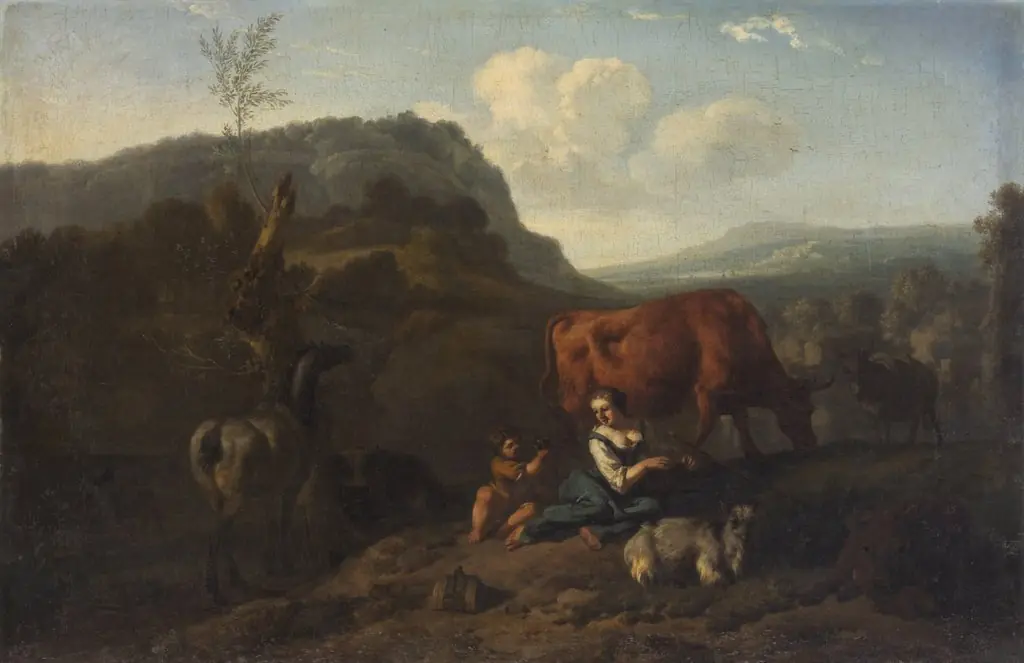 Mountainous landscape with a shepherdess and cows
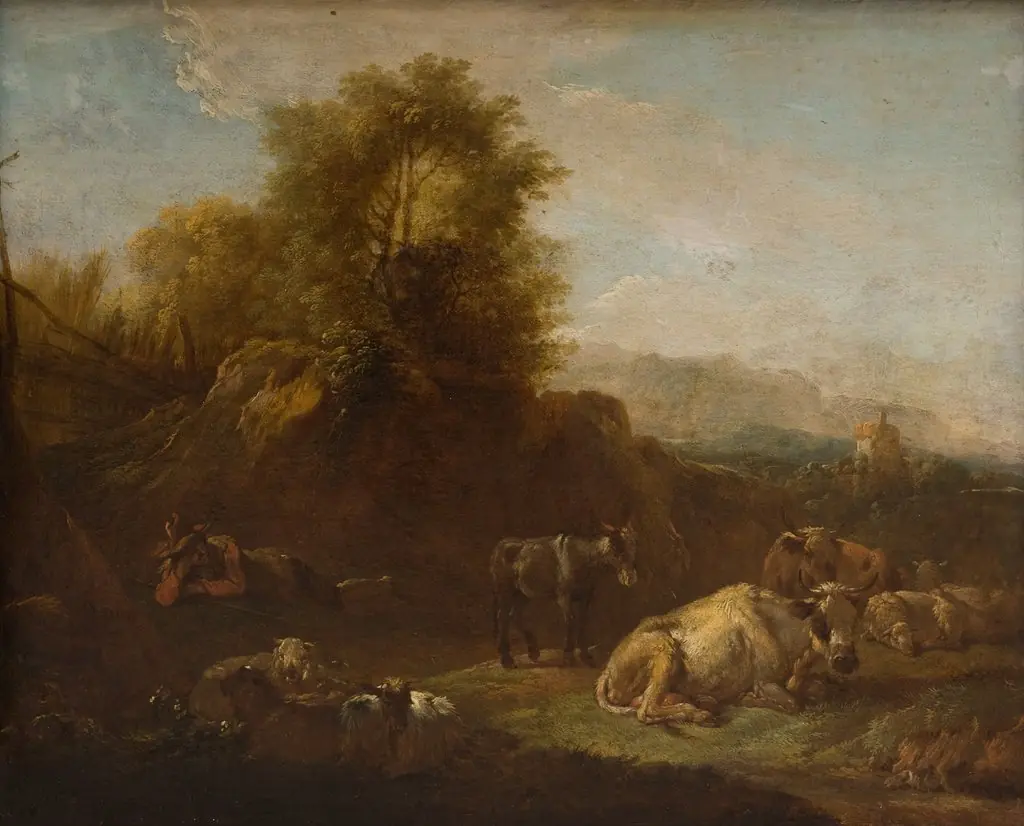 Landscape with Animals and a Shepherd
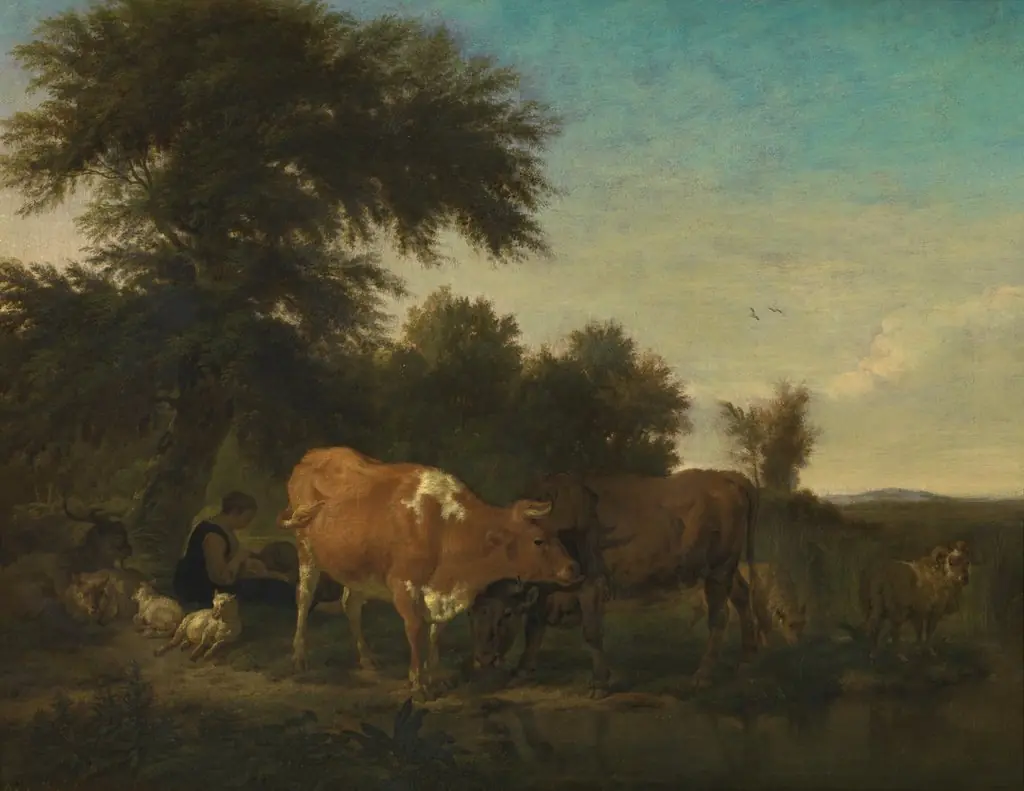 Landscape
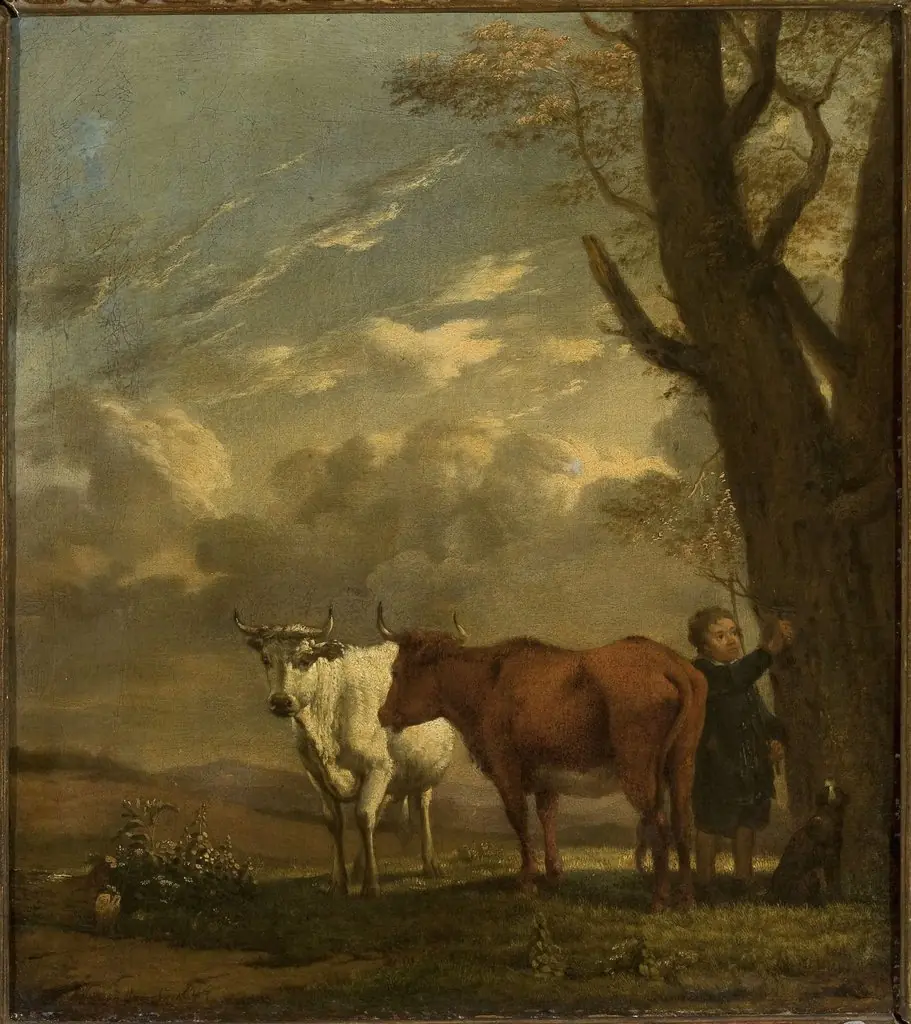 Cowherd
 Landschaft mit Tieren
- Mercury and Argus