Artwork
The church and village of Lumb
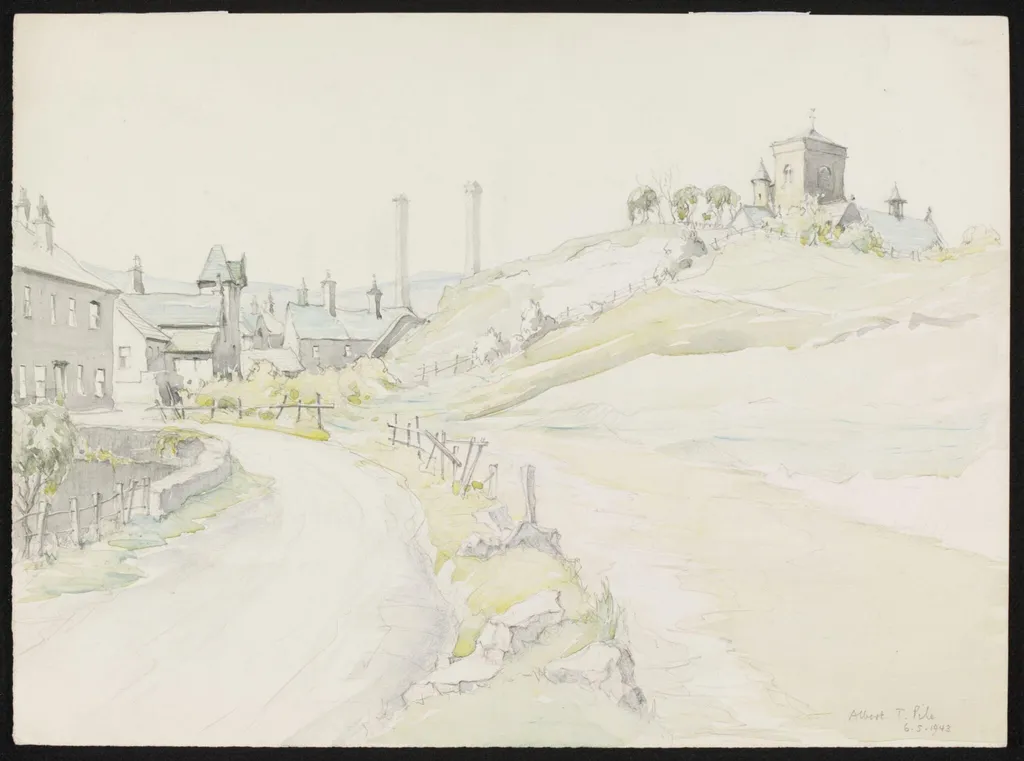
The church and village of Lumb is a watercolor work on paper by the Social Realist artist Pile. It dates from 6 and is held in the collection of the Victoria and Albert Museum.
About this work
The artist signed it in the corner with the date 6 May 1943, hinting this was a quick sketch of a real place.
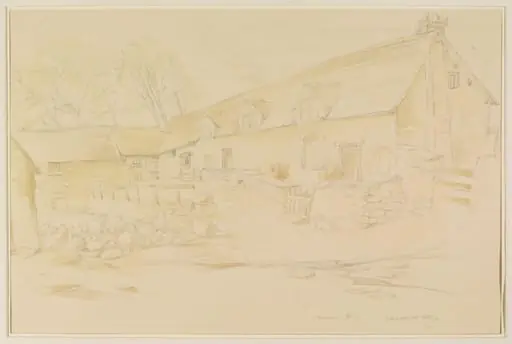
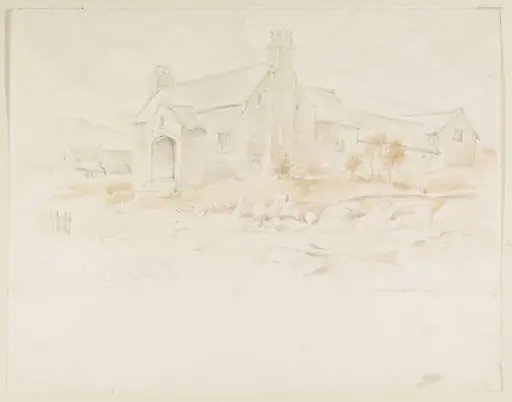
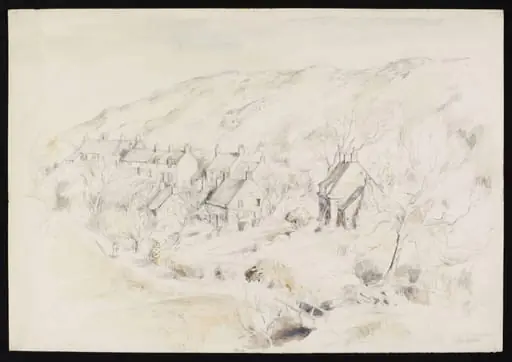
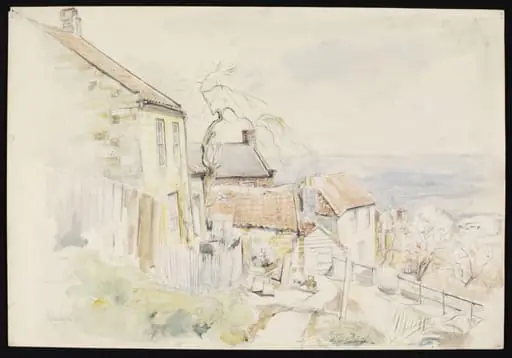
This watercolor shows a quiet village nestled on a hillside. Small houses with dark roofs cluster near a stone church with a tall steeple. A winding dirt path cuts through the scene, with a few people walking or standing around. The colors are muted, soft grays, greens, and yellows, giving it a calm, almost faded look.
The artist signed it in the corner with the date 6 May 1943, hinting this was a quick sketch of a real place. The loose, sketchy style makes it feel like a snapshot of everyday life, not a polished scene.
If you like this style, check out the Victoria and Albert Museum to see more works like it.
Overview
The church and village of Lumb is a watercolour painting depicting a rural scene with a church on a hillside. Created by Pile in 1943, it is a representative example of a work produced during a period of significant cultural documentation.
Subject & Meaning
The painting shows a village with a stone church and steeple, surrounded by houses with dark roofs, and a winding dirt path with figures. The scene conveys a sense of quiet, everyday life in a rural setting.
Technique & Style
The watercolour is executed in a loose, sketchy style with muted colours, including soft grays, greens, and yellows, giving it a calm appearance. The artist's signature and date suggest it was a rapid sketch of a real location.
History & Provenance
This work is part of the 'Recording Britain' collection, a wartime project initiated in 1940 to document Britain's cultural heritage. It was funded by the Pilgrim Trust and directed by Sir Kenneth Clark, featuring works by 97 artists.
Context
The 'Recording Britain' collection aimed to preserve a record of Britain's landscape and cultural heritage amidst wartime threats and social changes, capturing scenes such as market towns, rural landscapes, and historic buildings.
Own this work as a print
Artist & collection

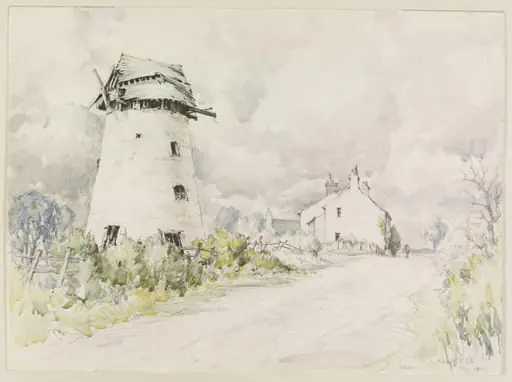 Windmill at Staining, near Blackpool
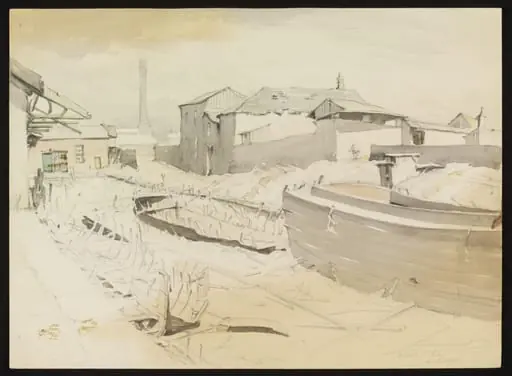 An old part of the Ship Canal, Quay Street, Manchester
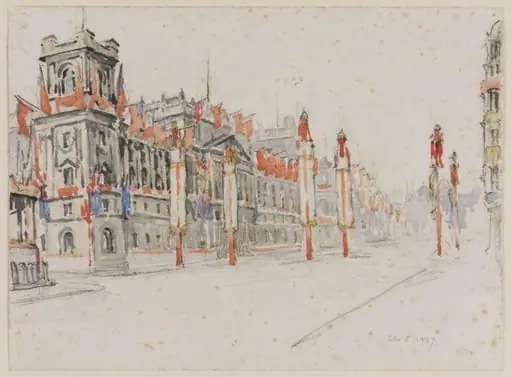 The Foriegn Office looking up Whitehall
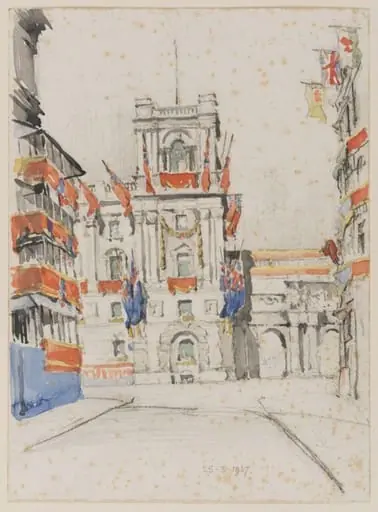 Foreign Office with stands
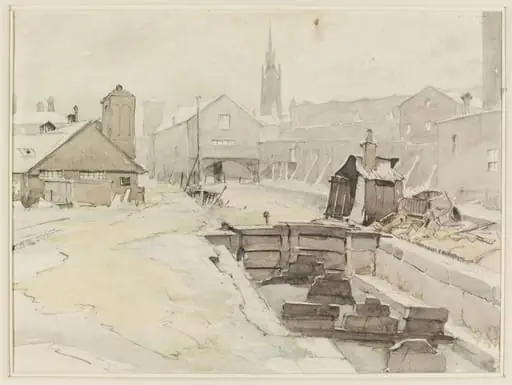 Manchester Ship Canal, Quay Street, Manchester
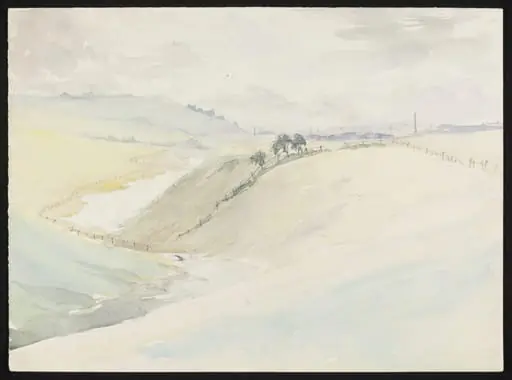 Looking towards Bury from the North of the city
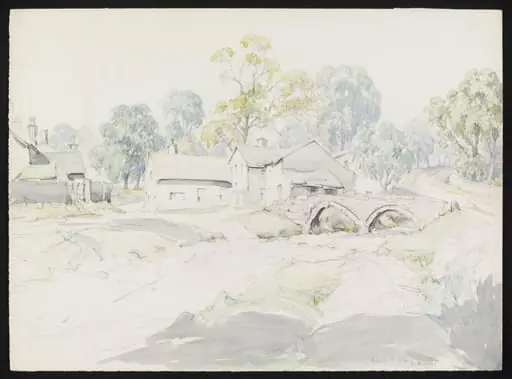 Wycoller Village
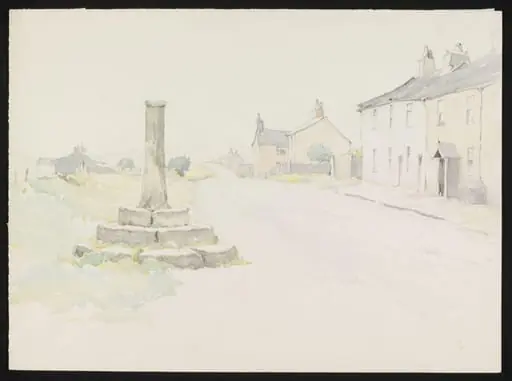
- The Village Street and Roman Cross, Affetside