Artwork
Andreas, Cardinal of the Holy Roman Empire
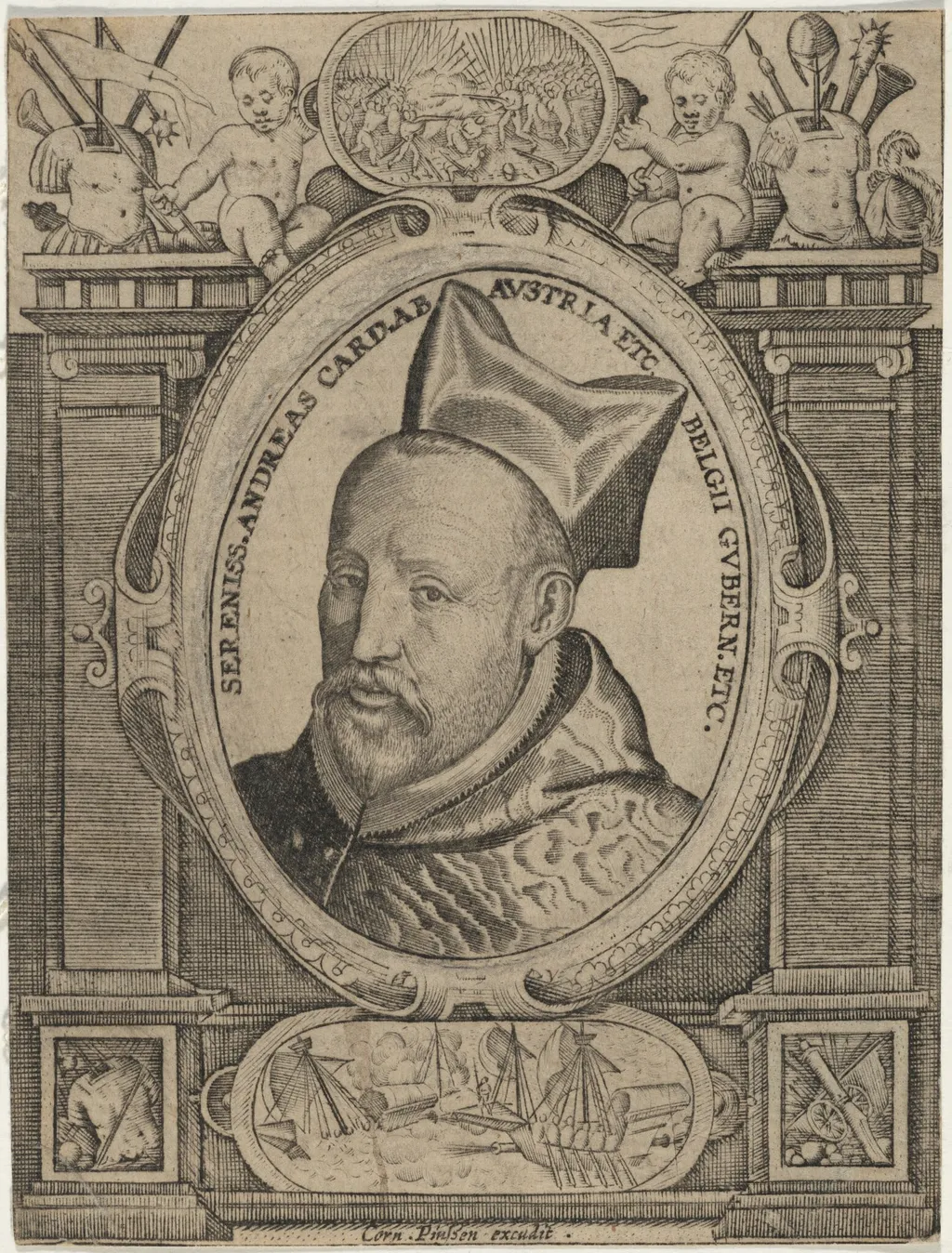
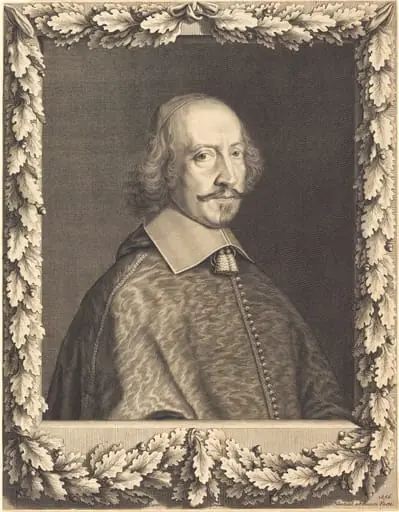
Andreas, Cardinal of the Holy Roman Empire is an ink print by Cornelius Pinssen. It is held in the collection of the National Gallery of Art.
About this work
Overview
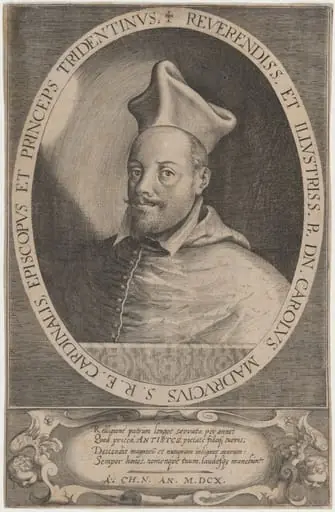
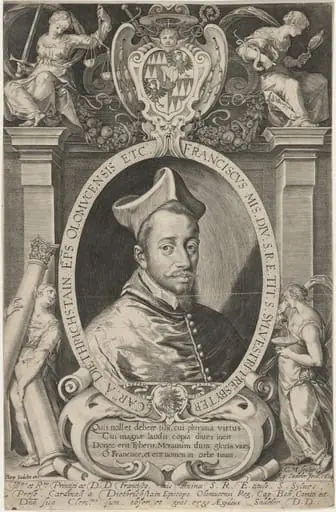
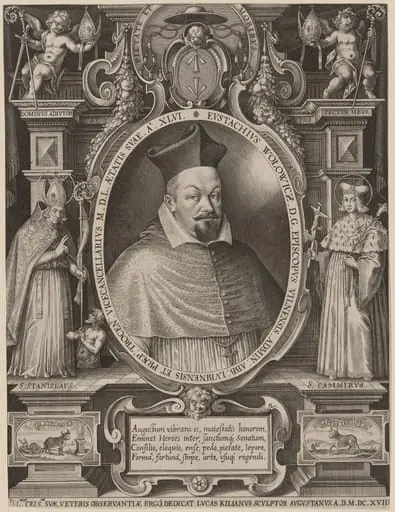
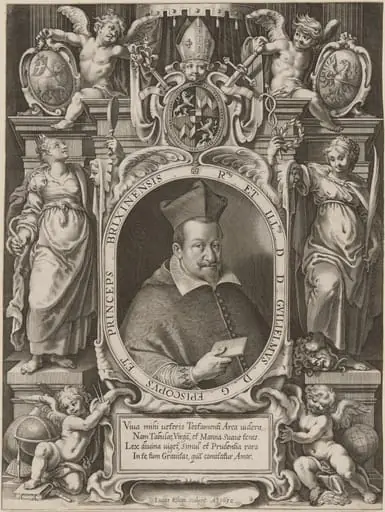
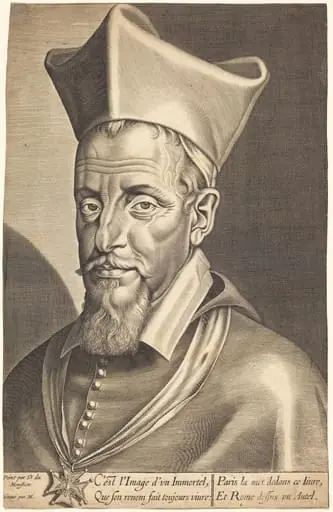
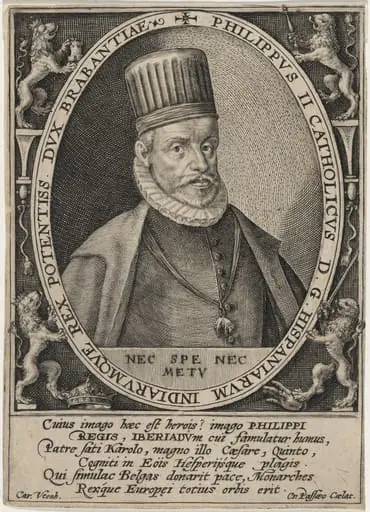
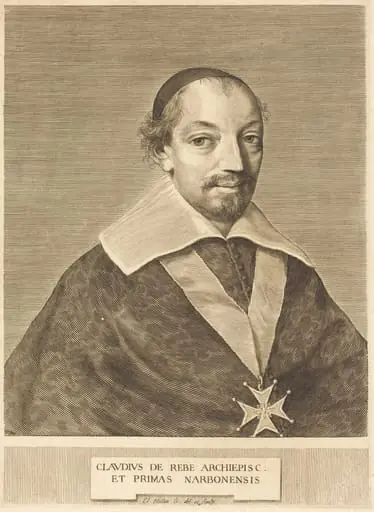
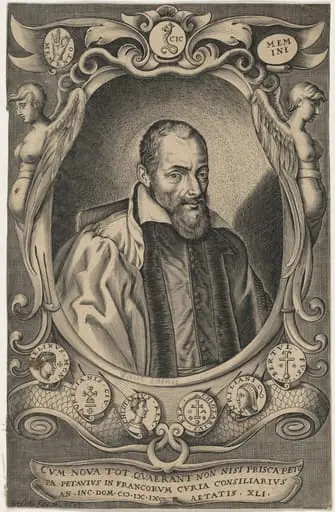
This black-and-white engraving by Cornelius Pinssen depicts Andreas, a cardinal of the Holy Roman Empire, rendered in precise linear detail.
This black-and-white engraving by Cornelius Pinssen depicts Andreas, a cardinal of the Holy Roman Empire, rendered in precise linear detail. The portrait occupies a central oval frame, surrounded by an ornate border filled with miniature allegorical scenes. The composition emphasizes the subject’s ecclesiastical authority through formal composition and intricate engraving techniques characteristic of early 17th-century Northern European printmaking.
Subject & Meaning
The cardinal, identified by his title and regional affiliations in the banner above, is portrayed with solemnity and dignity. His beard and bishop’s hat signify his clerical rank, while the surrounding cherubs holding tools and ships suggest themes of governance, divine favor, and maritime influence tied to his administrative role. The imagery functions as a visual affirmation of his status and responsibilities within the imperial church hierarchy.
Technique & Style
Pinssen employed fine, controlled lines typical of engraving to model form and texture, particularly in the folds of the cardinal’s robe and the contours of his face. The background border is densely packed with small, meticulously rendered scenes, demonstrating the artist’s skill in miniaturization. The absence of tone relies entirely on line density to convey depth and shadow, a hallmark of the medium.
History & Provenance
Created in the early 1600s, the print likely served as a portrait for diplomatic or ecclesiastical circulation, common among high-ranking church figures. While specific early ownership records are sparse, its style aligns with prints produced in the Low Countries for elite audiences. The inclusion of Latin inscriptions and heraldic motifs suggests it was intended for a literate, politically engaged viewership.
Context
During this period, engraved portraits of clergy were used to project authority across territorial and linguistic boundaries. The Holy Roman Empire’s complex political structure required visual symbols of legitimacy, and prints like this circulated among courts and monasteries. The fusion of portraiture with allegorical elements reflects a broader trend in Counter-Reformation visual culture, blending piety with political identity.
Legacy
Though not widely reproduced today, the engraving exemplifies the precision and symbolic richness of early modern printmaking. It contributes to the historical record of how ecclesiastical power was visually constructed in the absence of photography. Its survival offers insight into the networks of patronage and communication that sustained religious authority in early modern Europe.
Artist & collection
Artist
This engraver worked in the late 15th to early 16th century, turning notable faces into crisp black-and-white prints.