Artwork
Edward Howard (1744–1767)
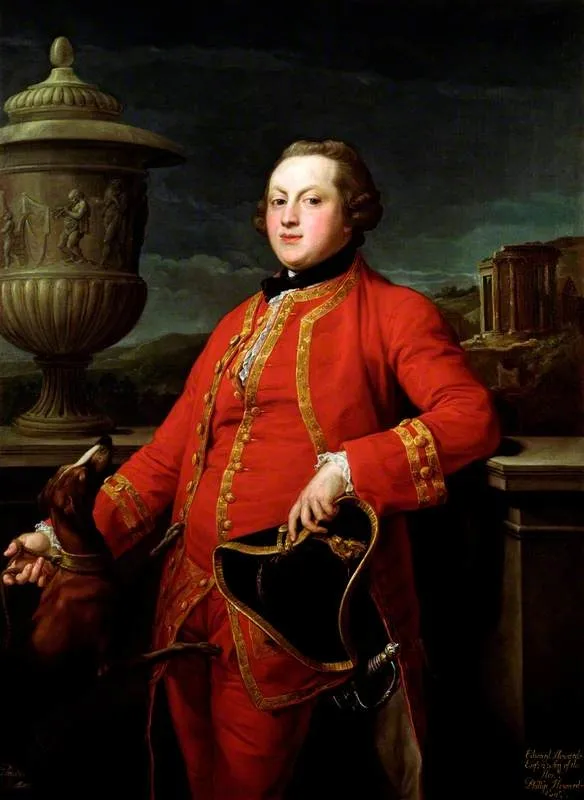
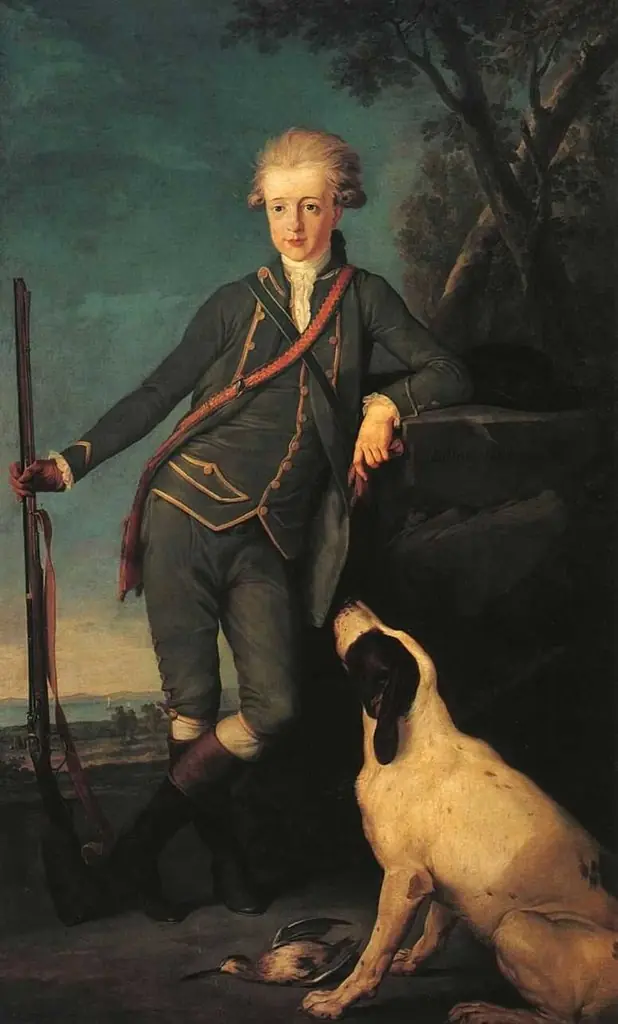
Edward Howard (1744–1767) is an oil painting by the Rococo painting artist Pompeo Batoni. It dates from 1766 and is held in the collection of the Victoria and Albert Museum.
About this work
Overview
The work is now held by the Victoria and Albert Museum in London, where it was accessioned in 1949 as W.
Edward Howard (1744-1767) is a full-length oil portrait on canvas by the Italian painter Pompeo Batoni (1708-1787), executed in 1766 during the height of the artist's career in Rome. Measuring 251.7 by 131.5 cm, the painting depicts Edward Howard, son of Lord Philip Howard and nephew of Edward Howard, 9th Duke of Norfolk, in the elaborate costume of a Grand Tourist against a backdrop of classical Roman ruins. The work is now held by the Victoria and Albert Museum in London, where it was accessioned in 1949 as W.36:1-1949. It stands as one of the most substantial examples of Batoni's portraiture of British aristocratic visitors to Italy, a genre that made him the most celebrated painter in Rome and one of the most famous artists in Europe during the mid-eighteenth century.
Subject & Meaning
The portrait presents Edward Howard three-quarter length, standing beside a stone balustrade in a scarlet coat and matching breeches trimmed with gold braid, a white ruffled shirt, and a black cravat. His left hand rests on a black tricorn hat with gold edging, while his right hand holds a thin cane and touches a brown dog, possibly a greyhound, that stands beside him. To his left is a large carved stone urn with figural relief depicting a dionysiac scene, and behind him to the right appear the ruins of the circular Temple of Vesta, known in the eighteenth century as the Temple of the Sibyl, set within the Roman countryside. The inclusion of identifiable Roman antiquities follows the convention of Grand Tour portraiture, in which Batoni brilliantly perfected the art of showing wealthy, aristocratic youth elegantly posed before celebrated monuments of ancient Rome. The dog and the classical setting serve as markers of status, cultivation, and the educational purpose of the Grand Tour, while the Minerva and Cupid relief on the frame's oval surmount, executed in the decorative manner of architect Sir William Chambers, reinforces themes of wisdom and love appropriate to a young nobleman's coming of age.
Technique & Style
Batoni executed the portrait in oil on canvas with a smooth paint surface and careful attention to the textures of fabrics and faces, while the landscape background is handled more loosely. Strong light falls from the left, illuminating the figure against deep shadows and creating a dramatic chiaroscuro effect that isolates Howard from the atmospheric, cloudy sky behind him. The signature and inscription appear in the lower right corner. The painting is housed in an elaborately carved contemporary British frame, possibly designed by John Linnell (1729-1796), surmounted by an oval with a relief of Minerva and Cupid. This frame exemplifies the British Neo-classical style and complements the classical references within the painting itself. The ruined Temple of Vesta, one of Batoni's favourite motifs that recurs in several of his portraits, is carefully observed and integrated into the composition as a backdrop that authenticates the sitter's Roman experience.
History & Provenance
Edward Howard commissioned the portrait in 1764 during his travels in Italy, though he had returned to Britain by 1764 before the painting's completion. Batoni finished the work in 1766 and sent it to Howard in Britain. The actor David Garrick described Howard in a 1764 letter as 'a very worthy good natured Young Man.' Howard died the following year in 1767, making this portrait a commemoration of a brief life. The Victoria and Albert Museum purchased the painting in 1949, and it entered the collection with the accession number W.36:1-1949. The frame, probably made in London, represents a significant collaborative element between Italian painting and British decorative arts.
Context
The portrait exemplifies the conventions of Grand Tour portraiture, a genre through which classically educated male members of the northern European ruling class documented their educational journeys through France and Italy. These travels, especially from the seventeenth century onwards, were undertaken to admire the remains of the Classical past and to collect art and antiquities. Batoni dominated this market for nearly fifty years, producing portraits of Rome's international visitors that remain among the most memorable artistic accomplishments of the period. While Batoni was equally gifted as a history painter and internationally known for his religious and mythological works, his portraits of Grand Tourists secured his reputation. If Batoni were too expensive or unavailable, other popular portraitists included George Willison and Nathaniel Dance-Holland, though Batoni's status as the most celebrated painter in Rome made him the preferred choice for discerning patrons. The dionysiac scene on the vase in this portrait appears in various versions across Batoni's oeuvre and may be a pastiche rather than a copy of a specific antique source.
Legacy
The portrait of Edward Howard remains a significant document of eighteenth-century aristocratic culture and the international art market centered on Rome. It preserves the memory of a young nobleman whose life ended shortly after the portrait's completion, and it illustrates the material culture of the Grand Tour, including the elaborate frames that became integral to such commissions. As a work in the Victoria and Albert Museum, it continues to serve as an important example of Batoni's portraiture and of British-Italian artistic exchange. The painting's afterlife in scholarship and public display contributes to understanding how visual culture constructed and perpetuated aristocratic identity in the age of the Grand Tour.
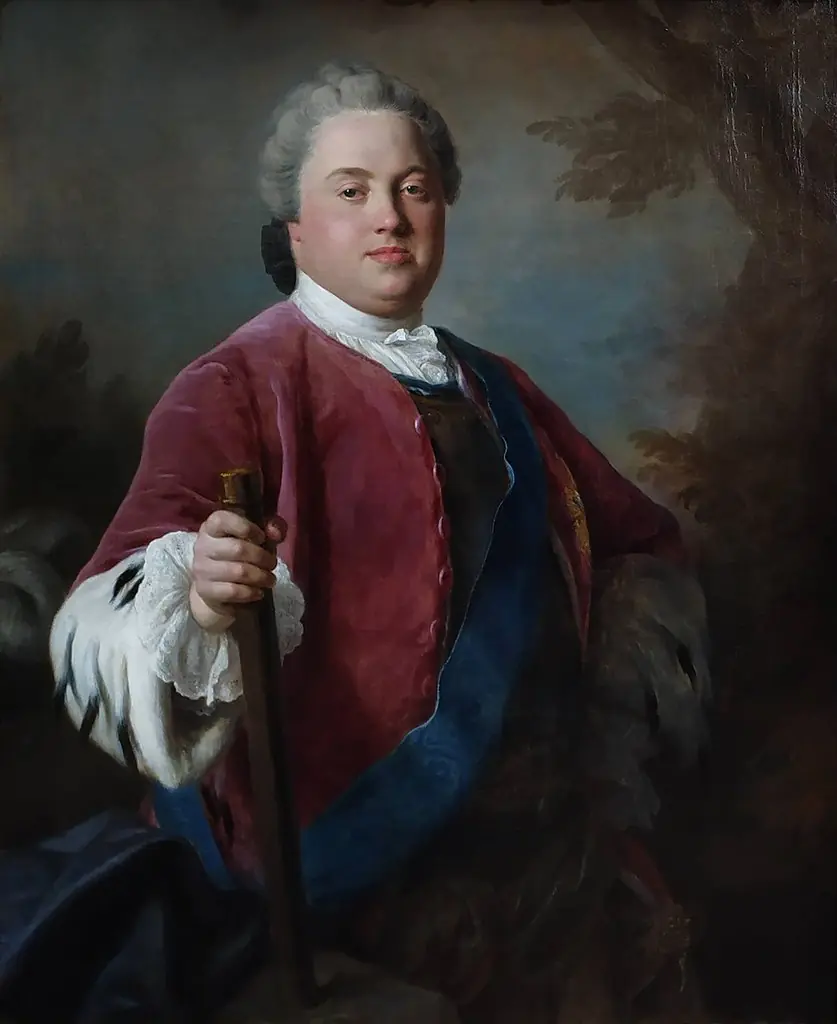
Artist & collection
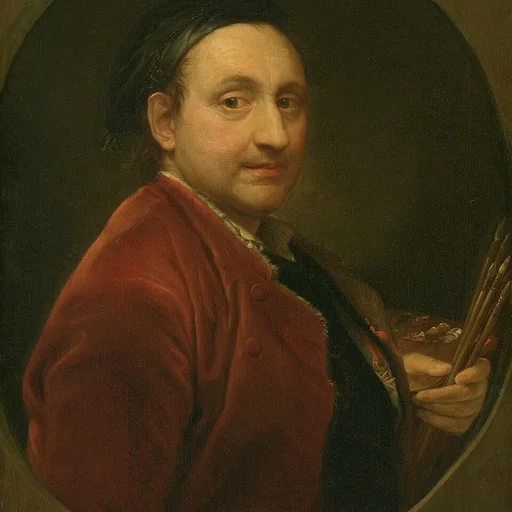
Artist
Pompeo Girolamo Batoni (25 January 1708 – 4 February 1787) was an Italian painter who displayed a solid technical knowledge in his portrait work and in his numerous allegorical and mythological pictures.

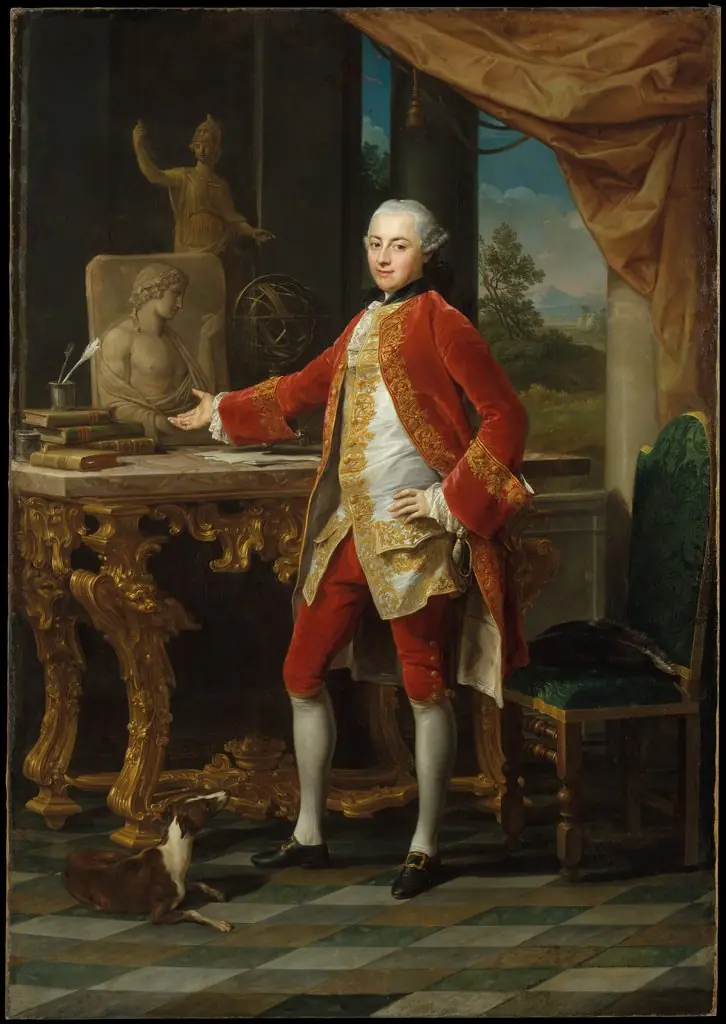
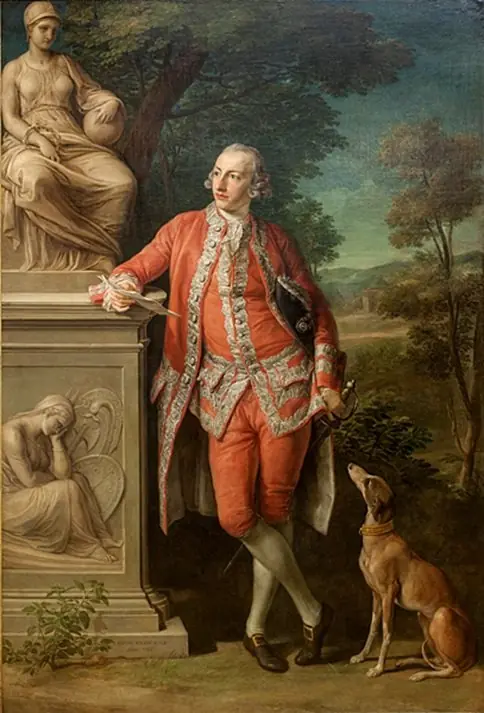
- Elector Frederick Christian of Saxony (1722-1763)
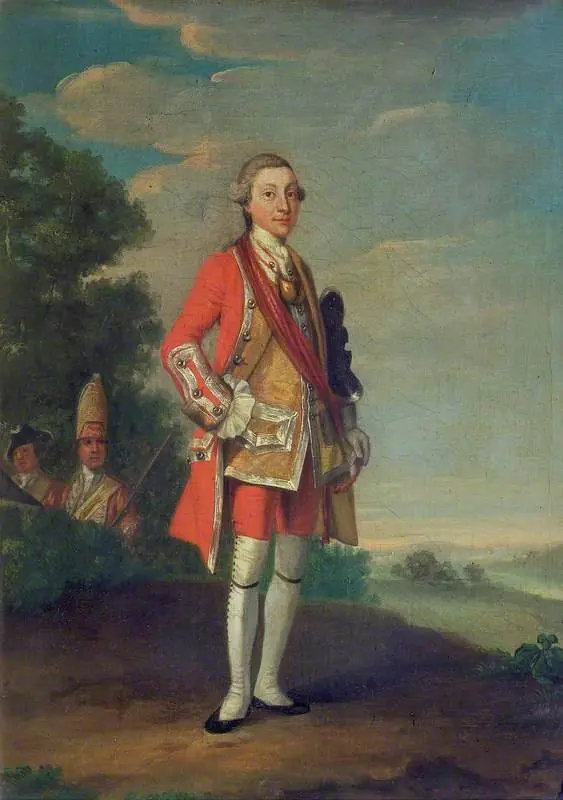 William Augustus (1721–1765), Duke of Cumberland, Son of George II
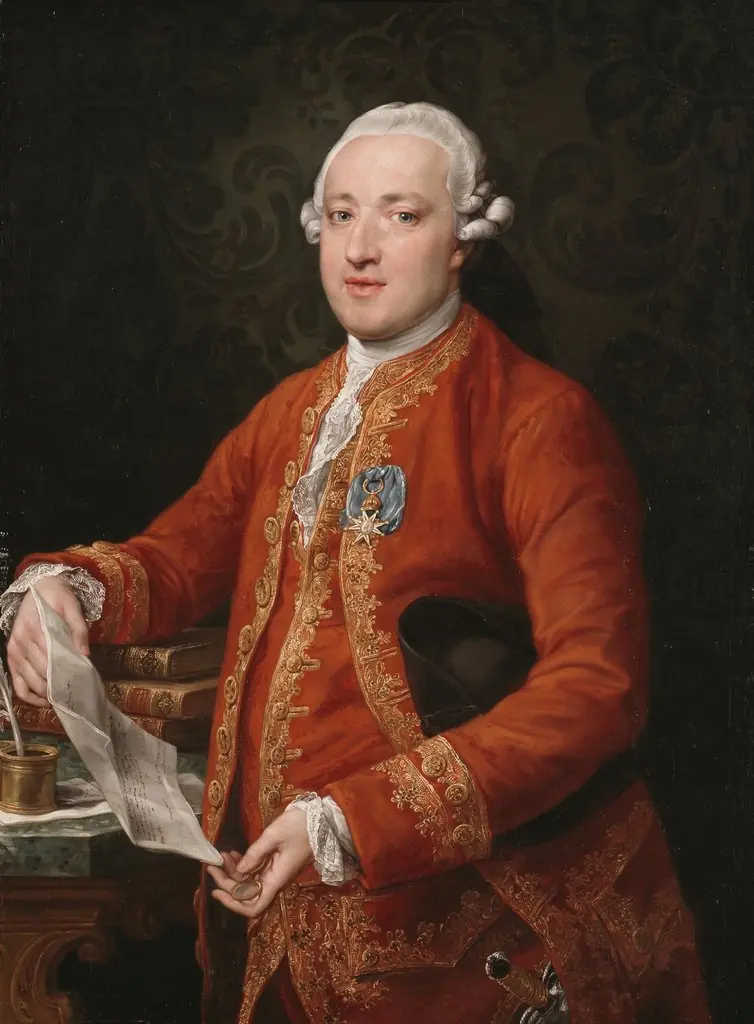 Don José Moñino y Redondo, Conde de Floridablanca
 Don José Moñino y Redondo, Conde de Floridablanca
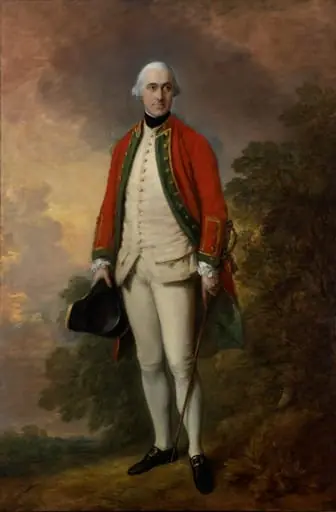 Portrait of George Pitt, First Baron Rivers
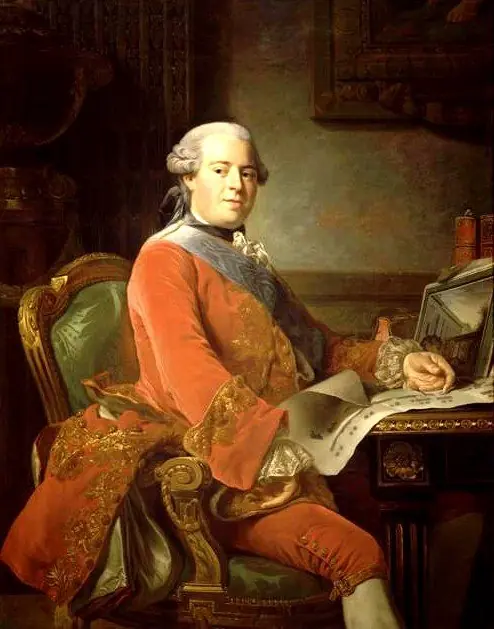 Portrait of Abel-François Poisson, marquis de Marigny
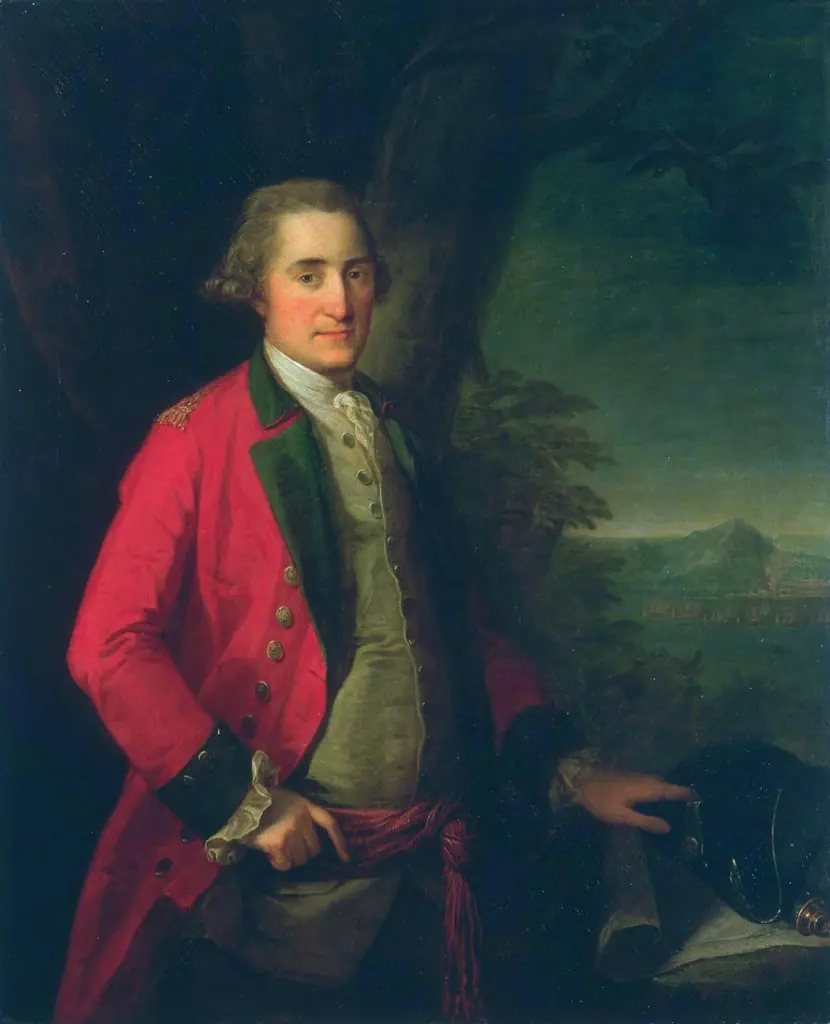 Portrait of Lieutenant General James Cuninghame
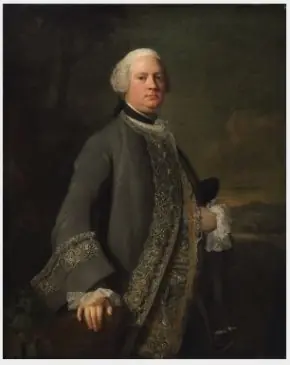 Portrait of Sir John Tyrell, Bt.
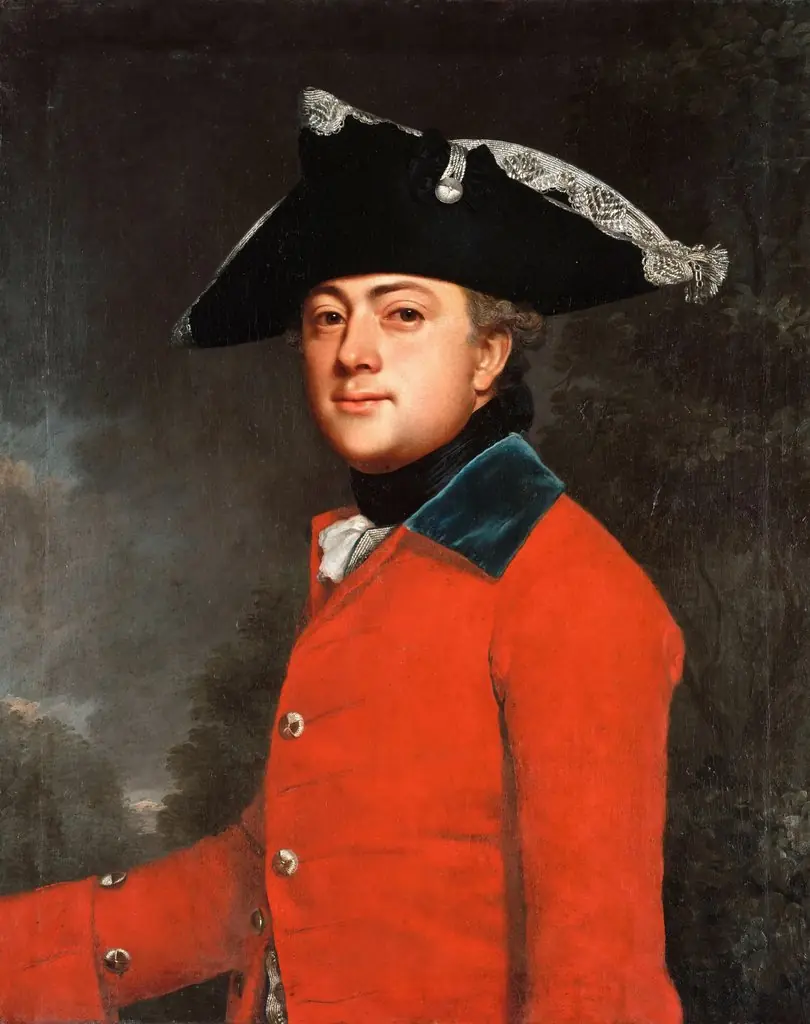 Brigade Major Georg Heinrich Beerhorst
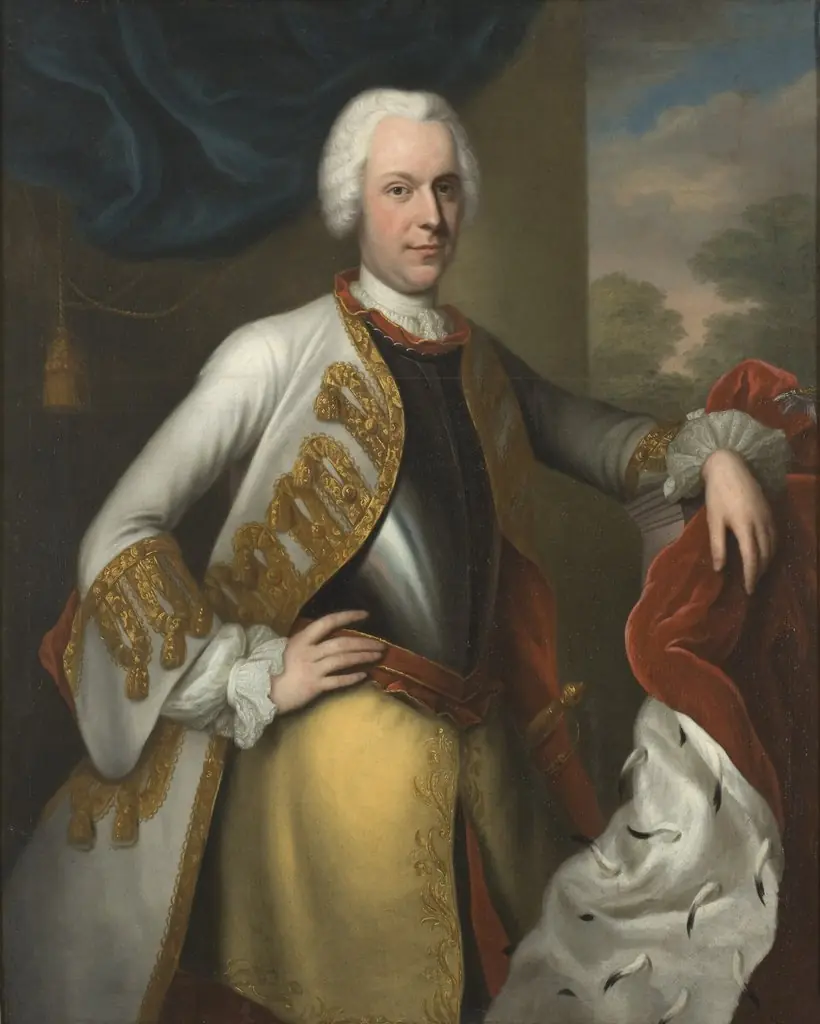 Adolf Fredrik (1710-1771), king of Sweden, duke of Holstein-Gottorp, prince bishop of Lübeck, married to Lovisa Ulrika of Prussia
 Portrait of Nikita Petrovich Panin (1770-1837)