Artwork
The Fall of Simon Magus
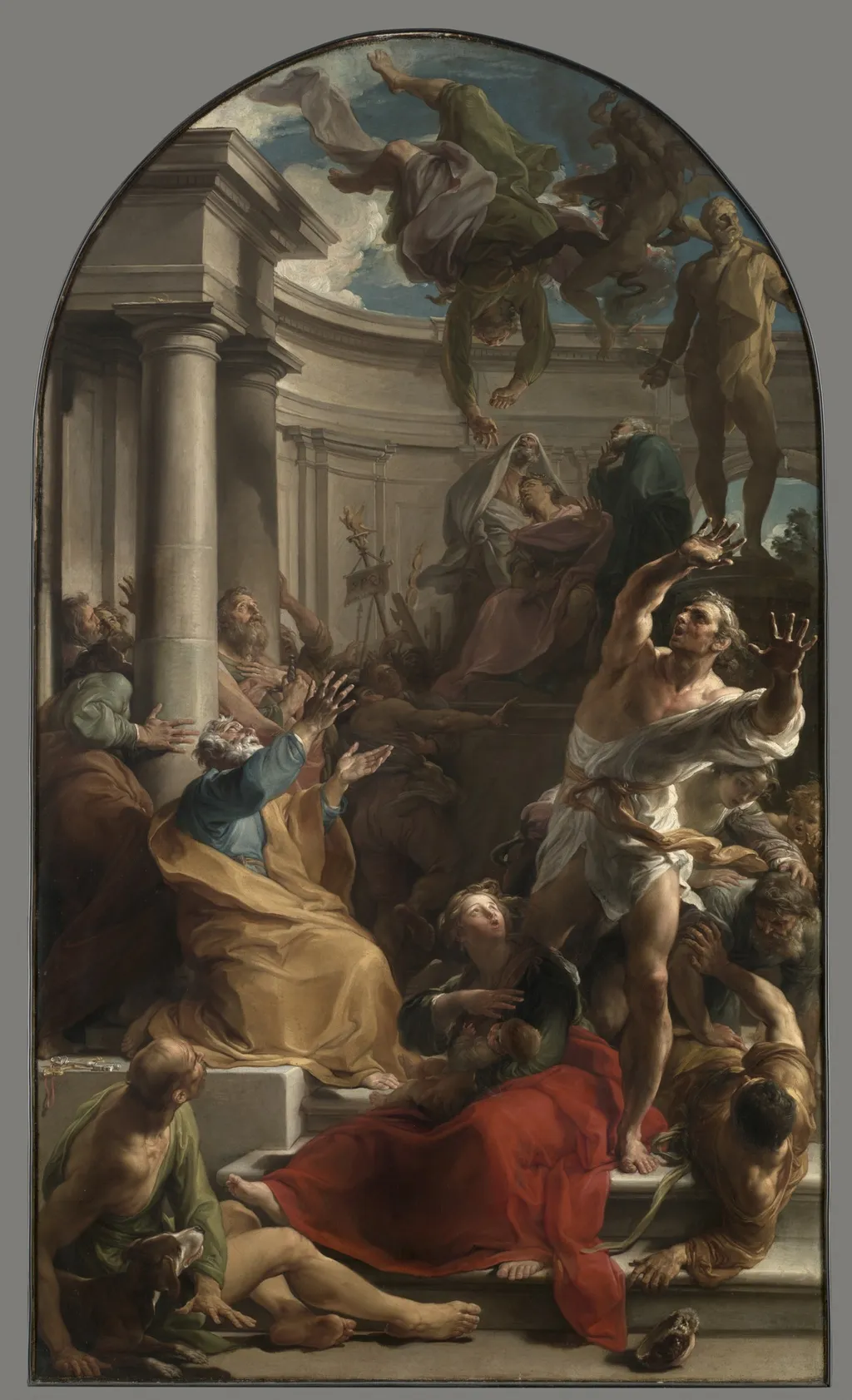
The Fall of Simon Magus is an oil painting by the Rococo painting artist Pompeo Batoni. It dates from 1745 and is held in the collection of the Cleveland Museum of Art.
About this work
Subject & Meaning
The elderly, white‑haired Peter in a blue tunic kneels with his keys at his feet, and the youthful Paul in a green tunic grips his sword and looks upward.
The painting depicts the apocryphal episode in which Simon Magus attempts to amaze the apostles Peter and Paul by levitating before Emperor Nero; Peter’s prayer causes the demons sustaining Simon to release him, and the sorcerer plummets to his death. Simon is shown in mid‑fall, his fur‑cap already on the ground while his attendant demons scatter to the right. Nero sits on his throne surrounded by Roman military symbols, a statue of Hercules, legionary standards, fasces and a SPQR banner, while the crowd reacts with confusion or fear.
The elderly, white‑haired Peter in a blue tunic kneels with his keys at his feet, and the youthful Paul in a green tunic grips his sword and looks upward. The scene was chosen for St. Peter’s Basilica as a visual affirmation of papal authority over pagan and heretical powers.
Technique & Style
Executed in 1745, this work is an oil painting on canvas measuring 183 by 108 centimeters. Stylistically, it exemplifies the late Baroque period, featuring a dynamic composition where the central figure of Simon Magus is captured in mid-free-fall. The arrangement includes dispersing demons to the right and a chaotic assembly of onlookers, including Emperor Nero flanked by classical symbols such as a statue of Hercules and legionary standards.
The artist rendered the apostles with distinct iconographic attributes: Saint Peter appears as an elder in a blue tunic with keys, while Saint Paul is depicted as a younger figure in green holding a sword. Batoni adapted this scene from an earlier model by Francesco Vanni, enlarging the figures to create a grander effect suitable for its original intended purpose as a mosaic altarpiece design.
History & Provenance
The Fall of Simon Magus was painted by Pompeo Batoni in 1745 as an oil-on-canvas work intended to serve as the design for a mosaic altarpiece in St. Peter's Basilica. Batoni based his composition on an earlier model by Francesco Vanni, enlarging the figures to give them a more monumental presence.
The original painting was displayed in the church of Santa Maria degli Angeli in Rome, while the version now held by the Cleveland Museum of Art is considered a studio copy of that work. The image was ultimately rejected for execution as a mosaic, and it has been noted that Anton Raphael Mengs was later commissioned to produce a replacement design, though he changed the subject.
Context
Pompeo Batoni's The Fall of Simon Magus (1745) exemplifies the late Baroque tradition, adapting a narrative from the apocryphal Acts of Peter and Paul to assert papal authority over pagan sorcery. The work was originally conceived as a design for a mosaic altarpiece in St. Peter's Basilica, intended to dramatize the First Pope's triumph over nonconforming ideas. Although the specific design was ultimately rejected for mosaic reproduction, the painting reflects Batoni's engagement with established compositional models, specifically altering an earlier scene by Francesco Vanni to present grander figures.
The piece is historically linked to the artistic milieu of Rome, where it was displayed in the church of Santa Maria degli Angeli before a version entered the collection of the Cleveland Museum of Art. Contemporary accounts, such as Onofrio Boni's elegy, note the rejection of the work for the basilica, while the subject matter allowed Batoni to explore the dramatic potential of the moment Simon Magus falls after failing to levitate.
Overview
Pompeo Batoni’s late‑Baroque composition entitled The Fall of Simon Magus depicts a tumultuous moment drawn from the Acts of the Apostles. A crowd of figures reaches upward toward a levitating, half‑naked man, while a kneeling figure in a yellow robe anchors the foreground. Architectural columns frame the scene, and a dramatic sky looms behind, all rendered in the heightened chiaroscuro typical of the period.
Own this work as a print
Artist & collection
Artist
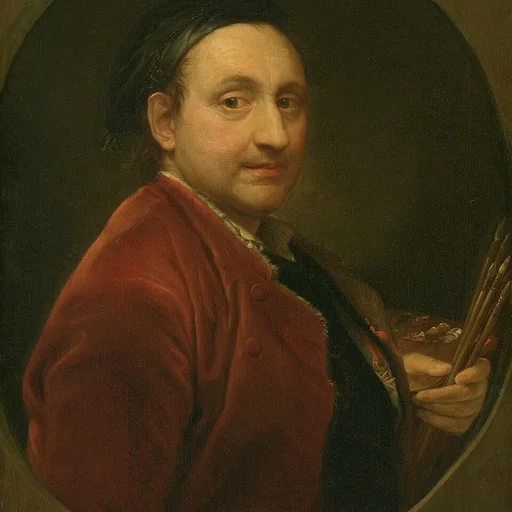
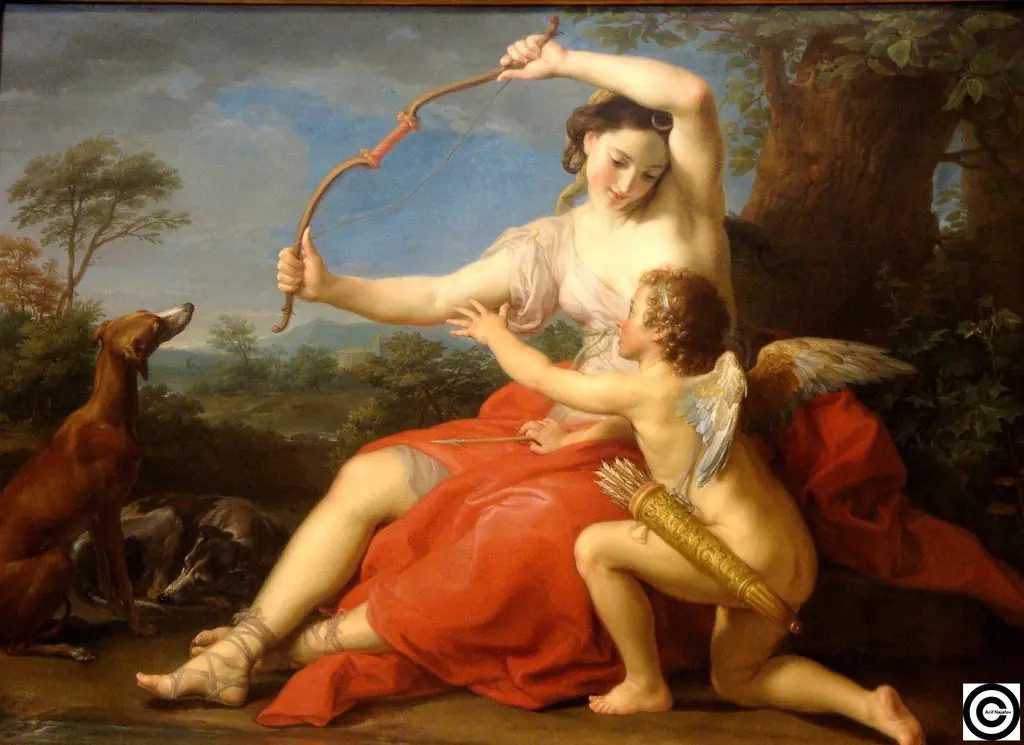
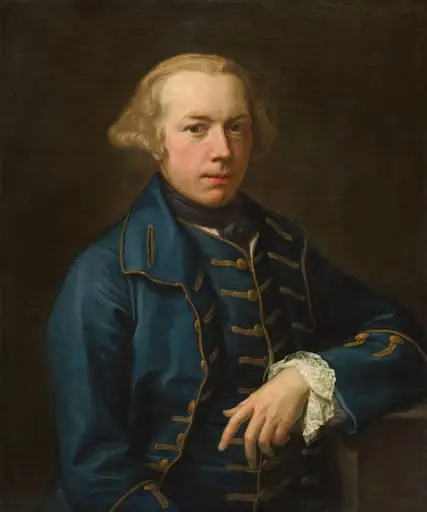
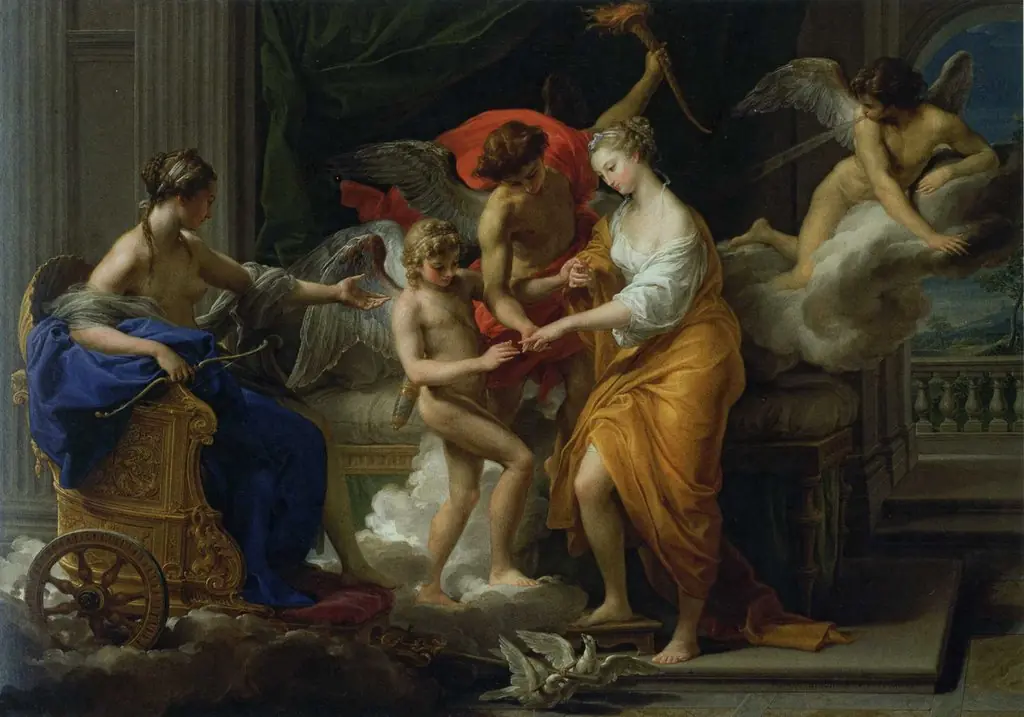
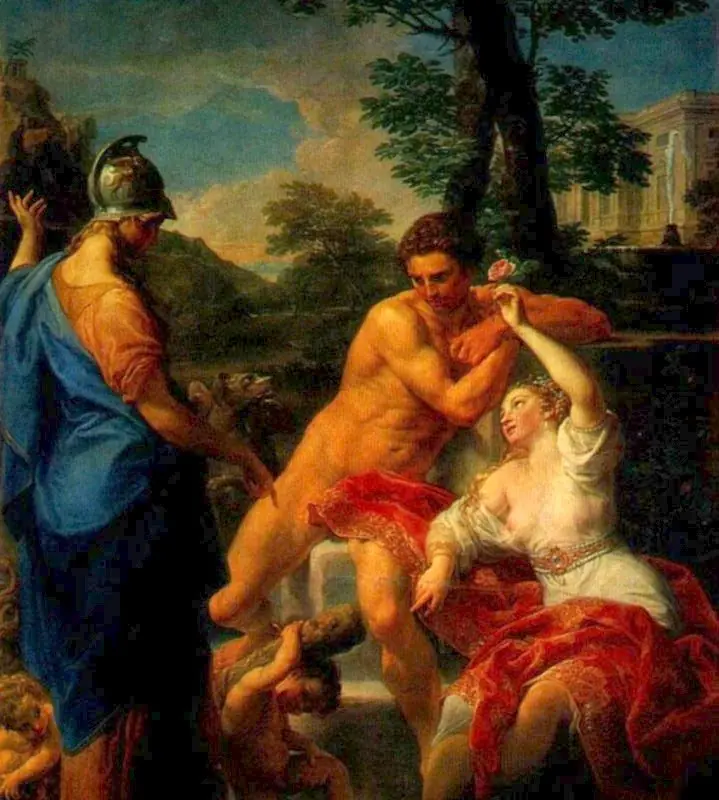
Pompeo Girolamo Batoni (25 January 1708 – 4 February 1787) was an Italian painter who displayed a solid technical knowledge in his portrait work and in his numerous allegorical and mythological pictures.

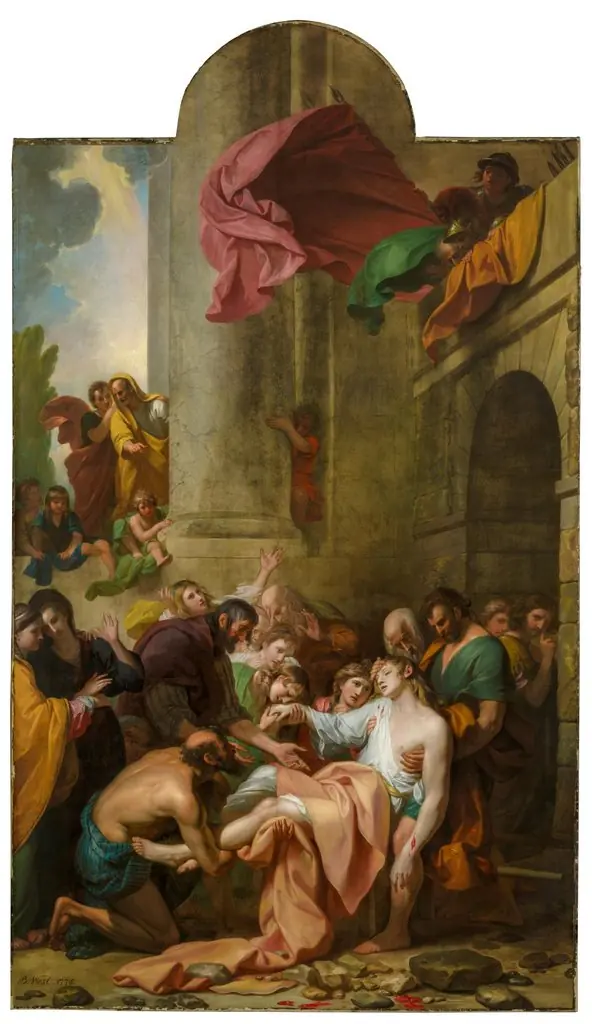 Devout Men Taking the Body of Saint Stephen
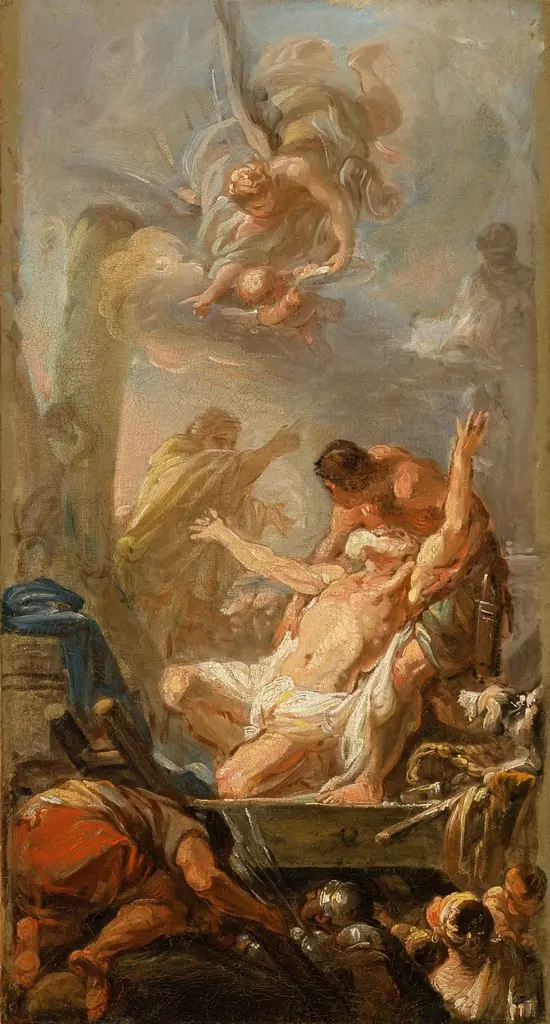 Scene from the Martyrdom of St. Andrew
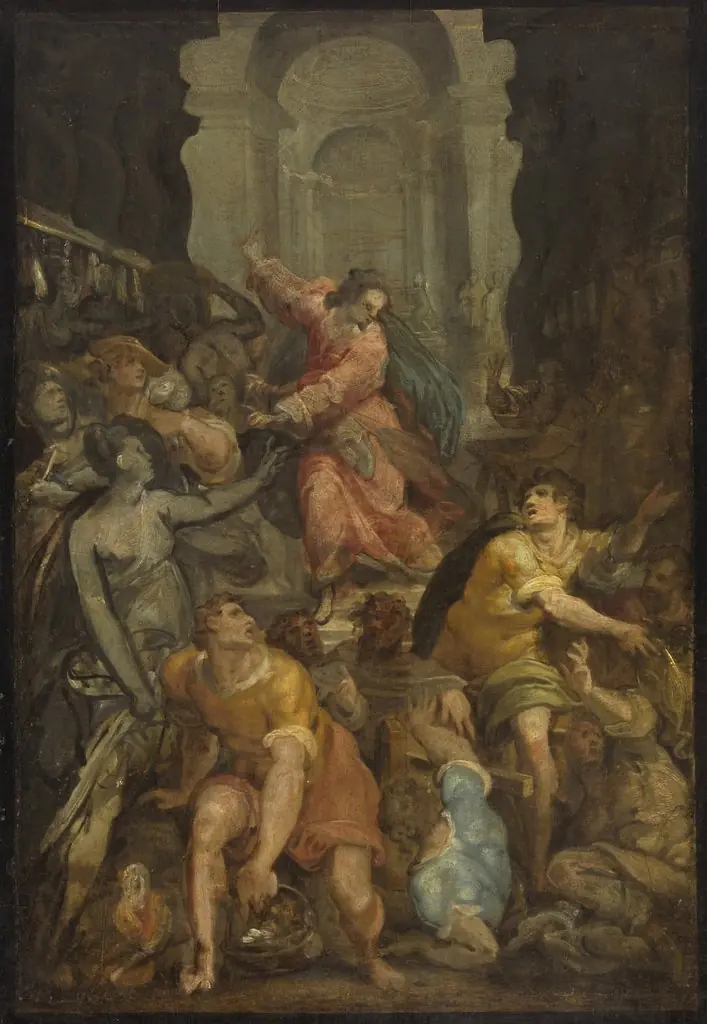 Christus vertreibt die Händler aus dem Tempel (?)
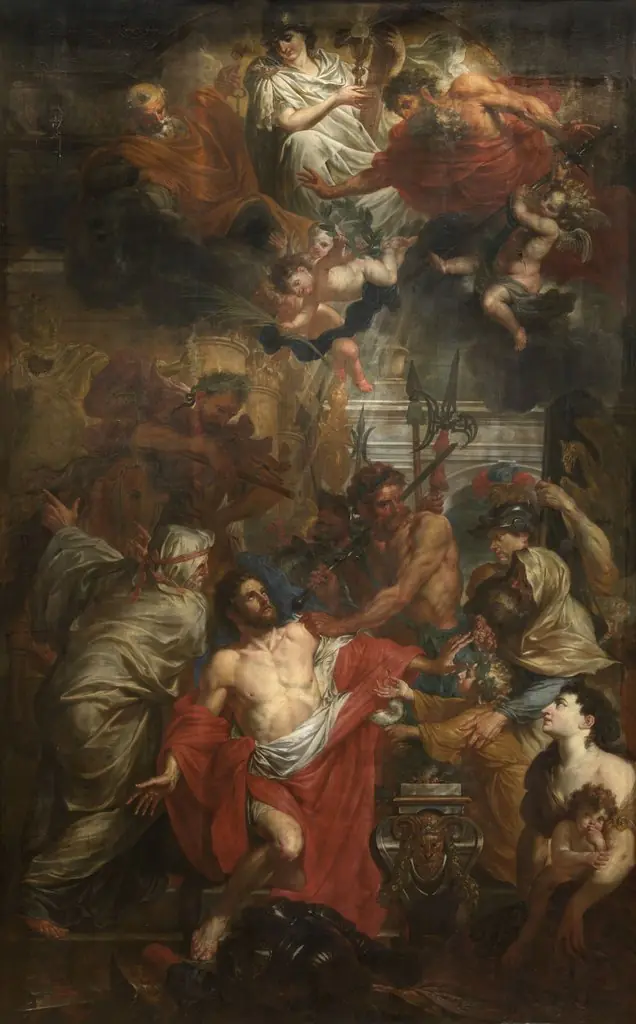 The Martyrdom of Saint George
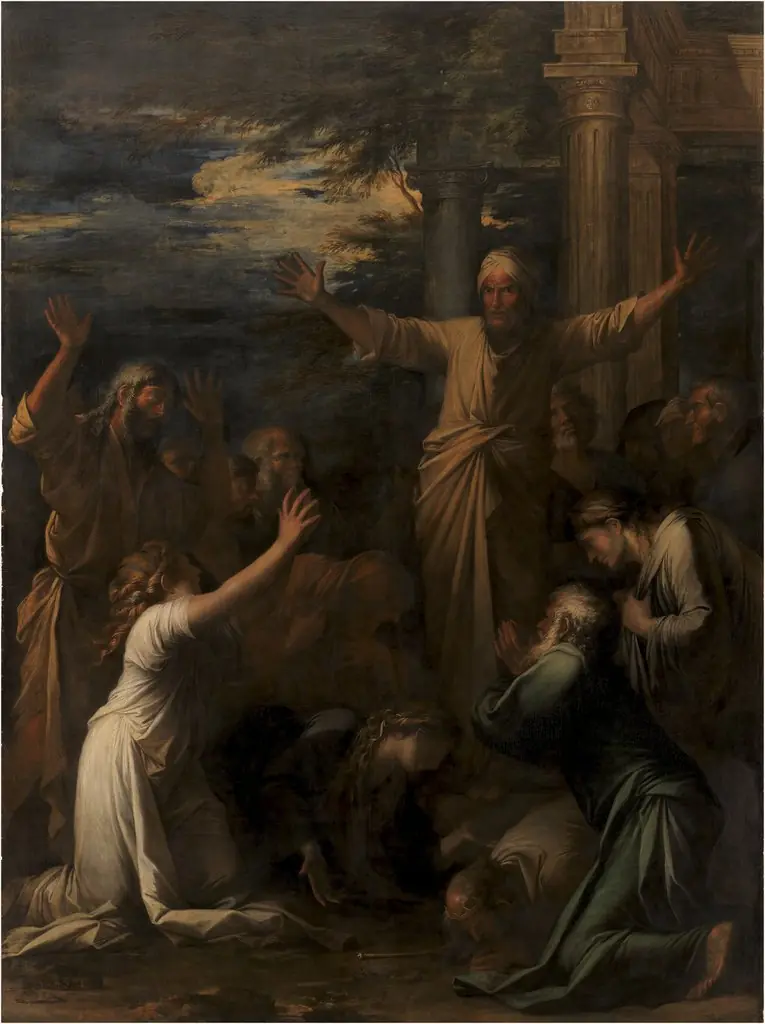 Jonah Preaching to the People of Niniveh
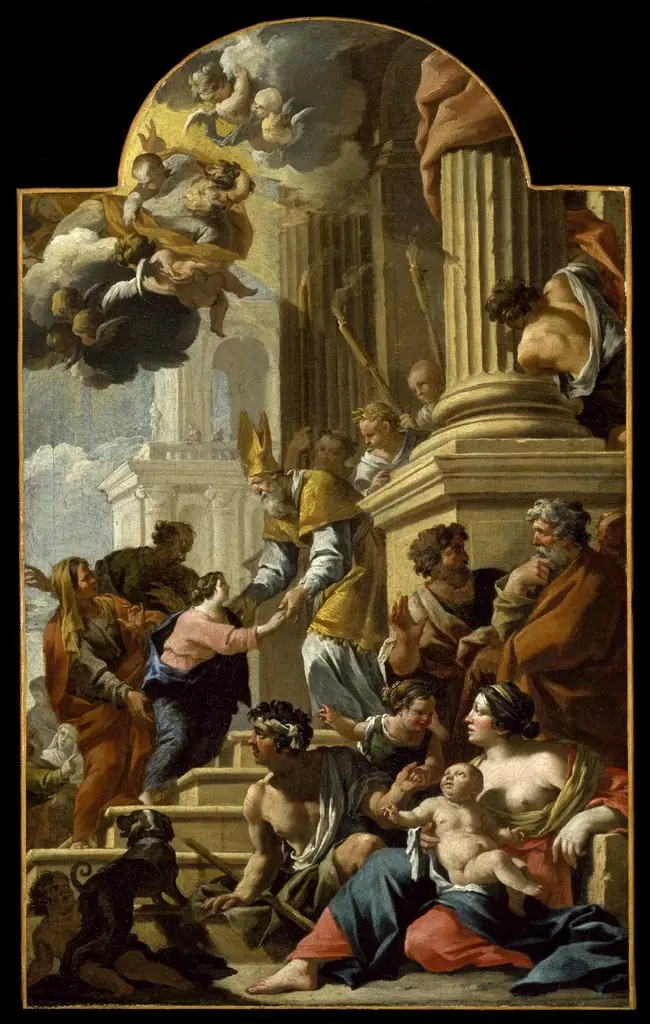 The Presentation of the Virgin in the Temple
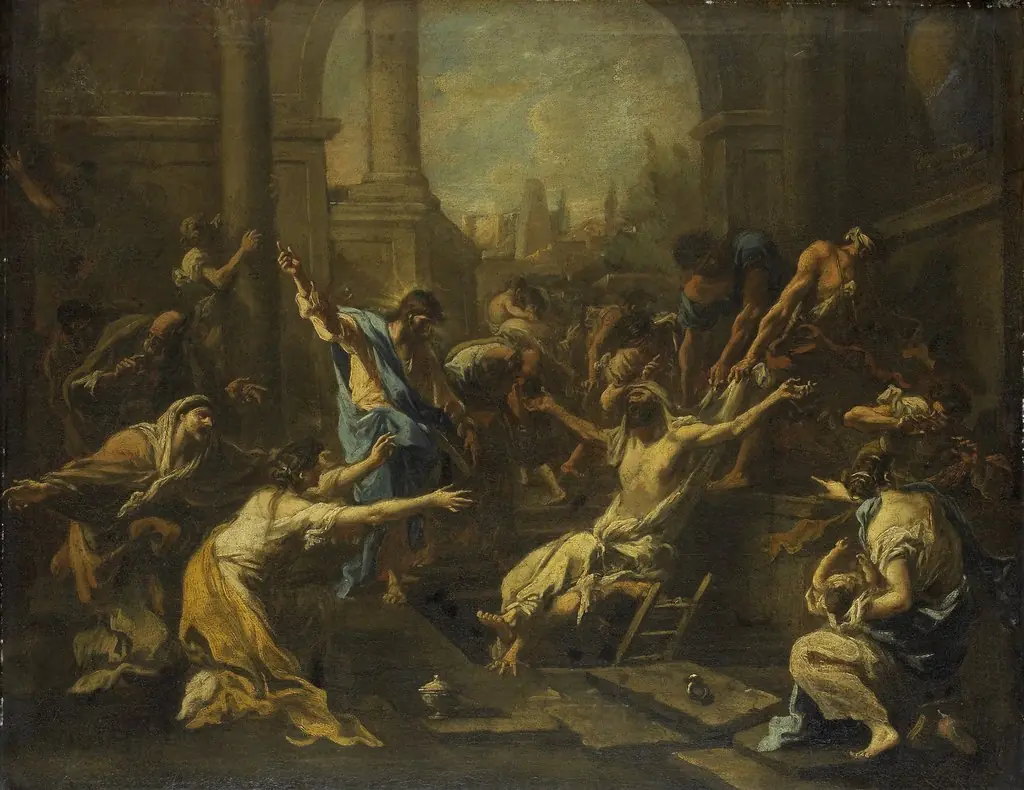 The Raising of Lazarus
 The Ascension
 Saints Ippolito, Taurino, and Ercolano
 Scenes from the Life of Saint Arianus