Artwork
Diana and Cupid
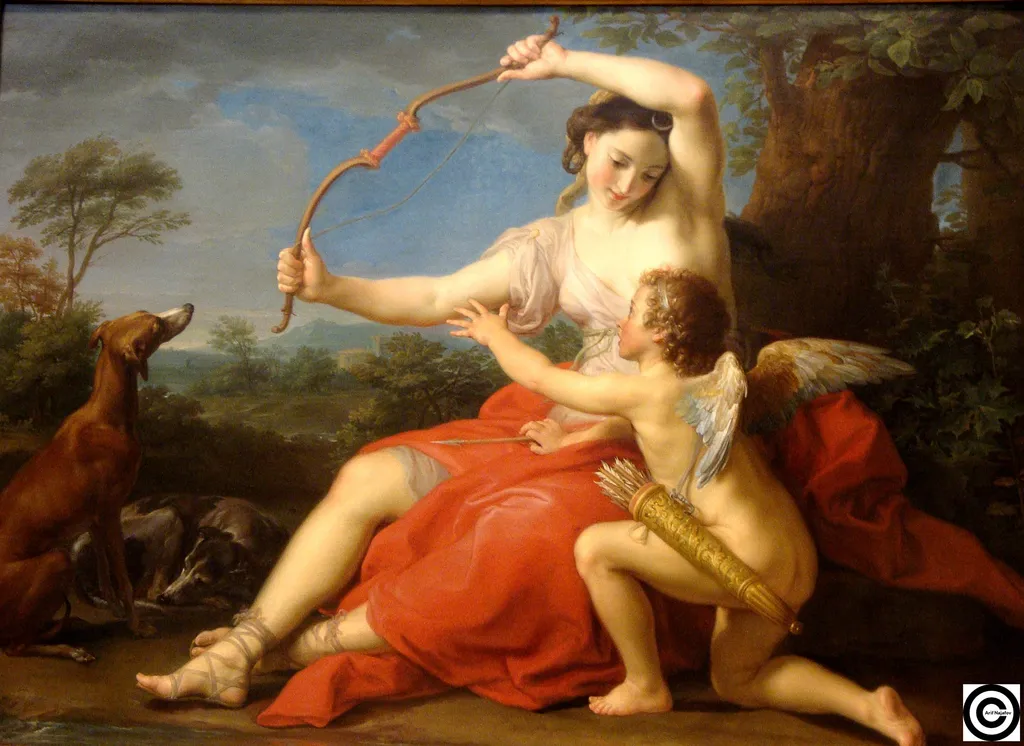
Diana and Cupid is an oil painting by the Rococo painting artist Pompeo Batoni. It dates from 1761 and is held in the collection of the Metropolitan Museum of Art.
About this work
Subject & Meaning
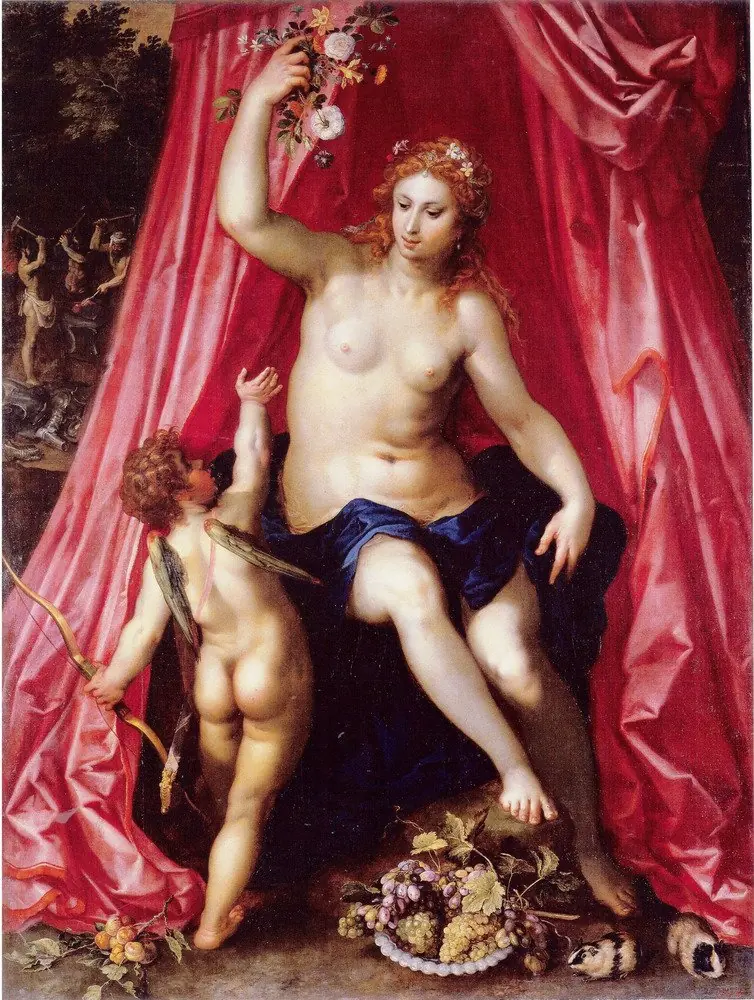
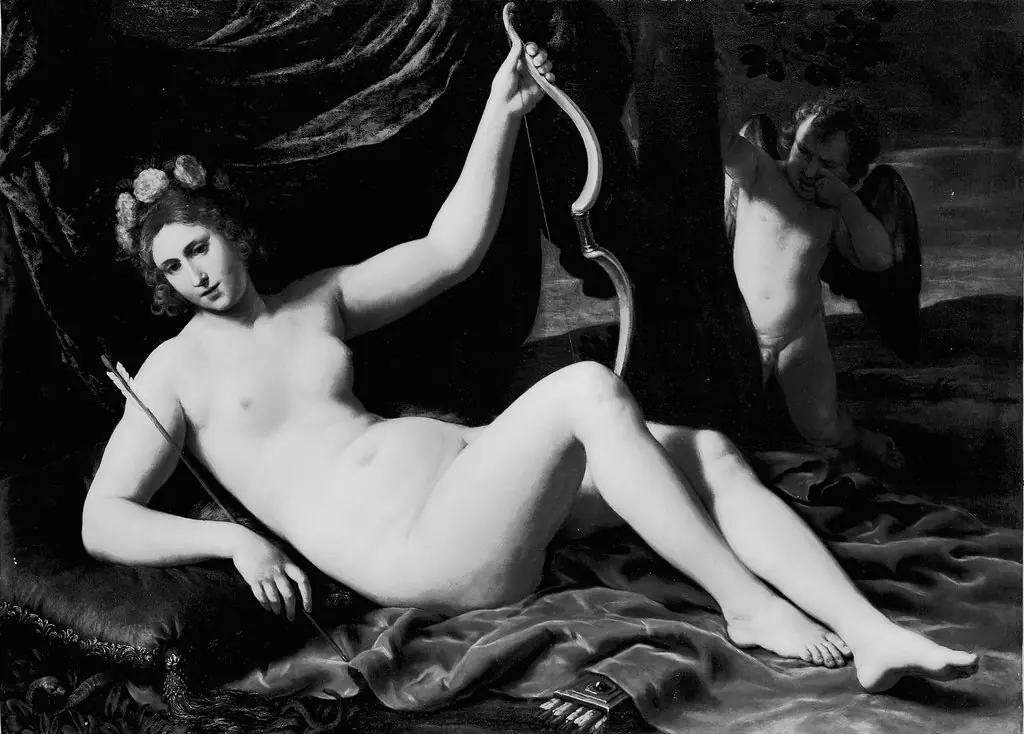
The central narrative shows Diana seizing Cupid's bow, forcing the mischievous archer to rest, an allegory of love's power subdued by the chaste huntress.
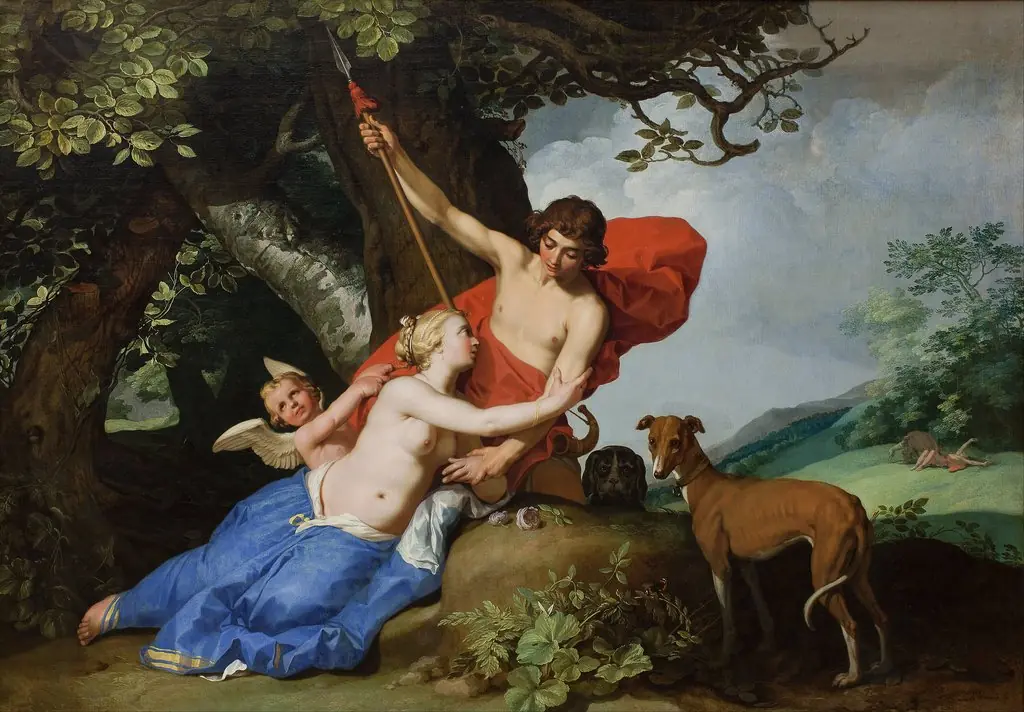
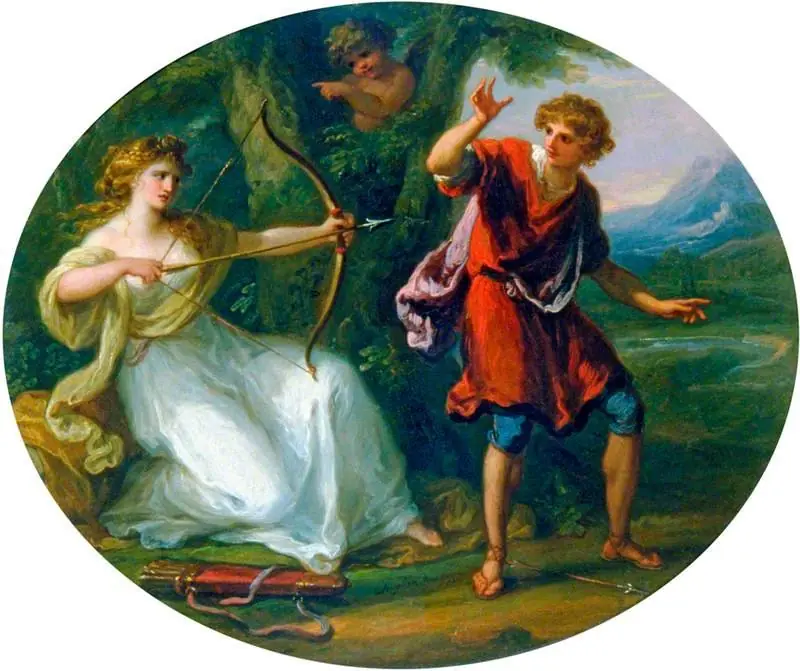
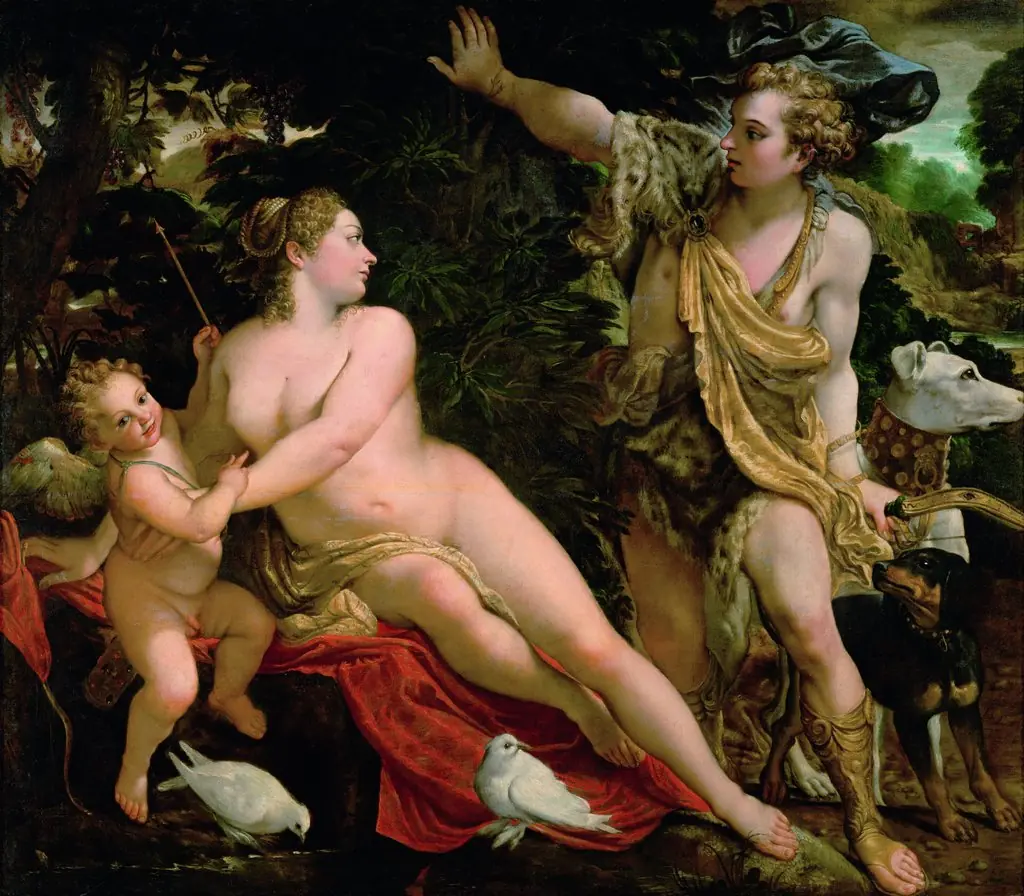
Batoni's composition stages a mythological encounter between Diana, the Roman goddess of the hunt, and Cupid, the god of love. The central narrative shows Diana seizing Cupid's bow, forcing the mischievous archer to rest, an allegory of love's power subdued by the chaste huntress. A dog appears alongside the figures, reinforcing the pastoral, outdoor setting.
The depiction of Diana derives from a sleeping Ariadne statue in the Vatican, which Batoni adapted for his goddess. Commissioned by Sir Humphrey Morice, an animal lover and director of the Bank of England, the painting functions as a personal allegory in which Morice is represented in the guise of the dog, resting in a Roman countryside populated by classical deities. The work also engages with the Neoclassical idiom associated with Anton Raphael Mengs, positioning Batoni within that current of mythological painting.
Technique & Style
Diana and Cupid is executed in oil paint on canvas, a standard medium for Batoni's mythological compositions of the period. The painting measures 124.5 by 172.7 cm, a horizontal format suited to the allegorical encounter between the two figures. Stylistically, the work is associated with the Neoclassical manner of Anton Raphael Mengs, reflecting the mid-eighteenth-century Roman classicism that shaped Batoni's approach to mythological subjects.
The figure of Diana derives from a sleeping statue of Ariadne in the Vatican, indicating Batoni's practice of adapting antique sculptural prototypes into painted form.
History & Provenance
The painting Diana and Cupid was executed by Pompeo Batoni in 1761. The work was commissioned by Sir Humphrey Morice, a prominent merchant and director of the Bank of England, who acquired it directly from the artist on April 1, 1762. The composition's iconography drew from classical sources, notably the sleeping statue of Ariadne in the Vatican, aligning Batoni's work with contemporary Neoclassical trends.
The painting entered the collection of the Metropolitan Museum of Art, where it remains, with dimensions recorded as 124.5 × 172.7 cm.
Context
Pompeo Batoni's 1761 mythological canvas Diana and Cupid, now housed in the Metropolitan Museum of Art, exemplifies the artist's synthesis of Rococo sensibility and emerging Neoclassical formalism. The work was acquired in 1762 by Sir Humphrey Morice, who commissioned an allegorical composition linking Diana's triumph over Cupid to an allegory of rest and canine symbolism. Scholars view the painting as a pivotal example of mid-18th-century mythological portraiture, reflecting Batoni's role in bridging decorative tradition and the stricter classicizing aesthetic that would dominate later European art.
Overview
Diana and Cupid is an oil painting executed by the Italian artist Pompeo Batoni in 1761. The work depicts the Roman goddess Diana, identifiable by her red drapery and the bow she holds, seated in a naturalistic setting. Beside her, the infant Cupid reaches toward her arm, while a dog rests nearby, a traditional attribute of the huntress.
Painted during the height of Batoni's career in Rome, where he was renowned for his Grand Tour portraits and mythological scenes, this piece exemplifies his ability to blend classical subject matter with a refined, elegant style characteristic of mid-18th-century Italian art. The composition balances the figures within a soft, atmospheric landscape, highlighting the interaction between the chaste goddess and the playful deity. Currently held in the collection of the Metropolitan Museum of Art in New York, the painting serves as a significant example of Batoni's mythological output, distinct from his more famous portraiture but demonstrating the same technical mastery and compositional clarity.
Own this work as a print
Artist & collection
Artist
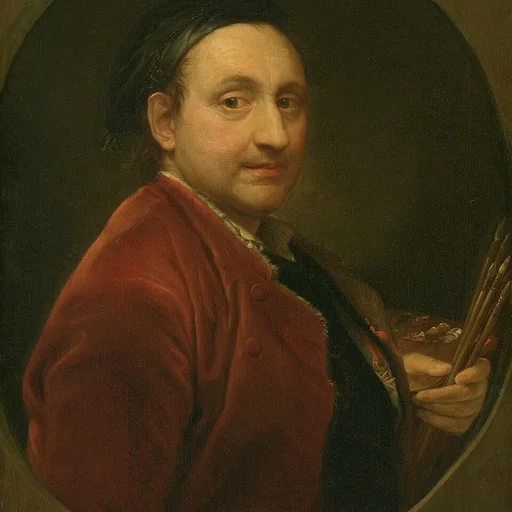
Pompeo Girolamo Batoni (25 January 1708 – 4 February 1787) was an Italian painter who displayed a solid technical knowledge in his portrait work and in his numerous allegorical and mythological pictures.