Artwork
Moschee din Maroc
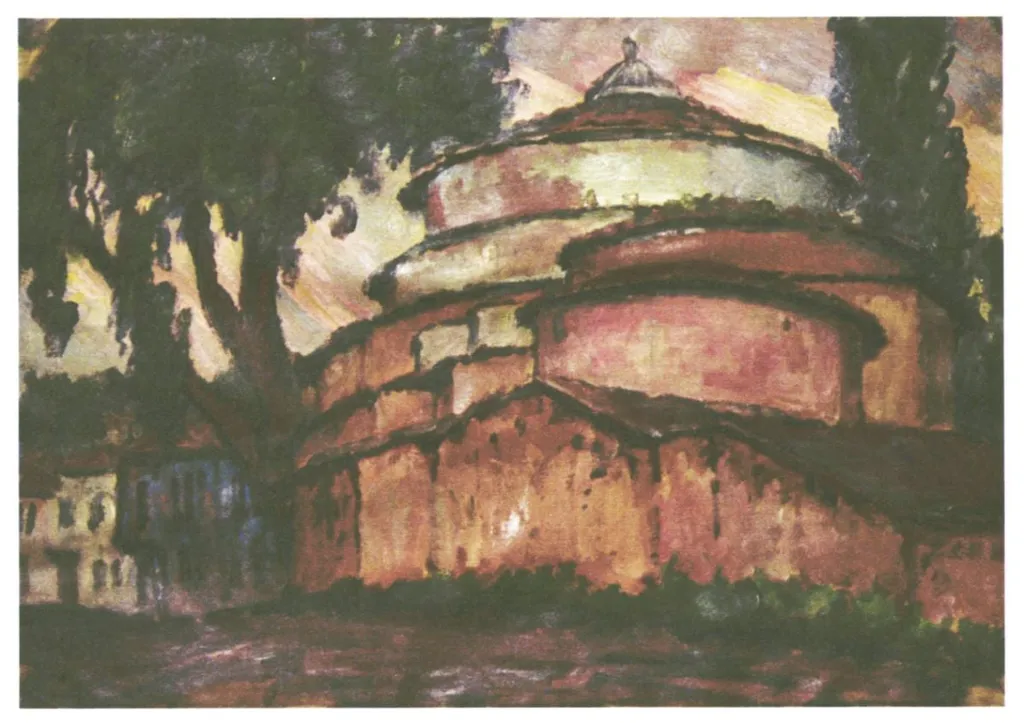
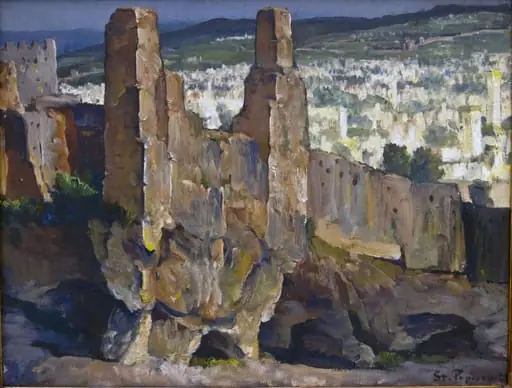
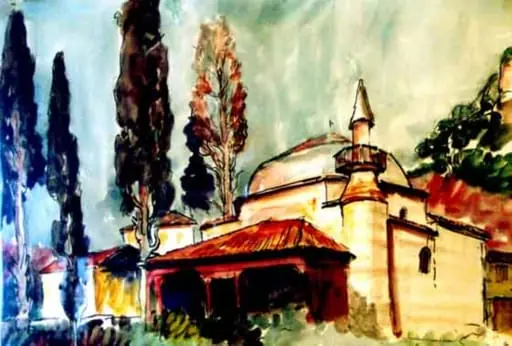
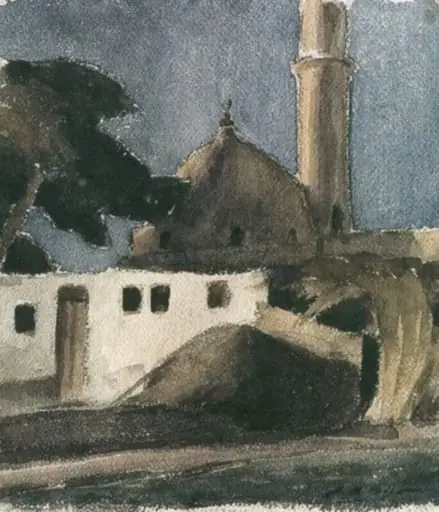
Moschee din Maroc is an unspecified painting by Ștefan Popescu. It is held in the collection of the Visual Art Museum Galați. This painting depicts a North African mosque, rendered with expressive, heavy brushwork.
About this work
Overview
This painting depicts a North African mosque, rendered with expressive, heavy brushwork. The structure features a rounded dome and weathered walls in muted reds and browns, set against a dark, nocturnal sky. Trees on either side frame the composition, drawing attention to the building’s silhouette. The thick application of paint creates a tactile surface, emphasizing texture over precise detail.
Subject & Meaning
The subject is a mosque in Morocco, identified by its architectural form, particularly the dome and arched openings. The worn surfaces and subdued palette suggest age and endurance, evoking a sense of quiet permanence. The absence of figures and the dim lighting shift focus from religious activity to the building’s physical presence as a cultural landmark.
Technique & Style
The artist employs impasto, applying paint thickly to build up the walls and dome, creating a rough, tactile quality. Colors blend unevenly, enhancing the sense of erosion and time. Brushstrokes are deliberate and visible, rejecting smooth realism in favor of emotional resonance. The dark sky contrasts with the warm tones of the structure, heightening its isolation.
History & Provenance
The work originates from a period when European artists were increasingly drawn to North African subjects, often after travel or study in the region. While the exact date and owner history are not documented here, its style aligns with late 19th- to early 20th-century Orientalist painting traditions, where architecture served as a symbol of exoticism and antiquity.
Context
During the colonial era, Moroccan architecture became a frequent subject for Western artists seeking to capture the 'other.' This painting reflects that trend, but avoids overt romanticism. Instead, it focuses on material decay and atmospheric mood, aligning more closely with post-impressionist concerns than with traditional Orientalist spectacle.
Legacy
The painting contributes to a broader artistic dialogue about how non-European architecture was interpreted through Western eyes. Its emphasis on texture and mood over accuracy marks a departure from documentary representation, influencing later artists who valued emotional expression over ethnographic fidelity in depicting foreign landscapes.
Artist & collection
Artist
Ștefan Popescu painted quiet scenes from the 1920s, blending everyday places with soft light.