Artwork
Băile Buziaș
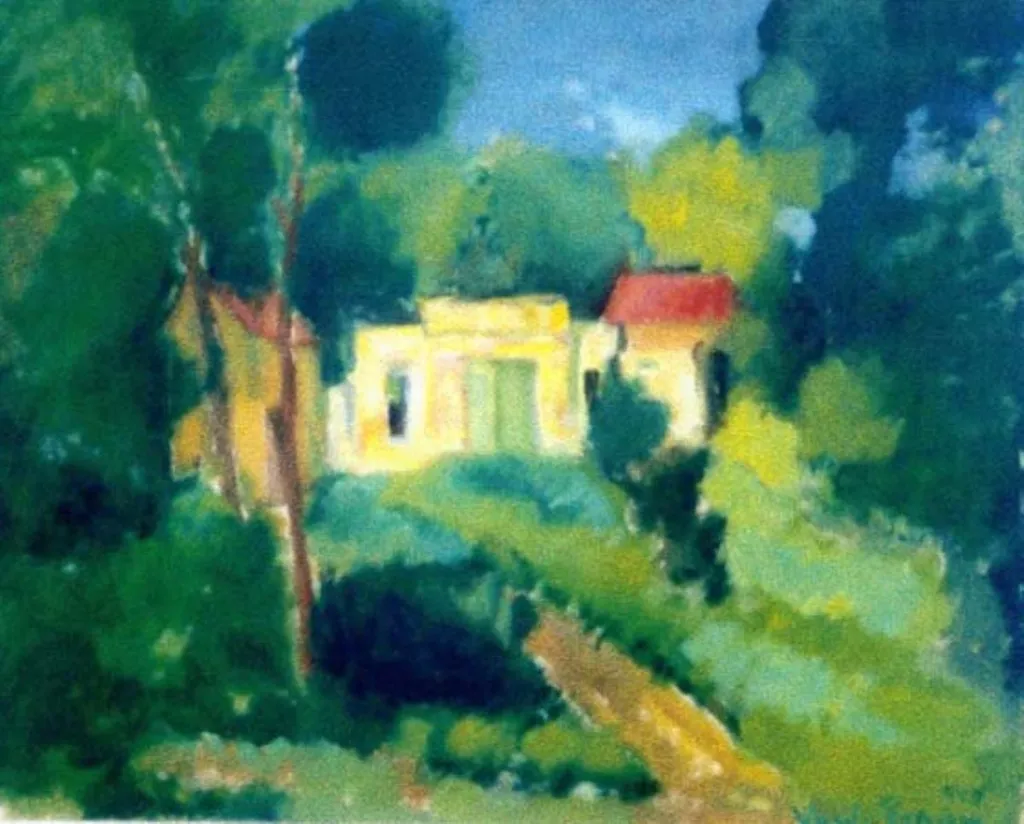
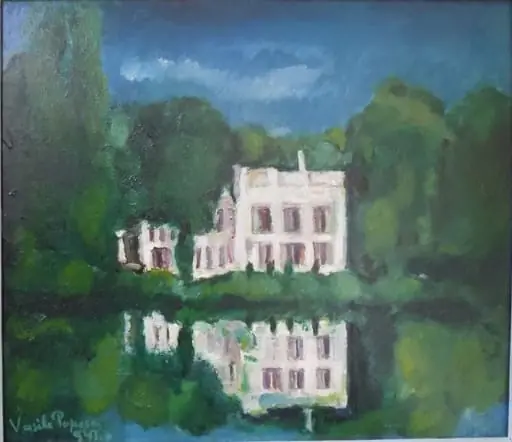
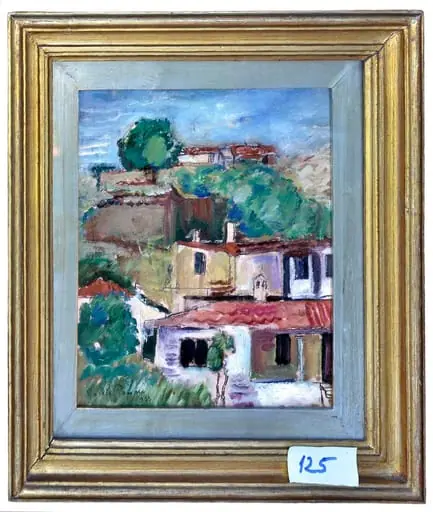
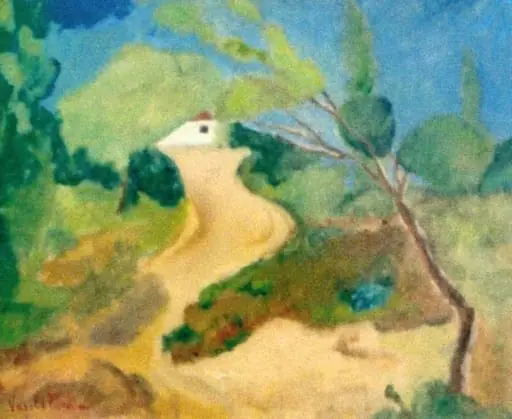
Băile Buziaș is an unspecified painting by the Regionalist artist Vasile Popescu. It dates from 1943 and is held in the collection of the Art Museum of Constanta.
About this work
Overview
The work is part of the Museum of Ethnography’s collection, where it contributes to a broader documentation of regional life.
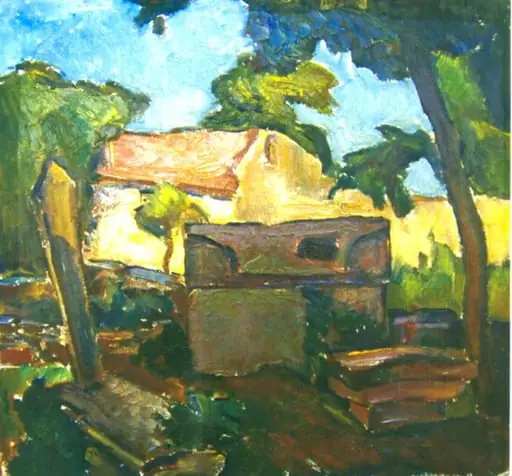
Painted in 1943 by Vasile Popescu, Băile Buziaș captures a quiet rural scene in western Romania. The work is part of the Museum of Ethnography’s collection, where it contributes to a broader documentation of regional life. Its composition centers on a modest dwelling amid natural surroundings, rendered with expressive brushwork and a restrained yet vivid palette that reflects the artist’s engagement with local landscapes.
Subject & Meaning
The painting portrays a single house in Buziaș, a known spa town, set within a dense grove of trees and lush vegetation. The structure, painted in yellow and white with a red roof, stands as a quiet anchor in the scene. Rather than depicting activity or human presence, the work conveys stillness and harmony between architecture and nature, suggesting a contemplative relationship with place rather than narrative storytelling.
Technique & Style
Popescu employs bold, directional brushstrokes to define foliage and architectural forms, lending the scene a dynamic rhythm. Color is applied with clarity, blue skies, white walls, and red tiles, creating visual contrast without saturation. Subtle chiaroscuro models the house and trees, suggesting volume and spatial depth.
The technique avoids academic refinement, favoring an intuitive, almost tactile handling of paint that emphasizes texture over detail.
History & Provenance
Created during World War II, the painting was acquired by the Museum of Ethnography shortly after its completion. Its preservation within this institution reflects an early 20th-century effort to document vernacular architecture and regional identity through art. No significant changes in ownership are recorded, and the work has remained in the museum’s permanent collection since the 1940s.
Context
Băile Buziaș emerges from a period when Romanian artists increasingly turned to local landscapes and folk environments as subjects, distancing themselves from urban modernism. Popescu’s focus on a provincial spa town aligns with broader cultural movements seeking to affirm national identity through depictions of everyday rural life, even amid political upheaval.
Legacy
Though not widely exhibited beyond institutional settings, Băile Buziaș remains a representative example of mid-century Romanian landscape painting. Its quiet intensity and attention to local detail have influenced later artists interested in regional authenticity. The work continues to serve as a reference point in studies of Romanian visual culture during the 1940s.
Artist & collection
Artist
Vasile Popescu was a Romanian basketball player who competed in the 1952 Summer Olympics.