Artwork
Stânjenul de lemne
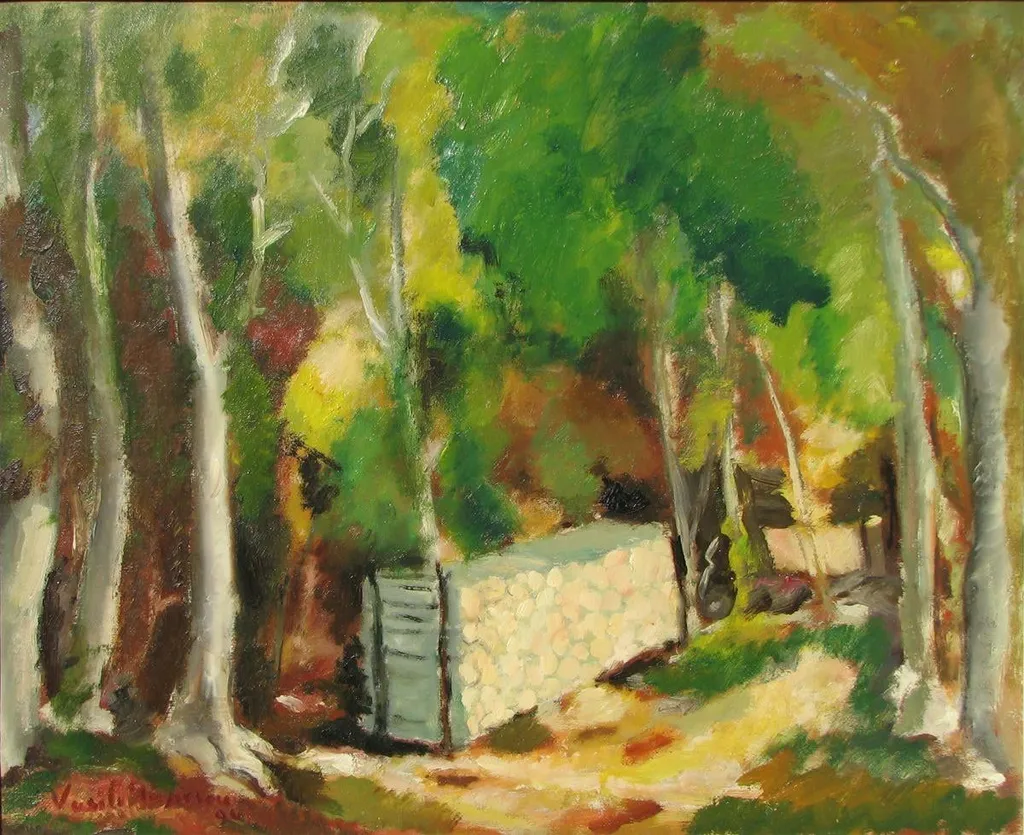
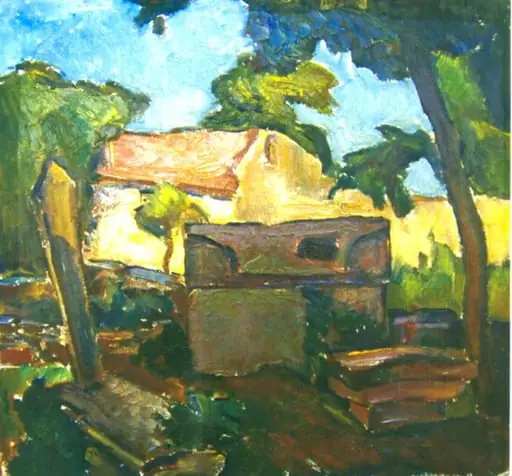
Stânjenul de lemne is a print by Vasile Popescu. It dates from 1974 and is held in the collection of the Brukenthal National Museum.
About this work
Overview
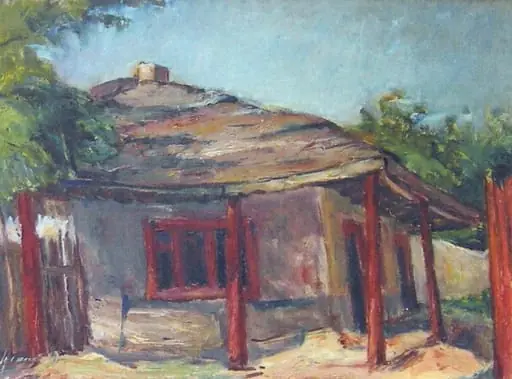
The composition draws attention to a modest wooden structure partially obscured by foliage, suggesting human presence within an untamed natural setting.
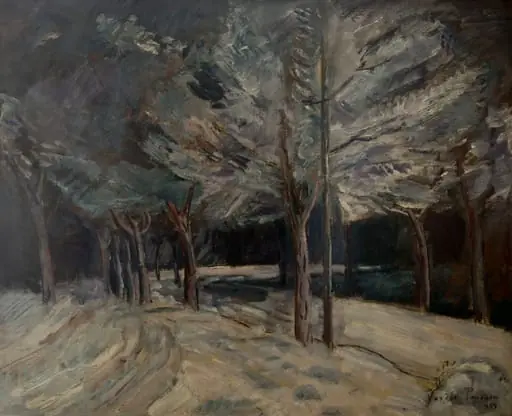
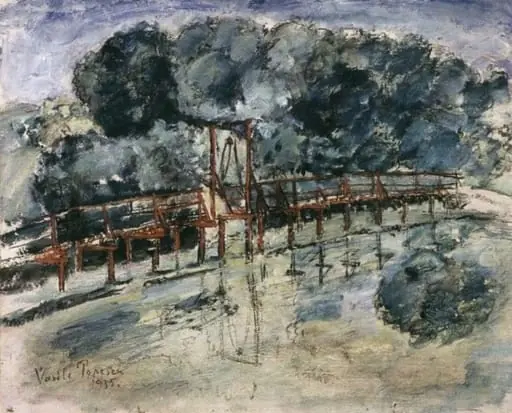
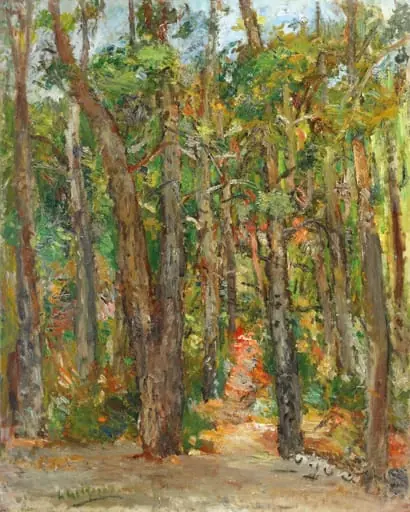
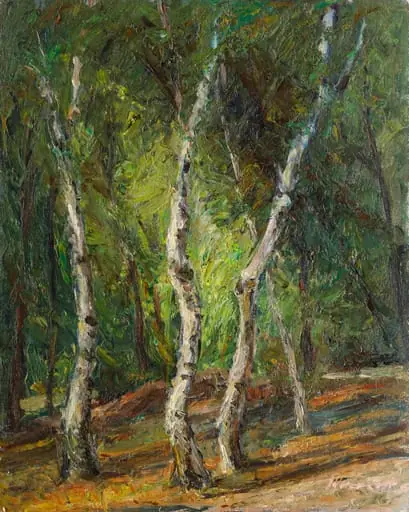
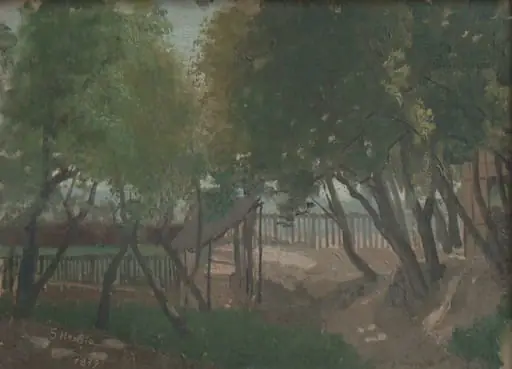
Stânjenul de lemne, dated around 1974, is a landscape painting by Romanian artist Vasile Popescu. It depicts a quiet, enclosed forest path dominated by slender, closely spaced trees. The composition draws attention to a modest wooden structure partially obscured by foliage, suggesting human presence within an untamed natural setting. The work avoids idealization, favoring a raw, immediate impression of the environment.
Subject & Meaning
The painting centers on a solitary wooden structure nestled in a dense woodland, its function ambiguous, perhaps a boundary marker, a shelter, or a forgotten tool shed. The path leading toward it invites contemplation, while the enclosing trees create a sense of seclusion. The scene evokes solitude and quiet labor, reflecting a rural Romanian context where nature and human intervention coexist without grandeur.
Technique & Style
Popescu employs thick, uneven brushstrokes to build texture across the canvas, a technique akin to impasto. The paint is applied with deliberate irregularity, emphasizing the roughness of bark, soil, and foliage. Colors are muted, shades of olive, umber, and charcoal, enhancing the somber atmosphere.
The lack of smooth blending gives the work a provisional quality, as if captured in a single, urgent moment of observation.
History & Provenance
Created during the later years of communist Romania, the painting emerged from a period when artistic expression was often constrained. Popescu, working outside official stylistic mandates, focused on intimate, personal landscapes. The work’s survival and recognition suggest it was privately held or exhibited in non-institutional spaces, resisting the dominant aesthetic norms of the time.
Context
In 1970s Romania, many artists turned to nature as a refuge from political pressure. Popescu’s focus on modest, unremarkable woodland scenes aligned with this trend, offering a quiet alternative to state-sanctioned heroic or industrial themes. His work resonates with a broader Eastern European tradition of lyrical realism, where the ordinary landscape becomes a vessel for introspection.
Legacy
Stânjenul de lemne contributes to a quieter strand of Romanian modernism that values emotional sincerity over formal polish. Though not widely exhibited during its time, it has gained recognition among scholars for its unembellished portrayal of rural life. The painting’s enduring relevance lies in its restraint, offering no grand narrative, only a persistent, humble presence in the forest.
Artist & collection
Artist
Vasile Popescu was a Romanian basketball player who competed in the 1952 Summer Olympics.