Artwork
Turcoaice
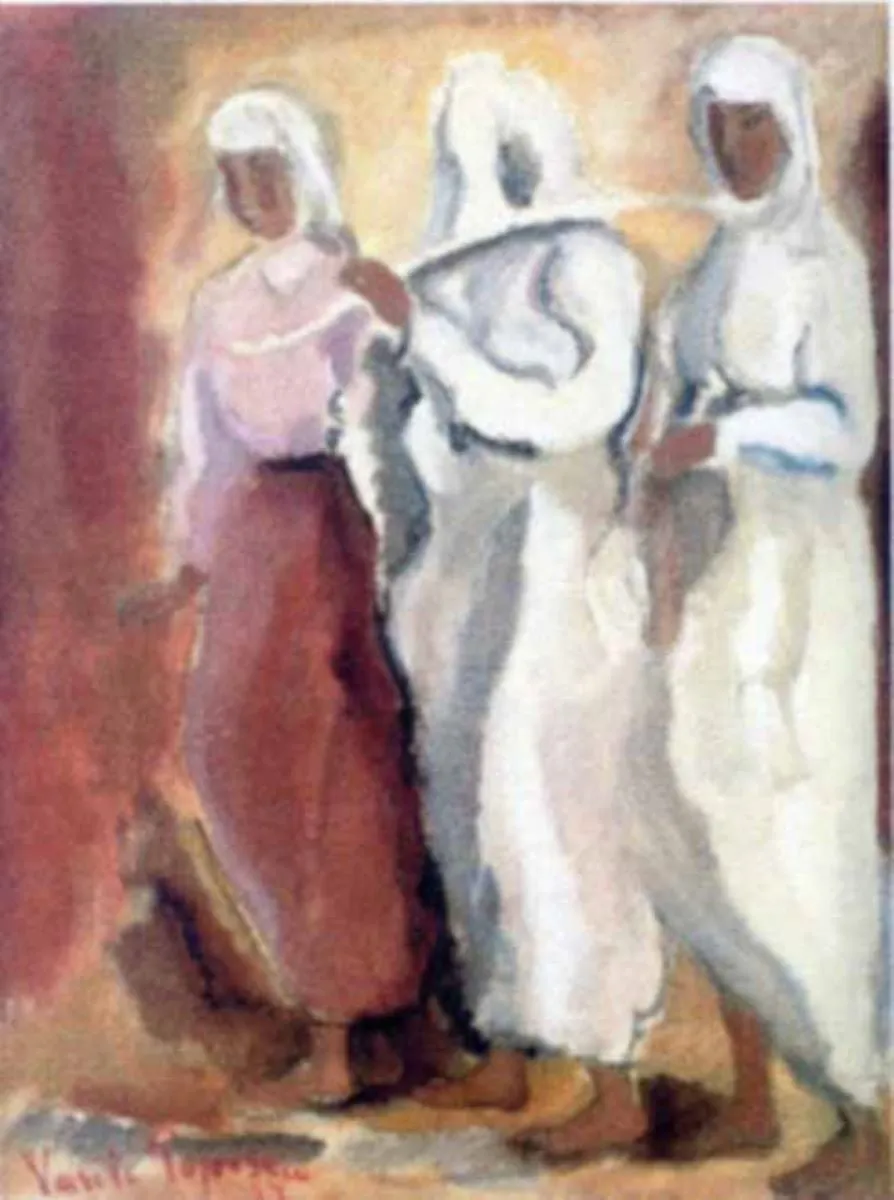
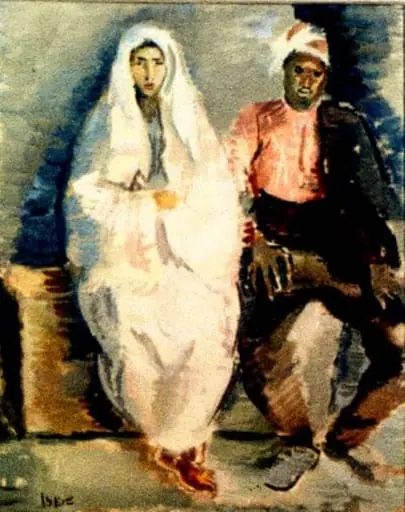
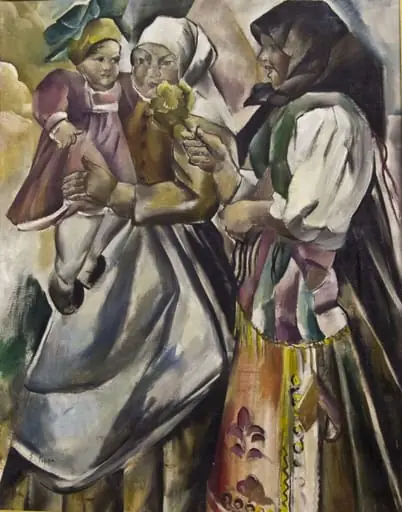
Turcoaice is an unspecified painting by the Social Realist artist Vasile Popescu. It dates from 1937 and is held in the collection of the Art Museum of Constanta.
About this work
Overview
The work resides in the Museum of Ethnography, where it contributes to documentation of regional attire and daily life in early 20th-century rural Romania.
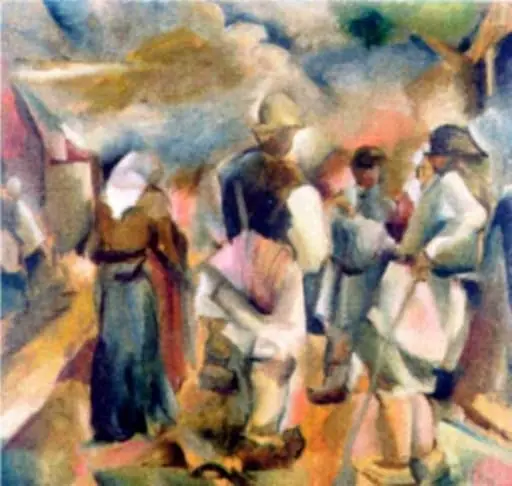
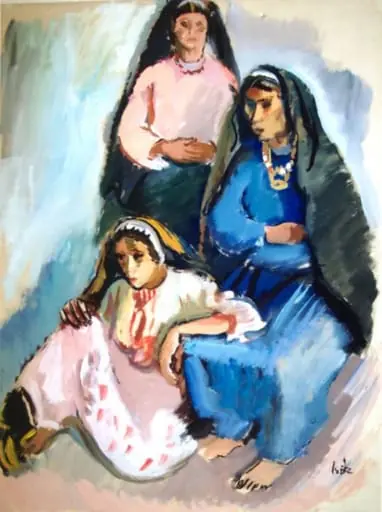
Turcoaice, painted in 1937 by Romanian artist Vasile Popescu, is a genre scene depicting two women in traditional dress. The work resides in the Museum of Ethnography, where it contributes to documentation of regional attire and daily life in early 20th-century rural Romania. Its unidealized portrayal and tactile brushwork distinguish it from formal portraiture, emphasizing authenticity over ornamentation.
Subject & Meaning
The two figures, dressed in distinct yet complementary garments, appear engaged in a quiet, unspoken ritual. The red skirt and white headscarf of one woman, paired with the folded cloth, suggest domestic or ceremonial activity. The other, in white with a blue sash, may represent a counterpart in a shared cultural practice.
Their stillness and direct presence evoke continuity in rural customs, without narrative climax or symbolism beyond the everyday.
Technique & Style
Popescu employed thick, visible brushstrokes to build form and texture, a method aligned with impasto. The paint is applied with deliberate weight, especially in the folds of fabric and the contours of the figures, creating a tactile surface that echoes the materiality of the clothing depicted. The background, rendered in muted earth tones, recedes softly, allowing the figures to dominate through both color and physicality.
History & Provenance
Created in 1937, Turcoaice entered the collection of the Museum of Ethnography shortly after its completion. Its acquisition reflects the institution’s mid-20th-century focus on preserving visual records of folk traditions. The painting has remained in public custody since, with no documented private ownership, reinforcing its role as a cultural artifact rather than a commercial work.
Context
In interwar Romania, artists like Popescu turned to rural subjects as part of a broader national effort to define cultural identity. Turcoaice aligns with this movement, capturing regional dress and demeanor without romanticization. Unlike urban modernist trends, it grounds itself in observation, reflecting a quiet resistance to external artistic influences through its focus on local realism.
Legacy
Turcoaice endures as a quiet testament to the dignity of ordinary life in rural Romania. It has not been widely reproduced or celebrated in mainstream art histories, but within ethnographic circles, it remains a reference for the depiction of traditional dress and the use of expressive brushwork to convey cultural specificity rather than idealized beauty.
Artist & collection
Artist
Vasile Popescu was a Romanian basketball player who competed in the 1952 Summer Olympics.