Artwork
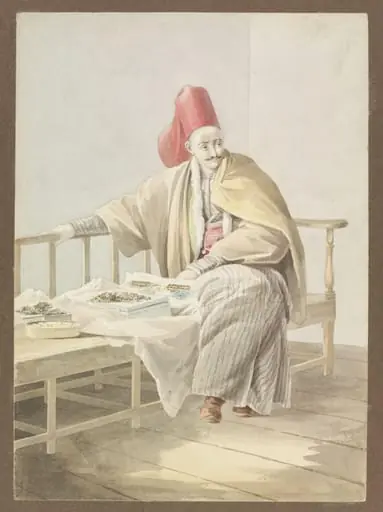
Portrait of Musa, a Hoca from Kashgar
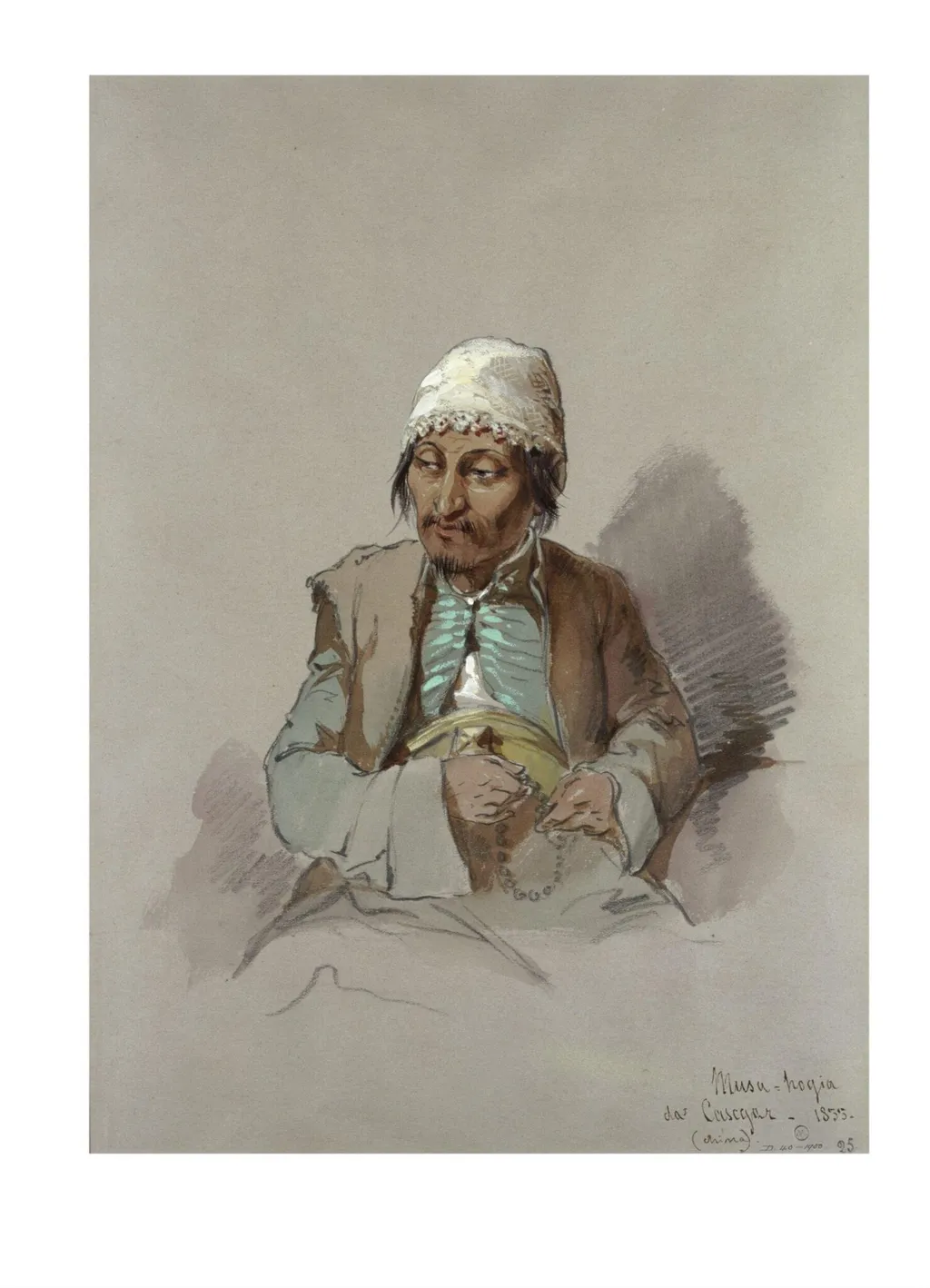
Portrait of Musa, a Hoca from Kashgar is a watercolor work on paper by the Impressionist artist Amedeo Preziosi. It dates from 1855 and is held in the collection of the Victoria and Albert Museum.
About this work
This watercolor shows a man named Musa, who taught the Qur’an in Kashgar. He holds prayer beads and wears a traditional skullcap. The artist painted him in 1855.
Musa may have traveled to Constantinople with a caravan carrying silk and porcelain. Kashgar was a key center for Islamic learning and pilgrimage.
If you like this, look up the Victoria and Albert Museum.
Overview
Portrait of Musa, a Hoca from Kashgar is a watercolour painting created in 1855. It depicts Musa, a Qur'an teacher, adorned in traditional attire, holding prayer beads.
Subject & Meaning
Musa, a hoca (Qur'an teacher), is shown with a tespih (prayer beads) and a crochet linen takke (skullcap), symbolizing his religious devotion and educational role in Islamic learning.
Technique & Style
The painting is executed in watercolour, a medium chosen for its transparency and delicacy, suited to capturing the subtle textures of Musa's attire and the intimacy of his portrait.
History & Provenance
Musa likely traveled to Constantinople via caravan, possibly accompanying silks and porcelain. The painting's provenance is not detailed here, but its creation in 1855 situates it within the era of cultural exchange between Eastern Turkestan and the Ottoman capital.
Context
Kashgar, Musa's origin, was a renowned center of Islamic learning and pilgrimage in Eastern Turkestan, highlighting the subject's significance within a broader religious and geographical context.
Own this work as a print
Artist & collection

Artist
Amedeo Preziosi (2 December 1816 – 27 September 1882) was a Maltese painter and traveler known for his watercolours and prints of Constantinople, the Balkans, Ottoman Empire, and Romania.

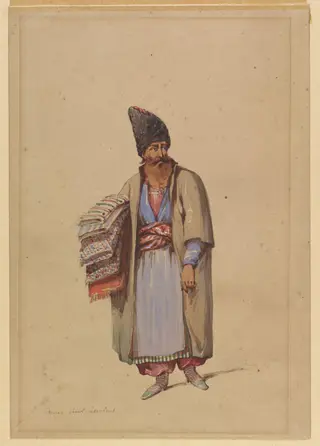 Persian Shawl-Merchant
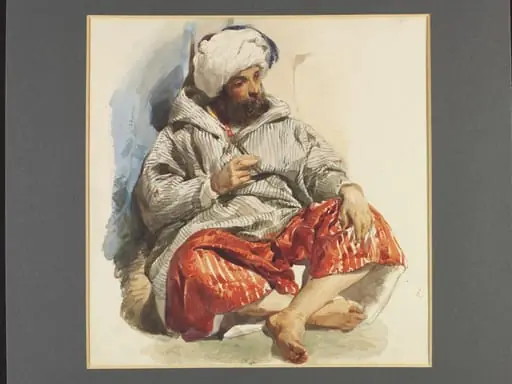 A European in Oriental dress, seated cross legged
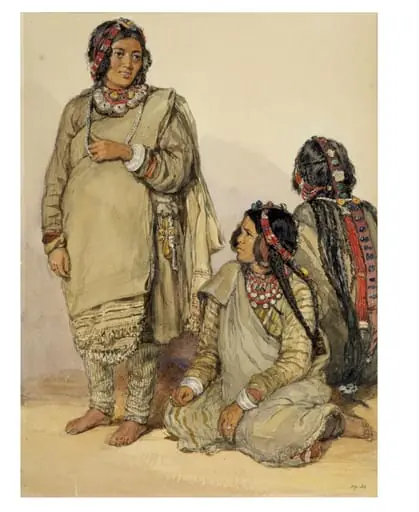 Study of women from Ladakh
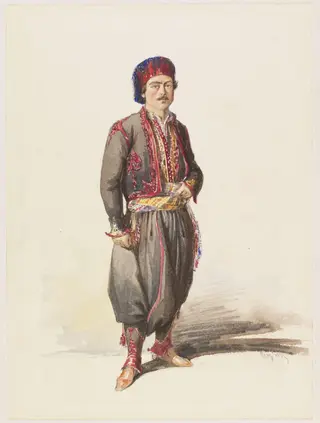 A Tatar, or Government Courier
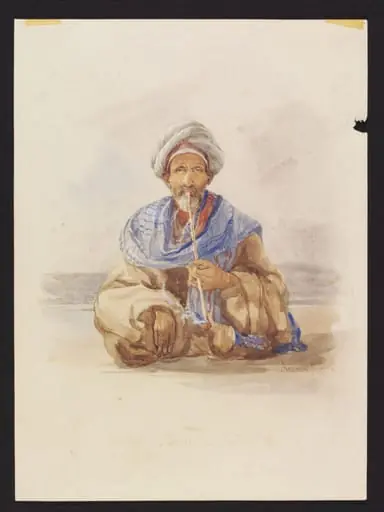 Achmet Girgeh
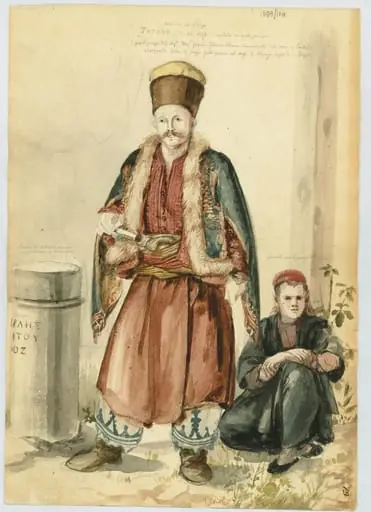 Ο τάταρος του Αλή Πασά "στην υπηρεσία του στρατηγού Adam" και ο νεαρός υπηρέτης του
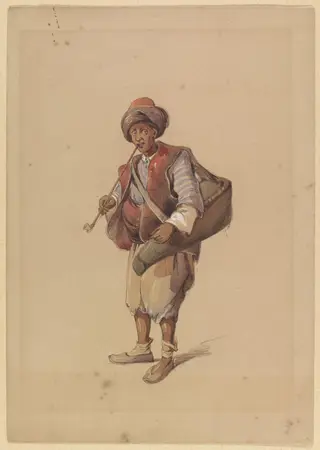 A Water Carrier
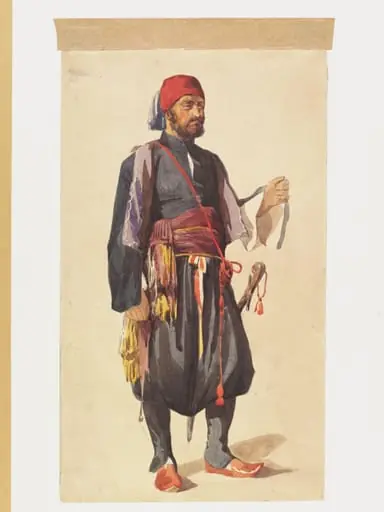 Officer, possibly a Spahi
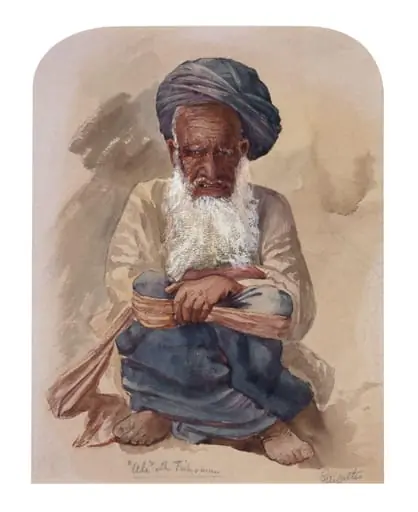 Ali the fisherman
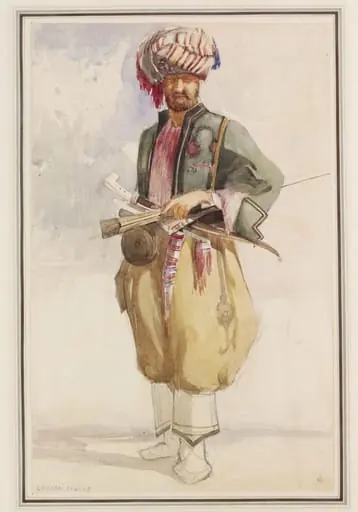 Lycian Figure
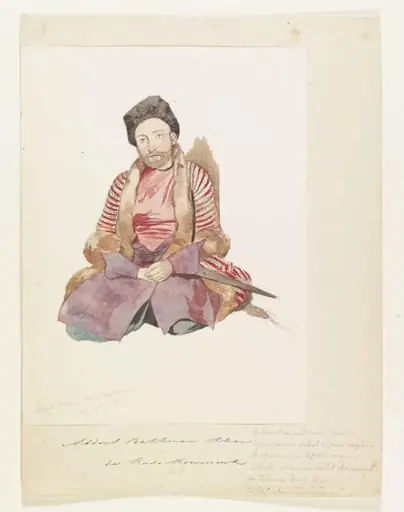 Abdoul-Rakhman - Khan de Kazi-Koumyk
 Baltadgi