Artwork
Master Cleeves
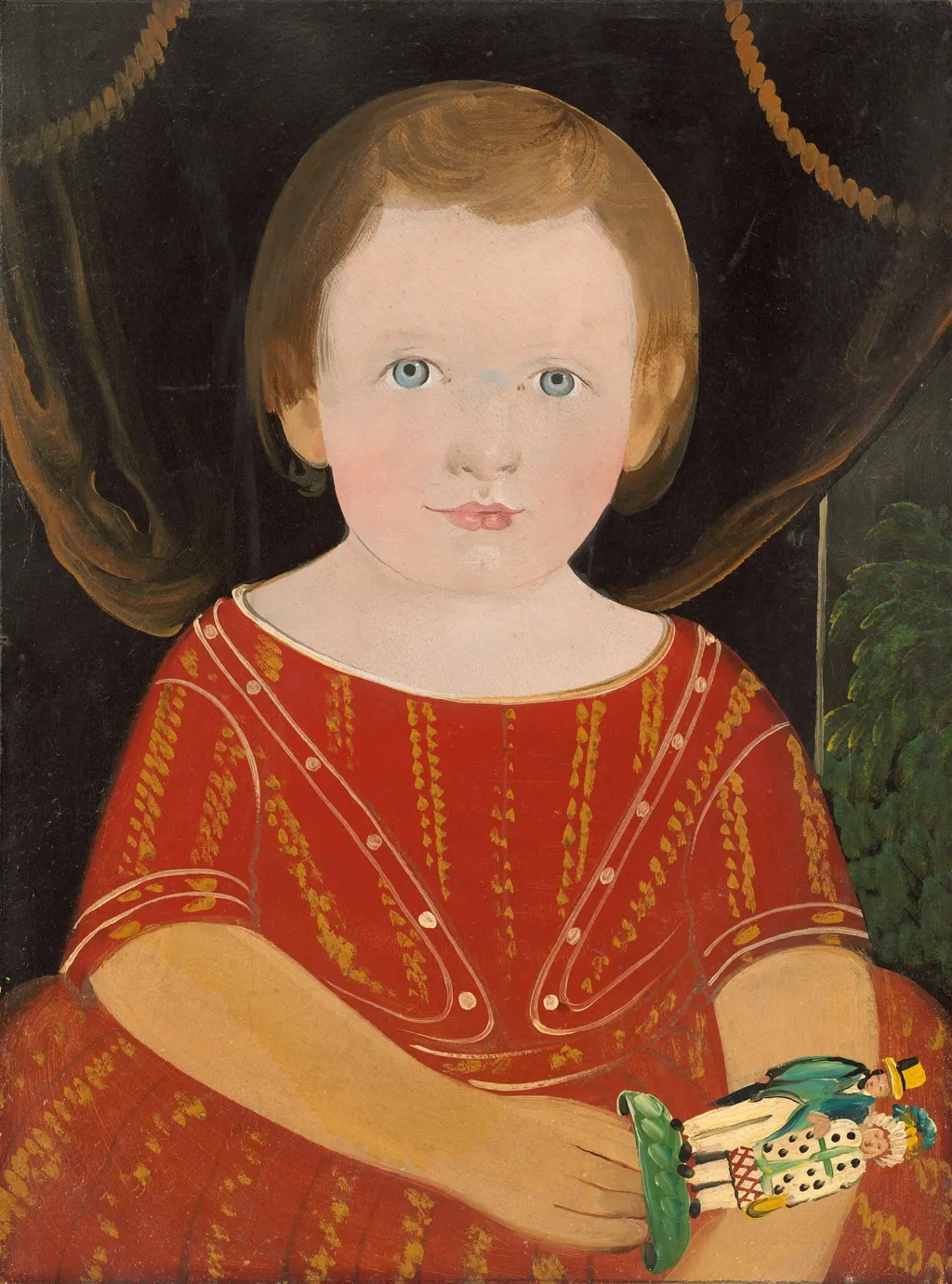
Master Cleeves is an unspecified painting by the Biedermeier artist William Matthew Prior. It dates from 1850 and is held in the collection of the National Gallery of Art.
- Inscription
- Inscribed:on reverse (no longer visible and no known photograph, but recorded in donor records): William M. Prior, 1850
About this work
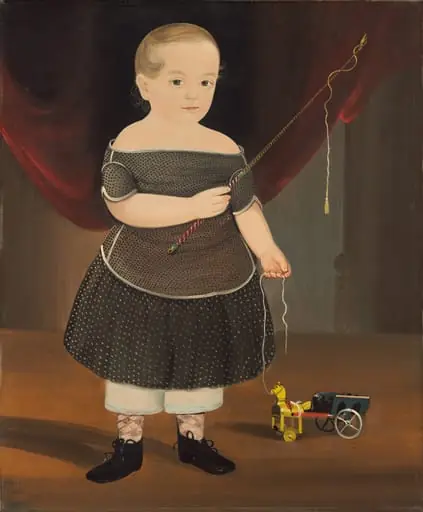
One hand rests on the arm of the chair, while the other holds a small, colorful toy that looks like a horse or carriage.
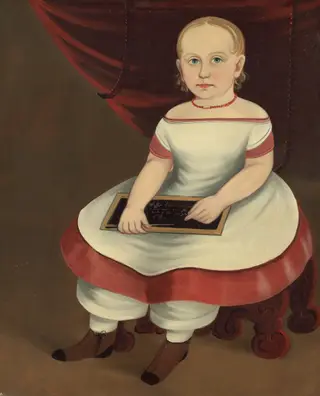
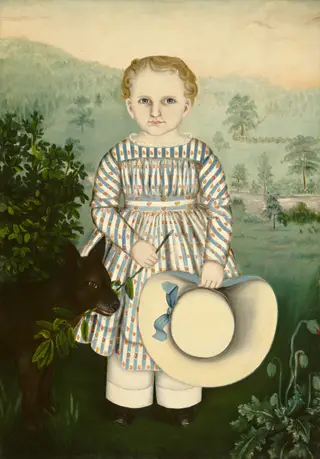
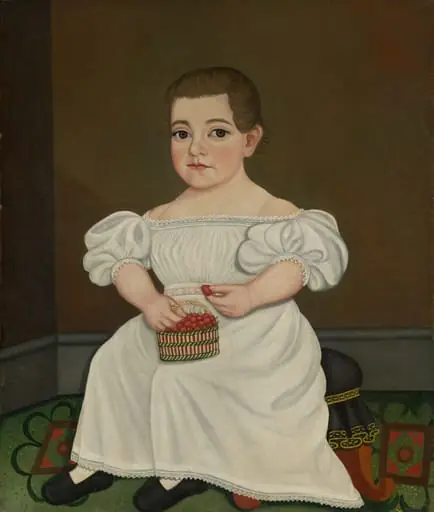
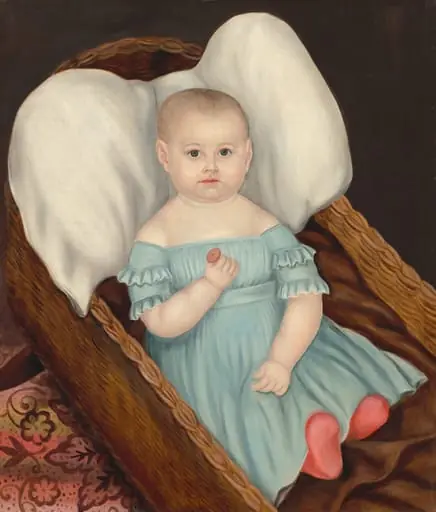
A young boy sits in a chair, wearing a bright red dress with gold trim and buttons. His face is round, with pale skin and blue eyes. One hand rests on the arm of the chair, while the other holds a small, colorful toy that looks like a horse or carriage. Behind him, the background is simple, dark with a hint of greenery on the right side.
The toy he holds is painted in bold, flat colors, standing out against the boy’s red dress. This style of painting was new in 1850, focusing on everyday life and clear details.
Next, check out the movement: Impressionism, Realism for more paintings like this one.
Technique & Style
Created in 1850, this portrait utilizes an aqueous medium applied to a cardboard support. The work measures 41.3 by 30.3 units and is classified as a painting within the portrait genre. The application of water-based pigments on paperboard reflects specific material choices characteristic of the artist's practice during this period.
The piece remains part of the collection at the National Gallery of Art in Washington, D.C., where its physical dimensions and medium are formally recorded.
History & Provenance
Master Cleeves is a portrait painted by William Matthew Prior in 1850 using an aqueous medium on cardboard. The work originated in Massachusetts, where it was held by Charles D. Childs of Boston; Childs sold the piece in 1948 to Edgar William and Bernice Chrysler Garbisch, who later gifted it to the National Gallery of Art in 1953. The painting remains in the Gallery’s collection in Washington, D.C., and its dimensions are recorded as 41.3 cm by 30.3 cm, confirming its 1850 inception. These details are documented in the work’s provenance and cataloguing records.
The portrait Master Cleeves is held in the collection of the National Gallery of Art in Washington, D.C. Its provenance traces from Massachusetts to Charles D. Childs of Boston, who sold the work in 1948 to Edgar William and Bernice Chrysler Garbisch. The painting entered the museum's holdings in 1953 as a gift from the Garbisches. The provided sources do not contain specific inventory or accession numbers, nor do they list any exhibition history for the work.
Overview
Painted in 1850 by American folk artist William Matthew Prior, Master Cleeves is a portrait rendered in aqueous medium on cardboard. The work exemplifies the Biedermeier movement's emphasis on intimate, domestic scenes, depicting a young boy in a formal yet personal setting. Prior, recognized for his specialization in portraits of families and children, captures the sitter with directness and attention to detail.
Subject & Meaning
The painting features a young boy seated in a chair, dressed in a bright red garment with gold trim and buttons. His round, pale face and blue eyes convey a youthful innocence. One hand rests on the chair arm, while the other holds a small, colorful toy resembling a horse or carriage. This portrayal highlights a private, familial moment, characteristic of the Biedermeier aesthetic.
Context
William Matthew Prior was a prominent American folk artist in the 19th century, known for his numerous portraits of children and families. Master Cleeves aligns with the Biedermeier movement, an artistic and cultural trend that celebrated the private sphere and domestic life. This societal value placed on the home and its inhabitants is clearly reflected in the painting's intimate subject matter and straightforward presentation.
Own this work as a print
Artist & collection
Artist
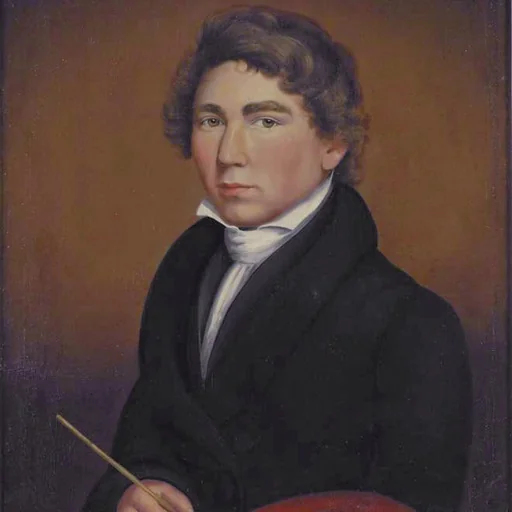
William Matthew Prior (May 16, 1806 – January 21, 1873) was an American folk artist known for his portraits, particularly of families and children.