Artwork
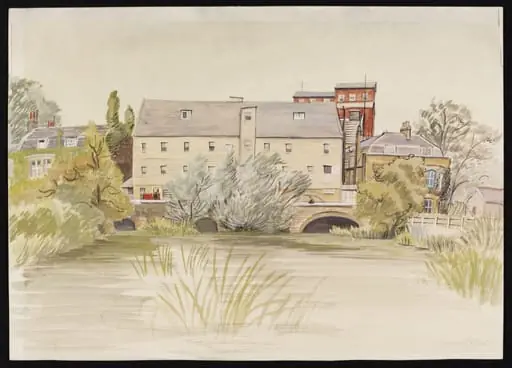
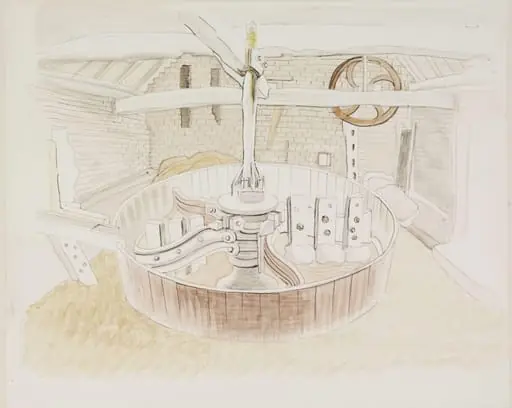
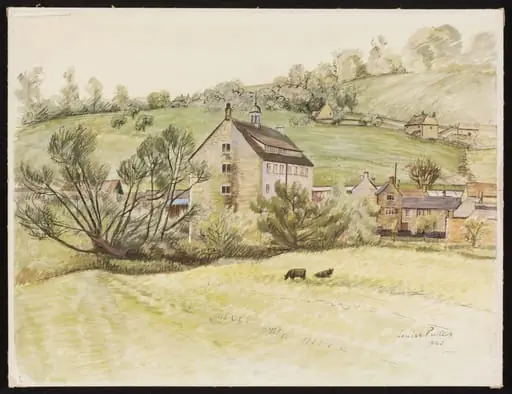
The Mill, Stone
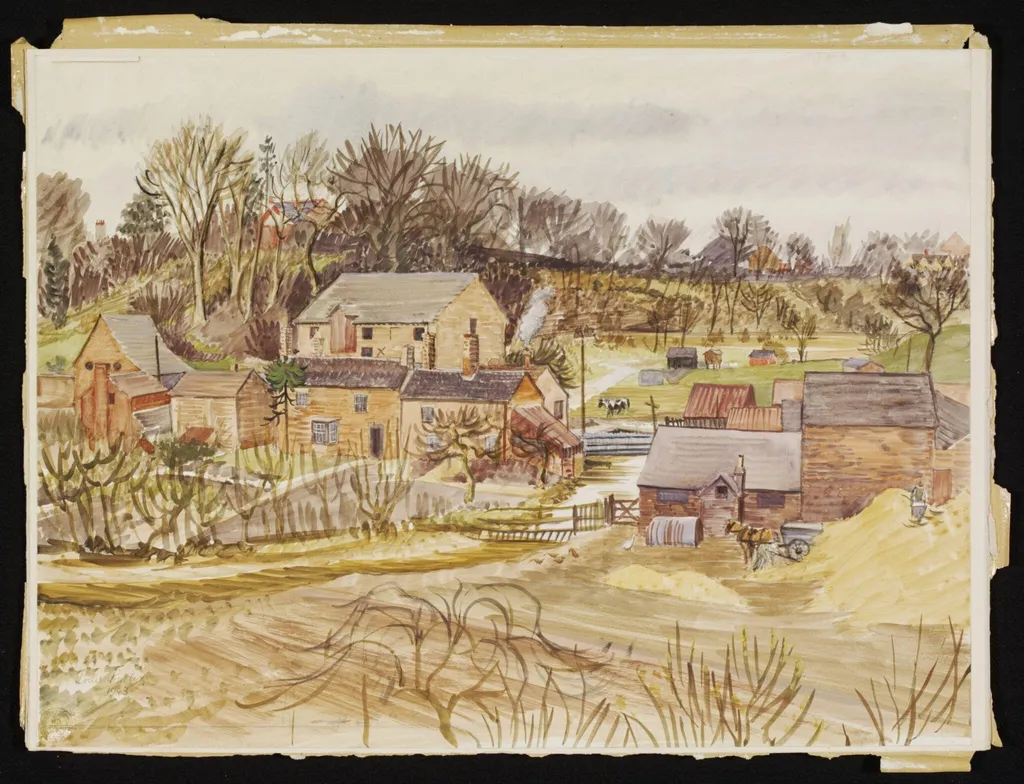
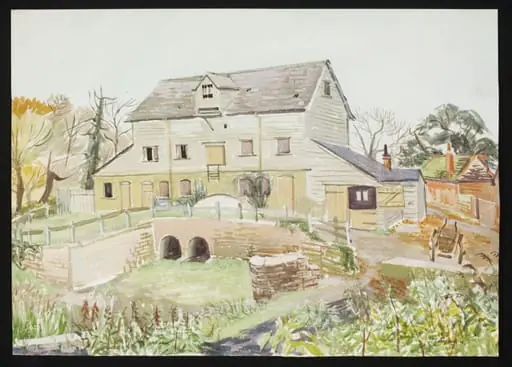
The Mill, Stone is a watercolor work on paper by the Art Brut artist Puller. It is held in the collection of the Victoria and Albert Museum.
About this work
Overview
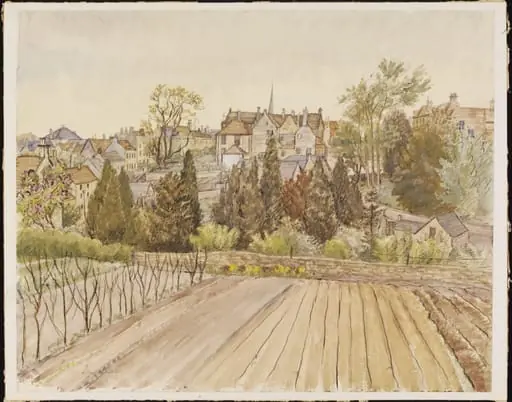
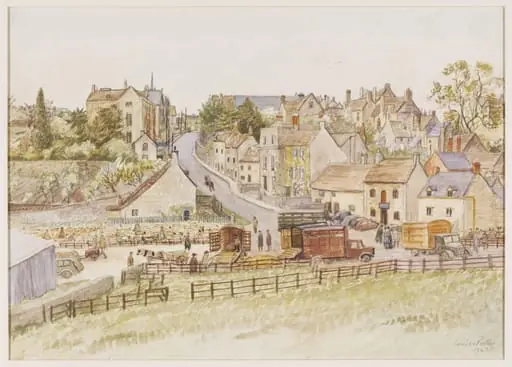
Created in 1943, this watercolour presents a modest rural tableau of a stone mill and surrounding farm buildings set against a gently sloping hillside. The composition includes a wooden mill by a river, a cluster of barns, a house with a chimney, a horse‑drawn cart, and distant grazing cattle, all rendered in muted, earthy tones.
Subject & Meaning
The work records a quiet agricultural landscape, emphasizing the continuity of countryside life amid the upheavals of wartime Britain. By focusing on everyday structures and labor, mill, barns, cart, livestock, it underscores the resilience of rural communities and the enduring value of local industry and scenery.
Technique & Style
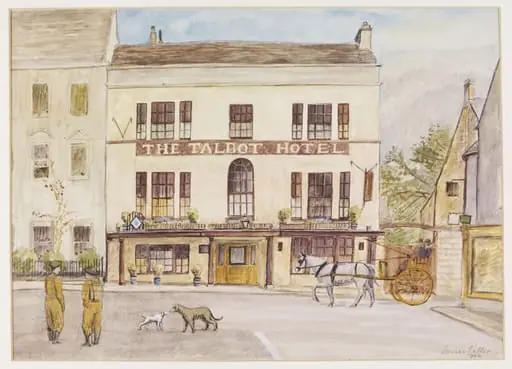
Executed with loose, sketch‑like brushstrokes, the watercolour relies on a limited palette of browns, yellows, greens and a hint of sky blue. The application is rapid yet controlled, giving the scene a soft, slightly washed appearance that conveys immediacy while preserving atmospheric depth.
History & Provenance
The piece was produced under the Recording Britain project, a wartime effort coordinated by Sir Kenneth Clark and financed by the Pilgrim Trust. Artists were commissioned to document sites deemed culturally significant or vulnerable, and this work reflects that mission, joining a broader collection of contemporary watercolours.
Context
During the Second World War, Britain faced extensive social and physical change; the Recording Britain initiative sought to safeguard visual memories of the nation’s heritage. This painting, like others in the series, serves as a historical record of a specific locale, capturing a moment before potential wartime alteration or post‑war development.
Own this work as a print
Artist & collection