Artwork
Coppice Mill, Stone
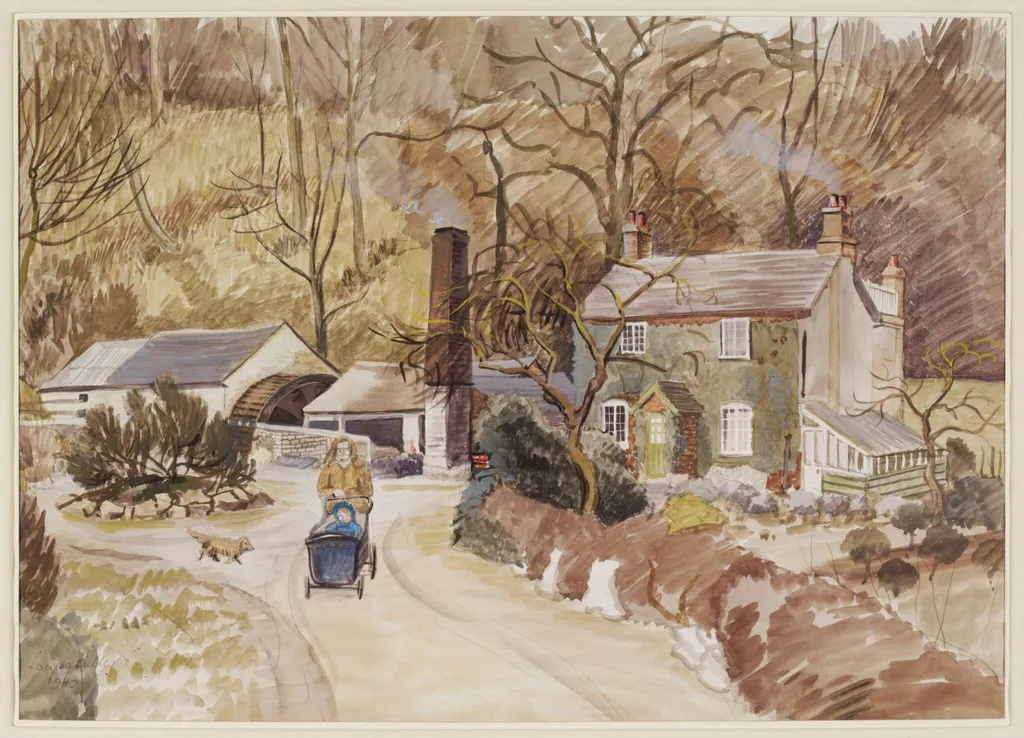
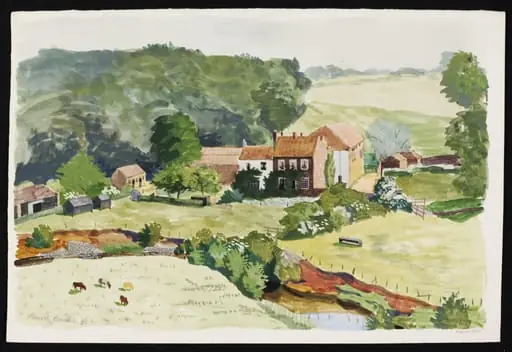
Coppice Mill, Stone is a watercolor work on paper by the Regionalist artist Puller. It is held in the collection of the Victoria and Albert Museum. Created in 1943, this watercolour portrays a modest rural scene in the Staffordshire countryside.
About this work
Overview
Created in 1943, this watercolour portrays a modest rural scene in the Staffordshire countryside. A watermill with its wheel set to the left dominates the background, while a chimney releases a thin plume of smoke near the centre of the composition. In the foreground a woman walks along a country lane, pushing a baby carriage, accompanied by a dog.
Subject & Meaning
The work captures everyday life in a wartime landscape, juxtaposing the continuity of domestic routine, embodied by the mother and child, with the enduring presence of local industry, represented by the mill and its chimney. The tranquil, sunlit atmosphere suggests a resilient, bucolic identity that persists despite the broader disruptions of the era.
Technique & Style
Executed in watercolour, the painting relies on a limited palette of warm browns and yellows to convey the bright daylight. Loose washes define the sky and fields, while finer brushwork renders the mill wheel, chimney and figures with modest detail. The overall effect balances atmospheric softness with enough clarity to identify the architectural elements.
History & Provenance
The piece was produced as part of the Recording Britain project, a government‑sponsored programme that commissioned artists to document the nation’s landscapes and built environment during World War II. By recording such scenes, the initiative aimed to safeguard visual records of places that might be altered or lost through wartime damage or post‑war development.
Context
Set against the backdrop of the early 1940s, the painting reflects a period when rural England was both a source of food production and a symbol of national stability. The inclusion of a working watermill underscores the continued importance of traditional industry, while the domestic figure highlights the everyday responsibilities carried on at home.
Own this work as a print
Artist & collection

 The Mill, Wadesmill
 Looking towards The Boar Inn, near Modishall
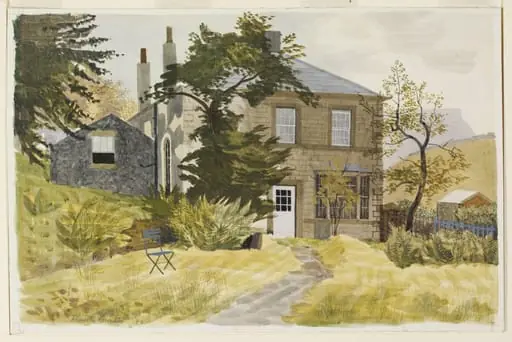 Ashopton Inn, showing Bamford Edge
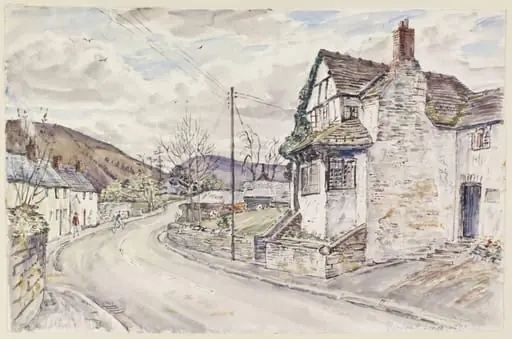 The Old Parsonage, New Radnor
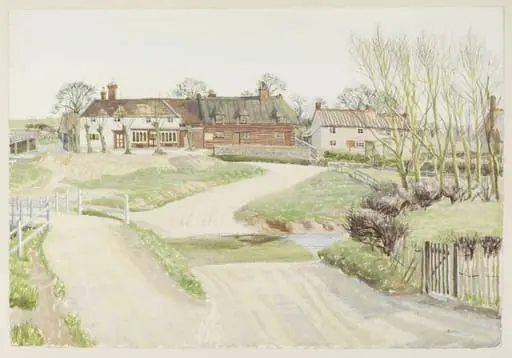 The Ford, Braughing
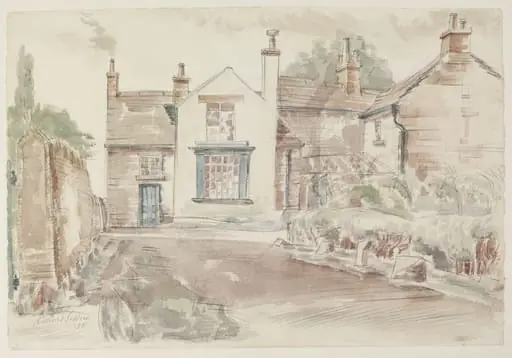 Cottages at Norton, No.1
 Pigeon House and Post Office, Mansel Lacy
 Meaford Lock, Stone
 The Ladybower Inn, Ashopton
 Brent Hall from the South, Finchingfield
 The Mill, Crathorne
- The Mill, Stone