Artwork
The Virgin and Child with the Young St. John
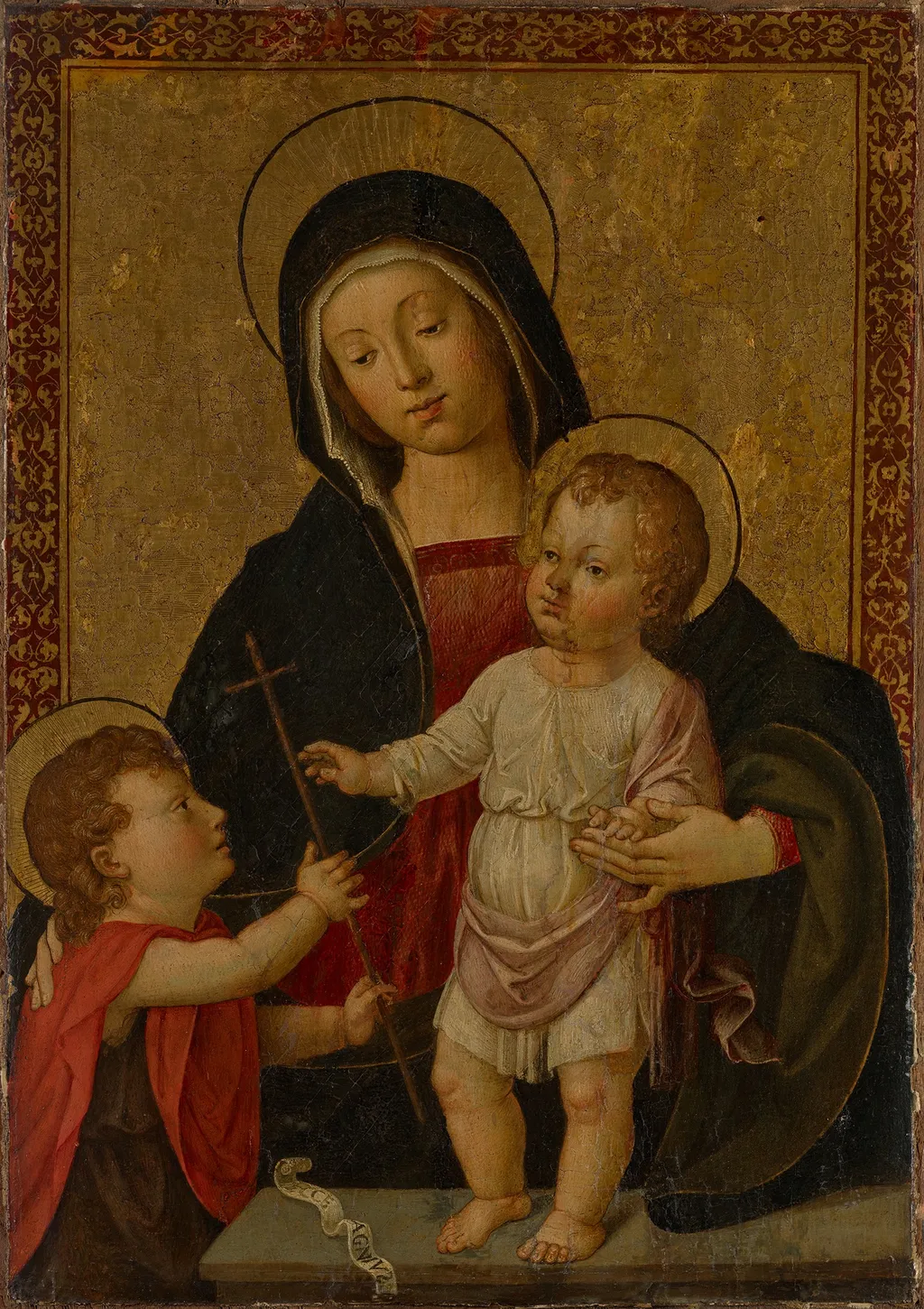
The Virgin and Child with the Young St. John is a paint painting by the Mannerist artist Q134489704. It dates from 1550 and is held in the collection of the Gemäldegalerie Berlin. The Virgin and Child with the Young St.
About this work
Overview
Its preservation in one of Germany's foremost painting collections ensures its accessibility for scholarly study and public appreciation.
The Virgin and Child with the Young St. John is a religious painting dated to 1550, attributed to the Master of the Madonna of Orte (Meister der Madonna von Orte), an artist active in the mid-16th century. Executed in paint on a poplar panel, the work is held in the collection of the Gemäldegalerie Berlin. While less widely known than treatments of the same subject by major Renaissance masters, the painting represents a significant example of mid-century Italian devotional imagery, preserving traditional iconographic formulas while exhibiting the refined craftsmanship characteristic of its period. Its preservation in one of Germany's foremost painting collections ensures its accessibility for scholarly study and public appreciation.
Subject & Meaning
The painting depicts the Virgin Mary with the Christ Child and the young Saint John the Baptist, a subject known in Italian as the Madonna col Bambino e San Giovannino. The composition presents three haloed figures: the Virgin at center, dressed in a dark blue mantle over a red dress, supports the standing Christ Child on a stone ledge. The Child, wearing a white tunic with a pink sash, extends his right hand toward the younger John, who kneels at left clad in red drapery and holds a tall cross staff. A scroll with faint lettering rests on the ledge, likely bearing John's prophetic words. The gold halos with radiating lines identify the sacred nature of all three figures. The interaction between the two children carries theological significance, prefiguring Christ's future sacrifice and John's role as precursor and baptist. The Virgin's downward gaze toward the children's exchange emphasizes her meditative witness to the divine mystery. The stone ledge serves as both a domestic detail and a symbolic reference to the altar and Christ's future tomb.
Technique & Style
The work is painted in oil on a poplar panel support, a standard combination for Italian panel painting of the period. The artist employed a flat gold background patterned with faint decorative motifs and enclosed by a crimson border with gold filigree, creating a shallow, compressed spatial environment typical of devotional panels that privilege symbolic clarity over naturalistic depth. Light falls evenly from the left, modeling the rounded forms of faces and limbs with soft shadows. The flesh tones display a smooth, enamel-like finish, while drapery is rendered with more linear folds. The overall palette is dominated by deep blue, vermilion, cream, and gold. Fine craquelure throughout the surface indicates the painting's age and the natural aging of the oil medium. The woman's mantle is edged with a thin white band at the face, a detail that adds luminosity and visual refinement. The gold ground remains largely untoned, maintaining the decorative brilliance expected in works intended for private devotion.
History & Provenance
The painting is dated to 1550 based on stylistic analysis and scholarly attribution. It is attributed to the Master of the Madonna of Orte, an artist whose working name derives from a related painting and who remains known primarily through a small corpus of works. The painting entered the collection of the Gemäldegalerie Berlin, where it is currently held. The Gemäldegalerie, part of the Staatliche Museen zu Berlin, is one of Europe's premier collections of Old Master paintings, providing a context for the work among masterpieces from the 13th to 18th centuries. Specific details regarding the painting's commission, early ownership, and acquisition by the museum are not recorded in the available sources. The work's presence in Berlin reflects the broader patterns of collecting Italian Renaissance and post-Renaissance painting by European museums in the 19th and early 20th centuries.
Context
The Master of the Madonna of Orte worked in a period when the High Renaissance innovations of Leonardo, Raphael, and Michelangelo had been absorbed into a broader artistic vocabulary across Italy. The painting's composition, with its pyramidal grouping of figures and intimate devotional character, participates in visual traditions established by earlier masters but executed with the more mannered elegance of the mid-16th century. The artist's very designation as a 'Master' following a key work indicates the limitations of current scholarship, a common situation for painters working outside major centers or in the shadow of more famous contemporaries. The subject of the Madonna and Child with the young Saint John was among the most popular in Renaissance art, allowing for variations that emphasized different aspects of the encounter between Christ and his precursor. The Berlin painting's retention of the gold background, at a time when many artists had adopted fully developed landscape or architectural settings, suggests a conservative patron or a deliberate appeal to traditional devotional expectations. The work contributes to understanding how regional masters adapted and perpetuated central Italian compositional models in the decades following the High Renaissance.
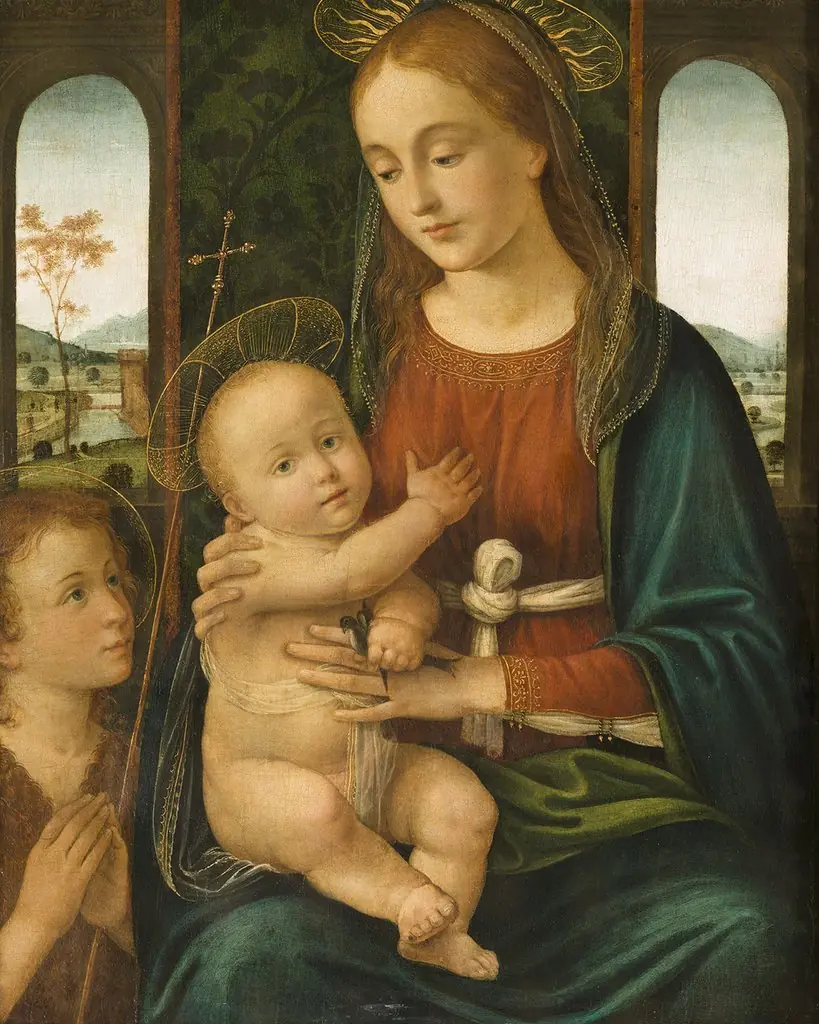
Artist & collection
Artist
This Italian Renaissance painter created altarpieces featuring religious scenes. One example is The Virgin and Child with the Young St. John, a work from around 1550 that shows Mary holding the infant Jesus while the…

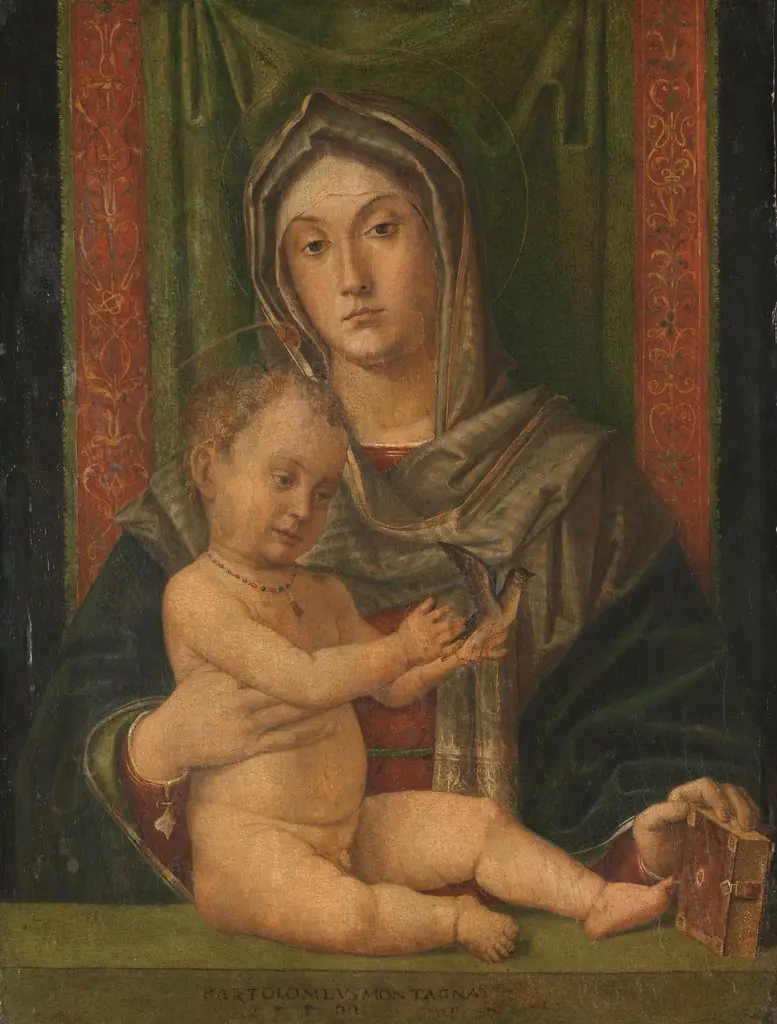 Virgin and Child
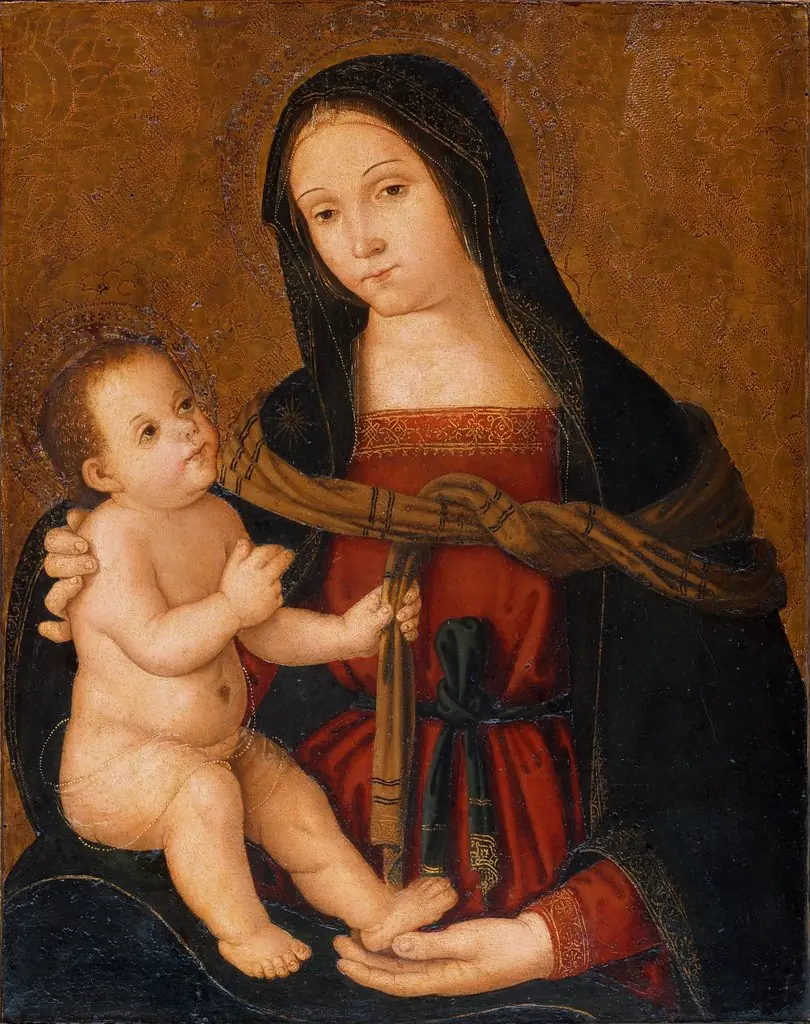 Madonna and Child
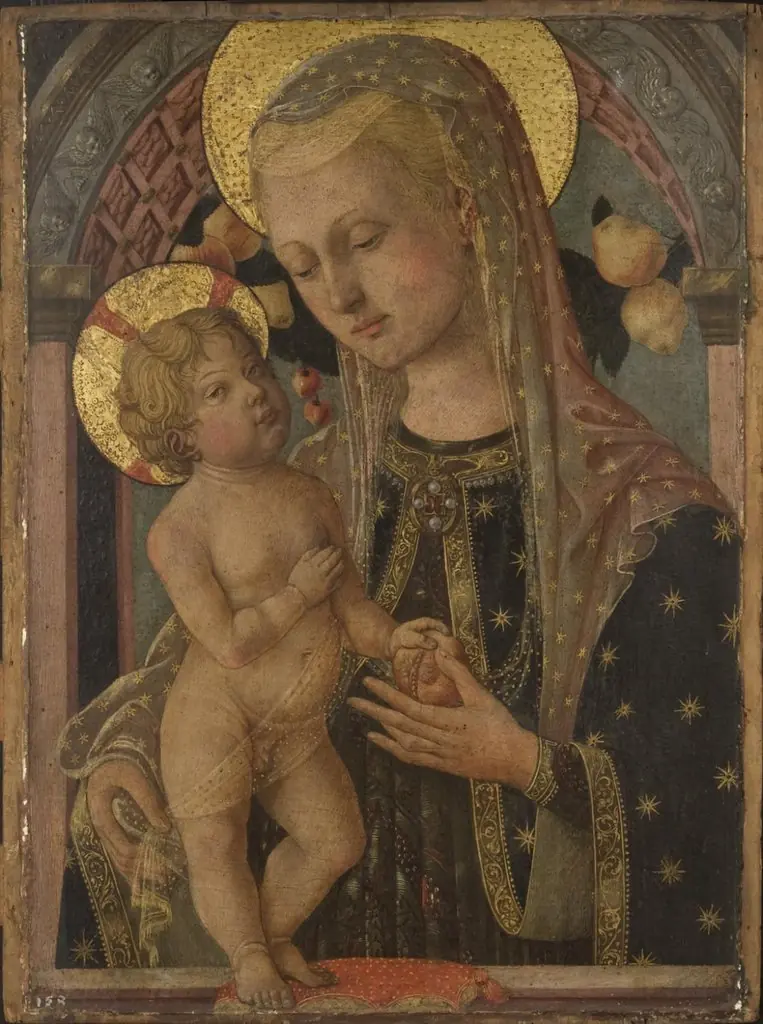 Virgin and Child with a Pomegranate
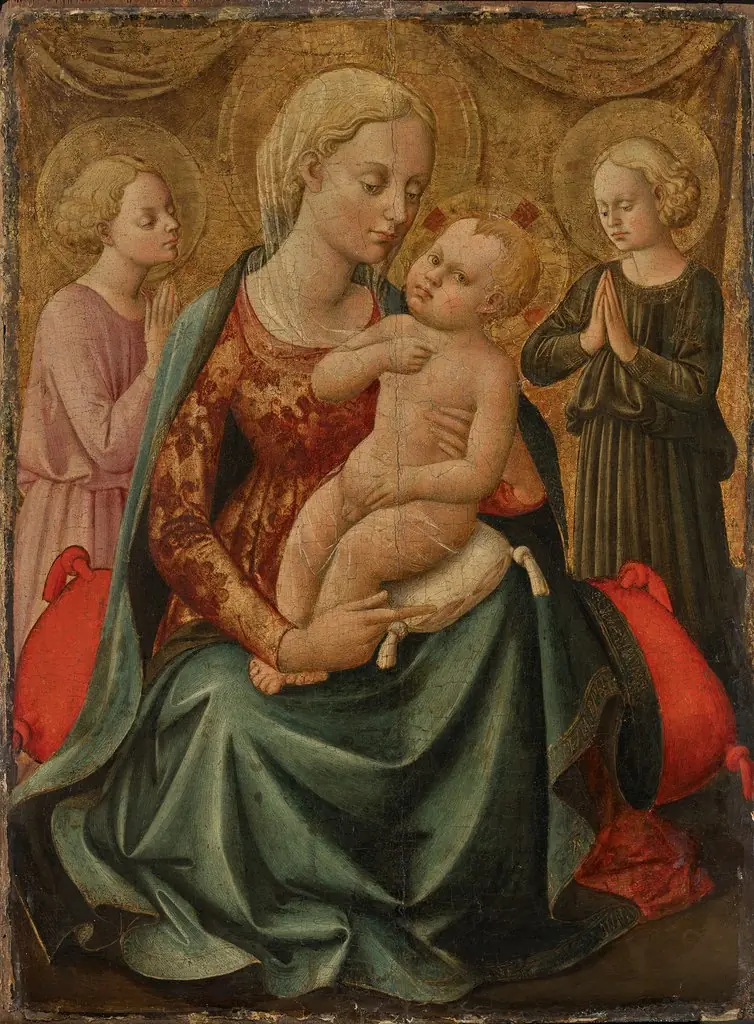 Madonna and Child
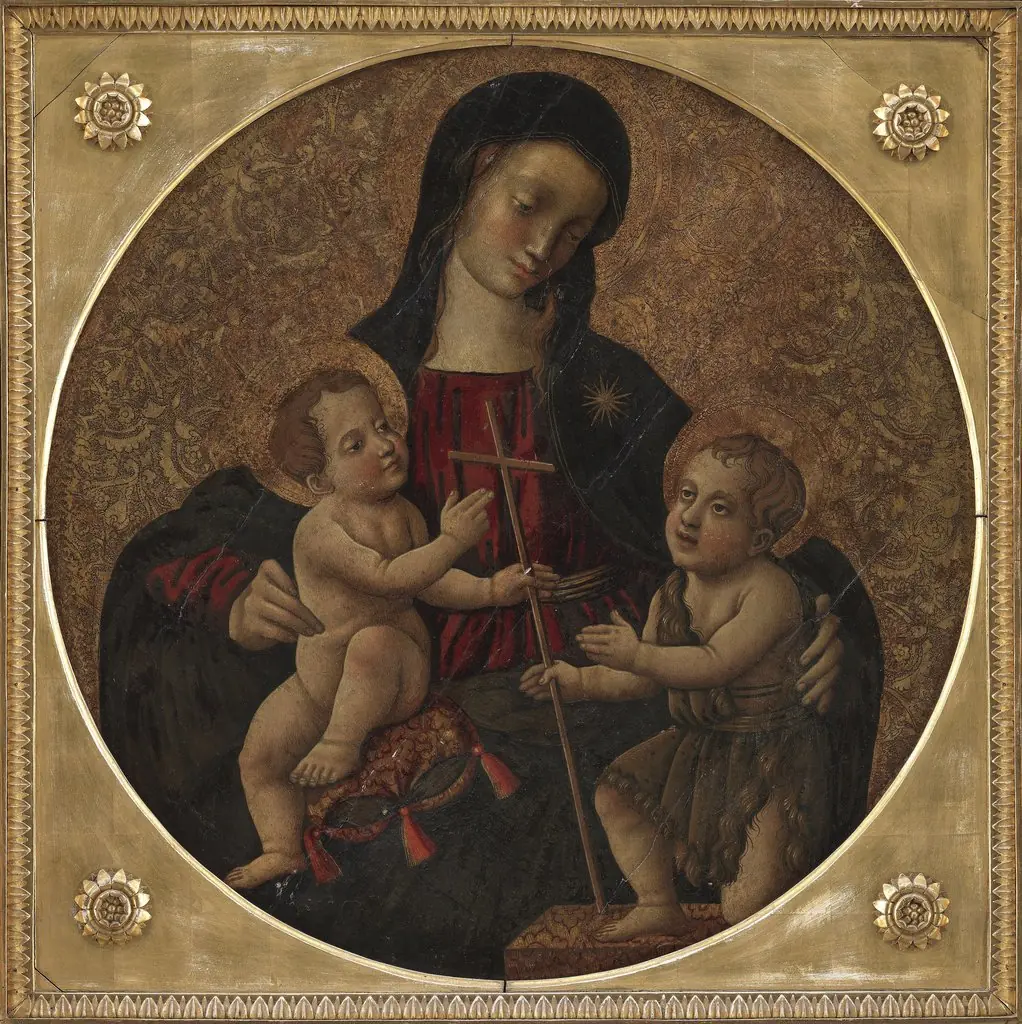 Madonna med Barnet og Den hellige Johannes
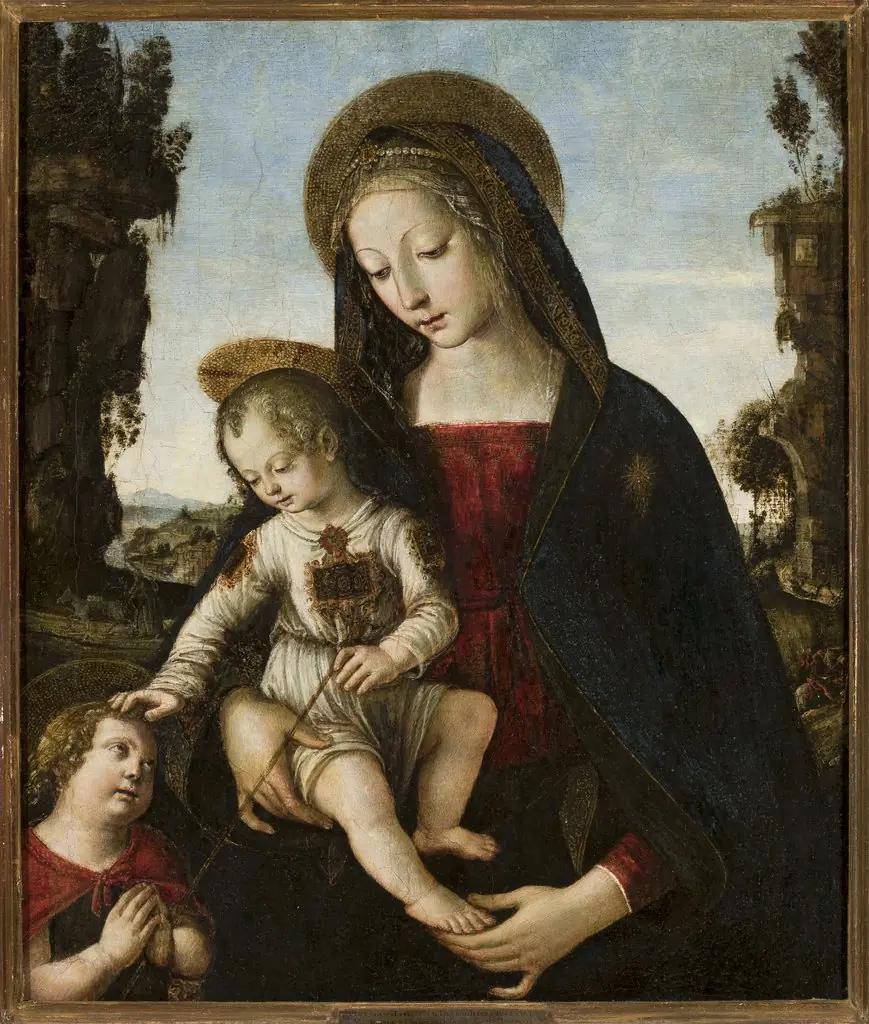 Madonna with Child Jesus and St. John
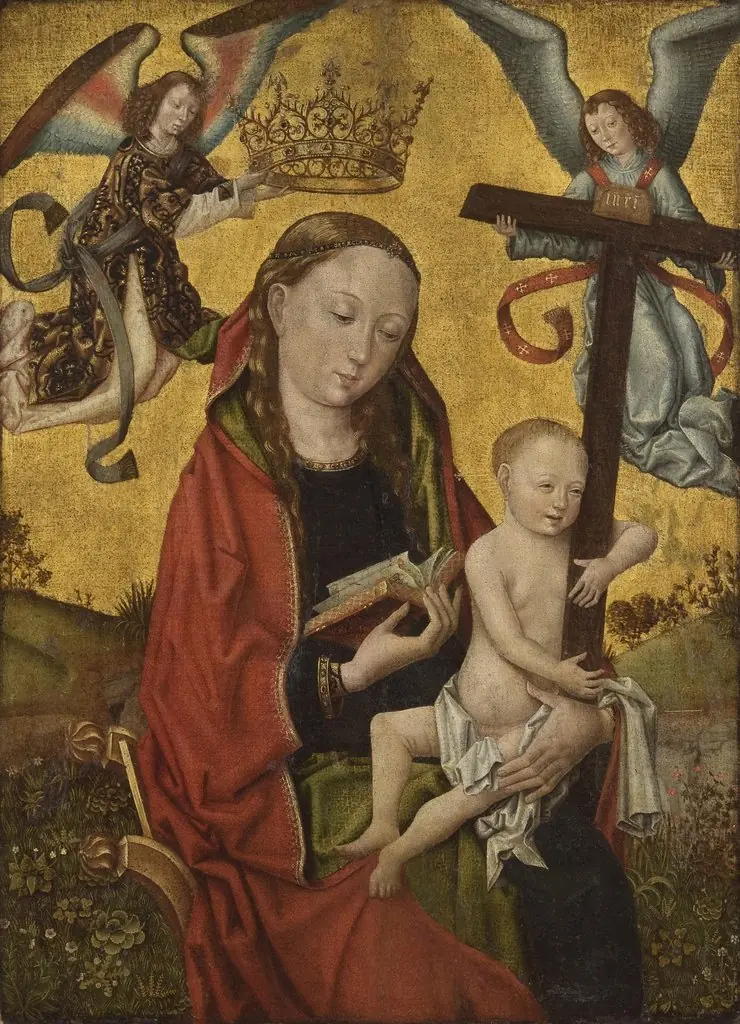 Virgin and Child Holding the Cross
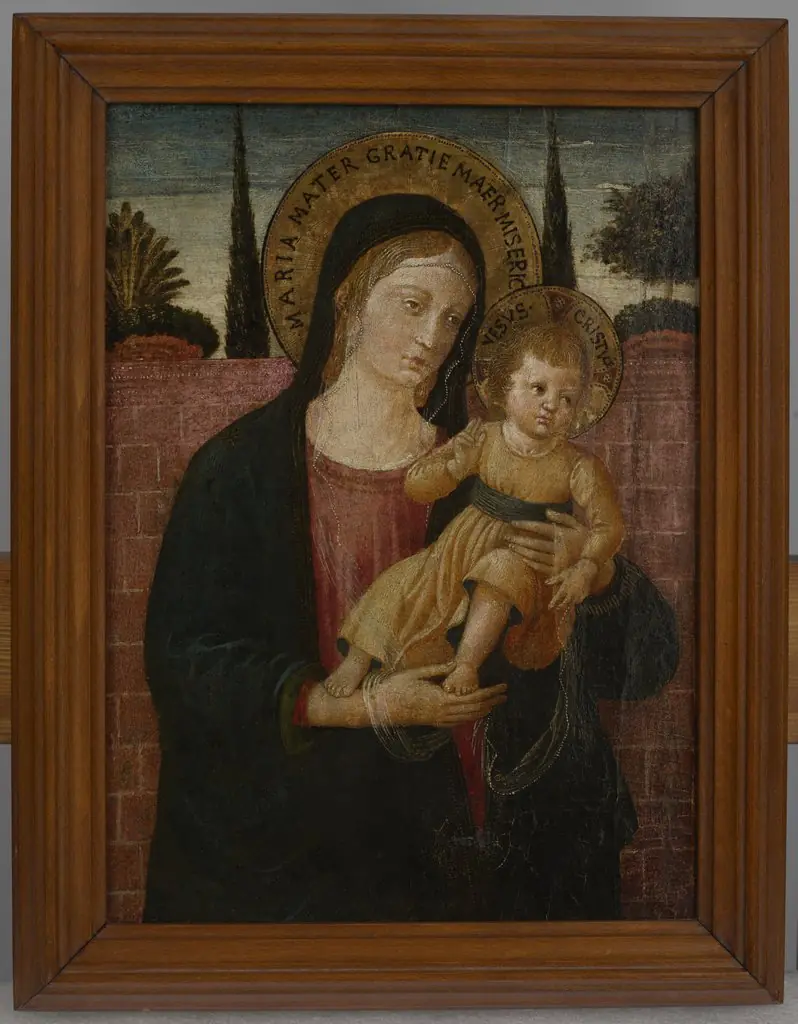 Madonna with Child
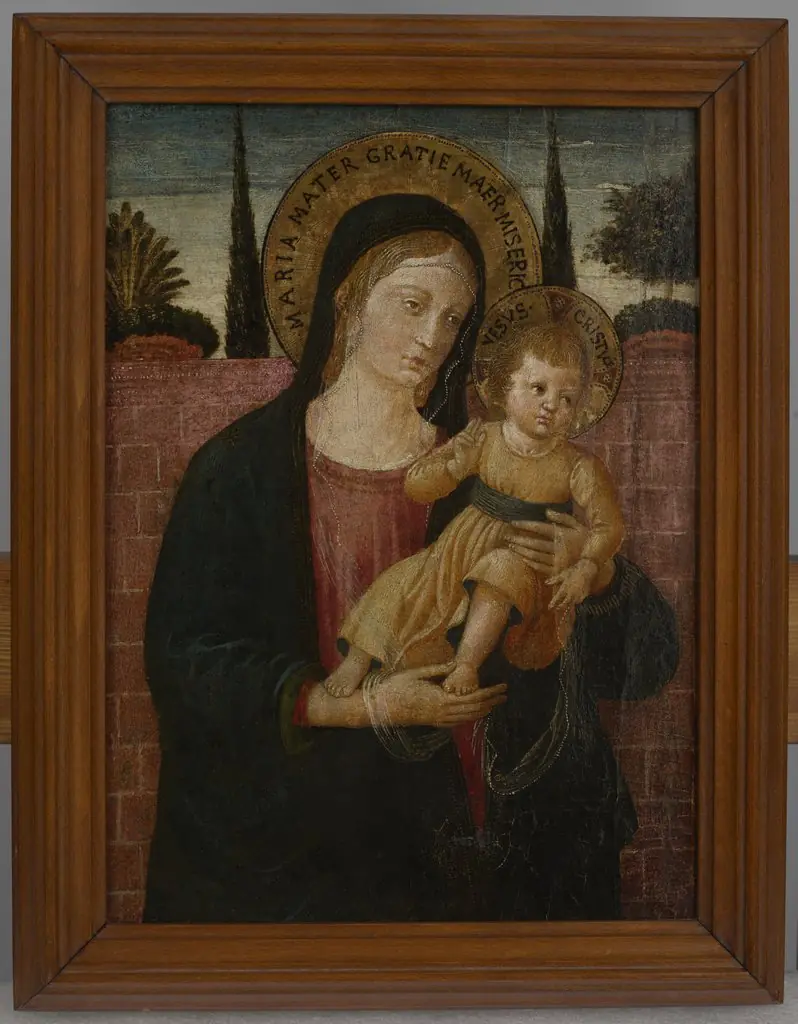 Madonna and Child (Obverse) and Tobias with Archangel Raphael (Reverse)
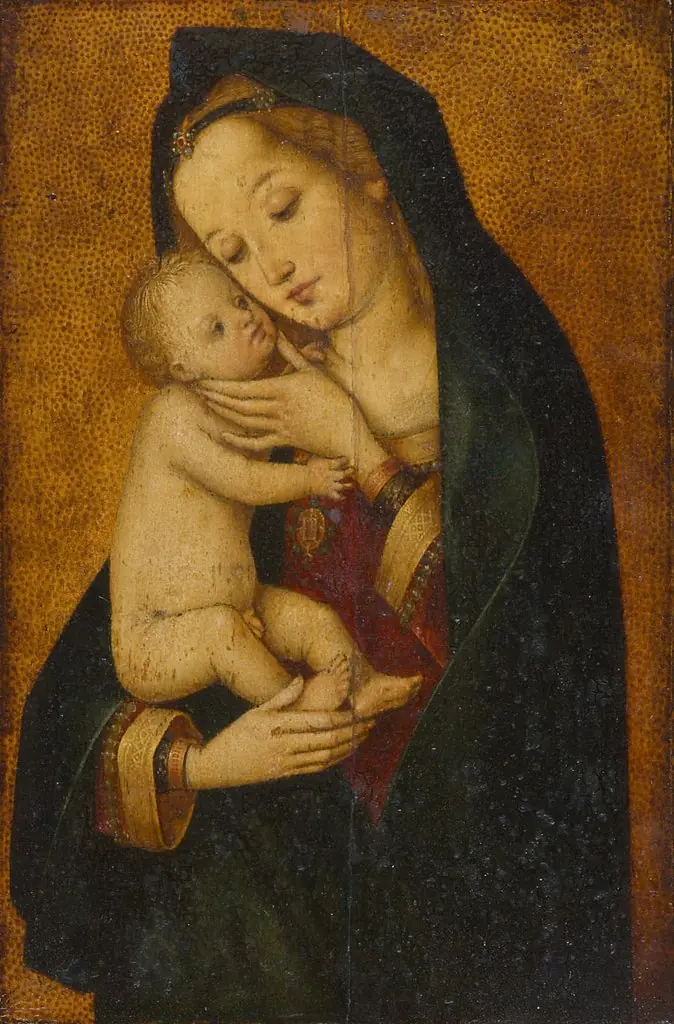 Maria, das Kind liebkosend
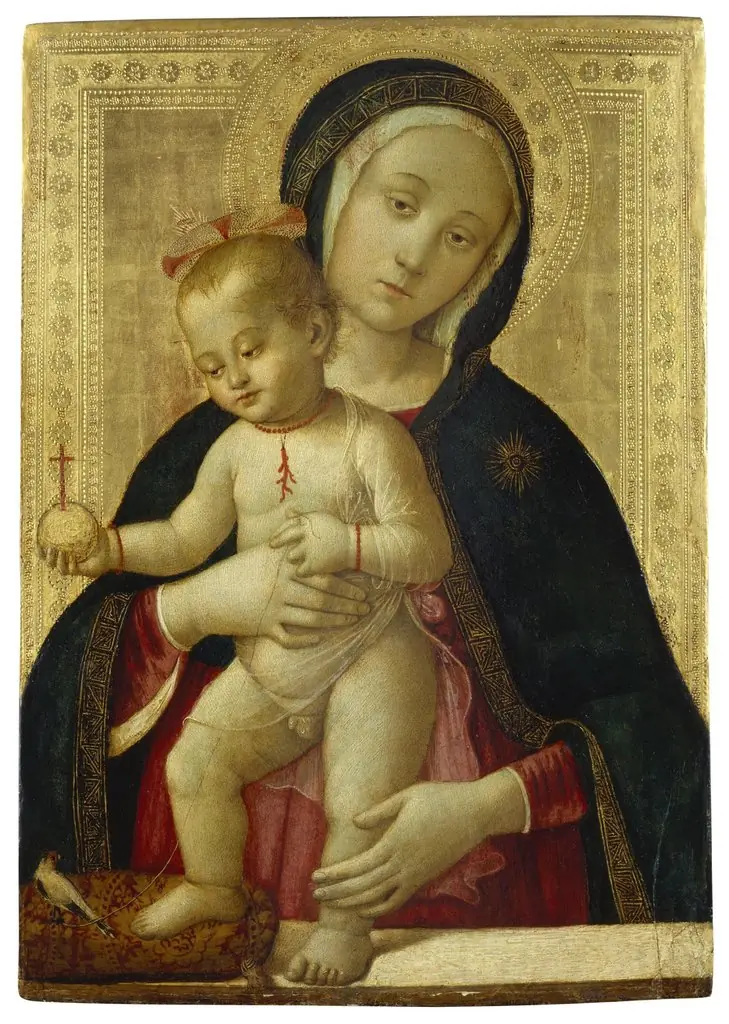 Madonna and Child
- Virgin and Child with Saint John the Baptist