Artwork
Rural Musicians
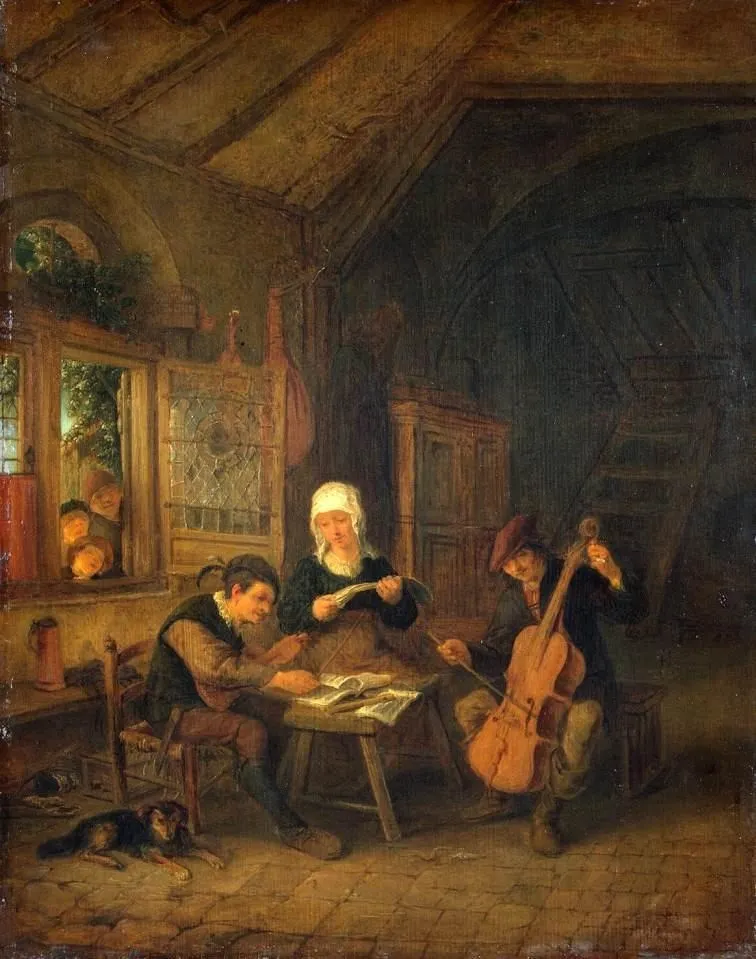
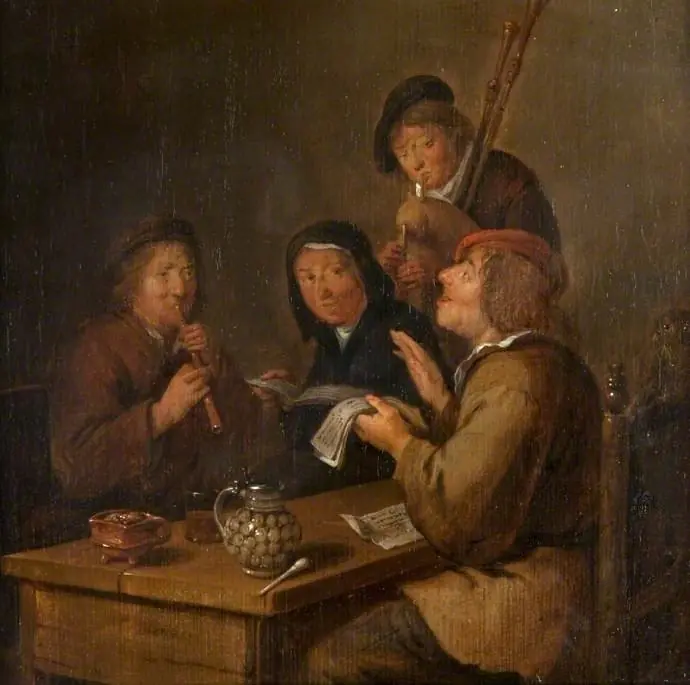
Rural Musicians is an oil painting by the Dutch Golden Age artist Adriaen van Ostade. It dates from 1645 and is held in the collection of the Hermitage Museum.
About this work
Overview
Rural Musicians is a genre scene painted by Adriaen van Ostade in 1645. Executed in oil paint on a wood panel, the work measures 39 by 30.5 centimeters. It was created in Haarlem during the Dutch Baroque period. The painting is held in the collection of the Hermitage Museum.
Subject & Meaning
Three children peer through a leaded glass window on the left, and a dog rests on the stone-tiled floor in the foreground.
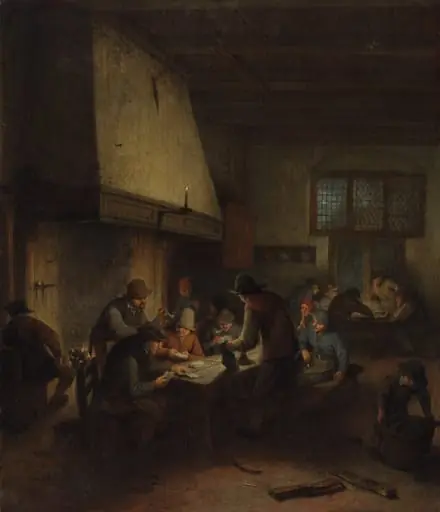
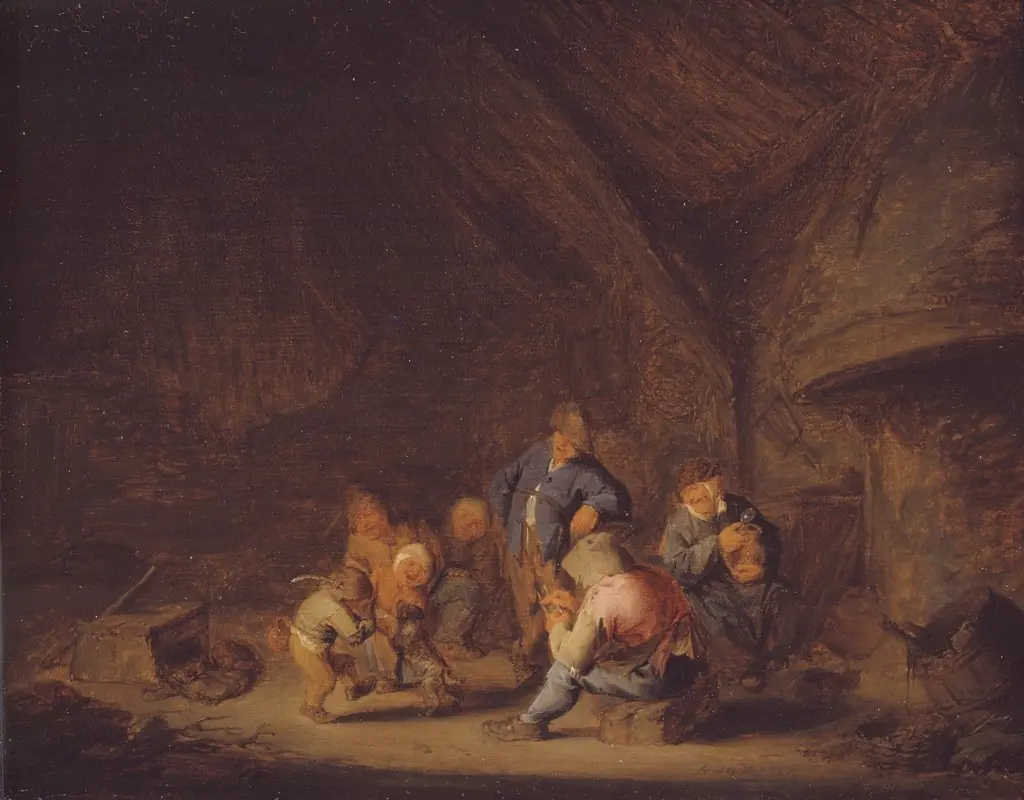
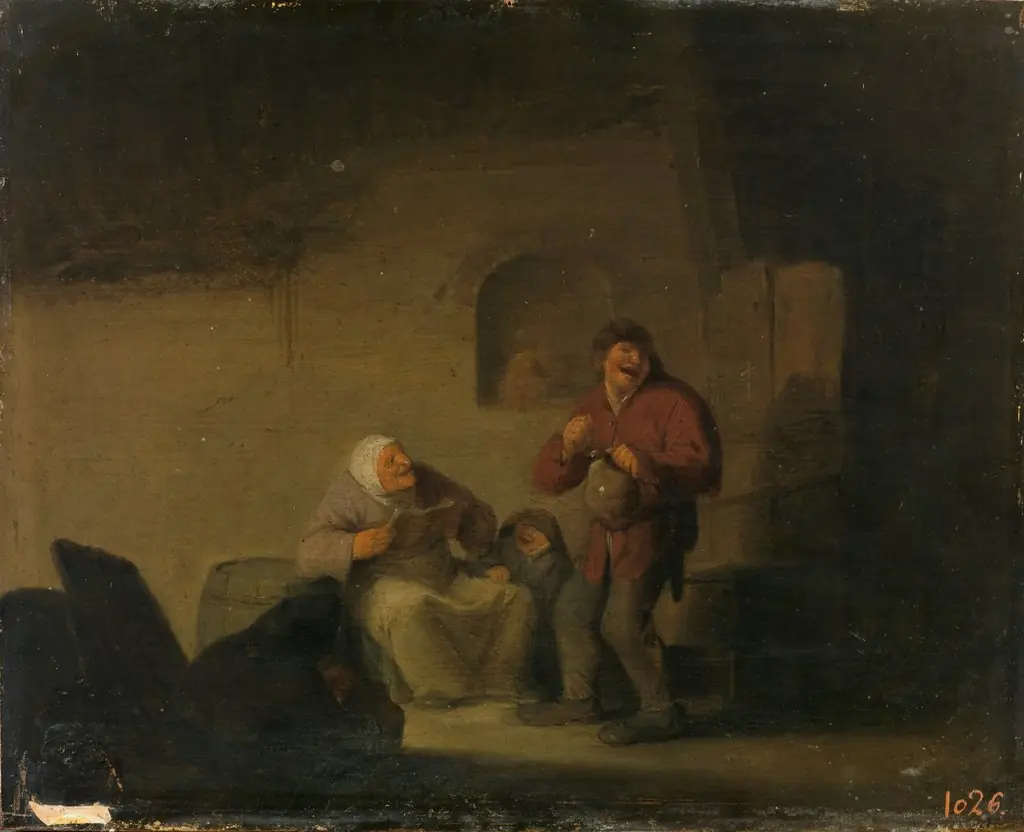
The composition features three central figures gathered around a small wooden table in a rustic interior. A seated man on the left leans over an open book, pointing at the pages while holding a pipe. A woman at the center holds a sheet of paper, perhaps a musical score, and wears a white head covering. To the right, a seated man wearing a red cap plays a cello-like instrument with a bow. Three children peer through a leaded glass window on the left, and a dog rests on the stone-tiled floor in the foreground. The scene reflects Ostade's focus on the humble diversions of peasant life. While his earlier works often underlined the coarseness of peasant types, his subjects from the 1640s onward tend toward less ribald themes, emphasizing the simple pleasures and dignity of the rural poor rather than bourgeois materialism.
Technique & Style
Ostade executed the work on a panel support using oil paint. The palette is dominated by browns, ochres, and muted earth tones, characteristic of his early period which relied on subdued ranges of neutral bluish-grays and browns, occasionally enlivened by a single bright note such as the red cap. Warm light enters from the window to illuminate the principal group, a hallmark of his style shaped by Adriaen Brouwer. The brushwork shows fine detail in the figures and objects, with looser handling in the darker background areas, such as the wooden cabinet and the staircase receding into shadow. The surface exhibits visible age cracking throughout.
Context
Adriaen van Ostade was a prominent figure among the Little Dutch Masters working in the thriving industrial and artistic center of Haarlem. He likely studied under Frans Hals alongside the Flemish painter Adriaen Brouwer, though Brouwer proved the most important influence in shaping Ostade's style. Alongside contemporaries like Jan Steen, who was briefly his pupil, Ostade captured the complex cultural scene of Haarlem through everyday life. While Steen focused on the growing materialistic pride of the Dutch working class, Ostade stressed the humble dignity of the peasant. His peasant figures often functioned as moralizing emblems or anti-bourgeois symbols, reflecting a growing 17th-century trend of charitable Christian attitudes toward the lower classes. By 1662, his success earned him the presidency of the Haarlem painters' guild.
Artist & collection

Artist
Adriaen van Ostade (baptized as Adriaen Jansz Hendricx 10 December 1610 – buried 2 May 1685) was a Dutch Golden Age painter of genre works, showing the everyday life of ordinary men and women.