Artwork
The Table in the Village Inn
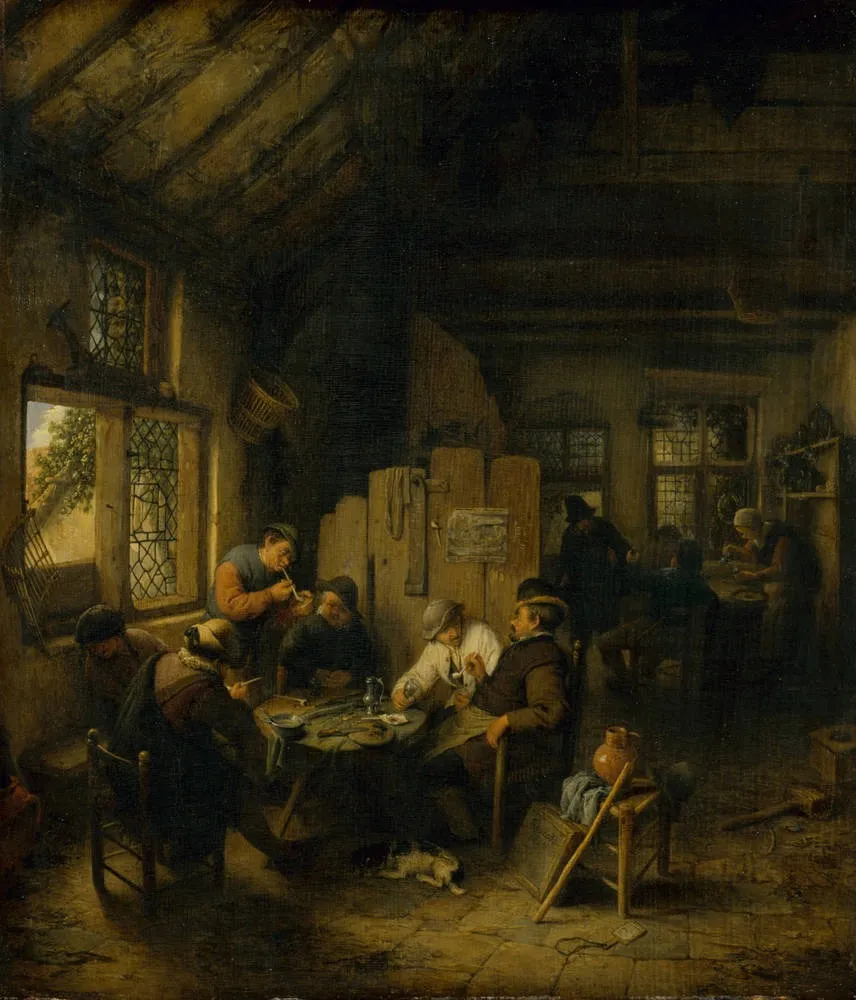
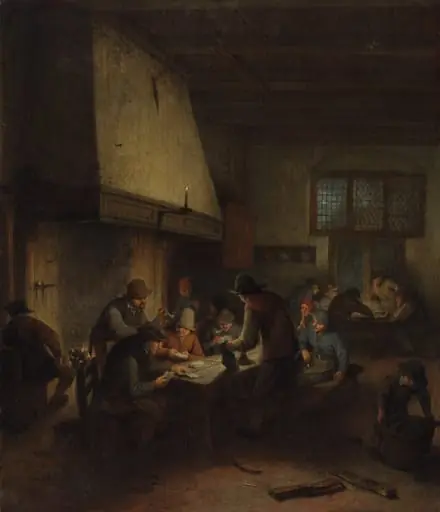
The Table in the Village Inn is an oil painting by the Dutch Golden Age artist Adriaen van Ostade. It dates from 1660 and is held in the collection of the Staatliche Kunstsammlungen Dresden.
About this work
Overview
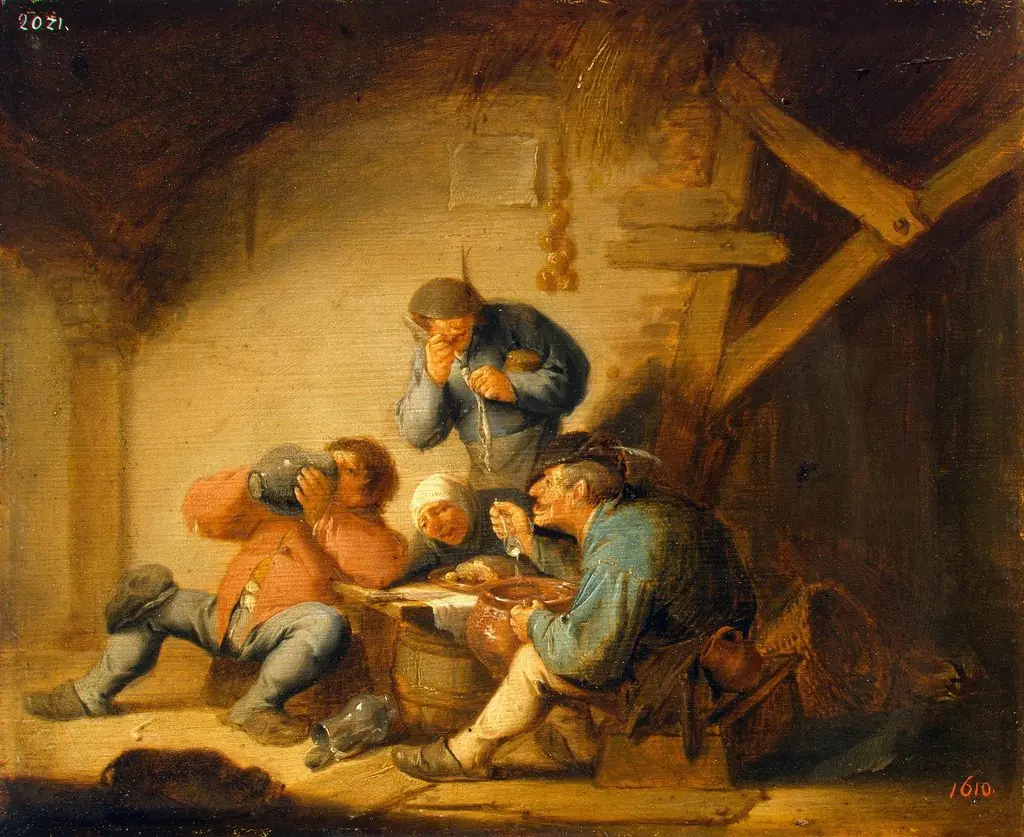
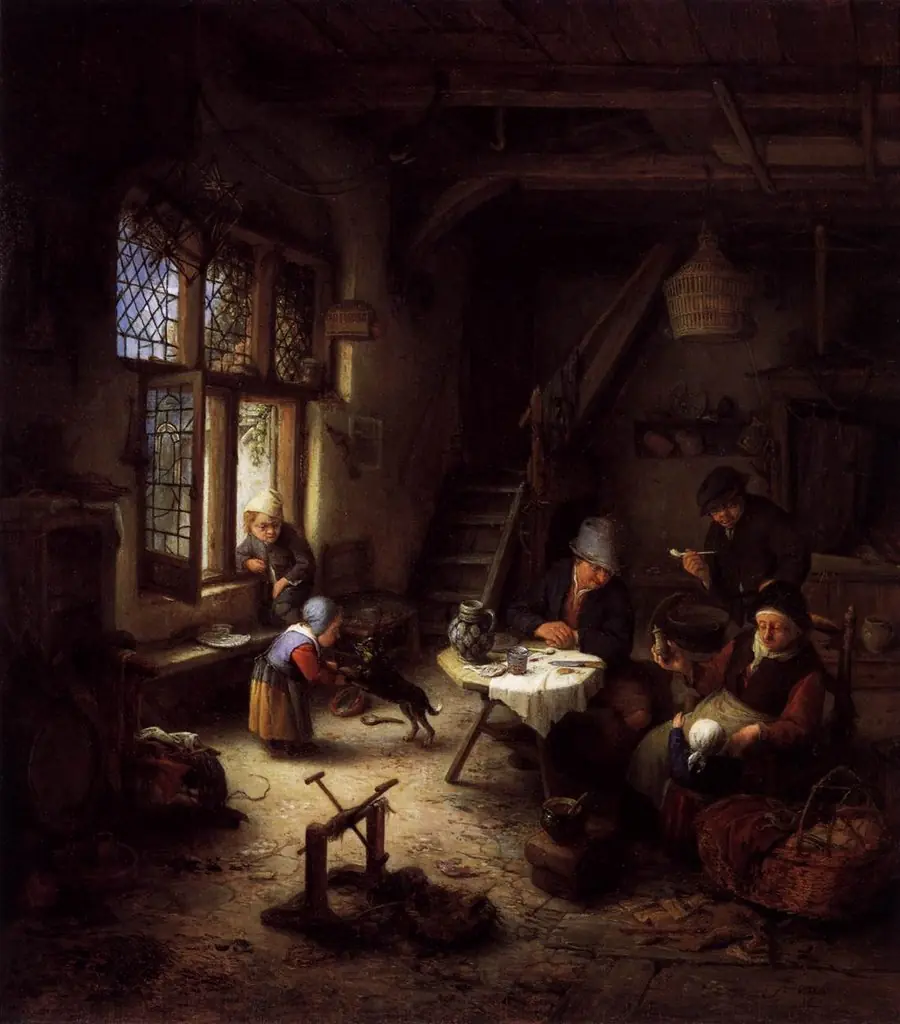
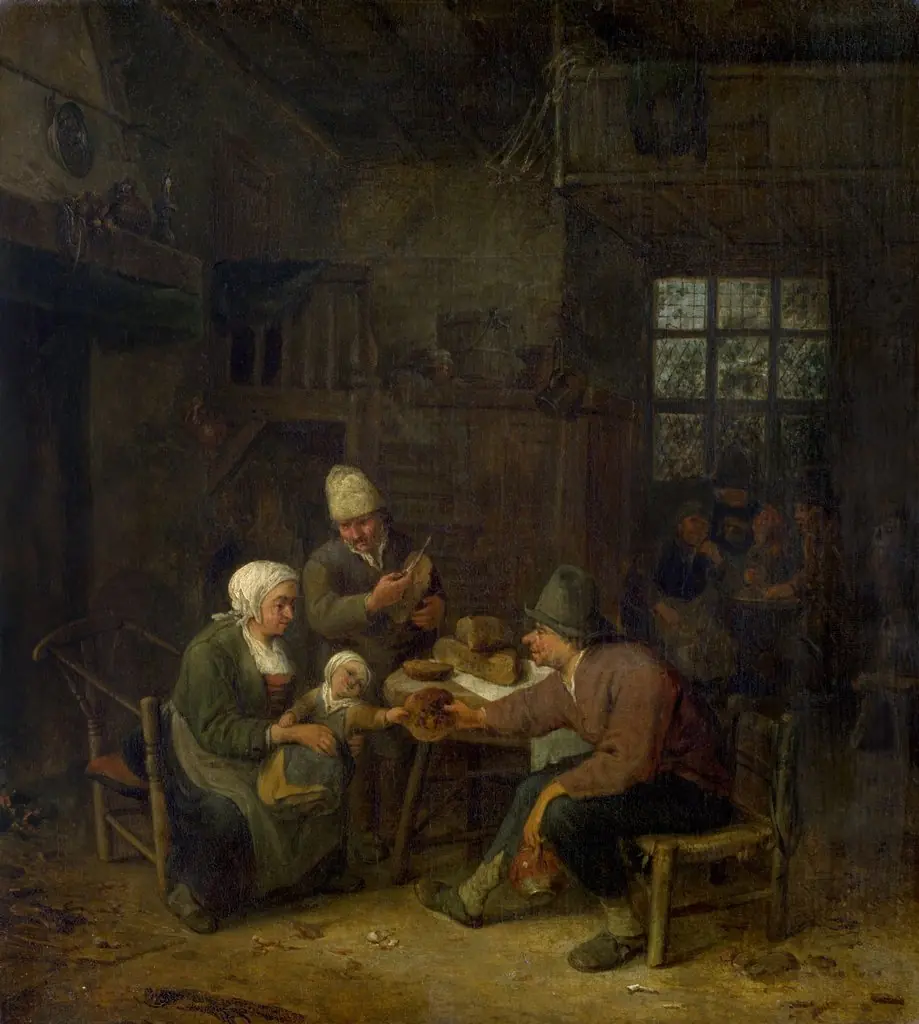
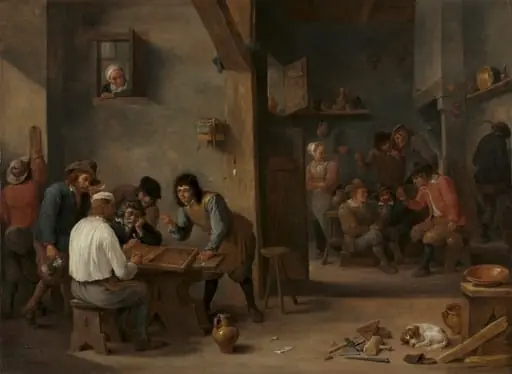
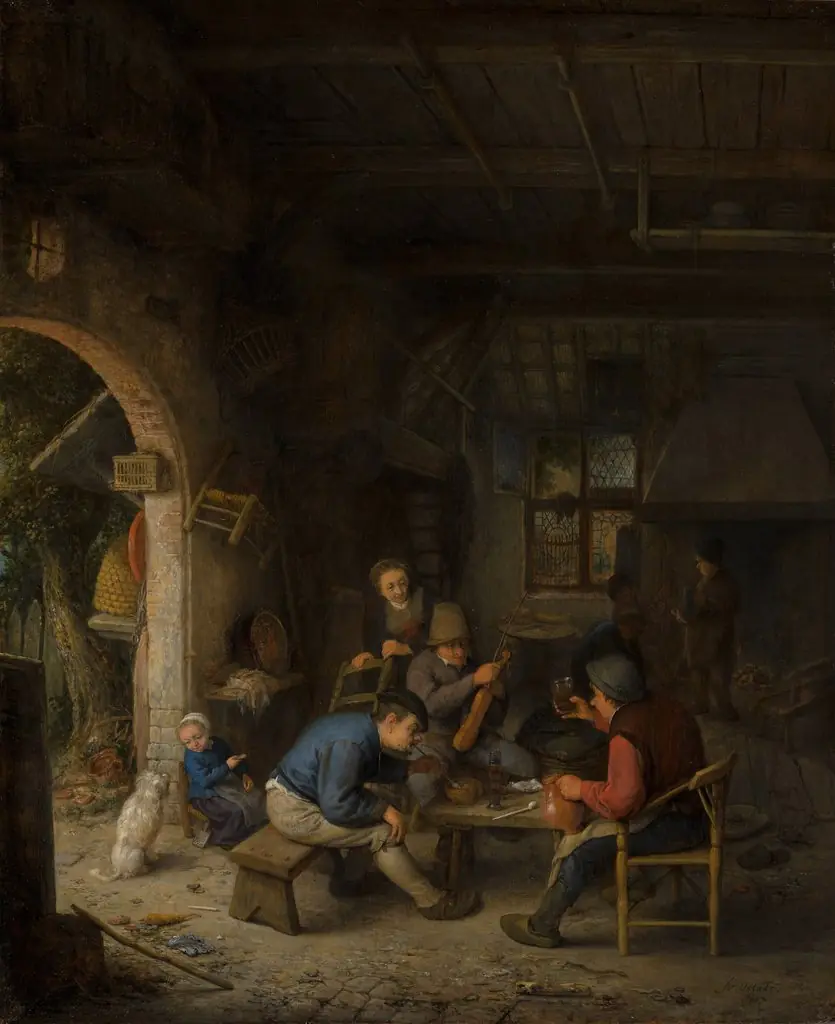
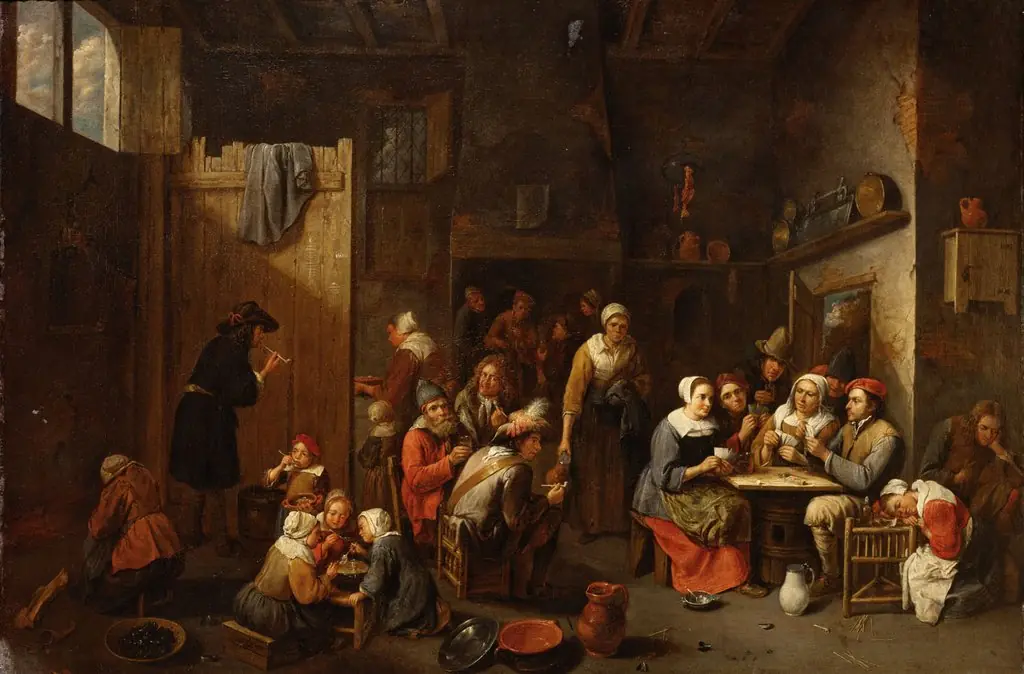
The work depicts a rustic interior where several peasants gather around a central table, engaged in animated conversation and the consumption of ale.
Adriaen van Ostade's The Table in the Village Inn, executed in 1660, is a quintessential example of Dutch Golden Age genre painting. The work depicts a rustic interior where several peasants gather around a central table, engaged in animated conversation and the consumption of ale. The composition is anchored by the figures clustered in the foreground, with one man prominently smoking a pipe, a common motif in Ostade's depictions of rural leisure.
Light enters from a window on the left, casting a warm, directional glow that illuminates the faces and hands of the drinkers while leaving the background in deep shadow, a technique that enhances the intimate, earthy atmosphere of the scene. Painted during the height of Ostade's career, this work reflects his mature style, characterized by a refined handling of light and a sympathetic, albeit unsentimental, observation of lower-class life. Unlike his earlier, more caricatured depictions of peasants, this painting demonstrates a greater attention to individual character and the subtle textures of the wooden interior and clothing.
The Table in the Village Inn stands as a significant contribution to the tradition of tavern scenes, illustrating the social dynamics and daily rituals of 17th-century Dutch village culture.
Subject & Meaning
The scene centers on a group of men gathered around a wooden table, drinking and conversing while one figure smokes a pipe. Light filters through a left‑hand window, illuminating the faces and casting soft shadows. The surrounding walls are decorated with everyday objects, a large jug, a basket, emphasizing the ordinary, communal atmosphere of village life.
Technique & Style
Van Ostade employs a restrained palette and careful modeling of light, creating a chiaroscuro effect that highlights the figures against the dim interior. The brushwork is fine in the facial details yet looser in the background, a hallmark of his approach to rendering texture and spatial depth in genre scenes.
History & Provenance
Painted in the later stage of van Ostade’s career, the work entered the Gemäldegalerie Alte Meister’s holdings in the 19th century, though earlier ownership records are sparse. Its acquisition reflects the museum’s focus on Dutch Golden Age paintings and the artist’s reputation for depicting everyday Dutch society.
Context
The painting belongs to a broader tradition of 17th‑century Dutch genre art that celebrated ordinary activities. Van Ostade, a pupil of Adriaen Brouwer, often portrayed tavern interiors, using them as a lens to explore social interaction, humor, and the moral undertones of communal drinking.
Artist & collection

Artist
Adriaen van Ostade (baptized as Adriaen Jansz Hendricx 10 December 1610 – buried 2 May 1685) was a Dutch Golden Age painter of genre works, showing the everyday life of ordinary men and women.