Artwork
Cupids and Geniuses
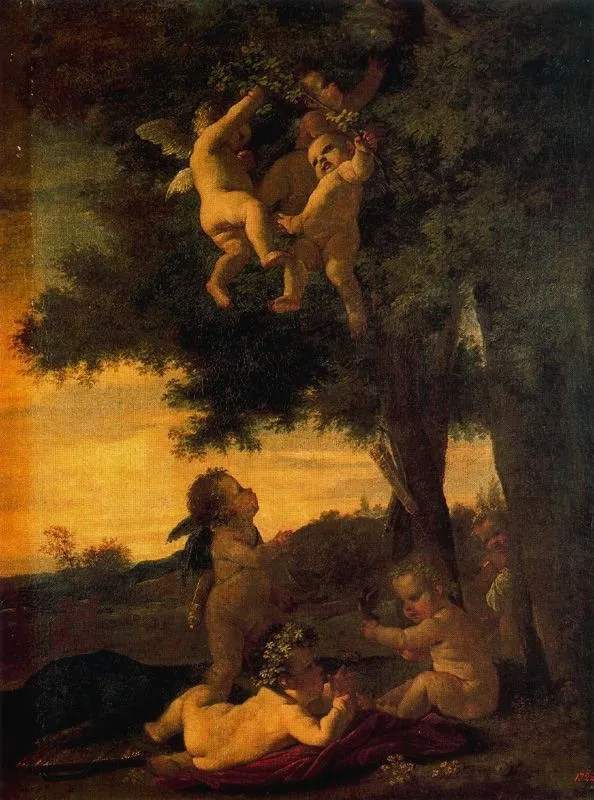
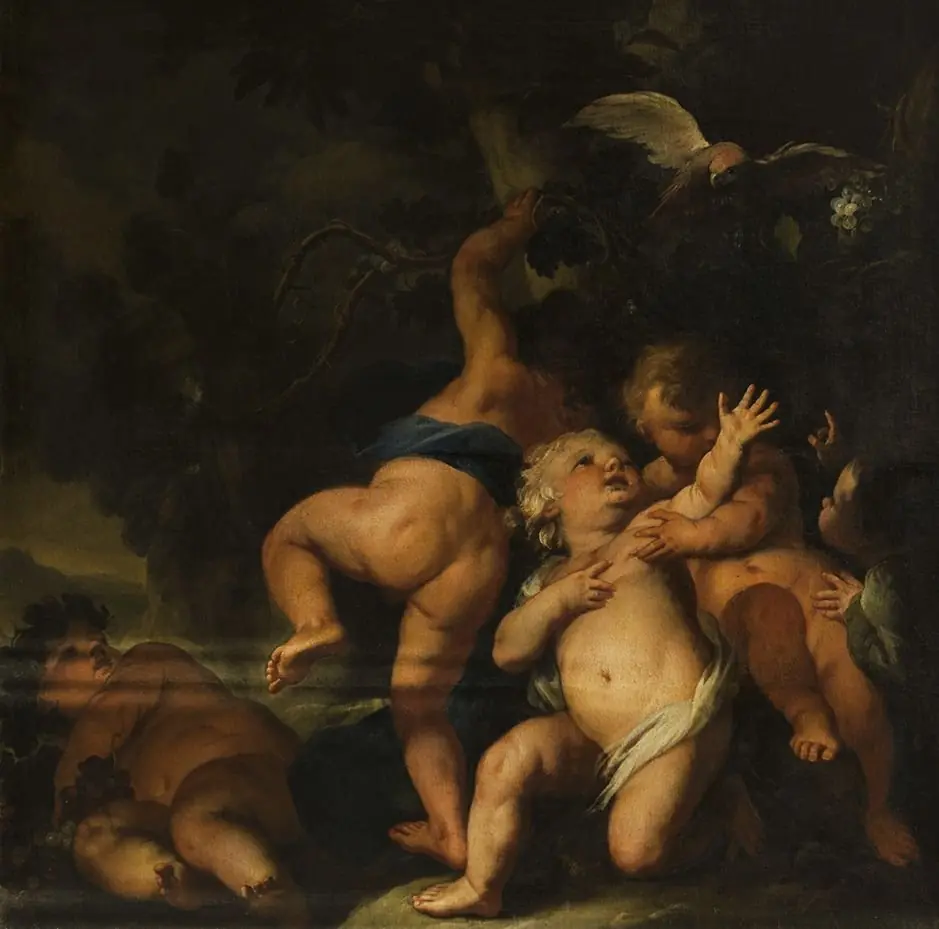
Cupids and Geniuses is an oil painting by the High Baroque Italian artist Nicolas Poussin. It dates from 1631 and is held in the collection of the Hermitage Museum.
About this work
Overview
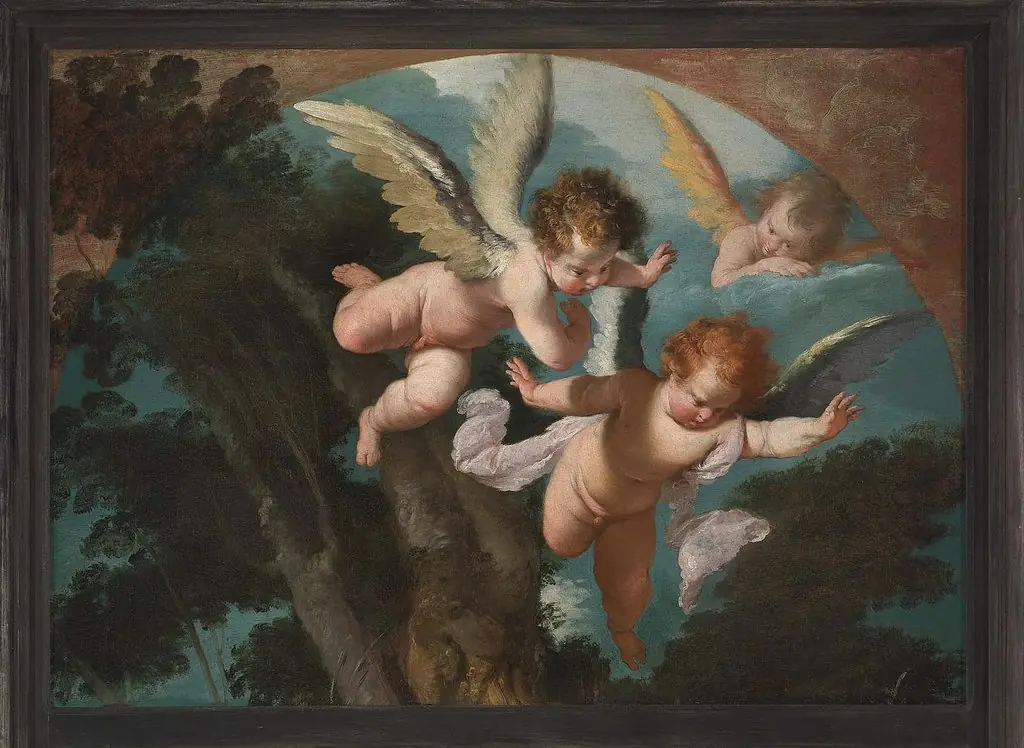
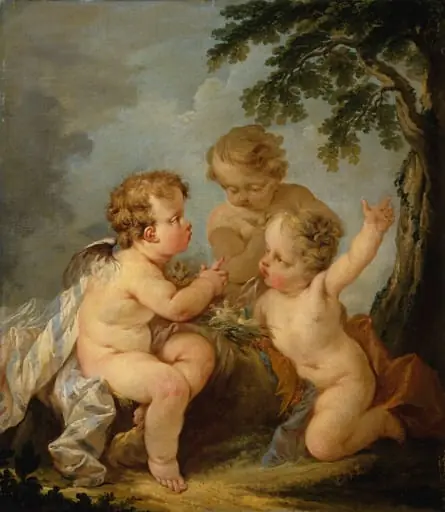
Nicolas Poussin's 'Cupids and Geniuses' is a 1631 mythological oil painting featuring three nude, winged children amidst a natural setting, characterized by warm colors and dynamic poses.
Subject & Meaning
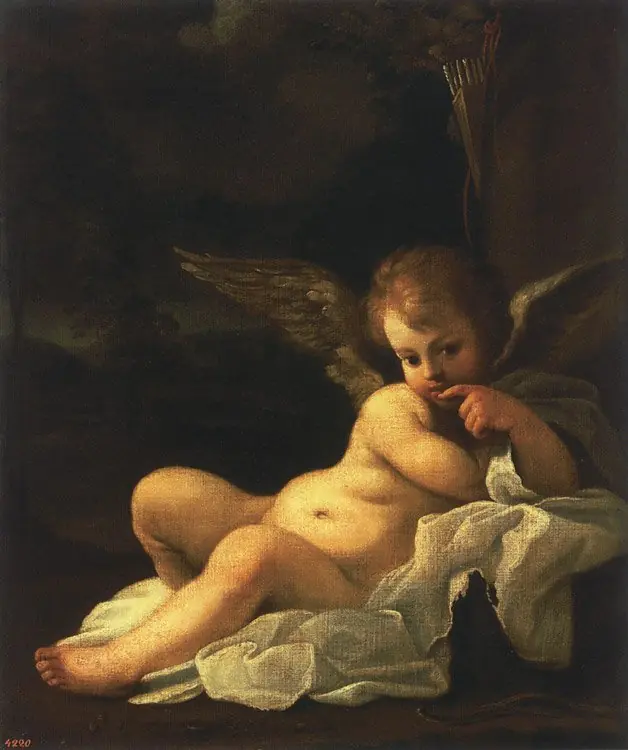
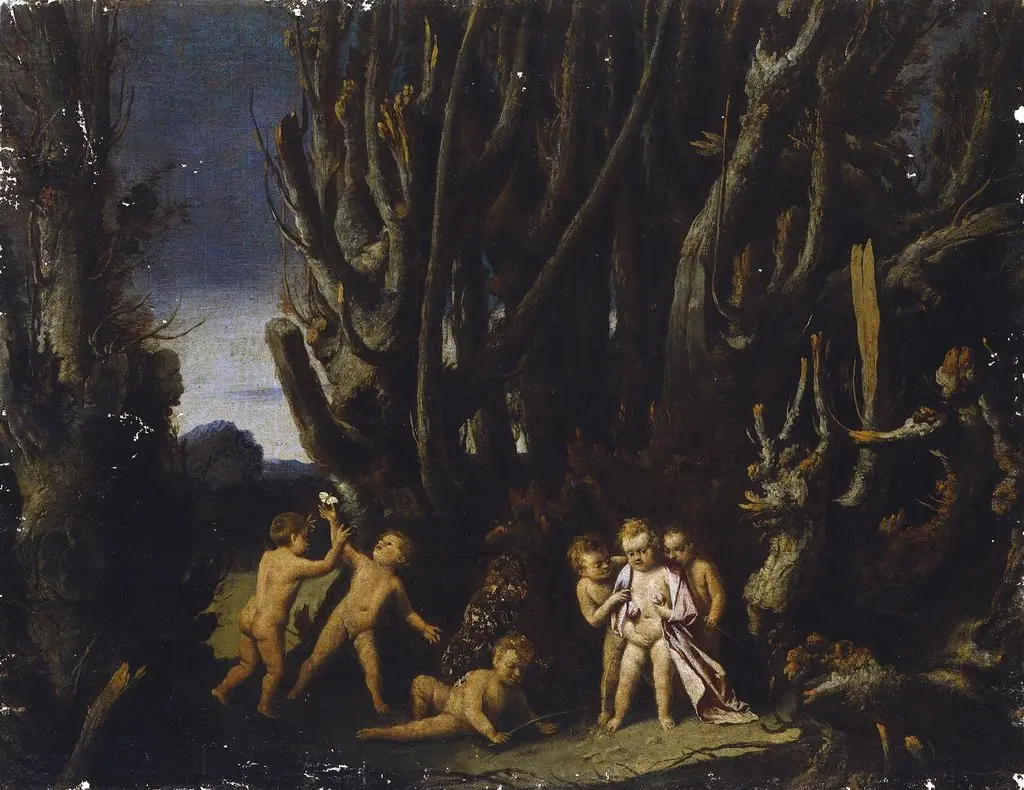
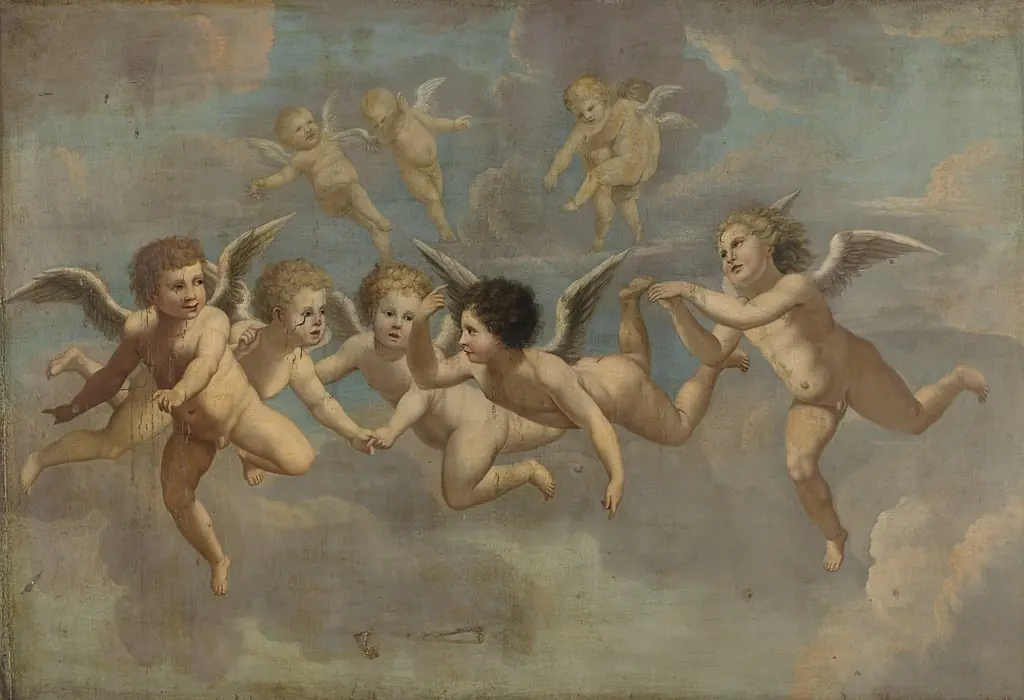
The painting depicts a scene of playful, winged youths (often referred to as putti in art historical contexts), two airborne and one seated, entwined with foliage. The subject matter draws on mythological themes, though the specific narrative or figures beyond the generic representation of Cupids or Geniuses is not explicitly defined.
Technique & Style
Poussin employs oil paint to achieve a warm, luminous effect, notably in the orange-glowing sky. The composition contrasts light, smooth-skinned figures with a densely branched, dark tree, highlighting the artist's use of chiaroscuro and attention to textural contrast.
History & Provenance
Created in 1631, 'Cupids and Geniuses' is now part of the collection at the State Hermitage Museum.
Context
The work reflects Baroque-era fascination with mythological subjects and the depiction of putti, common in European art of the time, symbolizing innocence, love, or divine presence.
Legacy
While specific influences or direct artistic descendants of 'Cupids and Geniuses' are not widely highlighted, it contributes to Poussin's broader legacy in Baroque painting and the ongoing representation of mythological themes in Western art.
Artist & collection
Artist
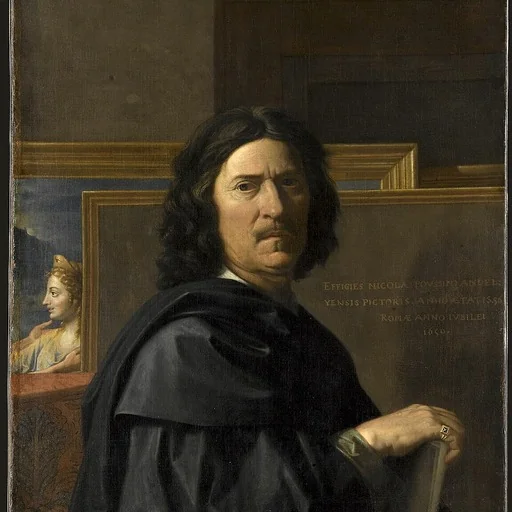
Nicolas Poussin (UK: US: French:; June 1594 – 19 November 1665) was a leading painter of the classical French Baroque style, although he spent most of his working life in Rome.