Artwork
Esther before Ahasuerus
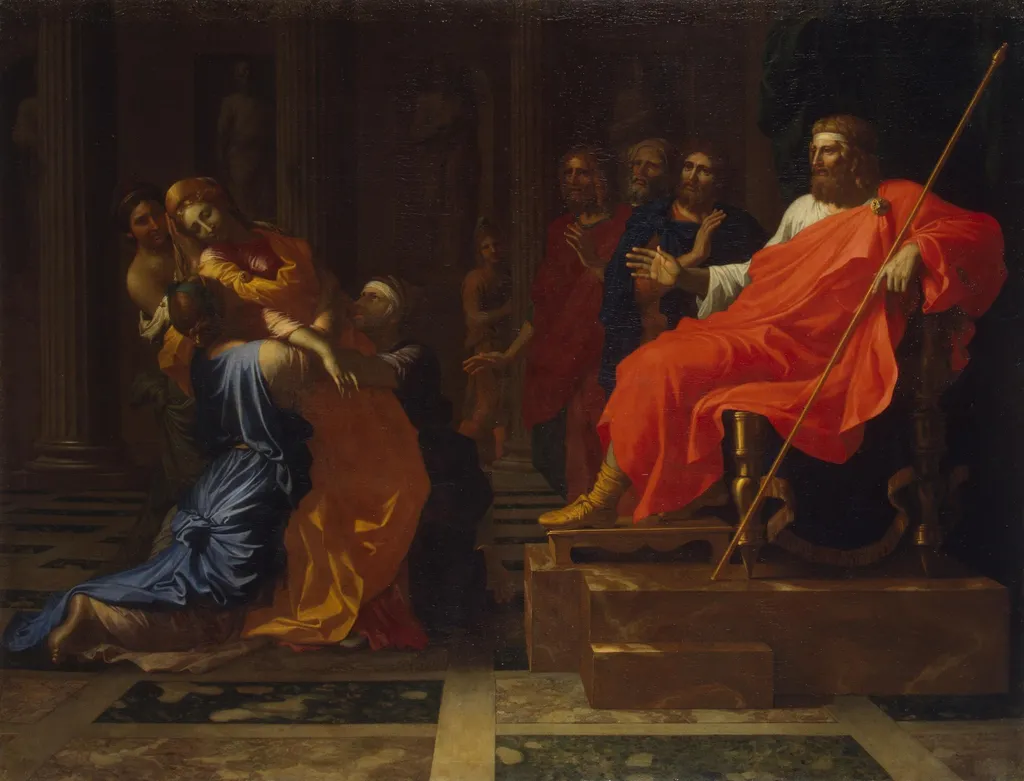
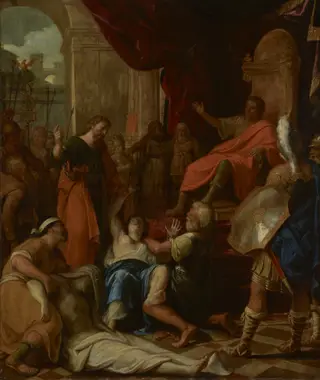
Esther before Ahasuerus is an oil painting by the Classicist painting artist Nicolas Poussin. It dates from 1655 and is held in the collection of the Hermitage Museum.
About this work
Subject & Meaning
By choosing this specific episode, the artist highlights the protagonist's extreme vulnerability and the life-threatening risk she undertakes for her cause.
Nicolas Poussin's 1655 painting depicts a dramatic moment from the biblical Book of Esther, illustrating the scene where Esther faints while appearing before King Ahasuerus. The work captures the tension of Esther approaching the Persian monarch, identified with Xerxes I, without a prior summons to intercede on behalf of the Jewish people. By choosing this specific episode, the artist highlights the protagonist's extreme vulnerability and the life-threatening risk she undertakes for her cause.
As a religious artwork rooted in the Classical movement, the composition emphasizes the gravity of the narrative through the figure of the swooning queen and the imposing presence of the enthroned king.
Technique & Style
Painted in oil on canvas, this 1655 religious work exemplifies Poussin's classicist approach. The composition measures 199 cm in height by 155 cm in width, and was produced in France. The painting depicts the biblical episode of Esther's fainting before the enthroned Ahasuerus, a subject drawn from the Book of Esther that was widely treated in sixteenth- and seventeenth-century art.
The handling reflects the ordered, narrative clarity characteristic of Poussin's mature style, with the dramatic moment of Esther's collapse staged within a formally balanced arrangement. The work belongs to the Classicism movement.
History & Provenance
Nicolas Poussin created the oil-on-canvas painting Esther before Ahasuerus in 1655, depicting a scene from the biblical Book of Esther. The work was produced in France during the mid-1650s. Its provenance traces back to the collection of Catherine II of Russia.
The painting entered the Hermitage Museum in Saint Petersburg between 1763 and 1770, where it remains part of the permanent collection today.
The painting is held by the Hermitage Museum in Saint Petersburg, Russia. It entered the museum between 1763 and 1770, having previously been part of the collections of Catherine II. No specific inventory or accession number is provided in the sources, and no exhibition history is documented.
Context
Nicolas Poussin's Esther before Ahasuerus (1655) stands as a significant work within the French Classicism movement, illustrating a pivotal moment from the Book of Esther. The painting depicts the biblical narrative where Esther faints before King Ahasuerus while interceding for the Jewish people, a subject frequently explored in 16th and 17th-century art. Poussin's treatment of this theme aligns with his status as a leading figure of the classical school, distinguishing his approach from contemporaries who tackled similar biblical episodes with different stylistic emphases.
The work's historical trajectory, moving from the collection of Catherine II to the Hermitage Museum in Saint Petersburg, further cements its place in the canon of European religious art. Its composition reflects the era's fascination with dramatic biblical storytelling, sharing thematic ground with works by artists such as Tintoretto and Artemisia Gentileschi.
Overview
Nicolas Poussin’s oil on canvas, dated 1655, presents a biblical episode titled Esther before Ahasuerus. The work resides in the State Hermitage Museum, where it forms part of the collection’s 17th‑century French paintings. The composition captures a moment of intense courtly drama, rendered in Poussin’s characteristic clarity of form and controlled palette.
Own this work as a print
Artist & collection
Artist
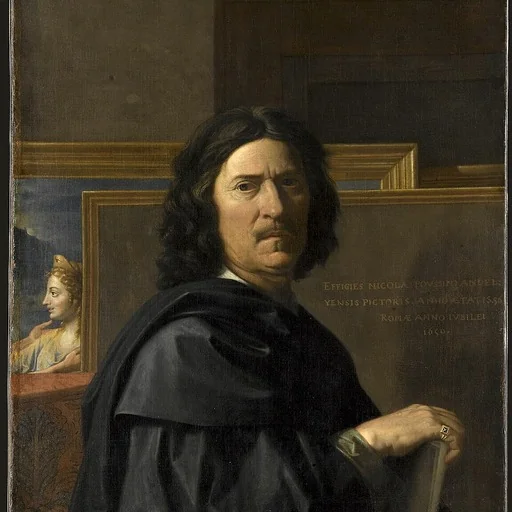
Nicolas Poussin (UK: US: French:; June 1594 – 19 November 1665) was a leading painter of the classical French Baroque style, although he spent most of his working life in Rome.

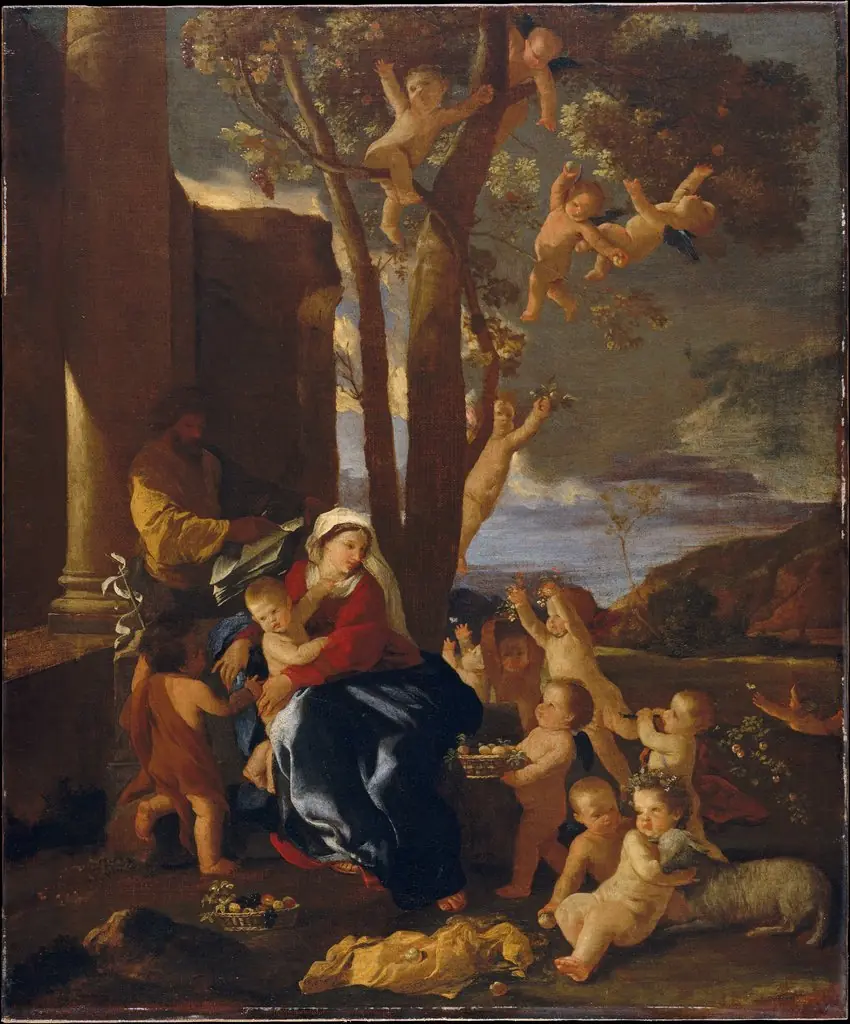
- Christ Receiving the Children
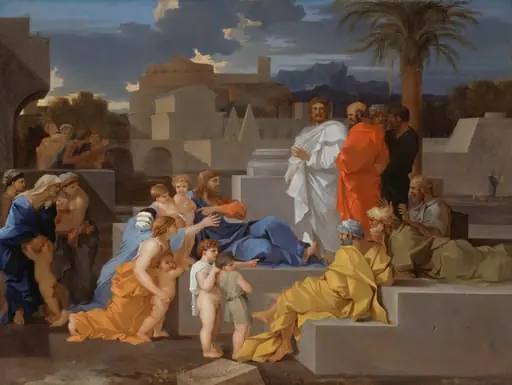 Christ Receiving the Children
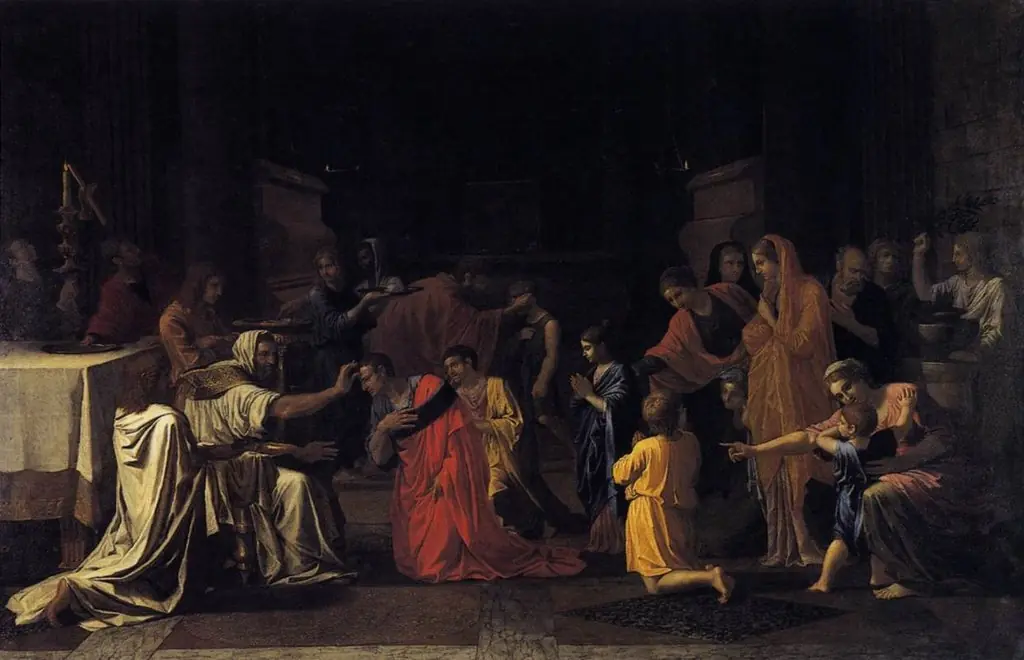 The Sacrament of Confirmation
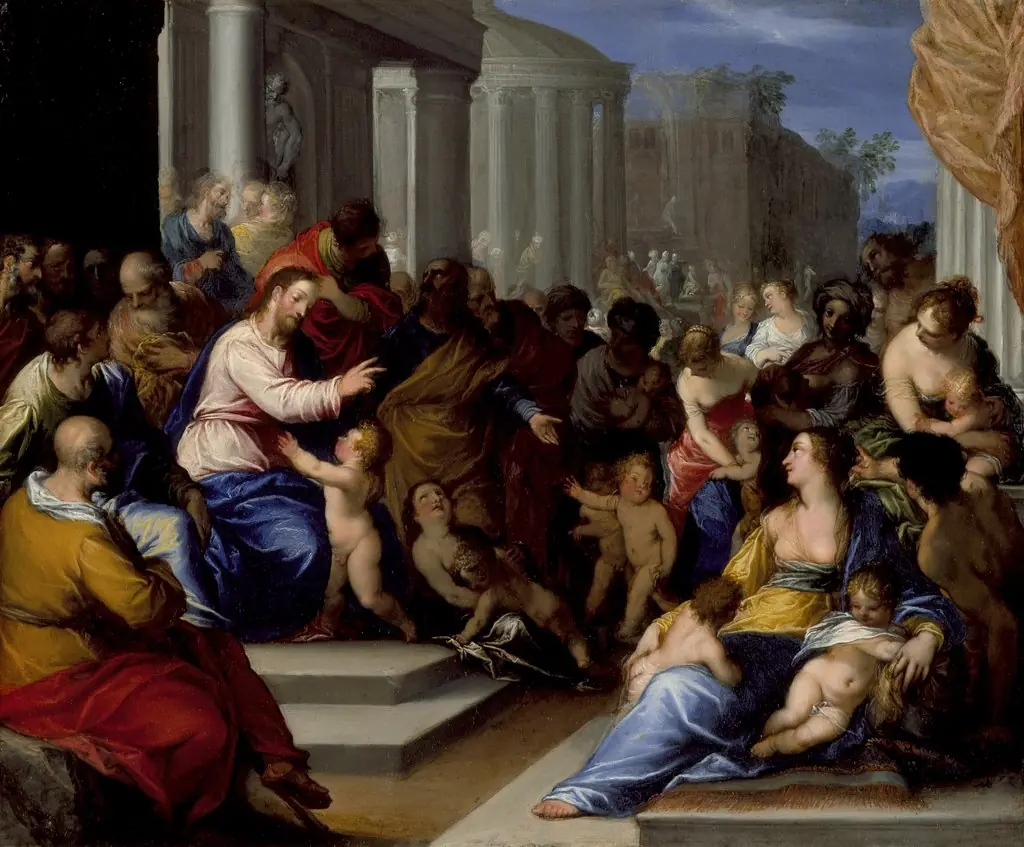 Suffer Little Children to Come Unto Me
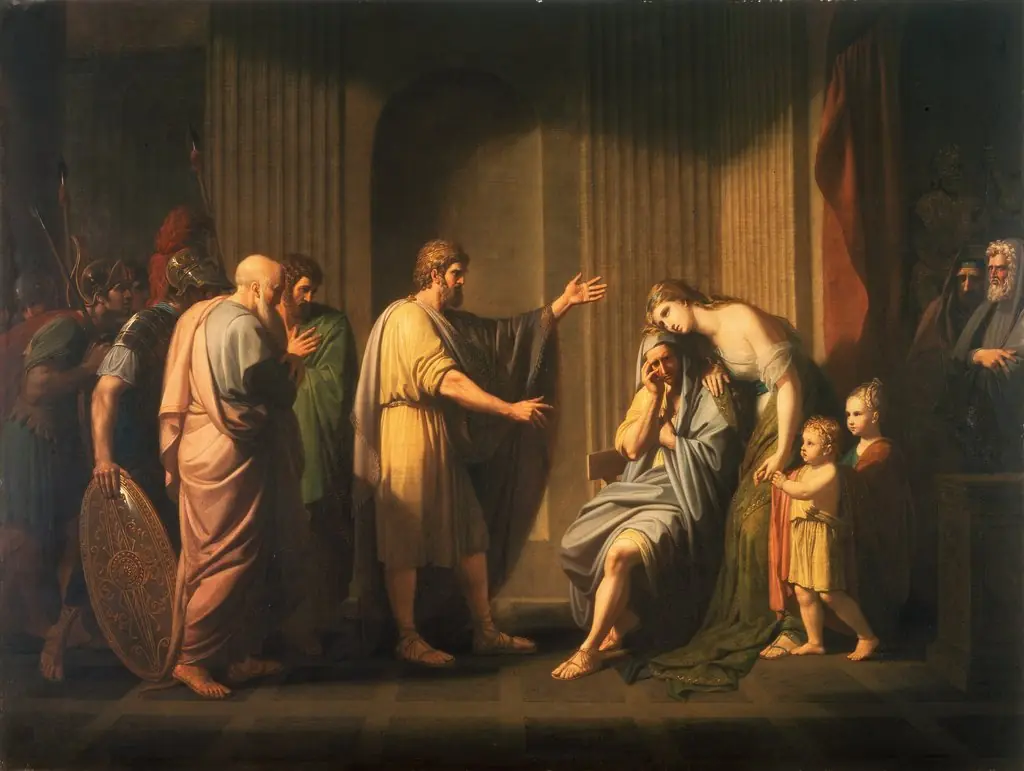 Cleombrotus Ordered into Banishment by Leonidas II, King of Sparta
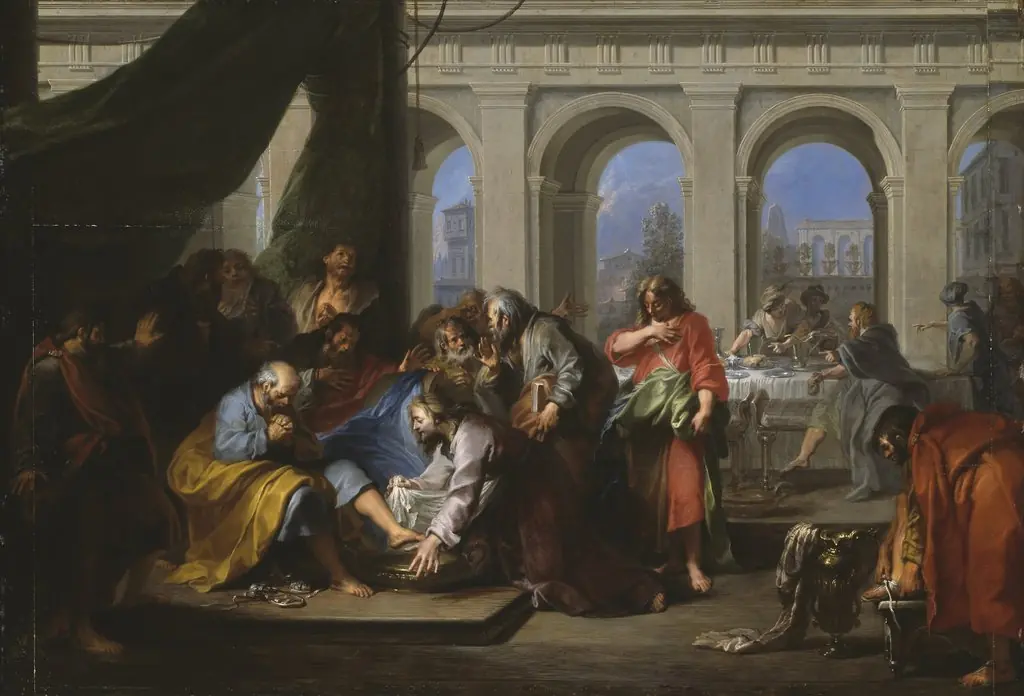 Christ Washing the Feet of His Disciples
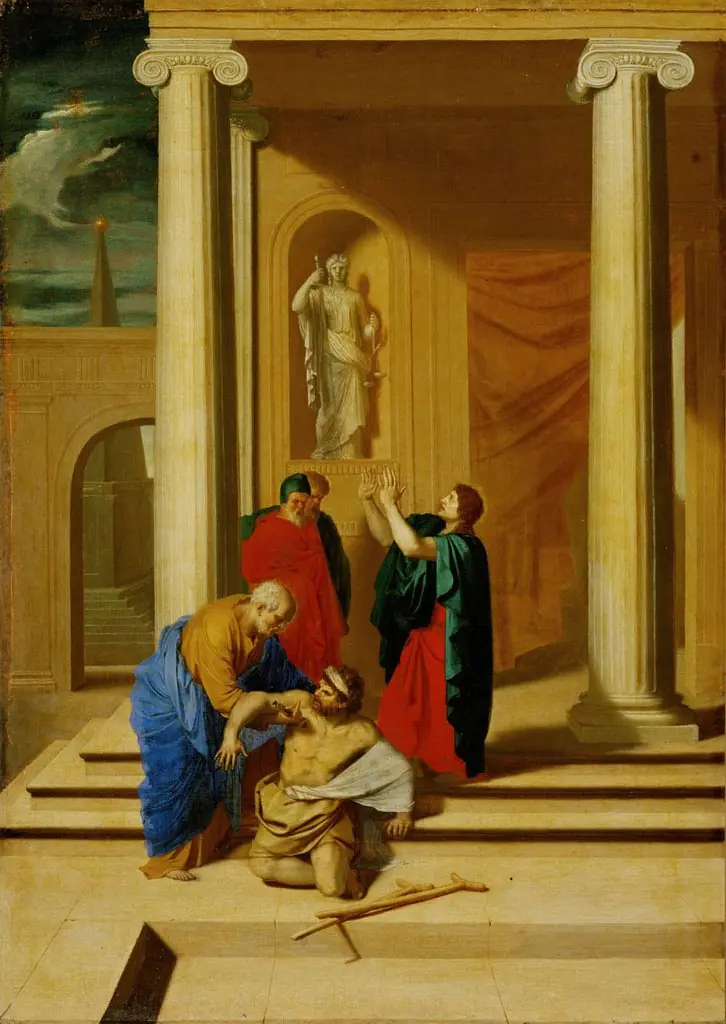 Peter and John heal a lame man in the temple
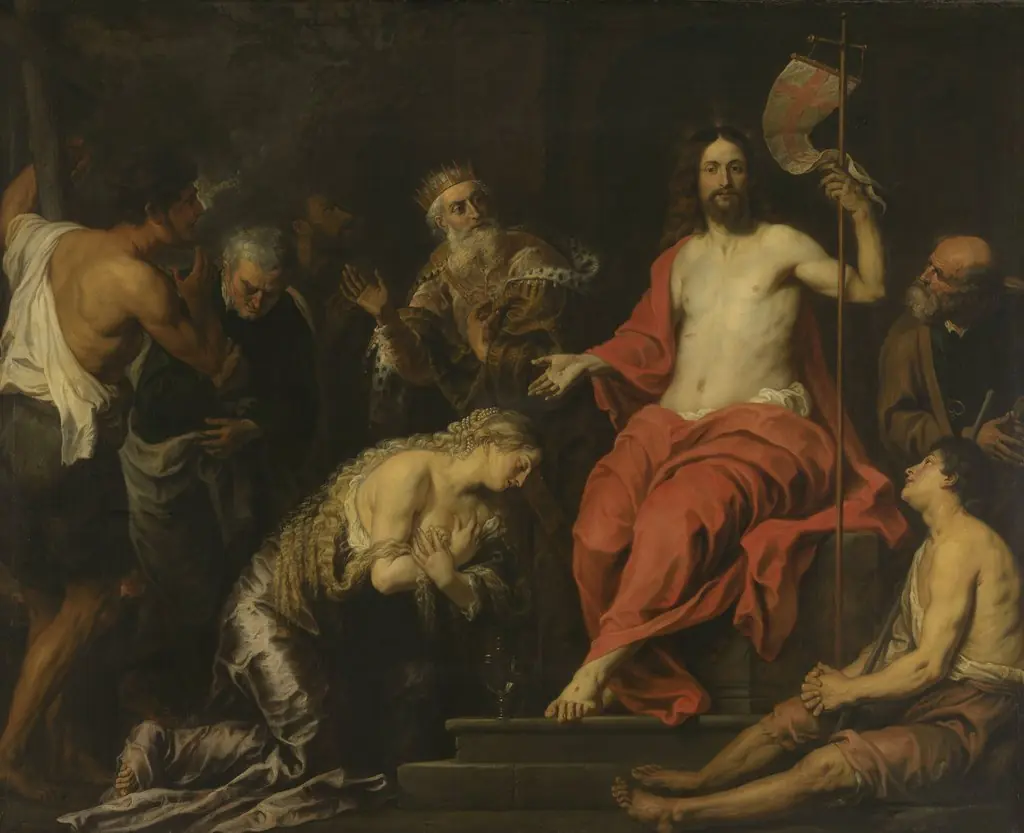 Christ and the repentant sinners
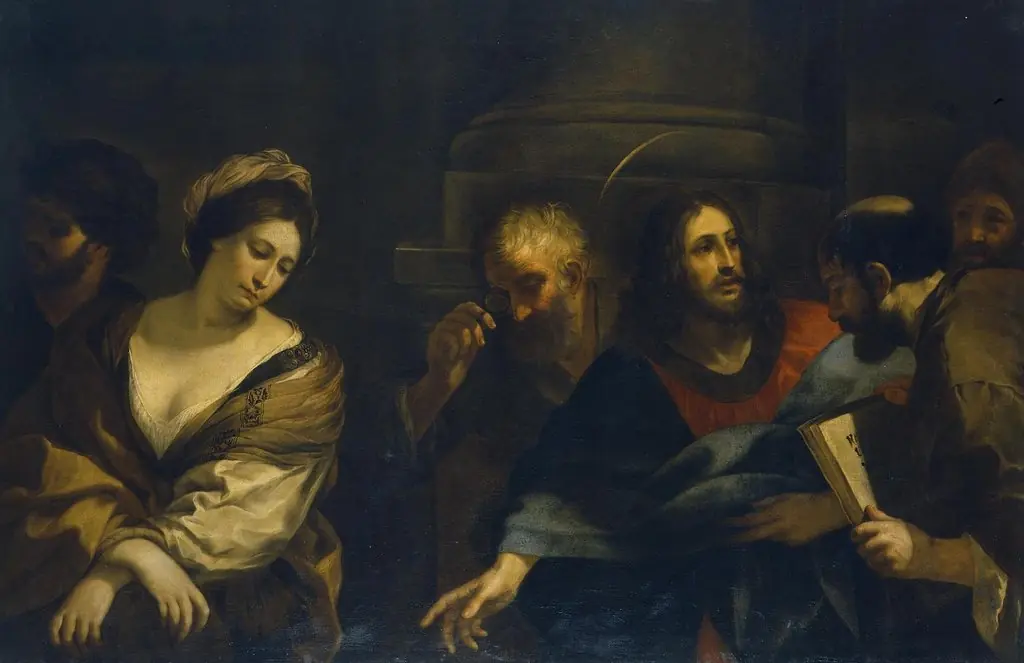 Christ and the Woman Taken in Adultery
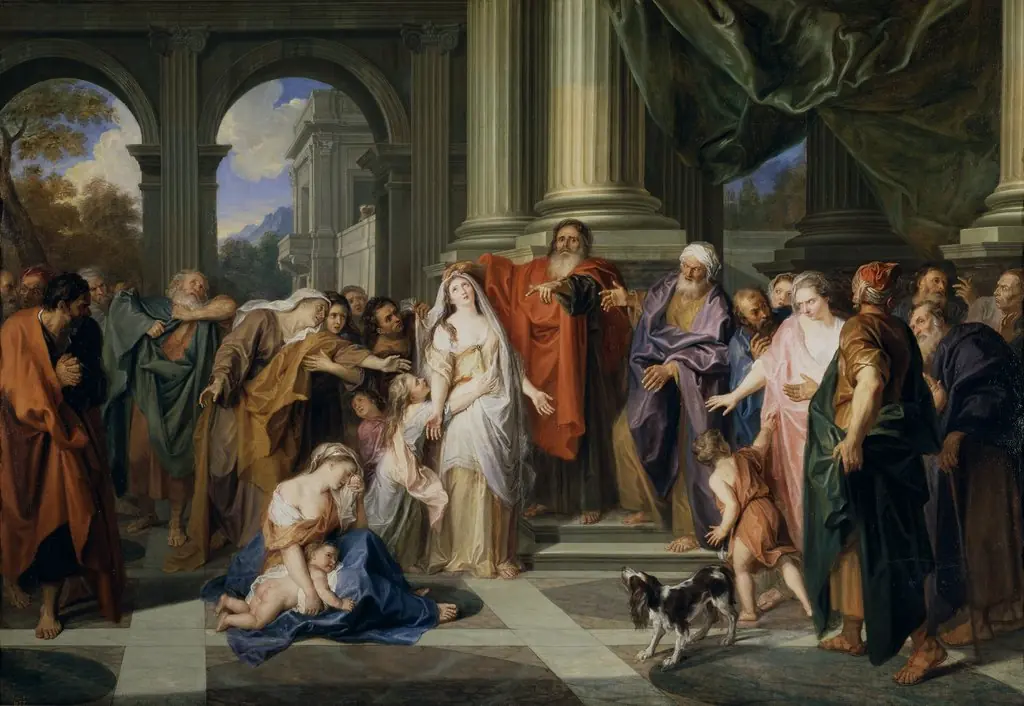 Susannah accused of adultery
 Christ Before Pilate
 Christ Washing the Feet of His Disciples