Artwork
Maurice, Prince of Orange
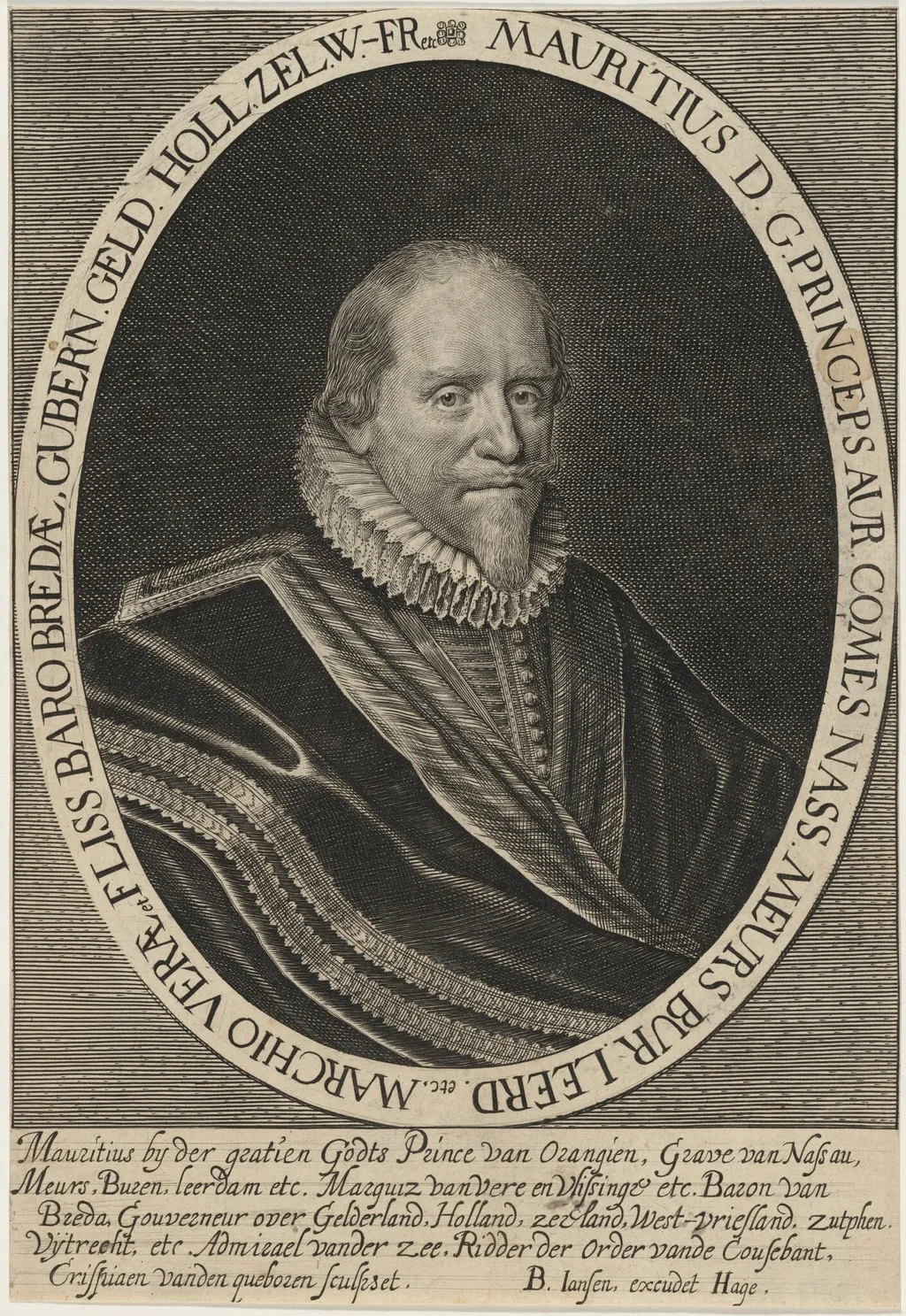
Maurice, Prince of Orange is an ink print by the Baroque artist Crispyn van den Queboorn. It dates from 1628 and is held in the collection of the National Gallery of Art.
About this work
Overview
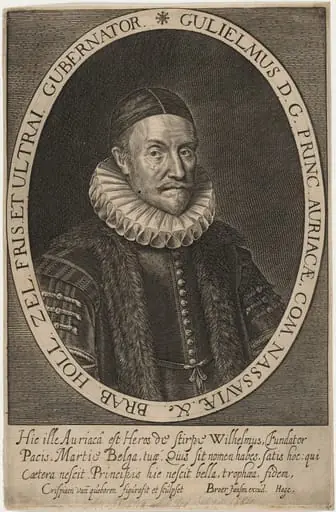
This 1628 engraving by Crispyn van den Queboorn depicts Maurice, Prince of Orange, a key military and political leader of the Dutch Republic.
This 1628 engraving by Crispyn van den Queboorn depicts Maurice, Prince of Orange, a key military and political leader of the Dutch Republic. Rendered in monochrome, the portrait emphasizes precision and formality, typical of early 17th-century printmaking. The image is framed by an ornate border of Latin titles, reinforcing his status. The artist’s signature appears subtly at the base, a common practice among engravers of the period.
Subject & Meaning
Maurice is portrayed as a composed, aging statesman, his white beard and furrowed brow suggesting experience and gravity. His attire, a dark coat over chainmail, combines civilian authority with military readiness, reflecting his dual role as noble and commander. The dense textual border functions as a heraldic device, cataloging his titles to assert legitimacy and lineage, common in portraits of European elites seeking to cement their public image.
Technique & Style
The portrait relies on fine, controlled lines characteristic of metal engraving, where ink is pressed from incised grooves in a copper plate. Facial details, wrinkles, stubble, and the texture of the ruff, are rendered with meticulous cross-hatching. The background remains unadorned, directing focus to the figure.
The elaborate border contrasts with the clean central composition, showcasing the engraver’s skill in balancing decorative elements with portraiture.
History & Provenance
Created in 1628, the engraving was produced during Maurice’s later years, shortly before his death in 1625. Though dated after his passing, it likely drew from earlier portraits or life studies. Such prints circulated among elites and officials, serving as both commemorative objects and political tools.
The work’s survival suggests it was valued in institutional or private collections, possibly within the Dutch Republic’s administrative circles.
Context
In early 17th-century Europe, engraved portraits were vital for disseminating the likenesses of rulers beyond painted originals. Maurice, as stadtholder and military reformer, was a frequent subject. Van den Queboorn’s work aligns with a broader trend of using print to reinforce authority through visual symbolism.
The inclusion of Latin titles reflects the humanist culture of the Dutch elite, who valued classical learning as part of their identity.
Legacy
The engraving remains a documented example of how print technology extended the reach of political imagery in the early modern era. While not widely reproduced today, it contributes to the visual record of Dutch leadership during the Eighty Years’ War. Its technical precision and formal composition reflect the standards of Northern European engraving, influencing later portraiture in print form.
Own this work as a print
Artist & collection