Artwork
Hermit Before a Crucifix
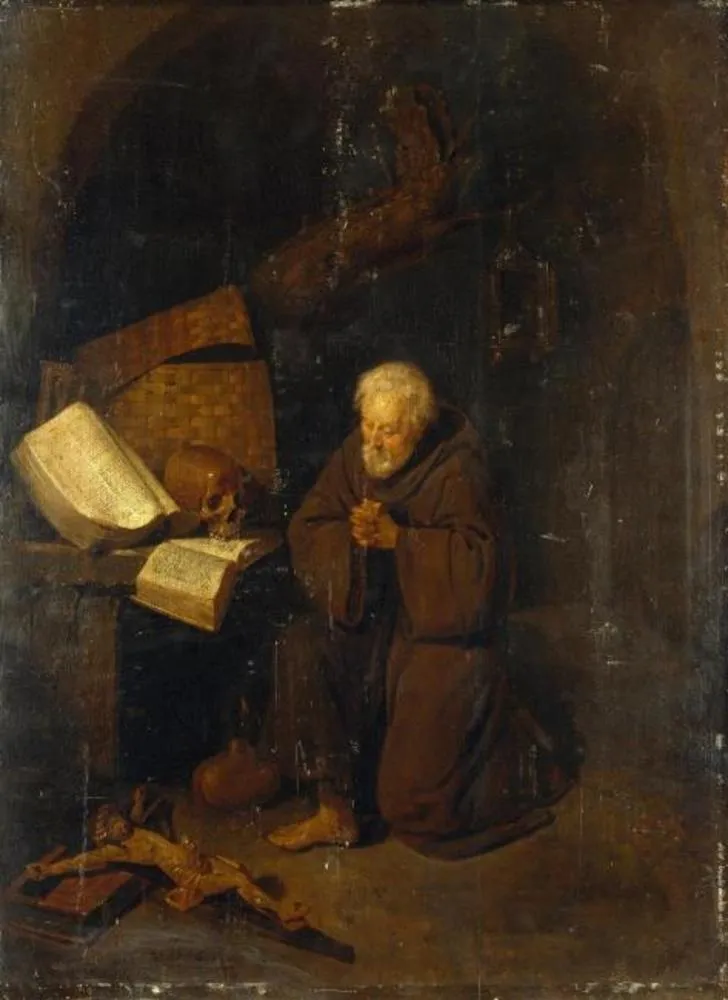
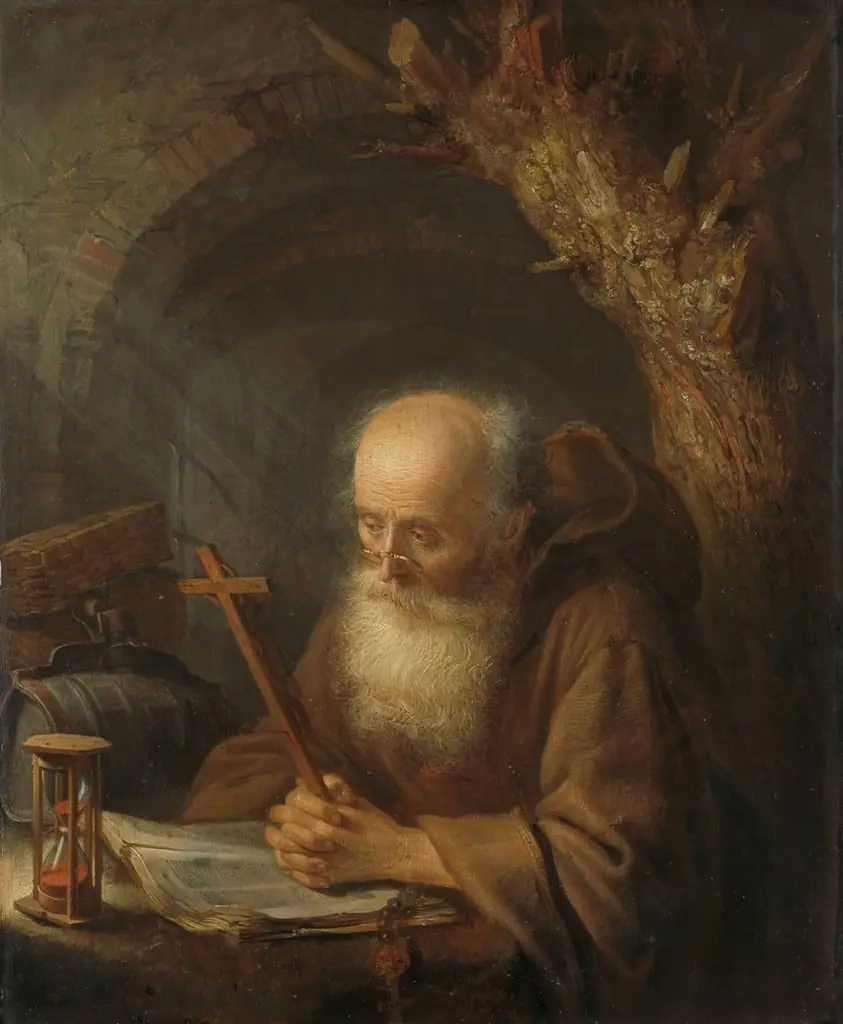
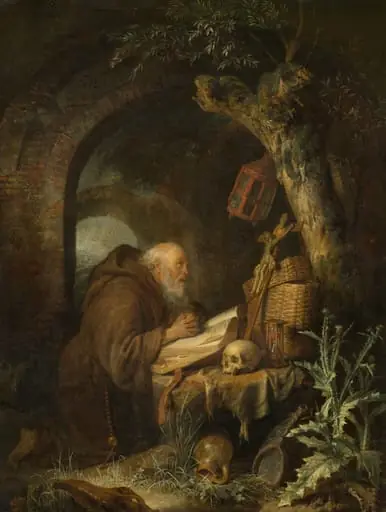
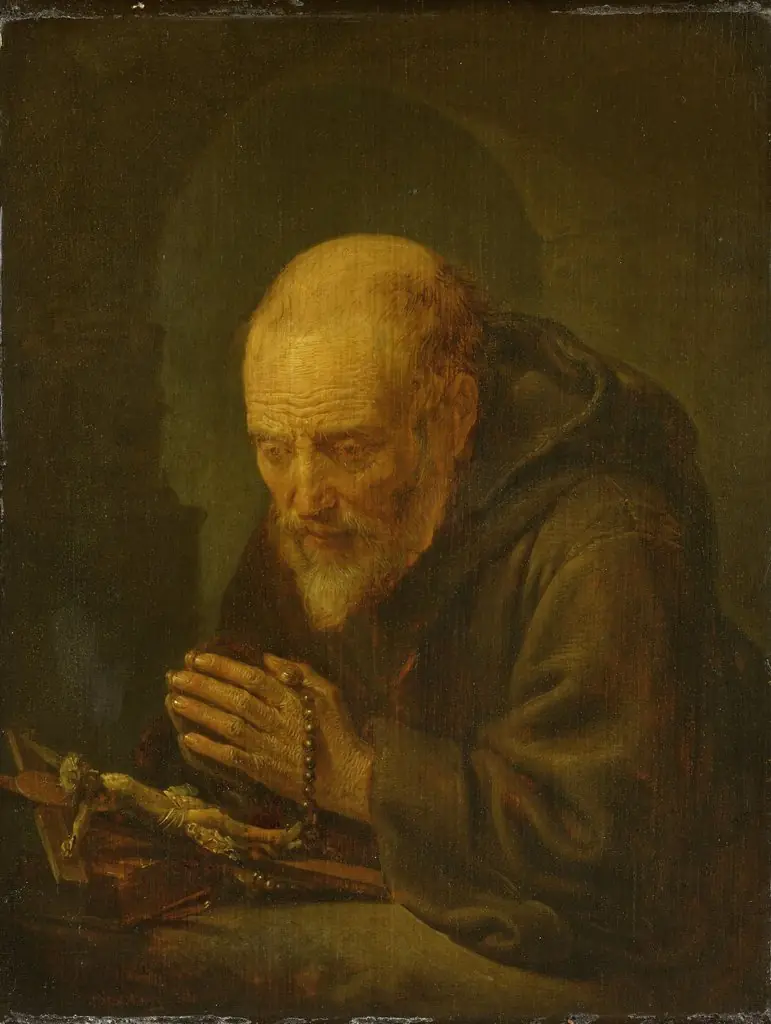
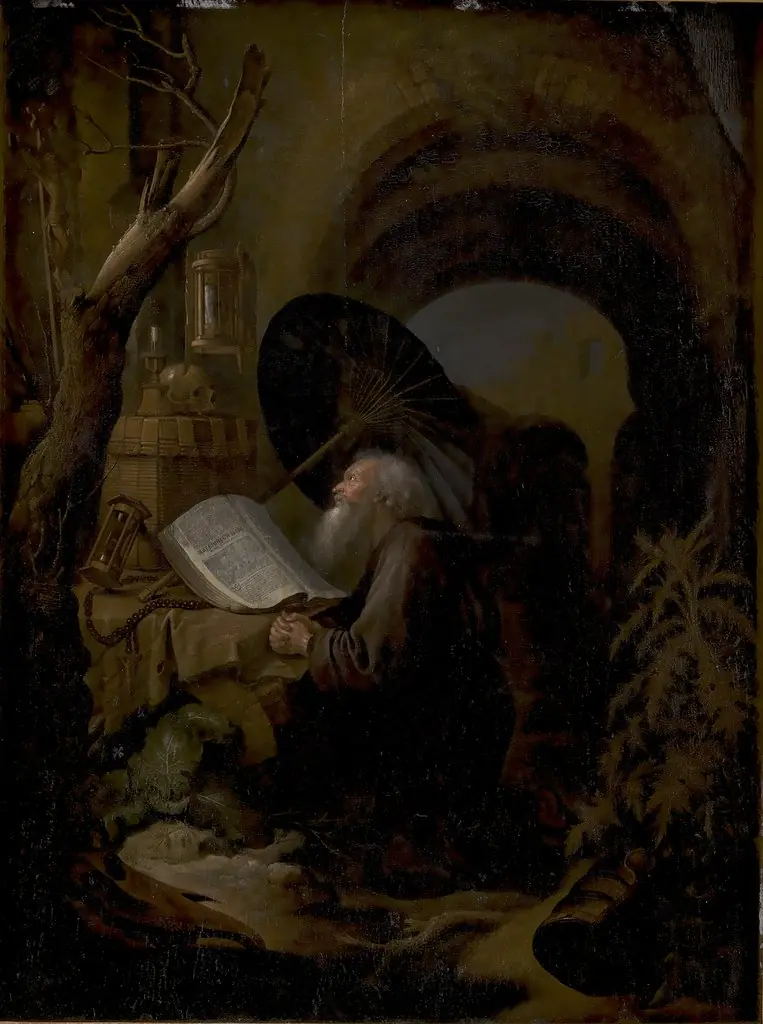
Hermit Before a Crucifix is an oil painting by the Dutch Golden Age artist Quirijn van Brekelenkam. It dates from 1660 and is held in the collection of the Hermitage Museum.
About this work
Overview
5 by 40 centimeters, this vertically oriented, intimate-scale work depicts a solitary hermit in prayer before a crucifix within a dimly lit interior.
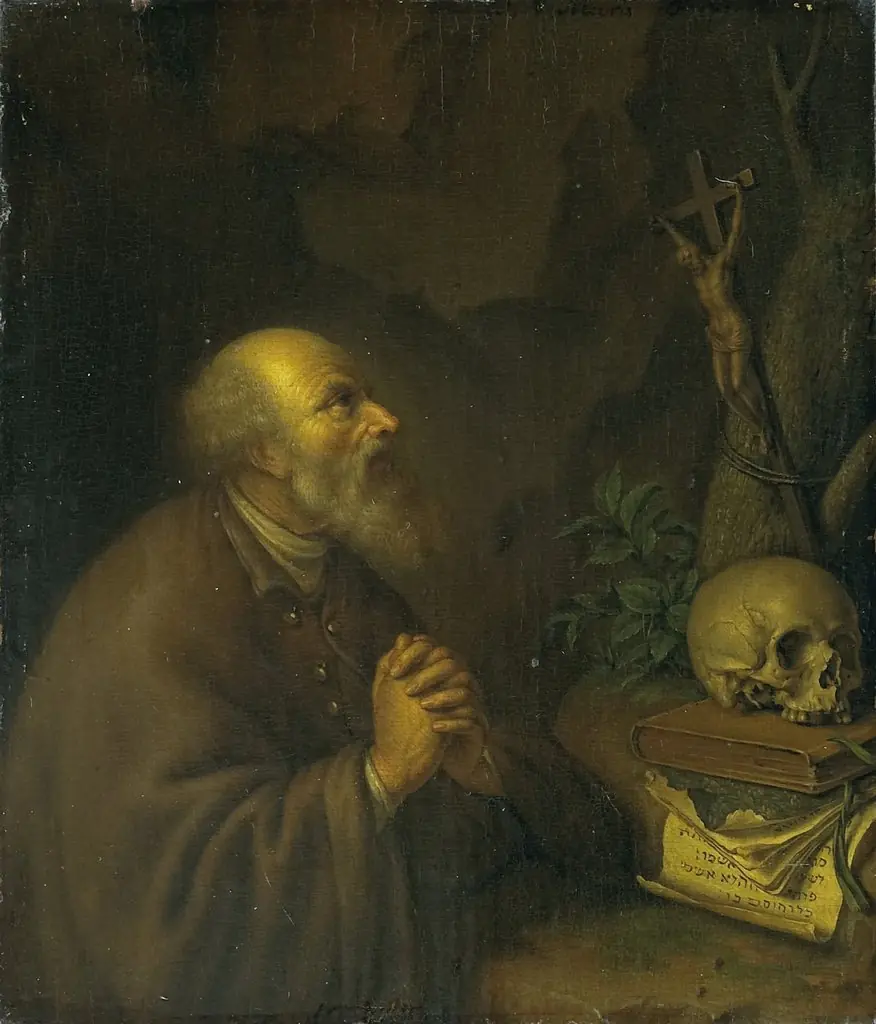
Hermit Before a Crucifix is an oil painting on panel by the Dutch Baroque artist Quirijn van Brekelenkam, dated to 1660. Measuring 54.5 by 40 centimeters, this vertically oriented, intimate-scale work depicts a solitary hermit in prayer before a crucifix within a dimly lit interior. The painting is held in the collection of the Hermitage Museum in Saint Petersburg, where it is accessioned under inventory number GЭ-1876. Though Van Brekelenkam is best known for his genre scenes of tailors' workshops and domestic interiors, this painting represents a significant devotional subject within his oeuvre, demonstrating the broader thematic range of a painter typically associated with the Leiden fijnschilder tradition.
Subject & Meaning
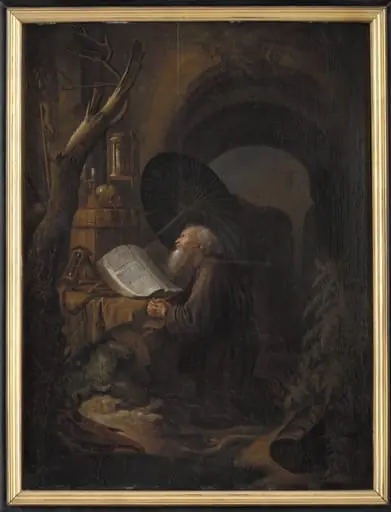
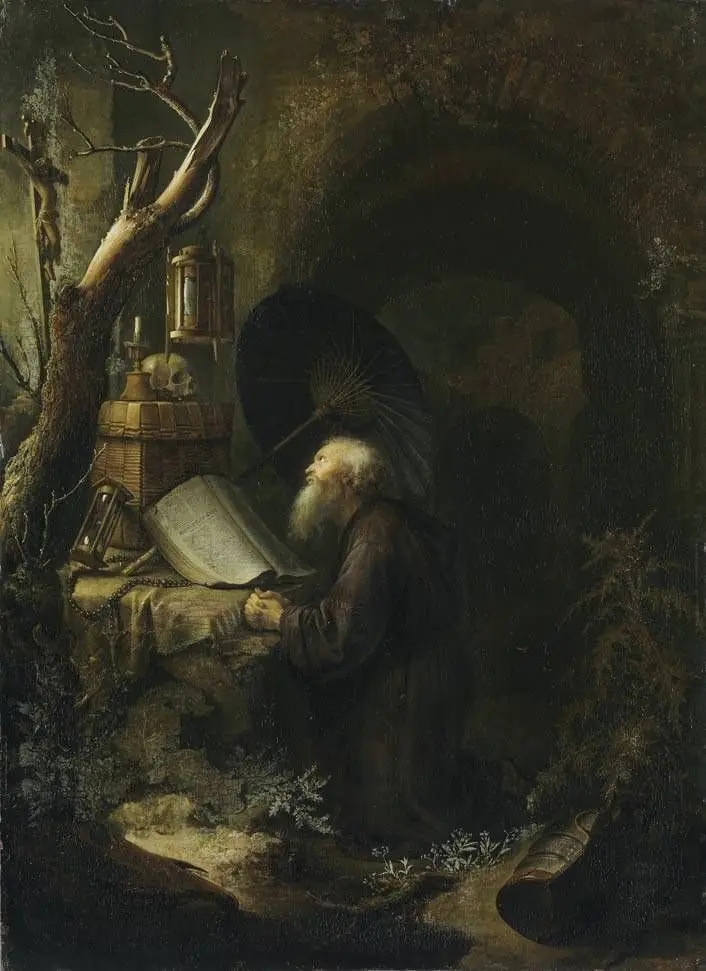
The painting presents an elderly, bearded hermit kneeling in prayer, his hands clasped at his chest and eyes lowered in contemplation. He wears a brown monastic robe and occupies the right center of the composition. Before him on the floor lies a crucifix bearing a small carved Christ figure, accompanied by a closed book and a rounded earthenware vessel. To his left, a rough wooden table or ledge supports an open large book, a smaller open book, and a human skull, with a woven basket and tilted wooden object leaning against a curved stone arch behind them. The iconography draws upon established vanitas and memento mori traditions: the skull serves as a reminder of human mortality, while the books suggest sacred study and the contemplative life. The crucifix anchors the scene in Christological devotion, inviting meditation on Christ's sacrifice. The concentrated illumination of the hermit's white hair, the book pages, and the skull against the near-black shadows creates a visual hierarchy that guides the viewer toward themes of spiritual preparation and earthly transience. The palette of deep browns, warm ochres, and dark shadows reinforces the austere, meditative atmosphere appropriate to the subject.
Technique & Style
Executed in oil on panel, the painting exhibits the smooth, blended brushwork characteristic of the Leiden fine painters, with particular refinement in the rendering of the figure and objects. The artist employs thicker texture in illuminated areas, creating subtle tactile variation across the surface. The composition is tightly focused and vertically oriented, with the background largely obscured by darkness and only faint suggestion of a small window or opening. This compressed spatial arrangement intensifies the psychological intimacy of the scene. The visible age cracks and some abrasion on the surface attest to the painting's historical passage. While Van Brekelenkam's technique shares the meticulous detail associated with the fijnschilder approach, his handling here is somewhat broader and more pictorial than the extreme miniaturist precision of his probable teacher Gerard Dou, reflecting his own independent development within the Leiden school.
History & Provenance
The painting was created in the Netherlands in 1660, during the mature phase of Van Brekelenkam's career. Its provenance prior to acquisition by the Hermitage Museum remains partially obscure in the available documentation. The work is now held by the State Hermitage Museum in Saint Petersburg, Russia, with the accession number GЭ-1876. This inventory prefix suggests entry into the collection during the Soviet period, though the precise circumstances of its acquisition have not been fully traced in the available sources. The painting has not been extensively documented in exhibition history within the provided materials, though it has been reproduced photographically and made available through digital platforms including Wikimedia Commons and the RKD Netherlands Institute for Art History image database.
Context
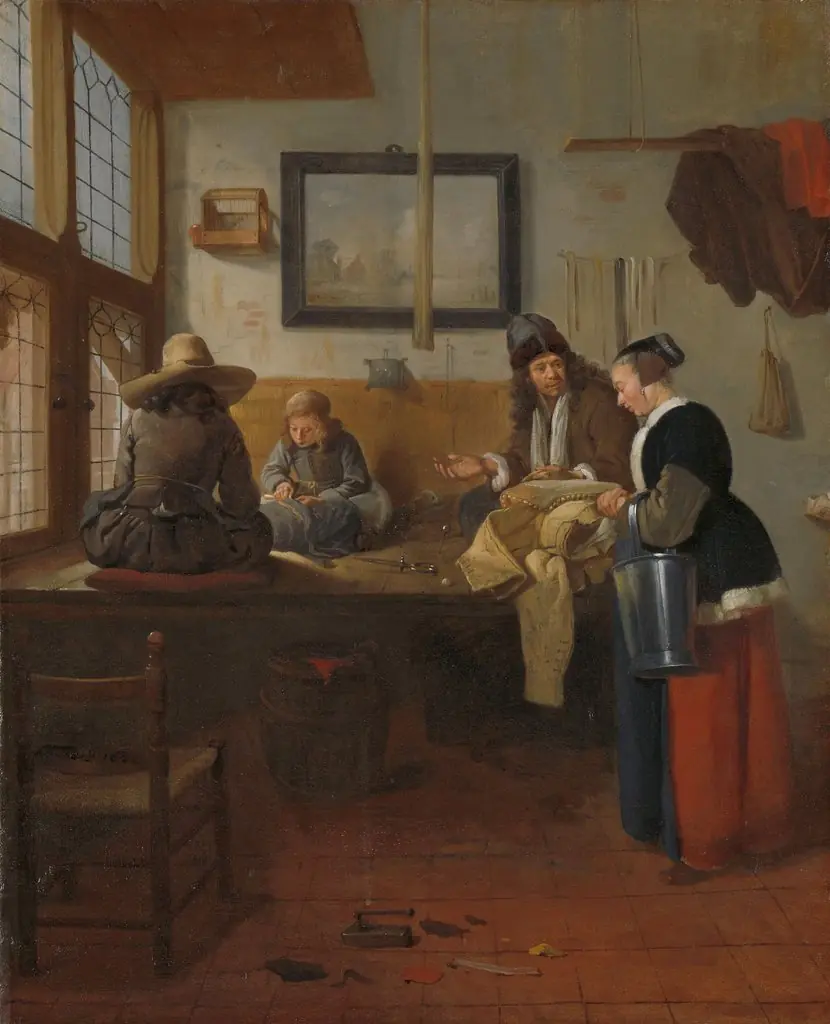
Quirijn van Brekelenkam was active in Leiden from 1648, when he registered with the Guild of Saint Luke, until approximately 1669. Born likely in Zwammerdam around 1622 into a Catholic family (his father was a tailor), he developed a specialty in small-scale genre paintings that captured everyday occupations with dignity and occasional moral undertones. While an eighteenth-century source claimed he studied under Gerard Dou, modern scholarship regards this relationship with skepticism, attributing stylistic similarities to broader influences within the Leiden school rather than formal apprenticeship. Van Brekelenkam's core reputation rests on approximately twenty-five variants of tailor and cobbler scenes produced between 1653 and 1664, fifty-five of which are documented in Leiden estate inventories. In the 1660s, he shifted toward more fashionable subjects influenced by Gabriël Metsu and Pieter de Hooch. Hermit Before a Crucifix belongs to a less frequent but significant strain of devotional imagery in Dutch Golden Age painting, one that Dou had notably cultivated through numerous hermit scenes between 1635 and 1670. Van Brekelenkam's treatment of the theme participates in the broader Dutch interest in the vita contemplativa, the contemplative life, which transcended specific denominational boundaries despite its apparent Catholic resonance.
Legacy
Hermit Before a Crucifix occupies a distinctive position within Van Brekelenkam's limited but well-documented oeuvre. While he is primarily remembered for genre scenes of craftsmanship and domesticity, this painting demonstrates his capacity for spiritual subjects and connects his work to the broader tradition of Dutch devotional painting. The work's preservation in the Hermitage Museum ensures its accessibility to scholars and publics, though it has received less sustained critical attention than the hermit scenes of Gerard Dou, whose treatment of the same theme in The Hermit (1670, National Gallery of Art, Washington) represents the most celebrated Dutch contribution to the subject. Van Brekelenkam's painting nonetheless offers valuable insight into how mid-rank Leiden painters adapted established devotional iconography within their own practice. The artist's broader legacy rests on his detailed documentation of seventeenth-century Dutch material culture and working life, with his paintings serving as important historical records of domestic interiors, tools, and clothing. His final dated work, De goudweger (The Gold Weigher) of 1668, now in the Alte Pinakothek, Munich, marks the endpoint of a career that spanned two decades of significant production in the Dutch Republic.
Artist & collection
Artist
Quirijn or Quiringh Gerritsz van Brekelenkam (1622/29, Zwammerdam – 1669/79, Leiden) was a Dutch Baroque genre painter.