Artwork
Studio Interior
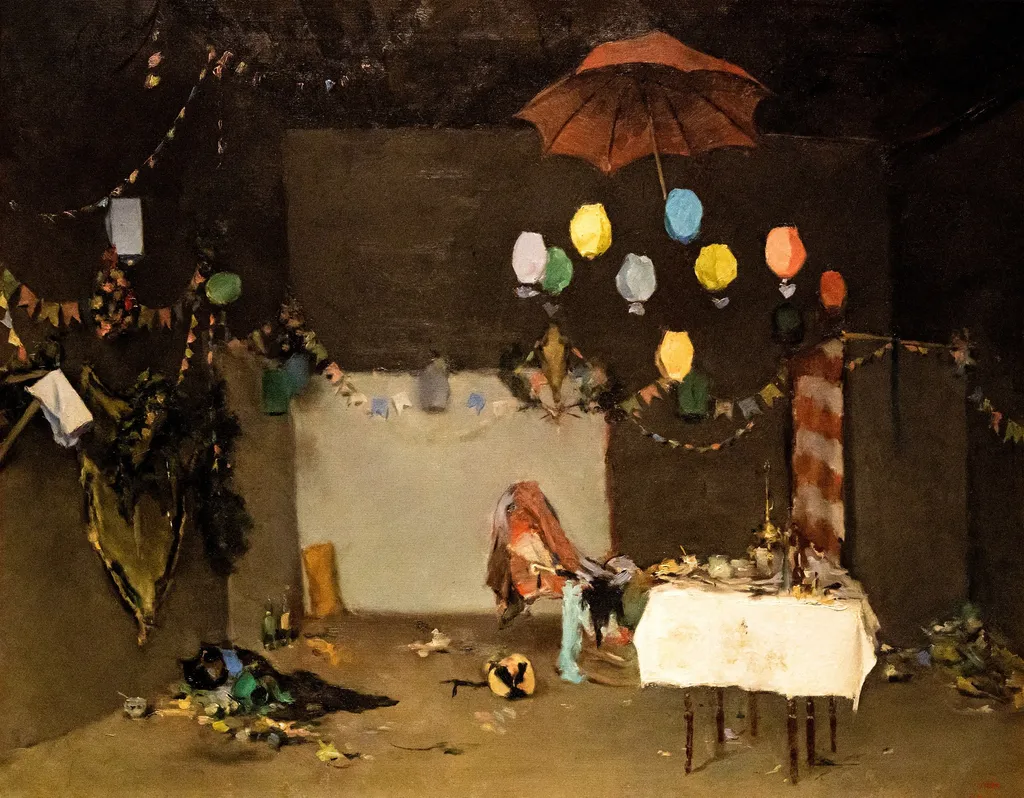
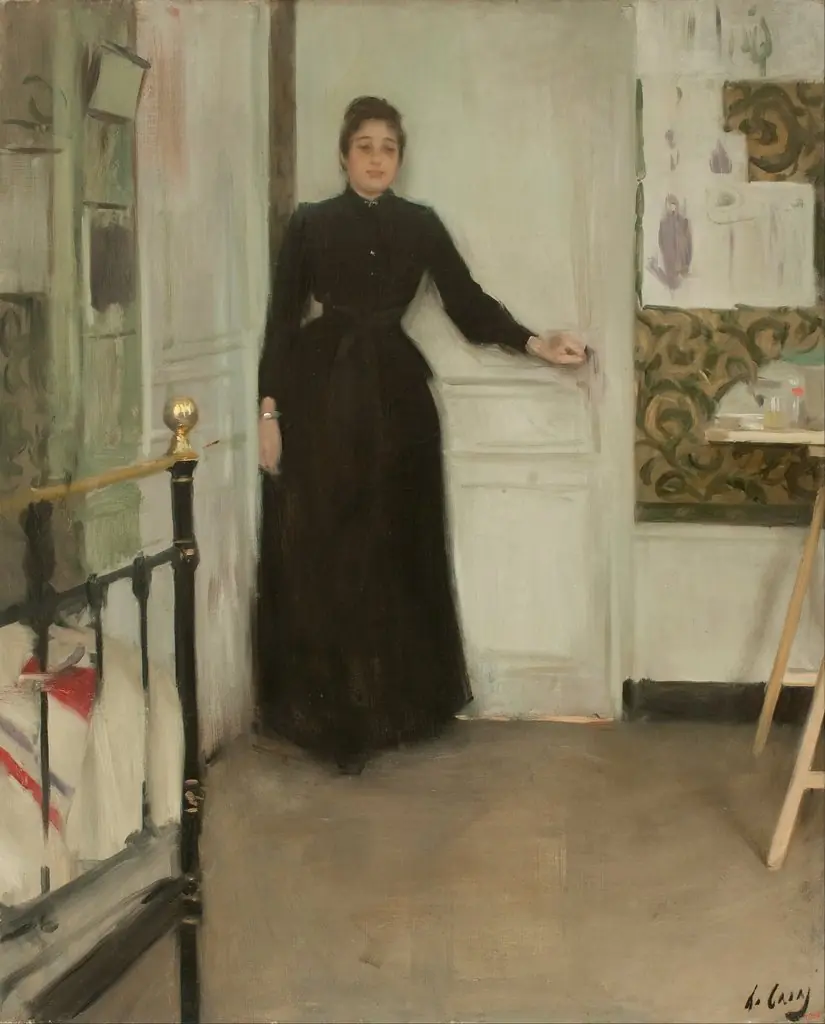
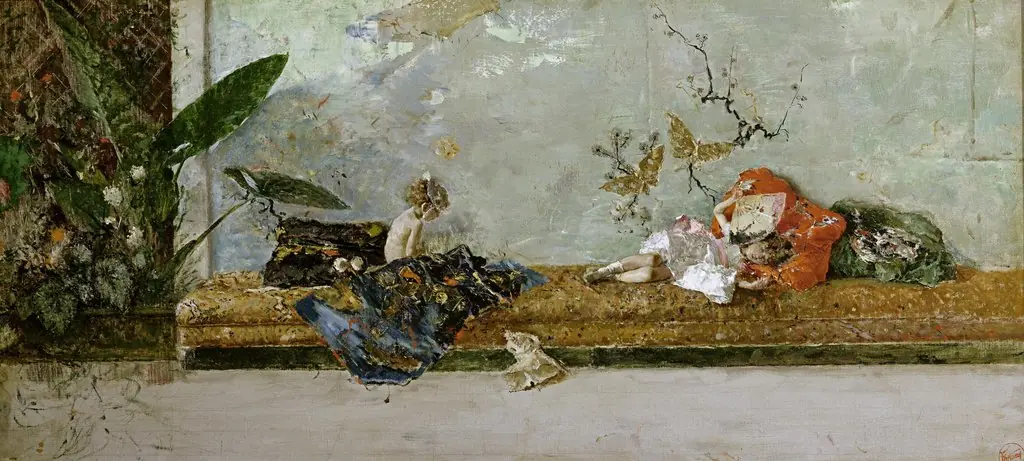
Studio Interior is an oil painting by the Art Nouveau artist Ramon Casas. It dates from 1892 and is held in the collection of the Museu Nacional d'Art de Catalunya.
About this work
Overview
Painted in 1892 by Catalan artist Ramon Casas, Studio Interior is an oil-on-canvas work that captures the daily environment of an artist’s workspace.
Painted in 1892 by Catalan artist Ramon Casas, Studio Interior is an oil-on-canvas work that captures the daily environment of an artist’s workspace. It reflects Casas’s interest in urban life and the rituals of creative labor. The painting is part of the permanent collection at the Museu Nacional d'Art de Catalunya, where it stands as a quiet testament to the material culture of late 19th-century artistic practice.
Subject & Meaning
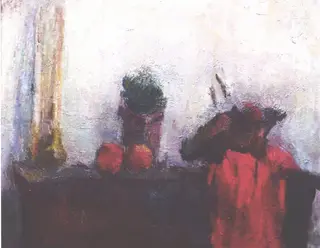
The scene portrays a disordered studio, centered on a table draped in white cloth and strewn with tools, papers, and discarded items. A red umbrella hangs from the ceiling, contrasting with the clutter below. Rather than idealizing the artist’s space, Casas presents it as lived-in and unpolished, suggesting the messy reality behind creative production. The composition implies a pause in work, inviting reflection on the transient nature of inspiration.
Technique & Style
Casas employs chiaroscuro to model forms and direct attention toward the central table, where light gathers among the objects. Brushwork is loose yet deliberate, capturing texture in fabric, wood, and debris without excessive detail. The palette is muted except for the vivid red of the umbrella, which acts as a focal accent.
The style aligns with late 19th-century realism, tempered by a sensitivity to atmospheric tone rather than narrative drama.
History & Provenance
Created in 1892, the painting remained in Casas’s possession until it entered the Museu Nacional d'Art de Catalunya’s collection, likely through donation or acquisition in the early 20th century. Its inclusion in the museum’s holdings reflects its significance as a document of Catalan artistic life during a period of cultural revival. No major changes in ownership or restoration are recorded in public archives.
Context
In the 1890s, Barcelona was a hub for modernist experimentation, and Casas was a key figure in its cultural scene. While often associated with Art Nouveau, his work here leans toward social observation rather than decorative flourish. The studio setting echoes contemporary European trends in depicting artists’ environments, yet Casas’s focus on disorder distinguishes it from more romanticized portrayals of the creative process.
Legacy
Though not widely reproduced, Studio Interior remains a significant example of Casas’s ability to merge realism with psychological nuance. It contributes to the understanding of how Catalan artists engaged with everyday spaces during the modernist era. The painting continues to inform scholarly discussions on the material conditions of art-making in fin-de-siècle Catalonia.
Own this work as a print
Artist & collection
Artist
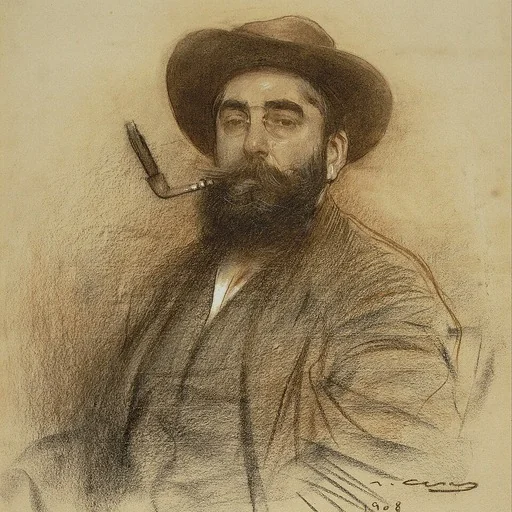
Ramon Casas i Carbó (Catalan pronunciation:; 4 January 1866 – 29 February 1932) was a Catalan artist from Spain.