Artwork
The Painter's Children in the Japanese Room
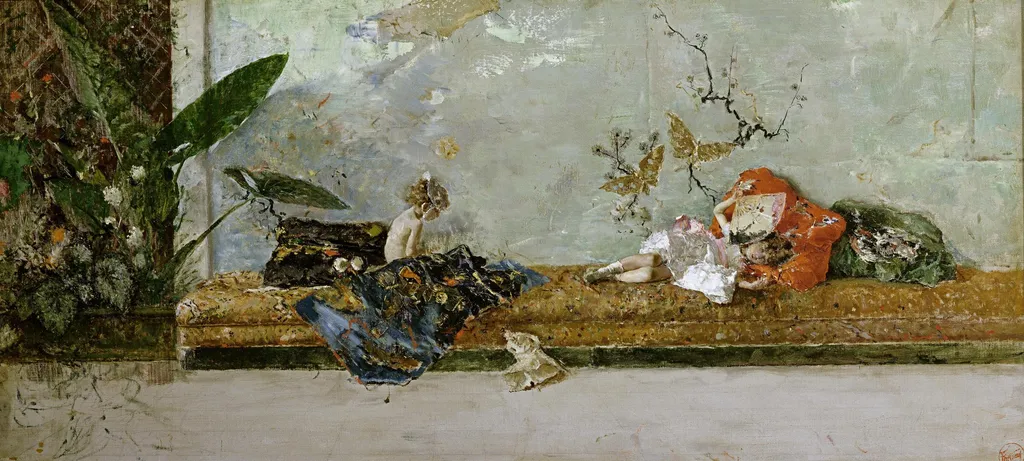
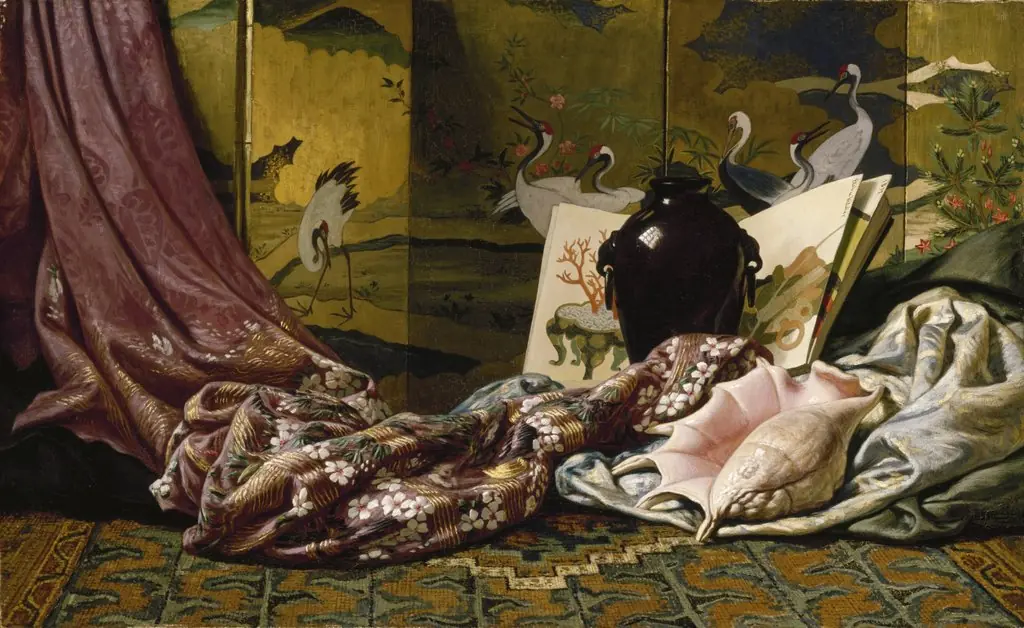
The Painter's Children in the Japanese Room is an oil painting by the Orientalist artist Mariano Fortuny Marsal. It dates from 1874 and is held in the collection of the Museo del Prado.
About this work
Overview
Executed with a textured, tactile approach, the painting avoids idealized sentimentality, instead presenting a quiet, unposed moment in a worn, lived-in space.
Painted in 1874 by Spanish artist Mariano Fortuny y Marsal, this oil work captures his two children in a domestic interior adorned with Japanese artifacts. The scene blends intimate family life with the 19th-century European fascination with Asian aesthetics. Executed with a textured, tactile approach, the painting avoids idealized sentimentality, instead presenting a quiet, unposed moment in a worn, lived-in space.
Subject & Meaning
Fortuny’s children are shown at ease on a low window seat, one seated, the other reclining, their postures suggesting unguarded relaxation. The presence of Japanese fans, textiles, and furnishings reflects the artist’s personal collection and his engagement with Japonisme, a trend among European artists. Yet the setting’s faded walls and scattered garments ground the scene in domestic reality, softening any exoticism with authenticity.
Technique & Style
Fortuny applied oil paint with thick, deliberate strokes, building surface texture through impasto that catches light unevenly. The palette is subdued, muted greens, browns, and whites, with underlying layers of underpainting visible through scraped passages. This rough handling contrasts with the delicate Japanese objects, emphasizing the tension between the refined and the worn, the imported and the everyday.
History & Provenance
Created during Fortuny’s mature period, the painting remained in the artist’s family until it entered the Museo del Prado’s collection in the 20th century. Its preservation there reflects its significance as an example of Spanish Orientalist painting and Fortuny’s unique synthesis of genre realism with cross-cultural motifs. No major alterations or restorations are documented in its modern history.
Context
In the 1870s, European artists increasingly incorporated Japanese design elements into their interiors, drawn by ukiyo-e prints and imported goods. Fortuny, like many contemporaries, collected such objects, but his treatment of them here is unromanticized. The painting aligns with a broader trend of domestic Orientalism, where exoticism served not as spectacle but as ambient detail in private life.
Legacy
The work stands as a quiet testament to Fortuny’s ability to merge personal observation with cultural curiosity. Unlike grand Orientalist narratives, it offers no narrative climax, only a moment of stillness. Its influence lies in its restraint, offering a model for how everyday interiors could carry the weight of global exchange without theatricality.
Artist & collection
Artist
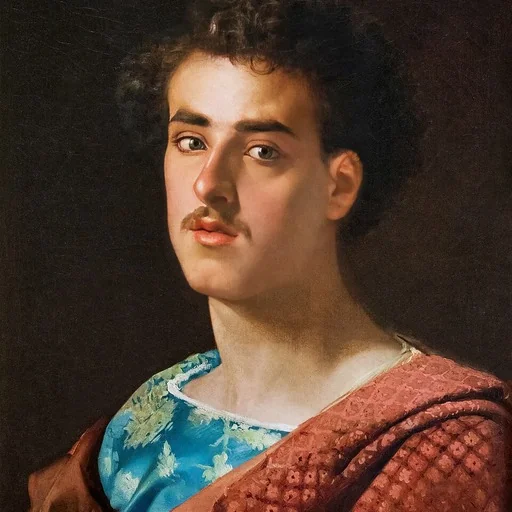
Mariano Fortuny y Marsal (Catalan: Marià Fortuny i Marsal, pronounced; June 11, 1838 – November 21, 1874) was a Spanish painter known for works focusing on Romantic fascination with Orientalist themes, historicist genre…