Artwork
Ramon Casas and Pere Romeu in an Automobile
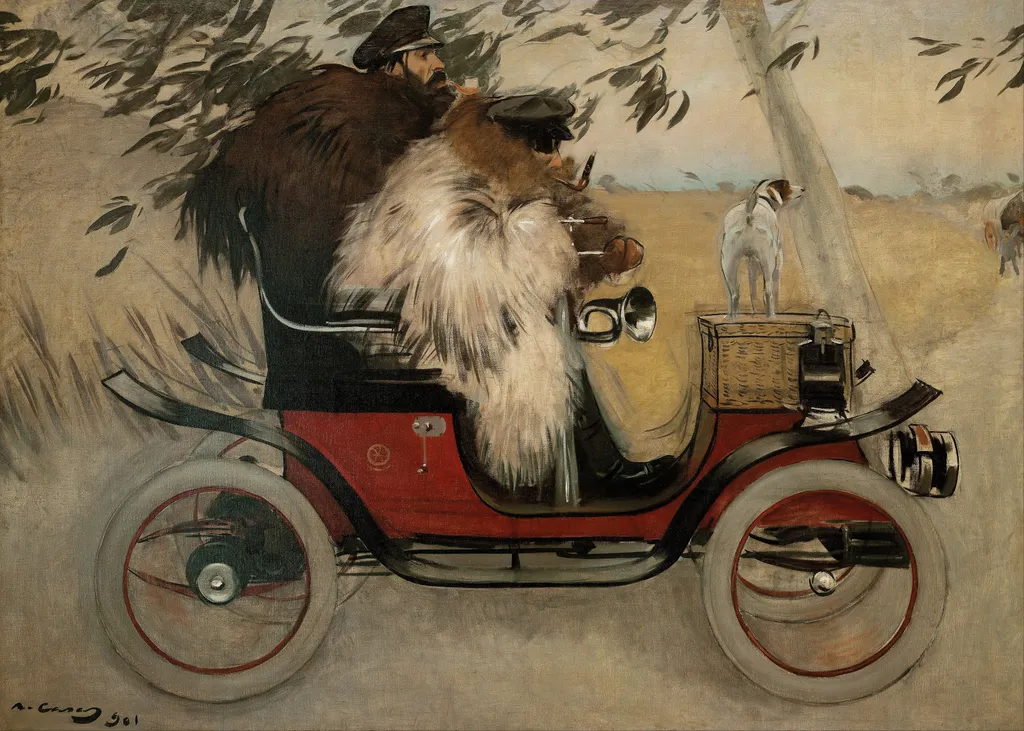
Ramon Casas and Pere Romeu in an Automobile is an oil painting by the Art Nouveau artist Ramon Casas. It dates from 1901 and is held in the collection of the Museu Nacional d'Art de Catalunya.
About this work
Ramon Casas created this oil painting in 1901. It's titled Ramon Casas and Pere Romeu in an Automobile.
The painting features the artist himself and Pere Romeu. This work is significant because it shows the subjects in an automobile, which was a notable mode of transportation at the time.
You can learn more about the artist who created this work, the artist: Ramon Casas.
Subject & Meaning
The canvas was painted for the café Els Quatre Gats, a hub of Barcelona's modernist circle, and now belongs to the Generalitat of Catalonia.
The painting shows Ramon Casas seated at the wheel of a red automobile with his friend Pere Romeu beside him. Both men wear hats and fur-lined coats and hold pipes in their mouths. A dog named Ziem stands on a basket in front of the car, appearing to scout for oncoming traffic.
The composition emphasizes speed through the movement of the wheels and the figures' positions. Created in 1901, the work symbolizes the transition from a tandem bicycle depicted in an earlier painting to the modern automobile, reflecting the dynamism of Catalan modernism. Casas's background as a poster artist is evident in the bold imagery.
The canvas was painted for the café Els Quatre Gats, a hub of Barcelona's modernist circle, and now belongs to the Generalitat of Catalonia.
Technique & Style
Ramon Casas and Pere Romeu in an Automobile is an oil-on-canvas painting executed in 1901. The work measures 208 cm in height and 291 cm in width. Stylistically, it exemplifies Catalan modernism and Art Nouveau, reflecting the artist's background as a prominent poster designer.
The composition emphasizes speed through the dynamic positioning of the figures and the implied motion of the automobile's wheels. The imagery captures the transition from traditional to modern modes of transport, replacing an earlier depiction of the subjects on a tandem bicycle. The painting features the artist and his friend Pere Romeu wearing hats and furs while smoking pipes, accompanied by the artist's dog Ziem.
History & Provenance
Ramon Casas and Pere Romeu in an Automobile is an oil-on-canvas work painted by Ramon Casas in 1901. It was produced in Barcelona to replace an earlier painting by Casas depicting the same two men riding a tandem, which had hung in the art café Els Quatre Gats, the modernist establishment co-founded by Casas and Pere Romeu. The new canvas, showing the pair in a red automobile, was installed at the same venue in 1901, and the two images together came to symbolize the shift from the old tandem to the modern car.
The painting is now held by the Museu Nacional d'Art de Catalunya in Barcelona, where it is owned by the Generalitat of Catalonia.
The painting is held in the collection of the National Art Museum of Catalonia (Museu Nacional d’Art de Catalunya) in Barcelona.
It was accessioned as part of the museum’s holdings, with inventory dimensions recorded as 208 cm high by 291 cm wide.
Context
Created in 1901, the painting is firmly situated within the Catalan modernism and Art Nouveau movements. The work reflects Casas's recognized talent as one of the great poster artists of Catalan modernism, a quality evident in the painting's striking imagery. It originally served as a decorative piece for the art café Els Quatre Gats, a stronghold of modernism in Barcelona co-founded by Casas and Romeu.
The canvas replaced an earlier Casas painting depicting the same two men on a tandem bicycle. Together, the two works came to symbolize the transition from the old to the new, with the automobile representing modernity. Both paintings have consequently become synonymous with Catalan modernism.
Legacy
Ramon Casas and Pere Romeu in an Automobile has become a defining symbol of Catalan modernism and the Art Nouveau movement. Created in 1901 to replace an earlier work depicting the subjects on a tandem bicycle, the painting was installed at Els Quatre Gats, the modernist café co-founded by the artist and his subject. This juxtaposition of the two canvases came to represent the cultural transition from traditional modes of transport to the modern era of the automobile.
The work's imagery, emphasizing speed and modernity, showcases Casas's background as a leading poster artist. Today, the painting is recognized as a seminal piece within the genre, permanently housed at the Museu Nacional d'Art de Catalunya in Barcelona.
Overview
Created in 1901, this oil-on-canvas work by the Catalan painter Ramon Casas depicts himself alongside his close associate Pere Romeu seated inside a motor vehicle. The composition captures a moment of early twentieth‑century modernity, reflecting the growing presence of automobiles in urban life. Today the painting belongs to the collection of the National Art Museum of Catalonia in Barcelona.
Own this work as a print
Artist & collection
Artist
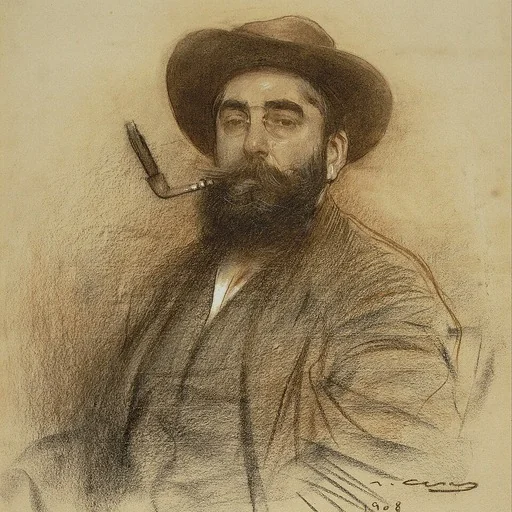
Ramon Casas i Carbó (Catalan pronunciation:; 4 January 1866 – 29 February 1932) was a Catalan artist from Spain.

- Why the Pifflers Lost their Return Match
 A Woman and a Girl Driving
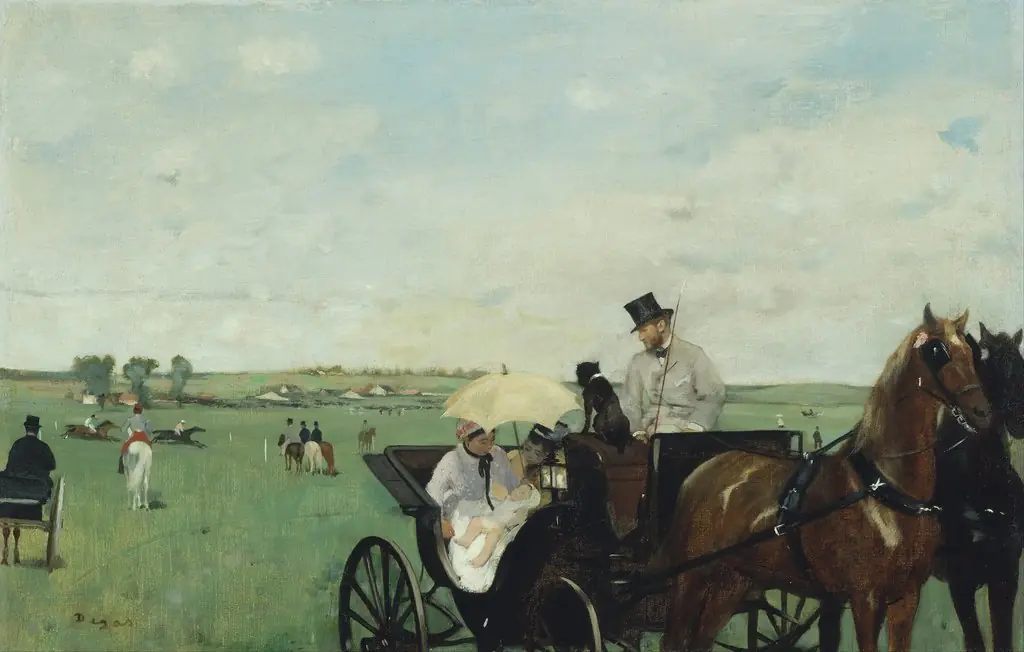 At the Races in the Countryside
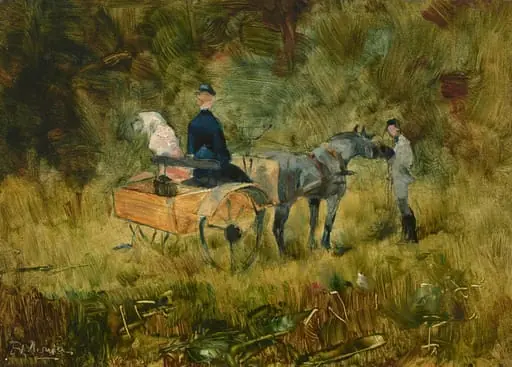 The Trap
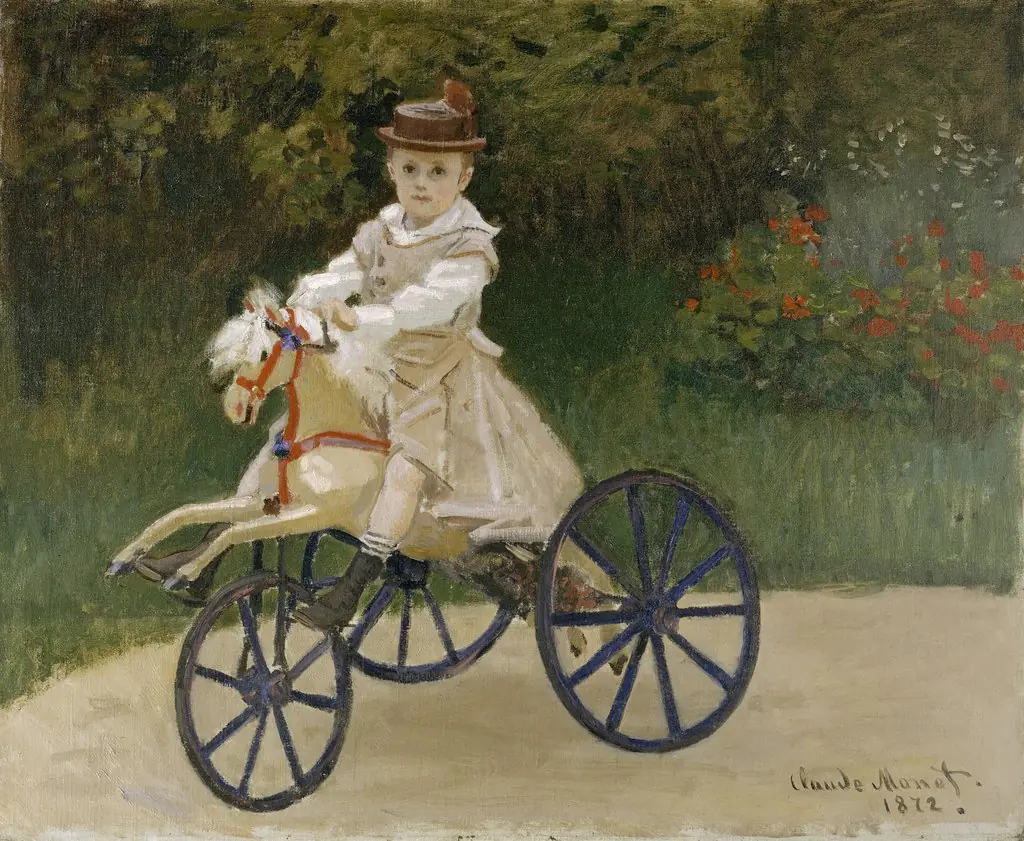 Jean Monet (1867–1913) on His Hobby Horse
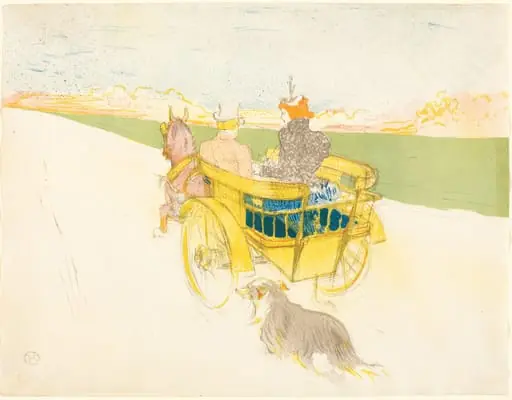 Country Outing (Partie de campagne)
 Dogs at a Hunt
 Place de la Concorde
 The One Hoss Shay
 Country Outing (Partie de campagne)
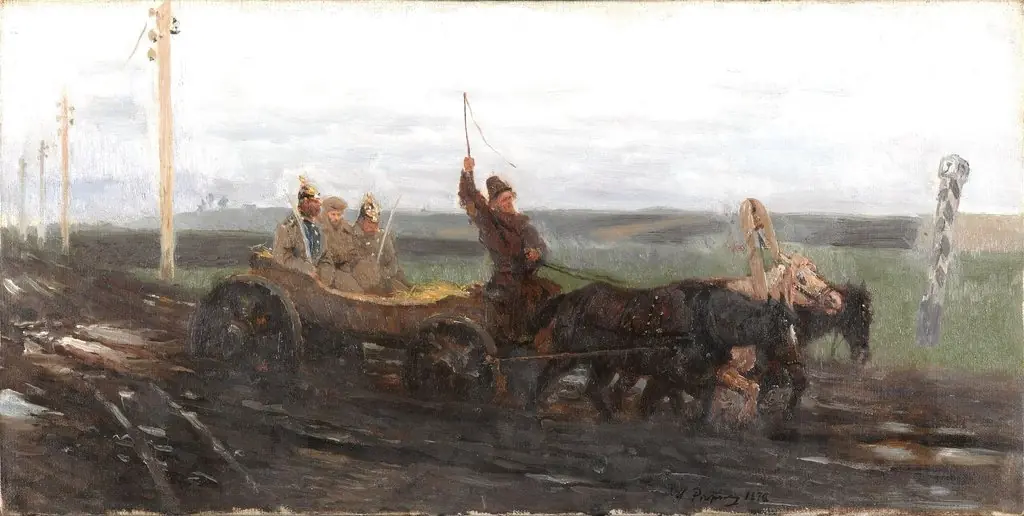 Under guard. On a dirty road
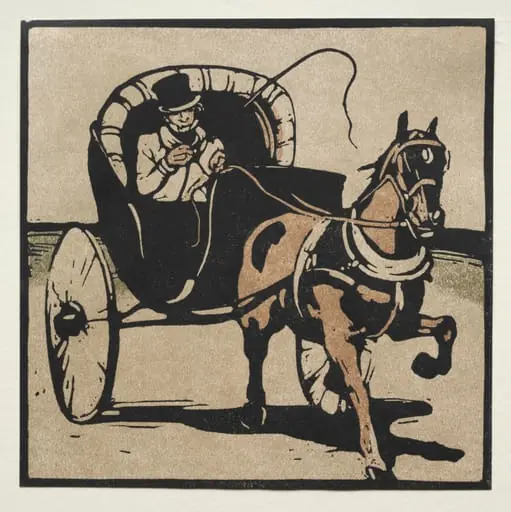 The Cabriolet