Artwork
Flowers in a Vase
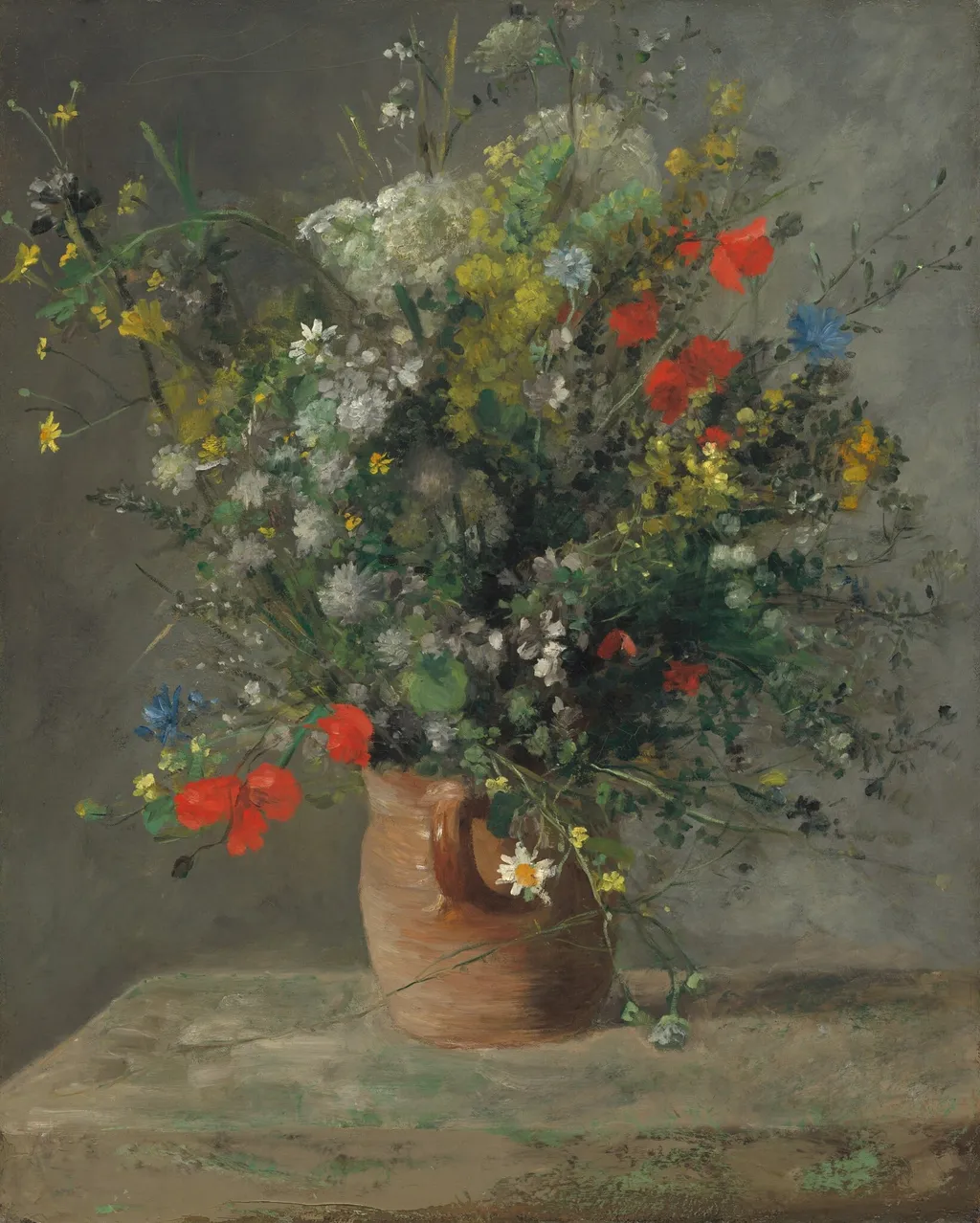
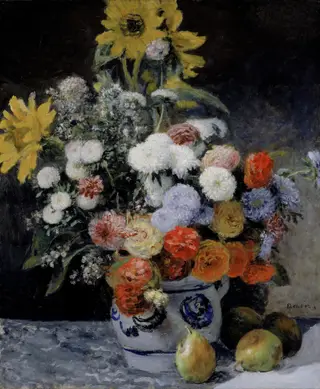
Flowers in a Vase is an oil painting by the Impressionist artist Pierre-Auguste Renoir. It dates from 1866 and is held in the collection of the National Gallery of Art.
About this work
Subject & Meaning
Executed in 1866, Pierre-Auguste Renoir's Flowers in a Vase is classified as a still life painting.
Executed in 1866, Pierre-Auguste Renoir's Flowers in a Vase is classified as a still life painting. The work's subject matter is explicitly identified as flowers arranged within a vessel. While the composition focuses on this floral depiction, the available records do not provide specific details regarding deeper iconographic traditions, symbolic meanings, or allegorical representations associated with the piece.
The artwork functions primarily as a direct representation of its botanical subject rather than a narrative scene, with its significance rooted in its status as an early oil painting by the artist now held in the National Gallery of Art.
History & Provenance
Auguste Renoir executed Flowers in a Vase in 1866 as an oil painting on canvas. The work's documented ownership begins with Charles Le Coeur (1830–1906). Following his tenure, the Le Coeur family sold the piece to the Parisian dealer Hector Brame on May 14, 1924.
Brame subsequently transferred it to Comte de Rivaud on December 2, 1924. The painting remained within Rivaud's lineage, passing to his heir, Mrs. Gambert de Loche, who sold it back to Hector Brame on April 10, 1958. Later that year, in July 1958, Brame sold the work to Paul Mellon of Upperville, Virginia.
Mellon retained the painting until 1983, at which point he gifted it to the National Gallery of Art in Washington, D.C., where it currently resides.
Created in 1866, Auguste Renoir's Flowers in a Vase is currently held by the National Gallery of Art in Washington, D.C., where it was accessioned as a gift from Paul Mellon in 1983. The work's provenance traces back to Charles Le Coeur before passing through the hands of Hector Brame and Comte de Rivaud. Since its arrival at the National Gallery, the painting has been exhibited internationally.
Its exhibition history includes showings at the Los Angeles County Museum of Art, the Thyssen-Bornemisza Museum, and the Scottish National Gallery. Additionally, the work has been displayed at multiple venues in Japan, including the Kyoto Municipal Museum of Art, the Tokyo Metropolitan Art Museum, the National Art Center in Tokyo, and the National Museum of Art in Osaka, as well as in Lisbon.
Legacy
Renoir’s Flowers in a Vase (1866) entered the National Gallery of Art, Washington, in 1983 as a gift from Paul Mellon, anchoring its legacy in the museum’s permanent collection. Its inclusion in a major traveling exhibition from 1993 to 1994, shown in Los Angeles, Kyoto, Tokyo, Edinburgh, Madrid, and Lisbon, helped consolidate its reputation beyond France, exposing it to transpacific and transatlantic audiences. The painting’s sustained display in Washington and its itinerant presence in early 1990s international surveys positioned it as a touchstone for studies of Renoir’s early still-life practice and the broader Impressionist movement.
Overview
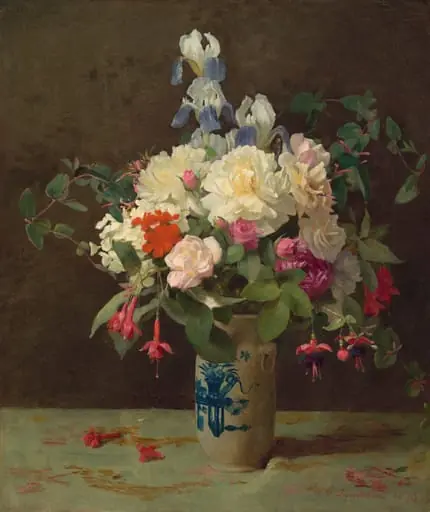
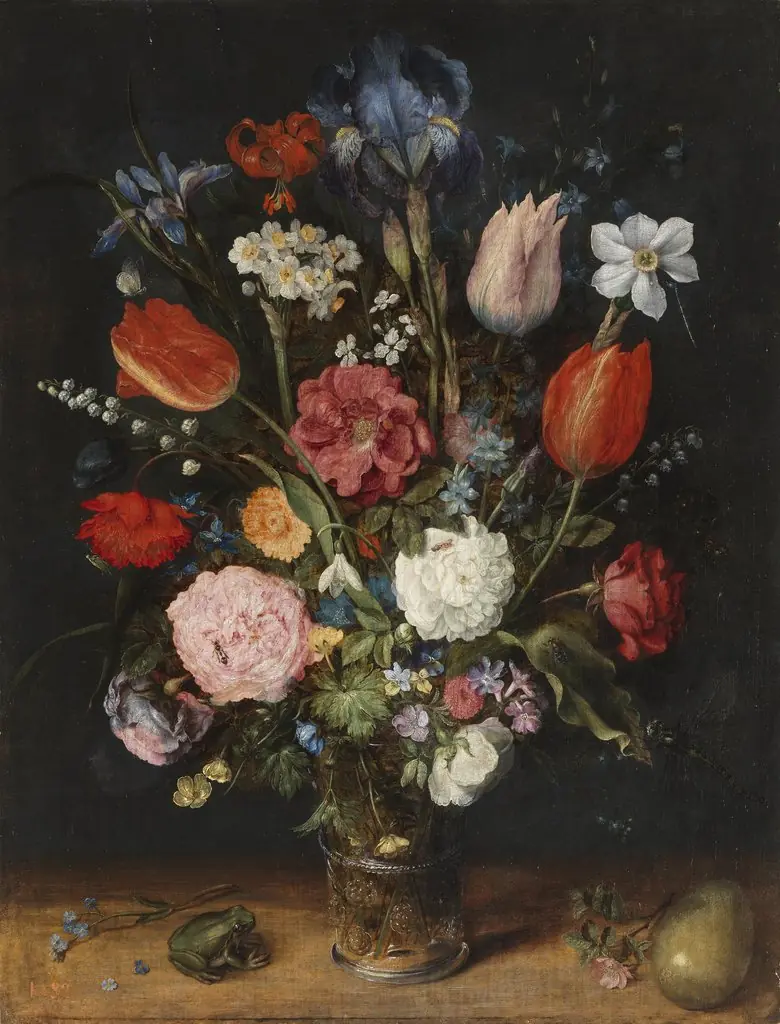
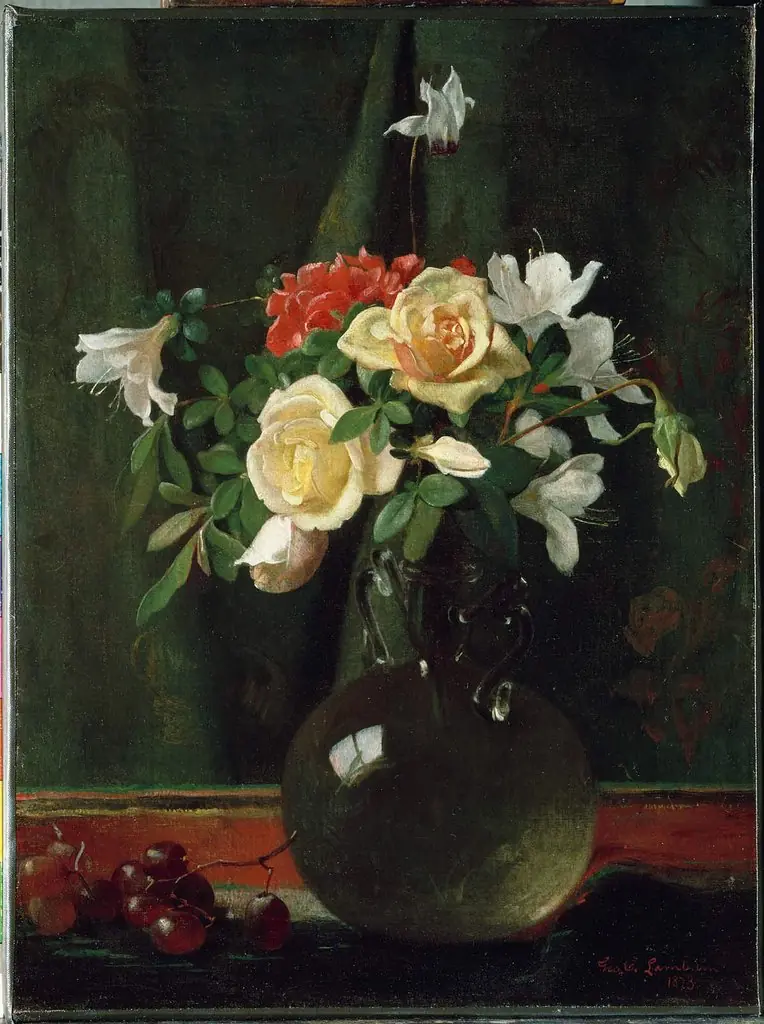
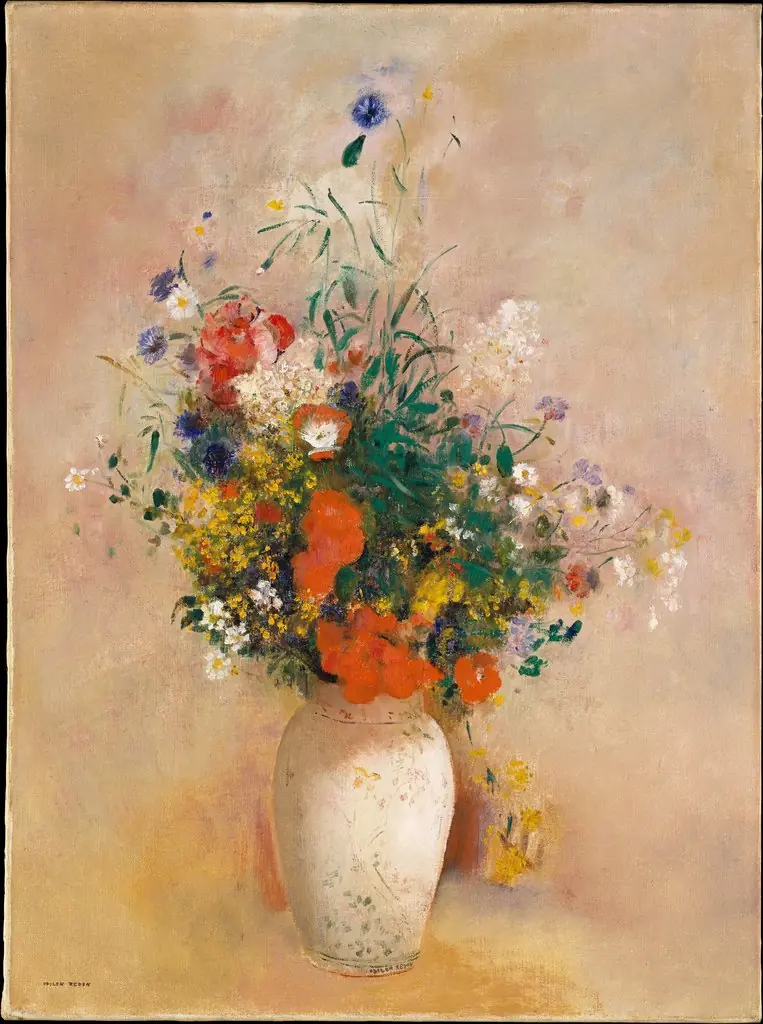
Auguste Renoir's Flowers in a Vase, an oil on canvas created around 1866, exemplifies his early engagement with still life. This painting captures a vibrant assortment of spring flowers arranged in a clear glass vessel, resting on a wooden surface. The composition offers a direct and unadorned observation of nature, characteristic of the period's evolving artistic interests.
Technique & Style
Renoir employed quick, loose brushstrokes in this work, creating a sense of immediacy. The paint is applied thickly in certain areas, lending a palpable texture to the surface, particularly evident in the soft appearance of the petals. He used a palette of gentle pinks and yellows, contrasted with vivid greens, and carefully rendered the play of light on the glass vase.
Context
While Renoir is widely recognized for his portraits, his still life paintings like Flowers in a Vase provided a crucial arena for developing his artistic approach. These floral studies allowed him to experiment with brushwork, color relationships, and the rendering of light and shadow, skills that would later inform the vibrant and expressive qualities seen in his figure compositions. This practice was foundational to his evolving style.
Own this work as a print
Artist & collection
Artist
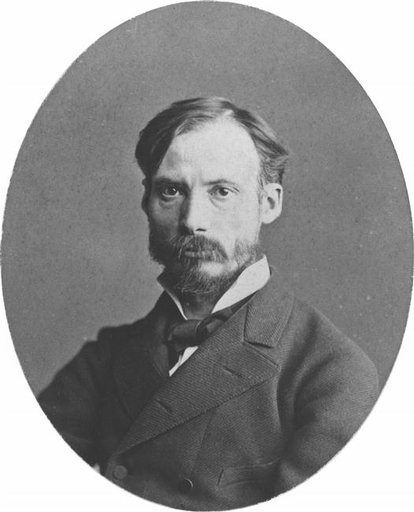
Pierre-Auguste Renoir was a French artist who was a leading painter in the development of the Impressionist style.